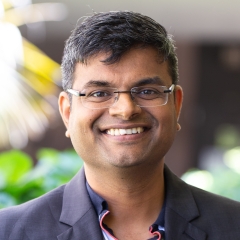
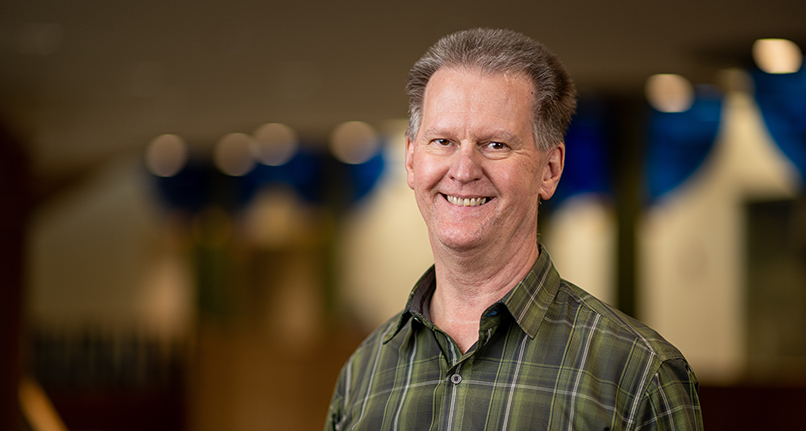
Dr. Kevin J. Keefer is a Research Assistant Professor of Atmospheric and Aerosol Sciences in the Department of Engineering Physics at the Air Force Institute of Technology (AFIT). With over 40 years of experience in atmospheric research, directed energy, and laser propagation modeling, he specializes in micro-meteorological and aerosol optical effects, particularly in optical turbulence quantification. PhD in Physics (AFIT, 1990) M.S. in Engineering Physics (AFIT, 1985) M.S. in Systems Management (University of Southern California, 1983) B.S. in Physics (U.S. Air Force Academy, 1981) His research focuses on atmospheric characterization , directed energy applications , and optical turbulence modeling using advanced techniques like 4D weather cubes, thermal blooming analysis, and real-time sensor integration. Recent work involves maritime environment turbulence assessment and multispectral extinction quantification. Dr. Keefer's publications (2022-2024) emphasize directed energy systems , laser propagation modeling , and atmospheric aerosol effects . Key topics include turbulence quantification via time-lapse imagery, energy balance methods, and sensor-enhanced weather modeling. Scientific Awards Ralph J. Mastrandea Memorial Award (Riverside Research Institute) He has co-authored over 70 conference proceedings and journal articles, collaborating extensively with experts like Steven T. Fiorino and Jack McCrae on projects including HEL performance forecasting, LEEDR marine boundary layer improvements, and real-time atmospheric effect tools for directed energy applications.
Santasri R. Bose-Pillai is a Research Assistant Professor at the Air Force Institute of Technology (AFIT) within the Engineering Physics department, part of the Center for Directed Energy. She holds a PhD in Electrical Engineering (Optics focus) from New Mexico State University (2008), an M.S. in Electrical Engineering (2005), and a B.S.E.E. with honors from Jadavpur University, India (2000). Her research focuses on atmospheric optics, directed energy applications, and laser communications, with expertise in turbulence profiling, imaging through atmosphere, and partially coherent source generation. She is a senior member of SPIE and a member of OSA and DEPS. Prior roles include Visiting Assistant Professor at Rose-Hulman Institute of Technology. Notable achievements include advising students awarded the Dean’s thesis prize (2020) and best student presentation (2019). Her work spans academic collaborations, with over 30 peer-reviewed publications and contributions to conferences such as IEEE Aerospace and SPIE. Key contributions include developing methods for atmospheric turbulence measurement using Hartmann sensors and time-lapse imagery. Education: PhD, Electrical Engineering (Optics), New Mexico State University, 2008 M.S., Electrical Engineering, New Mexico State University, 2005 B.S.E.E. (Honors), Jadavpur University, India, 2000 Research Interests: Optical turbulence profiling Directed energy systems Laser communication reliability Partially coherent source engineering Awards: Jadavpur University Alumni Association Award for academic excellence (2000) Co-advisor to Dean’s award-winning thesis (2020) Advisor to best student presentation (2019) Advising & Collaboration: Guided students Alexander Boeckenstedt and Benjamin Wilson. Active in directed energy research teams at AFIT.
Prof. Dr.-Ing. Frank Ulrich Rückert is a Professor of Fluid Energy Machines at the University of Applied Sciences Saarland (HTW Saar), where he teaches Thermodynamics, Fluid Dynamics, and Computational Fluid Dynamics. He serves as Spokesperson for the Institute for Physical Process Technology, Study Director for the Master's program in Safety Management, and Deputy Study Director for the Bachelor's program in Industrial Engineering. His work spans multiple research projects including WiPaKü, ELTROSOL, and H2-Schmiede. Dr. Rückert earned his degree in Environmental Engineering and Process Engineering with a focus on Process and Plant Engineering at BTU Cottbus, followed by a doctorate at the University of Stuttgart on technical combustion. His professional experience includes significant work at Robert Bosch GmbH at various international locations, where he developed nozzle and valve systems for liquid fuels and gases, and contributed to the pre-development of micro-steam turbines for waste heat recovery for over four years. His research focuses on modeling and simulation of physical and chemical processes, with particular expertise in Computational Fluid Dynamics (CFD), Computer Aided Engineering (CAE), digital twins, and programming mathematical models. He investigates renewable energy systems, heat transport, thermodynamics, energy storage, waste heat recovery, and high performance computing applications. His work bridges theoretical knowledge with practical engineering applications across power plant technology and grate firing systems. Dr. Rückert's recent publications demonstrate a strong trend toward digital twin technology across multiple engineering domains including hydraulic, pneumatic, electric, and mechanical systems. His work increasingly integrates artificial intelligence with simulation techniques, as evidenced by publications on AI-based positioning systems and metaverse applications for education. The research spans both fundamental engineering principles and cutting-edge applications in renewable energy systems. Honorary Golden Spike Award 2002 from the High Performance Computing Center Stuttgart (HLRS) Saarland Higher Education Teaching Award 2021 Dr. Rückert has secured funding for numerous research projects including WiPaKü (development of gearless wind energy generators), ELTROSOL (electrofilters for aerosol capture), H2-Schmiede (CO2 reduction in forging processes), and RePowerFish (renewable power supply for fish farming). He serves on the Scientific Committee for the SYMKOM conference and is actively involved with the Commercial Vehicle Cluster CVC Südwest. His external engagements include membership on the Landstuhl City Council and the Saarland Energy Innovation Initiative (LIESA). As Spokesperson for the Institute for Physical Process Technology and member of the wi-institute, Dr. Rückert leads several research teams focused on simulation and measurement technology. His work with the Wind Energy Lab demonstrates practical application of theoretical knowledge, while his involvement in the eClose project shows commitment to innovative educational approaches. The Competence Center for Fluid Machinery, Simulation and Measurement Technology serves as the hub for his interdisciplinary research activities.
Professor Stuart Clark is a distinguished academic at the University of New South Wales (UNSW), currently serving as Professor in the Civil and Environmental Engineering department within the Faculty of Engineering. He was appointed Director of Governance for the Faculty of Engineering in 2024 and promoted to Professor in 2025. Previously, he was an Associate Professor (2021-2025) and Senior Lecturer (2017-2021) in the Minerals and Energy Resources School at UNSW. His educational background includes a PhD in Geophysics from the University of Sydney (2007), Master of Arts from the University of Melbourne (2004), and BSc.(Hons)/B. Arts from the University of Sydney (2002). He also earned a Graduate Certificate in University Learning and Teaching from UNSW in 2022. Professor Clark's research focuses on understanding the influence of deep Earth processes on sedimentary basin development and applying machine learning to geological modeling. His work spans quantitative sedimentary basin dynamics, numerical simulations of Earth processes like subduction and sediment transport, and innovative applications at the intersection of geology and machine learning. His research has significant implications for sustainable resource use and exploration. His recent publications reveal a strong emphasis on basin analysis, particularly in the Northern Carnarvon Basin, with applications spanning petroleum geology, resource distribution, and geological modeling using advanced statistical methods like Bayesian inference. His work increasingly bridges traditional geology with computational approaches, including machine learning applications for fracture detection, fault identification, and image analysis of geological structures. Arc Postgraduate Council's Supervisor Award (2021) UNSW Vice Chancellor's Teaching Excellence Award - Rising Star (2019) UNSW Engineering Hero Award (2020) Professor Clark has successfully secured multiple significant research grants, including the Geodynamical Assessments of Subsidence in the North West Shelf in Australia (2024-2025), the ARC Industry Transformation Research Hub for Resilient and Intelligent Infrastructure Systems (2021-2027), and several Australian Research Council Linkage projects. He currently supervises numerous PhD and research master's students working on diverse projects related to basin evolution, dynamic topography, fracture mechanics, and resource exploration. His teaching portfolio includes undergraduate and postgraduate courses in geology, sedimentary and energy resources, and seismic imaging.
Associate Professor Kristen Splinter is an academic at the University of New South Wales (UNSW Sydney), affiliated with the School of Civil and Environmental Engineering and the Water Research Laboratory (WRL). She holds a Ph.D. in Geological Oceanography from Oregon State University (2009), an M.Sc. in Coastal and Oceanographic Engineering from the University of Florida (2004), and a B.Sc. in Civil Engineering from Queen's University (2002). Her research addresses coastal dynamics, including shoreline modeling, erosion/recovery processes, and remote sensing applications. Her work integrates field observations, numerical modeling, and machine learning to study: Storm-driven coastal erosion and multi-decadal shoreline change Dune stability under wave forcing and sediment moisture dynamics Satellite-derived shoreline mapping using SAR-optical fusion and LiDAR Climate impacts (e.g., ENSO) on Pacific coastlines Recent publications demonstrate a focus on scalable predictive models, machine learning hybrids (e.g., mixture-of-experts frameworks), and validation of shoreline algorithms against global datasets. Her articles frequently combine coastal physics with data science to improve erosion forecasting and early-warning systems. She co-leads the #WRLCoastal research group, supervising PhDs and postdocs. She chairs UNSW's Gender Equity Working Group and co-founded the international #Coast2Coast seminar series. Editorial roles include Senior Editor for Cambridge Prisms: Coastal Futures and Associate Editor for JGR-Earth Surface . Laboratory/fieldwork involves wave tank experiments (e.g., dune erosion mechanisms), iPhone LiDAR validation, and collaboration on Australia's national storm hazard early-warning framework. Current projects explore AI-driven shoreline modeling and climate-resilient coastal management strategies.
Silvia Pujals Riatós is a Researcher at the Core Facilities Unit of the Institute for Bioengineering of Catalonia (IBEC) in Barcelona, Spain, where she leverages advanced microscopy and nanomaterial characterization expertise to drive innovation in nanomedicine. Her dual role combines facility management with active research in developing next-generation nanocarriers for biomedical applications, particularly in drug delivery and cellular imaging. Her research spans nanomedicine, supramolecular chemistry, and super-resolution microscopy, with emphasis on designing light-activated drug delivery systems, quantifying nanoparticle behavior in biological environments, and engineering tumor-targeted nanotherapeutics. Key focus areas include supramolecular polymers, protein corona analysis, and real-time monitoring of nanocarrier dynamics in complex microenvironments like tumor-on-a-chip models. Her work bridges synthetic chemistry, materials science, and translational medicine to address challenges in cancer therapy and neurodegenerative diseases. Analysis of her 15 most recent publications (2021-2025) reveals three dominant trends: (1) Quantitative characterization of nanomaterial-biological interactions using cutting-edge microscopy techniques like DNA-PAINT and Glyco-PAINT, (2) Development of stimuli-responsive supramolecular systems with optimized stability-release profiles, and (3) Application of engineered nanocarriers in tumor models and cellular activation systems. Collaborations with the Albertazzi group and international teams demonstrate her integrative approach to solving biomedical challenges. As a core facility leader, Dr. Pujals provides critical infrastructure support for IBEC's research ecosystem, enabling high-impact studies through advanced nanomaterial analysis and super-resolution imaging services. Her facility work underpins projects ranging from fundamental protein interaction studies to preclinical cancer models, fostering interdisciplinary innovation across the institute.
Alexander Deisting is a Senior Scientist at Johannes Gutenberg University Mainz within the Faculty of Physics, Mathematics and Computer Science and the Institute of Physics. He works in Prof. Oberlack's group on next-generation dark matter detectors and serves on the PRISMA+ Ombuds team for diversity and inclusion concerns. His academic background includes: Dr. rer. nat. in Physics from Ruprecht-Karls-Universität Heidelberg (2018) with thesis on ion mobility and GEM discharge studies for the ALICE TPC upgrade Master of Science from Rheinische Friedrich-Wilhelms-Universität Bonn (2014) on InGrid detector readout Bachelor of Science from Rheinische Friedrich-Wilhelms-Universität Bonn (2012) on charge deposition reconstruction in GEM-Pixel-TPCs Dr. Deisting specializes in advanced particle detector instrumentation, particularly time projection chambers (TPCs). His research focuses on: Gas-filled TPCs with high spatial resolution Single-phase liquid TPCs for low-energy thresholds Optical readout systems for TPCs Novel amplification stages for enhanced detector performance His work bridges dark matter detection (XENONnT, Darwin) and neutrino physics (DUNE, JUNO) through major international collaborations. Analysis of his 12 publications (2017-2025) reveals consistent expertise in detector R&D for particle physics. Key trends include liquid xenon/argon TPC advancements for dark matter and neutrino experiments, gas detector optimization for heavy-ion colliders, and cross-disciplinary applications like environmental monitoring. His work emphasizes precision engineering, stability under extreme conditions, and innovative readout techniques. Dr. Deisting actively supervises BSc, MSc, and PhD theses in detector physics. He serves as Task Leader in DRD2 "Liquid detectors" and Darwin WG6 "Liquid Xenon Properties and Calibration," while regularly reviewing for JINST, EPJ C, NIM A, and MDPI journals. He is integral to the ETAP (Experimental Elementary Particle Physics) group at Mainz and the PRISMA+ Cluster of Excellence. His experimental work spans XENONnT/Darwin (dark matter), DUNE/T2K (neutrinos), and past collaborations including ALICE, RD51, and AIDAinnova for gaseous detector systems.
Nicolas Ragot is an Associate Professor at the Computer Science Department of the Polytechnic School of the University of Tours (EPU) , affiliated with the LIFAT (Fundamental and Applied Computer Science Laboratory of Tours) . He has been active in Pattern Recognition , Document Analysis , and Biometrics since his 2003 Ph.D. from IRISA lab, Rennes University. Current research focuses on deep learning for document layout generation , time series forecasting , and robust OCR systems Involved in international collaborations with Indian Statistical Institute-Kolkata , BnF (French National Library) , and LITIS Rouen Lead or participated in projects like IFCPAR , ANR Digidoc , Google Digital Humanities Awards , and Technovision EPEIRES His work spans: Document Analysis : OCR quality assessment, historical document digitization, and layout generation Biometrics : Online/offline signature verification and handwritten character recognition Machine Learning : One-class classification, incremental learning, and hybrid neural network architectures Scientific contributions include: Google Digital Humanities Award (2-year grant for digitization projects) Reviewer for top journals ( IEEE PAMI , Pattern Recognition ) and conferences ( ICPR , ICDAR ) Supervisor of RFAI group (since 2017) and extensive administrative involvement at Polytech Tours Key collaborations and networks: Academic: Indian Statistical Institute , LITIS Rouen , French National Library Industrial: ATOS Worldline , Nexter Research Networks: IFCPAR , ANR projects
Arpit Gupta is an Associate Professor in the Department of Computer Science at the University of California, Santa Barbara (UCSB), where he co-directs the Systems and Networking Lab (SNL). He also serves as a Faculty Scientist at Lawrence Berkeley National Laboratory and holds the Marjorie & Charles Benton Opportunity Fund Fellowship at the Benton Institute. His research focuses on two main areas: developing production-ready machine learning systems for self-driving networks that ensure secure and performant connectivity with limited infrastructure, and enabling data-driven policymaking to address digital inequity through better broadband measurement and analysis. His work bridges networking, security, and analytics to solve real-world problems at scale. Gupta's research has resulted in several influential systems including Trustee (for ML interpretability in networks), BQT (for broadband plan analysis), PINOT (programmable data collection), netUnicorn (network data collection platform), and netFound (network foundation models). His team develops practical solutions that have been deployed in production environments, including at Tencent. NSF CAREER Award (2025) Google Research Scholar Award (2025) Google ML and Systems Junior Faculty Award (2025) IETF/IRTF Applied Networking Prize (2025, 2023) SIGCOMM Doctoral Dissertation Award (2024) Best Paper Honorable Mention, ACM CCS (2022) As a mentor, he has advised multiple award-winning students including Udit Paul who received the SIGCOMM Doctoral Dissertation Award. His research is supported by substantial funding from NSF (including a $700k CAREER award), DoE, Google, Verizon, Cisco, and state agencies including the California Public Utility Commission.
Timothy D Johnson is a Professor in the Biostatistics department at the University of Michigan School of Public Health . His research focuses on Bayesian statistical methods, neuroimaging analysis, and biomedical data modeling. Education: PhD, University of California, Los Angeles (1997) MS, University of California, Riverside (1986) BS, University of California, Riverside (1984) Research Interests: Dr. Johnson develops advanced Bayesian methodologies for high-dimensional biomedical data, particularly in neuroimaging applications. His work addresses challenges in spatial statistics, mixture models, and variable parameter spaces, with applications spanning neuroscience, cancer, endocrinology, and radiology. Publications Trends: His recent work emphasizes scalable Bayesian frameworks for neuroimaging, applications of stimulated Raman histology in oncology, and statistical solutions for clinical radiology. Many articles focus on improving diagnostic accuracy in gliomas and understanding social cognition through neuroimaging.
Hubert Chanson is a Professor of Civil Engineering at the University of Queensland, where he has been a faculty member since 1990. He leads a research group of 5-10 researchers focused on environmental fluid mechanics and hydraulic engineering, utilizing physical experiments, numerical simulations, and field investigations. His work primarily addresses flows around hydraulic structures, two-phase (air-water/solid-liquid) interactions, and turbulence in open channels. His research spans environmental fluid mechanics , hydraulic engineering , coastal dynamics , and eco-hydraulics , with emphasis on practical applications like dam spillways, fish passage systems, and flood management infrastructure. Recent studies integrate advanced measurement techniques (e.g., acoustic Doppler velocimetry) with theoretical modeling to resolve complex free-surface flow phenomena. Chanson's publications show strong trends in air-water flow mechanics (e.g., stepped spillways, hydraulic jumps), fish passage optimization (e.g., culvert baffles, spillway designs), and transient flow analysis (e.g., tidal bores, surges). His work bridges fundamental fluid dynamics and engineering solutions, often validated through large-scale prototypes. He serves as Senior Editor for Environmental Fluid Mechanics and has chaired major conferences including the 2011 IAHR World Congress. His research group actively collaborates on field deployments and laboratory experiments, advancing sustainable hydraulic infrastructure design.
Professor Brighten Godfrey is a faculty member in the Department of Computer Science and an affiliate of the Coordinated Science Laboratory at the University of Illinois at Urbana-Champaign. He earned a Ph.D. in Computer Science from UC Berkeley (2009) and a B.S. from Carnegie Mellon University (2002). His research spans networked systems with a focus on low-latency networking , software-defined networks , microservices , and machine learning for networks . Ph.D. (2009) and B.S. (2002) in Computer Science Professor at UIUC since 2021 Technical Director at VMware (acquired Veriflow in 2019) His recent publications address microservice tracing , cluster verification , and mobile acceleration , with high-impact applications in XR systems and low-latency networks . Awards include the ACM SIGCOMM Rising Star Award , Sloan Research Fellowship , and multiple best paper and dataset awards . He has chaired program committees for SIGCOMM and HotNets . Teaching honors include Excellent Teacher and Outstanding Advising Awards . His research group has produced alumni now at institutions like Meta, Google, and ETH Zurich. Current projects include Service Layer Traffic Engineering (SLATE) and Learning-Based Congestion Control (Aurora, PCC).
Dr Bryan Bzdek is a Proleptic Associate Professor in the School of Chemistry at the University of Bristol. His research focuses on aerosol microphysics, surfactant dynamics, and respiratory aerosol generation mechanisms. He investigates the physical and chemical properties of aerosols in environmental, biomedical, and industrial contexts. Key research areas include: Surfactant behavior in microscopic droplets Aerosol generation during medical procedures and vocal activities Surface tension dynamics in finite-volume droplets Filtration efficiency of protective equipment His work combines experimental techniques like aerosol optical tweezers with computational modeling. Recent studies address aerosol risks in healthcare environments and musical instrument use, contributing to public health and safety guidelines. Collaborations involve interdisciplinary teams from chemistry, medicine, and engineering. He has published extensively on aerosol physics, surfactant chemistry, and environmental applications.
Dr. Ying Wang is an Adjunct Professor at the University of Illinois Urbana-Champaign and serves as a Science Lead at U.S. Farmers & Ranchers in Action (USFRA), focusing on sustainability strategies and environmental mitigation. Her interdisciplinary expertise bridges academia and industry, emphasizing corporate social responsibility and sustainable supply chain management. Education: She holds a B.S. in Analytical Chemistry from Lanzhou University, an M.S. in Environmental, Health, and Safety Management from Rochester Institute of Technology (RIT), and a Ph.D. in Polymer Chemistry and Physics from Sun Yat-sen University. Research Interests: Dr. Wang’s work spans sustainability assessment methodologies, environmental policy integration, and innovative solutions for reducing agricultural carbon footprints. She combines technical expertise in material science with strategic sustainability frameworks to address global environmental challenges. Publications: Her research outputs highlight contributions to electrochemical systems, membrane technologies, and nanomaterial applications. Recent articles focus on neural network-driven high-speed link modeling and advanced materials for energy storage, reflecting her cross-disciplinary approach. Awards/Grants: No specific awards or grants were mentioned in the provided text, but her roles at USFRA and academic contributions suggest involvement in industry-academia partnerships. Labs/Teams: Not explicitly detailed in the text, though her work at USFRA involves collaborative efforts with farmers, researchers, and policymakers to advance sustainable agricultural practices.
Dr. Ying Zhu is a Senior Lecturer at the School of Biomedical Engineering, University of Technology Sydney (UTS), and the group leader of the Laboratory of In-Vitro NanoDiagnostics. She holds a PhD in optical biosensors from UNSW (2011–2015), supervised by Prof. Justin Gooding, and completed postdoctoral research at Dartmouth College’s Thayer School of Engineering (2015–2017). Her research focuses on advancing diagnostic technologies using nanoplasmonic biosensors and extracellular vesicle analysis for cancer detection. She has secured ~$2 million in grants, including the ARC DECRA (2024) and Cancer Institute NSW Fellowship (2017–2020). Dr. Zhu’s expertise spans nanotechnology, biomedical engineering, and translational cancer research. Her work bridges lab-to-clinic applications, emphasizing clinical translation of biosensors and liquid biopsy techniques. Notable achievements include a highly cited paper in Clinical Medicine (2025) and 31 publications in top-tier journals (82.6% in top 10% journals, H-index 19). Education: PhD in Optical Biosensors (UNSW), Postdoc at Dartmouth College Awards: ARC DECRA, Cancer Institute NSW Fellowship Labs: Laboratory of In-Vitro NanoDiagnostics Teaching: Co-coordinates Biomedical Engineering courses (41160/42721) Her research portfolio includes funded projects on optical metasurfaces, nanoplasmonic sensors, and exosome-based diagnostics. Recent articles highlight innovations in quantum sensors, single-vesicle analysis, and cancer biomarker detection.