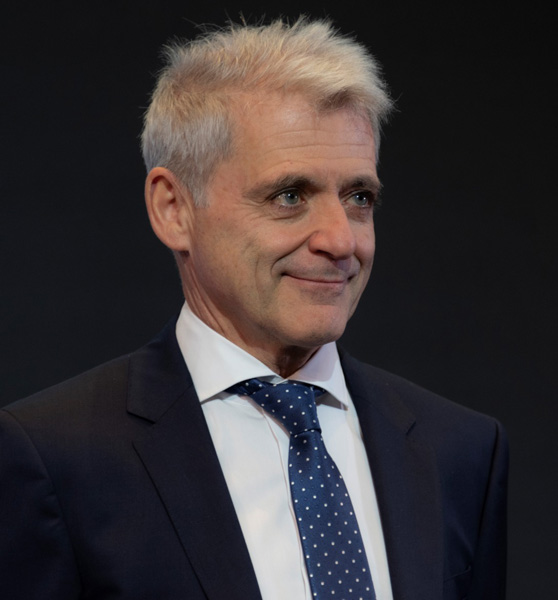
Barney Warf is a Professor of Geography & Atmospheric Sciences at The University of Kansas. His research spans globalization dynamics, social theory intersections, and economic geography with a focus on telecommunications, political geographies, and digital governance. He explores topics like cyber geography (digital divides, internet censorship), spatial aspects of voting systems, and global corruption patterns. His work bridges Marxist political economy and phenomenological theories, emphasizing theoretical pluralism. Research: Cyber governance, urban agglomeration theories, religious diversity geographies Teaching: Globalization, economic geography, social theory Key regions studied: Global comparative analysis with deep engagement in Latin America and Asia Warf's empirical studies include analyses of global city networks (New York's role), telecommunication infrastructure competition (satellite vs fiber optics), and the geographies of cannabis. He critiques neoliberal governance through pandemic responses and critiques technological biases in satellite imagery. Publications span over 20 years including influential books like Global Geographies of the Internet (2012) and Time-Space Compression (2008). His work regularly appears in Annals of the AAG , Urban Geography , and Geographical Review .
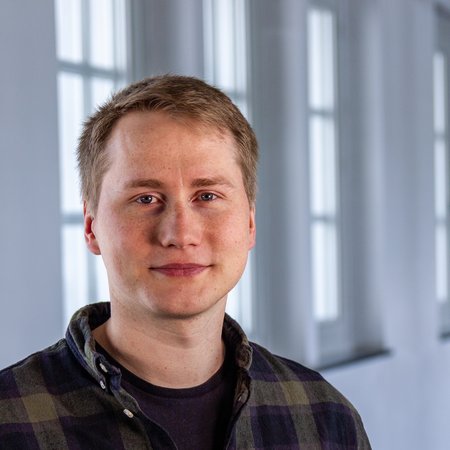
Dr. Uwe Grünefeld is a Visiting Professor at the Faculty of Computer Science , Institute for Computer Science and Business Information Systems (ICB) of the University of Duisburg-Essen. He has been actively contributing to Human-Computer Interaction research through multiple publications in 2025-2022 focusing on Virtual Reality , Augmented Reality , and Robotics . Research Interests span across immersive technology applications for health behavior change (situated artifacts, weight visualization mirrors), haptic feedback systems (EMS for weight perception, vibrotactile directional cues), and behavioral biometrics (hand tracking identification, gaze-based user recognition). His work addresses cross-reality system design , collaborative robotics , and human-in-the-loop simulation methodologies . Key Publications demonstrate significant contributions to VR/AR user engagement, with particular focus on Physical activity promotion through situated artifacts Advanced haptic feedback techniques for immersive environments Behavioral biometric identification systems Robot motion intent communication Cross-reality transition visualization His research often employs mixed-method approaches combining technical implementations with user studies involving quantitative and qualitative data collection.
Guanghan Meng is an Assistant Professor at the University of California, Berkeley , with dual appointments in the Herbert Wertheim School of Optometry and Vision Science and the Department of Electrical Engineering and Computer Science (EECS) . He leads the Visionary Optical Imaging Lab (VOILA) , focusing on interdisciplinary research combining optical physics and computational science to develop advanced microscopy technologies for eye and brain imaging. Education : PhD (2021, UC Berkeley), BE (2015, Shanghai Jiao Tong University) PhD Programs Affiliated With : Vision Science, Applied Science & Technology (AS&T), EECS His research integrates optical physics , computational biology , and artificial intelligence to create cutting-edge imaging tools. Recent work includes differentiable wave-optics libraries (Chromatix), super-resolution microscopy techniques, and high-speed neural imaging systems. Publications highlight applications in neuroscience (cerebral circulation, synaptic activity) and biomedical imaging (OCT, two-photon microscopy). VOILA is a highly interdisciplinary team spanning physics , engineering , and biology . In 2025, the lab will welcome 2 PhD students and 1 postdoc, though funding is currently at capacity for new members. Meng is affiliated with the Berkeley Artificial Intelligence Research Lab (BAIR) and Berkeley Center for Computational Imaging (BCCI) .
Professor Tobin J. Marks is the Vladimir N. Ipatieff Professor of Catalytic Chemistry, Professor of Materials Science and Engineering, Professor of Applied Physics, and Professor of Chemical and Biological Engineering at Northwestern University. He also serves as a Distinguished Adjunct Professor at Texas A&M Qatar University and is a Senior Fellow of the Hong Kong Institute for Advanced Study at City University of Hong Kong. Dr. Marks is a member of the US National Academy of Engineering, the US National Academy of Sciences, and a Fellow of the Royal Society of Chemistry, UK. Dr. Marks received his BSc in Chemistry from the University of Maryland in 1966 and his PhD in Inorganic Chemistry from MIT in 1970. His academic career at Northwestern began as an Assistant Professor of Chemistry in 1970, progressing to Associate Professor in 1974, Professor of Chemistry in 1978, Charles E. & Emma H. Morrison Professor of Chemistry from 1986-1999, Vladimir N. Ipatieff Professor of Catalytic Chemistry since 1999, Professor of Materials Science and Engineering since 1987, Professor of Applied Physics since 2009, and Professor of Chemical and Biological Engineering since 2017. Professor Marks' research spans numerous areas of chemistry and materials science. His work focuses on transition metal and f element organometallic chemistry, catalysis, vibrational spectroscopy, synthetic facsimiles of metalloprotein active sites, carcinostatic metal complexes, solid state chemistry and low-dimensional molecular metals, nonlinear optical materials, polymer chemistry, tetrahydroborate coordination chemistry, macrocycle coordination chemistry, molecular electro-optics, metal-organic chemical vapor deposition, polymerization catalysis, printed flexible electronics, solar energy, and transparent conductors. His research group consists of nearly 40 researchers working across four laboratories. Analysis of Professor Marks' recent publications reveals a strong focus on advanced materials for electronic and energy applications. His work spans organic electronics, flexible and stretchable devices, catalysis for sustainable chemistry, and novel materials characterization techniques. Key trends include the development of organic electrochemical transistors, high-efficiency organic solar cells, advanced catalysts for polymer recycling, and quantum materials for next-generation electronics. Professor Marks has received numerous prestigious awards throughout his career, including: US National Medal of Science American Chemical Society Joseph Priestley Medal Camille and Henry Dreyfus Prize in the Chemical Sciences Principe de Asturias Prize for Technical and Scientific Research US National Academy of Sciences Award in the Chemical Sciences Materials Research Society Von Hippel Award Harvey Prize in Science and Technology Karl Ziegler Prize from the German Chemical Society Professor Marks has mentored numerous students and postdoctoral researchers throughout his career, with his group currently consisting of nearly 40 researchers. He has received substantial research funding from multiple agencies including NSF, DOE, and DoD. His entrepreneurial spirit has led to the founding or co-founding of 15 startups, with technologies generating an estimated USD 100 billion in sales. Professor Marks leads several research teams focused on catalysis and organic electronic materials. His work has significant implications for sustainable chemistry, renewable energy, and next-generation electronic devices. He continues to be highly active in research, with numerous publications in 2025 demonstrating his ongoing scientific leadership.
Hui Luan Tran is a Junior Professor (Assistant Professor) at the Institute of Art History and Musicology, Department of Art History, at Johannes Gutenberg University Mainz since May 2022. Previously, they served as Research Assistant at the University of Bonn (2020-2022), Central Institute for Art History Munich (2019-2022), and Ludwig Maximilian University of Munich (2014-2016). Holding a PhD in Art History from LMU Munich (2018), their dissertation focused on 'Pre-Ideological Dying: The Death of Cleopatra as a Motif in Image Theory' under Prof. Dr. Ulrich Pfisterer. Their research explores early modern art theory, visual arts (Italy 16th-17th centuries, France 17th-18th centuries), image theory, ecological and economic dimensions of artistic creation, and the history of optics and visual perception. They are co-leader of the working group 'Ecology of Premodern Art' and involved in research networks like the Postdoc Forum for French Studies. Publications include a monograph on Cleopatra's death motif (2020), chapters on military art, Aby Warburg's education, and interdisciplinary studies in journals like Zeitschrift für Kunstgeschichte. Their work bridges art history, historiography, and scientific visualization. Current projects examine printing press logos at the Gutenberg Museum, funded by Tavolozza-Stiftung and Ernst von Siemens Kunststiftung. Scientific Awards: DAAD-funded Research Stay (Florence, 2017-2018) Postdoc Fellowship at Central Institute for Art History Munich (2018-2020) Gielen-Leyendecker-Stiftung Funding for Warburg Research Grants: Gefördert u.a. von der Tavolozza-Stiftung und der Ernst von Siemens Kunststiftung
Mark Bo Jensen is an Assistant Professor (tenure track) at the Department of Engineering Technology and Didactics, Technical University of Denmark (DTU), specializing in Energy Technology and Computer Science. His research is centered on Perception Engineering and Extended Reality technologies, particularly Virtual Reality (VR), with applications in human cognition, computer graphics, and scientific visualization. His research interests lie at the intersection of engineering and cognitive sciences, focusing on creating immersive and convincing extended reality experiences. Jensen applies his over 10 years of expertise in real-time computer graphics to advance VR systems for perception modeling, geometric data visualization, and material appearance simulation. His work contributes to fields such as medical diagnostics, 3D annotation, and photorealistic rendering. The recent publications highlight a strong trend in leveraging VR for scientific tasks, such as anatomical landmark annotation and visual field testing, as well as advancing core graphics techniques like meshlet optimization and diffusion-based stereo image generation. His research integrates computer vision, graphics algorithms, and human-centered design. While no scientific awards are currently listed, his active participation in research projects and consistent publication output indicate a growing academic profile. He has contributed to interdisciplinary collaborations involving medical, biological, and engineering domains. Jensen has been involved in advising and research projects, including serving as a PhD student in the 'Virtual Reality-Based Visualization of Geometric Data' project and currently as a project participant in 'AL-EYE: The Visual Aid'. These projects reflect his focus on applied VR solutions and data understanding. His work is conducted within the Energy Technology and Computer Science division at DTU, where he contributes to advancing perception-driven technologies and their practical implementation in scientific and medical contexts.
Christian Desrosiers is a Research Professor at the Department of Software Engineering and IT, École de technologie supérieure (ÉTS), with a Ph.D. from Polytechnique Montréal. His research focuses on data mining, machine learning, and computer vision, particularly in medical imaging and optical network analysis. Research Units: Zebra Research Chair in Computer Vision for Industrial Applications, LIVE – Interventional Imaging Laboratory, LIVIA – Imaging, Vision and Artificial Intelligence Laboratory Research Axes: Intelligent and autonomous systems, Health technologies His expertise spans medical image analysis, domain adaptation, and computer vision. Recent publications highlight advancements in 3D point cloud learning, MRI harmonization, domain generalization, and real-time segmentation networks. Scientific awards include the prestigious Zebra Research Chair. He has co-supervised over 30 graduate students in topics ranging from optical network diagnostics to brain imaging and machine learning applications.
Xin Li is a Professor in the Department of Electrical and Computer Engineering at Duke University and serves as the Associate Vice Chancellor at Duke Kunshan University. He holds a Ph.D. from Carnegie Mellon University (2005) and has held leadership roles in research consortia like the FCRP Focus Research Center and the Center for Silicon System Implementation (CSSI). His research bridges integrated circuits , machine learning , and cyber-physical systems , with applications in autonomous driving, battery lifetime prediction, and smart buildings. Education : Ph.D., Carnegie Mellon University (2005); M.S., Fudan University (2001); B.S., Fudan University (1998) His work emphasizes robust design methodologies for analog/RF circuits, data-driven predictive modeling , and Bayesian inference for high-dimensional variation spaces. Recent publications focus on generative adversarial networks for circuit design, multi-view imputation for incomplete data, and knowledge-driven autonomous systems . He has received numerous accolades, including the NSF CAREER Award (2012) , IEEE Donald O. Pederson Best Paper Awards (2013, 2016) , and IEEE Fellow (2017) . He has served as Editor for journals like IEEE Transactions on Biomedical Engineering and as Chair for conferences including ISVLSI and CAD/Graphics.
Raymond H. Cuijpers is an Associate Professor at Eindhoven University of Technology in the Human Technology Interaction group. His research focuses on Cognitive Robotics , Human-Robot Interaction , and Artificial Intelligence for cognitive agents, with applications in healthcare robotics and aging population support. PhD in Physics of Man from Utrecht University (2000) Postdoctoral research at Erasmus MC Rotterdam and Radboud University Nijmegen Key research areas include: Developing socially intelligent robots with proper social cue interpretation Hybrid AI approaches for real-world complexity handling Visual-haptic perception integration in human motor control Service robots for COPD patient assistance (KSERA project) Rescue robotics and tele-operation applications Recent research output (2025) includes studies on: Personalization in human-robot communication Optimal lighting for elderly visual perception Human-robot bonding mechanisms Interactive sensorized platforms for homecare (GUARDIAN) Audiovisual temporal integration in virtual environments He coordinates large-scale European projects like GUARDIAN and previously KSERA, contributes to sustainable development goals through healthcare robotics, and serves on editorial boards of leading journals including International Journal of Social Robotics . His work spans both technical robotics development and human-centric interaction studies.
Jeyeon Jo is an Assistant Professor in the Department of Textiles, Merchandising and Interiors at the University of Georgia's College of Family and Consumer Sciences. Her research focuses on wearable sensors, assistive technology, and ergonomic design, with an emphasis on sustainable materials and healthcare applications. She holds a Ph.D. in Human Centered Design from Cornell University (2023), an M.S. in Fashion Design (2017), and a B.S. in Clothing and Textiles (2014), both from Seoul National University. **Education:** Ph.D. Human Centered Design, Cornell University (2023) M.S. Fashion Design, Seoul National University (2017) B.S. Clothing and Textiles, Seoul National University (2014) **Research Interests:** Jeyeon develops wearable healthcare solutions using stretchable fiber optics and passive RFID, with a focus on optimizing user comfort and performance. Her work spans assistive technologies, firefighting gear ergonomics, and cross-cultural studies of clothing's sociocultural role. Recent projects include sustainable textile prototyping (LeatherBoard) and gait-monitoring systems (RFInsole). **Awards:** Human Service Studies Graduate Fellowship (Cornell, 2022) Best Brief at ISWC 2021 (2021) Roberta G. & John B. De Vries Graduate Award (Cornell, 2020) **Grants & Advising:** Currently no grants explicitly listed; actively advising students in wearable tech and textile engineering. Editorial roles include Fashion and Textiles (2024–present) and Korean Fashion & Textile Research Journal (2025–2026).
Jean Ponce is a Professor of Computer Science at Ecole Normale Superieure (ENS) in Paris and a Part-Time Global Distinguished Professor at New York University's Courant Institute of Mathematical Sciences and Center for Data Science (CDS). He previously served as Director of the ENS Computer Science Department (2011-2017) and held positions at Inria (2017-2022), University of Illinois at Urbana-Champaign (1998-2006), MIT, Stanford, and Inria (1982-1985). Academic Leadership: Scientific Director of PRAIRIE Interdisciplinary AI Research Institute in Paris Startup Involvement: Co-founder and CEO of Enhance Lab (2022) Editorial Roles: Senior Editor-in-Chief of International Journal of Computer Vision (2019-2022) Conference Leadership: Chair of IEEE CVPR (1997,2000), ECCV (2008), and upcoming ICCV (2023) Research Focus: Computer vision, machine learning, robotics, and AI with applications in exoplanet imaging, 3D reconstruction, and image quality assessment. His work bridges statistical learning and deep learning approaches. Awards: IEEE Fellow (2003) ELLIS Fellow (2019) ERC Advanced Grant (2011) IEEE CVPR Longuet-Higgins Prizes (2016,2020) ICML Test-of-Time Award (2019) Patents & Publications: Co-author of influential textbook Computer Vision: A Modern Approach (translated into Chinese, Japanese, Russian). Holds two US patents and one pending French patent. Google Scholar h-index of 78 with over 55,000 citations.
Prof. Margret Keuper is a Professor in the Department of Computer Vision and Machine Learning at the Max Planck Institute for Informatics. Her research focuses on advancing machine learning and computer vision techniques, with an emphasis on model fairness, adversarial robustness, and multimodal interactions. She leads interdisciplinary projects exploring topics such as dataset analysis, generative models, and climate action through visual narrative analysis. Research Interests: Her work bridges theoretical foundations and practical applications in domains like adversarial training, image classification robustness, and robotics perception. She explores how vision-language models can be steered to align with human biases and develops methods for data-efficient learning and interpretability. Recent Contributions: Recent work includes FAIR-TAT (model fairness via adversarial training), VSTAR (video synthesis), and TikZero (zero-shot graphics program generation). Her publications in top venues like CVPR, ICCV, and ICLR highlight contributions to both methodological innovation and real-world impact. Collaborations: Works closely with researchers across Max Planck and academic partners, focusing on projects such as sensor layout optimization, climate discourse analysis via social media imagery, and domain-aware foundation model fine-tuning.
Professor Tunde Peto is a Clinical Professor at Queen’s University Belfast, affiliated with the Centre for Public Health within the School of Medicine, Dentistry and Biomedical Sciences (MDBS). She leads the Belfast Ophthalmic Image Reading Centre and oversees the Northern Irish Diabetic Retinopathy Screening Programme. Her research focuses on blinding retinal diseases, diabetic retinopathy imaging, and global ophthalmic health initiatives. Peto has pioneered screening programs and trained clinicians worldwide, contributing to 528+ publications across 25+ years of research. She has secured £2M+ in grants, including EU-funded EYE-RISK projects. Notable awards include the Eva Kohner Award for vision research and recognition in the EVI TOP LIST of European women in ophthalmology. Education & Background: Trained in Hungary and Australia, with 15 years at Moorfields Eye Hospital in London before joining Queen’s University in Belfast. Research Interests: Diabetic retinopathy characterization, age-related macular degeneration, neurodegenerative retinal links (e.g., Alzheimer’s), and telemedicine applications in eye care. Key projects include TIGER (submacular hemorrhage treatment trials), MACUSTAR (quality-of-life metrics), and the Belfast Reading Centre’s image analysis infrastructure. Awards & Recognition: 19th Healthcare Awards NI (2018), Belfast Ambassador Recognition (2019), EVI TOP LIST (2021), and international leadership in diabetic eye disease initiatives. Grants & Funding: Led projects like EYE-RISK (€6.5M EU grant) and the ARIS Study, focusing on AMD treatment and genetic risk factors.
Dr. Babar Jamil is a Lecturer in Electrical Engineering at the University of York's School of Physics, Engineering and Technology. His expertise spans robotics, sensors, control engineering, and mechanism design. He holds a Ph.D. from Hanyang University (South Korea) and conducted postdoctoral research at Sungkyunkwan University, where he also served as a Research Professor. His current research focuses on safe human-robot collaboration systems, novel control algorithms for robotic systems, and smart structures through sensor integration. Education: Ph.D. in Electrical and Electronic Engineering, Hanyang University, South Korea Postdoctoral Researcher, Sungkyunkwan University, South Korea Research Interests: Developing hybrid robotic manipulators combining soft and rigid actuation Designing proprioceptive sensors for extreme environments Advances in pneumatic artificial muscles and soft actuators Integration of machine learning in robotics control systems Publications: Recent work emphasizes soft robotics actuators, sensor design, and human-robot interface innovations. Key themes include energy-efficient actuation, sensorized robotic fingers, and pumpless pneumatic systems. Labs/Teams: Leads robotics research at York, focusing on collaborative robotics and sensor-actuator integration. Maintains an active research group through his UoY Robotics website .
Wendy Huddleston is an Associate Professor in the Department of Physical Therapy at the University of Wisconsin-Milwaukee. Her research focuses on the cortical mechanisms underlying motor selection during visually guided goal-directed behavior, particularly the interaction between visual attention, motor attention, and cognitive neuroscience. She directs the Visuomotor Lab and serves as a mentor in the Rehabilitation Science and Technology graduate programs. She utilizes functional magnetic resonance imaging (fMRI) and psychophysical testing to study sensory processing for movement preparation. Her funded projects include investigations into individual differences in attentional mapping, cross-modal attention mechanisms, and the neurophysiological basis of movement variability. Collaborations extend to the Medical College of Wisconsin and the Center for Imaging Research. Huddleston's professional affiliations include the American Physical Therapy Association, Society for Neuroscience, Center for Imaging Research (MCW), and the Evidence-Based Practice Institute. Her work bridges rehabilitation science, biomechanics, and cognitive neuroscience to advance understanding of sensorimotor integration.