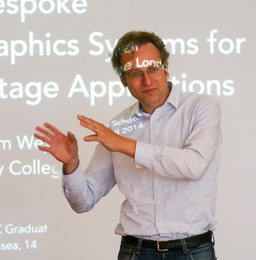
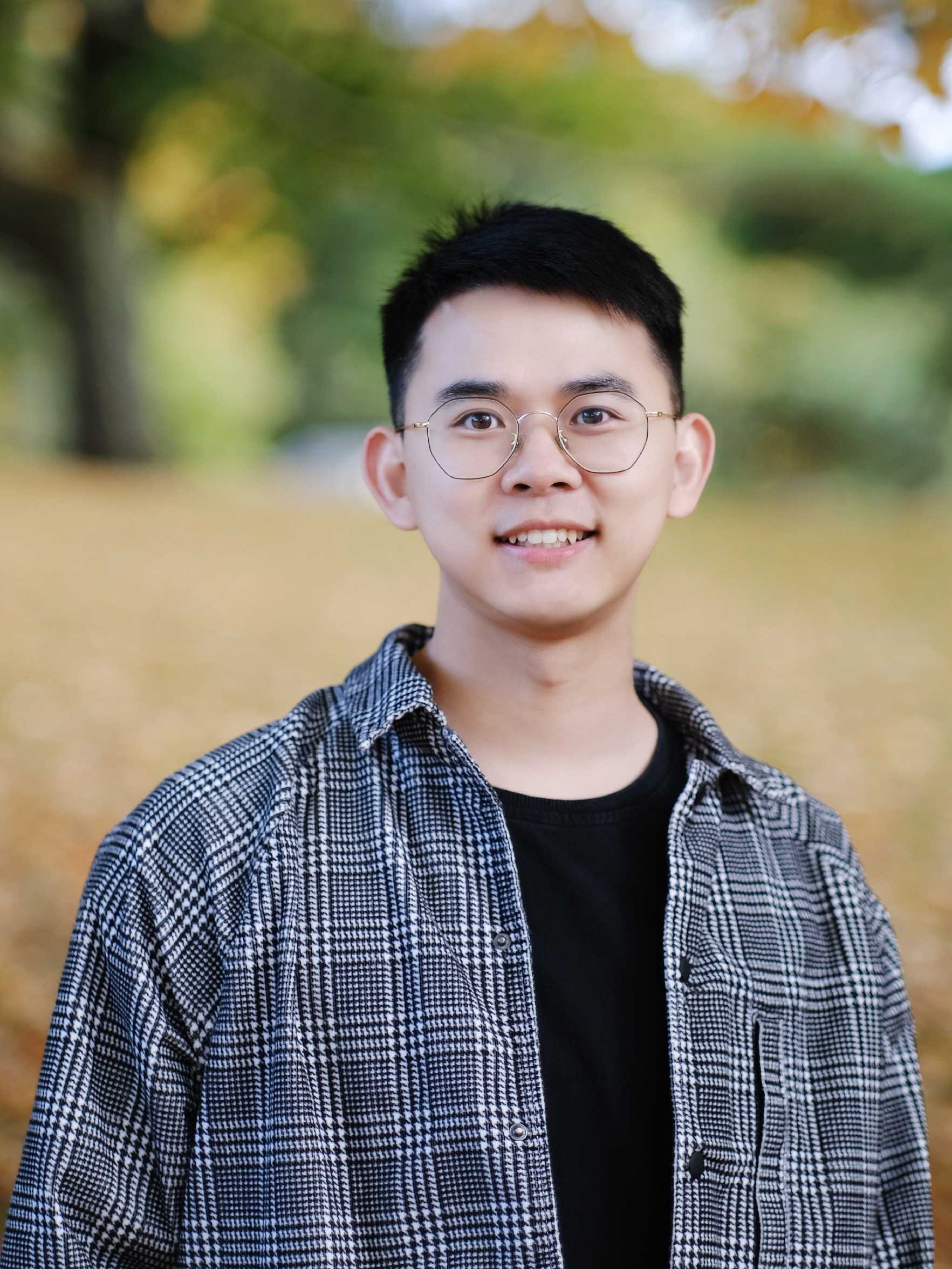
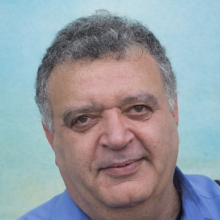
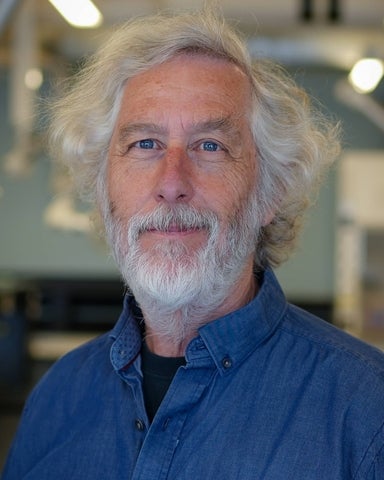
Tim Weyrich is Professor of Visual Computing (part-time) at University College London and Professor of Digital Reality at Friedrich-Alexander University Erlangen-Nürnberg. He leads the Digital Reality Lab and has affiliations with the Virtual Environments and Computer Graphics group at UCL, Eurographics, and the EPSRC Doctoral Training Centre (SEAHA). Previously, he held a Postdoctoral Teaching Fellowship at Princeton University. Research Interests: Content creation and computational photography Appearance modeling and fabrication Point-based graphics and cultural heritage analysis Digital humanities and 3D printing Article Trends: Recent work focuses on neural radiance fields (FruitNeRF++), 3D Gaussian splatting, mmWave radar inverse rendering, and texture anomaly detection. Applications span autonomous systems, cultural heritage, and medical imaging. Scientific Awards: Best Paper Honourable Mention (BMVC 2022) Best Student Paper Award (EG Workshop on GCH 2014) Honorable Mention (Eurographics 2011) Best Student Paper Honourable Mention (BMVC 2018) ACM SIGCHI Best Paper Honourable Mention (CHI 2013)
Prof. Jay Guo is a Distinguished Professor and Founding Director of the Global Big Data Technologies Centre at the University of Technology Sydney (UTS). He also leads the New South Wales Connectivity Innovation Network (CIN) and the TPG-UTS Network Sensing Lab. With over 700 publications, 350+ IEEE journal papers, and 27 patents, his work focuses on 5G/6G antennas, integrated sensing and communications (ISAC), and environmental sensing using 5G/6G networks. Research Interests: 5G/6G Antenna Systems (reconfigurable arrays, multibeam antennas) In-Band Full-Duplex Wireless Systems Integrated Sensing and Communications (ISAC) Environmental Sensing via Network Infrastructure Awards & Recognition: IEEE Schelkunoff Prize Paper Award (2023) Fellowships: IEEE, Australian Academy of Engineering, Royal Society of NSW Australia Engineering Excellence Award (2007) Australia's Top Researcher in Electromagnetics (2020-2023) Highly Ranked Scholar (top 0.05% globally) Grants & Projects: NSW Government-funded environmental sensing projects Industry collaborations with TPG Telecom, Telstra, and CSIRO Leadership in global antenna conferences (e.g., IEEE APS, ISAP) Labs & Initiatives: Global Big Data Technologies Centre TPG-UTS Network Sensing Lab NSW CIN (Connectivity Innovation Network)
John Powers is an Assistant Professor in the Department of Film and Media Studies at Washington University in St. Louis, where he researches the aesthetic, cultural, and technological histories of experimental film and video. His book Technology and the Making of Experimental Film Culture (Oxford University Press, 2023) analyzes Bolex cameras, film stock, and DIY techniques in avant-garde cinema. Powers teaches diverse courses including American cinema history, experimental film theory/practice, documentary studies, horror genres, and film historiography. He holds a Ph.D. in Film Studies from the University of Wisconsin-Madison. His research explores experimental media technologies through archival materials and filmmaker interviews, connecting avant-garde aesthetics with broader media ecologies. Upcoming work centers on Stan Brakhage's influence in 20th-century American art.
Thad Starner is a Professor in the College of Computing at Georgia Institute of Technology and Technical Lead/Manager on Google's Glass. He directs the Contextual Computing Group (CCG), co-founded the Animal Computer Interaction Lab, and contributes to Georgia Tech's Ubicomp Group and Brainlab. A wearable computing pioneer since 1993, he has over 500 publications and 80 issued U.S. patents. Coined 'augmented reality' in 1990 Developed CopyCat for ASL learning in deaf children Invented Passive Haptic Learning for skill acquisition His research spans wearable interfaces for Deaf-hearing communication, dolphin interaction systems (CHAT), dog-handler communication (FIDO), and brain-computer interfaces for ALS patients. Current projects focus on optical aging simulation, XR input methods, and animal behavior telemetry. Recent publications (2023-2025) explore AR display ergonomics, AI-augmented reasoning, sign language recognition, and animal-computer interaction. His work has been featured in 60 Minutes, BBC, National Geographic, and Time Magazine. CHI Academy (2017) Lemelson-MIT Prize finalist White House Champions of Change finalist He advises graduate students in wearable systems and teaches AI and prototyping courses. His lab developed the Perceptive Workbench for gesture tracking and created early Eigenfaces research for face recognition.
Max Hattler is a media artist and Associate Professor at the School of Creative Media , City University of Hong Kong . He previously held Lecturer positions at Goldsmiths, University of London (2006-2014) and the Royal College of Art (2012-2014). His work explores intersections of abstraction/figuration , sound/image relationships , and creative media through experimental animation and audiovisual performance. Current Research Focus: Abstracted moving images as frameworks for rethinking power relations Recent Curatorial Work: Relentless Melt series (2021-2025) showcasing Hong Kong experimental animation Key Publications Trends : Recent articles examine stereoscopic innovation , graphical sound techniques , and abstract animation semiotics . His curatorial research in Hong Kong digital art and VR animation demonstrates technical and theoretical contributions. Major Awards : Cannes Lions (2013) Visual Music Awards (2010, 2011, 2014) CityU Teaching Excellence Award (2021-22) President's Award (2022) for research contributions Best Experimental Film at Reanima Festival (2017) International Presence : Regularly participates in Ars Electronica , Animafest Zagreb , and Society for Animation Studies conferences. Has conducted workshops at CalArts , Geneva University of Art and Design , and Floating Projects Hong Kong .
Prof. Dr. Uli Lemmer is a Professor at the Department of Electrical Engineering and Information Technology (ETIT) at the Karlsruhe Institute of Technology (KIT). His research focuses on optoelectronics, thermoelectric materials, and printed electronics, with a strong emphasis on energy harvesting, nanotechnology, and photonics. He leads the Lichttechnisches Institut (LTI) and is affiliated with the Institute of Applied Physics. His work spans innovations in laser systems, flexible electronics, and bio-inspired materials. Office: Building 30.34, Room 223; Phone: +49 721 608-42530; Email: uli.lemmer@kit.edu. Research interests include the development of advanced materials for solar cells, thermoelectric generators, and sensor technologies. He pioneers methods like aerosol-jet printing and inkjet printing for scalable production of electronic devices. His group explores biomimetic structures (e.g., snake scale nanopores) and terahertz systems, pushing boundaries in both fundamental science and applied engineering. Recent publications highlight breakthroughs in printed thermoelectric modules, perovskite-based photovoltaics, and high-frequency antennas. His work integrates cutting-edge fabrication techniques with material science to address challenges in renewable energy, sensor networks, and flexible electronics. Prof. Lemmer collaborates internationally on projects like EU-funded energy initiatives and partners with industry for technology transfer. His lab specializes in additive manufacturing, optical systems, and nanoscale device engineering, aiming to bridge the gap between academic research and industrial applications.
Professor Brian Surgenor is a faculty member at Queen's University's Department of Mechanical and Materials Engineering, part of the Smith Engineering faculty. He holds a B.Sc. (1977), M.Eng. (AECL/Whiteshell), and Ph.D. (1983) in Mechanical Engineering from Queen's University. His research focuses on machine vision systems for automation, autonomous vehicle navigation, and mechatronic system design education. He has held key administrative roles including Department Head (1993-2002), Associate Dean (2008-2013), and Vice-Dean (2013-2016). His work emphasizes interdisciplinary innovation, such as the Mitchell Hall design project and contributions to Ingenuity Labs. Education: B.Sc. Mechanical Engineering, Queen's University (1977) M.Eng. Engineering Physics, McMaster University (AECL/Whiteshell) Ph.D. Mechanical Engineering, Queen's University (1983) Research interests include: - Pneumatic servosystems - Intelligent algorithms for machine vision - Off-road autonomous vehicle systems - Mechatronics education methodologies - Hybrid powertrain systems for vehicles His recent publications (2017–2024) explore autonomous systems, machine vision applications, and fuel cell hybrid technologies. Notable trends include advancements in UAV-based infrastructure inspection, terrain-adaptive autonomous driving, and low-cost machine vision solutions for small part sorting. His work bridges theoretical control systems with practical industrial automation challenges. He has contributed to laboratory design for CDIO curricula and pioneered mechatronics education through problem-based learning. His administrative leadership has shaped Queen's engineering graduate programs and research infrastructure. Currently involved in Ingenuity Labs, fostering cross-disciplinary innovation.
Imraan Faruque is an Associate Professor in the Department of Mechanical and Aerospace Engineering at Oklahoma State University (OSU), part of the College of Engineering, Architecture and Technology (CEAT). His research focuses on biologically-inspired flight control systems, engineered autonomy for unmanned aerial vehicles (UAVs), and the integration of sensory feedback mechanisms in autonomous systems. Education: Faruque holds a Ph.D. and M.S. in Aerospace Engineering from the University of Maryland (2011 and 2010) and a B.S. in Aerospace Engineering from Virginia Tech (2006). Research Interests: His work emphasizes bio-inspired solutions for aerial autonomy, including swarm coordination, gust-aware flight control, and human-autonomy interaction. Key areas include unmanned systems design, visual feedback algorithms, and adaptive control strategies derived from insect flight dynamics. Awards: He has received notable accolades such as the ONR Young Investigator Award (2019), AIAA Hal Andrews Young Engineer/Scientist Award (2017), and multiple 'Best in Session' recognitions at major conferences. His team also secured 1st Place in the International Aerial Robotics Championship (2005). Publications: Faruque’s research spans topics like orbital debris management, swarm intelligence, and tornado sensing with UAVs. His work bridges biological principles and engineering, with applications in aerospace, robotics, and environmental monitoring.
Michael Doolan is a Senior Lecturer at Sydney College of the Arts, University of Sydney. He holds a PhD from Monash University (2013), a Master of Arts (2001), and a Bachelor of Arts (1981). His work explores the intersection of memory, narrative, and objects, using ceramics and mixed media to create sculptures that interrogate childhood narratives and their influence on adult identity. Doolan’s installations often feature disorienting optical effects and fairy tale motifs, reinterpreting classic stories through a contemporary lens. Education: PhD, Faculty of Art Design & Architecture, Monash University (2013) Master of Arts, Monash University (2001) Bachelor of Arts, Monash University (1981) Research Interests: Doolan’s practice focuses on the legacy of fairy tales and their unresolved narratives. By combining handcrafted techniques with digital fabrication, his sculptures critique cultural narratives and materiality. His work often features uncanny, monochromatic ceramic forms that evoke childhood memories while questioning adult perceptions of selfhood. Exhibitions & Awards: Recent highlights include the Deakin University Small Sculpture Award 2024 , participation in the Korean International Ceramics Biennale 2019 , and solo exhibitions such as Stories with Endings Changed (2018) and World without World (2017). His work is featured in major public and private collections internationally. Associations: Member, Australian Network for Art & Technology (ANAT) Member, International Society for the Arts, Sciences and Technology (Leonardo) Current Projects: Researching new sculptural works that blend handcrafting with digital fabrication to reflect contemporary entanglements between human and machine processes.
Dr. Omar Rifaie Graham is a Lecturer (Assistant Professor) in Chemistry at Queen Mary University of London's School of Physical and Chemical Sciences, joining in September 2023. He leads a research group focused on polymer-based artificial cells to study physicochemical parameters underlying biological phenomena and develop technologies at the Living/Non-Living Interface. Previously, he held postdoctoral positions at Imperial College London and the University of Fribourg, Switzerland. Education: Licenciado in Pharmacy (BSc+MSc), Universidad Complutense de Madrid, Spain (2008–2014) PhD in Chemistry, Adolphe Merkle Institute – University of Fribourg, Switzerland (2014–2018) Research Interests: Development of artificial cells using polymer nanocontainers, stimuli-responsive materials (light, hydromechanical stress), and applications in biotechnology, therapy, and diagnostics. His work includes creating polymersomes with novel functionalities for drug delivery, diagnostics, and synthetic biology. Key Achievements: ACS PMSE Future Faculty Award (2023) Swiss Nanoscience Institute 'Best paper in nanoscience' (2021) Best PhD thesis in Experimental Sciences, University of Fribourg (2019) Co-founded a diagnostics company spun from his PhD research (1M+ USD funding) Grants & Collaborations: Royal Society Grant: £29,907 (2025–2026) National Institute for Health Research Grant: £315,942 (2020–2025) RSC Grant for 'Mimicking colour perception with artificial cells' (2024) Lab/Team: Directs a research group at Queen Mary's Department of Chemistry, collaborating with institutions like Imperial College London and the University of Fribourg. Active in synthetic biology, nanomedicine, and biomimetic materials.
Prof. Anna Franklin is a Professor of Visual Perception and Cognition at the University of Sussex's School of Psychology. She leads the Sussex Colour Group and Sussex Baby Lab , focusing on human color perception, development, and neural representation. Her research combines cognitive psychology, developmental science, and neuroscience to explore how color perception develops, influences aesthetics, and relates to conditions like autism. Key projects include ERC-funded initiatives studying environmental impact on color perception and developing the ColourSpot diagnostic app for childhood color vision deficiency. She also serves as Deputy Director of Research and Knowledge Exchange for the School of Psychology. Education includes a BA from the University of Nottingham and a PhD from the University of Surrey, followed by a postdoctoral fellowship. Her work spans 107+ publications, emphasizing interdisciplinary methods like hyperspectral imaging and fMRI. Collaborations include industry partnerships with ETTA LOVES and COSATTO to apply infant visual preference research in product design. Research grants include European Research Council awards (Starting Grant 2012-2017, Consolidator Grant 2018-2025) and a Proof of Concept grant for ColourSpot . Her labs investigate cross-cultural color categorization, infant aesthetics, and neural correlates of color processing. Future work focuses on calibrating visual systems to environmental statistics and improving early childhood color vision screening.
Qijia Shao is an Assistant Professor at The Hong Kong University of Science and Technology (HKUST), specializing in Mobile Computing, Human-Computer Interaction (HCI), and Ubiquitous Computing. He earned his Ph.D. in Computer Science from Columbia University (2024), advised by Prof. Xia Zhou and Prof. Fred Jiang, with prior degrees from Dartmouth College (M.Sc.) and UESTC (B.Sc.). His research focuses on developing unobtrusive systems for human physical/physiological signal sensing, integrating machine learning, signal processing, and hardware design to address societal challenges in healthcare, education, and human-computer interaction. Educational Background: Ph.D., Computer Science, Columbia University (2024) M.Sc., Dartmouth College B.Sc., UESTC Visiting Student, National Chiao Tung University (EECS) Research Assistant, Missouri S&T Research Interests: Deployable systems for human state analysis via physical/physiological signals (e.g., ECG, movement) Generalizable AI algorithms for low-overhead data interpretation Hardware-software co-design for imperceptible sensing Applications in healthcare (e.g., Kangaroo Mother Care monitoring), education, and consumer electronics Awards & Recognition: MobiSys 2024 Best Paper and Demo Awards NSF Funding & Rising Stars Honors ACM UbiComp Gaetano Borriello Award Finalist Editorial Board Member (ACM IMWUT, since 2024) Lab & Collaborations: Director of the Ubiquitous X Lab at HKUST Industry partnerships with Samsung, Snap, and Philips Research International conference TPC roles (MobiSys, SenSys) and keynote speaking engagements
Amir Shmuel is a Professor at McGill University's Faculty of Medicine, holding appointments in the Department of Neurology and Neurosurgery, Department of Biomedical Engineering, and Department of Physiology. He serves as Director of the Brain Imaging Signals Lab and Core Faculty at the McConnell Brain Imaging Centre of the Montreal Neurological Institute. His leadership includes chairing the 2018 International Society for Brain Connectivity conference and securing an $18.7M Canada Foundation for Innovation grant for Quebec's first large-bore 7 Tesla MRI scanner. Dr. Shmuel's research focuses on understanding neuronal mechanisms underlying functional brain imaging signals and visual information processing. His integrative approach combines fMRI, optical imaging, multi-channel neurophysiological recordings, and optogenetics across multiple spatial and temporal scales. Current research priorities include resting-state functional connectivity mechanisms, cortical lamina-resolved neurophysiology, and computational modeling of brain signals. His lab emphasizes parallel model development with experimental data acquisition. Recent publications demonstrate strong trends in multimodal neuroimaging integration, with emphasis on high-resolution fMRI techniques (especially 7T applications), resting-state connectivity analysis across species, and computational modeling of neurovascular coupling. Key subfields include laminar-specific activity mapping, artifact detection in medical imaging using deep learning, and cross-species functional connectivity frameworks. Dr. Shmuel's research is currently funded by the Canadian Institutes of Health Research (CIHR), Natural Sciences and Engineering Research Council of Canada (NSERC), and the US Department of Defense. His lab maintains active collaborations through initiatives like the International Society for Brain Connectivity and the PRIME-DE database consortium. Operating within the Brain Imaging Signals Lab at the Montreal Neurological Institute, Shmuel's team develops and applies advanced multimodal techniques including simultaneous fMRI-electrophysiology, voltage-sensitive dye imaging, and computational modeling frameworks. The lab maintains strong ties with the McConnell Brain Imaging Centre and participates in major open-science initiatives including the Tanenbaum Open Science Institute.
David Cory is a Professor and Canada Excellence Research Chair Laureate in Quantum Information Processing at the University of Waterloo's Department of Chemistry. He is affiliated with the Institute for Quantum Computing and the Waterloo Institute for Nanotechnology. His research focuses on quantum information science, neutron interferometry, structured light applications, and spin systems. Cory's work bridges quantum physics, materials science, and biomedical imaging, with contributions to quantum control, entanglement, and advanced neutron beam technologies. He has pioneered methods for generating structured neutrons and developing quantum measurement devices, including phase grating neutron interferometers. Scientifically, Cory has advanced quantum simulations of mesoscopic systems, explored thermal state structures in quantum models, and applied structured light for biomedical diagnostics. His recent articles highlight innovations in neutron Airy beam generation, robust micro-macro entanglement, and psychophysical studies of light perception. Awards include the Canada Excellence Research Chair, recognizing his leadership in quantum technologies. Awards: Canada Excellence Research Chair Laureate in Quantum Information Processing Labs/Teams: Institute for Quantum Computing, Waterloo Institute for Nanotechnology
Zhu-Tian Chen is an Assistant Professor in the Department of Computer Science and Engineering at the University of Minnesota, Twin Cities, where he leads research in data visualization, human-computer interaction, and augmented reality. Prior to this, he held postdoctoral positions at Harvard University and UC San Diego, working with leading researchers in visual computing and interactive design. Ph.D. in Computer Science, Hong Kong University of Science and Technology B.Eng. in Software Engineering, South China University of Technology His research focuses on augmenting human intelligence through hybrid human-AI systems, particularly in everyday and outdoor environments. He specializes in designing intelligent AR interfaces, embedded visualizations, and language-oriented interactions for applications in sports analytics, education, and data analysis. His work integrates human-centered design with applied machine learning to create intuitive and effective visualization tools. The recent trend in his publications shows a strong emphasis on intelligent AR systems for dynamic scenes, LLM-based code generation interfaces, and real-time augmentation of sports videos using natural language and gaze-based interactions. His work frequently appears in top-tier venues such as IEEE VIS, ACM CHI, and UIST. Best Paper Award, ACM CHI'23 Best Short Paper Honorable Mention, EuroVis'23 Best Paper Honorable Mention, IEEE VIS'22 (twice) Certificate of Distinction and Excellence in Teaching, Harvard University Hong Kong Ph.D. Fellowship Dr. Chen actively mentors undergraduate, master’s, and PhD students, as well as visiting scholars and interns, and is building a new research lab focused on visualization for intelligent AR systems. He has served on program committees for major conferences including ACM CHI, IEEE VIS, and EuroVis, and has been invited to speak at institutions such as Apple, JP Morgan, and multiple universities worldwide. He also contributes to the academic community through grant reviewing for NSF and the Department of Energy. He leads research projects in intelligent AR systems for sports, language-oriented interactions with LLMs, and immersive data visualization, often in collaboration with institutions like Harvard, UC San Diego, and HKUST. His lab welcomes students and collaborators interested in visualization, HCI, and applied AI.