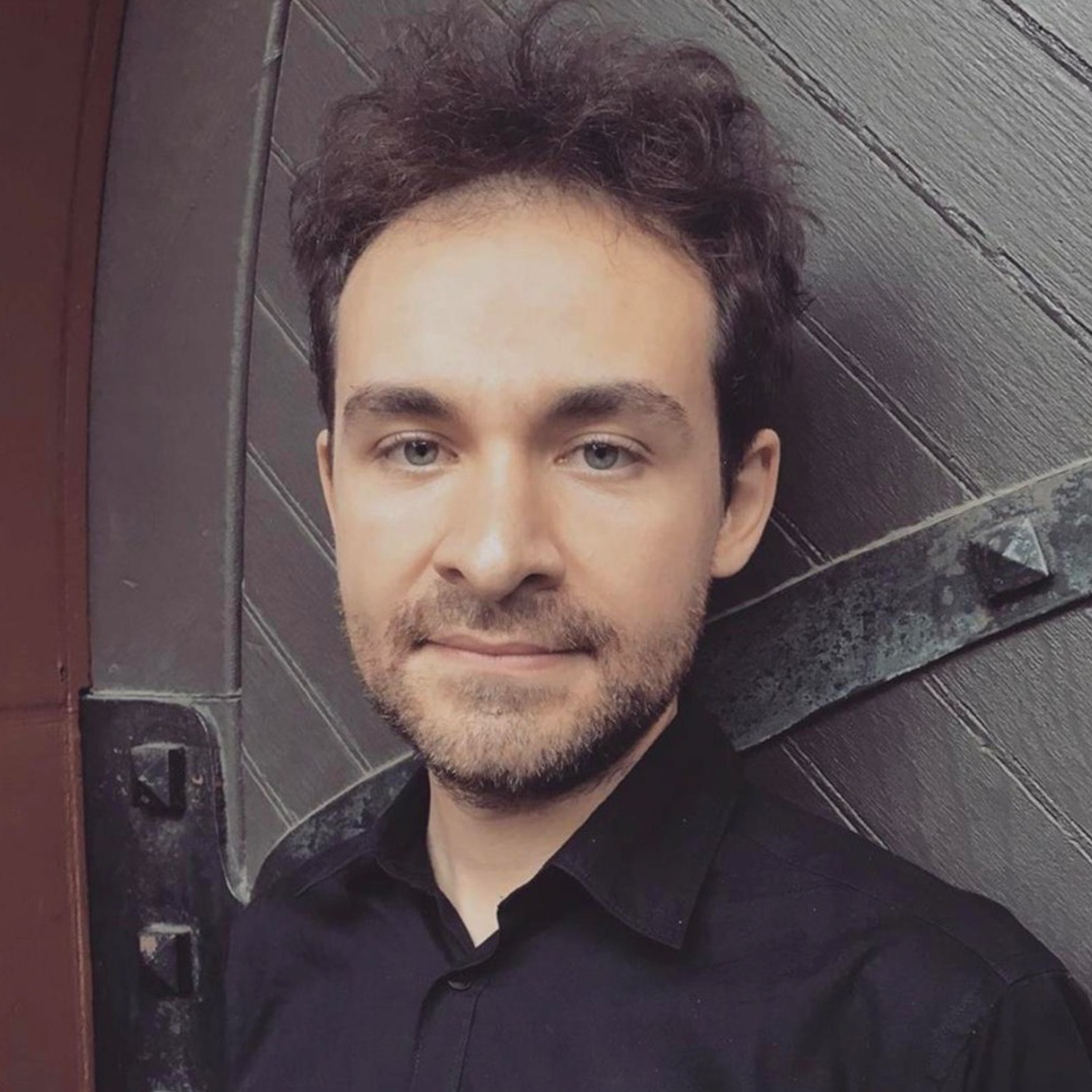
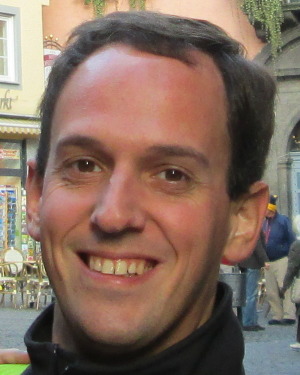
Edoardo Baldini is an Assistant Professor of Physics at the University of Texas at Austin, affiliated with the College of Natural Sciences. His research focuses on discovering and controlling emergent quantum phases in materials using ultrafast laser spectroscopy and advanced experimental techniques. Key affiliations include the Center for Complex Quantum Systems, Texas Quantum Institute, and Texas Materials Institute. Education: PhD from École Polytechnique Fédérale de Lausanne (2017), Postdoc at MIT (2017-2021). Research interests include quantum materials, ultrafast laser science, light-matter interaction, and multiferroics. His group develops techniques to study collective modes (phonons, magnons, excitons) and engineer novel functionalities via terahertz fields. Recent breakthroughs include manipulating spin waves in antiferromagnets and revealing hidden polar orders in quantum materials. Publications highlight discoveries in multiferroic oscillations, terahertz-driven magnon dynamics, and structural symmetry-breaking mechanisms in Ta₂NiSe₅. Awards include the 2025 Sloan Fellowship and NSF CAREER Award. Grants and recognitions include funding from the U.S. Department of Energy, Army Research Office, and Keck Foundation. His lab actively recruits students and postdocs in experimental condensed matter physics.
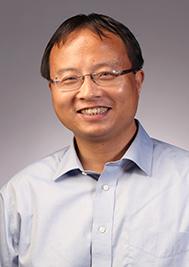
Dr. Jonathan Hu is a Professor in the Department of Electrical and Computer Engineering at Baylor University's School of Engineering and Computer Science. He holds a PhD from the University of Maryland Baltimore County (2008) and completed a postdoctoral fellowship at Princeton University (2009–2011). He is an active researcher in optics and photonics, leading the Photonics Research Laboratory and advising both graduate and undergraduate research assistants. Research Interests: Nanophotonics and metamaterials for photovoltaic and biomedical applications Mid-IR supercontinuum generation using chalcogenide photonic crystal fibers 2D materials such as graphene and their alignment via magnetic fields Coherent optical communication and quantum optical Fredkin gates Numerical simulation of electromagnetic problems and leaky mode analysis His recent publications (2019–2024) demonstrate a strong focus on quantum plasmonics, specialty optical fibers, optofluidics, and nonlinear optical phenomena, with high-impact work in journals like Science Advances , ACS Photonics , and Advanced Materials . The research shows a clear trend toward integrating photonics with 2D materials and quantum systems, with applications in sensing, communication, and materials characterization. Scientific Awards and Recognition: 35 Baylor faculty named among top 2% most cited researchers (2023) Editor’s Pick, Journal of Applied Physics (2018) Top three downloads in OSA journals for three consecutive months (2009) NSF Graduate Research Fellowship (awarded to advisee) Chinese Government Award for Outstanding Self-Financed Students Abroad (awarded to advisee) Second Place in FiO + LS Student Competition (awarded to advisee) Advising and Grants: Dr. Hu actively mentors students at all levels, with current graduate research assistants including Wei Zhang, Zhihao Hu, and Sterling Walzel. His lab is supported by external funding, though specific grants are not detailed in the text. He has advised PhD students such as Joshua Young, Chao Niu, and Chengli Wei, many of whom have gone on to successful academic and industry careers. His teaching includes core courses like EGR 1302, ELC 2320, and ELC 4320, as well as advanced topics in computational photonics and integrated photonics. Labs and Teams: He leads the Photonics Research Laboratory at Baylor University, located at the BRIC facility. He is also involved with the Baylor University Optica Student Chapter, promoting optics outreach and networking among students and researchers.
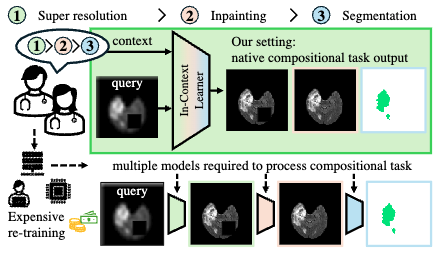
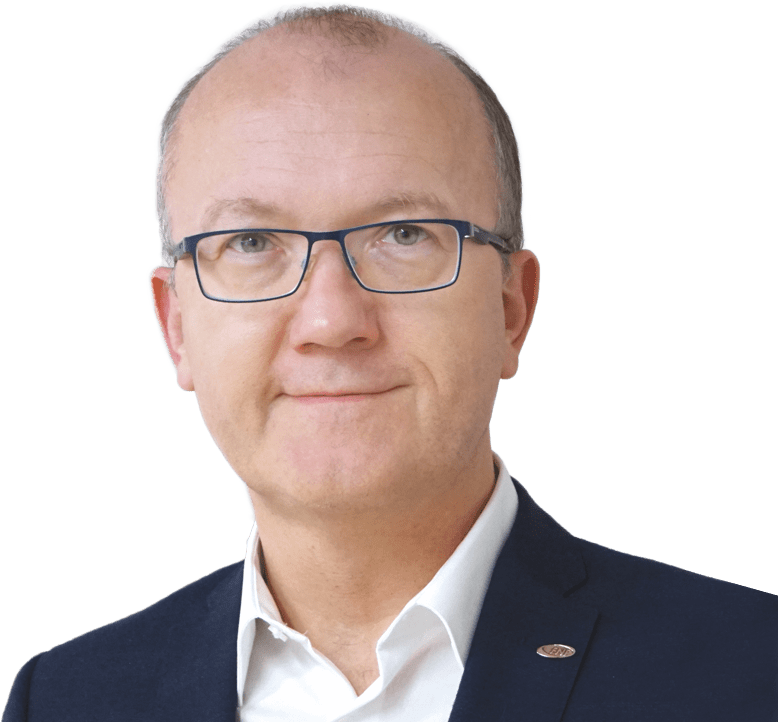
Prof. Dr. Erik Rodner is a faculty member at the University of Applied Sciences Berlin (HTW Berlin), where he serves as a Professor for Machine Learning and Data Science. He also contributes to the School of Engineering Sciences - Technology and Life. His research spans computer vision, machine learning, and biomedical applications, with a focus on learning with limited data, robust visual recognition models, and medical image analysis. He has developed innovative methods for medical diagnostics, industrial classification, and anomaly detection. Recent publications (2025-2016) highlight his expertise in visual in-context learning, semi-weakly segmentation, and active learning frameworks. He has collaborated with institutions such as ZEISS Group, Friedrich Schiller University Jena, and UC Berkeley. Scientific Awards: Award for Excellent Teaching (2023)
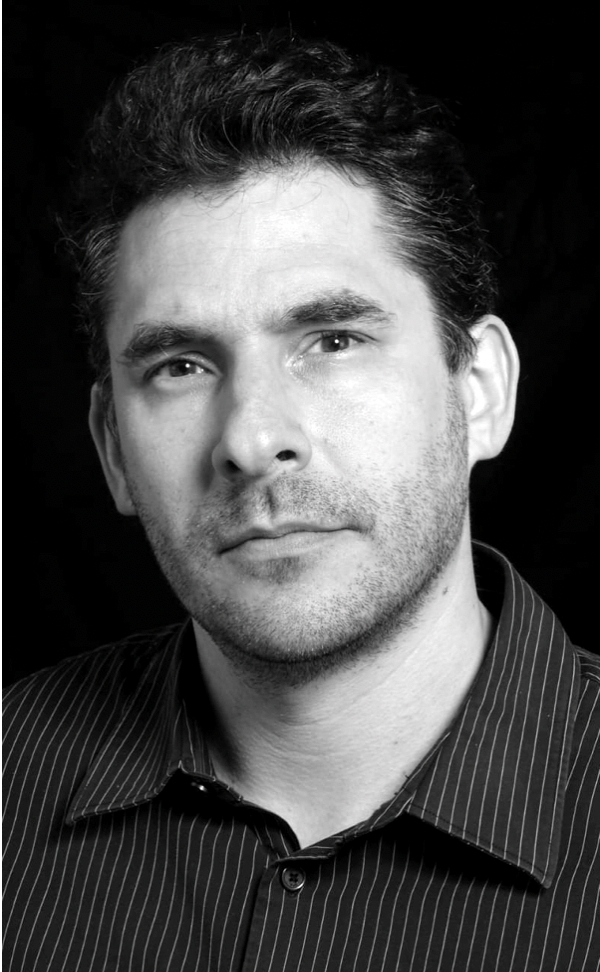
Prof. Florian Zaussinger is a faculty member at the Faculty of Applied Computer and Life Sciences at Mittweida University of Applied Sciences. His research focuses on thermal convection, fluid dynamics, and numerical simulations in both geophysical and astrophysical contexts. He has contributed extensively to studies on microgravity experiments, including the GeoFlow and AtmoFlow projects conducted on the International Space Station (ISS). University: Mittweida University of Applied Sciences Faculty: Applied Computer and Life Sciences Department: Mathematics Contact: +49 3727 58-1381 | florian.zaussinger@hs-mittweida.de | Building 6, Room 6-131 His research involves advanced numerical modeling of complex fluid systems, including spherical convection, dielectric heating, and double-diffusive processes. He has developed and applied computational tools like the ANTARES code to simulate convection in DA white dwarfs, planetary atmospheres, and Earth's mantle. His work bridges theoretical fluid mechanics with experimental validation in space-based microgravity environments. Recent publications highlight his expertise in thermo-electrohydrodynamic convection, planetary fluid flow analysis, and microgravity-induced instabilities. While the scraped data does not list scientific awards or students directly, his academic profile emphasizes interdisciplinary collaboration with engineering and life sciences, particularly in applied mathematics for fluid dynamics and experimental data processing.
Wout Joseph is a Professor in the domain of Experimental Characterization of wireless communication systems at Ghent University (Belgium), where he has been working since October 2009. He is also an IMEC Principal Investigator since 2017. His research is conducted within the wireless, acoustics, environment & expert systems (WAVES) research unit at the Department of Information Technology (INTEC). Dr. Joseph was born in Ostend, Belgium on October 21, 1977. He received his M.Sc. degree in electrical engineering from Ghent University in July 2000. From September 2000 to March 2005 he was a research assistant at the Department of Information Technology (INTEC), where his scientific work focused on electromagnetic exposure assessment around base stations for mobile communications related to health effects. This work led to his Ph.D. degree in March 2005. Professor Joseph's research expertise spans multiple domains within wireless communications and bioelectromagnetics. His primary research interests include electromagnetic field exposure assessment, in-body electromagnetic field modeling, electromagnetic medical applications, propagation for wireless communication systems, IoT, antennas and calibration. He also specializes in wireless performance analysis, industry 4.0 applications, wireless localization, and Quality of Experience metrics. His work is particularly notable for its focus on dosimetric studies in the radiofrequency range, where his research is ranked first in number of peer-reviewed studies. His research has practical applications in wireless network planning, occupational safety, and public health policy related to electromagnetic fields. His extensive publication record (over 886 publications with an h-index of 45 in ISI Web of Science and 66 in Google Scholar) demonstrates a clear trajectory from fundamental electromagnetic field measurements to applied research in industrial wireless networks and bioelectromagnetic applications. Recent work shows a strong emphasis on 5G exposure assessment across multiple European countries, millimeter-wave channel modeling, and the application of machine learning techniques to exposure assessment and wireless localization. EBEA council board member (2015-2018) EBEA board member at large (2019) Bioelectromagnetics Society board member (2022) Bioelectromagnetics Society board member (2024) 24 research awards Professor Joseph leads significant research efforts in electromagnetic field exposure assessment, with particular emphasis on developing measurement methodologies and computational models for real-world exposure scenarios. His work bridges theoretical electromagnetic modeling with practical applications in wireless communications and bioelectromagnetics. His research group within the WAVES unit is highly active in both theoretical and experimental aspects of wireless communications and bioelectromagnetics, with current projects focusing on 5G exposure assessment across Europe, millimeter-wave channel modeling for data centers and industrial environments, and the development of novel exposure assessment methodologies using advanced signal processing and machine learning techniques.
Professor Gareth Pierce is a leading academic at the University of Strathclyde, serving as Co-Director of the Centre for Ultrasonic Engineering and Academic Director of the UK Research Centre in Non-Destructive Evaluation (RCNDE). He specializes in robotics, autonomous systems, and non-destructive evaluation (NDT&E), with a focus on structural health monitoring (SHM) and advanced manufacturing. His work integrates robotics, AI, and ultrasonics to address challenges in aerospace, energy, and healthcare sectors. He holds a Spirit Aerosystems/Royal Academy of Engineering Research Chair and leads the £50M SEARCH (Sensor Enabled Automation, Robotics & Control Hub), which spans manufacturing and asset management applications. Education: BSc (Hons) in Pure and Applied Physics from the University of Manchester (1989), PhD in Fibre-Optic Interferometers for Laser-Generated Ultrasound from UMIST (1993). Additional qualifications include City & Guilds certifications in electrical installations and a PGDip in Psychological Wellbeing. Research Priorities Autonomous robotic inspection for manufacturing and asset management Integration of AI/machine learning with NDT&E systems In-process inspection for additive manufacturing and welding Ultrasonic and guided wave technologies for defect detection Key Achievements 2023 Anne Birt Award for NDT innovation Leadership roles in SRPe Robotics & UK HVM Catapult initiatives Over 270 research outputs, 86 projects, and a £50M research portfolio Teaching Course organiser for EE312 (Instrumentation & Microcontrollers) and contributes to advanced systems engineering education. Supervises student projects across engineering disciplines. Labs & Collaborations SEARCH Hub operates from Royal College R2.41 (manufacturing applications) and Technology Innovation Centre TIC 7.14 (asset management). Collaborates with global industry partners like Spirit Aerosystems and Högskolan Väst (Sweden).
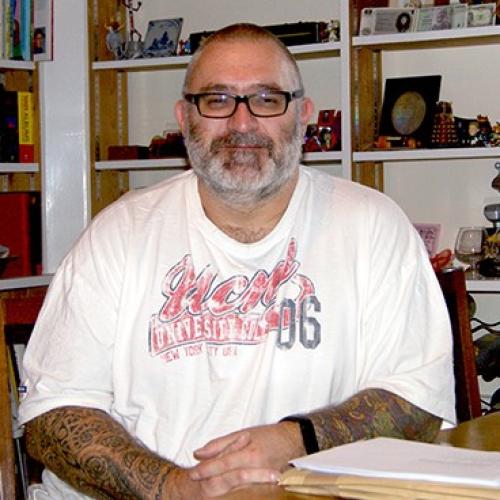
Aaron Shugar is a Professor and current Bader Chair in Art Conservation at Queen’s University. With a background in archaeometallurgy and conservation science, he specializes in non-destructive analysis techniques for cultural heritage, including X-ray fluorescence (XRF), Raman spectroscopy, and hyperspectral imaging. His work bridges art history, material degradation, and technological innovation. Honours H.B.A. in Anthropology and Law & Society from York University M.S. in Archaeological Materials from the University of Sheffield Ph.D. in Archaeometallurgy from University College London His research focuses on historic artist’s pigments , ancient metallurgy , and technical history of artifacts , with particular interest in degradation pathways and manufacturing processes. Recent publications highlight trends in AI integration with XRF analysis and preservation of modern materials in art conservation. Bader Chair in Art Conservation Mellon Foundation Professor in Conservation Science Aaron co-directed the Archaeometallurgy Laboratory at Lehigh University, served as a guest scientist at NIST, and remains a research associate at the Smithsonian Institution. He actively contributes to TEFAF’s Scientific Vetting Committee and acts as a forensic materials expert for the Court of Arbitration for Art.
Craig Shultz is an Assistant Professor in the Department of Electrical and Computer Engineering at the University of Illinois Urbana-Champaign (UIUC), where he joined in January 2024. He is affiliated with the College of Engineering and conducts research through the Interactive Display Lab, which he founded upon joining UIUC. Prior to his academic position, Shultz co-founded Fluid Reality and served as VP of Research and Development at Tanvas, where he developed electroadhesive touchscreens based on his research at Northwestern University. Dr. Shultz's educational background includes: Ph.D. in Mechanical Engineering from Northwestern University (2017) M.S. in Mechanical Engineering from Northwestern University (2015) B.S. in Electrical Engineering from the University of Tulsa (2011) Shultz's research focuses on advancing human-computer interaction through innovative haptic technologies. His work centers on developing tactile interfaces that leverage electrostatic actuation and novel input/output devices to create immersive user experiences. His primary research areas include: Human-Computer Interaction - Exploring contemporary use cases and building novel input and output devices Electrostatic Actuation - Modeling and characterization of moderate to high voltage electrostatic actuators Haptic Technology - Designing and evaluating tactile interaction devices Interactive Embedded Systems - Creating systems that respond to human touch in sophisticated ways Shultz's research has demonstrated how haptic technologies can enhance user experiences across various domains including virtual reality, mobile devices, and interactive displays. His work aims to elevate haptic rendering to the sophistication level of graphics and audio systems through practical hardware and software solutions. Dr. Shultz has received numerous prestigious awards for his research contributions: IEEE Robotics and Automation Society Technical Committee on Haptics Early Career Award (2025) TCH Early Career Award at World Haptics 2025 Sony Faculty Innovation Award for Finger Mounted Haptic Displays (2025) Multiple Best Paper awards at premier ACM and IEEE conferences (2014-2022) As an educator and mentor, Shultz has advised multiple graduate students in the Interactive Display Lab, including Jung-Hwan (the lab's inaugural member), Seung Heon, and Yanjun (his first PhD student). His research has attracted significant attention, being featured in major media outlets including NBC Nightly News, TechCrunch, and Engadget. Shultz teaches courses such as ECE 210 (Analog Signal Processing), ECE 211 (Analog Circuits & Systems), ECE 445 (Senior Design Project Lab), ECE 598 CS (Interactive Haptic Systems), and ME 470 ZJ3 (Senior Design Project). The Interactive Display Lab, housed in room 3038 of the Electrical and Computer Engineering building at UIUC, is equipped with electronics assembly and debugging equipment, a prototyping lab, optical bench, student offices, and a photo and VR studio. The lab benefits from access to departmental mechanical, electrical, and clean room fabrication facilities. Current research directions include developing fast interactive soft buttons (DynaButtons), high-resolution haptic gloves (Fluid Reality), and flat panel haptics with embedded electroosmotic pumps.
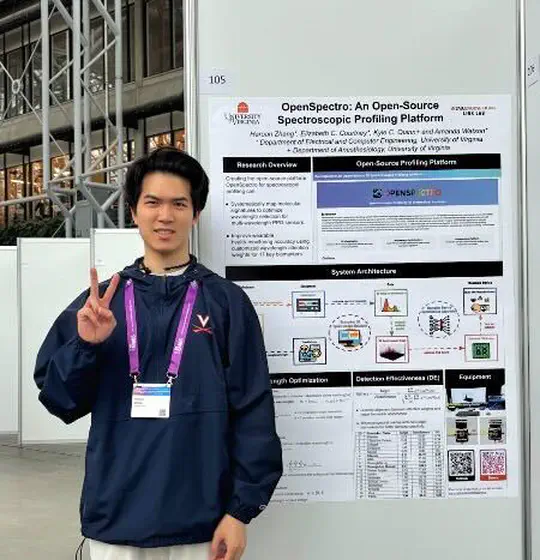
Amanda Watson is an Assistant Professor in Electrical and Computer Engineering at the University of Virginia, with joint appointments in Computer Science. She leads the Watson Research Lab within the UVA Link Lab, a multidisciplinary center for Cyber-Physical Systems (CPS) and Internet of Medical Things (IoMT) research. Her work bridges wearable technology with healthcare and athletic performance applications, focusing on noninvasive monitoring, physiological signal analysis, and safety-critical medical devices. She is also the cofounder and CEO of Luminosity Wearables, commercializing a noninvasive continuous glucose monitor. Education: PhD in Computer Science (2020) - College of William & Mary MSc in Computer Science (2016) - College of William & Mary Bachelors in Computer Science and Mathematics (2014) - Drury University Her research spans multiple domains including: Wearable spectroscopy for nutrition and skin health Machine learning for drug overdose and fall risk detection Biomechanical monitoring in sports medicine Wearable support for visual and neurological impairments IoMT device integration and analytics Recent publications (2024-2025) show strong emphasis on calibration-free physiological monitoring systems, with technical contributions in spectral analysis , multi-wavelength sensing , and rapid prototyping for healthcare wearables. Applications range from maternal health to gerontological social isolation detection. Lab and Team: The Watson Research Lab at UVA develops wearable solutions for clinical and athletic contexts, with ongoing collaborations in the PRECISE Center at University of Pennsylvania and LENS lab at William & Mary alumni network. She works with multidisciplinary teams including engineers, clinicians, and data scientists.
Professor Daniel Gryko leads a prominent research group at the Institute of Organic Chemistry, Polish Academy of Sciences, specializing in advanced functional dyes and photochemistry. His work bridges fundamental organic synthesis with practical applications in bioimaging, molecular electronics, and nanomaterials. With over 150 publications and numerous high-impact grants, including an ERC Advanced Grant and multiple Horizon Europe projects, Gryko has established himself as a leader in the field of novel chromophore design. Gryko's research focuses on developing innovative fluorescent dyes with exceptional photophysical properties, particularly exploring fluorescence of nitroaromatics, two-photon absorption phenomena, and excited-state intramolecular proton transfer (ESIPT). His group specializes in several key structural platforms including corroles, diketopyrrolopyrroles, pyrrolo[3,2-b]pyrroles, dipyrrolonaphthyridinediones, porphyrins, and coumarins. Recent work has centered on creating strongly emitting helicenes, quadrupolar dyes with unique symmetry-breaking properties, and developing specialized fluorophores for super-resolution microscopy applications. Analysis of Gryko's recent publications reveals a strong emphasis on molecular design strategies for controlling photophysical behavior. His group frequently employs π-expansion techniques, heteroatom doping, and strategic substitution patterns to tune emission properties. A significant portion of their work focuses on overcoming traditional limitations in fluorophore design, such as the non-fluorescence of nitroaromatics, through innovative molecular architectures. Gryko has received prestigious recognition including an ERC Advanced Grant for the ARCHIMEDES project targeting NIR-II emission efficiency, multiple Horizon Europe grants, and the TEAM grant from the Foundation for Polish Science supporting development of fluorescent probes for super-resolution microscopy. His group's work has resulted in numerous publications in top-tier journals including Journal of the American Chemical Society , Chemical Science , and Angewandte Chemie . Professor Gryko actively mentors a diverse research team including PhD students, postdoctoral researchers, and collaborators worldwide. His group has secured substantial funding including Horizon Europe grants for PhotoBrane and APACE projects, ERC funding, and multiple Polish National Science Centre grants. Current projects focus on developing novel fluorescent probes for super-resolution microscopy, creating bio-mimetic sunlight-pumped lasers, and designing photo-switchable membranes for molecular separation. The Gryko group operates a well-equipped laboratory focused on organic synthesis and photophysical characterization. Their work spans from fundamental molecular design to practical applications in bioimaging and materials science. Recent expansions of their research program include development of probes for detecting SARS-CoV-2 proteases, demonstrating the group's ability to pivot toward addressing pressing societal challenges.
Tim Wilkinson is a Professor of Photonic Engineering at the University of Cambridge, holding a Fellowship at Jesus College. He serves as Director of Studies in Engineering and Manufacturing Engineering (Parts IIA and IIB) and specializes in photonics research. BEng Hons, University of Canterbury, New Zealand PhD, Magdalene College, University of Cambridge Research Interests: Liquid crystal photonics, devices, and displays Optical communications and spatial optics Nanophotonic devices and metasurfaces Holography and 3D display technologies Scientific Awards: ILCS Mid-Career Award Hilsum Medal from the BLCS Tim maintains additional affiliations with the Cambridge Centre for Microsystems and Photonics Engineering (CMMPE) and the Cambridge Energy Initiative. His personal interests include DJing, drum and bass music, Lego building, record collecting, and smallholding farming.
Prof. Dr. Matthias Krauledat is a faculty member at Hochschule Rhein-Waal , specifically within the Faculty of Technology and Bionics . His academic career spans both theoretical research and industrial application, with a focus on Machine Learning and Brain-Computer Interfaces . After completing his PhD in Electrical Engineering/Computer Science at Technische Universität Berlin , he has contributed significantly to the advancement of EEG-based communication systems and neural signal processing methodologies. Born in Essen, Germany Studied Mathematics with a minor in Computer Science at University of Münster/Oxford Doctoral research at TU Berlin on Brain-Computer Interfaces Industrial experience at Henkel AG & DMT GmbH Research Interests focus on Machine Learning applications in Neuroscience and Biomedical Engineering , specifically Brain-Computer Interfaces , EEG Signal Processing , and Adaptive Classification Systems . His work explores how algorithms can be developed to enable self-learning computers to solve complex tasks involving neural data interpretation and prediction for previously unseen data in clinical and technological contexts. Publications demonstrate a consistent contribution to Neuroscience and Machine Learning fields, with particular emphasis on Brain-Computer Interface systems from 2004 through 2009. His research has focused on reducing training requirements, improving signal processing accuracy, and developing novel interaction paradigms like the Hex-o-Spell mental typewriter while addressing statistical challenges like covariate shift in neural data analysis. Professional Experience includes academic research at TU Berlin's Intelligent Data Analysis group, industrial software development roles at Henkel AG's Scientific Computing department, and TÜV Nord Group's Optical Metrology and Machine Diagnostics divisions. He maintains active research connections through collaborative publications with leading experts in the field.
Paolo Prandoni is a Lecturer at École Polytechnique Fédérale de Lausanne (EPFL) in the School of Computer and Communication Sciences (IC). He serves as a Scientist in the Audiovisual Communications Laboratory (LCAV) and teaches in the SSC-ENS and SIN-ENS units, focusing on signal processing theory and practical applications in audiovisual communications. He earned his PhD from EPFL after completing all prior education there, driven by childhood fascination with long-distance telephony. His doctoral work established foundations in communication systems that continue to inform his research. Prandoni's research spans audio/image processing, machine learning for media analysis, and DSP education. Key areas include computational photography (e.g., spectral imaging, stained glass rendering), speech quality assessment via transfer learning, music information retrieval (e.g., fingering prediction), and audience analytics through his company Quividi. His work consistently bridges theoretical signal processing with real-world implementation. Recent publications reveal a strategic shift toward machine learning integration in signal processing tasks, particularly non-intrusive speech assessment and lensless imaging reconstruction. Simultaneously, he advances DSP pedagogy through MOOC development and hands-on teaching tools using off-the-shelf hardware, emphasizing accessibility and practical skill development. No scientific awards are documented in the provided materials. He has advised PhD student Thanikachalam Niranjan (thesis: Image Based Relighting of Cultural Artifacts , 2016) and teaches Communication Systems and Computer Science courses. His educational impact extends through the open-access textbook Signal Processing for Communications (2008) and tools like MultiPub for maintainable online classes. Industry engagement includes Quividi co-founding (2006) and ongoing CSO role in attention analytics. As a core LCAV laboratory member, he collaborates on interdisciplinary projects including cultural heritage digitization, embedded signal processing systems, and real-time audience measurement, leveraging EPFL's infrastructure for both academic and commercial applications.
Paul Rothemund is a Visiting Associate in Computing and Mathematical Sciences and Computation & Neural Systems at the California Institute of Technology . His research focuses on expanding the toolkit of DNA nanotechnology , particularly through the development of DNA origami and its integration into fields like biological engineering and translational research . He is part of the Biology and Biological Engineering divisions and collaborates with the Winfree and Qian labs. B.S., Caltech (1994) Ph.D., University of Southern California (2001) Research Interests Rothemund’s work centers on programmable molecular systems , with a focus on DNA origami for creating nanoscale shapes, RNA nanostructures , and lipid nanodiscs . His lab develops methods for molecular self-assembly , nanophotonic architectures , and single-molecule assays . Key applications include hybrid nanodevices , precision biomolecular placement , and dynamic DNA/RNA systems . Publication Trends Over 15 recent articles, Rothemund’s research spans DNA/RNA origami , lipid bilayer engineering , nanoarray fabrication , and biomolecular sensing . Themes include modular design , co-transcriptional folding , and programmable nanoscale materials . Scientific Recognition Beckman Senior Research Fellow (2001-04) Bryan R. Coles Prize (2017) Advising & Collaborations Rothemund has advised doctoral students and postdocs such as Anya Mitskovets (now at KLA) and Tyler Ross (MIT/Harvard). His lab forms a DNA nanotechnology supergroup and engages in interdisciplinary collaborations.
Zhanna Sarsenbayeva is a Lecturer in the School of Computer Science at the University of Sydney. Previously, she held a Doreen Thomas Postdoctoral Research Fellowship at the University of Melbourne. Her research focuses on Human-Computer Interaction (HCI), Ubiquitous Computing, Accessibility, and Affective Computing. She earned a PhD in Engineering from the University of Melbourne, an MSc in Computer Science and Engineering from the University of Oulu, and a BSc in Computer Science from University College London. Research Interests: Dr. Sarsenbayeva explores how technology can enhance accessibility, improve emotion recognition in mobile contexts, and address situational impairments. Her work spans wearable sensors, mobile health applications, and ethical AI methodologies. Awards & Honors: 2022–2023: Australia-Germany Joint Research Cooperation Scheme 2021: CIS ECR Grant 2020: Doreen Thomas Postdoctoral Fellowship 2019: Gaetano Borriello Outstanding Student Award Advising & Grants: She currently supervises five PhD students researching topics like mixed reality collaboration and emotion recognition. Her grants include projects on accessibility standards and fairness in AI. International Collaborations: Engages with researchers at Aalborg University (Denmark), University of Oulu (Finland), and LMU Munich (Germany) on interdisciplinary projects.