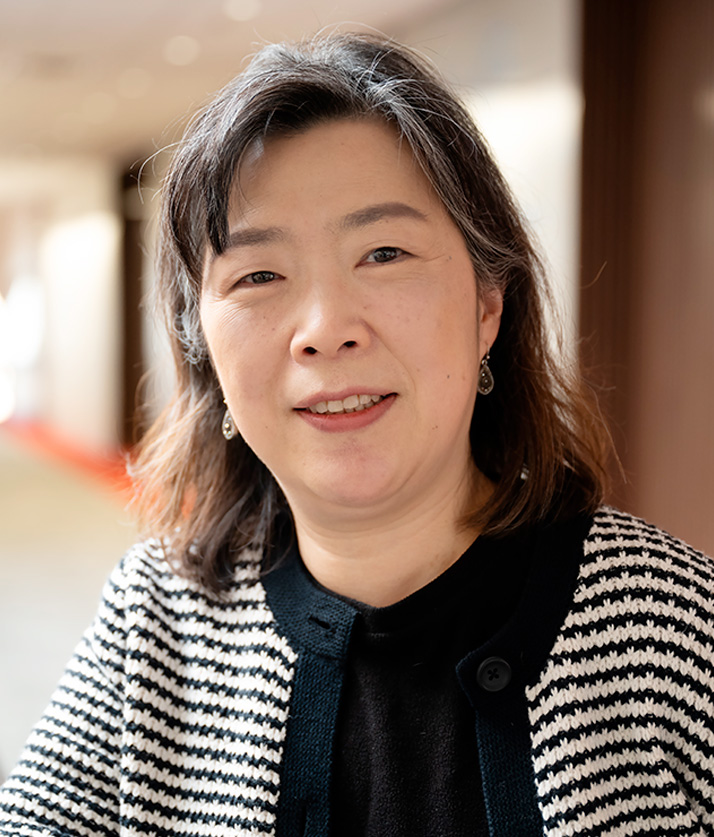
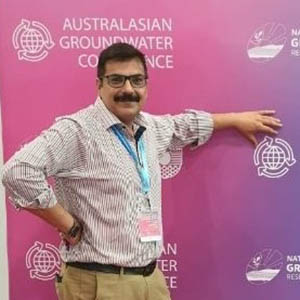
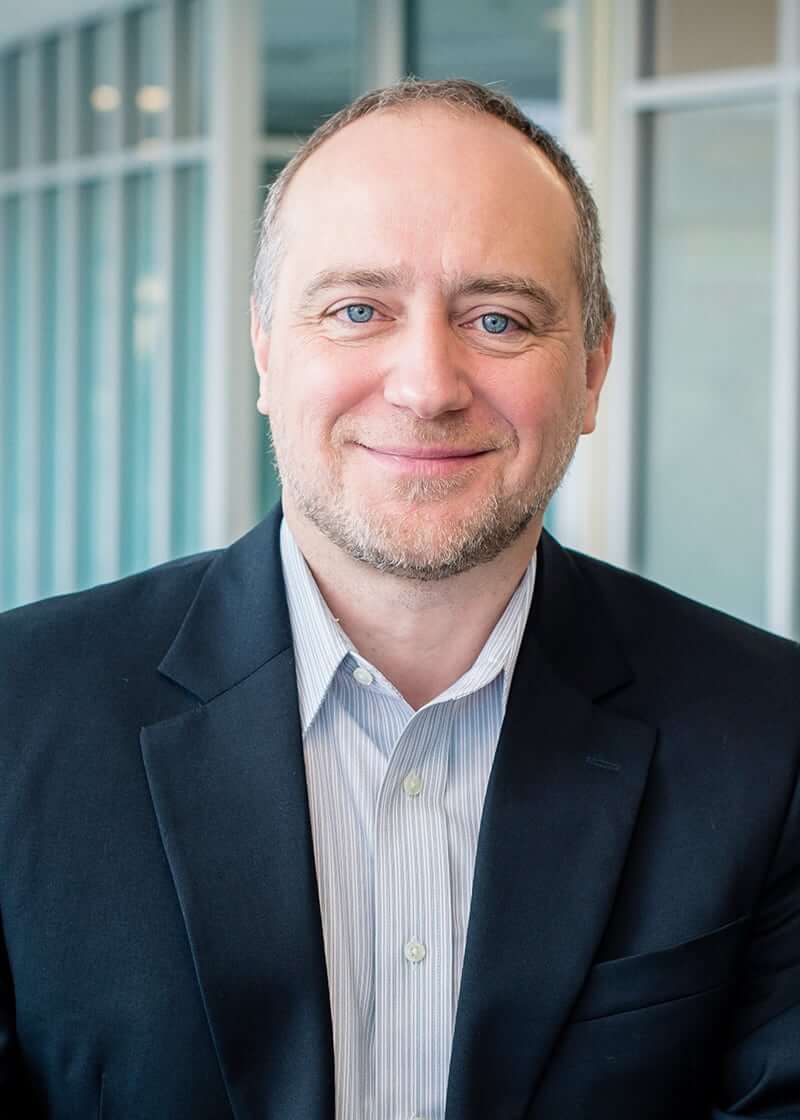
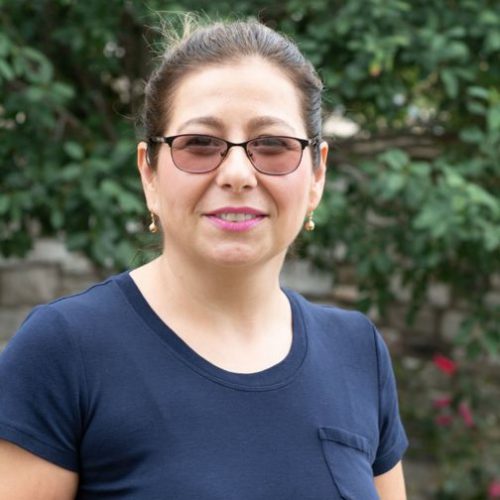
Sangmi Yoo is a Professor of Art at the Texas Tech University School of Art , where she teaches printmaking and drawing. She holds an M.F.A. from The Ohio State University and a B.F.A. from Seoul National University. Academic Rank: Professor Education: M.F.A. (The Ohio State University), B.F.A. (Seoul National University) Her artistic practice explores the intersection of personal memory, collective perception, and public spaces through layered hand-cut and laser-cut prints, paper panels, and felt installations. She draws inspiration from botanical elements, Dazzle camouflage patterns, and post-digital printmaking techniques to create optical illusions that challenge notions of idealized environments. Notable exhibitions include Lucca Biennale Cartasia (2024), Tides of Resilience (2022), and the Pacific Rim International Print Exhibition (2008). Her work is held in permanent collections such as the Art Bank of the National Museum of Contemporary Art (Korea) and The Museum of Texas Tech University . Scientific Awards & Recognitions Denbo Fellowship at Pyramid Atlantic Art Center Wolhee Choe Memorial Award (2014) Seacourt Print Workshop Artist-in-Residence (2012) Puffin Foundation Artist Grant (2010) Springfield Art Museum Purchase Award (2009)
Bappaditya Mandal is a Senior Lecturer in Computer Science at Keele University's School of Computer Science and Mathematics, Faculty of Natural Sciences. He holds positions as an Academic Conduct Officer and actively contributes to both teaching and research. His academic journey includes a B.Tech in Electrical Engineering from IIT Roorkee, a Ph.D. in Electrical and Electronic Engineering from Nanyang Technological University, Singapore, and an MA in Higher Education Practice from Keele University. Dr. Mandal's research spans computer vision and machine learning with specific applications in biomedical image analysis, civil infrastructure inspection, human behavior analysis, and marine life detection. His work focuses on attention mechanisms, deep learning architectures, and subspace modeling, with recent publications demonstrating applications in medical diagnostics, structural engineering, and traffic prediction systems. His research demonstrates a consistent trajectory from foundational computer vision work to increasingly applied, interdisciplinary projects addressing real-world problems. His scholarly contributions include numerous publications in top-tier journals and conferences, with recent work focusing on attention-based deep learning models for concrete defect recognition, macular disease classification, and traffic flow prediction. The publications reveal a strong emphasis on developing interpretable attention mechanisms that can be applied across diverse domains while maintaining high accuracy. Award for Leading, Educating and Nurturing Talent (TALENT) from A*STAR Singapore Best Student Paper Award 2016: Honourable Mention Award from IAPR in Singapore Long service award from the Institute in 2014 Best Biometric Student Paper Award at the 19th International Conference on Pattern Recognition, Florida, USA, 2008 Research Scholarship Award from Nanyang Technological University (2004-2008) Dr. Mandal supervises PhD students including Asad Inamdar, Jenni Watson, and Kody Mistry, with research spanning medical applications, structural analysis, and AI systems. His work demonstrates strong industry connections, having collaborated with SMEs in both Singapore and the UK to develop practical solutions for research and development challenges. He is actively involved in grant-funded research, particularly in healthcare technology and infrastructure monitoring applications, and maintains affiliations with professional organizations including IEEE (Senior Member), British Computer Society (Fellow), and Higher Education Academy (Fellow).
Dr. Mobushir Khan is a Spatial Scientist at the Gulbali Research Institute, part of the Agricultural, Environmental and Veterinary Sciences department at the Gulbali Institute. He holds a PhD in Spatial Sciences for Natural Resources from Twente University, Netherlands, with over ten years of teaching and research experience. His work focuses on geospatial technologies, remote sensing, and GIS applications in agriculture, water resources, and environmental management. He has contributed to projects funded by ACIAR, FAO, ADB, and ISNET, aligning with UN SDGs 2 (Zero Hunger), 13 (Climate Action), and 15 (Life on Land). His research emphasizes precision agriculture, groundwater monitoring, and disease hotspots in livestock. Teaching includes courses like GEO303 (Climatology), SPA442 (Remote Sensing), and others. His 63+ publications and datasets address topics like crop mapping, salinity management, and climate modeling. Notable outputs include a 2024 report on salinity adaptation in Pakistan and blogs on precision agriculture tools. Media highlights include a 2020 SBS article on an app aiding Pakistani farmers.
Dale Callahan is an Associate Professor at the University of Alabama at Birmingham (UAB), where he serves as Director of the Master of Science in Engineering Management and the Information Engineering Management concentration. His research and teaching focus on entrepreneurship, innovation, and professional development for engineers, with a mission to help engineers succeed in industry and entrepreneurial ventures. Callahan holds a Ph.D. in Electrical Engineering from the University of Alabama, an M.S. in Electrical Engineering from UAB, and an M.S. in Business Administration from Auburn University at Montgomery. He also earned a B.S. in Electrical Engineering from Auburn University and maintains a Professional Engineer License (#19314) in Alabama. His academic work spans diverse fields, including sports performance analysis (e.g., choking recognition in tennis), vehicle tracking systems, and social media data applications. He has contributed to engineering management education and technology adoption frameworks, with publications ranging from biomedical acoustics to mobile security protocols. His research trends show interdisciplinary expertise in Sports science and physiological data analysis Transportation and vehicle tracking technologies Medical device evaluation (stethoscopes) Information engineering and management Digital privacy and cybersecurity Data-driven event rating models
Gareth Russell is an Associate Professor in the Biological Sciences department at New Jersey Institute of Technology (NJIT). His research focuses on conservation biology, ecology, and biodiversity, with emphasis on species richness, extinction risk, and human impacts on ecosystems. He has led and collaborated on federal grants, including projects on automated species identification and urban forest ecosystem services. Notable contributions include studies on African elephant movement, mosquito abundance monitoring, and camera trap methodologies. Key research interests include understanding ecological networks, conservation strategies, and applying technology like deep learning to ecological data. His work spans diverse ecosystems, from tropical forests to urban environments, addressing challenges such as habitat fragmentation and invasive species management. Russell has published extensively in peer-reviewed journals and contributed to media discussions on sustainability and biodiversity initiatives. Projects: ODOMATIC (species identification tools), ULTRA-Ex (urban forest dynamics), and real-time reef fish monitoring systems. Grants: Multiple National Science Foundation grants (2007–2019). Media: Featured in articles on urban gardens, mosquito surveillance, and environmental policy. His research integrates fieldwork with computational models, aiming to inform conservation policies and mitigate human-driven ecological disruptions.
Marijana Gavrilović Božović is an Associate Professor at the Department of Electrical Engineering and Computer Science, Faculty of Engineering, University of Kragujevac, Serbia. Her academic work focuses on plasma physics, spectroscopy, and biomedical signal processing. Department: Electrical Engineering and Computer Science Email: marijana.gavrilovic@kg.ac.rs Office: D-26 Her research spans multiple domains: Plasma Physics and Spectroscopy : Investigates laser-induced plasma dynamics, Stark broadening, and LIBS (Laser Induced Breakdown Spectroscopy) for material analysis. Biomedical Engineering : Explores neural network applications for gait phase recognition using acceleration and force data. Medical Physics : Analyzed pediatric radiation exposure in clinical settings. Recent publications highlight her expertise in plasma diagnostics, cavitation effects during laser ablation, and biomedical signal processing. She employs advanced spectroscopic techniques and computational modeling to study plasma behavior under various conditions.
Alberto Alberello is a Research Fellow at the University of East Anglia 's School of Engineering, Mathematics and Physics, specializing in Fluids & Structures . His work focuses on wave-ice interactions, polar oceanography, and nonlinear wave dynamics. Doctor of Science, Swinburne University of Technology (2017) Master of Engineering, Politecnico di Milano (2012) Bachelor of Engineering, Politecnico di Milano (2010) Alberello's research explores the complex interactions between ocean waves and sea ice, particularly in Antarctic and Arctic environments. He investigates wave propagation in ice-covered waters, wave-induced ice breakup, and the development of numerical models like WIce-FOAM for simulating heterogeneous sea ice systems. His work contributes to understanding climate dynamics and improving maritime safety in polar regions. His recent publications demonstrate expertise in wave mechanics, with a focus on parameter-free Schrödinger systems, ICESat-2 altimetry validation, and nonlinear wave evolution under heterogeneous damping. Alberello's work spans both theoretical modeling and experimental validation through wave tank studies and field measurements. Alberello actively collaborates internationally, with recent projects involving institutions such as the Isaac Newton Institute for Mathematical Sciences , London Mathematical Society , and the Daiwa Anglo-Japanese Foundation . He has presented at conferences in New Zealand and Australia and conducted fieldwork in the Southern Ocean and Okhotsk Sea.
Dr. Reyhan Baktur is an Associate Professor in Electrical and Computer Engineering at Utah State University. Her research focuses on antenna design for small satellites, optically transparent antennas, and integrated solar panel systems. She has led numerous projects funded by NASA and NSF, including the development of transparent antennas for CubeSat missions. Education: PhD in Electrical Engineering, Clemson University (2005) MS in Electrical Engineering, Chinese Academy of Science (2000) BS in Electrical Engineering, Tsinghua University (1998) Her work bridges electromagnetic theory with practical applications in satellite communications and sustainable energy. Research areas include multifunctional RF systems, computational modeling of antenna performance, and novel materials for transparent electronics. Dr. Baktur has received multiple awards including the IEEE Dudley Award for Undergraduate Teaching and recognition as a Senior IEEE Member. She actively mentors graduate students and has supervised 18 PhD candidates. She teaches courses in Antennas, Electromagnetics, and Microwave Circuits, incorporating project-based learning in space systems design.
**Partha Banerjee** is a Professor and Director of the Holography and Metamaterials Laboratory at the University of Dayton , within the School of Engineering and Department of Electro-Optics and Photonics . He holds a Ph.D. in Electrical and Computer Engineering from the University of Iowa (1983), an M.S. from the same institution (1980), and a B.E. in Electronics and Telecommunication Engineering from the Indian Institute of Technology, Kharagpur (1979). His research focuses on Digital and Dynamic Holography , Metamaterials , Photorefractive Materials , and Acousto-optics . Notable contributions include advancements in 3D imaging, phase retrieval techniques, and applications of metamaterials in optical filters. He leads the Holography and Metamaterials Lab, which explores cutting-edge technologies in holography, photonics, and nanophotonics. Awards and Honors: Holoknight Award (2019) Dayton Area Associated Societies Council Research Award (2012) University of Dayton Alumni Research Award (2012) Fellow, Institute of Physics (2011) Fellow, SPIE (1998) Fellow, Optical Society of America (1995) Professional Activities: Banerjee has served as Co-Chair of multiple international conferences on Digital Holography, including events in Bordeaux (2019) and Heidelberg (2015). He is a Topical Editor for Applied Optics and has contributed to special journal issues on topics like Digital Holography. Grants and Funding: His work is supported by grants from the University of Dayton and collaborations with industry partners, focusing on metamaterials, holography, and photonics applications. Labs and Teams: Directs the Holography and Metamaterials Laboratory , which collaborates with global institutions to advance optical technologies. Key projects include 3D imaging systems, tunable optical filters, and forensic applications of holography.
Professor Kristin Dana is a faculty member in the Department of Electrical and Computer Engineering at Rutgers University, School of Engineering. Her research focuses on computer vision, robotics, artificial intelligence, computational photography, and machine learning. She leads the SOCRATES initiative, a NSF-funded program integrating STEM education with social and behavioral sciences. Dana holds a Ph.D. from Columbia University (1999), an M.S. from MIT (1992), and a B.S. from Cooper Union and NYU (1990). Education: Ph.D., Electrical Engineering, Columbia University, 1999 M.S., Electrical Engineering and Computer Science, MIT, 1992 B.S., Electrical Engineering and Computer Science, Cooper Union/NYU, 1990 Research interests span computer vision applications in agriculture (e.g., cranberry ripening analysis), robotics for socially aware systems, and computational methods for material recognition. Her work bridges optical technologies with practical systems like autonomous bridge inspection robots, earning awards such as the NSF CAREER and Sarnoff Technical Achievement Awards. Recent publications emphasize interdisciplinary innovations: from AI-driven agricultural monitoring to steganography in light fields. Grants include a $3M NSF NRT grant for SOCRATES and robotics-related projects. Honors: 2014 Charles Pankow Award (ASCE) 2011 Rutgers ECE Service Award 2001 NSF CAREER Award 1994 Sarnoff Technical Achievement Award Advising focuses on graduate training through SOCRATES, while lab collaborations include Rutgers Robotics and remote sensing frameworks like Finch. Current work explores vision-based localization systems (ViFi series) and socially cognizant robotic systems.
John A. Jaszczak is a Professor of Physics at Michigan Technological University in the College of Sciences and Arts. He serves as Director and John and Phyllis Seaman Endowed Curator of the A. E. Seaman Mineral Museum and holds affiliated appointments in Materials Science and Engineering. Dr. Jaszczak earned his PhD in Physics from Ohio State University in 1989, following an MS from the same institution in 1985 and a BS (Highest Honors) in Physics from Case Western Reserve University in 1983. His research spans two primary domains: theoretical condensed matter physics and mineralogy, particularly focusing on graphite and minerals from the Merelani tanzanite deposits in Tanzania. His physics work involves computational modeling of materials' properties, electron transport in nanostructures, and single-electron transistor devices. His mineralogical research examines graphite morphology, crystal growth patterns, and van der Waals heterostructures found in natural minerals. Dr. Jaszczak has published extensively in both physics and mineralogy, with recent work bridging these fields through studies of naturally occurring 2D materials like merelaniite. His research demonstrates a unique interdisciplinary approach connecting quantum mechanical modeling with geological mineral specimens. He has served as Associate Dean for Undergraduate Education in the College of Sciences and Arts since 2013 and is Associate Director for Education and Outreach for MTU's Multi-Scale Technologies Institute. His teaching includes University Physics courses, Theoretical Mechanics, and Fundamentals of Nanoscale Science and Technology. As curator of the A. E. Seaman Mineral Museum, Dr. Jaszczak oversees one of North America's significant mineral collections, with particular expertise in copper specimens from the Lake Superior region and graphite morphology studies. His work bridges fundamental physics research with practical applications in materials science and geological education.
Jason S. Lewis, PhD, is a Professor and Deputy Director at the Sloan Kettering Institute's Office of Science Education and Training (OSET), holding the Emily Tow Chair in Oncology. He leads the Jason Lewis Lab at Memorial Hospital Research Laboratories, focusing on radiopharmaceutical development for cancer diagnosis and treatment. His work bridges small- and biomolecule-based targeting agents with positron-emitting or therapeutic radioisotopes to interrogate cancer molecular profiles via noninvasive nuclear imaging and endoradiotherapy, with a strong emphasis on clinical translation. PhD, The University of Kent (UK) His research spans molecular imaging , targeted radiotherapy , and theranostic agent development , with specific applications in neuroendocrine tumors , pancreatic cancer , ovarian cancer , and melanoma . Key methodologies include ImmunoPET , click chemistry , and shortwave infrared fluorescence imaging . Recent trends in his publications (2023-2025) demonstrate expertise in: DLL3 (Delta-like Ligand 3) targeting for small cell lung and neuroendocrine tumors HER2/PD-L1 imaging in breast and gastroesophageal cancers Development of copper-67 and 225Ac-based theranostic agents Advancements in pretargeted radioimmunotherapy Innovations in SWIR fluorescence-guided surgery Scientific recognition includes 2025 Dr. Saul Hertz Lifetime Achievement Award (SNMMI) 2023 Glenn T. Seaborg Award (ACS) 2021 Gold Medal for Lifetime Achievement (World Molecular Imaging Society) NCI R35 Outstanding Investigator Award (2019-2026) The lab collaborates with multiple institutions including the Gerstner Sloan Kettering Graduate School of Biomedical Sciences , trains researchers through the Center for Molecular Imaging & Bioengineering , and maintains affiliations with Clarity Pharmaceuticals , Telix Pharmaceuticals , and pHLIP, Inc .
Javier Montoya is a Senior Lecturer at the Lucerne School of Computer Science and Information Technology, part of the Lucerne School of Applied Sciences and Arts (HSLU). He holds a PhD in Computer Vision and Machine Learning from ETH Zurich (2016), with earlier Master’s degrees from INRIA/Grenoble Institute of Technology (France) and UNICAMP (Brazil). His research focuses on Deep Learning, Machine Learning, and Computer Vision, particularly in healthcare applications such as medical image processing and digital health solutions. Education: PhD: Swiss Federal Institute of Technology (ETH Zurich), 2016 Master’s: INRIA/Grenoble Institute of Technology (France), 2010 Master’s: University of Campinas (UNICAMP, Brazil), 2007 Montoya’s professional expertise spans Machine Learning & Deep Learning, Image Processing & Computer Vision, and Digital Health. His work bridges academic research with applied projects, including roles as Senior Research Scientist at Zurich University of Applied Sciences (ZHAW, 2020–2021) and Research Scientist at ETH Zurich (2017–2019). His recent publications emphasize medical imaging advancements, motion artifact mitigation, and deep learning applications in healthcare. His research trends highlight innovations in medical image segmentation (e.g., polyp detection, cardiac imaging) and cross-disciplinary projects like solar energy systems and road network analysis. While no specific grants or awards are listed, his extensive publication record underscores contributions to both healthcare and engineering domains.
Tina Moor is a Lecturer and researcher at the Lucerne School of Design, Film and Art (HSLU DFK), specializing in textile design and interdisciplinary innovation. She holds a Textildesign degree from the Hochschule für Gestaltung und Kunst in Zürich (1988–1992) and has led numerous research projects, including Innosuisse-funded initiatives with industry partners. Her work spans sustainable materials, photovoltaic integration, medical textiles, and biomimetic design. She has been nominated for the Designpreis Schweiz multiple times and holds patents for pneumatic textile systems. Education 1988–1992: Textildesign, Hochschule für Gestaltung und Kunst, Zürich Research Interests Moor focuses on sustainable textile innovation, integrating natural fibers, photovoltaic systems, and medical applications. Her projects emphasize interdisciplinary collaboration and circular economy principles, such as the SpinLab (sustainable fibers) and Viscosilab (biomaterials). She explores how textile design can address environmental and healthcare challenges through partnerships with industries. Key Projects Texlining 2: Bioinspired textiles with natural fibers Solar Design Tools: Photovoltaic facade integration CIMProW: Circular medical protective wear Awards & Recognition Designpreis Schweiz nominations (2011, 2013, 2015) Bundesstipendium für Design (1995) Leistungspreis der ZHdK (1995, 1989) Grants & Leadership As former head of the Textildesign program (2010–2021), Moor secured funding for projects like the Innosuisse initiatives. Her teams collaborate internationally, addressing challenges in material science, architecture, and healthcare. Labs & Teams Active in labs like SpinLab and Viscosilab, she leads teams developing functional textiles for energy, architecture, and medical applications. Recent work includes solar-integrated textiles and adaptive protective wear.
Sofia Visa is a Professor of Computer Science at The College of Wooster, a liberal arts institution in Ohio. She holds a B.S. from the University of Lucian Blaga (Romania, 1998), an M.S. from the University of Cincinnati (2002), and a Ph.D. from the same institution (2007). Her research focuses on computational biology, machine learning, and interdisciplinary applications of computer science in fields like genomics and image processing. Dr. Visa’s work spans areas such as genetic analysis of tomato domestication, image segmentation using OpenCV, and fuzzy logic systems for medical data classification. She has collaborated on projects involving genomic data analysis, transcription factor binding site detection, and Bayesian classification of plant morphometric data. Her publications reflect a strong emphasis on interdisciplinary research, particularly in bridging computational methods with biological and agricultural sciences. Her teaching includes advising independent studies and fostering collaborative, project-based learning. Despite no explicitly listed awards, her extensive publication record highlights contributions to both computer science theory and applied biological computing. She is affiliated with The College of Wooster’s Computer Science department and actively engages in research mentoring undergraduate students in computational biology projects.