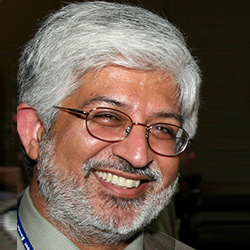
Yashar Ganjali is a Professor in the Department of Computer Science at the University of Toronto , leading the Systems and Networking Group . His research spans computer networks , with a focus on data center networking , software-defined networking (SDN) , and congestion control . Education : Not explicitly detailed, but inferred from academic rank as a Professor. His work on flow consolidation , load migration in SDN controllers , and machine learning for network management has been influential. Recent projects include FORESIGHT (2025) for ML-driven scheduling and Meta-Migration (2023) to reduce switch migration latency. Scientific Awards include the IFIP Networking 2025 Best Paper Award . Collaborations with institutions like Google (2024) and Facebook (2019) highlight his industry impact. Advisees include Sepehr Abbasi Zadeh (PhD, 2024). Current projects integrate optical packet switching and eBPF-based network augmentation , aiming to address scalability, micro-bursts, and resource allocation efficiency in cloud environments.
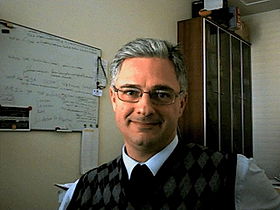
Y. N. Singh is a Professor in the Department of Electrical Engineering at Indian Institute of Technology Kanpur . He holds a PhD and M.Tech from IIT Delhi and a B.Tech from REC Hamirpur . Education PhD, IIT Delhi (1997) M.Tech, IIT Delhi (1992) B.Tech, REC Hamirpur (1991) His research focuses on telecom networks , optical networks , complex networks , and wireless sensor networks , with significant contributions to network protection protocols, rumor propagation modeling, and optical memory design. His work on p-cycles has advanced telecom network survivability techniques. Selected publications include key papers in IEEE/OSA Journal of Lightwave Technology and Acta Physica Polonica B . He has received the AICTE Young Teacher Award (2002) and the Dr. M.N. Saha Memorial Award (2006). Contact details Office: EE/ACES, IIT Kanpur, UP, India-208016 Phone: 0512-[679/392/259]-7944 (O) Lab: 0512-[679/392/259]-7841, 7070 Fax: 0512-259-0063
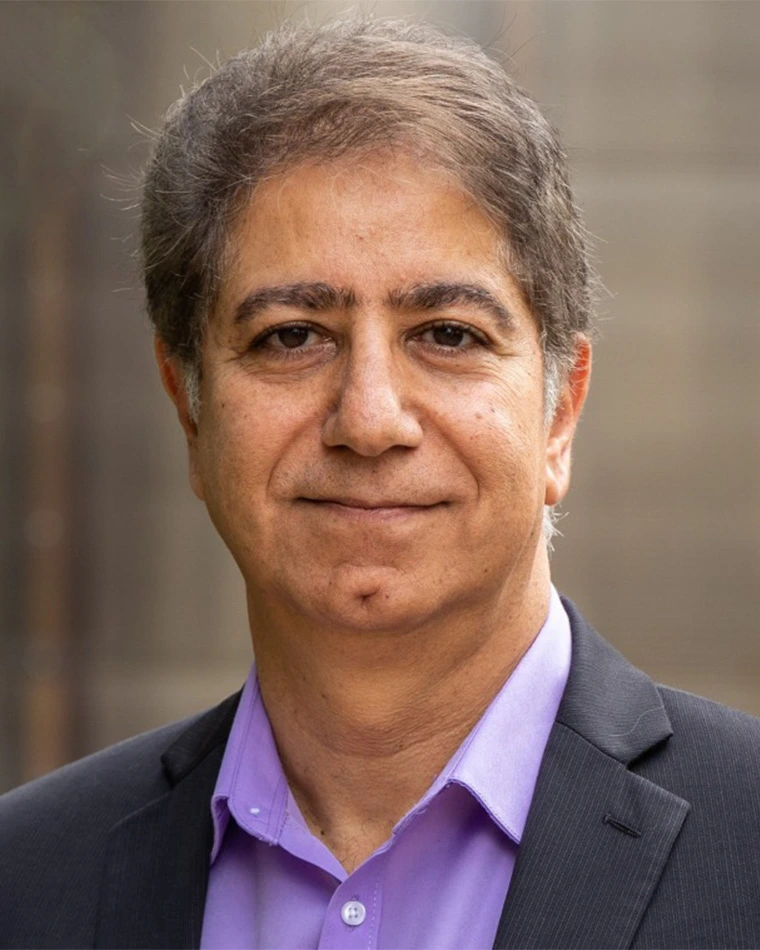
Philippe Ciblat is a Professor at TELECOM Paris Tech, affiliated with the Department of Signal Processing and Communications. His research spans signal processing, wireless communications, and machine learning applications in networking. He has collaborated extensively with institutions like the University of Paris-Saclay and international researchers in areas such as cooperative communication protocols, resource allocation, and coding theory. Research Interests: Machine learning for signal processing, wireless channel modeling (Rician fading), lattice decoding, caching strategies, and distributed optimization. Notable Work: Pioneered transformer-based packet scheduling, neural network approaches to lattice decoding, and effective capacity analysis in fading channels. His contributions include over 170 publications in top venues (IEEE Trans. Signal Process., IEEE Trans. Wireless Commun.) and collaborations with industry partners on practical implementations like cache-aided polar coding. He has advised multiple researchers in distributed systems and wireless resource management.
Kevin Lu is a Teaching Professor and Associate Dean for Undergraduate Studies at the Charles V. Schaefer, Jr. School of Engineering and Science at Stevens Institute of Technology . He holds a D.Sc. in Systems Science and Mathematics from Washington University in St. Louis and has over 40 years of experience in telecommunications R&D, academia, and standards development. Lu's career spans roles at Bellcore/Telcordia, Broadcom, and Stevens Institute of Technology. IEEE Life Senior Member since 1980 2018 transition from industry to academia after 28 years at Bellcore/Telcordia 2024 recipient of IEEE Standards Association Distinguished Service Award Research Interests: Focus on optical networks , telecommunications infrastructure , and Internet of Things education. His work explores network survivability , data integrity in AI systems , and passive optical network deployment . Current teaching includes courses on Digital System Design and Internet of Things . Standards Leadership: Lu chairs the IEEE Standards Board Industry Connections Committee and has served on multiple IEEE SA committees since 2005. His 2024 award recognized governance leadership in industry-standard development processes. Academic Contributions: Lu transitioned to full-time academia in 2018 after serving as Adjunct Professor at Stevens since 2015. His teaching philosophy emphasizes lifelong learning and soft skill development alongside technical knowledge. He received Stevens' Henry Morton Distinguished Teaching Professor Award and departmental teaching/service awards.
Prem Kumar is a Professor of Electrical and Computer Engineering at Northwestern University and Director of the Center for Photonic Communication and Computing. He is affiliated with the McCormick School of Engineering and the PhD Program in Applied Physics. His work focuses on advancing quantum communication, quantum sensing, fiber-optic systems, and photonic devices to enable secure quantum networks and ultrafast information processing. Prem Kumar holds a Ph.D. in Physics from the State University of New York at Buffalo (1980), an M.Sc. in Physics from the Indian Institute of Technology, Kanpur (1976), and a B.Sc. in Physics from the University of Delhi (1974). His research interests span quantum communications and quantum information processing, with a focus on quantum sensing, imaging, and fiber-optic technologies. He develops photonic systems for secure networking using quantum mechanics principles, emphasizing entanglement distribution and quantum light applications for precision measurements. Recent efforts include integrating quantum and classical communications in shared optical fibers and improving scalability of quantum-photonic systems with electronics. Recent articles highlight advancements in quantum wrapper networking, including noise mitigation strategies for classical-quantum coexistence, experimental quantum teleportation over deployed fiber, and CMOS-based quantum photonics. He explores scalable solutions for quantum light sources and network stabilization using feedback mechanisms. No scientific awards are mentioned in the text. His advising and grants narrative remains unspecified in the provided content, though his leadership in the Center for Photonic Communication and Computing indicates active research team coordination. He collaborates on projects like the Illinois Express Quantum Network (IEQNET), a metro-scale quantum networking initiative, and contributes to interdisciplinary labs involving photonics, electronics, and quantum mechatronics.
Dr. Graham Swift is the MSc Course Leader in the Department of Engineering and Mathematics at the College of Business, Technology and Engineering. He holds a BEng (Hons) and PhD in Engineering, and is a member of institutions such as MIET, CPhys, and FHEA. His research focuses on optical communications, signal processing, and the application of software tools for designing signal-based systems and devices. Education : BEng (Hons) in Engineering PhD in Engineering Research Interests : Dr. Swift specializes in optical time division multiplexing (OTDM), optical buffering, and all-optical systems. His work addresses challenges in high-speed optical networks, including signal demultiplexing, crosstalk analysis, and optical router design. He has contributed to advancements in nonlinear optical loop mirrors (NOLM), soliton-based control pulses, and semiconductor laser amplifier modeling. Advising & Grants : Supervised PhD theses by A.A. Als (2004), R. Gao (2003), and C.Y. Cheung (2001) Focus areas: optical packet networking, noise analysis in demultiplexers, and all-optical buffering Publications Trends : His articles span optical demultiplexing, terahertz systems, and educational pedagogy. Recent work emphasizes ultra-fast optical routers and student engineering education practices.
Conor McArdle is an Assistant Professor in the School of Electronic Engineering at Dublin City University (DCU). His research focuses on telecommunications networks, datacentre architectures, and optical switching technologies, supported by EU and SFI grants. He has co-authored over 40 publications and co-supervised four PhD students and one MEng student in topics like high-speed optical networks and packet switching protocols. His teaching includes object-oriented programming, network modeling, and algorithms. Research Interests: Optical networking for data centers Energy-efficient network design Telecommunications security Network performance analysis Recent publications emphasize agile optical data center networks, reconfigurable architectures, and hybrid buffering systems. He collaborates with industry on network management and security aspects of mobile networks. Grants & Awards: Extensive EU/SFI-funded projects on network performance and energy efficiency. No specific awards listed. Teaching: Coordinates modules in Algorithms for Engineers (EE324), Network Analysis (EE517), and Programming (EE219).
Guido Giuliani is an Associate Professor of Optoelectronics at the University of Pavia's Department of Industrial and Information Engineering. His research spans semiconductor lasers, silicon photonics, optical sensors, and non-contact laser measurement techniques. Giuliani co-founded Julight Srl, a photonics technology start-up developing sensor solutions. Research focuses on: Semiconductor laser dynamics and applications Silicon photonic devices and circuits Laser interferometry and vibrometry systems THz generation and detection techniques Optical methods for biomedical diagnostics His technical contributions include all-optical switching devices using semiconductor ring lasers, silicon micro-resonator filters, terahertz spectroscopy systems, and non-contact physiological monitoring techniques. Giuliani's work has been implemented in EU projects including FABULOUS (silicon photonics for optical access networks). He develops practical photonic solutions bridging fundamental research and industrial applications.
Maurizio Casoni serves as an Associate Professor of Telecommunications at the University of Modena and Reggio Emilia within the Department of Engineering 'Enzo Ferrari'. An IEEE Senior Member, he maintains active roles in research, teaching, and leadership of the Networking Laboratory (NetLab). His institutional affiliations include participation in European Commission-sponsored projects and chairing IEEE workshops. His research spans emergency communication systems, vehicular networks (V2X), 5G/6G architectures, and TCP/IP protocol optimization. Key focus areas include safety-critical applications for public safety networks, disaster recovery systems, and energy-efficient network designs. His work integrates theoretical modeling with extensive field trials in real-world environments like the Modena Automotive Smart Area. Analysis of his recent publications reveals a strong emphasis on vehicular safety systems (2023-2024), particularly V2X communication reliability and human-machine interfaces for cooperative driving. Earlier work (2019-2021) concentrated on TCP congestion control mechanisms for wireless networks and IEEE 802.11p performance optimization for emergency scenarios. His research consistently bridges academic theory with practical implementation through EU-funded projects. Casoni leads significant research initiatives including the European FP7 Project PPDR-TC (Public Protection and Disaster Relief – Transformation Center, 2013-2015) and the E-SPONDER project (2010-2014) focused on first-responder communication systems. His grants portfolio features collaborations with Alenia Spazio, CISCO Systems, and KLabs. He actively supervises thesis projects and teaches core courses including Technologies of Network Infrastructures and Fundamentals of Telecommunications. As director of the Networking Laboratory, he oversees experimental testbeds like NetBoxIT for heterogeneous network emulation and TEMPEST for packet scheduling evaluation. His team conducts field trials for emergency networks and vehicular communications, maintaining strong industry partnerships for real-world validation of research prototypes.
Josep Solé-Pareta is a Professor in the Department of Computer Architecture at the Polytechnic University of Catalonia (UPC), specializing in optical networking and telecommunications. His research spans optical burst switching, wavelength assignment algorithms, network planning, and emerging 5G network architectures. He has contributed significantly to the ALLIANCE project developing converged network solutions for 5G and beyond. His research interests focus on Optical Networks , Optical Communication , Broadband Networks , and Computer Architecture , with particular emphasis on physical layer impairments, routing algorithms, and network optimization. His work bridges theoretical network models with practical implementations in next-generation optical infrastructures. Analysis of his recent publications reveals a strong trend toward converged network architectures integrating optical transport with 5G wireless systems, energy-efficient network design, and machine learning applications for network monitoring. His research consistently addresses critical challenges in spectrum fragmentation, quality of transmission, and network resiliency across multiple generations of optical networking technologies. Professor Solé-Pareta has contributed to significant research projects including the ALLIANCE project for 5G network infrastructure. His work demonstrates consistent funding support for advanced research in optical networking and telecommunications infrastructure. He has been involved with the SMARTxAC platform used by the Supercomputing Center of Catalonia (CESCA) for monitoring the Catalan Research and Education Network. His research group appears to focus on optical network architectures, traffic engineering, and next-generation network planning methodologies.
Marwan Krunz is a Regents Professor in the Department of Electrical and Computer Engineering and holds a joint appointment in the Department of Computer Science at the University of Arizona, where he also serves as Site Director and Deputy Center Director for the NSF WISPER Center. He was the founding Director of the NSF Broadband Wireless Access and Applications Center (BWAC), which concluded in December 2024, and previously served as UA site director for Connection One, another NSF I/UCRC. He is an affiliated member of the UA Cancer Center and a member of the Graduate Faculty. PhD in Electrical Engineering, Michigan State University (1995) MS in Electrical Engineering, Michigan State University (1992) BS in Electrical Engineering, University of Jordan (1990) Dr. Krunz's research spans wireless networking, communications, and security, with a strong emphasis on AI and machine learning for resource management, dynamic spectrum access, MIMO systems, and physical-layer security in 5G and NextG networks. His work addresses critical challenges in network slicing, ultra-low-latency mobile edge computing, full-duplex transmissions, and IoT energy management. He integrates techniques from stochastic optimization, game theory, and deep learning to design intelligent and resilient wireless systems. The 15 most recent publications reflect a deep engagement with NextG wireless systems, focusing on AI-driven optimization, physical-layer vulnerabilities, spectrum sharing, and low-latency computing. These works span disciplines including computer science, electrical engineering, and cybersecurity, with sub-fields ranging from reinforcement learning for network control to mmWave security and V2X edge computing. The consistent theme is intelligent, adaptive, and secure wireless infrastructures for future applications. IEEE Fellow (2010) NSF CAREER Award (1998) IEEE Communications Society Distinguished Lecturer (2013–2014) Arizona Engineering Faculty Fellow (2011–2014) IEEE TCCC Outstanding Service Award (2012) Chair of Excellence, University of Carlos III de Madrid (2011) Fulbright Senior Specialist (2011) Distinguished Alumni Award, MSU (2020) Dr. Krunz has advised numerous graduate students and mentored research teams in wireless systems. His research has been funded by the National Science Foundation, U.S. Department of Defense, NASA, Qatar Foundation, and industry partners, with total funding exceeding $20 million. He has served as Editor-in-Chief of IEEE Transactions on Mobile Computing (2017–2020) and on editorial boards of multiple top-tier journals. He has chaired major conferences including WiOpt 2023 and WiSec’12, and served as TPC chair for INFOCOM’04 and WCNC’16. He has also acted as chief scientist and technologist for two wireless-focused startups. Dr. Krunz leads research teams within the NSF WISPER Center and previously directed the BWAC center, which included multiple universities and industry affiliates. His labs focus on experimental and theoretical aspects of wireless systems, including testbeds for 5G/NextG, AI-driven spectrum management, and secure communications. His teams collaborate across disciplines, including computer science, engineering, and cancer research through the UA Cancer Center affiliation.
Manya Ghobadi is an Associate Professor in the Department of Electrical Engineering and Computer Science at MIT, affiliated with the Computer Science & Artificial Intelligence Laboratory (CSAIL). Her research focuses on efficient systems for machine learning, cloud infrastructure, and reconfigurable networks. She holds appointments in both the School of Engineering and the Department of EECS at MIT. Education: PhD from the University of Toronto, prior experience at Microsoft Research and Google before joining MIT. Research Interests: Systems for ML, cloud infrastructure, data center networks, optical networks, hardware-software co-design, and network optimization. Publications: Over 50+ papers in top venues including SIGCOMM, NSDI, HotNets, and MLSys, with awards such as the NSF CAREER and Sloan Fellowship. Students: Advises 10+ PhD candidates including Mingran Yang (Microsoft Research Fellow) and Sudarsanan Rajasekaran. Awards: Sloan Fellowship, ACM SIGCOMM Rising Star, Optica Simmons Memorial Speakership. Labs/Teams: Leads research on photonic computing (NetBlocks, Lightning) and network optimization (Cassini, TopoOpt). Collaborates with industry partners like Juniper and Google.
Emmanuel Varvarigos is a Professor at the School of Electrical and Computer Engineering of the National Technical University of Athens (NTUA), where he directs the High Speed Communication Networks Laboratory (HSCNL). He holds a B.E. from NTUA (1988) and a Ph.D. from MIT (1992). His career includes roles as Assistant/Associate Professor at UCSB (1992–1998), Associate Professor at TU Delft (1998–1999), and Professor at the University of Patras (1999–2015). He has led major research initiatives, including directorships at the Greek School Network and EAIT/ICT-Diofantos. His research focuses on optical networks, smart grids, cloud computing, and network algorithms. Education: B.E. in Electrical & Computer Engineering, NTUA (1988) Ph.D. in Electrical Engineering & Computer Science, MIT (1992) His research interests span optical networking (flexible OFDM, elastic bandwidth), smart grid optimization, cloud-edge computing, and distributed system protocols. He has authored over 450 publications and led 35+ EU projects, including coordinations of H2020 initiatives like ORCHESTRA and FLEXGRID. Awards include the Vinton Hayes Award and NSF recognition. Current roles include HSCNL directorship, overseeing 5 postdocs and 10+ PhD students. His HSCNL lab addresses challenges in high-speed networks, data centers, and energy grids, collaborating globally on projects like ORCHESTRA (optical networks) and SOCIALENERGY (smart grids).