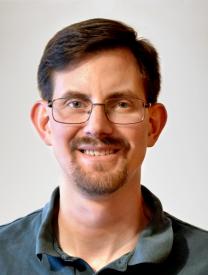
Dr. Irina Paci is a Professor of Chemistry at the University of Victoria, specializing in theoretical and computational chemistry. Her research focuses on understanding molecular self-assembly processes, particularly at solid surfaces, and developing multi-scale computational methods to model materials' dynamic behavior under external fields. She holds a PhD from Queen's University and completed postdoctoral research at Queen's and Northwestern University. Her work integrates Monte Carlo simulations, density functional theory (DFT), and quantum chemistry to study surface adsorption mechanisms, catalytic reactions, and nanocomposite dielectric properties. Key areas include cysteine adsorption on gold surfaces, palladium-catalyzed cross-coupling reactions, and the impact of solvent effects on reaction pathways. Recent studies explore aluminum oxide degradation in perovskite solar cells and quantitative reactivity models for nucleophilic aromatic substitution. Teaching interests span physical chemistry, quantum mechanics, and computational methods. Dr. Paci leads the Paci Research Group, which includes graduate students like Archita Adluri and Natalie Stubb, focusing on advancing computational methodologies for energy materials and surface science. Her lab's work bridges fundamental theory with applications in nanotechnology and sustainable energy systems.
Ian Manners was a distinguished Professor of Chemistry at the University of Victoria (UVic), holding the Canada 150 Research Chair. He previously held faculty positions at the University of Toronto (1990–2006) and the University of Bristol (2006–2018). His research focused on polymer chemistry, catalysis, and self-assembly-driven nanomaterials. He earned his BSc and PhD in Chemistry from the University of Bristol, followed by postdoctoral work at RWTH Aachen University and Penn State University. His research interests spanned the synthesis and application of advanced materials, including metallopolymers, crystallization-driven self-assembly, and functional nanofibers. He supervised over 150 students, postdocs, and researchers, many of whom became prominent academics and industry leaders. His contributions were recognized through prestigious awards, including the E.W.R. Steacie Prize and Royal Society of Chemistry De Gennes Prize. Dr. Manners authored over 800 peer-reviewed articles, with an h-index of 123. His work emphasized interdisciplinary collaboration, bridging polymer chemistry with applications in energy, biomedicine, and electronics. He served on editorial boards of top journals and was a sought-after keynote speaker at global conferences. He passed away in December 2023, leaving a legacy of groundbreaking science, mentorship, and a global research community profoundly impacted by his work.
Dr. Amy Sheppard is a Senior Lecturer at Aston Optometry School within Aston University's College of Health and Life Sciences. She serves as Deputy Head (Education) and maintains UK optometry registration. Her academic appointments include roles as External Examiner for the University of Central Lancashire's MSci Optometry programme and iPRO research adviser for the College of Optometrists. She also chairs Vision Care for Homeless People. Education: 2018: Master's in Education with Distinction (Aston University) 2014: Senior Fellow of Higher Education Academy 2010: PhD in Optometry (Aston University) 2003: BSc (Hons) Optometry, First Class Honours (Aston University) Research Focus: Dr. Sheppard's work centers on anterior eye physiology with specialization in Digital Eye Strain, ocular accommodation mechanisms, and presbyopia management. Her investigations employ clinical optometry approaches to address contemporary vision challenges, particularly screen-related visual fatigue and age-related focusing disorders. Recent work explores mobile health applications for vision assessment and AI integration in ophthalmic care. Publication Trends: Her recent articles demonstrate strong focus on digital eye health epidemiology, innovative myopia control interventions, presbyopia diagnostics, and technological applications in optometry. Collaborative work frequently addresses clinical guidelines development and vision-related public health challenges across different demographics. Awards & Honors: Senior Fellow of Higher Education Academy (2014) Fellow of UK Higher Education Academy (2013) Master's in Education with Distinction (2018) Academic Leadership: She leads modules in Clinical Practice (undergraduate) and Ageing Eye (postgraduate), supervises research dissertations, and directs educational initiatives. She accepts PhD students and contributes to curriculum development across optometry programs. Affiliations: Member of Optometry & Vision Science Research Group (OVSRG) and Aston Research Centre for Health in Ageing. Maintains active collaborations with national optometry organizations and international research teams.
Zijiang J He, PhD, is a Professor and Distinguished University Scholar in the Department of Psychological and Brain Sciences at the University of Louisville. His research focuses on visual perception, particularly the mechanisms underlying 3D depth perception and middle-level vision. He holds a B.S. in Biophysics from the University of Science and Technology of China (1983), M.S. in Neurobiology from Shanghai Institute of Physiology (1986), and Ph.D. in Physiological Optics & Neuroscience from the University of Alabama at Birmingham (1990). Postdoctoral training was completed at Harvard University (1994). Research interests include space vision mechanisms and middle-level vision processes. His lab explores how the brain integrates 2D retinal images into 3D spatial perception, leveraging virtual reality and psychophysical methods. Key contributions include studies on sensory eye dominance, binocular rivalry, and perceptual learning protocols for amblyopia. He leads the Visual Perception and Cognition Lab, emphasizing interdisciplinary approaches combining neuroscience, computational modeling, and behavioral experiments. Notable achievements include the Distinguished University Scholar title and impactful publications in *Nature*, *Science Advances*, and *Proceedings of the National Academy of Sciences*. His work bridges ecological regularities and neural processing, advancing understanding of visual system adaptations to spatial environments.
Domenic Forte is Professor and Steven A. Yatauro Faculty Fellow in the Department of Electrical and Computer Engineering at the University of Florida. He directs research on hardware security and trust at the Florida Institute for Cybersecurity (FICS) Research Scan Lab. Forte's innovations include anti-counterfeiting technologies for integrated circuits, protection against side-channel attacks, and hardware Trojan detection. Recent projects develop low-cost methods to detect recycled counterfeit chips using LDO-based odometers and defenses against optical probing attacks. His work integrates AI/ML approaches for hardware assurance challenges including SEM image analysis and X-ray tomography reconstruction.
Giorgos Mountrakis is a Professor in the Department of Environmental Resources Engineering at SUNY College of Environmental Science and Forestry (ESF). His research focuses on environmental monitoring using remote sensing, environmental modeling through geographic methods, and decision support systems for ecological and urban challenges. He holds a Dipl. Eng. from the National Technical University of Athens (1998), an M.S. (2000), and Ph.D. (2004) from the University of Maine. His work integrates advanced technologies like satellite imagery, LiDAR, and machine learning to address land cover dynamics, climate impacts, and wildlife conservation. Current advisees include Atef Amriche (PhD candidate in Geospatial Information Science), Babak Haji Seyed asadollah (PhD in Environmental Resources Engineering), Ahmadreza Safaeinia (PhD in Environmental Resources Engineering), and Zhixin Wang (PhD in Geospatial Information Science). Key research themes include: land use/cover classification using deep neural networks, climate change impacts on forests and rangelands, and optimizing spatial-temporal models for large-scale environmental analysis. His projects span global datasets (e.g., Landsat, MODIS) and regional case studies in the US, Mongolia, and Algeria. Publications emphasize methodological advancements in remote sensing, such as fusion of multisensor data, accuracy assessment frameworks, and applications in biodiversity conservation. His work bridges technical innovation with practical environmental decision-making, addressing issues like urban growth prediction and wildlife-vehicle collision mitigation.
Gitanjali Kolhatkar is an Assistant Professor in the Department of Engineering Physics at McMaster University and holds a Canada Research Chair in Bioinspired Smart Materials (Tier 2). She is also an Associate Member of the McMaster School of Biomedical Engineering. Her research focuses on developing smart materials for neuromorphic computing, leveraging ferroelectric materials to mimic synaptic functions while optimizing energy efficiency. Key techniques include microwave-assisted hydrothermal synthesis, magnetron sputtering, and advanced characterization methods like aSNOM and AFM-IR. Education: BSc and MSc in Physics, University of Ottawa (2008, 2010) PhD in Electrical Engineering, University of Sherbrooke (2014) Postdoctoral Fellowship, Institut National de la Recherche Scientifique (2015-2019) Alexander von Humboldt Fellow, University of Kiel, Germany (2019-2022) Research Interests: Neuromorphic materials, piezoelectric/ferroelectric systems, III-V semiconductors, thin films, photovoltaics, and smart sensors. Her work bridges material nanostructure and macroscopic properties to enable applications like artificial synapses, energy harvesters, and tactile sensors. Scientific Awards: Alexander von Humboldt Post-doctoral Fellowship Canada Research Chair (Tier 2) Invited Professorship at Munich University of Applied Sciences Teaching & Labs: Instructs courses in semiconductor devices (ENGPHYS 3PN4) and manufacturing (ENGPHYS 4Z04). Her lab (JHE A318/A313) focuses on interdisciplinary materials research. Current projects emphasize neuromorphic systems and bio-inspired smart materials.
Martin Erinin is an Assistant Professor in the Department of Mechanical Engineering at the University of Michigan . His research focuses on experimental fluid mechanics , with broad interests in multiphase flows , free-surface flows , and surfactant-dominated flows , alongside the development of optical measurement techniques for thermos-fluids . His work has significant environmental , naval , and industrial applications . Contact Details: Office: 2027 Automotive Lab, 1231 Beal, Ann Arbor, MI 48109-2133 Lab: G019 Automotive Lab Email: merinin@umich.edu Research Highlights: Studies ocean waves , air-sea interaction , and wave-particle transport mechanisms. Investigates ice accretion on marine structures and wave-ice sheet interactions . Develops experimental methods to analyze complex fluid dynamics systems.
Timothy A. McKay serves as the Arthur F. Thurnau Professor of Physics, Astronomy, and Education at the University of Michigan's College of Literature, Science, and the Arts (LSA), where he also holds the administrative role of Associate Dean for Undergraduate Education. His dual expertise bridges astrophysics research and educational innovation, with significant contributions to both observational cosmology and learning analytics. His educational background includes: B.S. in Physics from Temple University (1986) Ph.D. in Physics from the University of Chicago (1992) McKay's research spans two interconnected domains. In observational cosmology, he pioneered work with major astronomical surveys including the Sloan Digital Sky Survey (SDSS), Robotic Optical Transient Search Experiment (ROTSE), and Dark Energy Survey (DES), focusing on galaxy clusters, cosmic rays, and large-scale structure. Since 2015, he has strategically shifted toward learning analytics, applying data science to transform STEM education. His innovative projects include E 2 Coach (a personalized student support system) and the NSF-funded REBUILD initiative, which creates intergenerational research teams to develop evidence-based teaching practices across physics, chemistry, astronomy, biology, and mathematics. Analysis of his publication trajectory reveals a deliberate pivot from astrophysics to educational research around 2015. While his early work centered on galaxy clusters and cosmological phenomena, recent publications (2020-2024) overwhelmingly focus on systemic equity gaps in STEM education, data-driven interventions, and multi-institutional collaborations. This evolution demonstrates how his data science methodology transitions seamlessly between cosmic structures and educational ecosystems. His scientific recognition includes: Prestigious Arthur F. Thurnau Professorship (awarded for exceptional undergraduate teaching) McKay directs the NSF-funded REBUILD project and the Digital Innovation Greenhouse, securing substantial research funding while mentoring undergraduate and graduate students in interdisciplinary teams. His work with the Big Ten Academic Alliance (CIC) has generated cross-institutional studies on grading patterns, performance disparities, and student support systems, with practical applications implemented across multiple universities. He actively collaborates with faculty across STEM disciplines to develop scalable educational technologies. His research infrastructure includes the Digital Innovation Greenhouse (an educational technology incubator) and REBUILD project teams, which integrate undergraduates, graduate students, postdocs, and faculty in evidence-based educational research. These teams operate at the intersection of data science and pedagogy, developing tools that analyze institutional datasets to personalize student support while maintaining rigorous scientific methodology.
Professor Andrew Maiden is a faculty member at the University of Sheffield's School of Electrical and Electronic Engineering, specializing in Computational Imaging. He leads the Semiconductor Materials and Devices Research Group. His research focuses on advancing optical systems through computational methods like ptychography, which enhances microscopy and imaging precision. With a PhD from Durham University (2005) and an MEng from the University of Birmingham (2001), Maiden's career includes pioneering work with Professor John Rodenburg on ptychography and a brief industry stint commercializing microscopy technologies. He teaches Digital Signal Processing (DSP) to third-year students and advises researchers such as Cao S (PhD graduate). Research interests include Coherent Diffractive Imaging (CDI), electron microscopy phase imaging, and inverse problem solutions. His work bridges computational algorithms with practical applications in optics and materials science. Maiden has contributed to over 50 peer-reviewed publications and holds patents on ptychography-related imaging techniques. His lab focuses on developing high-resolution imaging tools without traditional lenses, emphasizing low-dose radiation and high-throughput bio-imaging. Teaching and mentorship play key roles in his academic contributions, shaping future engineers in signal processing and computational methods. Collaborations span academia and industry, reflecting his dual focus on innovation and real-world application.
Caglar Oskay is the Cornelius Vanderbilt Professor of Engineering and Chair of the Department of Civil and Environmental Engineering at Vanderbilt University. He is also a Professor of Mechanical Engineering. His research focuses on multiscale computational modeling of material and structural systems under extreme conditions, with expertise in composite materials, failure mechanisms, and computational mechanics. Dr. Oskay earned his Ph.D. in Civil Engineering from Rensselaer Polytechnic Institute (2003) and has held academic roles there before joining Vanderbilt in 2006. He was honored as an ASME Fellow in 2017 and as a Chancellor Faculty Fellow in 2016. Key research areas include multiscale failure modeling, life prediction of heterogeneous materials, and computational methods for composites and multiphysics systems. His work integrates advanced simulation techniques with experimental validation, addressing challenges in infrastructure resilience, additive manufacturing defects, and quantum computing applications in engineering. Education: Ph.D., Civil Engineering, Rensselaer Polytechnic Institute (2003) M.S., Civil Engineering, Rensselaer Polytechnic Institute M.S., Applied Mathematics, Rensselaer Polytechnic Institute B.S., Civil Engineering, Middle East Technical University Recent research highlights include stochastic modeling of geotechnical infrastructure failures, quantum-enhanced finite element methods, and predictive analytics for additive manufacturing defects. He leads interdisciplinary efforts on backward erosion piping in flood protection systems and has secured grants for multiscale modeling of titanium alloys and composites. Awards: ASME Fellow (2017) Chancellor Faculty Fellow (2016) Advising and grants: Dr. Oskay’s grants include NSF-funded studies on backward erosion piping and quantum computing applications. His research group collaborates with industry partners on materials for aerospace and energy sectors, emphasizing computational tools for failure prediction and material design. His work bridges computational mechanics with practical engineering challenges, advancing methods for infrastructure resilience, advanced materials, and sustainable design through multiscale modeling innovations.
Cristiano Porciani is Professor of Astrophysics at the University of Bonn's Argelander Institute for Astronomy, specializing in cosmological structure formation and galaxy evolution. He leads a research group working on numerical simulations of large-scale structure and theoretical cosmology. His research focuses on dark matter distribution, galaxy bias, and cosmological parameter estimation using perturbation theory and high-performance computing. Recent work examines relativistic effects in large-scale structure and intensity mapping techniques. Publications show strong emphasis on Euclid mission science, including instrument characterization, survey simulations, and cosmological tests. Article trends reveal consistent development of statistical methods for analyzing next-generation sky surveys. Supervises 9 graduate students working on cosmological simulations, galaxy clustering statistics, and radiative transfer modeling. Leads research projects within the Euclid Consortium and Transregional Collaborative Research Centre.
Miroslaw Bober is Professor of Video Processing at the University of Surrey, where he joined in 2011. He leads the Visual Media Analysis team within the Centre for Vision, Speech and Signal Processing (CVSSP) in the School of Computer Science and Electronic Engineering. His extensive industry experience includes 15 years as General Manager of the Mitsubishi Electric R&D Centre Europe and Head of Research for its Visual & Sensing Division. BSc and MSc in Electrical Engineering from AGH University of Science and Technology, Krakow, Poland (1990) MSc in Machine Intelligence with distinction from Surrey University (1991) PhD in Computer Vision from Surrey University (1995) Professor Bober's research focuses on novel techniques in signal processing, computer vision and machine learning with applications in industry, healthcare, big-data and security. His expertise particularly lies in image and video analysis and retrieval, including visual search, object recognition, and analysis of motion, shape and texture. His algorithms for shape analysis, image/video fingerprinting, and visual search are considered world-leading and have been selected for ISO International standards within MPEG, with applications used by organizations like the Metropolitan Police. His recent publication trends show a strong focus on hybrid network architectures, scene graph generation, medical imaging applications, and augmented reality publishing systems. His work spans both theoretical advancements in computer vision and practical implementations addressing real-world challenges in media, healthcare, and security domains. The research demonstrates a consistent pattern of bridging academic innovation with industrial applications, particularly in visual search technology and media analysis. Presidential Award for strengthening the TV business in Japan via innovative 'Visual Navigation' content access technology (2010) Mitsubishi Best Invention Award for Image Signature Technology (2008) Professor Bober serves as Programme Director for the MSc in Multimedia Signal Processing and Communications and holds various teaching and mentoring roles. He has secured over 30 research and industrial grants totaling more than £16M, including the BRIDGET FP-7 project (5.28 M€) as coordinator and PI, and the CODAM project (£1.05 M) as PI. His work with the BBC, Huawei, and other industry partners demonstrates strong industry-academia collaboration. As chair of MPEG technical work on Compact Descriptors for Visual Search (CDVS) and Compact Descriptors for Video Analysis (CDVA), Professor Bober leads international standardization efforts. His Visual Media Analysis team develops cutting-edge visual search and media analysis algorithms with applications across broadcast, security, and healthcare domains.
Uwe Klemradt is a Professor in the Department of Physics at RWTH Aachen University. His research focuses on experimental condensed matter physics, with a strong emphasis on advanced characterization techniques such as X-ray scattering and in situ studies of thin film growth. Key areas include ferroelectric materials, phase transitions, and nanotechnology. His work often involves the exploration of material properties at surfaces and interfaces, leveraging synchrotron radiation and laboratory-based light sources. Recent studies include investigations into the crystallization dynamics of BaTiO3 thin films, resistive switching in oxide films, and the structural evolution of heterostructures. Notable contributions span thin film deposition methods, such as RF sputtering, and the analysis of material behavior under external fields (e.g., magnetic field-induced ferroelectricity). His research bridges fundamental physics with applications in electronics and nanotechnology. No scientific awards are explicitly listed. His advising and grant activities are not detailed in the provided texts. The Department of Physics at RWTH Aachen University serves as his primary affiliation, with access to advanced experimental facilities.
James E. Aguirre is an Associate Professor in the Department of Physics and Astronomy at the University of Pennsylvania. His research focuses on understanding galaxy formation, cosmology, and large-scale structure through advanced instrumentation and observational techniques. He leads projects such as HERA (Hydrogen Epoch of Reionization Array) and TIM (Terahertz Intensity Mapper), dedicated to studying the early universe and distant star-forming galaxies. Aguirre’s work involves cutting-edge millimeter-wave and radio instrumentation design, including Z-Spec, PAPER, and MUSTANG. He has contributed to significant discoveries, such as detecting massive water reservoirs around quasars and determining distances to gravitationally lensed galaxies. Supported by NSF grants, his research bridges observational astronomy with cosmological theory. Education: Ph.D. in Astrophysics (thesis work on TopHat balloon-borne telescope). Teaching: ASTR011 Introduction to Astrophysics I. Current Projects: HERA, TIM, Simons Observatory, and PAPER. Grants: NSF Grant No. 0807990 and others. His research group collaborates on instrumentation like the Bolocam Galactic Plane Survey and explores techniques for mitigating calibration errors and improving signal analysis in radio interferometry. Aguirre’s efforts advance both observational methods and our understanding of cosmic evolution from the epoch of reionization to present-day galaxy formation.