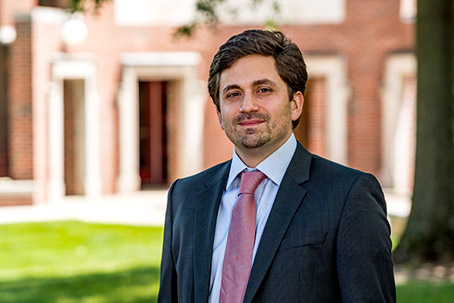
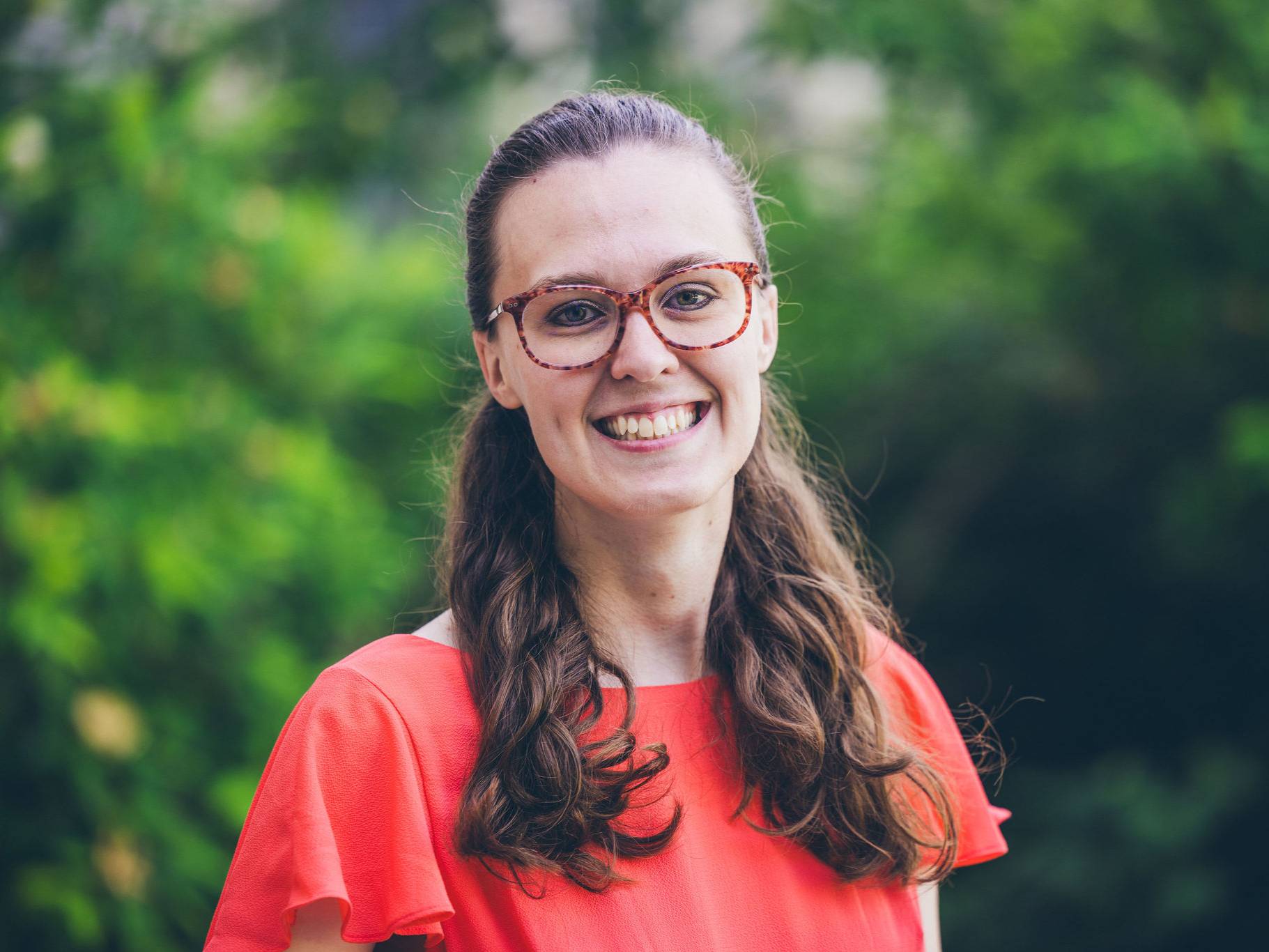
Xiuhao Deng is an Associate Research Fellow and PhD Supervisor at the Institute of Quantum Science and Engineering, Southern University of Science and Technology (SUSTech), with adjunct positions at Pengcheng Lab and Hefei Lab. He obtained his B.S. in Modern Physics from University of Science and Technology of China (USTC) in 2005, followed by an M.S. in Atomic and Molecular Physics from USTC (2009) and a Ph.D. in Physics from University of California, Merced (2015). Research Interests: Driven quantum systems Quantum control theory and open quantum systems Superconducting and spin qubits Quantum error correction Quantum simulation Quantum computing His work focuses on robust quantum gate engineering, scalable quantum control, and error mitigation in multi-qubit systems. Recent publications emphasize geometric correspondence methods, noise resilience, and hardware optimization. Academic Activities: Organized QIP 2020 (international quantum conference) Reviewer for Phys. Rev. X , Phys. Rev. Lett. , and other journals Transferred to Shenzhen International Quantum Academy in 2025 after tenure at SUSTech
Richard D. Wesel is an Associate Dean for Academic and Student Affairs at a College of Engineering, where he has held leadership roles such as Vice-Chair of the Electrical Engineering Department. With Ph.D. and M.S. degrees in Electrical Engineering from Stanford University and MIT respectively, his research focuses on communication theory and channel coding, particularly low-density parity-check (LDPC) codes and turbo codes for efficient data transmission over noisy channels. Education: MIT (B.S., M.S.), Stanford (Ph.D.) Leadership: Associate Dean, Former Vice-Chair of Electrical Engineering Wesel's research explores advanced techniques for broadcast and multiple-access communication systems, emphasizing applications in wireless LANs, satellite communications, and optical networks. His work integrates machine learning with traditional decoding algorithms, as seen in recent publications on neural-network-optimized LDPC decoding and parallel trellis-stage-combining methods for high-throughput systems. His articles demonstrate a focus on finite-blocklength coding, including CRC-aided list decoding for convolutional and polar codes, and voltage optimization strategies for flash memory reliability. Wesel has authored over 100 publications and led a research group that won the 2006 Design Automation Conference's top award for optical multiple access design. Scientific Awards: National Science Foundation CAREER Award Okawa Foundation Award As an educator, Wesel received the TRW Excellence in Teaching Award in 2000 and has contributed to academic governance through roles on the Faculty Executive Committee and Undergraduate Council. His work bridges theoretical communication systems with practical implementations, including FPGA-based decoders and adaptive coding for fading channels.
Dante Fratta is a Professor in the Department of Civil & Environmental Engineering at the University of Wisconsin-Madison, where he has been actively involved in research and teaching since 2000. His work focuses on geotechnical engineering, environmental monitoring, and fiber optic sensing technologies. Education: PhD (1999) – Georgia Institute of Technology M.A.Sc. (1995) – University of Waterloo Diploma (1993) – Universidad Nacional de Córdoba Research Interests: Geomaterial process evaluation using elastic and electromagnetic waves, fundamental physical behavior of soils and rocks, geophysical assessment of near-surface environments, and distributed fiber optic sensing methods. Recent Publication Trends: He has pioneered applications of Distributed Acoustic Sensing (DAS) and fiber optic technologies for geotechnical, environmental, and energy infrastructure monitoring, including wind turbines, geothermal systems, and mining operations. Scientific Awards: Benjamin Smith Reynolds Award for Excellence in Teaching (2012) Chi Epsilon Excellence in Teaching Award (2008) Best Paper Award, GeoCongress Sensing Methods and Devices Track (2006) Distinguished Alum, Universidad Nacional de Córdoba (2013) Multiple keynote and invited speaking engagements Teaching: Fratta teaches graduate and undergraduate courses in geotechnical engineering, including Foundations, Applied Geophysics, and Pre-Dissertator Research, with active involvement in Spring 2025 classes.
Corinne Dejous is a Professor at the University of Bordeaux, affiliated with IMS Bordeaux (Institut des Matériaux et Systèmes Microélectroniques de Bordeaux) within the College of Engineering. She leads research in the WAVES group, specifically in the DEVICES, MATERIALS, ZEROPOWER team, focusing on advanced sensor technologies. Her work bridges microelectronics, nanotechnology, and environmental monitoring applications. Her primary research interests include acoustic wave sensors, particularly Love wave devices, microwave sensors, biosensors, microfluidics, and energy harvesting for wireless sensor networks. Dr. Dejous has pioneered developments in multiparameter sensing for complex liquids, heavy metal detection, humidity monitoring, and flexible sensor platforms. Her research demonstrates a strong emphasis on practical applications for environmental monitoring, healthcare, and Internet of Things (IoT) technologies. Analysis of her recent publications reveals a consistent focus on advancing sensor sensitivity and reliability through novel materials (including nanomaterials and polymers), innovative modeling approaches (FEM and equivalent circuit models), and hybrid sensing platforms that combine acoustic, optical, and electrical measurement techniques. Her work increasingly addresses sustainability concerns, with research on green laboratory practices and reduced environmental impact of sensor technologies. Dr. Dejous maintains active collaborations with researchers across multiple institutions and has contributed significantly to both fundamental sensor science and practical implementations. Her work spans from theoretical modeling to device fabrication and real-world testing, including field deployments such as in the Amazon River for water quality monitoring.
Professor Yonathan Shapir is a full Professor in the Department of Physics at the University of Michigan, with a joint appointment in Chemical Engineering. Since his arrival in 1985, he has advanced from Assistant Professor to full Professor, pursuing theoretical condensed-matter physics and statistical mechanics. Education: B.Sc. in Physics, Tel-Aviv University (1971) Ph.D. in Physics, Tel-Aviv University (1981) Research Interests: Professor Shapir’s work centers on understanding complex disordered systems through statistical mechanics. His investigations encompass critical phenomena in spin-glasses and random-field systems, classical and quantum transport in dirty metals leading to the metal-insulator transition, polymer statistics, fractal properties of percolation clusters, and kinetic models of surface growth and aggregation. These themes are unified by a deep interest in scaling laws, universality, and the emergent geometry of random media. Publication Trends: Between 2001 and 2010, his articles reveal a concentrated effort on diffusion in dynamically disordered environments, scaling behavior of growing surfaces, and the morphology of organic thin films such as pentacene. Earlier work (1996–2000) explored critical dynamics of dendrimers, surface growth on disordered substrates, and transitions in crystalline roughness. The breadth spans from fundamental statistical-physics questions to applications in materials science and organic electronics. Scientific Awards: Fulbright Award (1981) Bourse Joliot-Curie (1982) Visiting Compton Fellowship at the Technion (1989–1990) Advising & Grants: No explicit lists of students or current funding are provided in the material; however, his extensive publication record with numerous co-authors suggests active mentoring and collaboration. Future directions likely continue along the interface of statistical mechanics and nanoscale materials. Labs & Teams: While no specific laboratory names are given, Professor Shapir’s joint appointment implies active participation in both the Physics Department and the Chemical Engineering program, fostering interdisciplinary teams working on materials growth, transport phenomena, and computational statistical physics.
Everett A. Lipman is an Associate Professor in the Department of Physics at the University of California, Santa Barbara. His research focuses on experimental biological physics, particularly using single-molecule techniques to study protein folding, DNA synthesis, and molecular motors. Dr. Lipman received his B.A. in Physics with Honors from the University of Chicago in 1991, followed by his M.A. (1993) and Ph.D. (1998) in Physics from UC Berkeley. His doctoral work, "Studies of Evolved Stars with a Mid-Infrared Interferometer," was supervised by Professor Charles Townes and Dr. William Danchi. Lipman's research interests span several areas of biophysics including protein folding dynamics, single-molecule spectroscopy, DNA synthesis mechanisms, and nanoscale optical devices. His work has significantly advanced our understanding of molecular processes at the single-molecule level, particularly in elucidating the mechanisms of protein folding and the operation of molecular motors. He has developed innovative techniques such as nanoscale optical encoders for tracking molecular processes with unprecedented precision. His publication record demonstrates consistent contributions to high-impact journals including Nature, Science, PNAS, and the Journal of Physical Chemistry. His research has evolved from early work in astrophysics (infrared interferometry) to his current focus on biological physics, showing remarkable interdisciplinary breadth. Hellman Family Foundation Faculty Fellow (2008) UCSB Department of Physics Outstanding Teaching Award (2008) UCSB Residence Halls Association Outstanding Professor (2005-2006) Alfred P. Sloan Research Fellow (2005) National Science Foundation Graduate Fellow (1991-1994) Member, United States Physics Olympiad Team (1987) Dr. Lipman has mentored several graduate students to completion of their PhDs, including Charles E. Wickersham (2010) and Shawn H. Pfeil (2009). His research has been supported by prestigious organizations including the Hellman Foundation, Sloan Foundation, National Science Foundation, and HFSP. He teaches advanced physics courses including Physics 128 and Physics 129, focusing on computational methods and experimental techniques in physics.
Brandon Chalifoux serves as an Assistant Professor at The University of Arizona's Wyant College of Optical Sciences and Department of Aerospace and Mechanical Engineering. His research focuses on enabling next-generation space telescopes through precision fabrication, mounting, and alignment of lightweight optical mirrors, with applications spanning astronomy, Earth observation, and space infrastructure development. His educational background includes: Ph.D. in Optical Sciences, Massachusetts Institute of Technology, 2019 M.S. in Optical Sciences, Massachusetts Institute of Technology, 2014 B.S. in Physics, Rice University, 2008 Chalifoux's research centers on stress-based surface shaping, precision engineering, ultrafast laser optical material processing, and astronomical optics. Through the Lightweight Optics Lab, he develops experimental and analytical techniques for manufacturing and aligning thin mirrors, with current projects targeting X-ray mirror metrology, laser stress figuring, and optical assembly methods critical for future high-resolution space telescopes. His recent publications (2023-2025) demonstrate concentrated advancements in ultrafast laser stress figuring (ULSF) for optical surface correction across thin mirrors and X-ray telescope optics. Key themes include material behavior analysis in fused silica and glass, stress generation mechanisms, and novel metrology techniques like axial shift mapping, establishing foundational methodologies for space-based optical systems. Scientific Awards: No awards mentioned in source material Chalifoux has successfully advised graduate students including Dr. Hayden Wisniewski (PhD, 2023), now a metrology engineer at ASML, and Alex St. Peter (Masters, 2023). His lab secures research funding for optical engineering projects with emphasis on space telescope technology, featuring significant collaborations with MIT on stress tensor mesostructures and laser-based figuring techniques. The Lightweight Optics Lab operates at the forefront of space optics research, conducting projects from fundamental laser-material interactions to X-ray mirror segment assembly. Current team efforts focus on ultrafast laser stress figuring for mirror correction and advanced metrology for near-cylindrical surfaces, directly addressing challenges in next-generation astronomical instrumentation and space infrastructure.
Paolo Samorì is a Professor at the University of Strasbourg and holds multiple leadership roles, including Deputy Director of the Institute of Supramolecular Science and Engineering (ISIS) and Director of the Nanochemistry Laboratory . He received his Laurea (Master's) in Industrial Chemistry from the University of Bologna (1995) and PhD in Chemistry from Humboldt University of Berlin (2000) under Prof. J.P. Rabe. His research focuses on nanochemistry, supramolecular science, materials chemistry, and scanning probe microscopies , with a strong emphasis on graphene, 2D materials, and hybrid nanomaterials for optoelectronics, energy, and sensing applications. His recent publications (470+ total) highlight advancements in: Crystal engineering of organic and inorganic materials Thermoelectric and supercapacitor systems using MOFs and MXenes Neuromorphic devices leveraging biopolymer hydrogels and optoionic effects Photodetection and photothermal conversion in 2D heterostructures Sensing technologies including SERS, SEIRAS, and electrolyte-gated transistors Samorì has received numerous scientific awards , including ERC grants, CNRS Silver Medal, and multiple international prizes. He serves as Associate Editor of ACS Nano and holds advisory roles for journals like Advanced Materials and Chemical Communications. His affiliations include the Royal Society of Chemistry , European Academy of Sciences , and German National Academy of Sciences and Engineering .
Bernardo Tellini is a Full Professor of Electrical and Electronic Measurements at the Department of Energy, Systems, Land, and Construction Engineering (DESTEC) at the University of Pisa, where he also serves as Vice-Rector for Doctoral Research. He has held this institutional role since 2020, overseeing doctoral program planning, accreditation, and admission procedures. Previously, he chaired the doctoral program in Energy, Electrical, and Thermal Engineering from 2012 to 2016 and served on the Leonardo da Vinci Doctoral School in Engineering from 2008 to 2016. Education: PhD in Electrical Engineering, University of Pisa (1999) Degree in Electrical Engineering, University of Pisa (1993) Postdoctoral research at Karlsruhe Research Center for Technology and Environment Industry experience at ABB Tellini's research focuses on electrical and magnetic measurement methodologies for high-power pulsed applications, characterization of electrical and magnetic properties of materials, aging processes in battery cells, and electromagnetic emissions from power circuits. His work spans from fundamental measurement theory to practical industrial applications, particularly in railway technologies where he represents the University on the Steering Committee of the District for Railway Technologies, High-Speed, and Network Safety in Tuscany. He has served as president of the European Pulsed Power Laboratories agreement and chaired major IEEE conferences including I2MTC 2015 and MELECON 2020. His recent publications reveal a strong emphasis on RFID-based localization systems , nanoparticle-enhanced optical sensors , and advanced battery characterization techniques . The research trajectory shows increasing integration of measurement science with emerging technologies like plasmonic sensing, microwire-based transducers, and smart systems for industrial monitoring. His team has developed innovative approaches for battery health monitoring under vibration stress, temperature sensing using magnetic materials, and precise localization methods using phase-based RFID systems. Professional Service: President of Italian Section of IEEE (2019-2021) Scientific director of Pisa research unit in Association of Electrical and Electronic Measurements (GMEE) Member of Certification Committee of Italcertifer SpA (since 2019) Representative on District for Railway Technologies Steering Committee (since 2013) Tellini has authored approximately 200 publications in international journals and conference proceedings. His leadership extends to academic governance through roles on the DESTEC Department Human Resources Committee and various university committees overseeing scientific qualifications and doctoral programs. His research bridges theoretical measurement principles with practical engineering solutions for energy systems, transportation infrastructure, and industrial monitoring applications.
Laurent Bellaiche is a Distinguished Professor in the Department of Physics within the College of Arts and Sciences at the University of Arkansas. His research focuses on computational condensed matter physics with emphasis on ferroelectrics, multiferroics, and semiconductor materials. He leads the Computational Condensed Matter Physics (CCMP) Group and serves as a founding member of the Smart Ferroic Materials Center. His primary research interests include: Developing first-principles methods for predicting properties of ferroelectrics and multiferroics Investigating topological defects, spin liquids, and magnetic skyrmions Studying non-equilibrium effects for neuromorphic computing applications Optimizing electro-optic, electrocaloric, and piezoelectric effects Designing antiferroelectrics for high-energy-density applications Professor Bellaiche's recent publications (2024-2025) demonstrate significant activity in topological polar structures, skyrmion engineering, strain-induced phenomena, and computational design of functional materials. His work shows strong interdisciplinary connections between condensed matter theory, materials science, and device physics with particular emphasis on emergent topological phenomena in low-dimensional systems. Scientific awards include: Twenty-First Century Professorship in Nanotechnology and Science Education NSF CAREER Awardee Bellaiche maintains active collaborations with experimental groups internationally, particularly with CentraleSupélec in France. He is involved in innovative educational initiatives including a course titled "Thinking Outside the Box: Physics, Soccer and much more" and contributes to the Soccernostalgia podcast. His research group emphasizes both fundamental theoretical advances and practical applications in next-generation electronic and energy materials.
Professor Geoff Duller has been a faculty member at Aberystwyth University's Department of Geography & Earth Sciences since 1995, holding a Personal Chair since 2005. He studied Geography at St Catherine's College Oxford (BA 1987), completed his PhD in 1992 at Aberystwyth on luminescence dating of Quaternary sediments in New Zealand, and established the Aberystwyth Luminescence Research Laboratory in 2000. His research focuses on luminescence dating method development and application, particularly for Quaternary environmental change studies. Key contributions include creating single-aliquot dating methods and leading the NERC-funded BRITICE-Chrono project for ice sheet deglaciation chronology. He serves as Associate Editor of Radiation Measurements and editor of Journal of Quaternary Science , with editorial board membership at Ancient TL . His article portfolio demonstrates expertise in: Luminescence signal analysis (2025: IRPL/IRSL in feldspars; 2024: opercula thermoluminescence) Quaternary chronology (2025: Thar desert floodouts; 2024: Tibetan glaciofluvial sediments) Methodological innovation (2025: EMCCD crosstalk reduction; 2024: pIRIR protocol optimization) Scientific recognition includes the Bigsby Medal (2012). Current supervision includes PhD students Robyn Pinder, Svenja Riedesel, and Nina Ataee. He co-directs the Aberystwyth Luminescence Research Laboratory and manages specialized equipment including Risø luminescence readers.
Dr. Thangavel Thevar is a Senior Lecturer in the School of Engineering at the University of Aberdeen, where he has been teaching since 2005. He completed both his undergraduate degree (First Class Honours in Electrical Engineering) and PhD (in Laser Engineering) at the University of Aberdeen in 1989 and 1993 respectively. Prior to his academic career, he accumulated approximately 10 years of industrial R&D experience in the USA, working on solid-state laser development and holographic applications. Dr. Thevar's research focuses on several key areas: Digital holography for imaging of marine plankton and micro-particles Laser Induced Breakdown Spectroscopy (LIBS) for subsea applications Laser-based instrumentation development Development of solid-state lasers for scientific, industrial, and medical applications Engineering applications of holography His most notable recent achievement is leading a team that developed the weeHoloCam, a state-of-the-art ultracompact underwater holographic camera for imaging microorganisms. Weighing just 3.5 kg, this system is the lightest and most compact of its kind, capable of imaging 240 ml/s and continuously recording up to 200,000 holograms. The system incorporates a rapid hologram processor and an AI-based image classifier. This technology has significant applications in marine studies including spatial and temporal monitoring of plankton species, monitoring harmful plankton & micro-jellyfish, study of vertical transport of floc, and monitoring microplastic pollution in the ocean. Dr. Thevar has secured numerous research grants as Principal Investigator, including projects funded by Sustainable Aquaculture Innovation Centre (SAIC), BBSRC, DEFRA, and Defence & Security Accelerator (DSTL). His current research portfolio demonstrates strong interdisciplinary connections between optical engineering, marine science, and environmental monitoring. His scientific contributions include: Royal Academy of Engineering Visiting Teaching Fellow Award (2010-2013) US patent 8,494,012 B2 for Raman converters Development of alexandrite lasers and ruby holographic lasers during his industrial R&D period Work on US government contracts for non-destructive inspection methods for military aircraft and the space shuttle Sabbatical work at NASA Langley Research Centre developing diode pumped Thulium YALO lasers As an educator, Dr. Thevar has served as Coordinator of MSc Oil & Gas Engineering (2007-2020), Undergraduate Level 1 Coordinator, and has contributed to various committees including Quality Assurance and Students' Progression. He currently teaches courses including Principles of Electronics, Electrical & Mechanical Systems, Control Systems, and supervises individual projects at both undergraduate and postgraduate levels. He is accepting PhD students interested in Engineering research. Dr. Thevar is actively involved in professional organizations, serving as Technical Programme Chair for IEEE/OES Oceans Conference 2007, on organizing committees for various conferences, as a committee member of the Instrument Science and Technology Group (Institute of Physics), and as a member of both IET and IEEE. He also serves as a reviewer for optics-based journals.
Professor Richard Bailey is Professor of Environmental Systems at the University of Oxford's School of Geography and the Environment. He serves as a Tutorial Fellow and Dean of St Catherine's College, a Senior Research Fellow at the Institute for New Economic Thinking, and a member of the Oxford Biodiversity Institute. Bailey co-directs the Oxford Luminescence Dating Laboratory and leads the CoHESys-lab research group focused on complex human-environmental systems. Richard's research centers on the dynamics of natural environmental systems and coupled human-environment interactions across various timescales. His work employs mathematical modeling, numerical simulations, and empirical data analysis to understand complex systems, with a strong focus on sustainability applications, particularly in ocean systems. The CoHESys-lab develops models that integrate machine learning methods to explore implementable policies for environmental challenges. His recent publications demonstrate a strong trend toward interdisciplinary research combining environmental science, computational modeling, and sustainability. Bailey's work spans from theoretical explorations of complex systems to applied projects addressing pressing issues like plastic pollution, fisheries management, and climate change impacts on marine ecosystems. His research increasingly incorporates agent-based modeling and machine learning approaches to tackle coupled human-environment challenges. Co-Director of Oxford Martin School Programme on Sustainable Oceans Co-Director of Oxford Luminescence Dating Laboratory Leader of CoHESys-lab research group Professor Bailey currently supervises graduate students Maike Nowatzki (focusing on dunefield morphology using deep learning) and Thomas Youngman (working on macroeconomic modeling for UK climate transition). His recent advisees include Emily Neil (rewilding impacts at Knepp Estate) and Diana Bailey (LM OSL analysis techniques). His research is supported through collaborations with organizations including Ocean Conservancy, Stanford University, George Mason University, and the University of California at Santa Barbara, with computational support from Amazon Web Services. Bailey leads the CoHESys-lab (Complex Human Environmental Systems Simulation Laboratory), which develops sophisticated models for understanding coupled human-environment systems. His OSIRIS framework (Ocean Systems Interactions, Risks, Instabilities and Synergies) represents a significant contribution to analyzing multiple stressors on marine systems. The lab maintains strong collaborations with environmental organizations and academic institutions worldwide to address sustainability challenges through innovative computational approaches.
Kosta Popovic serves as Associate Department Head and Associate Professor in the Department of Physics and Optical Engineering at Rose-Hulman Institute of Technology. His expertise lies in the design and development of Multimodal Medical Imaging Systems for Surgical Guidance and Diagnostics, with active supervision of undergraduate research projects spanning X-ray imaging phantoms and CNN-based medical image analysis. His educational background includes: PhD in Physics from the University of Virginia (2013) BA in Physics and Mathematics from Hamilton College (2006) Dr. Popovic's research integrates medical imaging device engineering with computational analysis techniques, focusing on gamma camera development, surgical guidance systems, and multimodal imaging integration. His teaching philosophy emphasizes hands-on laboratory experiences, covering Introductory Physics, Advanced Physics Labs, Physics of Medical Imaging, and Nuclear Physics curricula. His publication trends reveal consistent contributions to medical imaging hardware (gamma cameras, SPECT systems) and educational pedagogy, with recent work emphasizing machine learning applications in surgical diagnostics and adaptable course design for engineering education. His notable recognitions include: APS Career Mentoring Fellow (2024-2025) Engineering Unleashed Fellow (2021) As an active APS and ALPhA member, he serves as a reviewer for Physics in Medicine and Biology and ASEE Annual Conference. His academic service extends to co-advising the institute's Volleyball and SCUBA clubs, demonstrating commitment to holistic student development through both research mentorship and extracurricular engagement.
Dr. Julia Loshelder is an Assistant Professor in the Department of Civil and Environmental Engineering at South Dakota Mines. Her research integrates remote sensing, machine learning, and geotechnical engineering to analyze soil properties and remediate sensitive clays. She holds degrees from the University of Arkansas (B.S., M.S., Ph.D.) and a Graduate Certificate in Entrepreneurship. During her Ph.D., she conducted fieldwork in Oslo, Norway, focusing on quick clay remediation and laboratory projects at the Norwegian Geotechnical Institute. Education: Bachelor of Science in Civil Engineering, University of Arkansas Master of Science in Civil Engineering, University of Arkansas Doctor of Philosophy (Ph.D.) in Civil Engineering, University of Arkansas Graduate Certificate in Entrepreneurship Research focuses on proximal/remote sensing techniques (e.g., hyperspectral imagery, LiDAR) combined with machine learning to rapidly assess soil mineralogy and engineering properties. Key areas include unsaturated soil characterization and remediation of sensitive clays. Teaching includes courses such as CEE 346: Geotechnical Engineering 1 and CEE 448/548: Applied Geotechnical Engineering. Her articles highlight advancements in soil moisture analysis, compaction methods, and remote sensing applications. No scientific awards explicitly mentioned. Advising and grants sections remain unspecified in provided data. No labs/teams explicitly listed, though her research collaborations with the Norwegian Geotechnical Institute indicate active partnerships.