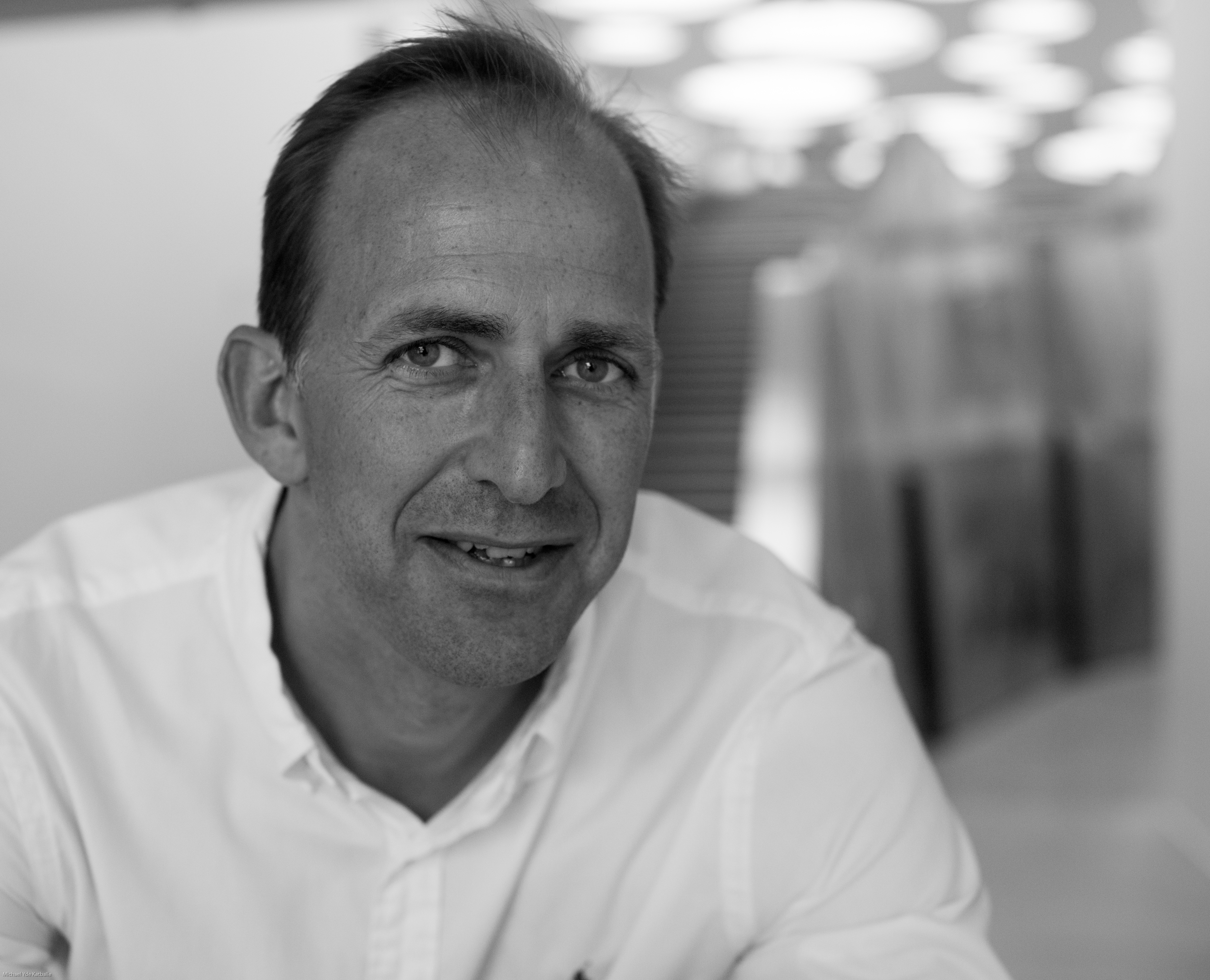
Professor Ulrik Lund Andersen heads the quantum information group at DTU Physics, Technical University of Denmark. His research develops quantum technologies including quantum computation, secure communication, and quantum-enhanced measurement systems. His group generates entangled optical states and investigates diamond-photon interactions for quantum nonlinearities. Key research areas: Quantum computing architectures Continuous-variable quantum information Quantum key distribution Quantum-enhanced sensing Solid-state quantum systems Recent work advances error correction, quantum state engineering, and quantum sensing algorithms. Publications demonstrate consistent focus on practical quantum technology implementation. Awards include multiple Sapere Aude research grants and the Eliteforsk Award from the Danish Ministry of Science.
Seth Lloyd is a Professor of Mechanical Engineering at the Massachusetts Institute of Technology (MIT), where he directs the Center for Extreme Quantum Information Theory (xQIT). His work bridges theoretical physics, quantum information science, and complex systems theory. He has made significant contributions to the foundations of quantum computing and quantum information processing. Lloyd received his education from prestigious institutions: B.A. from Harvard College (1982) M.Phil from Cambridge University (1984) as a Marshall Scholar Ph.D. in Physics from Rockefeller University (1988) Lloyd's research focuses on quantum information science, particularly quantum computation and quantum communications. He has pioneered work in quantum analog computation, quantum error correction, and quantum metrology. His research explores how quantum mechanics can be harnessed for information processing tasks, with applications ranging from quantum computing to understanding biological processes like photosynthesis. Lloyd is also known for his work on complex systems and the relationship between information and physical systems, arguing that the universe itself can be viewed as a quantum computer. His publication record shows a clear progression from foundational quantum computing work to applications in quantum machine learning and quantum biology. The most recent articles reveal a strong focus on quantum algorithms for machine learning, quantum metrology, and the intersection of quantum mechanics with biological systems. His work on the HHL algorithm for solving linear systems has been particularly influential in quantum machine learning, though its practical advantages have been debated following Ewin Tang's classical algorithms. Lloyd has received numerous scientific honors: Lindbergh Fellow (1994) Finmeccanica Professorship (1996) Edgerton Prize (2001) Fellow of the American Physical Society (2007) Quantum Communication Award (2012) International Quantum Communication Award (2012) Throughout his career, Lloyd has mentored numerous students and researchers in quantum information science. He has secured significant research funding for his work in quantum computing and complex systems. His research has been supported by various foundations and government agencies interested in advancing quantum technologies. Lloyd has also been involved in interdisciplinary collaborations, particularly with biologists studying quantum effects in photosynthesis. Lloyd directs the Center for Extreme Quantum Information Theory (xQIT) at MIT, which brings together researchers from physics, computer science, and engineering to tackle fundamental challenges in quantum information processing. His lab has been at the forefront of developing theoretical frameworks for quantum computing and exploring practical implementations of quantum information protocols.
Klaus Mølmer is a Professor at the Niels Bohr Institute, University of Copenhagen, specializing in Quantum Optics and Photonics. His research spans quantum information, entanglement, and cavity QED, leveraging machine learning and Grover's algorithm for quantum state engineering. His recent work focuses on spin squeezing, Rydberg atom interactions, and mechanical resonator cooling. A leader in quantum simulation and superradiance, he collaborates on cavity-mediated emission and quantum network design. The 15 most recent articles highlight advancements in quantum state manipulation, entanglement protocols, and robust differential phase sensing. These studies bridge theoretical frameworks with experimental applications in cavity QED, Rydberg arrays, and zero-photon detection.
Mikkel N. Schmidt is an Associate Professor in the Department of Applied Mathematics and Computer Science at the Technical University of Denmark (DTU). His research focuses on statistical modeling, Bayesian methods, and their applications in science and industry. He has held visiting roles at Columbia University (2007) and Cambridge University (2008-2009). His work integrates probabilistic modeling with computational inference to address complex problems in diverse fields such as molecular discovery, optical communication, and brain connectivity analysis. Education highlights include visiting scholar and postdoctoral experiences at top-tier institutions. Research interests span statistical methodology development, machine learning applications, and interdisciplinary problem-solving. Current projects involve Bayesian neural networks for molecular discovery and federated learning optimization. Advising efforts include supervising multiple PhD students in areas like molecular discovery and denoising diffusion models. Notable collaborations involve work on materials science, quantum communication, and medical signal processing. His contributions bridge theoretical advancements with practical industrial applications, emphasizing interdisciplinary innovation.
Jiri Srba is a Professor at Aalborg University's Department of Computer Science, part of the Technical Faculty of IT and Design. He leads research in the Distributed, Embedded and Intelligent Systems group and contributes to projects like "ControLing wAter In an uRban Environment" and "Collective Adaptive System SynThesIs using Non-zero-sum Games". His office is located at Selma Lagerløfs Vej 300, 9220 Aalborg Øst, Denmark. Contact him at +4599409851 or srba@cs.aau.dk. His core research focuses on formal methods and applied computer science: Model checking and verification of concurrent systems Petri nets and their applications Network protocol verification and synthesis Distributed system correctness Automated reasoning for industrial systems His publication record shows strong emphasis on network verification, model checking optimization, and applying formal methods to environmental systems. Recent work integrates computer science with sustainable engineering, particularly in water management systems and energy control.
Brian Møller Andersen is a Professor in Solid State Physics at the Niels Bohr Institute, University of Copenhagen, where he has maintained continuous academic appointments since completing his PhD. His research spans multiple frontiers of condensed matter physics with significant contributions to superconductivity and magnetism. PhD in Theoretical Physics, University of Copenhagen (2001-2003) PhD studies at Stanford University (2000-2001) MSc in Theoretical Physics, University of Copenhagen (1998-2000) International Exchange at UC Berkeley (1997-1998) BSc in Mathematics and Physics, University of Copenhagen (1994-1997) Andersen's primary research focuses on Superconductivity , particularly high-temperature superconductors where magnetism and superconductivity coexist, and Magnetism in novel quantum materials. His work extends to Quantum Transport phenomena, Ultracold Atoms in optical lattices, Topological Insulators , and Strongly Correlated Systems . Recent publications reveal a growing emphasis on altermagnetism, kagome lattice physics, and topological superconductivity, indicating significant evolution in his research trajectory toward emergent quantum phenomena. Analysis of his 15 most recent publications (2024-2025) shows a clear progression into cutting-edge areas: 60% focus on altermagnetism and novel magnetic states, 40% on unconventional superconductivity in topological materials, and 30% examining quantum confinement effects. His work demonstrates increasing interdisciplinary connections between condensed matter theory, materials science, and quantum information science, with frequent collaborations across Europe and the US. Andersen has received significant research support through prestigious fellowships including the Lundbeck Foundation fellowship (Associate Professor level, 2012-2017) and FNU Steno Stipend (Assistant Professor level, 2009-2013), alongside early career support from the Villum Kann Rasmussen Post. Doc. Stipend. His research group at the Niels Bohr Institute focuses on theoretical modeling of quantum materials, particularly computational approaches to understanding competing orders in correlated electron systems. The group maintains strong connections with experimental teams conducting neutron scattering, STM, and ARPES measurements to validate theoretical predictions.
Martin Nordal Petersen is an Associate Professor at the Department of Electrical and Photonics Engineering , Technical University of Denmark (DTU) . His work spans Internet of Things (IoT) , optical networking , and wireless communication systems, with notable contributions to LoRa , NB-IoT , and LPWAN technologies. He actively supervises PhD projects on topics such as machine learning in IoT edge devices , secure 5G communication , and smart community architectures . Active projects (2024–2027): Machine Learning in IoT Edge Devices , Deterministic and Secure 5G Communication Finished projects (2021–2024; 2018–2021; 2015–2018): Reliable M2M/IoT Communication , Smart Communities , IoT 100% , Network Slicing His research explores: IoT Reliability : Multi-RAT communication, backup systems, and signal propagation Optical Networks : Alien wavelength integration, SDN control, and network emulation platforms Wireless Innovation : GPS-free geolocation, maritime NB-IoT use cases, and multimode fiber distribution Current collaborations emphasize cross-disciplinary applications of IoT in healthcare , industrial ergonomics , and smart environments .
N. Asger Mortensen is a Professor and D-IAS Chair at the Danish Institute for Advanced Study , University of Southern Denmark. He serves as Scientific Director of the DNRF Center of Excellence POLIMA , focusing on polariton-driven light-matter interactions. His career spans leadership roles at SDU and DTU, including VILLUM Investigator grants. Education : Dr. scient. (2021) University of Copenhagen; Dr. techn. (2006), PhD (2001), MSc (1998) from Technical University of Denmark. Research Interests : Quantum plasmonics, nanophotonics, metamaterials, optofluidics, and light-matter interactions in structured materials. His work bridges classical electrodynamics and quantum physics, emphasizing nonlocal effects and polaritonic phenomena. Recent Articles : Explore nonlocality in photonic materials, plasmonic systems in 2D materials, and polariton dynamics. Keywords include Nanophotonics , Quantum Optics , and Condensed Matter , with subfields like Surface Plasmons , Exciton Polaritons , and Topological Insulators . Scientific Awards : Fyens Stiftstidendes Forskerpris (2023) Elected Member, Royal Danish Academy of Sciences and Letters (2022) VILLUM Investigator (2017) European Optics Prize (2008, 2004) Grants : Leads DNRF CoE (2023-2029, ~60 MDKK) and VILLUM Investigator (2017-2023, ~40 MDKK). Co-applicant on numerous international collaborations. Editorial Roles : Associate Editor for Science Advances and Nanophotonics , with past roles at Optics Express and Journal of Physics: Condensed Matter .
Kohei Nakajima is an Associate Professor at the Department of Intelligent Mechano-Informatics, Graduate School of Information Science and Technology, The University of Tokyo. He holds concurrent positions at the Department of Creative Informatics and the Next Generation Artificial Intelligence Research Center (AI Center). As an Endowed Chair in Advanced Artificial Intelligence Education, he leads the Physical Intelligence Lab, which focuses on the intersection of soft robotics, nonlinear dynamics, and physical computing. His research interests center on Physical Reservoir Computing (PRC), a paradigm that exploits the natural dynamics of physical systems for computation, with applications in soft robotics, spintronics, and quantum machine learning. Nakajima's work demonstrates how physical systems can inherently process information without traditional digital computation, leveraging phenomena like chaos, bifurcations, and embodied intelligence. Nakajima's publications reveal a strong focus on understanding how physical systems can perform computational tasks. His recent work spans from biological applications (jellyfish cyborgs, ostrich-inspired robotics) to fundamental theoretical advances in reservoir computing. The research demonstrates how physical phenomena can be harnessed for information processing, with implications for energy-efficient computing and novel robotic control paradigms. As the organizer of the Reservoir Computing Seminar, Nakajima has built a vibrant research community exploring the nature of information processing across disciplines. His lab actively recruits graduate students and postdocs, indicating strong research momentum and institutional support for his work in physical intelligence.
Henrik Myhre Jensen is a Professor at the College of Engineering , Aarhus University, specializing in Mechanics of Materials , Solid Mechanics , and Mechanical Engineering . His research focuses on fracture mechanics, composite materials, and computational modeling of structural behaviors. Research Focus Fracture mechanics in composites and layered materials Computational modeling of kink band propagation Surface wear and coating technologies Ultrasound imaging applications in mechanical systems Notable Contributions Henrik has contributed to understanding crack propagation in cantilever beams, developed numerical methods for simulating delamination in composites, and explored buckling instabilities in solids. His recent work connects machine learning (holomorphic neural networks) to traditional fracture mechanics problems. Key Projects MAGFLY (2017-2021): Magnets for Flywheel Energy Storage InnoVacc (2009): Pressure Testing of Vacuum Chambers Simulation of composite structures (2011-2020): Micro-mechanical modeling
Charles Marcus is a Professor at the University of Copenhagen's Niels Bohr Institute, holding the Villum Kann Rasmussen Chair in Quantum Sciences. He directs the Center for Quantum Devices and Microsoft Station Q – Copenhagen, while affiliating with the Niels Bohr International Academy. Education : Stanford University (B.S. 1984), Harvard University (Ph.D. 1990), IBM Postdoctoral Fellow (1990-92) Employment : Faculty at Stanford (1992-2000), Harvard (2000-2011), and UCPH (2012-present) His research focuses on experimental condensed matter physics, particularly quantum coherent electronics in semiconductors/superconductors. Key areas include spin qubits for quantum computing, Majorana modes in nanowires, quantum Hall systems, and superconductor-semiconductor hybrids. Recent work explores topological quantum information schemes and novel magnetic resonance imaging approaches. Scientific publications span quantum devices, Josephson junctions, and topological materials. Awards include the H.C. Ørsted Gold Medal, AAAS Newcomb-Cleveland Prize, and fellowships from AAAS and APS. He serves on advisory boards for quantum technology centers globally. Significant Awards : H.C. Ørsted Gold Medal (2020) Industry Prize, Danish Academy of Natural Sciences (2019) Member, National Academy of Sciences (2018) Award for Research Excellence in Nanotechnology (2014) Professional Roles : Director, Center for Quantum Devices (2012-2019) Lab Director, Microsoft Quantum (2016-2021) Scientific Director, Harvard Center for Nanoscale Systems (2004-2009)
Hao Hu is a Senior Researcher at the Department of Electrical and Photonics Engineering at the Technical University of Denmark (DTU). He leads the Photonic Integrated Circuit based Systems Group and is active in the field of silicon photonics for optical communications. His research focuses on integrated photonic systems, including optical phased arrays, LiDAR, and neural network applications. Research Interests: Hao Hu's work spans optical beam steering , integrated photonics , silicon photonics , and optical wireless communications . He explores energy-efficient photonic components and optical computing platforms for machine learning, contributing to advancements in LiDAR and optical signal processing. Recent Publications: His recent articles highlight innovations in digital optical computing , thermo-optic phase shifters , and solid-state beam steering , reflecting expertise in silicon photonics and machine learning applications. The ACS Photonics 2025 article emphasizes ultra-low loss design methodologies, while the Journal of Lightwave Technology 2025 paper addresses 2D beam steering for LiDAR systems. Students: Hao Hu supervises multiple PhD students, including T. E. Rude, X. Zhu, Y. Han, X. Long, and P. Nay, across projects like integrated optical phased arrays and silicon photonics for neural networks.
Farshad Moradi is a Professor at the Department of Electrical and Computer Engineering at Aarhus University, specializing in neuromorphic engineering, spintronics, and biomedical device design. His work focuses on integrating advanced materials and circuits for applications in neural interfaces, energy-efficient computing, and wireless biomedical systems. Research Interests include: Spintronic-based neuromorphic computing architectures Ultra-low power analog/mixed-signal integrated circuits Ultrasonically powered implantable medical devices Neural signal processing and seizure detection systems Wireless energy transfer and structural health monitoring Key Projects (2016-2026): SPICE: Spintronic-Photonic Integrated Circuit Platform PHOTON-NeuroCom: Photonic-assisted Neuromorphic Computing Neuro-Sense: Flexible bioinspired neuroprostheses CorroSense: Self-powered corrosion monitoring HERMES: Hybrid Enhanced Regenerative Medicine Systems Recent innovations include: Ultrasonically powered optogenetic implants Low-power neural amplifiers for deep-brain interfaces Spin-torque nano-oscillator-based neuromorphic hardware Energy harvesting systems for structural monitoring
Andrea Crovetto is an Associate Professor at the Technical University of Denmark (DTU), affiliated with the National Centre for Nano Fabrication and Characterization and the Department of Nanofabrication. His research focuses on advanced materials for photovoltaic applications, including solar cell technologies, thin films, and semiconductor materials. His work contributes to UN Sustainable Development Goals related to affordable and clean energy. Key research interests include photovoltaic materials discovery, tandem solar cell design, and semiconductor characterization. Notable achievements include developing monolithic selenium/silicon tandem solar cells and pioneering studies on phosphosulfide semiconductors. He has authored over 90 publications and datasets, including high-impact articles in journals like JPhys Energy and PRX Energy . Dr. Crovetto has received the Young Scientist Award (2016) and actively supervises PhD students in projects such as Experimental Discovery of Phosphosulfide Materials for Solar Cells and Thiophosphate Thin Films for Quantum Technology . His research also involves collaborations on material synthesis, computational modeling, and device fabrication. He has presented at international conferences, including talks on monolithic tandem solar cells and materials discovery methodologies. His lab, based at DTU’s Produktionstorvet , integrates experimental and theoretical approaches to advance sustainable energy technologies.
Mark Bo Jensen is an Assistant Professor (tenure track) at the Department of Engineering Technology and Didactics, Technical University of Denmark (DTU), specializing in Energy Technology and Computer Science. His research is centered on Perception Engineering and Extended Reality technologies, particularly Virtual Reality (VR), with applications in human cognition, computer graphics, and scientific visualization. His research interests lie at the intersection of engineering and cognitive sciences, focusing on creating immersive and convincing extended reality experiences. Jensen applies his over 10 years of expertise in real-time computer graphics to advance VR systems for perception modeling, geometric data visualization, and material appearance simulation. His work contributes to fields such as medical diagnostics, 3D annotation, and photorealistic rendering. The recent publications highlight a strong trend in leveraging VR for scientific tasks, such as anatomical landmark annotation and visual field testing, as well as advancing core graphics techniques like meshlet optimization and diffusion-based stereo image generation. His research integrates computer vision, graphics algorithms, and human-centered design. While no scientific awards are currently listed, his active participation in research projects and consistent publication output indicate a growing academic profile. He has contributed to interdisciplinary collaborations involving medical, biological, and engineering domains. Jensen has been involved in advising and research projects, including serving as a PhD student in the 'Virtual Reality-Based Visualization of Geometric Data' project and currently as a project participant in 'AL-EYE: The Visual Aid'. These projects reflect his focus on applied VR solutions and data understanding. His work is conducted within the Energy Technology and Computer Science division at DTU, where he contributes to advancing perception-driven technologies and their practical implementation in scientific and medical contexts.