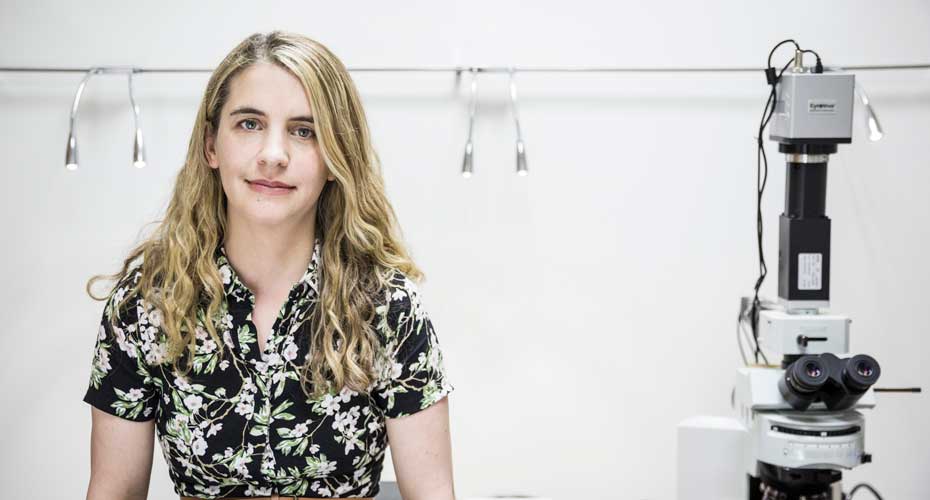
Dr. Robert Oliver is a Lecturer in Sustainable Materials at the University of Sheffield within the School of Chemical, Materials and Biological Engineering . His research focuses on the development of advanced semiconducting materials, particularly metal halide perovskites , to enhance solar energy conversion efficiency and mitigate climate change. He holds a MPhys in Physics from Corpus Christi College, Oxford, and a DPhil in Materials Science from St Anne's College, Oxford, supervised by Professors Henry Snaith and Michael Johnston. Dr. Oliver's work spans materials science, photophysics, and device engineering , with a multidisciplinary approach to studying perovskite solar cells and LEDs. He has received the MRS Graduate Student Award (2022) for his doctoral research. His teaching includes modules on Energy Generation and Storage (MSc) and Chemistry and Biology of Materials (Undergraduate) . Recent publications highlight his expertise in perovskite passivation , interface engineering , and device physics for photovoltaics. His research group, the Optoelectronic Devices and Spectroscopy Group (ODSG) , aims to develop design rules for next-generation optoelectronics. Dr. Oliver is a Member of the Institute of Physics (MInstP) and a Fellow of the Higher Education Academy (FHEA) .
Kerry J. Vahala serves as the Ted and Ginger Jenkins Professor of Information Science and Technology and Applied Physics at the California Institute of Technology, where he has maintained continuous faculty appointment since 1985. He progressed from Research Fellow (1985) to Assistant Professor (1986-90), Associate Professor (1990-96), Professor (1996-2002), and Jenkins Professor (2002-present), serving as Executive Officer of the Department of Applied Physics from 2013-2025. His academic background includes: B.S. in Applied Physics, Caltech (1980) M.S. in Applied Physics, Caltech (1981) Ph.D. in Applied Physics, Caltech (1985) Professor Vahala's research pioneers ultra-high-Q optical microresonators that confine light for exceptionally long durations (Q factors exceeding 1 billion in chip-based devices). His work explores nonlinear optical phenomena including soliton microcombs and second-harmonic generation, cavity optomechanics involving radiation-pressure coupling, and integrated photonic systems for quantum and classical applications. The Vahala Research Group has established foundational techniques for high-Q resonator fabrication and demonstrated breakthrough applications in low-noise microwave generation and quantum light sources. Analysis of his 2023-2025 publications reveals strong emphasis on system integration of microresonators with photonic circuits, particularly using silicon nitride platforms. Key trends include development of practical microwave photonics systems (spiral resonators, low-noise oscillators), quantum light generation (photon pairs, 780nm sources), and novel resonator architectures (micro-Fabry-Pérot cavities, Moiré-effect devices) addressing previously intractable challenges in the 'green gap' and thermal limitations. His scientific recognition includes: Charles Hard Townes Medal (2025) As Executive Officer until 2025 and current Jenkins Professor, Vahala has directed departmental strategy while maintaining active research leadership. His group receives substantial research funding evidenced by advanced nanofabrication capabilities and recent high-impact publications, though specific grant details aren't provided in source materials. The group maintains strong industry and academic collaborations visible through multi-institutional publications. The Vahala Research Group operates specialized laboratories for nanofabrication and optical characterization at Caltech, focusing on pushing Q-factor limits and developing application-specific resonator systems. Their current work integrates microresonators with photonic circuits to create self-contained systems for communications, sensing, and quantum information processing, as demonstrated by recent advances in isolator-free lasers and microwave photonics.
Christy F. Landes is the Jerry A. Walker Endowed Chair in Chemistry and Professor of Chemistry at the University of Illinois Urbana-Champaign, with additional appointments as Professor in Electrical and Computer Engineering and Materials Research Lab, and as an Affiliate in Chemical and Biomolecular Engineering. She joined UIUC in 2023 after serving as the Kenneth S. Pitzer-Schlumberger Chair of Chemistry at Rice University. Education: B.S. in Chemistry, George Mason University (1998) Ph.D. in Chemistry, Georgia Institute of Technology (2003) Postdoctoral positions at University of Oregon and University of Texas at Austin Professor Landes' research focuses on physical, analytical and materials chemistry with emphasis on predictive separations, spectro-electrochemistry, protein dynamics at interfaces, imaging and signal processing, and single-molecule spectroscopy. Her work aims to understand complex structure-function relationships in biological processes to inspire innovation for materials design. The Landes Research Group develops new spectroscopic tools to image chemical dynamics at interfaces at the limit of a single event, creating new models to understand and predict macroscale processes like protein separation and photocatalysis. Her research spans several specific areas including predictive separations, spectro-electrochemistry, protein dynamics at interfaces, computational imaging/AI/data science, and interfacial energy and charge transfer in hybrid nanomaterials. By studying individual molecules rather than ensembles, her group can identify the chemical complexity of nanoscale interfacial dynamics and reveal underlying populations that form ensemble measurements. Scientific Awards: 2023 Fellow of the American Association for the Advancement of Science 2024 Kazuhiko Kinosita Award in Single-Molecule Biophysics 2020 Award for Special Creativity, National Science Foundation 2019 Kavli Fellow, U.S. National Academy of Sciences 2016 Early Career Award in Experimental Physical Chemistry, American Chemical Society 2011 NSF CAREER Award Professor Landes has advised numerous graduate and undergraduate students throughout her career at University of Houston, Rice University, and now at UIUC. Her research has been supported by various grants including NSF funding. Her group has developed innovative methods to break the Abbe diffraction limit, achieving spatial resolutions of just a few nanometers and time resolutions faster than traditional cameras frame times. The Landes Research Group at UIUC continues to develop new spectroscopic tools to image chemical dynamics at interfaces, with specific focus areas including predictive separations, spectro-electrochemistry, protein dynamics at interfaces, computational imaging/AI/data science, and interfacial energy and charge transfer in hybrid nanomaterials.
Brenda Ogle is a Professor in the Department of Biomedical Engineering at the University of Minnesota's College of Science and Engineering. She leads the System Regeneration Lab, where her research focuses on cardiac tissue engineering, stem cell differentiation, and advanced 3D bioprinting technologies. Her work bridges multiple disciplines including stem cell biology, extracellular matrix science, and engineering principles to develop novel approaches for cardiovascular regeneration. Dr. Ogle's research interests primarily center on understanding the mechanisms that govern stem cell fate, particularly in the context of the cardiovascular system. Her lab is pioneering 3D bioprinting for cardiac tissue engineering, creating complex model systems that go beyond simple geometric shapes. Key areas of investigation include the role of extracellular matrix proteins in guiding stem cell differentiation, the development of novel tools for analyzing stem cell behavior, and the delivery of stem cells or associated progeny to the body. Her work has led to breakthroughs in creating patch-like structures with micron-scale features that support cardiac cell organization and can be adhered to failing hearts. Dr. Ogle's research has resulted in significant scientific contributions, including the development of unique bioink formulations coupled with multiphoton-based 3D printing to create chambered heart structures based on digital templates. These engineered tissues can sustain flow profiles and exhibit pressure-volume dynamics characteristic of the native heart, making them valuable for studying cardiac disease progression and testing drug efficacy. Her work has received recognition including an NIH R01 award for Epicardial Regulation of Myocardial Function and being named a BMES Fellow. NIH R01 Awarded, Epicardial Regulation of Myocardial Function BMES Fellow (2021) Dr. Ogle mentors a diverse team of researchers including postdoctoral associates, graduate students, and undergraduate researchers. Her lab has produced numerous PhD graduates who have gone on to successful careers in academia and industry. Current research projects in her lab include heart organoid formation using hiPSC-derived cardiomyocytes, investigation of hypertrophic cardiomyopathy mechanisms, cardiomyocyte maturation studies, and development of ECM-based bioinks for cardiac constructs. The lab is also working on creating integrated platforms for high-throughput cardiac organoid production and developing models to study the impact of radiation exposure on cardiac function.
Jens Dittmer is a Professor at Le Mans University, affiliated with the Institute of Molecules and Materials of Le Mans (IMMM). His research focuses on advanced solid-state NMR techniques for studying paramagnetic systems, ion conductors, hybrid perovskites, and polymer degradation. Key projects include developing NMR methods for paramagnetic materials, analyzing lithium garnets for battery applications, and collaborating with Pratt Institute on art conservation using NMR. Primary Affiliation: Institute of Molecules and Materials of Le Mans (IMMM), Le Mans University Research Highlights: Paramagnetic Solid-State NMR, Ion Mobility in Garnets, Hybrid Perovskite Photovoltaics, Polymer Degradation in Art Conservation His work bridges fundamental NMR physics with applied material science, particularly in energy and cultural heritage sectors. Collaborations span international institutions including University of Rennes, ParisTech, and Pratt Institute. Current projects emphasize sustainable material design and non-invasive analytical techniques.
Prof. Deniz ULUTAŞ is a Professor in the Department of Physics at the Faculty of Science, Istanbul University, where he has served since 2014. His academic career at Istanbul University spans over three decades, progressing from Research Assistant (1988-1999) to Assistant Professor (2000-2009), Associate Professor (2009-2014), and finally Professor (2014-present). He has held significant administrative positions including Head of Department (2014-2017, 2009-2013) and Vice Dean of the Faculty of Science (2009-2011). Dr. ULUTAŞ received his Doctorate from Istanbul University in 1999 with a dissertation on 'Electronic behavior of semiconductor and semi-insulator solid materials in thin film form,' following his Postgraduate studies (1987-1989) and Undergraduate education (1981-1987) at the same institution. His academic journey began with research on 'Optical Properties of Bismuth Thin Films' for his Master's degree. Prof. ULUTAŞ's research primarily focuses on dielectric properties, electronic structure, and electrical, magnetic, and optical characteristics of materials, particularly thin films and low-dimensional structures. His work spans condensed matter physics, materials science, and semiconductor physics, with significant contributions to understanding chalcogenide semiconductors, polymer composites, and nanostructured materials. His publication record includes 142 papers in Web of Science with an impressive h-index of 399, demonstrating substantial impact in his field. His recent work shows a strong trend toward interdisciplinary applications, including potential biomedical diagnostics using dielectric spectroscopy. His research demonstrates consistent focus on thickness-dependent properties, dielectric relaxation mechanisms, and the relationship between material structure and electrical behavior across various material systems including Tl-based chalcogenides, polymer electrolytes, and nanocomposites. The evolution of his work shows increasing sophistication in both experimental techniques and theoretical interpretations. 142 Publications in Web of Science 30 Publications in Scopus 399 h-index (Web of Science) 385 h-index (Scopus) Prof. ULUTAŞ has supervised numerous graduate students, with 8 doctoral and master's theses completed under his guidance and several more in progress. His laboratory appears focused on thin film deposition, dielectric characterization, and analysis of electronic properties across diverse materials systems. He has also contributed to educational materials with lecture notes on Thermodynamics, Statistical Physics, and Modern Research Topics in Physics.
Francesco Prudenzano is a Full Professor at the Department of Electrical and Information Engineering (DEI), Polytechnic University of Bari, Italy. He leads research in photonics, microwave engineering, and electromagnetic compatibility, with a focus on mid-infrared optical fiber devices, laser design, and microwave antennas. His work spans theoretical modeling, fabrication, and application development in advanced photonic systems. University: Polytechnic University of Bari Department: Electrical and Information Engineering Research Group: MOE Group (Microwave and Optical Engineering) Research Interests: Prudenzano's research explores the design and optimization of optical fiber devices, microwave sensors, and electromagnetic systems. Key areas include mid-infrared laser development, additive manufacturing of antennas, and photonic sensors for composite materials. His work bridges material science, photonics, and electromagnetics to solve practical engineering challenges. Recent Publications (2024-2025): His articles highlight advancements in fluoride and chalcogenide fiber optics, Q-switched lasers, and 5G antenna technologies. Topics span mid-IR amplification, supercontinuum generation, and microwave applicators for medical use, reflecting his interdisciplinary approach. Laboratories: Research is conducted at the Electromagnetic Fields and Telecommunications laboratories in Bari and the "Polo Magna Grecia" facility in Taranto, focusing on device prototyping and electromagnetic modeling.
Vivian Ferry is an Associate Professor in Materials Science and Engineering at the University of Minnesota’s College of Science and Engineering. Her research explores the interaction between light and nanostructured materials, focusing on applications for solar energy conversion, optoelectronic devices, and tunable metamaterials. She leads the Ferry Research Group, which emphasizes interdisciplinary work combining colloidal chemistry, nanofabrication, optical spectroscopy, and computational modeling. PhD in Chemistry (2011) Research Interests: The group’s research integrates Nanophotonics , Plasmonics , and Materials Science to develop advanced materials for sustainability and energy technologies. Current projects include Nano-Optics for Sustainability , Light Management in Optoelectronic Devices , and Nanopatterning . The work spans theoretical and experimental approaches, with collaborations across departments and institutions. Selected Scientific Awards: SPIE Early Career Achievement Award (2019) NSF CAREER Award (2016) AFOSR YIP award (2016) McKnight Land-Grant Assistant Professor (2017) Technology Review’s 35 Innovators under 35 (2016) APS Ovshinsky Fellowship in Sustainable Energy (2019) Marion Milligan Mason Award (2018) Advising and Collaborations: Vivian has mentored numerous PhD and Master’s students, including Rohan Chakraborty , John Keil , Bryan Cote , and Clare Froehlich , many of whom have transitioned to roles in academia and industry. Her group collaborates with researchers like Professor Chris Leighton and Professor Kelsey Stoerzinger, and has secured grants from the NSF, AFOSR, and ACS PRF. The Ferry Group has produced over 20 peer-reviewed publications and actively engages in outreach through programs like MRSEC REU and IPRIME. Labs and Teams: She is based in 431 Amundson Hall and co-directs the Electronic, Magnetic & Photonic Materials program at IPRIME. Her team includes postdocs, graduate students (e.g., Sri Aashrita Boddu , Sam Ewald ), and undergraduate researchers. The group participates in national and international conferences (e.g., MRS, IPRIME, AVS) and symposia on photovoltaics, nanophotonics, and plasmonics.
Sonja Schelhaas is a researcher affiliated with the European Institute for Molecular Imaging (EIMI) at the University of Münster. Her work focuses on molecular imaging technologies, particularly in oncology and neurological contexts. PhD in Medical Biochemistry (2007-2010) Postdoc at EIMI since 2010 Research Fellow in Anaesthesiology (2005-2006) Her research spans: PET tracer development for ion channels Molecular imaging of tumor microenvironments Applications of small animal PET in disease models Bacterial and inflammatory imaging Radiochemistry and multimodal imaging techniques Epigenetic regulation in cancer Recent publications highlight her contributions to: P2X4 receptor antagonists for PET tracers KCa31 channel imaging in cancer Bacterial detection via radiolabeled compounds FLT PET for tumor proliferation analysis Neurogenesis and blood-brain barrier studies PEGylated nanoparticle characterization Schelhaas has collaborated extensively in preclinical imaging projects, contributing to cancer research, infection monitoring, and neurodegenerative disease modeling. Her work appears in journals like Journal of Medical Chemistry , Cancer Research , and Molecular Imaging and Biology .
Shu Yang is the Joseph Bordogna Professor and Department Chair of Materials Science and Engineering at the University of Pennsylvania's School of Engineering and Applied Science. Her research spans multiple departments, with primary appointments in both Materials Science and Engineering and Chemical and Biomolecular Engineering. She directs the Yang Lab, which operates at the intersection of multi-materials synthesis, nano-/microfabrication, and device processing, backed by deep understanding of physical, mechanical and biological principles. Director, Center for Analyzing Evolved Structures as Optimized Products (AESOP) Principal Investigator, NSF NRT: Climate Action and Resilience for Extreme Urban Heat (CLIMATE-CARE) Member of the Engineering Research Visioning Alliance (ERVA) Professor Yang's research focuses on developing novel materials synthesis, assembly and eco-manufacturing of complex, multi-functional, nano- to macrostructured soft, sustainable materials and composites. Her lab addresses fundamental questions centered around surface/interface, actuation mechanisms, and structure-property relationships. Through directed assembly of oligomers, polymers, gels, colloids, liquid crystals, amphiphiles, and their composites with inorganic materials and biomolecules across nano- to macroscales, her team creates complex, multi-functional nano- and microstructures with unique surface, optical, and mechanical properties. Analysis of Professor Yang's recent publications reveals a strong trend toward environmentally responsive materials with applications in sustainability, water harvesting, carbon capture, and climate resilience. Her work increasingly integrates kirigami engineering principles with liquid crystal elastomers to create programmable, shape-morphing materials. The research shows a clear trajectory from fundamental materials science toward real-world applications addressing global challenges, particularly in climate action and sustainable infrastructure. Inaugural Nat Geo 33 Extraordinary Changemaker List 2022 Cozzarelli Prize from PNAS for Class III: Engineering and Applied Sciences Advanced Materials Hall of Fame collection recognition Multiple highly cited papers according to Web of Science Professor Yang's research group has secured significant funding for projects addressing climate change, sustainable materials, and advanced manufacturing. Her lab has developed numerous technologies with potential applications in coatings, adhesives, smart windows, displays, sensors, soft robotics, biomedical devices, dehumidifiers, and carbon-absorbing concrete. The Yang Lab maintains a strong mentoring record with numerous students and postdocs who have gone on to successful careers in academia and industry. Her group actively collaborates across disciplines, working with biologists, physicists, environmental scientists, and engineers to tackle complex challenges. The Yang Lab operates state-of-the-art facilities for materials synthesis, characterization, and fabrication. The lab is particularly known for its expertise in liquid crystal elastomers, kirigami engineering, and biomimetic materials. The group maintains strong industry partnerships and has filed multiple patents based on their research. Their facilities enable everything from molecular-scale synthesis to macro-scale manufacturing of functional materials, with particular strength in bridging these scales through innovative design principles.
Manuela Reben serves as a Professor at AGH University of Science and Technology in Kraków, Poland, within the Faculty of Materials Science and Ceramics. Her primary appointment is in the Department of Glass Technology and Amorphous Coatings, with office space in building A-3, room 222. She holds the significant administrative role of Vice-Dean of the Faculty of Cooperation and participates in multiple governance bodies including the Chemical Engineering Discipline Council, Faculty College, University Senate, and Senate Committee on Science. Her research centers on advanced glass systems with specialization in optical materials , radiation shielding composites , and waste glass valorization . Key investigations include structural characterization of rare earth-doped tellurite and phosphate glasses, development of novel compositions for photonic applications, and utilization of industrial glass wastes in sustainable construction materials. Her work bridges fundamental materials science with practical engineering solutions for laser technology, nuclear shielding, and eco-friendly building products. Analysis of her recent publications (2022-2025) reveals dominant research trajectories in three interconnected domains: (1) Engineering phosphate/tellurite glass matrices doped with rare earth ions for broadband optical amplifiers and laser gain media; (2) Developing radiation-shielding glasses with optimized attenuation properties for medical and nuclear applications; (3) Transforming industrial glass wastes into functional construction materials through sintering process optimization. These efforts demonstrate consistent innovation in glass composition design and property tailoring. Scientific awards: No awards documented in available sources. Advising activities and research grants are not specified in current documentation, though her leadership roles suggest significant mentorship responsibilities. Her departmental affiliation indicates active participation in collaborative research teams focused on glass technology and amorphous materials development.
Univ.-Prof. Dr. Norbert Schuch is a Professor of Physics and Mathematics at the University of Vienna, leading the Quantum Information and Quantum Many-Body Physics group. His research bridges Quantum Information Theory, Quantum Computing, and the study of complex quantum many-body systems, with a focus on Tensor Networks, Topological Order, and Symmetry Breaking. He has offices at both the Faculty of Physics (Boltzmanngasse 9) and Faculty of Mathematics (Oskar-Morgenstern-Platz 1). Research Interests : Quantum Information at the interface of Many-Body Physics, including Entanglement Theory, Topological Quantum Computation, Tensor Network algorithms, and Symmetry-Protected Topological (SPT) phases. His work develops numerical and analytical frameworks to study entanglement order parameters and prepare/experiment with topological states in quantum simulators. Teaching : Courses on Quantum Information, Quantum Computing, Theoretical Physics, and seminars on quantum many-body topics. Prior to Vienna, he was a tenured group leader at Max-Planck-Institute of Quantum Optics and a lecturer at Technical University Munich. Scientific Awards : ERC Consolidator Grant SEQUAM (2020–2025) FWF ESPRIT Programme ESP 306 FWF SFB BeyondC FWF Entanglement Order Parameters Research Trends : His recent publications explore Quantum Algorithms, Tensor Networks for Topological Phase Transitions, Entanglement Spectra, and Symmetry-Protected Phases. Key subfields include Non-Abelian Anyons, Chiral Spin Liquids, and Computational Complexity in Many-Body Systems. Group Members : Current team includes postdocs like Dr. Ilya Kull and Dr. András Molnár, with historical alumni spanning PhDs, Masters, and BSc students now at institutions like Xanadu, MIT, and Quantinuum.
Professor Aoife Gowen is a leading academic at the UCD School of Biosystems & Food Engineering , specializing in hyperspectral imaging and its applications across medicine, food safety, and engineering. Her research, supported by prestigious European Research Council (ERC) funding, investigates water molecule interactions with surfaces to improve bone graft materials and develop innovative diagnostic tools for prostate cancer. She also leads Science Foundation Ireland (SFI)-funded projects on hyperspectral monitoring of bacterial growth for food safety. Beyond technical research, Professor Gowen has developed computational tools now integrated into commercial chemical analysis software. Her work spans interdisciplinary domains, including sustainable transport policy, critical thinking education, and promoting gender diversity in engineering. As a key figure in the Women on Walls initiative, she has enhanced visibility for women in STEM fields. Her recent publications focus on spectral technologies for food quality, microplastics characterization, and medical diagnostics, reflecting her commitment to addressing global challenges in health and sustainability. Scientific Awards: ERC Grant for water-surface interaction research Professor Gowen actively collaborates with European networks and industry partners, driving advancements in hyperspectral imaging applications. Her lab’s efforts to bridge computational science with real-world chemical analysis have positioned her as a pioneer in invisible chemistry visualization, impacting medicine, food, and environmental engineering.
Professor Fernando Dias is a distinguished academic in the Department of Physics at Durham University, specializing in advanced photophysics and optoelectronic materials. His research focuses on developing novel organic molecules for applications in light-emitting devices, particularly exploring the fundamental mechanisms behind near-infrared emission, room-temperature phosphorescence, and thermally activated delayed fluorescence. Professor Dias' research interests center on spectroscopy and photophysics of organic molecules for optoelectronic and photonic applications. He investigates how molecular structure influences emission properties, with particular emphasis on NIR emitters and the interplay between different excited states. His work bridges fundamental photophysical understanding with practical applications in organic light-emitting diodes (OLEDs), where he explores how molecular design can optimize device efficiency and performance. The research group examines energy transfer mechanisms, excimer formation, and the relationship between molecular conformation and luminescent properties. Analysis of Professor Dias' recent publications reveals a strong trend toward developing advanced materials for next-generation optoelectronic devices. His work consistently focuses on platinum and iridium complexes, boron-containing compounds, and molecular designs that exploit thermally activated delayed fluorescence mechanisms. The research spans fundamental photophysical characterization to device implementation, with a clear trajectory toward improving efficiency and color purity in organic light-emitting technologies. Recent work shows increasing sophistication in molecular engineering approaches, including dendronized structures, multimolecular excited states, and precise control of molecular conformation to optimize emission properties. Professor Dias actively supervises PhD students including Rongjuan Huang, Piotr Pander, Carolina Francener, and Lucy Weatherill. His departmental responsibilities include serving as Chair of the Health & Safety Committee, International Coordinator for Physics, and Exchange Coordinator for Physics. He teaches fourth-year undergraduate courses in Optical Devices and Postgraduate courses in Optical Spectroscopy, in addition to directing Level 1 Discovery Labs, tutorials, Team Projects, and Level 4 project supervision.
Dr. M Reza Kholghy is an Associate Professor and Canada Research Chair in Particle Technology and Combustion Engineering at Carleton University's Department of Mechanical and Aerospace Engineering. He directs the Energy and Particle Technology Laboratory (EPTL) where he focuses on sustainable industrial solutions. His academic credentials include a BASc in Aerospace Engineering from Sharif University of Technology, and MASc/PhD degrees in Mechanical Engineering from the University of Toronto, followed by postdoctoral work at ETH Zurich. Research interests center on: Industrial decarbonization through metal fuel combustion (aluminum/iron) and carbon management Hydrogen production via methane pyrolysis and metal-water reactions Advanced material synthesis including flame spray pyrolysis for catalytic films and alumina production Nanoparticle engineering with focus on soot formation dynamics and optical properties His publications predominantly explore nanoparticle synthesis mechanisms, soot formation modeling, and sustainable fuel technologies, with recent emphasis on hydrogen cogeneration and metal combustion. Experimental and computational approaches are equally represented across combustion diagnostics, reactor design, and molecular dynamics simulations. Major scientific recognitions include: Canada Research Chair (Tier 2) Vanier Canada Graduate Scholarship NSERC Postdoctoral Fellowship He leads the Energy and Particle Technology Laboratory with industry partnerships focused on sustainable technology development. The lab specializes in flame spray pyrolysis reactors, nanoparticle characterization (surface area, porosity, composition), and high-pressure reaction systems. Dr. Kholghy actively mentors students through capstone projects and research positions, though specific PhD/Master's advisees aren't named in available sources.