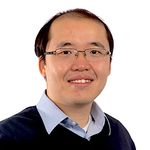
Jon T. Njardarson is a Professor in the Department of Chemistry and Biochemistry at the University of Arizona. Previously, he held positions as Associate Professor (2010–2016) and Assistant Professor (2004–2010) at Cornell University and Tri-Institutional institutions (Rockefeller University, MSKCC, Weill-Cornell). His research focuses on developing novel synthetic strategies and synthesizing complex natural products, emphasizing the synergy between method innovation and target synthesis. He earned his Ph.D. from Yale University (1994–2001) and B.S. from the University of Iceland (1990–1993). His research group explores synthetic organic chemistry, including polymer synthesis from sulfur-based monomers, total synthesis of bioactive natural products, and reaction development. Key themes include inverse vulcanization for advanced materials, stereocontrolled cascade reactions, and sustainable polymer feedstocks. Notable contributions include studies on flame-retardant polymers, NMR characterization of sulfur-based polymers, and educational initiatives for blind/visually impaired students. His work bridges fundamental chemistry with practical applications in materials science and pharmaceuticals.
Bernard Kirtman is a Distinguished Professor in the Department of Chemistry & Biochemistry at the University of California, Santa Barbara (UCSB). He holds affiliations within the College of Letters and Science. His research focuses on theoretical and computational chemistry, particularly structural and spectroscopic properties of molecules and materials, including nano-materials, vibrational effects on optical properties, and density functional theory applications. Education: Dr. Kirtman earned his Ph.D. in Physical Chemistry from Harvard University in 1961. He completed postdoctoral studies at the University of Washington and joined UCSB in 1965, where he has remained ever since. Research Interests: His work spans nano-material fragment analysis, vibration-optical property interactions, infinite periodic systems' response to fields, density functional theory challenges, and doping effects on material properties. These areas reflect his expertise in bridging theoretical models with real-world material behavior. Publications: His recent works (2005–2010) emphasize computational methods in material science, with contributions to Phys. Rev. B , J. Chem. Phys. , and Solid State Comm. . These publications highlight advancements in electronic structure calculations and material property predictions. Awards: He received the 1983 UCSB Distinguished Teaching Award and the 2005 ICCMSE Prize for Theoretical and Computational Chemistry. A 2009 symposium in Rhodes, Greece, honored his contributions. Advising & Grants: While specific grants are not listed, his decades-long career at UCSB indicates sustained research support. His advising legacy includes mentorship reflected in collaborative publications with students and colleagues. Labs/Teams: Active within the Chemistry & Biochemistry Department, his work likely integrates with computational and theoretical research groups focused on materials and quantum chemistry.
Linda Katehi is a Professor of Electrical & Computer Engineering and Materials Science & Engineering at Texas A&M University, holding the O'Donnell Foundation Chair II. She is a Member of the National Academy of Engineering and American Academy of Arts and Sciences. Her research focuses on advanced electromagnetic systems, MEMS devices, and embedded intelligent sensors. Katehi earned her Ph.D. in Electrical Engineering from UCLA (1984), with prior degrees from UCLA and the National Technical University of Athens. Education: Ph.D., Electrical Engineering, UCLA (1984) M.S., Electrical Engineering, UCLA (1981) B.S., Electrical and Mechanical Engineering, National Technical University of Athens (1977) Research Interests: Katehi pioneers innovations in microwave circuits, MEMS-based reconfigurable systems, terahertz technology, and neuromorphic sensors. Her work emphasizes integrating artificial intelligence into hardware for adaptive sensing platforms. Recent projects include flexible electronics, time-domain system analysis, and sustainability in urban infrastructure. Awards & Recognition: Ramo Simon Founder’s Award (2015) Charter Fellow, National Academy of Inventors (2013) Leading Women in STEM Award (2012) Rudy E. Henning Mentoring Award (IEEE, 2011) Lab & Teams: Directs the Intelligent Electromagnetic Sensors Lab (IEMSL), advancing embodied intelligence in electronics. Her team develops AI-embedded sensors and reconfigurable systems for applications in healthcare, communications, and environmental monitoring. Collaborates across disciplines to address global sustainability and equity challenges.
Christos Gagatsos is an Assistant Professor in the Department of Electrical and Computer Engineering and a member of the Wyant College of Optical Sciences at the University of Arizona. He joined the university in 2018 as a postdoctoral research associate, was promoted to Assistant Research Professor in 2020, and became an Assistant Professor in ECE in 2023. Prior to this, he was a postdoctoral research fellow at the University of Warwick, UK. His educational background includes: PhD in Engineering Sciences and Technology, Université Libre de Bruxelles and École Polytechnique, Belgium (2014) MSc in Physics of Elementary Particles, University of Athens, Greece (2010) BSc in Physics, University of Athens, Greece (2007) Christos Gagatsos's research lies at the intersection of quantum information, quantum sensing, and quantum communications, with a strong theoretical focus on bosonic systems. His work explores fundamental concepts such as entanglement, non-Gaussianity, and Bayesian estimation in quantum systems. He is particularly interested in pushing the limits of quantum-enhanced sensing, including optical phase and transmissivity estimation, and in developing theoretical frameworks for quantum detection and discrimination. His teaching interests include quantum information, quantum optics, probability theory, and applied mathematics. The recent trend in his publications reflects a deep engagement with Bayesian methods in quantum parameter estimation, quantum change point detection, and the characterization of quantum states through measures like Wigner entropy. His work spans both fundamental quantum theory and practical applications in sensing and communication, often bridging classical and quantum approaches. He advises several graduate students across departments, including Boyu Zhou (Physics), Ali Cox (Physics), Qipeng Qian (Mathematics), and Leo Bia (Optical Sciences). While no formal scientific awards are listed in the provided text, editorial recognition such as an Editor’s Pick in APL Quantum highlights the impact of his research. Christos Gagatsos leads a research group focused on theoretical quantum information, actively collaborating with quantum research groups across the University of Arizona, Arizona State University, and international institutions in the USA and Europe. His lab investigates quantum sensing, communications, and foundational aspects of quantum mechanics using bosonic platforms, fostering a collaborative and interdisciplinary research environment.
Jeppe Revall Frisvad is an Associate Professor in the Department of Applied Mathematics and Computer Science at the Technical University of Denmark (DTU), within the Visual Computing group. His work bridges computer graphics, material science, and applied optics, focusing on realistic rendering and material appearance modeling. Ph.D. in Computer Graphics, DTU Informatics (2008) M.Sc. in Engineering (Applied Mathematics), DTU (2004) Education in University Teaching, LearningLab DTU (2008–2009) His research centers on computing material appearance from physical and chemical properties, developing faster and more accurate physically based rendering methods. Key areas include light scattering, bidirectional reflectance distribution functions (BRDF), anisotropy, and translucency modeling. Applications span computer games, movies, digital prototyping, architectural visualization, and training simulators. His recent publications (2024–2025) reflect a strong trend in digitizing material appearance, especially for 3D printing and food science, using spectrophotometry and optical validation. The work combines computer graphics with interdisciplinary applications in food structure and biological imaging, emphasizing measurement, modeling, and simulation. Scientific Awards: Research travel prize from AEG Elektronfonden (2006) IGDA scholarship for GDCE 2005 DTU Ph.D. scholarship (2004) He actively supervises Ph.D. students and leads multiple research projects, including those on organ-on-chip imaging, cheese quality analysis, and optical modeling of teeth. He collaborates across disciplines and institutions, with external research stays at UC San Diego and the University of Otago. He is involved in projects integrating AI with 3D imaging and material digitization. Jeppe is a key member of the Visual Computing research environment at DTU, contributing to both fundamental rendering algorithms and practical applications in industry and science.
Seamus O'Hara is a Researcher in the Department of Physics and Astronomy at the University of Pennsylvania. His research focuses on condensed matter experiment with particular emphasis on quasiparticle dynamics and interferometry techniques. O'Hara holds a B.S. in Physics and Mathematics from The Pennsylvania State University (2017) and a Ph.D. in Physics from The University of California, Santa Barbara (2023). B.S. Physics and Mathematics, The Pennsylvania State University (2017) Ph.D. Physics, University of California, Santa Barbara (2023) His experimental work explores driven quasiparticle systems through advanced interferometric methods, leveraging polarimetry and high-order sideband analysis to reconstruct quantum states and Hamiltonians in semiconductors like GaAs. Key areas include studying geometrical phases, dephasing mechanisms, and non-Abelian Berry curvature effects in strained materials. This research bridges theoretical predictions with experimental validation in quantum condensed matter systems. Recent publications emphasize advancements in Bloch wave interferometry techniques, temperature-dependent dephasing studies, and direct experimental measurements of Luttinger parameters through quasiparticle dynamics. These contributions advance understanding of nonequilibrium phenomena in solid-state systems.
Prof. Dr. Wolfgang Brütting is a group leader at the Institute of Physics, Experimental Physics IV of the University of Augsburg . His research focuses on organic semiconductors and their applications in optoelectronic devices, particularly organic light-emitting diodes (OLEDs) . The group investigates molecular orientation, charge transport, and interfacial polarization mechanisms to enhance device efficiency and stability. Research Interests include: Molecular orientation in organic emitters Charge injection and accumulation in OLEDs Thermally activated delayed fluorescence (TADF) Perovskite nanocrystals for LEDs Organic-inorganic hybrid materials Thin film characterization techniques Recent Publications (2025-2023) highlight advancements in interface engineering, TADF emitter design, and perovskite nanocrystal stabilization. Collaborative efforts span institutions in Germany, Japan, and the U.S., with a strong emphasis on experimental validation and computational modeling. Key Facilities include: Transmission Electron Microscope (TEM) Molecular-beam epitaxy setups Photoluminescence and ellipsometry systems Numerical simulation tools
Wyatt E. Tenhaeff is an Assistant Professor leading a research group focused on thin film coatings for electrochemical energy storage systems. His work targets lithium metal and solid-state batteries, developing ultrathin protective coatings to enhance cycle life, safety, and energy density through suppression of parasitic electrolyte reactions. He teaches core Chemical Engineering courses including Chemical Reactor Design (CHE 231) and Process Control (CHE 272). His research program centers on: Electrochemical Energy Storage Solid State and Lithium Metal Batteries Polymer Thin Films, Interfaces, and Thin Film Synthesis and Characterization Vacuum Deposition Processing Recent publications demonstrate expertise in initiated chemical vapor deposition (iCVD) for nanoscale-precise polymer films, with dual applications in battery interface engineering and optical coatings. Key trends include elastic antireflection systems for flexible optics, mechanically robust battery separators, and high-voltage stable polymer electrolytes enabled by novel plasticization strategies. His scientific recognition includes: NSF CAREER Award (2019) Curtis Award for Nontenured Faculty Teaching (2018) R&D 100 Award (2017) Oak Ridge National Laboratory Weinberg Fellowship (2009-2011) National Science Foundation Graduate Research Fellowship (2005-2008) MIT Presidential T. Haslam Fellowship (2004-2005) Tenhaeff mentors graduate researchers in thin film synthesis and battery technology development, supported by his NSF CAREER grant investigating polymer electrolytes for high-voltage applications. His collaborative projects frequently involve national laboratories and industry partners in advancing separator technologies and vapor-deposited coatings. His laboratory specializes in initiated chemical vapor deposition (iCVD) with in situ thickness monitoring, enabling conformal polymer films down to 10 nm. Current efforts focus on shear-thickening electrolytes, silicon anode stabilization, and scalable thin film processes for next-generation energy storage and flexible electronics.
Stan F.S.P. Looijmans is an Assistant Professor at the Processing and Performance of Materials group within the Department of Mechanical Engineering at Eindhoven University of Technology (TU/e). His research focuses on bridging the gap between processing-induced structure formation and mechanical properties in semi-crystalline polymers, with a particular emphasis on advanced characterization techniques and multiscale modeling. Academic Background : BSc and MSc in Mechanical Engineering (TU/e), PhD in 2023 on adhesion-modified polypropylene composites Research Tools : Synchrotron X-ray/infrared radiation, microscale mechanical testing, numerical simulations His work explores key areas such as: Crystallization in additive manufacturing Structure formation under extreme conditions Micromechanical testing of composites Contact mechanics phenomena Local failure prediction in semi-crystalline systems Recent publications highlight his expertise in polymer crystallization kinetics, fiber-reinforced composites, and processing-structure-property relationships. Notably, his 2025 work on PLA stereocomplexation and PP/HDPE blends demonstrates innovative approaches to microstructure engineering. He contributes to education through courses in mechanical characterization of materials and soft materials processing.
Christine P. Hendon is an Associate Professor of Electrical Engineering at Columbia University's School of Engineering and Applied Science, where she also serves as Vice Dean for Engagement and Provost's Senior Faculty Teaching Scholar. She directs the Structure-Function Imaging Laboratory, which develops biomedical optics technologies for clinical applications. Her research focuses on developing optical coherence tomography (OCT) and near infrared spectroscopy (NIRS) systems for structure-function analysis of biological tissues, with particular emphasis on cardiac electrophysiology applications. The laboratory creates integrative optics and therapeutic probes to improve treatment of cardiac arrhythmias, developing platform optical imaging systems to enable structure-function analysis of biological organ systems. Professor Hendon's recent publications show expansion into women's health applications, with work on uterine tissue mechanics. Her research consistently bridges engineering innovation with clinical practice through collaborations with medical professionals. Presidential Early Career Award for Scientists and Engineers (PECASE) 2017 NSF CAREER Award NIH New Innovator Award Forbes' 30 under 30 in Science and Healthcare MIT Technology Review's 35 under 35 Innovators Fellow of Optica, SPIE, and AIMBE Elected to Optica Board of Directors (2025-2027) Professor Hendon maintains an active research program with multiple ongoing grants, as evidenced by her prestigious awards and recent patent issuances. She mentors a diverse group of students across electrical engineering, biomedical engineering, computer science, applied physics, and mechanical engineering disciplines. Her Structure-Function Imaging Laboratory provides students with opportunities to work on clinically relevant technologies from concept through to potential commercialization, with several patents recently issued from laboratory work. The laboratory maintains strong clinical partnerships that provide students with exposure to real-world medical challenges. Professor Hendon's laboratory develops optical imaging platforms that correlate tissue microstructure to electrical conduction and mechanical contraction, with the main clinical driver addressing unmet needs in cardiac electrophysiology. The lab has produced innovative therapeutic catheters and algorithms for improved guidance and monitoring of arrhythmia therapy.
Marie-Christine Daniel serves as an Associate Professor in the Department of Chemistry & Biochemistry at the University of Maryland, Baltimore County (UMBC). Her research laboratory focuses on the preparation of multifunctional colloidal inorganic nanoparticles for medical, materials, and environmental applications. She maintains an active research program with laboratory space in the Meyerhoff Chemistry/Biochemistry Building. Daniel earned her Ph.D. from the University of Bordeaux 1 (France) in 2003, followed by postdoctoral training at Tokyo University (Japan) and Indiana University (IN) in 2004. Her educational background provides a strong foundation in both European and American research traditions. Her primary research interests include the development of nanoparticle-based drug delivery systems for cancer chemotherapy, particularly using dendronized gold nanoparticles capable of carrying payloads of up to 1400 dendrons per nanoparticle. She also investigates plasmon-exciton coupling using gold nanoparticles and quantum dots for quantum computing applications, and develops microfluidic sensors for lead detection in tap water. Her work bridges chemistry, materials science, and biomedical engineering. Analysis of her publication record reveals consistent research output across three main thrusts: 1) Cancer nanomedicine with emphasis on prostate cancer treatment, 2) Quantum phenomena in nanoparticle assemblies, and 3) Environmental sensing applications. Her most recent work (2025) continues to advance quantum dot transfer techniques, while her highly cited 2004 Chemical Reviews article on gold nanoparticles remains influential in the field. Daniel leads multiple funded research projects including NSF-funded work on hyperthermia for enhanced nanoparticle delivery to tumors, development of HIFU (High-intensity focused ultrasound) energized functionalized nanoparticles for tumor ablation, controlled assembly of inorganic nanoparticles for hybrid nanomaterials, and gold nanoparticle-based microfluidic devices for lead sensing in tap water. Her laboratory collaborates extensively with researchers across disciplines including physics, oncology, and engineering. The Daniel Lab maintains active collaborations with the Pelton research group in Physics at UMBC for nanoparticle optical properties research, and works with medical researchers on cancer treatment applications. Current projects include optimizing dendronized gold nanoparticles for prostate cancer treatment, developing gold nanorattles for combination chemotherapy and photothermal therapy, and creating user-friendly lead detection devices for home water testing.
Claire F. Gmachl is the Eugene Higgins Professor of Electrical and Computer Engineering at Princeton University, where she also serves as Associate Chair of the Department of Electrical and Computer Engineering and Head of Whitman College. She is affiliated with the Princeton Materials Institute (PMI) and directs the education program of MIRTHE, an NSF-sponsored Engineering Research Center. Ph.D., Technical University of Vienna, Austria (1995) M.Sc., Physics, University of Innsbruck, Austria (1991) Her research focuses on quantum cascade lasers (QCLs), leveraging semiconductor heterostructures for environmental, health, and security applications. Projects include high-temperature QCLs, widely tunable systems, and collaborations with spectroscopists across academia, government, and industry. The group integrates device modeling, fabrication in PMI cleanrooms, and optical characterization. Recent publications emphasize QCLs' design flexibility through quantum wells and barriers, enabling innovations in gain bandwidth, power efficiency, and tunability. These align with applications in trace gas sensing, medical diagnostics, and security systems. Scientific Awards: MacArthur Fellow (2005) Popular Science Brilliant 10 (2004) Snell Premium award (2003) MIT Technology Review TR100 (2002) Claire has mentored numerous graduate students, including Radhika Bhuckory and Mingkun Zhao, and leads interdisciplinary collaborations through MIRTHE's network of 6 universities, 40 faculty, and 40 industry partners. Her lab utilizes advanced fabrication facilities and emphasizes a balanced work style integrating modeling, experimentation, and scientific communication.
Professor Stuart Reid FRSE serves as Head of Department and Royal Society Industry Fellow in Biomedical Engineering at the University of Strathclyde. He leads a multidisciplinary research team working at the intersection of medical science and advanced physics, with significant contributions to both regenerative medicine and gravitational wave detection technologies. His research encompasses two major thrusts: Nanokicking Technology: As co-inventor of 'nanokicking,' he developed a method using precisely controlled nanoscale vibrations to stimulate stem cells to differentiate into bone tissue. This groundbreaking work, published in ACS Nano (2013) and Nature Biomedical Engineering (2017), is now being translated to clinical applications through nanokick.com, with support from Find A Better Way charity for land mine injury treatment. Advanced Optical Coatings: His laboratory has pioneered the world's first high-energy ECR ion beam deposition facility, producing the lowest absorption sputtered amorphous silicon coatings (PRL 2018) for next-generation gravitational wave detectors. This work enables detectors to approach quantum noise limitations. Professor Reid's publications reveal a consistent trajectory from fundamental science to clinical and industrial applications, demonstrating exceptional translational impact across disciplines. His recent work increasingly focuses on commercialization and clinical translation of both nanokicking technology and advanced optical coatings. His scientific recognition includes: Appointment to the RSE Young Academy of Scotland (2014) Membership on the Royal Society's Research Grants Board (2020) 12 total prizes as documented in his academic profile Currently overseeing 49 research projects (16 active, 33 completed), Professor Reid directs significant research funding including the BIOME project (2025-2026) and EPSRC DTP research on extracellular vesicles. He established the Extreme Performance Optical Coatings testbed (www.epoc.scot) within the National Manufacturing Institute Scotland, creating a national resource for advanced optical coating development and testing.
Lei Tian is an Associate Professor in the Department of Electrical and Computer Engineering and the Department of Biomedical Engineering at Boston University's College of Engineering. He leads the Computational Imaging Systems Lab and maintains affiliations with the Neurophotonics Center, Photonics Center, Center for Information & System Engineering, Rafik B. Hariri Institute for Computing, and Nanotechnology Innovation Center. His educational background includes: PhD, Massachusetts Institute of Technology, 2013 MS, Massachusetts Institute of Technology, 2010 Professor Tian's research integrates optics and computation to overcome physical limitations in imaging systems. His work spans computational imaging and sensing, computational microscopy, imaging in scattering media, phase retrieval, and neurophotonics. He develops next-generation imaging systems with applications in biomedical microscopy, neuroscience, semiconductor metrology, and advanced vision applications, emphasizing the joint design of optical components and computational algorithms. His publication record shows a strong progression from fundamental computational imaging techniques to practical applications, with increasing integration of deep learning approaches to solve challenging imaging problems in scattering media and neural environments. His work consistently bridges theoretical advances with real-world applications. Professor Tian has received numerous prestigious awards: Boston University Provost's Scholar-Teacher of the Year Award (2025) Optica Fellow (2025) Early Career Excellence in Research, BU College of Engineering (2021) NSF CAREER Award (2019) Dean's Catalyst Award (2018) The Fumio Okano Best 3D Paper Prize (2018) As an advisor, he has successfully mentored at least 10 PhD students to completion as of mid-2025, with recent graduates including Jeffrey Alido, Jiabei Zhu, Chang Liu, Hao Wang, and Joseph Greene. His research is supported by substantial funding including a $2 million NIH grant for the Computational Miniature Mesoscope (CM2), a $1.75M grant from NIBIB for cancer cell metabolism research, and funding from the Chan Zuckerberg Initiative. His Computational Imaging Systems Lab pioneers innovative imaging techniques that synergistically combine optical hardware with computational algorithms, making significant contributions to computational microscopy, intensity diffraction tomography, neural imaging systems, and deep learning applications in optical imaging for both biomedical and industrial applications.
Dr. D. Grant Allen is a Professor and Frank Dottori Chair in Pulp and Paper Engineering at the University of Toronto's Department of Chemical Engineering and Applied Chemistry (Faculty of Applied Science and Engineering). He serves as Principal Investigator at the Bioprocess Engineering Lab and BioZone research center. His education includes a B.A.Sc. and M.A.Sc. from the University of Toronto, and a Ph.D. from the University of Waterloo. Dr. Allen's research focuses on environmental bioprocess engineering , with emphasis on: Microalgae cultivation for biofuels/chemicals using CO₂ and wastewater Advanced biological wastewater treatment and toxicity reduction Biosolids dewatering using novel bioflocculants and enzymatic methods Bioconversion of waste streams into value-added products Biofilm/floc microbiology and process optimization His publications demonstrate strong interdisciplinary trends in sustainable waste valorization, algal biotechnology, and advanced sludge treatment techniques, with consistent focus on industrial applications in pulp/paper and wastewater sectors. Awards & Honors: Sustained Excellence in Teaching Award (2022) Professor Diran Basmadjian Teacher of the Year Award Fellow: Chemical Institute of Canada, AAAS, Canadian Academy of Engineering, Engineering Institute of Canada LeSuer Memorial Award for Technical Excellence He currently advises graduate students and leads collaborative projects with industry/government partners. As Principal Investigator at BioZone, he coordinates interdisciplinary teams developing bioscience solutions for sustainability. Current projects include photocatalytic wastewater pretreatment and microfluidic carbon capture systems.