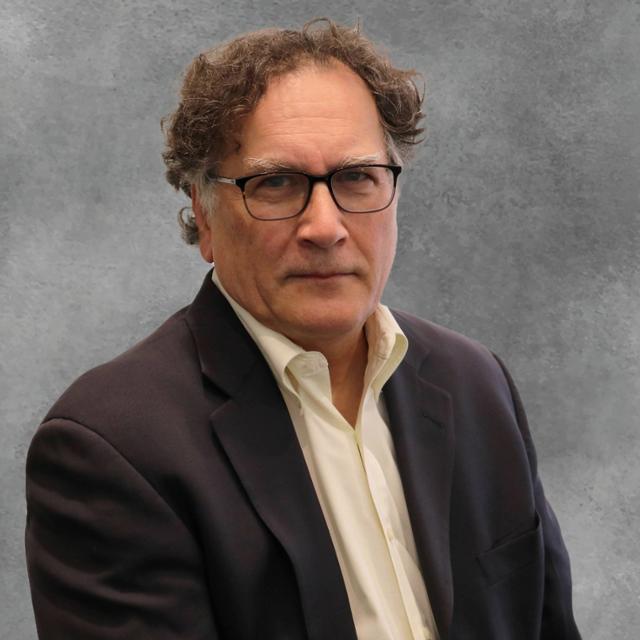
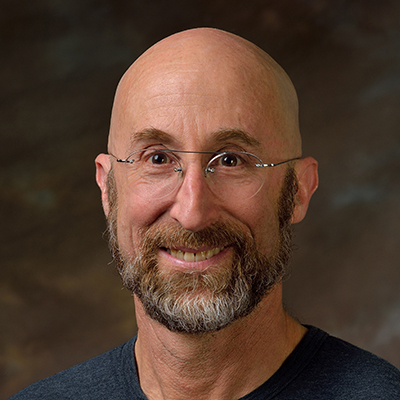
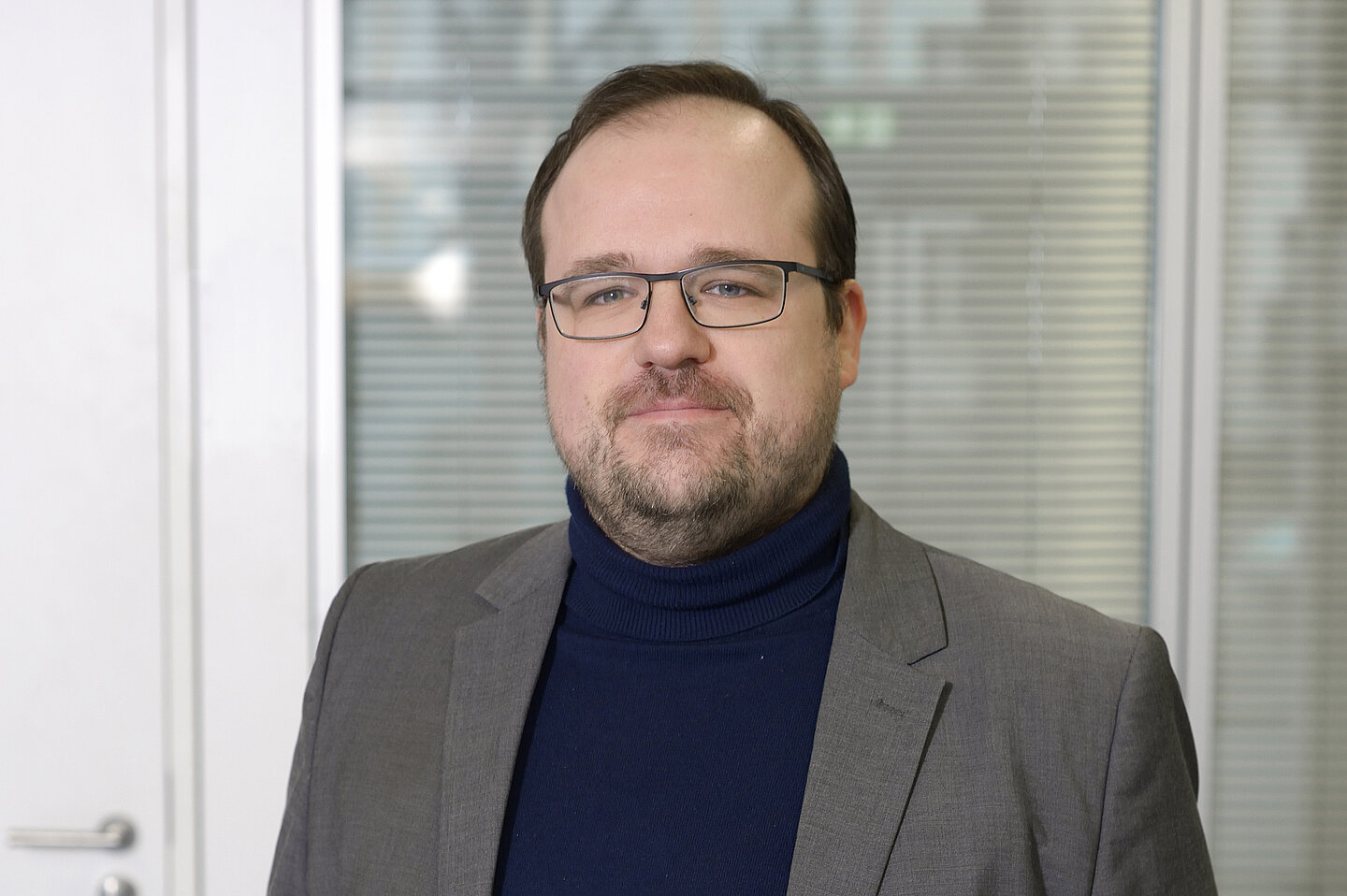
John Stolz is Professor of Environmental Microbiology and Director of Environmental and Energy Engineering at Duquesne University's School of Science and Engineering. His NASA-trained research examines microbial metal reduction, modern stromatolite ecosystems, and shale gas extraction impacts. His lab investigates arsenic/selenium biotransformation pathways, microbial communities in Shark Bay stromatolites, and environmental impacts of unconventional energy development. Recognized with multiple excellence awards including the Nobel J. Dick Endowed Chair. Over 150 publications explore microbial respiration mechanisms, biogeochemical cycling, and environmental bioremediation. Current grants support water quality testing near shale gas operations.
Lei Wu is a Professor and Anson Wood Burchard Chair Professor in the Department of Electrical and Computer Engineering at Stevens Institute of Technology. He holds a B.S. (2001) and M.S. (2004) in Electrical Engineering from Xi'an Jiaotong University, and a Ph.D. (2008) in Electrical Engineering from Illinois Institute of Technology. His research focuses on power system optimization, renewable energy integration, microgrid control, and cyber-physical systems resilience. Education: B.S. Electrical Engineering, Xi'an Jiaotong University (2001) M.S. Systems Engineering, Xi'an Jiaotong University (2004) Ph.D. Electrical Engineering, Illinois Institute of Technology (2008) Research Interests: Dr. Wu's work addresses challenges in power system operations, including optimization of renewable energy integration, electricity market design, and resilient microgrid control. He develops advanced algorithms for unit commitment, stochastic modeling of renewable resources, and cyber-physical security. His research emphasizes practical applications in grid resilience, demand response, and multi-energy system coordination. Awards: Fellow of IEEE (2022) NSF CAREER Award (2013) IBM Smarter Planet Faculty Innovation Award (2011) Grants & Professional Service: He leads grants on smart grid optimization, including projects from NSF, DOE, and industry partners. He serves as Editor for IEEE Transactions on Smart Grid and other journals, and has advised numerous students on energy-related research. His work on microgrid control and cyber-physical security has been widely recognized in industry and academia. Labs & Teams: Leads the Stevens Energy Systems Lab, focusing on advanced grid technologies and interdisciplinary collaborations between power systems, AI, and cybersecurity.
Shuxian LUO is an Assistant Professor of Asian Studies at the University of Hawai’i at Mānoa, specializing in Indo-Pacific maritime security, Chinese foreign policy, and U.S.-China relations. Her research focuses on crisis management mechanisms, territorial disputes, and geopolitical dynamics in the South China Sea and Yellow Sea. She holds a Ph.D. in International Relations from Johns Hopkins SAIS (2021), an M.A. in China Studies from Johns Hopkins SAIS (2016), an M.A. in Political Science from Columbia University (2008), and a B.A. in English Literature from Peking University (2007). Her current book project analyzes China's escalation strategies in maritime disputes, while ongoing research includes studies on Sino-Russian relations, Hong Kong’s Baodiao movement, and Arctic geo-economic interests. Her recent publications explore AI risks in U.S.-China crisis management, China’s conciliatory posture toward South Korea, and ASEAN’s role in great power competition. Dr. Luo’s work bridges theoretical frameworks with real-world policy implications, emphasizing the interplay between military tactics, legal frameworks, and diplomatic signaling in conflict prevention. She frequently publishes in journals like China International Strategy Review and the Journal of Contemporary China, and contributes to policy analyses for institutions like Brookings and War on the Rocks.
Rajesh Karki is a Professor in the Department of Electrical and Computer Engineering at the University of Saskatchewan’s College of Engineering. He holds a B.E., M.Sc., and Ph.D. in related fields. His research focuses on power system reliability, renewable energy integration, and microgrid resilience, with particular emphasis on addressing challenges posed by extreme weather, cyber threats, and decarbonization targets. Dr. Karki’s work spans theoretical modeling, probabilistic analysis, and practical implementation strategies for smart grids, energy storage systems, and distributed generation. His educational background includes advanced degrees in electrical engineering, complemented by professional engineering licensure (P.Eng.). His research has explored diverse topics such as wind energy curtailment mitigation, energy storage optimization, and demand response mechanisms in developing economies like Nepal. He has authored numerous peer-reviewed publications on grid resilience, reliability economics, and cyber-physical system security. Key themes in his work include: (1) quantifying the reliability value of energy storage in active distribution systems, (2) modeling cyber-physical threats to microgrids, and (3) developing frameworks for extreme weather-resilient infrastructure. Despite the volume of his publications (over 50 articles), no specific awards or grants are explicitly listed in the provided materials. His research often intersects technical, economic, and policy dimensions of sustainable energy systems.
Neal Sullivan is a Professor of Mechanical Engineering at the Colorado School of Mines (CSM), leading experimental research at the Colorado Fuel Cell Center as its director. His expertise lies in electrochemical ceramics, with a focus on fuel cells, electrolyzers, and membrane reactors for energy conversion and storage. Sullivan’s work spans from materials development to large-scale system integration, addressing applications such as hydrogen production, CO₂-to-fuels processes, and geothermic fuel cell systems for unconventional oil recovery. His research is supported by grants from the U.S. Department of Energy (DOE), NASA, and industry partners, totaling over $15M. Notable projects include the development of proton-conducting ceramic electrolyzers for water splitting, high-efficiency hybrid SOFC-IC engine systems, and Mars-based CO₂ methanation. Sullivan has led collaborative efforts with global leaders in electrochemistry, emphasizing scalability and durability in energy systems. Key contributions include innovations in protonic ceramic fabrication, catalyst integration, and multi-stack system design. His lab focuses on bridging early-stage materials research with full-scale demonstrations, achieving power outputs up to 100 kW. Sullivan’s work has been published in top journals like Nature Energy and International Journal of Hydrogen Energy , with a strong emphasis on practical applications and renewable energy solutions. Labs/Teams: Director of the Colorado Fuel Cell Center. Grants/Advising: PI/co-PI on multiple DOE and NASA grants, including $5M for hybrid SOFC systems and $1.5M for geothermic fuel cells. Advises on advanced materials and system integration for energy storage and conversion.
Radu State is Full Professor in Network Management and Cyber Security at the University of Luxembourg's Interdisciplinary Centre for Security, Reliability and Trust (SnT), where he leads the SEDAN research group. Research focuses on: Network security architectures Distributed system management Service-oriented security Cybersecurity protocols His work addresses fundamental challenges in secure network operations and resilient service deployment across complex infrastructures.
Iris D. Tommelein serves as the Roy W. Carlson Distinguished Professor in the Civil and Environmental Engineering Department at the University of California, Berkeley's College of Engineering, where she directs the Project Production Systems Laboratory (P2SL). A globally recognized pioneer in Lean Construction, she has revolutionized architecture-engineering-construction (AEC) practices through research, industry workshops, and leadership since co-founding the Lean Construction Institute in 1997. Her educational foundation spans multiple disciplines: Ph.D. in Civil Engineering (Construction Engineering and Management), Stanford University, 1989 M.S. in Computer Science (Artificial Intelligence), Stanford University, 1989 M.S. in Civil Engineering (Construction Engineering and Management), Stanford University, 1985 B.S. (5-year degree) in Civil Engineer-Architect, Vrije Universiteit Brussel, Belgium, 1984 Professor Tommelein's research centers on transforming construction processes through Lean principles and digital innovation . Her work pioneers takt planning for workflow reliability, industrialized construction for labor and sustainability challenges, and mistakeproofing to eliminate errors. She integrates digital twins , AI , and optimization to develop practical decision-support systems for supply chains, logistics, and production management. Recent focus includes modular offsite construction and Industry 4.0 applications. Analysis of her 2023-2025 publications reveals intensifying research on takt planning maturity models and industrialized construction feasibility , with growing emphasis on mass timber automation and visual management systems. Her work consistently bridges lean theory with practical implementation across megaprojects, subcontracting networks, and heavy civil engineering. Her exceptional contributions have earned: Lean Pioneer Award (Lean Construction Institute, 2015) National Academy of Construction induction (2019) PPI Technical Achievement Award (2022) Robert B. Harris Award (University of Michigan, 2024) ASCE Construction Management Award (2024) - first woman recipient in 51 years Through the P2SL, she leads industry-collaborative research on production system design, mistakeproofing frameworks, and digital transformation. Her grant-funded projects develop assessment tools for industrialized construction adoption and takt planning methods adaptable to diverse project types. She actively mentors graduate students and drives knowledge transfer via workshops and the annual Construction Innovation Day. The Project Production Systems Laboratory (P2SL) operates as a global hub for construction innovation, partnering with owners, contractors, and suppliers to implement lean production systems. Current initiatives include developing serious games for mistakeproofing training, optimizing work density methods for heavy civil projects, and creating digital twins for real-time construction management.
Kyojin Choo is a Tenure Track Assistant Professor at the Swiss Federal Institute of Technology Lausanne (EPFL) in the School of Engineering , affiliated with the Mixed-Signal Integrated Circuits Lab (MSIC-LAB). He also holds teaching roles in Microengineering and Electrical and Electronics Engineering at EPFL. B.S. and M.S. in Electrical Engineering from Seoul National University (2007, 2009) Ph.D. in Electrical Engineering from the University of Michigan (2018) His research focuses on charge-domain analog/mixed-signal circuits , low-power sensor interfaces , and compact ADCs for IoT, wearables, and millimeter-scale systems. He has pioneered charge-injection cell techniques for energy-efficient circuits in energy management, sensor front-ends, and communication. His work emphasizes reducing power consumption to nanowatt levels while enabling ultra-compact designs. His recent publications highlight advancements in compact SAR ADCs , low-power MEMS accelerometers , millimeter-scale imaging systems , and ultra-low-power timing generators . His research integrates charge-domain circuit design with sensor interface optimization , energy harvesting , and high-speed link architectures . He holds over 20 US patents and has taught courses in Microengineering and Electrical Engineering at EPFL. His group (MSIC-LAB) addresses challenges in battery-free sensor design, power-constrained system scaling, and commercialization of wearables with unconventional form factors.
Antonello Monti is a Professor and Director of the Institute for Automation of Complex Power Systems at RWTH Aachen University. His research focuses on modern power systems, including smart grid technologies, hybrid AC-DC grids, and quantum computing applications in energy systems. Recent publications demonstrate innovations in grid resilience, EV charging optimization, quantum-assisted power system planning, and advanced simulation techniques. His team develops open-source tools like JuliaGrid for power system analysis and validates concepts through real-time testing platforms. Research addresses energy transition challenges including renewable integration, grid modernization, cyber-physical security, and next-generation optimization methods combining quantum computing with traditional power engineering approaches.
Prof. Tammo H.A. Bijmolt is a Full Professor of Marketing Research and Chairman of the Department of Marketing at the University of Groningen's Faculty of Economics and Business. He holds additional roles such as Director of the Groningen Digital Business Center and former Director of the SOM Research Institute. His expertise spans consumer decision making, e-commerce, advertising, retailing, loyalty programs, and meta-analysis. Education: PhD in Marketing (cum laude, 1996) and MSc in Quantitative Business Economics (cum laude, 1991), both from the University of Groningen. Research focuses on marketing methodology, consumer behavior in digital contexts, and loyalty programs. Notable awards include the 2022 Best Paper Award (Journal of Interactive Marketing) and the 2017 Emerald Literati Award. Advising over 20 PhD students and overseeing grants such as NPG funding for digitalization projects. Active in leadership roles with EMAC and EIASM, and consulting with firms like DVJ Insights and Unilever. Labs/Teams: Leads the Groningen Digital Business Center and collaborates with the SOM Research Institute.
Douglas C. Hopkins is a Research Professor and Director of the Laboratory for Packaging Research in Electronic Energy Systems (PREES) at North Carolina State University's Department of Electrical and Computer Engineering. He joined the ECE faculty in 2011 and is affiliated with the FREEDM Systems Center and the Center for Additive Manufacturing and Logistics (CAMAL). He holds a Ph.D. in Electrical Engineering from Virginia Tech (1989). His research focuses on Very High-Frequency power electronics, Wide Band Gap (WBG) devices (GaN/SiC), advanced packaging, and solid-state protection systems . He has pioneered work in integrated power electronics, harsh-environment systems, and 3D power electronics integration. His leadership includes founding conferences such as the International Symposium on 3D Power Electronics Integration and Manufacturing (3D-PEIM) and the International Symposium on Advanced Power Electronics Packaging (APEPS). Prof. Hopkins has authored over 200 publications and co-founded DensePower, LLC as CEO/CTO. He serves as Associate Editor for the IEEE Journal of Emerging and Selected Topics in Power Electronics and holds editorial roles in multiple journals. His awards include the IMAPS Outstanding Educator Award (2013) and IMAPS Fellow (2007). He has held visiting appointments at the Army Research Lab, NASA, and Lawrence Livermore National Lab, and served as a National Academy of Sciences reviewer. His consulting firm, DCHopkins & Associates, LLC, provides engineering expertise in power electronics and packaging. Key Contributions: Director of PREES Lab and FREEDM Center member Co-founder of 3D-PEIM and APEPS symposiums IEEE PELS Technical Committee member (TC2, TC-6) Recipient of IMAPS Fellow and multiple conference recognitions
Lars O. Nord is a Professor in the Department of Energy and Process Engineering at NTNU, specializing in thermal energy systems, CO2 capture technologies, and dynamic process modeling. He holds a PhD from NTNU (2010) and a Master's from Virginia Tech (2001). His research focuses on power cycles, turbomachinery optimization, and decarbonization strategies for energy systems. Nord has led projects such as DEXPAND and InnCapPlant, addressing CO2 capture under variable loads and expander efficiency in renewable systems. Current roles: Head of the Thermal Energy research group and teaches courses like Engineering Thermodynamics. Research highlights include thermal energy storage integration, moving bed adsorption processes, and offshore hybrid energy systems. His work spans over 80 publications, emphasizing CO2 capture dynamics, turbine design, and control strategies for flexible power plants. Notable collaborations include SINTEF and Aker Solutions. Nord advises multiple PhD candidates and has mentored alumni now leading roles in industry and academia.
Tamon Stephen is a Professor in the Department of Mathematics at Simon Fraser University (SFU), part of the Faculty of Science. His research focuses on operations research, with an emphasis on combinatorial optimization, algorithms, discrete geometry, and computational biology. He holds a Ph.D. in Mathematics from the University of Michigan (2002). His work often bridges theoretical and computational aspects, addressing interdisciplinary applications. Stephen is affiliated with the Centre for Operations Research and Decision Sciences (CORDS) and has contributed to software tools for hypergraph transversals and colorful linear programming. He has taught courses such as Math 208W (Introduction to Operations Research) and has advised projects in metabolic network analysis and scheduling optimization. His office is located at the Surrey campus (SRYC 2886). Key research collaborations include studies on firefighter scheduling, nurse rostering, and metabolic pathway analysis. His methodologies often leverage algorithm design, polytope theory, and discrete mathematics. Stephen actively participates in academic service, organizing seminars and contributing to conferences such as the West Coast Optimization Meeting. His work emphasizes practical applications of theoretical results, with a focus on solving real-world optimization challenges.
Affiliations & Roles Professor of Computer and Information Science at University of Pennsylvania Faculty in Graduate Groups: Bioengineering (School of Engineering) Genomics & Computational Biology (School of Medicine) Operations, Information & Decisions (Wharton School) Psychology (School of Arts & Sciences) Research Affiliations: Annenberg Public Policy Center (Distinguished Fellow) Center for Cognitive Neuroscience Institute for Translational Medicine Research Interests Focuses on explainable AI, natural language processing (NLP), and machine learning applications in psychology and medicine. Key areas include: Language analysis for well-being and mental health Spectral methods for NLP (e.g., Eigenwords) Forecasting and decision-making models Bioinformatics and genomics Teaching Teaches advanced courses in Machine Learning, Deep Learning, and AI ethics, including: CIS 5200: Machine Learning CIS 5220: Deep Learning CIS 6200: Advanced Topics in Deep Learning Key Collaborations Works with interdisciplinary teams on projects like the Good Judgment Project (forecasting) and WWBP (Well-Being and Language). Collaborators include Martin Seligman (positive psychology), Dean Foster (statistics), and Michael Collins (NLP).
Prof. Dr. Oliver Crönertz serves as Dean and Professor of Business Administration and IT-Supported Business Processes at the Faculty of Digital Transformation , HTWK Leipzig. His work bridges digital transformation with business management, focusing on interdisciplinary project management, digital business models, and sustainability. Current roles: Dean, supervising professor for HTWK Robots/nao Team Research areas: Digital Transformation, Business Analytics, Industry 4.0, Stoffstrommanagement Research Trends : Recent publications emphasize digital solutions for environmental management, business process optimization, and smart urban logistics. His work connects Industry 4.0 with financial sustainability and societal impacts of digitalization. Projects : Leads Mittelstand-Digital Zentrum Leipzig-Halle, involved in EXIST-Potentiale, Future Parking, and FAssMII (Feedback-based E-Assessment in STEM).