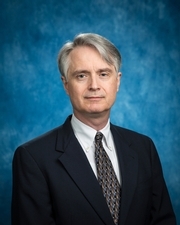
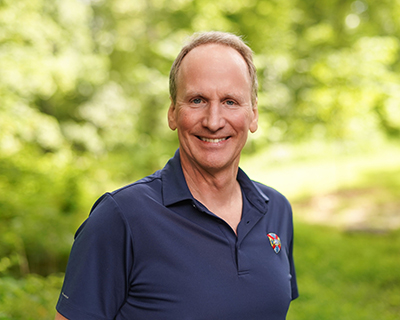
Randell Barry serves as Associate Professor in the Applied Aviation Sciences Department within the College of Aviation at Embry-Riddle Aeronautical University. His expertise bridges atmospheric science and aviation operations through specialized meteorology instruction and applied research. Academic credentials include: Ph.D. in Atmospheric Science, SUNY at Albany M.S. in Atmospheric Science, SUNY at Albany Professor Barry's research centers on operational meteorology for aviation safety, with particular focus on probability-based weather forecasting systems, extreme weather event analysis, and hurricane impacts on flight operations. His work translates complex atmospheric phenomena into actionable decision-support tools for pilots and dispatchers, emphasizing uncertainty quantification in weather products critical to aviation safety. Scientific recognition includes publications in the Journal of Aviation/Aerospace Education & Research addressing aviation weather challenges, though specific awards are not documented in available materials. Teaching responsibilities drive student engagement through WX 201 (Survey of Meteorology), WX 363 (Thunderstorms), and advanced Dynamic Meteorology courses (WX 374/375). His curriculum integrates real-world aviation weather case studies with theoretical principles, preparing students for FAA certification and operational meteorology roles. Current grant activity and student advising details are not specified in source materials. No dedicated research laboratory or center affiliation is mentioned in the available documentation.
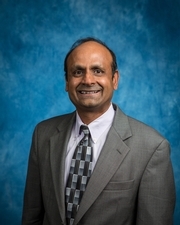
Vedapuri Raghavan is a Professor in the Department of Accounting, Economics, Finance & Information Sciences at Embry-Riddle Aeronautical University's David B. O'Maley College of Business. He serves as the ISTAT University (ISTAT U) Program Coordinator, directing aircraft leasing and finance education globally, and maintains visiting professorships across Italy, China, Germany, and Bahrain. His research focuses on sustainable aviation finance, aircraft leasing, international aviation finance, and theoretical finance applications to airlines. Recent work examines fintech impacts on airline performance, sustainable finance metrics, and European airport financial structures, reflecting growing emphasis on environmental and digital transformation in aviation economics. Professor Raghavan's publication trends show consistent contribution to aviation finance literature, with increasing attention to sustainability metrics and innovative financing mechanisms since 2020. His work bridges theoretical finance with practical industry applications across commercial aviation sectors. His scientific recognitions include: Fulbright Specialist grant for Aircraft Leasing research in Germany (2025) Joseph R. Martin Distinguished Professor of Aviation Business (2022-2023, 2018-2019) Fulbright Scholar for Islamic Aviation Finance in Bahrain (2018-2019) Christian and Lou Seno Distinguished Professor of Aviation Finance (2015-2017) Research funding includes $105,000 from ISTAT Foundation for course development (2014-2016), $31,050 for video lectures (2019-2020), and $5,000 Joseph Martin Professorship for Sustainable Aviation Finance (2022-2023). He actively involves students through OCOB Philanthropy Council projects and ISTAT's industry mentorship program, providing direct pathways to aviation finance careers. As ISTAT University Program Coordinator, he oversees curriculum development incorporating industry expert content, manages scholarship initiatives, and facilitates connections between students and aircraft manufacturers, lessors, and valuation firms worldwide.
Dr. Daniel Burow serves as Assistant Professor in the Applied Aviation Sciences Department within Embry-Riddle Aeronautical University's College of Aviation. His expertise spans applied climatology, meteorology, hazards research, and geospatial analysis with significant contributions to coastal environmental studies. His educational foundation includes: Ph.D. in Geography from University of Tennessee M.S. in Geography from University of North Dakota B.S. in Meteorology: Mathematics and Geography from Valparaiso University Dr. Burow's research program integrates satellite remote sensing and field methodologies to address critical environmental challenges. His work focuses on hurricane impact assessment on coastal dunes, urban stormwater systems, marine pollution detection, and climate perception dynamics. By analyzing pre- and post-event satellite imagery, he quantifies environmental changes from natural disasters while examining societal responses to weather hazards through survey-based studies. This dual approach bridges physical environmental processes with human dimensions of climate adaptation. Analysis of his 15 publications (2019-2025) reveals a clear trajectory toward advanced satellite applications, with 60% of recent work utilizing remote sensing for coastal change detection. His research shows strong regional focus on Florida's vulnerable coastline and Tennessee's severe weather patterns, producing actionable insights for disaster management and climate resilience planning. The interdisciplinary nature of his work spans meteorology, geography, and environmental science with increasing emphasis on anthropogenic impacts. While no specific awards are listed, his consistent publication record in respected journals including Remote Sensing (multiple 2024 papers) and Geographical Review demonstrates scholarly impact. His research appears grant-supported through evident fieldwork and data acquisition capabilities. As an educator, Dr. Burow teaches advanced and introductory GIS courses alongside climate change curriculum, preparing students for geospatial careers in environmental monitoring. His publications indicate active student collaboration opportunities, particularly in data collection and analysis for coastal research projects. The integration of his research specialties with Embry-Riddle's aviation mission creates unique opportunities for studying weather impacts on aerospace operations.
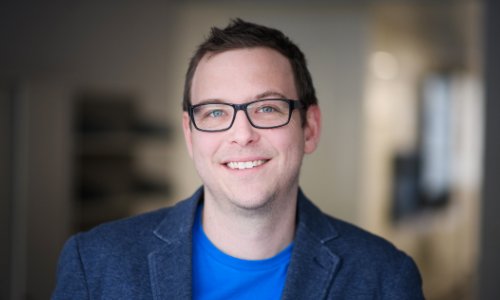
Reto Stauffer serves as Assistant Professor at the Institute of Statistics and Digital Science Center (DiSC) at the University of Innsbruck, where he has been affiliated since 2006—initially at the Institute of Atmospheric and Cryospheric Sciences before transitioning to his current dual roles. A meteorologist specializing in statistical weather forecasting, he co-founded DiSC to drive interdisciplinary digital research tools across university faculties while prioritizing public accessibility. His educational journey began with vocational training as an electrical systems draftsman in Switzerland, followed by accelerated university studies in Innsbruck culminating in a PhD. Stauffer emphasizes practical academic engagement over theoretical isolation, famously stating the university "must not become an academic ivory tower". Research interests span Meteorology , Statistical Methods , and Weather Forecasting , with growing focus on Digital Science infrastructure and Interdisciplinary collaboration . His work prioritizes developing accessible tools that bridge academic research and real-world applications. Currently establishing DiSC as a cross-faculty hub, Stauffer champions initiatives where digital research methodologies serve diverse disciplines while maintaining community connections. The center's sterile new premises at Innrain symbolize his vision for future collaborative energy once fully operational.
Nick Julien Baumgart is a PhD Fellow at the Department of Public Health, Faculty of Health and Medical Sciences, University of Copenhagen, and an active member of the Copenhagen Centre for Disaster Research (COPE). He contributes to global climate analysis through the World Weather Attribution (WWA) initiative, delivering rapid scientific assessments on climate-related disasters. His research specializes in climate change vulnerability and exposure within attribution science, focusing on heat and drought drivers in Kenyan informal settlements. Baumgart's work analyzes how pre-existing socioeconomic conditions amplify disaster impacts, bridging climate science with public health outcomes. Current projects examine urbanization effects on flood risks in Nepal and East Africa, poverty-climate interactions in Madagascar, and Arctic heat extremes. Article trends reveal consistent focus on attribution methodologies across diverse geographies, with 80% of publications addressing climate impacts in Global South regions. His collaborative work emphasizes rapid-response analysis for public discourse, evidenced by media coverage in 2 news outlets and references in 2 Wikipedia pages. Baumgart's research is funded by the Danish Ministry of Foreign Affairs project 'Climate Change Attribution and Vulnerability in Kenya' (DFC File No. 23-12-KU). He maintains active collaborations through COPE and WWA networks, engaging with institutions across Europe, Africa, and the Americas. His work operates within the Copenhagen Centre for Disaster Research framework, leveraging interdisciplinary teams for rapid disaster attribution studies. Current efforts focus on integrating vulnerability metrics into climate event analysis for policy-relevant outputs.
Rachael Filwett is an Assistant Professor in the Department of Physics at Montana State University's College of Letters & Science. Her research focuses on energetic particles originating from the Sun and their behavior in interplanetary space and planetary magnetospheres. Her educational background includes a B.S. in Physics, East Asian Studies, and Mathematics from Valparaiso University (2013), followed by M.S. (2016) and Ph.D. (2018) in Physics from the University of Texas at San Antonio. Her academic journey has positioned her at the forefront of space physics research. Dr. Filwett's research centers on ion particle acceleration and transport mechanisms, with particular emphasis on how particles accelerated at the Sun and shocks move through interplanetary space. She utilizes both space-based and ground-based data to investigate particle origins and acceleration processes, with applications to space weather prediction. Her work extends to energetic particle entry and trapping in terrestrial and gas giant magnetospheres. A significant portion of her research involves developing next-generation miniaturized particle instruments for SmallSats that maintain high mass and energy resolution, addressing critical needs in space instrumentation. Her publication record reveals strong emphasis on heliospheric science, with key contributions in solar wind dynamics, particle acceleration mechanisms, and space weather applications. Recent work shows increasing focus on community development, accessibility, and mental health awareness within the heliophysics field. Dr. Filwett actively secures competitive research funding, with current projects including: Suprathermal Property Scaling and Acceleration Processes from the Near-Sun Environment to 1 AU (NASA) Resolving Uncertainty in Past 14C Spikes from Tree Rings (NSF) CAREER: Evolution of Stream Interaction Regions from 1 to 5.4 au and Implications for Geomagnetic Induced Currents (NSF) LabOratory for the Behavior of the SloT Region (LOBSTR) (NASA) She is deeply committed to educational outreach, having developed the CS CORE course ASTR 120 'The Sun and Society' for non-STEM majors and taught various physics courses including honors-level general physics and electromagnetism. Her service includes committee work for the Conference for Undergraduate Women in Physics. Dr. Filwett also champions inclusivity in space physics, advocating for accessibility and mental health awareness within the scientific community.
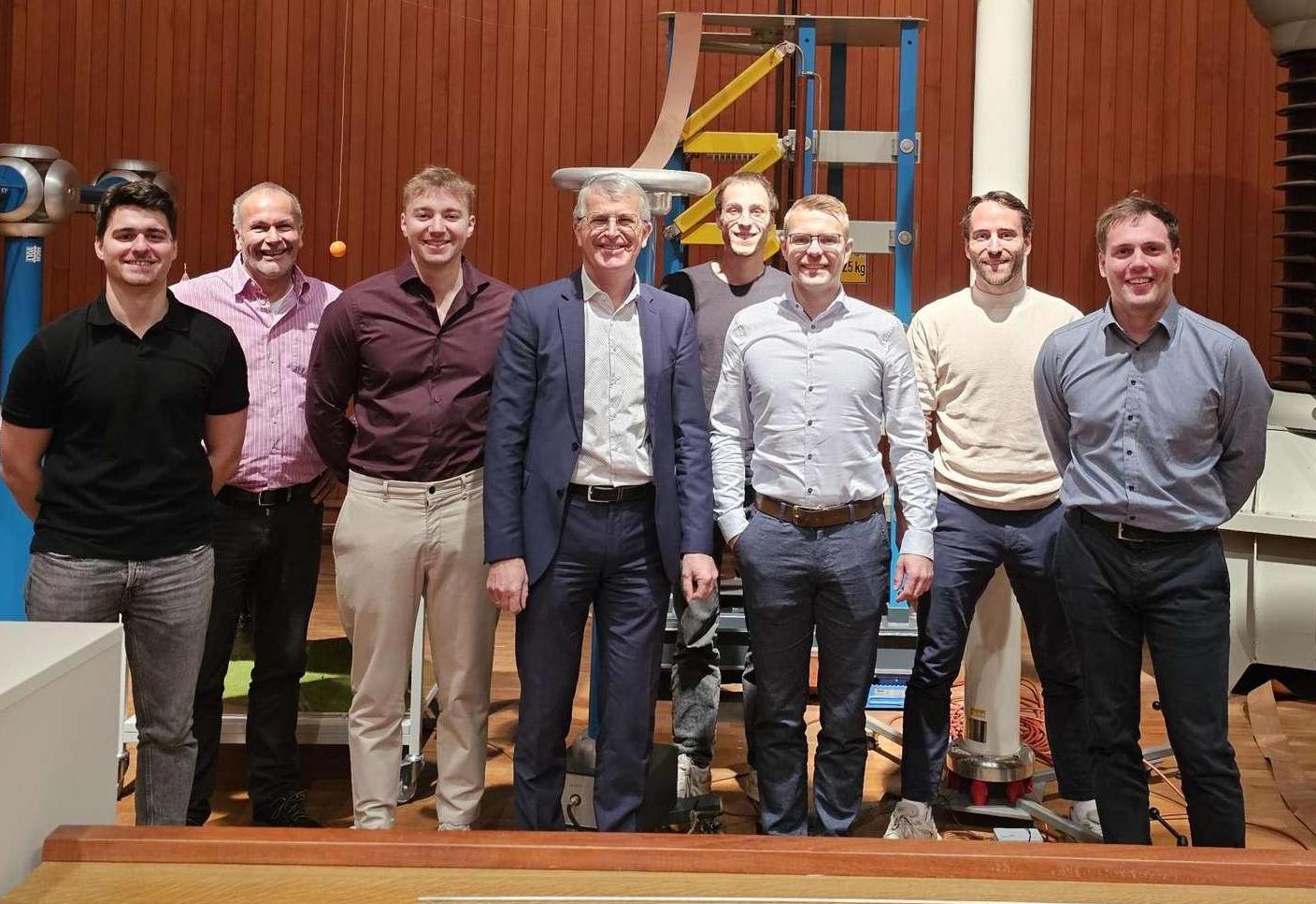
Prof. Dr.-Ing. Michael Finkel is a full Professor at Augsburg University of Applied Sciences in the Faculty of Electrical Engineering, where he serves as Academic Advisor for International Industrial Engineering, Member of the Faculty Council, and Chair of the Examination Board. His professional affiliations include memberships in CIGRE, IEEE, VDE, and the EMC Project Group of FNN. He received the Bavarian Certificate of Higher Education Teaching in 2009 and multiple research awards including ETG Literature Prizes and Young Author Awards. Professor Finkel's research focuses on High-Voltage Engineering, Power Systems, and Smart Grid technologies. His work addresses critical challenges in renewable energy integration, grid stability, and distributed energy resources. Key research areas include: Island grid operation and emergency power systems Smart grid digitalization and control strategies Electric vehicle integration in urban networks Power system stability and frequency control Renewable energy forecasting and grid integration His recent publications demonstrate strong focus on converter-dominated grids, renewable integration, and smart grid solutions. Research trends show increasing emphasis on real-time grid monitoring, AI applications in power systems, and hybrid energy solutions. Collaborative projects frequently involve industry partnerships and international research networks. Significant scientific recognitions include: ETG Literature Prize 2024 for heat pump load modeling Young Author Award 2025 for hydropower island grid research HSA_transfer Award 2022 for technology transfer Multiple best paper awards at international conferences Professor Finkel actively supervises doctoral candidates in power systems research and leads projects funded by industry and public grants. Current initiatives include developing emergency power solutions for critical infrastructure and advanced monitoring systems for distribution networks. His research group collaborates extensively with the Technology Transfer Centers of Augsburg University and industry partners in the energy sector.
Dr. Christopher S. Thaxton is a Professor in the Department of Physics and Astronomy at Appalachian State University, where he has served since 2004, progressing from Assistant Professor to his current position. He holds multiple leadership roles including Director of the Atmospheric Science Minor Program (since 2018) and previously directed the Environmental Science Program (2012-2017) and Professional Science Master's Program (2007-2012). He also served as Interim Director of the Engineering Physics Graduate Program from 2022 to June 2023. Dr. Thaxton leads the Applied Fluids Laboratory (AppAFL), which investigates fluid mechanics of boundary layers and the coupling between fluids and terrestrial surfaces. The lab develops and applies instrumentation and analytical/numerical tools for research in sediment transport, seafloor dynamics, and atmospheric boundary layer processes. His research interests span multiple areas of fluid dynamics with particular focus on: Seafloor object burial dynamics and sediment transport Atmospheric boundary layer processes in complex terrain Urban stream hydrology and temperature dynamics Computational fluid dynamics and modeling Machine learning applications in fluid dynamics Dr. Thaxton's recent publications demonstrate strong activity in naval applications of fluid dynamics, atmospheric modeling using the Weather Research and Forecasting (WRF) model, and sediment transport mechanics. His work often involves interdisciplinary collaboration with environmental scientists, geographers, and engineers. Notable awards and funding include: $350,000 contract with the U.S. Naval Research Laboratory's Ocean Sciences Division Collaboration in an NSF MRI program award of $530,000 Multiple student NREIP (Naval Research Enterprise Internship Program) fellowships As an advisor, Dr. Thaxton mentors both graduate and undergraduate students, with recent advisees including Adian Keaveney, Nick Mencis, Joshua McNeill, and Tess Mickey. His lab provides students with substantial computational resources and opportunities for research travel and conference participation. The Applied Fluids Laboratory maintains strong connections with the Naval Research Laboratory and other research institutions, providing students with valuable networking and career opportunities. The lab maintains extensive computational resources including specialized workstations running Linux with software for computational fluid dynamics (OpenFOAM), atmospheric modeling (WRF), and machine learning applications. Dr. Thaxton also teaches courses related to his expertise including Atmospheric Physics and Fluid Mechanics.
Dr. Stanley A. Cheyne serves as Professor of Physics and Astronomy at Hampden-Sydney College, based in Pauley Science Center, Room 408. His contact details include phone (434) 223-6178 and email scheyne@hsc.edu. Educational background: Ph.D. in Physics, University of Mississippi (1989) M.A. in Physics, University of Mississippi (1986) B.A., Hendrix College (1984) His research centers on meteorology and climatology, maintaining the Pauley Science Center Weather Station and curating critical weather resources including National Weather Service forecasts, radar systems with velocity vectors, GFS/NAM computer models, Arctic sea ice data, and real-time carbon dioxide monitoring. This work supports regional climate analysis and educational forecasting in Central Virginia. Scientific Awards: No awards documented in provided materials Dr. Cheyne advises Physics and Astronomy students though specific names aren't listed; no grant information appears in the profile. His operational infrastructure includes the campus weather station providing local observation data.
Dr. Patric Seifert is a Scientist at the Leibniz Institute for Tropospheric Research (TROPOS) in Leipzig, Germany, where he has been working since 2010. He is affiliated with the Remote Sensing of Atmospheric Processes department and leads the Ground-Based Remote Sensing group. His work focuses on atmospheric remote sensing, particularly using the LACROS instrument suite for aerosol and cloud observations. He also maintains a strong connection with the University of Leipzig, where he earned his PhD and currently teaches courses on cloud radar and remote sensing to master's students. PhD in Meteorology from University of Leipzig (2010) Diploma in Meteorology from University of Leipzig (2006) Student of Meteorology at University of Leipzig (2000-2006) Dr. Seifert's research centers on understanding aerosol-cloud interactions, particularly how aerosols influence ice formation processes in the atmosphere. His work involves extensive use of ground-based remote sensing instruments, including the LACROS suite, to observe cloud and aerosol properties. He investigates how aerosol particles affect numerical weather forecast models and develops methods to derive continuous datasets of aerosol and cloud microphysical properties through the Cloudnet data processing scheme. His current research spans multiple international projects across diverse geographical locations including the Arctic, Southern Ocean, Cyprus, and Antarctica. Analysis of Dr. Seifert's recent publications reveals a strong focus on cloud microphysics, particularly mixed-phase and ice clouds. His work frequently employs advanced remote sensing techniques including polarimetric radar and lidar to study ice nucleation processes, particle shape distribution, and aerosol-cloud interactions. A significant portion of his recent research relates to the MOSAiC expedition in the Arctic, examining cloud life cycles and the impact of wildfire smoke on cirrus formation. His publications also highlight innovative approaches to cloud seeding experiments using UAVs and the development of new methods for analyzing cloud radar data. Member of Deutsche Meteorologische Gesellschaft (DMG) since 2006 Ordinary Member of the DFG Transregio programme Arctic Amplification: Climate Relevant Atmospheric and Surface Processes and Feedback Mechanisms (AC3) since 2021 Dr. Seifert actively collaborates on numerous international research projects including ACTRIS/Cloudnet, DACAPO-PESO (focusing on the Southern Ocean), PICNICC (examining hemispheric cloud contrasts), SPOMC (polarimetric observations of clouds), COALA (Antarctic observations), ATMO-ACCESS, ACTRIS-D, and EXCELSIOR. His work often involves mentoring students and conducting outreach activities to demonstrate TROPOS's contributions to understanding aerosol-cloud interactions and career opportunities in atmospheric sciences. He has been instrumental in operating and extending the LACROS instrument suite for various field campaigns around the world. Dr. Seifert leads the Ground-Based Remote Sensing group at TROPOS, which operates the LACROS (Leipzig Aerosol and Cloud Remote Observations System) infrastructure. This mobile observation platform has been deployed in diverse environments including Punta Arenas, Chile for the DACAPO-PESO campaign, Cyprus for multiple projects, and Antarctica for the COALA campaign. His team collaborates with international partners across Europe, New Zealand, and the Americas to study atmospheric processes in different climatic regions, with particular emphasis on aerosol-cloud interactions in pristine environments.