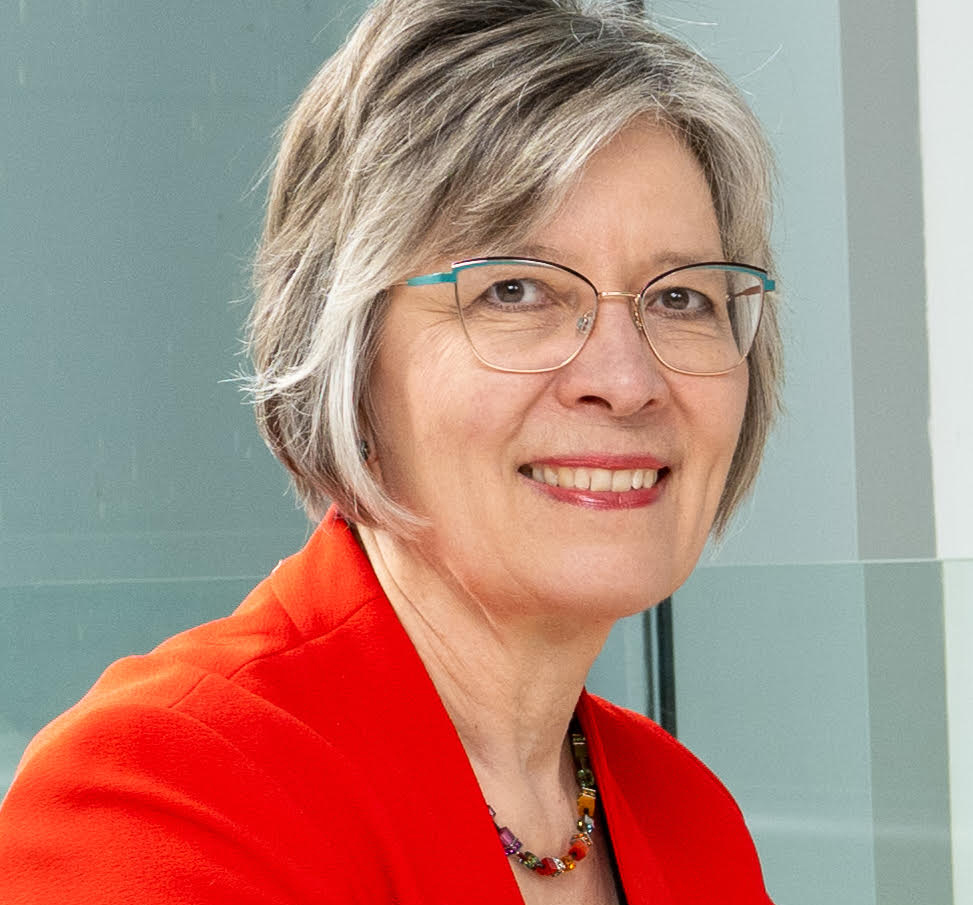
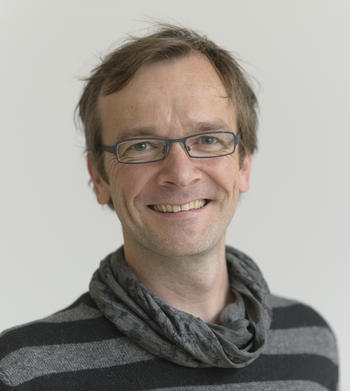
Eirik Mikal Samuelsen is an Associate Professor at the Department of Physics and Technology within UiT The Arctic University of Norway . His research focuses on ship icing , atmospheric icing , and numerical weather forecasting at hectometric scales. He leads projects such as SPRICE (improved warning of sea spray icing) and a collaborative initiative with the Norwegian Air Ambulance Foundation (SNLA) to enhance helicopter icing warnings. His work integrates Complex Systems Modelling and applies to Arctic maritime safety . Research areas: Ship Icing, Polar Meteorology, Boundary Layer Dynamics Key projects: SPRICE, Smart Senja/RENEW Teaching: Wind Modelling in Complex Terrain (Fys-3810/8810) Recent publications highlight his expertise in sea spray icing prediction, helicopter safety in Arctic conditions, and high-resolution weather modeling. Collaborative works emphasize ensemble forecasting for maritime decision-making and CFD simulations for field expedition tools. Supervision includes master's and PhD students in meteorology. He is affiliated with UiT's Complex Systems Modelling group and Smart Senja/RENEW project at Forskningsparken 1 A404.
Professor Robert Fitch is a distinguished academic leader and one of Australia's foremost authorities in robotics at the University of Technology Sydney (UTS), where he serves as Professor in the School of Mechanical and Mechatronic Engineering. He holds significant leadership roles as Director of the NSW Defence Innovation Network and was previously Director of UTS Tech Lab and Head of School of Mechanical and Mechatronic Engineering from 2019-2023. His career bridges academia, research, and industry collaboration to develop engineering solutions for tomorrow's societal challenges. PhD from Dartmouth College (1998-2004) Former Senior Research Fellow at Australian Centre for Field Robotics, University of Sydney Current Director of NSW Defence Innovation Network (since 2023) Founding Co-Director of NSW Space Research Network (2021-2023) Professor Fitch specializes in autonomous field robotics, developing outdoor robotic systems for diverse industry applications from agriculture to aeronautics, environmental science to space exploration. His research spans multiple domains including multi-robot coordination, hydrogen storage systems, maritime robotics, and AI-driven automation. He operates at the critical nexus of academia, research, and industry, collaborating with businesses and government organizations to deliver innovative solutions to complex real-world challenges. His work demonstrates exceptional translational impact, turning academic research into commercial ventures and practical applications. His recent publications reveal a strong focus on advancing robotics through novel planning algorithms for multi-robot systems operating in complex environments. There's a clear trend toward practical applications in maritime operations, hydrogen energy storage, and warehouse automation, reflecting his commitment to solving real-world engineering challenges. His research integrates theoretical advances with industry needs, particularly in marine robotics, autonomous systems for agriculture, and energy storage technologies. Professor Fitch's work has received significant recognition with numerous accolades and extensive media coverage including appearances on ABC's flagship 7.30 program, Weekend Australian, BBC, and The Hindu. His research has been featured in over 15 news outlets and blogged about extensively, demonstrating its broad societal impact. He has graduated 20 PhD students who are now leading work in field robotics, mechanical and mechatronic engineering, and autonomous systems. Since 2011, he has secured nearly $30 million in grants funding over 50 projects, including major collaborations with industry partners like Space Machines Company, Advanced Navigation, and Australian Wool Innovation. His leadership has been instrumental in growing startups from small beginnings to significant operations, such as Space Machines Company which launched the largest Australian-made satellite into orbit aboard a SpaceX transporter in March 2024. Professor Fitch leads the UTS Robotics Institute and has been instrumental in establishing collaborative spaces like UTS Tech Lab, which has fostered successful partnerships with multiple companies. His work with Wildlife Drones demonstrates how academic research can translate into successful commercial ventures, having grown from research projects into an established business. His leadership extends to numerous industry and academic organizations, boards, and committees, where he serves as director, chair, and co-chair.
Shinji Wakao is a full Professor in the School of Advanced Science and Engineering, Waseda University, Japan, where he has served since 1993 and was Dean of the School from 2016 to 2020. Holding doctoral and master degrees in electrical engineering from Waseda, he leads a prolific research group specialising in computational electromagnetics and renewable-energy power systems. Education: Doctor of Engineering, Waseda University Master of Engineering, Waseda University Bachelor of Engineering (Electrical Engineering), Faculty of Science and Engineering, Waseda University Research Interests: His work integrates large-scale numerical electromagnetic field analysis—finite-element and infinite edge-element methods, level-set topology optimisation—with practical power-engineering challenges such as photovoltaic generation forecasting, smart-grid battery scheduling, zero-energy-house design, and electric-machine optimisation. Publication Trends: Recent articles emphasise deep-learning-enhanced PV forecasting (auto-encoders, CNNs, just-in-time modelling) and advanced topology-optimisation techniques (encoder-decoder networks, MMA-accelerated level-set methods) for magnetic shields and motors, reflecting a convergence of machine learning and energy-system science. Scientific Awards: IEEJ Academic Promotion Award (2008) IEEJ Distinguished Paper Award (2008) Committee & Society Roles: He serves on Japanese national committees including METI’s Power Safety Sub-committee and the Cabinet Office’s solar-energy evaluation panels, and is a board member of the Japan Solar Energy Society. Professional memberships include IEEE, IEEJ, JSCES and JSES. Laboratory & Projects: He heads the Wakao Laboratory within Waseda’s Department of Electrical Engineering, conducting projects on smart-grid PV management, magnetic-sensor optimisation for railway signalling, and net-zero-energy building renovation strategies.
Lars Petter Røed is Professor II (part-time) in the Department of Geosciences at the University of Oslo and a senior researcher at the Norwegian Meteorological Institute (MET) in Oslo, Norway. His career intertwines academia and operational service, focusing on oceanography, climate system interactions and numerical modelling of marine environments. Research interests span from large-scale ocean circulation to mesoscale processes such as eddies and ocean fronts, with special attention to Arctic seas and the North Atlantic. He develops and applies high-resolution numerical models to study ocean-atmosphere coupling, sea-ice variability, pollution drift and eutrophication, and translates research into operational forecasting tools used for ship routing, storm-surge warnings and environmental management. Recent publications illustrate a commitment to both fundamental methodology—e.g., his 2019 Springer textbook on numerical methods for geophysical fluids—and practical applications such as the 2022 storm-surge warning system for the Norwegian coast. This dual output underscores a strategy of blending rigorous mathematical techniques with societal benefit. Textbooks & outreach: beyond articles he authors educational works, notably Waves, Swells, and Currents: An Introduction to Ocean Forecasting (2022 lecture series) and the comprehensive 2023 Norwegian MET textbook VINDTEK co-authored with colleagues, aimed at students and forecasters. Contact: larspr@met.no | Visiting: CIENS, Gaustadalleen 21, Oslo.
Tuija Pulkkinen is the George R. Carignan Collegiate Professor of Climate and Space Sciences and Engineering at the University of Michigan. She leads the Pulkkinen Research Group, focusing on Sun-Earth interactions, space weather modeling, and auroral physics using advanced simulations and observational data. Her work bridges solar phenomena, magnetospheric dynamics, and technological impacts of space weather. Research interests span: Space Weather Modeling : Developing predictive frameworks for geomagnetic storms and solar wind impacts on Earth's magnetosphere. Auroral Physics : Investigating mechanisms behind transpolar arcs (e.g., Theta Aurora) and omega bands. Magnetospheric Energetics : Quantifying energy transfer via global simulations (e.g., SWMF) for real-time forecasting with NOAA. Her publications (2022–2025) reveal trends in magnetospheric substorms, solar wind coupling, and space weather uncertainty quantification. Recent articles emphasize simulation-driven insights into storm-time dynamics, auroral sources, and model validation against satellite data. No scientific awards are explicitly mentioned in the source text. She mentors PhD students and postdocs (e.g., Austin Brenner, Shannon Hill, Tim Keebler) and collaborates on NASA/NSF grants, including projects with NOAA's Space Weather Prediction Center. Her group also contributes to missions like SWIFT for heliospheric structure analysis. The Pulkkinen Research Group operates within the University of Michigan's Climate and Space department, utilizing the Space Weather Modeling Framework (SWMF) for geospace simulations. Collaborations extend to Aalto University, NASA Goddard, and international consortia studying ICMEs and magnetospheric eruptions.
David Dempsey is an Associate Professor in the Department of Civil and Environmental Engineering at the University of Canterbury's Faculty of Engineering, where he has been affiliated since December 2020. He leads the Subsurface Engineering Group, addressing critical challenges for a low-emissions future. His research integrates geomechanics, machine learning, and fluid dynamics across four key areas: Carbon Dioxide Removal : Designing systems to combust forestry waste and sequester CO₂ in geothermal reservoirs. Underground Hydrogen Storage : Modeling hydrogen injection/recovery in depleted gas fields. Volcanic Forecasting : Developing real-time ML systems for eruption prediction using seismic data. Induced Seismicity : Quantifying earthquake risks from energy projects. His recent publications (2021-2025) show a strong focus on machine learning applications in geohazards and energy storage, with themes including seismic forecasting, CO₂-hydrogen geostorage, and wildfire prediction. Numerical modeling and data-driven approaches dominate his methodology. He actively supervises 13+ graduate students on projects such as hydrogen geostorage, volcanic forecasting, and flood prediction. His group collaborates with industry on geothermal and seismic risk projects, leveraging real-time data from networks like GeoNet.
Prof. Dr. Henning Rust is a Professor of Statistical Meteorology at the Department of Geosciences, Freie Universität Berlin, and head of the Statistical Meteorology Group. He co-speaks the Hans-Ertel-Centre for Weather Research, funded by the German Weather Service (DWD), and contributes to national and international climate projects like MiKlip and BINGO. His work bridges statistical modeling, extreme event analysis, and climate risk communication. PhD in Theoretical Physics (2007, University of Potsdam) Diplom in Physics (2001, Albert-Ludwigs-Universität Freiburg) BSc with Honours in Physics (1998, Brock University, Canada) Research Interests focus on stochastic precipitation models , extreme convective events , statistical downscaling , and forecast verification . He specializes in time series analysis and long-range dependence in climatological data. His recent publications analyze decadal climate predictability, compound extremes (e.g., ozone-weather interactions), and citizen science applications in weather education. Notable works include skill score decomposition for Atlantic climate phases and flexible IDF curve modeling for urban hydrology. Awards include a summa cum laude PhD and the Distinguished Graduation Student Award for Physics. He supervises PhD and Master’s students on topics like windstorm risk modeling and precipitation extremes . Additional roles: German Meteorological Society (executive board) , MiKlip steering committee , and climate communication via self-built weather station projects.
Christiane Jablonowski is a Professor in the Department of Atmospheric, Oceanic and Space Sciences (AOSS) at the University of Michigan's College of Engineering. She serves on the NCAR Community Earth System Model (CESM) Scientific Steering Committee, the AMS Committee on Artificial Intelligence Applications to Environmental Science, and represents U-M at the University Corporation for Atmospheric Research (UCAR). Her educational background includes: Ph.D. in Atmospheric & Space Sciences and Scientific Computing, University of Michigan M.S. in Meteorology, University of Bonn, Germany B.S. in Physics, Aachen University of Technology, Germany Professor Jablonowski specializes in atmospheric dynamics, focusing on baroclinic waves, tropical cyclones, and stratospheric phenomena. She pioneers idealized test cases for dynamical cores of General Circulation Models (GCMs) and leads the Dynamical Core Model Intercomparison Project (DCMIP). Her research integrates machine learning with high-resolution modeling for weather prediction and climate simulation, with significant work on Great Lakes coupling and volcanic eruption impacts. Her recent publications reveal strong trends toward machine learning applications in physical parameterizations and ultra-high-resolution modeling, with recurring themes in stratospheric dynamics, tropical cyclone simulation, and dynamical core evaluation across 15 recent articles spanning volcanic aerosol impacts, QBO modeling, and Great Lakes ice forecasting. Her scientific accolades include the Presidential Early Career Award for Scientists and Engineers (PECASE) and Department of Energy Early Career Award, alongside the 2023 UCAR Outstanding Accomplishment Award. Additional honors recognize her methodological innovations and graduate fellowship achievements. UCAR Outstanding Accomplishment Award in Publication (2023) AGU EOS publication highlights (2022) Presidential Early Career Award for Scientists and Engineers (PECASE) (2010) Department of Energy Early Career Award (2010) AOSS Faculty Award (2010) Distinguished Achievement Award, U-M College of Engineering NCAR Advanced Study Program Fellowship She directs major federally funded initiatives including the NOAA Unified Forecast System Short-Range-Weather team and CESM Atmospheric Model Working Group, mentoring numerous graduate students through DOE and NASA grants while leading the Dynamical Core Model Intercomparison Project. As founder of the Dynamical Core Model Intercomparison Project (DCMIP) and co-chair of NOAA's Unified Forecast System team, she coordinates international collaborations developing next-generation atmospheric modeling frameworks at the Climate and Space Research Building.
Chen Ling is an Associate Professor in the Mechanical Engineering Department at the University of Akron 's College of Engineering and Polymer Science. Formerly an Assistant Professor at the University of Oklahoma's Department of Industrial and Systems Engineering, her work focuses on cognitive systems engineering and human decision-making in aviation and weather systems , with funding from the FAA, NSF, DOT, and DOC. Ph.D. in Industrial Engineering, Purdue University (2006) M.S. in Industrial Engineering, North Carolina A&T State University (2001) B.S. in Aeronautics and Astronautics, Beijing University of Aeronautics and Astronautics (1996) Her research explores human-computer interaction , weather risk communication , and ergonomics , particularly in aviation and severe weather contexts. Recent work examines probabilistic hazard information (PHI) systems for tornado warnings, forecasters' mental workload, and collaborative weather warning protocols. She employs simulation modeling, cognitive task analysis, and usability experiments to enhance safety in complex systems. Key trends in her publications include: Development of FACETs-era convective warning systems Integration of automated guidance in National Weather Service operations Human performance assessment using EEG and wearable sensors Usability optimization for weather displays and paratransit applications Dr. Ling is a member of the Human Factors and Ergonomics Society (HFES) and the Institute of Industrial Engineering (IIE) , with research spanning from 2006 to 2025 across journals like Behavior and Information Technology and International Journal of Human-Computer Studies .
Maj Dawn L. Sanderson serves as an Assistant Professor of Statistics in the Mathematics and Statistics Department within the Graduate School of Engineering and Management at the Air Force Institute of Technology (AFIT), while also holding the position of Military Deputy for AFIT's Scientific Test and Analysis Techniques Center of Excellence (STAT COE). Her academic credentials include: PhD in Statistics and Operations Research, University of North Carolina at Chapel Hill (2025) MS in Applied Mathematics, Air Force Institute of Technology (2019) MS in Criminal Justice Administration, Columbia Southern University (2015) BS in Mathematics, Methodist University (2011) Her research program centers on reliability engineering and uncertainty quantification through extreme value theory, with specialized expertise in Bayesian data analysis methodologies. This work bridges theoretical statistics with real-world applications in aerospace operations and medical decision-making, demonstrating consistent interdisciplinary impact across defense and healthcare domains. Publication analysis reveals a strategic focus on high-stakes operational problems where statistical modeling directly influences safety-critical decisions, particularly in meteorological risk assessment and clinical treatment optimization. As Military Deputy for the STAT COE, she drives the integration of rigorous scientific testing frameworks across Air Force acquisition and operational test communities. While specific student advising details are unavailable, her dual military-academic role suggests leadership in developing next-generation defense analysts through AFIT's graduate programs.
Lai-yung Ruby Leung is a Battelle Fellow at Pacific Northwest National Laboratory (PNNL) working in Earth Systems Analysis & Modeling. She serves as Chief Scientist of the Energy Exascale Earth System Model (E3SM) supported by the U.S. Department of Energy, leading major efforts to develop state-of-the-art capabilities for modeling human-Earth system processes on high-performance computers. Dr. Leung's research broadly spans climate and hydrological cycle modeling with expertise in land-atmosphere interactions, orographic processes, monsoon climate, and climate extremes. Dr. Leung earned her educational credentials from prestigious institutions: Ph.D., Atmospheric Science, Texas A&M University M.S., Atmospheric Science, Texas A&M University B.S. (Honors), Physics & Statistics, Chinese University of Hong Kong Her research interests focus on regional and global climate modeling , land-atmosphere interactions , and the regional hydrologic cycle . She investigates orographic precipitation mechanisms, climate extremes, climate variability and change, and aerosol-cloud interactions. Her work integrates advanced modeling techniques with observational data to understand complex Earth system processes, with research featured in Science , Popular Science , Wall Street Journal , and National Public Radio . Dr. Leung has published over 500 peer-reviewed papers and serves as an editor for the American Meteorological Society's Journal of Hydrometeorology . Analysis of Dr. Leung's recent publications reveals her leadership in developing and applying the Energy Exascale Earth System Model (E3SM), with significant contributions to understanding mesoscale convective systems, soil moisture dynamics, urban hydrology, and climate extremes. Her work demonstrates increasing integration of machine learning techniques with traditional climate modeling approaches, particularly in model evaluation frameworks and high-resolution simulations. She maintains strong focus on practical applications of climate science for understanding water resources, extreme weather events, and climate change impacts. Dr. Leung's scientific recognition includes: Election to the National Academy of Engineering (NAE) Election to the Washington State Academy of Sciences (WSAS) Fellow of the American Geophysical Union (AGU) Fellow of the American Meteorological Society (AMS) Fellow of the American Association for the Advancement of Science (AAAS) AMS Hydrologic Sciences Medal (2022) U.S. Department of Energy Office of Science Distinguished Scientist Fellow (2021) Reuter's Hot List of top 1,000 most influential climate scientists (2021) AGU Jacob Bjerknes Lecture (2020) AGU Bert Bolin Global Environmental Change Award (2019) As Chief Scientist of E3SM, Dr. Leung leads major research initiatives funded by the Department of Energy and has organized key workshops sponsored by DOE, NSF, NOAA, and NASA. She has served on numerous advisory panels and National Academies committees that define future priorities in Digital Twin, AI/ML, climate modeling, hydroclimate, and water cycle research. Her professional service includes membership on the Board on Atmospheric Sciences and Climate of the National Academies, council membership with the American Meteorological Society, and editorial roles for prominent journals. Dr. Leung directs research within PNNL's Earth Systems Analysis & Modeling group, collaborating with national and international climate research teams. She leads efforts to advance the Energy Exascale Earth System Model (E3SM), which represents cutting-edge capabilities in modeling human-Earth system processes. Her work connects with multiple PNNL research areas including atmospheric science, global change, and coastal science, contributing to the laboratory's mission of addressing complex environmental challenges through scientific innovation.
John P George is a prominent researcher at the National Centre for Medium Range Weather Forecasting (NCMRWF) specializing in Numerical Weather Prediction, Data Assimilation, and Atmospheric Modeling. His work primarily focuses on improving tropical cyclone forecasting, monsoon systems, and satellite data assimilation techniques for the Indian region. His research interests span Numerical Weather Prediction Data Assimilation techniques Atmospheric Modeling Tropical Cyclone forecasting Monsoon systems Satellite meteorology Analysis of his publication record from 2008-2022 reveals a strong focus on improving numerical weather prediction models, particularly for tropical cyclones over the Bay of Bengal and Indian monsoon systems. His work demonstrates expertise in high-resolution modeling, vortex initialization techniques, and satellite data assimilation. Key trends in his research include the development of 4D-Var data assimilation methods, evaluation of different model versions for cyclone prediction, and simulation of extreme weather events using progressively higher resolution models. His scientific contributions include Development of India's first integrated expert urban flood forecasting system for Chennai Implementation of vortex initialization techniques that reduced track errors by ~58% Assimilation of INSAT-3D imager data that improved humidity and wind field forecasts Validation of soil moisture products over Indian regions Dr. George's research has significantly contributed to improving the accuracy of numerical weather prediction models in India, particularly for high-impact weather events like tropical cyclones and monsoon depressions. His work bridges the gap between theoretical atmospheric modeling and operational weather forecasting needs in the Indian context.
Ümit Aydın serves as a Lecturer at Bingol University's Social Sciences Vocational School within the Transportation Services Department, specializing in Civil Aviation Cabin Services. With academic appointments since 2017 including roles at Istanbul Aydın University and Bingol University since 2020, he maintains active industry connections across Turkish and European aviation sectors. His educational background includes a Business Administration undergraduate degree from Süleyman Demirel University (2011), dual master's degrees in Business Administration (Mehmet Akif Ersoy University, 2017) and Aviation Management (Kocaeli University, 2023), with ongoing studies in Aviation Management at Anadolu University. Industry experience spans Flight Operations at Antalya Airport, sales management, and U.S. quality control roles. Research focuses on civil aviation economics during crises, cabin crew training, and customer satisfaction dynamics. His work bridges academic theory with practical industry applications, particularly analyzing pandemic impacts on airlines and airspace management. Recent publications examine snow removal economics, in-flight atmospheric effects on passenger behavior, and financial fraud detection. Scientific recognition includes a Bingol University Rectorate Certificate of Appreciation for establishing the mock-up cabin classroom. His research output shows concentrated activity in 2021 with multiple conference papers addressing urgent aviation industry challenges during the pandemic. As a student mentor, he emphasizes practical skill development through industry partnerships that secured employment for students at international airports. His administrative roles include Deputy Directorship of Bingol University's Continuing Education Center (2023) and prior teaching coordination at Istanbul Cerrahpasa University. The mock-up cabin classroom represents his key infrastructure contribution, providing hands-on training in aircraft cabin environments. This facility supports his teaching philosophy centered on practical competency development through simulated real-world scenarios.
Michał Wójcik serves as Assistant Lecturer in the Department of Computer Systems Architecture within the Faculty of Electronics, Telecommunications and Informatics at Gdańsk University of Technology. Concurrently, he holds a technical role as Senior Specialist – Design Programmer in the Team for Development and Maintenance of Central University Systems (CUI), operating from Building A of the Faculty (room 523) with contact number 583471867. His research bridges computer science with environmental and business applications, focusing on Software Engineering (RESTful systems, Jakarta EE), High Performance Computing (parallel application simulation), and Environmental Informatics (marine forecasting, benthic habitat mapping). Key projects include the FindFISH numerical forecasting platform for fisheries and MERPSYS simulation environment for HPC systems, demonstrating strong interdisciplinary collaboration. Analysis of his 2017-2024 publications reveals evolving expertise from core HPC simulation toward applied environmental informatics, with recent work emphasizing open innovation competence profiling and marine ecosystem modeling. His publications consistently address real-world problems through computational solutions, particularly in Baltic Sea environmental monitoring and multi-partner innovation ecosystems.
Dr. Anjali Sharma is an Assistant Professor in the Sustainability Studies Program at La Sierra University. She earned her Ph.D. in Environmental Sciences from Florida A&M University (2021) and a Diploma in GIS and Remote Sensing (2021), building on foundational Master's studies in India. Her research integrates climate science, agriculture, and sustainability. Research focuses include: Climate change adaptation strategies for agricultural systems Sustainable food production and processing techniques Ecohydrological modeling and environmental decision-making Development of climate resilience indicators for crops Her publications demonstrate strong emphasis on: Agricultural adaptation in Florida (4 publications) Food science innovation (2 publications) Advanced climate/environmental modeling (2 publications) Notable scientific recognition: National Technical Association Scholarship (2018, 2019) 3MT Poster Competition 3rd Prize (2019) Florida ASABE Presentation Award (2018) Climate Change Video Award (2018) She actively collaborates on sustainability projects at La Sierra University, though lab infrastructure and current grants are unspecified.