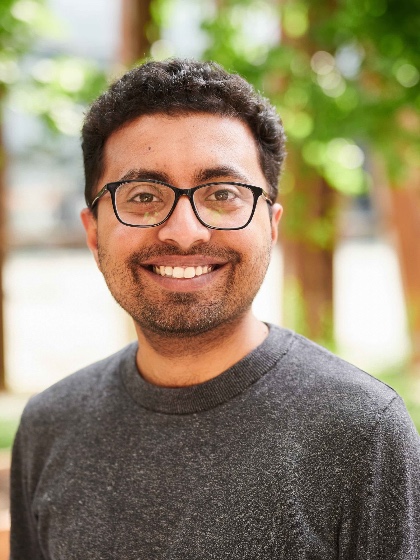
Dr. Rafid Al-Khannak is an Associate Professor in Computing at Buckinghamshire New University. He holds a PhD in Engineering and IT from the University of Bolton, completed in collaboration with Siemens AG. His research focuses on engineering and IT operational development, particularly in cloud computing, distributed systems, cybersecurity, and infrastructure automation. Al-Khannak maintains industry collaborations with Amazon and Siemens on cloud implementation and security projects. Key research areas include: Secure cloud migration frameworks using AWS hybrid models Infrastructure automation through CI/CD pipelines Penetration testing methodologies for cloud applications AI-enhanced education system transformation Healthcare application development for specialized needs
Dr. Chiwuokem Nwoko is a Lecturer in Strategy and Operations at Plymouth Business School within the University of Plymouth's Faculty of Arts, Humanities and Business. His research focuses on leveraging big data and responsible AI to enhance business decision-making, cybersecurity, and fraud prevention in e-retail sectors. He collaborates with stakeholders to develop ethical and secure data-driven solutions, emphasizing education and awareness programs. Teaching responsibilities include modules such as International and Digital Business, Digital Analytics, and Business Analytics. He supervises PhD candidates Ben Omoruyi (Business Management) and Xiaoyi Zhan (International Logistics), while leading MSc dissertations in data science and strategy across multiple schools. His work aligns with UN Sustainable Development Goals, addressing challenges in data privacy, supply chain resilience, and innovation. Professional activities include international collaborations with institutions like the International Institute in Geneva and Peninsula College, Malaysia. Research emphasizes pragmatic applications of technology in business, with recent publications exploring pandemic impacts on e-retail fraud prevention and big data-driven strategies.
Dr. James L. Szalma is Professor in the Human Factors and Cognitive Psychology PhD Program at University of Central Florida. He holds a PhD in Applied Experimental/Human Factors psychology from University of Cincinnati. His research investigates how task characteristics interact with operator attributes (cognitive abilities, personality, emotion, motivation) to influence performance, workload, and stress. Current projects examine threat detection training using video game paradigms, motivational influences on human-technology interaction, and social context effects on performance. He developed Fuzzy Signal Detection Theory applications for threat detection evaluation. He directs the Performance Research Laboratory investigating attentional processes in high-stakes environments including security and defense applications.
Kevin W. Hamlen is the Louis A. Beecherl, Jr. Distinguished Professor in the Department of Computer Science at the University of Texas at Dallas. He serves as Executive Director of UT Dallas' Cyber Security Research and Education Institute. His research focuses on language-based security , binary software hardening , cyberdeception , and formal program verification . He has received multiple grants from agencies like AFOSR, NSF, DARPA, and industry partners including Lockheed Martin and Intel. PhD and MS from Cornell University BS from Carnegie Mellon University His research explores automated approaches to software security through techniques like binary disassembly , control-flow integrity , and honey-patching . He has pioneered methods for malware defense and cloud/web/mobile security . Recent work examines adaptive cyberdeception and GPU-based security frameworks . His publications span binary code manipulation , malware mitigation , and blockchain security . Key awards include the NSF IUCRC Technology Breakthrough Award and two CSAW Best Paper 2nd Prizes . He advises numerous PhD students, many of whom now work at Google, IBM, and Microsoft. His book Autonomous Cyber Deception (Springer, 2019) with Ehab Al-Shaer and Cliff Wang provides comprehensive coverage of adaptive cyberdeception strategies.
Richard K. Cho is an Associate Professor in the Operations and Information Management Area of the Faculty of Business at the University of New Brunswick (Saint John campus), where he has taught since 2005. His extensive university service includes roles as UNB Senator, Senate Admissions Committee Chair, and long-standing faculty advisor for the Golden Key International Honour Society. His academic credentials include: Ph.D. in Management Sciences from University of Waterloo (2002) M.Sc. in Management Sciences from Korean Advanced Institute of Science and Technology (1987) B.Sc. in Industrial Engineering from Seoul National University (1985) Dr. Cho's research centers on supply chain coordination mechanisms , specializing in vendor-managed inventory systems with constraints like limited storage capacity and stockout-cost sharing. His work integrates game theory and stochastic optimization to develop practical contract frameworks that balance risk and efficiency in complex supply chains. Publications appear in top-tier journals including Operations Research and Manufacturing & Service Operations Management. His publication trajectory reveals consistent focus on optimizing contractual arrangements in inventory systems, with increasing sophistication in modeling storage limitations and cost-sharing structures between supply chain partners. Dr. Cho secured two SSHRC research grants in 2008 and served on SSHRC's national adjudication committee for Insight Development Grants in 2011. He teaches core courses including Supply Chain Management & Logistics (BA 4653) and Production & Operations Management (BA 3653) at undergraduate and MBA levels, drawing on prior industry experience at Samsung Electronics where he contributed to DRAM development projects.
Dr. Lei Fan is an Assistant Professor in the Department of Engineering Technology at the University of Houston, with a joint appointment in the Electrical and Computer Engineering (ECE) Department. His research focuses on power system operations, optimization algorithms, quantum computing, and energy storage systems. He holds a Ph.D. from the University of Florida and a B.S. from Hefei University of Technology. Education: Ph.D., University of Florida B.S., Hefei University of Technology Research Interests: Dr. Fan’s work bridges theoretical optimization and practical energy systems, including quantum algorithms for power grid management, battery storage planning, and distributed quantum computing architectures. His LORE (Learning & Operations Research & Energy) lab explores cutting-edge applications in teleoperation, satellite networks, and environmental monitoring. Publications: Recent work emphasizes quantum computing’s role in solving complex optimization problems, such as entanglement routing in satellite networks and distributed hydrogen-power systems. His research also integrates machine learning for methane plume detection and hyperspectral imaging. Labs/Teams: He leads the LORE lab, advancing interdisciplinary research in energy systems and quantum technologies.
Dr. Michael Talbot is an Associate Professor in the History of the Ottoman Empire and Modern Middle East at the University of Greenwich, affiliated with the School of Humanities and Social Sciences within the Faculty of Liberal Arts and Sciences. He holds advanced degrees including a PhD and multiple prestigious fellowships (FRAS, FRHistS). His research focuses on global Ottoman interactions, with specialties in Ottoman-British relations, maritime history, and consular networks. Recent work examines Ottoman communities in Britain/Ireland and Ottoman-Algerian/Palestinian dynamics. Education: BA Hons, MA, PhD in History, Postgraduate Certificate in Higher Education (PGCertHE). He is an SFHEA (Senior Fellow of the Higher Education Academy) and Registered Professional Archaeologist (RPA). Research interests emphasize transnational connections, including Ottoman maritime territoriality, diplomatic practices, and colonial perceptions. He bridges academic and public history through BBC radio contributions and consulting for Netflix’s Rise of Empires: Ottoman . Scientific Recognition: 2018 BBC/AHRC 'New Generation Thinker' award for public scholarship. Media engagements include BBC Radio 3 broadcasts and expert commentary on Ottoman history for major platforms. Advising: Actively supervises graduate students in Ottoman diplomatic history, global interactions, and Middle Eastern studies. No current grants listed but maintains international archival collaborations. Engages in digital humanities through exhibition curation projects. Labs/Teams: Collaborates with Ottoman Studies networks and the University’s Humanities Research Centre. Active in transnational historical research partnerships.
Christos Nicolaides is an Assistant Professor at the Department of Business and Public Administration within the School of Economics and Management at the University of Cyprus (UCY), holding a secondary appointment as a Digital Fellow at MIT's Initiative on the Digital Economy. Previously, he spent three years as a James McDonnell Foundation-funded Postdoctoral Fellow at MIT Sloan School of Management. His educational background includes a PhD in Engineering from Massachusetts Institute of Technology (2014), SM from MIT (2011), MSc in Applied Mathematics from Imperial College London (2009), and BSc in Physics from University of Thessaloniki (2008). Nicolaides' research applies mathematical, statistical, and computational tools to large-scale empirical questions in social influence mediated by digital technologies. His work spans Data Science , Machine Learning , Social Networks , and Computational Social Science , with significant contributions to understanding human mobility patterns, disease transmission dynamics, and social contagion effects. His research has established novel methodologies for analyzing complex network structures in mobility data and social interactions. Analysis of his 15 most recent publications reveals a consistent focus on applying network science to real-world problems, particularly in pandemic response (12 publications), human mobility analytics (9 publications), and social contagion dynamics (7 publications). His work demonstrates increasing interdisciplinary integration, combining computer science, epidemiology, and organizational behavior since 2020. Marie S. Curie Fellow Two Highly Cited Papers by Web of Science (2017, 2020) Best Paper Award by Risk Analysis Society (2019) Professor of The Week by Poets & Quants (2020) As principal institutional investigator, Nicolaides has secured over €1 million in research funding from the European Commission, industry partners, Cyprus Innovation and Research Foundation, and Cyprus Ministry of Health. His current teaching includes Social Networks and Entrepreneurship, Introduction to Operations Management, and Quantitative Methods in Management. Media coverage of his work spans major outlets including The New York Times, CNN, Nature, and Science, with significant impact on public health policy discussions during the COVID-19 pandemic.
Sudhakar Ganti is an Associate Professor in the Department of Computer Science at the University of Victoria, part of the Faculty of Engineering and Computer Science. He holds a PhD from the University of Ottawa. His research focuses on cloud computing resource management, software-defined networking (SDN), traffic management, quality-of-service optimization, and performance evaluation through queueing theory. His work bridges theoretical frameworks with practical applications in network efficiency and distributed systems. Dr. Ganti’s expertise includes optimizing resource allocation in fog-cloud systems, enhancing telehealth IoT energy efficiency, and developing dynamic defense frameworks for SDN security. His contributions span network traffic prediction, large file transport protocols, and formal verification of networking systems. He has published extensively in top-tier conferences and journals, addressing challenges in distributed computing, cyber security, and edge computing. His research trends emphasize leveraging reinforcement learning for fog-cloud resource allocation, multi-objective optimization in IoT, and SDN-driven network security. Earlier work includes foundational studies on optical router bypass, cloud workload characterization, and conversational agents for smart environments. Despite his prolific output, no academic awards or grants are explicitly mentioned in his profile.
Professor Gregoris Mentzas is a faculty member at the National Technical University of Athens, School of Electrical and Computer Engineering, where he directs the Division of Industrial Electric Devices and Decision Systems. His research focuses on AI-enabled decision systems, knowledge management, and semantic technologies applied to digital enterprises and e-government. With over 350 publications, he ranks among the top 2% most cited scientists globally. Research Interests: Artificial intelligence for decision augmentation, big data analytics in personalized health and smart mobility, semantic web technologies, and industrial internet of things. Current projects investigate trustworthy AI frameworks and hybrid intelligence systems for Industry 5.0. Teaching: Leads courses in Digital Enterprise Management, Strategic Information Systems, and Project Management at undergraduate and postgraduate levels, incorporating industry case studies and experiential learning approaches. Awards & Leadership: Top 2% Highly Cited Scientist (PLOS Biology 2021) 5 Best Paper Awards in international conferences Director of Information Management Unit (1997-present) Board Member of Institute of Communication and Computer Systems (2006-2009) Projects & Funding: Secured over €18 million in research grants through 60+ European projects with industry partners including SAP, IBM, and Siemens. Research outcomes led to three technology spin-offs.
Gillian Ruth Goward is a Professor and Chair of the Department of Chemistry and Chemical Biology at McMaster University, where she also serves as Associate Dean of the Faculty of Science. She holds a prestigious McMaster Faculty of Science Research Chair in Magnetic Resonance of Materials for Energy Storage. Her research focuses on advanced energy materials, particularly lithium-ion batteries, fuel cells, and alternative energy systems, utilizing magnetic resonance spectroscopy and imaging. She is a Senior Editor for the Journal of Physical Chemistry and contributes to the Canadian and international Magnetic Resonance and Materials Chemistry communities. Her team employs state-of-the-art magnetic resonance tools to study electrolyte-electrode interfaces and ion dynamics in solid/solution phases. Education: Ph.D. in Chemistry, University of Waterloo (1995-1999) Certificate in University Teaching, University of Waterloo (1997-1998) Honours Bachelor of Science in Chemistry, McMaster University (1991-1995) Her research interests span atomic/molecular spectroscopy, electrochemistry, and chemical characterization of materials, with a focus on improving energy storage technologies. Recent work emphasizes sodium-ion batteries, solid-state electrolytes, and operando NMR techniques to track ion dynamics during battery operation. Her studies often integrate experimental methods like solid-state NMR with computational approaches (e.g., DFT) and advanced imaging (MRI). She has secured significant grants, including a $4.2M award to advance critical minerals research in collaboration with industry leaders. Her contributions include developing polymer-rich composite solid-state electrolytes and plastic inorganic electrolytes for safer batteries. Scientific Awards: McMaster Faculty of Science Research Chair in Magnetic Resonance of Materials for Energy Storage Her teaching activities include Spectroscopy (CHEM 776) and Sustainable Chemistry: Natural Resources and Energy (CHEM 3SC3) . She leads a research group engaged in collaborative projects, as evidenced by her 111 scholarly activities in the last decade. Her lab specializes in air-sensitive studies and has developed innovative RF probes for battery analysis.
Paul Nuyujukian serves as an Assistant Professor of Bioengineering and Neurosurgery, with courtesy appointment in Electrical Engineering at Stanford University. He is a Faculty Scholar of the Wu Tsai Neurosciences Institute, directing the Brain Interfacing Laboratory where his team develops neural interface technologies for clinical applications in stroke and epilepsy. Education: MD, Stanford University (2014) PhD in Bioengineering, Stanford University (2012) BS, UCLA (2006) Dr. Nuyujukian's research integrates motor systems neuroscience with neuroengineering to decode brain activity during movement and recovery from injury. His laboratory pioneers brain-machine interface (BMI) platforms that translate neural signals into communication and control systems, with particular emphasis on intracranial EEG recording and real-time neural decoding. Current work focuses on developing clinically viable BMI solutions for neurological conditions through both preclinical models and human trials, advancing our understanding of neural population dynamics in health and disease. Recent publications reveal strong trends in intracranial EEG acquisition systems, seizure detection algorithms using information theory, and closed-loop BMI applications for ambulatory neuroscience. His work bridges fundamental neuroscience with clinical translation, particularly in epilepsy monitoring, chronic pain management, and neural prosthetics for paralysis. A notable emphasis exists on creating scalable, minimally invasive recording platforms that reduce clinical burden while maintaining high-fidelity neural data. Scientific Awards: No specific awards listed in provided materials As director of the Brain Interfacing Laboratory, Dr. Nuyujukian mentors students and collaborators in neural engineering research while securing grant funding for BMI development. His group maintains active collaborations with Stanford's Department of Neurosurgery and Neurology for clinical translation, with current projects including real-time decision-state decoding and personalized network mapping for pain management. The laboratory operates advanced facilities for both animal and human neural recording, emphasizing seamless integration of engineering innovation with clinical neuroscience. The Brain Interfacing Laboratory comprises multidisciplinary scientists and engineers developing next-generation neural interfaces. Current initiatives include the LiCoRICE platform for ambulatory neuroscience, seizure detection systems using compression-enabled entropy estimation, and ketamine's effects on hippocampal connectivity. The team actively participates in clinical trials for BMI applications in stroke rehabilitation and epilepsy, with strong partnerships across Stanford's medical and engineering schools to accelerate technology translation.
Dr. Constantin Catalin Dragan is a Senior Lecturer in Secure Systems at the University of Surrey, UK. He holds a PhD in Computer Science from Alexandru Ioan Cuza University of Romania (2014), focusing on cryptographic primitives. His research expertise includes applied cryptography, provable security, electronic voting systems, and formal verification. Dr. Dragan has held postdoctoral positions at LORIA, CNRS, INRIA (France) and the University of Surrey. He leads modules such as Privacy Enhancing Technologies (COM3030), Information Security Management (COM3017/COMM037), and supervises final year projects. Currently advising PhD student Navid Abapour, his teaching emphasizes cybersecurity, operating systems, and privacy-preserving technologies. His research focuses on formal verification of security protocols, end-to-end verifiable voting systems, and cryptographic primitives. Notable contributions include work on machine-checked proofs for accountability in systems, privacy-preserving e-voting protocols, and blockchain-based trust services like TAPESTRY and KYChain. Publications span venues like IEEE S&P, EuroS&P, and ESORICS, with a focus on cryptographic protocol design and formal security models. He actively contributes to international workshops on cryptology and cyber security, advancing theoretical foundations and practical implementations of secure systems.
Ashish Cherukuri is an Associate Professor at the University of Groningen's Faculty of Science and Engineering, affiliated with the Optimization and Decision Systems group. His research focuses on optimization-based control, game theory, and multi-agent systems applied to energy, transportation, and robotics. He holds a Ph.D. from UC San Diego and postdoctoral experience at ETH Zurich. Education: Ph.D., University of California, San Diego (2012–2017) M.Sc., ETH Zurich (2008–2010) B.Tech, Indian Institute of Technology Delhi (2004–2008) Research Interests: Data-driven optimization, distributed algorithms, networked cyber-physical systems, and uncertainty handling in energy and transportation systems. Recent work emphasizes stochastic optimization, game-theoretic routing, and risk-aware control. Awards: Robert E. Skelton Dissertation Award (2017) Outstanding Graduate Student Award (2016) Focht-Powell Fellowship (2012–2015) Grants & Service: Editor for the IEEE Control Systems Society, organizer of Energy-Open 2019, and member of professional societies (IEEE, INFORMS, SIAM). Active in conference organization and academic leadership roles. Labs/Teams: Part of the Jan C. Willems Center for Systems and Control and the Engineering and Technology Institute Groningen (ENTEG). Research integrates theoretical advancements with practical applications in energy networks and smart systems.
Habiba Akter is a Lecturer in Networks and Digital Systems at Queen Mary University of London (QMUL), affiliated with the School of Electronic Engineering and Computer Science . She holds an MEng in Electronic Engineering and Computing (2016) and a PhD in Electronic Engineering (2021), both from QMUL. Her education prior to university was completed in Bangladesh. Her research focuses on Computer Networks , Evolutionary Algorithms , Fractal Patterns , and AI-Based Face Detection . She explores applications such as optimizing network routing, generating fractal patterns using genetic algorithms, and analyzing network tunneling protocols for enhanced security and efficiency. In teaching, she instructs undergraduate courses including Internet Protocols and Wireless Networks , integrating practical network design principles with theoretical foundations. No scientific awards or funded grants are explicitly listed. Her work includes collaborations on network topology analysis (e.g., the Fortaleza case study) and multi-constrained path optimization in tunnelled networks. No lab affiliations or team collaborations are mentioned in the provided information.