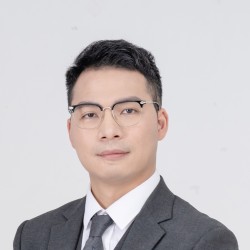
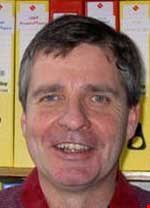
Professor Siobhan Banks is a Research Professor and Director of the Behaviour-Brain-Body Research Centre at the University of South Australia (UniSA), affiliated with UniSA Justice & Society. She holds a Ph.D. from Flinders University (2004) and conducted postdoctoral research at the University of Pennsylvania. Her work focuses on the interplay between sleep, fatigue, and human performance, particularly in shift workers and high-stakes operational environments. Research interests include circadian rhythms, fatigue countermeasures, and the design of habitable spaces to enhance cognitive performance. Key areas of research include the impact of sleep deprivation on team performance, the metabolic consequences of shift work, and the application of human-centered design in maritime and aerospace environments. She collaborates with organizations like the Australian Defence Science and Technology Group and the Alliance for Research in Exercise, Nutrition and Activity (ARENA). Publications emphasize fatigue risk management, circadian-aligned interventions, and the physiological effects of altered eating schedules during shift work. Her work bridges basic science and applied solutions, aiming to improve workplace safety and productivity through evidence-based strategies.
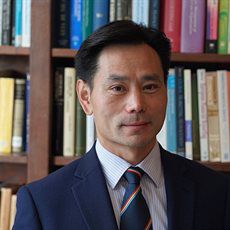
Professor Yufeng Zhang is a Chair in Operations Management and Head of the Department of Management at Birmingham Business School, University of Birmingham. He is also a Senior Fellow of the Higher Education Academy and a Fellow of the Alan Turing Institute. His academic journey began at Shanghai Jiao Tong University, continued at the Technical University of Berlin, and culminated with a PhD from the University of Cambridge, where he also worked as a Research Associate before joining Birmingham in 2009. PhD, Engineering – University of Cambridge MSc/Dipl-Ing, Global Production Engineering – Technical University of Berlin BEng, Mechanical Engineering & Automation – Shanghai Jiao Tong University BEng, International Finance – Shanghai Jiao Tong University PG Cert in Learning & Teaching in Higher Education Yufeng Zhang’s research focuses on sustainability, digitalisation, engineering innovation, and global network operations. His work integrates engineering and management perspectives, employing qualitative, quantitative, and simulation methods. He has led numerous projects funded by UK, EU, and international bodies, and has published over 80 refereed papers in top-tier journals such as Journal of Operations Management , International Journal of Production Economics , and Journal of Cleaner Production . His recent publications highlight trends in green operations, sustainable supply chains, digital transformation, and network capabilities. The research spans subfields including environmental performance, IoT integration, supply chain flexibility, and servitisation, reflecting a strong interdisciplinary focus on modern operational challenges. His scientific awards include the University’s Excellence in Teaching and Learning Award (2013), Literati Nominations for Highly Recommended Papers (2008, 2013), and recognition as a Senior Fellow of the Higher Education Academy and Turing Fellow. Yufeng has supervised over 20 PhD students and has held key roles such as Deputy Lead for REF2021, Director of Business Programmes with Engineering, Sciences, Law and Languages (2010–2017), and Coordinator of Europe China High Value Engineering Networks (EC-HVEN). He is an External Examiner for multiple universities and a Visiting Professor at Zhejiang University, demonstrating extensive academic leadership and collaboration. He leads and contributes to research labs and networks focused on engineering innovation and sustainable operations, including collaborations with industry and international institutions. His future work continues to explore the intersection of digital technologies, sustainability, and global operations, aiming to shape resilient and responsible business practices.
Sonja Wogrin is a University Professor (Univ.-Prof.) at Graz University of Technology (TU Graz), where she has been heading the Institute for Electricity Economics and Energy Innovation since August 2021. She holds a Dipl.-Ing. in Technical Mathematics from TU Graz (2008), a Master of Science in Computation for Design and Optimization from MIT (2008), and a doctorate in Electricity Systems from Universidad Pontificia Comillas (2013). Her educational background includes: Doctorate in Electricity Systems, Universidad Pontificia de Comillas (June 2013) Dipl.-Ing. in Technical Mathematics, Graz University of Technology (October 2008) Master of Science in Computation for Design and Optimization, MIT (June 2008) Professor Wogrin's research focuses on decision support systems in the energy sector, optimization methodologies, and particularly the problem of generation capacity expansion. Her work spans several key areas including bilevel programming, capacity expansion planning, energy storage systems, and time series aggregation for energy system optimization. She has made significant contributions to understanding how to integrate renewable energy sources into power systems while maintaining economic efficiency and grid stability. Her research often addresses the challenges of decarbonizing electricity systems through advanced mathematical modeling and optimization techniques. Her recent publications demonstrate a strong focus on improving the computational efficiency of energy system models while maintaining accuracy, with particular attention to the integration of renewable energy sources, energy storage systems, and the development of resilient energy communities. She has pioneered work on time series aggregation methods that balance computational tractability with model accuracy, which is crucial for long-term energy planning under uncertainty. Professor Wogrin has received several prestigious awards and fellowships including: 4th EASE Student Award for "Co-Optimisation of energy storage technologies in tactical and strategic planning models" (2019) Beca de movilidad para investigadores "NILS Ciencia y Sostenibilidad" (2015) Beca Erasmus "Personal Docente/Investigador" de formación (2016) Beca Iberdrola de ayuda a la investigación en energía y medio ambiente (2020) She leads multiple significant research projects including EU - NetZero-Opt, RINGs, iKlimET, V2G-QUESTS, and CIDEAL, which focus on optimizing energy systems for net-zero emissions, resilient energy networks, climate and energy system modeling, vehicle-to-grid integration, and industrial decarbonization. Her work has substantial practical implications for energy policy and grid operations in Austria and beyond. Professor Wogrin collaborates extensively with industry partners including Austrian Power Grid AG, KELAG, and Netz Niederösterreich, ensuring her research addresses real-world energy challenges. Professor Wogrin leads the research group at the Institute for Electricity Economics and Energy Innovation, which develops advanced optimization models for energy systems. Her team has created the LEGO (Low-carbon Expansion Generation Optimization) model, an open-source tool for energy system optimization that has gained international recognition. The group's work spans from fundamental optimization methods to practical applications in energy system planning and operation, with a strong emphasis on computational efficiency and model accuracy.
Dr Francesca Pianosi is an Associate Professor in Water & Environmental Engineering at the University of Bristol 's School of Civil, Aerospace and Design Engineering. She contributes to the Cabot Institute for the Environment and leads research on data analysis, mathematical modelling, and uncertainty quantification for hydrology and water engineering. Specialises in simulation and optimisation methods for water resource management Focuses on uncertainty propagation in natural hazard models Developed the open-source SAFE Toolbox for sensitivity analysis Research Trends Her recent publications (2023-2025) demonstrate expertise in: Groundwater flow and recharge in data-scarce regions Digital Twin applications for watershed management Climate change impact on landslides and droughts Multi-objective optimisation for reservoir operations Integration of machine learning with hydrological models Scientific Awards Arne Richter Award for Outstanding Young Scientists (2015) Best Research Oriented Paper - Journal of Water Resources Planning and Management (2024) Early Career Research Excellence (ECRE) award (2014) Francesca leads the Water Management and Adaptation based on Watershed Digital Twins project (2024-2027) and contributes to the USARIS project on uncertainty quantification for infrastructure systems (2023-2025).
Ida-Johanne Jensen is Associate Professor at the Department of Biotechnology and Food Science, Faculty of Natural Sciences, Norwegian University of Science and Technology (NTNU). Her work integrates food science, marine biotechnology and sustainability to valorise marine resources, improve food quality and develop novel functional products. Education & Doctoral Training Dr Jensen obtained her PhD from UiT The Arctic University of Norway (UiT Norges arktiske universitet) in 2014 with the dissertation "Health benefits of seafood consumption – with special focus on household preparations and bioactivity in animal models" , laying the foundation for her expertise in seafood bioactivity and nutrition. Research Interests Her research agenda centres on: Protein chemistry and functionality of marine raw materials and side-streams (brewer’s spent grain, sea cucumber, fish proteins). Development of functional foods and nutraceuticals with antihypertensive, antioxidative and cardioprotective properties. Sensory and technological quality optimisation of foods for extreme environments (military rations, Arctic field meals). Smart packaging and intelligent freshness indicators using natural colorants (anthocyanin-based hydrogel beads). Life-cycle assessment and environmental sustainability of aquaculture and fisheries. Publication Trends Jensen has an extensive publication record (>60 papers since 2009). Recent work (2023–2025) demonstrates a clear pivot towards valorisation of underutilised marine resources (sea cucumbers, brewer’s spent grain) and application-oriented food engineering (freeze-drying, microencapsulation, jerky processing). Reviews on military rations and marine antihypertensive peptides highlight her translational focus on human health and performance. Scientific Awards & Recognition No specific awards are listed in the provided material; however, sustained high-output publication in top-tier journals ( Food Chemistry , npj Science of Food , Marine Drugs ) attests to strong peer recognition. Student Supervision & Grants She has supervised numerous master’s students at NTNU on topics ranging from Arctic field-ration development to protein extraction from brewer’s spent grain, indicating robust external funding and industry collaboration. Laboratories & Collaborations Research is conducted within NTNU’s Department of Biotechnology and Food Science laboratories, with active collaborations across Europe and the Indian Ocean region for marine resource assessments.
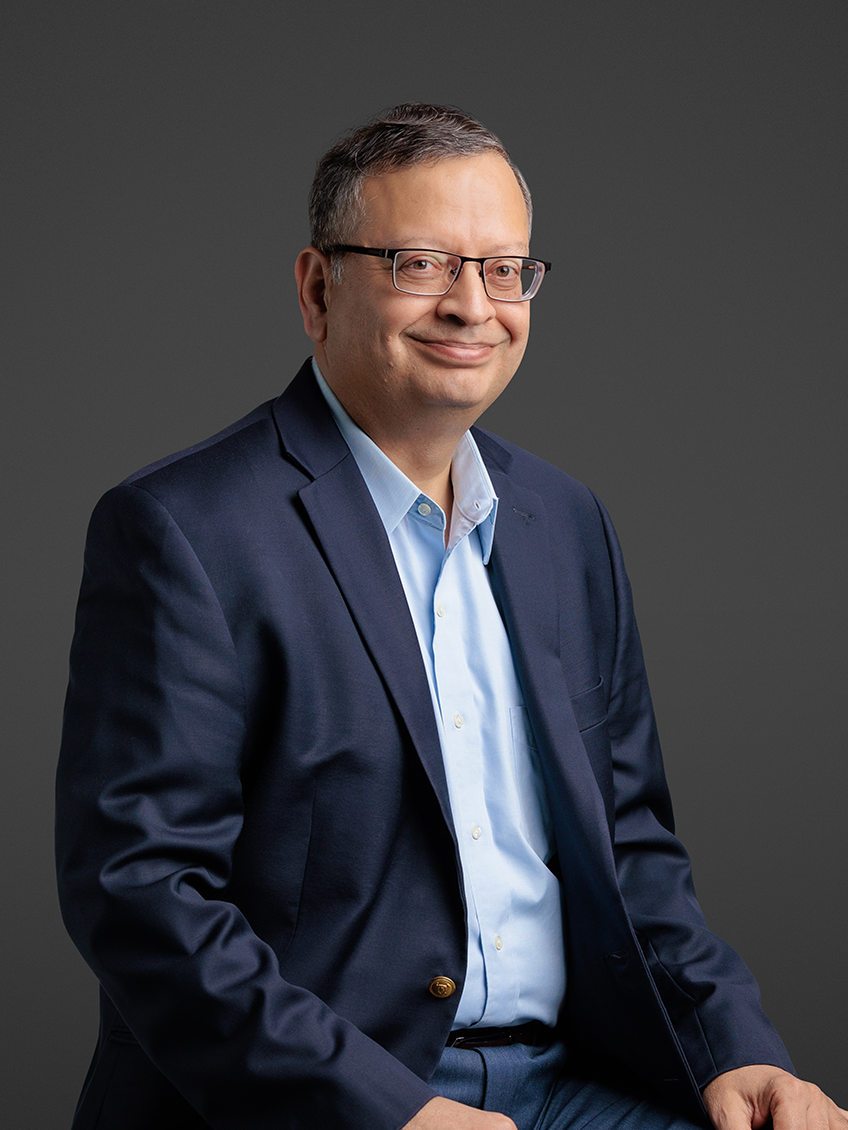
Rakesh Nagi is a Professor and Head of the Engineering Systems and Design Pillar at Singapore University of Technology and Design (SUTD), where he joined in August 2023. He concurrently holds the Donald Biggar Willett Professorship at the University of Illinois, Urbana-Champaign (UIUC), on leave. His academic leadership includes serving as Department Head of Industrial and Enterprise Systems Engineering at UIUC (2013–2019) and as Interim Director of the Illinois Applied Research Institute (2016–2018). Previously, he was Chair of Industrial and Systems Engineering at the University at Buffalo (SUNY) from 2006 to 2012. Education: PhD (1991) and MS (1989) in Mechanical Engineering from the University of Maryland, College Park, with work at the Institute for Systems Research and INRIA, France. BE (1987) in Mechanical Engineering from the University of Roorkee (now IIT Roorkee), India. Research focuses on Data Science, Machine Learning, Operations Research, GPU-accelerated computing, and military applications. Key areas include Big Graphs, High-level Information Fusion, Production Systems, and Multi-Agent Systems. His work often leverages parallel computing and optimization techniques. Recipient of prestigious awards: IISE David F. Baker Award (2022), INFORMS Koopman Award (2021, 2018), and multiple DARPA Graph Challenge recognitions. Contributions span over 100 peer-reviewed articles in top journals (e.g., Operations Research, IEEE Transactions) and conferences. Research projects include Hybrid AI/ML-Optimization for cloud workflows, GPU-accelerated algorithms for multi-target tracking, and interventions against illicit supply chains. Active collaborations with IBM-Illinois and NSF-funded initiatives address strategic resource allocation and network analysis. Labs/Teams: Leads the Engineering Systems and Design Pillar at SUTD and coordinates interdisciplinary projects at UIUC’s Coordinated Science Laboratory.
Dr Smitha Gopinath is a Lecturer in the School of Chemical, Materials and Biological Engineering at the University of Sheffield , where she leads research in sustainable engineering systems within the Sustainable Design Laboratory (SDL) . Education & Career Path PhD in Chemical Engineering, Imperial College London Post-doctoral researcher, Applied Mathematics and Plasma Physics Group, Los Alamos National Laboratory Research Focus Dr Gopinath’s interdisciplinary work centres on the design, calibration and operation of sustainable engineering systems . She develops high-fidelity models and large-scale optimisation algorithms tailored to energy and materials challenges. Core interests include: Thermo-mechanical energy conversion devices (heat pumps, organic Rankine cycles) Carbon-capture utilisation and storage (CCUS) via novel solvents and separation systems Power-grid expansion and operation for renewable integration and decarbonisation Methodologically, she integrates Integrated Molecular and Process Synthesis (IMPS) with Optimisation Accelerated by domain Knowledge (OAK) to co-design molecules, materials and flowsheets that meet stringent energy and environmental targets. Publication Landscape Across 2015–2025 her publications reveal a clear trajectory from fundamental thermodynamic measurements and molecular design toward rigorous optimisation of large-scale energy systems. Early work concentrated on CO₂ solubility and carbonation kinetics of steel slag, providing essential data for carbon-sequestration schemes. Subsequent papers introduced advanced optimisation frameworks—outer-approximation algorithms, exact reformulations and feasibility-based methods—applied to solvent-based CO₂ capture, organic Rankine cycle working-fluid selection and AC optimal power flow (ACOPF). Recent contributions benchmark global optimality certificates for ACOPF problems, underscoring her drive to bridge chemical process systems engineering with electrical power systems optimisation. Teaching & Mentoring Dr Gopinath teaches undergraduate modules: CPE440 (Particle Technology) CPE170 (Particle Technology) She actively invites prospective PhD students to join the Sustainable Design Laboratory, offering supervision on projects spanning sustainable process design, renewable energy systems and algorithmic optimisation. Laboratory & Collaborative Networks She directs the Sustainable Design Laboratory (SDL), a multidisciplinary team leveraging systems engineering, multi-scale modelling, process simulation and optimisation to re-imagine a sustainable chemical and energy industry. The SDL collaborates with international partners, including Los Alamos National Laboratory and leading researchers in applied mathematics and power systems engineering.
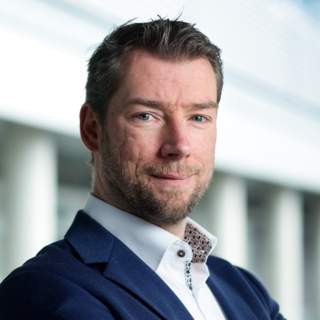
Martijn Mes is a full professor of Transportation and Logistics Management and chair of the Industrial Engineering & Business Information Systems section at the University of Twente, Netherlands. He leads research and education initiatives that integrate AI, simulation and optimisation into logistics and supply-chain innovation. Education: Ph.D. in Operations Research, University of Twente – 2008 M.Sc. in Applied Mathematics, University of Twente – 2002 Post-doctoral researcher, Princeton University, Dept. of Operations Research & Financial Engineering Research focus: Mes develops quantitative models and AI techniques for strategic, tactical and operational logistics challenges. His work spans three application pillars: Emergency & humanitarian logistics – rapid relief distribution with trucks and UAVs Urban logistics – city distribution, self-organising systems and last-mile innovations Sustainable logistics – synchromodal transport, green ports and electric/autonomous fleets Methodologically he combines approximate dynamic programming, reinforcement learning, multi-agent simulation, discrete-event simulation and stochastic optimisation to create decision-support tools for industry and government. Publications trend: Recent articles (2025-2022) exhibit a strong emphasis on integrating reinforcement learning and stochastic optimisation into dynamic vehicle routing, drone-assisted delivery and post-disaster inventory allocation, signalling a shift towards data-driven, real-time logistic systems. Grants & projects: Mes has coordinated and participated in numerous national and European projects on sustainable logistics, urban distribution, port optimisation and healthcare logistics, frequently collaborating with industry partners and public bodies. Teaching & supervision: He coordinates and lectures in the BSc and MSc programmes Industrial Engineering & Management, offering courses on simulation, queueing theory, dynamic programming, Markov chains, transportation management and technology management. He has authored a widely used Plant Simulation tutorial and supervises PhD candidates working on AI-driven logistics, autonomous vehicles and digital twins.
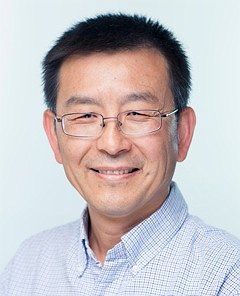
Jingling Xue is a Scientia Professor at the School of Computer Science and Engineering at the University of New South Wales (UNSW) in Sydney, Australia. As an IEEE Fellow of the Computer Society, he leads the Programming Languages and Compilers research group, focusing on practical applications of compiler optimization and program analysis techniques. His work bridges theoretical foundations with real-world software systems, particularly in developing open-source tools for large-scale program analysis. Professor Xue received his B.Eng and M.Eng degrees from Tsinghua University in 1984 and 1987, respectively, followed by a PhD from the University of Edinburgh in 1992. His academic journey has established him as a leading figure in programming languages and compiler technology. Xue's research spans programming languages, compiler technology, and program analysis with emphasis on practical relevance. His current projects include compiler techniques for improving parallelism and locality, pointer/alias analysis for million-line-scale programs, and static/dynamic analysis for detecting bugs and security vulnerabilities in real-world applications like web browsers and Android apps. His group actively develops open-source tools to support scientific replicability and reproducibility in these areas. His recent publications demonstrate a strong focus on applying program analysis techniques to modern challenges including AI compilers, homomorphic encryption, security vulnerability detection, and graph processing systems. The work shows evolution from traditional compiler optimization to addressing emerging domains like privacy-preserving computation and deep learning systems while maintaining rigorous theoretical foundations. Scientific Awards: Best Paper Award at CGO'13 Best Paper Award at CGO'16 Distinguished Paper Award at ECOOP'16 Distinguished Paper Award at ICSE'18 Distinguished Paper Award at ISSTA'19 Distinguished Paper Award at ASE'19 Distinguished Artifact Award at ISSTA'23 Best Artifact Award at FSE'23 Distinguished Paper Award at ASE'23 Test-of-Time Award at CGO'21 Professor Xue has successfully supervised 30 PhD students to completion, many of whom now work as professors or researchers in academia and industry. He has served as Program Chair for major conferences including LCTES'13, CC'18, CGO'20, and General Chair for LCTES'20. His group currently focuses on memory safety in Rust, smart contract analysis, AI compilers, compilation for privacy-preserving computation, and adversarial attacks in deep learning. The Programming Languages and Compilers group maintains strong connections with industry partners, translating theoretical advances into practical tools for real-world software development challenges. Their work on pointer analysis, memory safety, and compiler optimizations continues to influence both academic research and industrial practice.
Dr. Yinglong He is a Lecturer in Automated Electrified Transport (AcT) Systems at the School of Mechanical Engineering Sciences, University of Surrey, UK, and an Honorary Assistant Professor at the School of Engineering, University of Birmingham. His research focuses on intelligent transportation systems, energy management, vehicle dynamics, and AI-driven optimisation. He has held positions including Postdoctoral Research Associate at the University of Cambridge and Technology Expert at the European Commission's Joint Research Centre (JRC). Research interests include autonomous vehicle control, traffic simulation, hybrid/electric vehicle dynamics, and sustainable transport solutions. Notable contributions include advancing microscopic traffic models for automated vehicles and optimising energy systems for hybrid powertrains. His work integrates machine learning, multi-agent systems, and data-driven approaches to address challenges in transport decarbonisation and safety. Recent publications highlight advancements in hybrid vehicle dynamics simulation, lithium-air battery modelling, and energy mapping of urban buildings. He has received the Chinese Government Award for Outstanding Self-Financed Students (2022) and is a Fellow of the Institute for Sustainability (IfS). His expertise spans interdisciplinary collaborations in automotive engineering, energy systems, and smart infrastructure.
Dr. Cormac Lucas is a Senior Lecturer in the Department of Mathematics at Brunel University London, affiliated with the College of Engineering, Design and Physical Sciences. His work bridges mathematical optimization with practical applications in finance and operations management. Lucas specializes in Mathematical Optimisation Stochastic Optimisation Asset and Liability Management (ALM) Risk Analytics Portfolio Optimization Supply Chain Planning Under Uncertainty His research combines theoretical advancements with industrial projects, such as US Coast Guard Cutter Scheduling, Insight Investment's ALM, and Unilever's Natural Oil Buying Policy. Recent publications (2013–2024) highlight his focus on Portfolio Rebalancing with Transaction Costs Scenario Generation for Stochastic Programming Heuristic Algorithms for Cardinality Constraints Queuing Systems with Standby Servers Robust Supply Chain Planning Financial Derivative Modeling These works utilize methods like Variable Neighbourhood Search, Differential Evolution, and Lagrangian Relaxation. Email: cormac.lucas@brunel.ac.uk
Hanyu Gu is a Senior Lecturer in the School of Mathematical and Physical Sciences at the University of Technology Sydney (UTS), part of the Faculty of Science. He holds a PhD in Power Engineering and Automation from Shanghai Jiao Tong University (1999) and has extensive industry experience in telecommunications, airline optimization, and mining. His research focuses on combinatorial optimization, decomposition methods, stochastic programming, and machine learning applications. Notable awards include second place in the 2020 ROADEF competition. He collaborates with institutions like the UTS Transportation Research Centre and has contributed to projects such as optimisation engines for airline management and underground mining algorithms. Current research explores hybrid algorithms, Bayesian optimisation, and scheduling under uncertainty. Education: Bachelor in Industrial Automation, Shanghai Jiao Tong University (1994) Master in Control Theory and Application, Shanghai Jiao Tong University (1997) PhD in Power Engineering and Automation, Shanghai Jiao Tong University (1999) Industry Experience: ZTE (1999–2001): Senior Wireless Communication Engineer CTI, Melbourne (2007–2011): Airline Management Optimisation Researcher NICTA (2011–2013): Underground Mining Optimisation Researcher Grants: ARC Linkage Project LP0883855 (2008–2012): Developed optimisation tools for transportation crewing, valued at $840,000. Research interests span decomposition methods for large-scale problems (e.g., airline scheduling), stochastic programming for resource sharing, and hybridisation of mathematical programming with constraint programming. Recent work includes Bayesian optimisation for knapsack problems and relax-and-solve algorithms for project scheduling. His articles frequently address optimisation in logistics, healthcare, and transportation, emphasizing practical industry applications and algorithmic innovation. Awards: Second place in the ROADEF 2020 competition for maintenance planning solutions. Advising & Grants: Supervises Masters and PhD students in operations research and optimisation. Collaborates with Ausgrid, UGL, and ANC on optimisation projects (e.g., employee training timetabling, logistics). Active in the Optimisation Group of UTS Transportation Research Centre, he bridges academic research with real-world challenges in scheduling, logistics, and resource management. Ongoing efforts include advancing metaheuristics and integrating machine learning with traditional optimisation techniques.
Siamak Naderi is an Assistant Professor of Operational Research and Analytics in the ISMA Group at Warwick Business School (WBS), joined since December 2020. His research focuses on Healthcare Analytics, Retail Analytics, and large-scale optimization methods for complex decision-making environments. He holds a PhD and Master's from Sabanci University and a Bachelor's from the University of Tehran. Education PhD and MSc in Industrial Engineering, Sabanci University, Istanbul BSc in Industrial Engineering, University of Tehran, Iran His research has been funded by EPSRC and published in top journals like International Journal of Production Economics and International Journal of Production Research. Current teaching includes Mathematical Programming, Business Analytics, Data Management, and Generative AI applications across undergraduate, master's, and doctoral programs. Research Trends : Recent work emphasizes supply chain optimization in fast-fashion retail, healthcare system modeling under budget constraints, and heuristic solutions for operational efficiency. His articles blend theoretical optimization with real-world applications in retail and healthcare sectors. Teaching & Mentoring : Actively mentors students across BSc, MSc, and PhD programs in analytics and operational research. Teaches advanced modules like Pricing Analytics, Optimisation Models, and AI applications. Labs & Collaborations : Part of the ISMA Group at WBS, focusing on data-driven analytics for business and healthcare sectors. Collaborates on EPSRC-funded healthcare analytics projects.
Professor David Harvey is a faculty member at the School of Mathematics and Statistics within the University of New South Wales (UNSW), where he has held positions ranging from Courant Instructor to his current professorship. He is also a Fellow of the Australian Mathematical Society . Ph.D. in Mathematics (Harvard University, 2008) B.Sc. in Mathematics with First Class Honours and University Medal (UNSW, 2002) Harvey's research focuses on computational number theory and arithmetic geometry , with emphasis on fast polynomial and integer arithmetic algorithms. His work includes groundbreaking advancements in O(n log n) complexity for integer multiplication, leveraging techniques such as Fast Fourier Transforms , lattice reduction , and p-adic cohomology for zeta function computations. His publications from 2018–2024 demonstrate expertise in algorithm design for problems in number theory , algebraic geometry , and cryptography , with recurring themes of computational efficiency , finite field arithmetic , and polynomial operations . 2022 N.G. de Bruijn Medal (shared) 2019 Australian Mathematical Society Medal 2016 Journal of Complexity Best Paper Award Harvey has led significant research grants including the ARC Future Fellowship (2017–2021) and the ARC Discovery Project , focusing on zeta function algorithms and point-counting on algebraic surfaces . He co-organizes the UNSW Number Theory Seminar.
Agni Orfanoudaki serves as an Associate Professor of Operations Management at the University of Oxford's Saïd Business School and holds a Fellowship in Management Studies at Exeter College. She concurrently maintains a visiting scholar position at Harvard Kennedy School as a Harvard Data Science Initiative fellow. Her academic journey includes a Ph.D. in Operations Research from MIT and undergraduate studies at Athens University of Economics and Business. Her research focuses on developing machine learning algorithms to address real-world data imperfections—including missing values, censored observations, and unobserved counterfactuals—with applications in healthcare and insurance. Key contributions include predictive models for cardiovascular/cerebrovascular diseases and COVID-19 patient care, alongside pioneering the field of algorithmic insurance through quantitative frameworks for litigation risk assessment of ML models. She emphasizes interpretability and system design for seamless healthcare integration. Orfanoudaki leads the Data Driven Decisions Lab (3DL), collaborating with eight+ US/European hospitals, major medical societies, and international reinsurers. Her teaching spans MBA/EMBA Technology and Operations Management courses and the Oxford AI Ethics, Regulation and Compliance Programme, supplemented by machine learning instruction for Exeter College undergraduates.