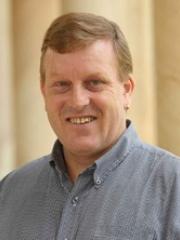
Dr. Viresh Patel is a Lecturer in Optimisation at the School of Mathematical Sciences, Queen Mary University of London. His research focuses on extremal and probabilistic combinatorics, graph polynomials, phase transitions, and approximation algorithms. University: Queen Mary University of London School: School of Mathematical Sciences Email: viresh.patel@qmul.ac.uk Research Interests: Patel’s work bridges combinatorics, graph theory, and statistical physics. Key areas include Hamiltonian cycles in dense graphs, algorithmic approaches to graph polynomials, and complexity analysis of physical models. Publication Trends: Recent articles address structural graph theory (cycle/path decomposition), computational complexity (Potts/Ising models), and approximation algorithms using probabilistic and Taylor series methods. Collaborations: Regular co-authorship with researchers like Guus Regts, Allan Lo, and Matthew Jenssen indicates strong interdisciplinary engagement.
Dr. Andrew Ward is an ARC Early Career Industry Fellow at the Australian Centre for Water and Environmental Biotechnology (ACWEB) within the Faculty of Engineering, Architecture and Information Technology at The University of Queensland. He leads research projects focused on wastewater treatment, nutrient recovery, and microalgae biotechnology, with significant industrial experience working with water utilities to scale research to pilot and demonstration levels. Dr. Ward holds a PhD from the School of Chemical Engineering at the University of Adelaide, where his thesis focused on the optimisation of halophilic anaerobic digestion of algal biomass. He also earned a Bachelor (Honours) degree from Flinders University. His educational background provides a strong foundation in chemical and environmental engineering principles applied to water and wastewater treatment. Dr. Ward's research primarily focuses on innovative approaches to wastewater treatment and resource recovery. His work spans nutrient recovery via electrodialysis, Anammox processes for domestic and agricultural wastewater treatment, and the development of algae-bacterial aggregated flocs (ABAF) for wastewater remediation. He investigates microalgae's role in energy and nutrient recovery from a circular economy perspective, aiming to transform wastewater treatment facilities into resource recovery centers. His research integrates biological, chemical, and engineering approaches to create sustainable solutions for water management challenges. Dr. Ward has extensive experience scaling laboratory research to pilot and demonstration levels, working closely with industry partners including Urban Utilities. Dr. Ward's publication record demonstrates a consistent focus on advancing wastewater treatment technologies, with recent articles examining deep learning applications, nutrient recovery systems, and sustainable biogas production. His work shows a clear progression toward more integrated, circular economy approaches to water management, emphasizing resource recovery alongside treatment. ARC Early Career Industry Fellowship (2024-2027): "Circular Economy", via renewable energy and resource recovery ARC Industry Fellowship Advance Queensland Industry Research Fellowship (2020-2023): Aggregated algal/bacterial flocs for wastewater treatment and algae industries Dr. Ward serves as lead investigator for Urban Utilities' wastewater microalgae research program and manages multiple research projects with industry partners. He currently supervises PhD students working on "Recovery of high-value coloured organic compounds from wastewater" and previously supervised research on "Algae Bacteria Aggregated Flocs in the Enhanced Treatment of Wastewater." His research has attracted significant funding from the Australian Research Council, Queensland government, and industry partners, demonstrating the practical relevance and impact of his work. Dr. Ward works within the Australian Centre for Water and Environmental Biotechnology (ACWEB), collaborating with researchers across engineering, microbiology, and environmental science disciplines. His team focuses on developing and scaling technologies that address real-world water treatment challenges while recovering valuable resources from wastewater streams.
Yingqian Zhang is an Associate Professor in the Information Systems group at the Industrial Engineering and Innovation Sciences department of Eindhoven University of Technology (TU/e). She is affiliated with the Eindhoven Artificial Intelligence Systems Institute (EAISI), specifically with the EAISI High Tech Systems and EAISI Foundational groups. Her research focuses on applying Artificial Intelligence to solve complex decision-making problems across various domains including logistics, transportation, manufacturing, and e-commerce. Dr. Zhang received her PhD in Computer Science from the University of Manchester, UK. Prior to joining TU/e, she served as an Assistant Professor in the Econometrics Institute at Erasmus University Rotterdam and as a postdoc researcher in the Algorithmics group at TU Delft. She was also a visiting professor at the Institute for Advanced Computer Studies at University of Maryland, College Park, USA. Her research expertise lies at the intersection of Artificial Intelligence and optimization, with particular focus on machine learning, deep reinforcement learning, and trustworthy data-driven optimization. Dr. Zhang develops socially aware algorithms that can optimize decisions in data-rich environments. Her work bridges the gap between theoretical AI advancements and practical applications in industrial settings, addressing real-world challenges through innovative algorithmic solutions. She is particularly interested in how AI can support human decision-making while maintaining transparency and trustworthiness. Dr. Zhang's recent publications reveal a strong trend toward applying graph neural networks and reinforcement learning to complex scheduling and optimization problems. Her work demonstrates increasing sophistication in handling stochastic elements in decision-making processes, with applications spanning healthcare diagnostics, logistics, transportation, and manufacturing. She has made significant contributions to the field of neural combinatorial optimization, particularly for job shop scheduling problems and vehicle routing. Dr. Zhang has received several prestigious awards recognizing her contributions to the field: Winner of the MLVRP2023 GECCO competition (2023) Best Paper Award from Omega-International Journal of Management Science (2017) Best Industrial Paper Award (2020) Best Student Paper Award (2019) Best Student Paper Award of ICAART 2022 (2022) As a dedicated mentor, Dr. Zhang supervises numerous PhD students including Mohsen Abbaspour Onari, Abdo Abouelrous, Luca Begnardi, Xia Jiang, Chengpeng Hu, Minshuo Li, Robbert Reijnen, Jesse van Remmerden, Bart von Meijenfeldt, Ya Song, and Igor Smit. Her research is supported by various grants, including the LEO (Learning and Explaining Optimization) project co-funded by Holland High Tech | TKI HSTM via the PPP allowance scheme for public-private partnerships. Dr. Zhang actively contributes to the academic community as the Chair of the Benelux Association for Artificial Intelligence (BNVKI) and as a member of the Technical Board for the European Big Data Value Association (BDVA). She serves as an associate editor for the "Annals of Mathematics and Artificial Intelligence" journal and participates in the technical Program Committee for major AI conferences such as IJCAI, AAAI, AAMAS, and ECAI. She is also on the executive committee of the Data Science meets Optimisation (DSO) working group of EURO to promote collaboration between AI and Operations Research communities.
Dr Joshua Tan serves as an Assistant Professor in the School of Mathematical and Computer Sciences at Heriot-Watt University's Malaysia Campus, where he conducts research and teaching in mathematical disciplines. His research spans core mathematical fields with emphasis on: Financial Mathematics and Actuarial Science applications Number Theory, particularly its historical development Matrix Theory through rank preservers problems Administratively, Dr Tan functions as timetable optimiser, students' club liaison, and impact statement coach, supporting institutional operations while maintaining active research engagement as evidenced by his ORCID profile and participation in academic workshops like the 2022 PURE Workshop for HWUM MACS.
Manuela Battipede is Associate Professor of Flight Mechanics & Control at the Politecnico di Torino , Department of Mechanical and Aerospace Engineering (DIMEAS). Since 2002 she has led research and teaching in aerospace guidance, airworthiness, neural-network-based virtual sensors, and trajectory optimisation, coordinating EU H2020 and Clean Sky projects, industrial airworthiness certification contracts, and supervising PhD students in aerospace engineering. Education & Academic Career Joined Politecnico di Torino as a confirmed Associate Professor (Prof.ssa Associata Confermata). Visiting Researcher, West Virginia University, USA (April–September 2002). Research Interests Her work integrates control theory , flight mechanics , and artificial-intelligence-based sensing to enhance safety and efficiency of air and space vehicles. Key themes include: 4-D trajectory optimisation for climate-neutral aviation. Certifiable virtual air-data systems using neural networks. Flutter suppression and intelligent flight control for fixed-wing and rotary-wing aircraft. Low-thrust orbital mechanics, collision avoidance, and end-of-life disposal for satellites. Lighter-than-air platforms and VTOL hybrid drones for earth-observation and fire-monitoring missions. Scientific Awards & Recognition PoCN – Proof of Concept Network (2015), AREA Science Park, Italy. Regular evaluator for SESAR Joint Undertaking, EU H2020, and European Commission programmes. Doctoral Advising & Funding Since 2011 she has served on the PhD board of the Aerospace Engineering doctorate at Politecnico di Torino, currently supervising: Giorgio Antonio Orlando (39th cycle, 2023–) Gabriele Tarascio (39th cycle, 2023–) She has been Scientific Director of >20 competitively funded projects (EU Clean Sky MIDAS, ESA, MIUR-PRIN, EASA certification contracts, etc.) and commercial consultancy contracts exceeding €3 M. Laboratories & Teams Battipede leads the Modelling, Simulation and Control of Aircraft research group at DIMEAS, managing real-time hardware-in-the-loop test rigs, CubeSat development platforms, and an integrated multi-aircraft simulation laboratory for education and industrial validation.
Dr. Murat AYDIN is a full-time Assistant Professor (Dr. Lecturer) at Karabük University, Faculty of Technology, Department of Industrial Design Engineering, where he has also served as Vice-Dean since 2022 and Head of Department since 2021. His entire academic career since 2008 has been spent at Karabük University and briefly at Düzce University. Education PhD in Mechanical Education, Karabük University, 2019 MSc in Mechanical Education, Karabük University, 2009 BSc in Design & Construction Teaching, Bülent Ecevit University, 2006 Associate Degree in Technical Programs, Selçuk University, 2003 Research Interests His work centres on the intersection of digital design and manufacturing, spanning computer-aided design & manufacturing , additive manufacturing , machine learning , image processing , and finite-element analysis . Within these themes he investigates process optimisation, mechanical characterisation of printed parts, formability of sheet metals, and advanced sensing techniques such as digital image correlation. Across 41 publications and 33 conference presentations from 2008 to 2024, a clear evolution is visible: early studies on hydraulic sheet-metal forming have gradually expanded to embrace 3D printing, composite filaments, and machine-learning-driven design optimisation, positioning him at the forefront of Industry 4.0-oriented research. Scientific Recognition & Service Associate Editor, International Journal of 3D Printing Technologies and Digital Industry (2022–present) Editorial board member and frequent organiser of national & international congresses on 3D printing and industrial design Peer reviewer for Journal of Cleaner Production and other leading journals Advising & Funding He currently supervises four master’s students on topics ranging from medical-device prototyping to the use of 3D printing in composite aerated-concrete production. His research has been funded by five competitive grants, including two TÜBİTAK-supported national projects (total ≈ ₺1.8 M) and an EU-UNESCO project on 3D printer design curricula. Laboratory & Team He leads the Additive Manufacturing & Digital Design Laboratory at Karabük University, a facility equipped with multi-material FDM printers, high-resolution DIC systems, and tensile-testing rigs, hosting a multidisciplinary team of graduate researchers and industry collaborators.
Prof. Dr. Michael Felux is full Professor and team leader of the Aviation Infrastructure group at the ZHAW School of Engineering , Zurich University of Applied Sciences. He also co-founded and co-owns the Estonian consultancy Navaid OÜ , providing GNSS/CNS expertise while ensuring non-conflict with his academic role. Education Dr.-Ing. in Mechanical Engineering, TU München (2012 – 2018) Dipl.-Tech. Math. in Mathematics, TU München (2003 – 2009) CAS Hochschuldidaktik (Higher-Education Didactics), PHZH (2021) Research Focus Michael Felux’s research centres on safe, secure and efficient aviation communication, navigation and surveillance (CNS) . He investigates GNSS-based augmentation systems (GBAS, SBAS) for precision approach and landing, develops real-time interference detection & localization techniques to counteract jamming and spoofing, and explores high-integrity navigation solutions for unmanned aerial vehicles (UAVs). Additional interests include environmental optimisation of flight procedures and multi-constellation, multi-frequency signal processing . Across more than 50 peer-reviewed publications since 2015, his work consistently targets the intersection of technical robustness and operational feasibility . Recent papers map GNSS disruption events across European airspace, quantify fuel-burn reductions enabled by GBAS-guided continuous-descent approaches, and introduce cost-efficient machine-learning frameworks for real-time localisation of malicious radio-frequency interference. Scientific Awards & Recognition (no specific awards listed in supplied material) Research Funding & Projects Spoofer Localization – Swiss project leader, ongoing EGNSS DFMC for GBAS based operations – EU project leader, ongoing Making I-CNS A Reality – integrated CNS technology, project leader, ongoing High Integrity Satellite Navigation for UAV using Galileo HAS – project leader, ongoing LINA – Shared large-scale infrastructure for safe testing of autonomous systems, team member, ongoing Collision avoidance system for manned & unmanned aircraft via SDR – completed Emission Reduction using Satellite Navigation for Approach Guidance – completed Laboratory & Team As head of the Aviation Infrastructure team at ZHAW, Prof. Felux directs a multidisciplinary group developing next-generation CNS technologies. The team operates dedicated GNSS/GBAS testbeds, flight-trial aircraft, and spectrum-monitoring networks to validate concepts from simulation through to real-world deployment.
Dr. Eylül Damla Gönül Sezer is an Assistant Professor and current Head of the Department of Industrial Engineering at Yeditepe University, Faculty of Engineering, where she has been a faculty member since 2020. She holds an integrated PhD in Systems Engineering from the same university (2009-2018). Education 2004–2009: BSc, Systems Engineering (English), Faculty of Engineering and Architecture, Yeditepe University 2009–2018: Integrated PhD, Systems Engineering, Institute of Science, Yeditepe University Research Focus Dr. Sezer’s research integrates system dynamics with simulation modelling to tackle complex socio-technical problems. Her core interests include healthcare performance optimisation , environmental sustainability , disaster-economic impact assessment , and industrial systems analysis . She has developed system-dynamics models for clinical laboratory productivity, wastewater treatment networks, marine mucilage mitigation in the Marmara Sea, and macro-economic impacts of the expected Istanbul earthquake. Across her publications (2020-2024), a clear trend emerges: applying dynamic modelling to public-interest problems—ranging from pollution control to earthquake resilience—while validating frameworks and integrating multi-criteria decision tools such as AHP/ANP. This interdisciplinary stance bridges traditional industrial engineering with environmental and health systems. Scientific Awards & Recognition No specific competitive awards are listed in the provided material. Advising & Grants She has supervised five master’s theses (2021-2025) on topics spanning AI-enhanced call-centres, earthquake economic impacts, synthetic-data generation, and Industry 4.0 adoption in the automotive sector. She has participated in four funded projects, including a TÜBİTAK 1001 grant (₺149 700) as principal investigator modelling the economic effects of the anticipated Istanbul earthquake. Additional projects examined marine mucilage impacts on fisheries/tourism and sustainable debris-collection site selection post-earthquake. Laboratories & Teams While no dedicated laboratory name is provided, her affiliation with Yeditepe University’s Department of Industrial Engineering and her role as department head since 2022 position her at the centre of collaborative research clusters in Systems Modelling and Simulation , working with national and international partners on environmental and disaster-resilience projects.
Dr. Nikolas Kantas is a Reader in Statistics at Imperial College London's Department of Mathematics. He completed his undergraduate studies and PhD at the University of Cambridge's Signal Processing Group. His research focuses on developing numerical methods for complex problems in inference, optimisation, filtering, and control. Research Interests: Kantas specializes in computational statistics and stochastic processes, with expertise in particle filtering, Sequential Monte Carlo, and Markov Chain Monte Carlo methods. His work bridges theoretical foundations with applications in data assimilation, optimization under uncertainty, and high-dimensional statistical modeling. Publication Trends: Recent work (2022-2025) demonstrates strong focus on optimization algorithms, stochastic differential equations, and Monte Carlo methods. Key themes include multi-objective optimization, privacy-preserving algorithms, Langevin dynamics, and distributed computing. Methodological innovations frequently address high-dimensional and real-time computational challenges. Student Advising & Grants: Currently supervises 4 PhD students and has graduated 9 doctoral candidates. Research funding includes JP Morgan AI Faculty Research Awards and support from the National Physical Laboratory (NPL). Academic Leadership: Co-organizes the annual Greek Stochastics workshop on Statistics and Applied Probability. Coordinates PhD programs through the Mathematics Research program, MFC CDT, and Statistics and Machine Learning CDT.
Alessandro Di Giorgio is Associate Professor of Automatic Control at the Department of Computer, Control and Management Engineering Antonio Ruberti (DIAG) , Sapienza University of Rome, where he teaches courses on Automation, Network Control and Handling, and Modeling & Simulation. He coordinates the Smart Energy Research Group of the Consorzio per la Ricerca nell’Automatica e nelle Telecomunicazioni and acts as scientific referent of the university start-up Applied Research to Technologies . Education Ph.D. in Systems Engineering, Sapienza University of Rome, 2010 M.Sc. in Physics (110/110 cum laude), Sapienza University of Rome, 2005 Research interests revolve around advanced control architectures for future power systems, with particular emphasis on smart-grid planning and real-time operation , model-predictive control of micro-grids , large-scale integration of renewable generation and storage , stochastic optimisation of electric-vehicle charging infrastructures , and cyber-physical security against malicious attacks . His work combines systems theory with practical implementations validated within several European and national projects. Recent publications (2023-24) demonstrate a clear trend toward data-driven and stochastic model-predictive strategies that coordinate millions of grid-edge resources—electric vehicles, batteries, renewable plants—while guaranteeing economic efficiency, reliability and resilience of distribution networks. Projects & Technology Transfer Scientific responsible in 10 EU-funded research projects on smart grids and electromobility Principal Investigator of Italian academic and Industria 2015 programmes Co-founder & scientific reference, start-up Applied Research to Technologies (technology transfer on EV-charging optimisation) He is member of the Networked Systems Cybersecurity initiative and serves as reviewer and organiser for major IEEE conferences on power systems and control.
Frank Werner is apl. Professor (Adjunct Professor) of Mathematical Optimisation at the Otto von Guericke University Magdeburg, Faculty of Mathematics, Institute for Mathematical Optimization. Since 1989 he has been a permanent member of this institute, leading DFG- and EU-funded projects, supervising international doctoral students and post-doctoral researchers, and serving on the editorial boards of more than a dozen journals. Education 1961–1973: Nordpark-Oberschule, Clara-Zetkin-Oberschule, EOS Geschwister Scholl, Magdeburg (Abitur ‘Ausgezeichnet’) 1975–1980: Diploma in Mathematics, Technische Hochschule Magdeburg (Dipl.-Math., grade ‘Ausgezeichnet’) 1980–1983: Doctoral studies, TH Magdeburg (Dr. rer. nat., Summa cum laude) 1987–1989: Habilitation, TH Magdeburg (Dr. rer. nat. habil.) Research Interests Werner’s work lies at the intersection of applied mathematics, operations research and computer science. He designs exact and heuristic algorithms for NP-hard scheduling and sequencing problems, analyses the stability of solutions under interval data uncertainty, and applies these techniques to real-world domains such as machine scheduling, vehicle routing, train timetabling, supply-chain coordination, and healthcare logistics. Recent activities extend to the use of machine-learning techniques to enhance optimisation algorithms. Scientific Awards & Honours Best Paper Award, International Journal of Production Research Best Paper Award, IISE Transactions NOC Prize 2009, INCOM Symposium Moscow, for work on hierarchical mobile-robot scheduling Supervision, Grants & Service Since 1992 Werner has coordinated numerous DFG and EU projects and acted as principal investigator for international collaborations involving Belarus, Russia, Poland, the USA, Mexico, Iran, Nepal, China and Finland. He has mentored Alexander von Humboldt fellows and long-term visiting scholars, and currently serves as Editor-in-Chief of the MDPI journal Algorithms , Associate Editor for Journal of Scheduling and International Journal of Production Research , and on the editorial or advisory boards of more than ten further journals. Laboratory & Teams He heads the Scheduling & Discrete Optimisation group within the Institute for Mathematical Optimization, maintaining active partnerships with Tribhuvan University (Nepal), Autonomous University of Baja California (Mexico), Belarusian State University, École des Mines de Saint-Étienne (France), University of Alabama in Huntsville (USA), and many others.
Paschalis-Thomas Doulias is Associate Professor of Organic Chemistry and Biochemistry in the Department of Chemistry at the University of Ioannina, Greece. His laboratory, located in Ioannina Campus building X3-106D, investigates the molecular mechanisms governing mitochondrial fatty-acid β-oxidation and their translational exploitation for rare inherited disorders of long-chain fatty-acid oxidation. Research Interests His research spans two tightly integrated themes: Basic Research: Elucidating post-translational redox modifications—particularly S-nitrosylation, acetylation and succinylation—that regulate key enzymes of mitochondrial fatty-acid oxidation. Work uses genetically modified mouse models (Sirt-3 -/- , Sirt-5 -/- , eNOS -/- and VLCAD Cys238Ala knock-in) complemented by cellular mutagenesis to dissect how energetic demand is coupled to enzymatic flux. Translational Research: Developing nitric-oxide-based therapies for long-chain fatty-acid oxidation disorders (LC-FAODs). The group pioneered the concept that augmenting NO signalling restores catalytic efficiency of mutant VLCAD, and is currently validating FDA-approved NO donors and proprietary hybrid NO-plus-substrate molecules in patient-derived cells and a humanised VLCAD-deficient mouse. Publication Landscape (2020-2025) Over the past five years, Doulias and collaborators have generated 15 high-impact articles that collectively map redox-proteomic landscapes in cardiovascular, neurodegenerative and metabolic disease contexts. Recurring keywords include S-nitrosylation, TCA-cycle compromise, mitochondrial energetics, HFpEF, ALS and Alzheimer’s disease, underscoring a unifying theme of redox-metabolic crosstalk. Scientific Awards & Recognition While specific honours are not enumerated, the consistent citation of his work (H-index 30, 3571 citations) attests to significant peer recognition. Funding & Collaborations Active translational projects include medicinal-chemistry optimisation of NO-donating compounds and in vivo efficacy testing in humanised mouse models of VLCAD deficiency, implying sustained competitive funding and multi-disciplinary partnerships. Laboratory & Team The group operates within the Department of Chemistry core facilities, leveraging state-of-the-art proteomics, metabolomics and transgenic animal resources to advance both basic and pre-clinical goals.
Shinji Wakao is a full Professor in the School of Advanced Science and Engineering, Waseda University, Japan, where he has served since 1993 and was Dean of the School from 2016 to 2020. Holding doctoral and master degrees in electrical engineering from Waseda, he leads a prolific research group specialising in computational electromagnetics and renewable-energy power systems. Education: Doctor of Engineering, Waseda University Master of Engineering, Waseda University Bachelor of Engineering (Electrical Engineering), Faculty of Science and Engineering, Waseda University Research Interests: His work integrates large-scale numerical electromagnetic field analysis—finite-element and infinite edge-element methods, level-set topology optimisation—with practical power-engineering challenges such as photovoltaic generation forecasting, smart-grid battery scheduling, zero-energy-house design, and electric-machine optimisation. Publication Trends: Recent articles emphasise deep-learning-enhanced PV forecasting (auto-encoders, CNNs, just-in-time modelling) and advanced topology-optimisation techniques (encoder-decoder networks, MMA-accelerated level-set methods) for magnetic shields and motors, reflecting a convergence of machine learning and energy-system science. Scientific Awards: IEEJ Academic Promotion Award (2008) IEEJ Distinguished Paper Award (2008) Committee & Society Roles: He serves on Japanese national committees including METI’s Power Safety Sub-committee and the Cabinet Office’s solar-energy evaluation panels, and is a board member of the Japan Solar Energy Society. Professional memberships include IEEE, IEEJ, JSCES and JSES. Laboratory & Projects: He heads the Wakao Laboratory within Waseda’s Department of Electrical Engineering, conducting projects on smart-grid PV management, magnetic-sensor optimisation for railway signalling, and net-zero-energy building renovation strategies.
Xin Fei is a Lecturer in Business Analytics at the University of Edinburgh Business School since 2022. Previously, she held the same role at the University of Bristol and was a fellow at the Bristol Digital Futures Institute . Her academic foundation includes a PhD in Operations Research & Management Science from Warwick Business School , supervised by Professor Juergen Branke and Professor Nalan Gulpinar. Current affiliation: University of Edinburgh Business School Prior affiliations: University of Bristol, Bristol Digital Futures Institute Education: PhD in Operations Research & Management Science (Warwick Business School) Xin Fei's research bridges business analytics , optimization , and decision science , focusing on stochastic programming , simulation optimization , and reinforcement learning . Her work develops computationally efficient methods for complex decision problems under uncertainty, emphasizing scenario generation and information collection procedures . Her recent publications in European Journal of Operational Research (ABS 4), IEEE Transactions on Evolutionary Computation (ABS 4), and INFORMS Transportation Science (ABS 3) highlight applications in transportation systems , industrial engineering , and pharmaceutical portfolio planning . Collaborative research includes air traffic management innovations recognized by the Jane's Innovation Award (2019). Teaching highlights include UG: Business Analytics and Information Systems (BUST08032) (2021-present), PG: Principles of Data Analytics (CMSE11432) (2022), and advanced PG courses in Applied Decision Optimisation (2023-present) and Online Learning and Decision Making (2023-present). Administrative roles include PGR Representative for the Management Science and Business Economics Group (2022-2025). Professional Affiliations: Fellowship of the Higher Education Academy The Operational Research Society The Institute for Operations Research and the Management Sciences (INFORMS)
Professor David Andrews is Professor of Engineering Design in the Department of Mechanical Engineering at University College London (UCL). A globally recognised authority on naval architecture and ship design methodology, he has held continuous academic appointments at UCL since 1980, punctuated by distinguished service in the UK Ministry of Defence where he rose to Director of Frigates and Mine Countermeasures. Since 2000 he has occupied the Chair in Engineering Design at UCL, leading major research initiatives funded by EPSRC, ONR and the EU, and forging strategic industrial partnerships. Education Bachelor of Engineering, UCL (1970) MSc Naval Architecture, UCL (1971) PhD “Synthesis in Ship Design”, UCL (1984) Research Focus Professor Andrews is acknowledged as the world-leading expert in naval ship design methodology, with seminal contributions to early-stage design processes, submarine architecture, trimaran/multi-hull vessels, and distributed ship service systems. His pioneering Design Building Block approach and SURFCON CAD tool have been integrated into industry-standard platforms such as PARAMARINE. Current work addresses energy balance frameworks, computer-aided sketching, and philosophical foundations of engineering design. Across more than 150 publications, a clear trajectory emerges: from fundamental design theory through tool development to practical application in warship, submarine and advanced multi-hull projects. Recent outputs (2021-2024) emphasise automation of early-stage synthesis, network-based modelling of complex distributed systems, and integration of operational availability considerations into concept design. Honours & Awards Fellow of the Royal Academy of Engineering (2000) Fellow of the Royal Institution of Naval Architects (RINA) Fellow of the Society of Naval Architects and Marine Engineers (SNAME) William Froude Medal, RINA (2020) – highest award David W Taylor Medal, SNAME (2021) – lifetime contribution Advising & Grant Leadership Since flexible retirement in 2012 he continues to lecture and supervise MSc projects in Naval Architecture, Marine Engineering and Submarine Design CPD courses. He has led or co-led research grants exceeding £2 million from EPSRC, EU and industry (BAE Systems, Rolls-Royce, BMT, Dstl). These projects have funded numerous CASE studentships and collaborative PhD programmes that bridge UCL and industrial stakeholders. Research Team & Industrial Links Professor Andrews heads the Design Research group at UCL, mentoring successive MoD Professors of Naval Architecture and maintaining active Memoranda of Understanding with BAE Systems and other maritime primes. He chairs the tri-annual International Marine Design Conference’s Design Methodology Panel and has delivered keynote addresses worldwide, uniquely representing non-US expertise at successive US Navy Ship Design Process Workshops.