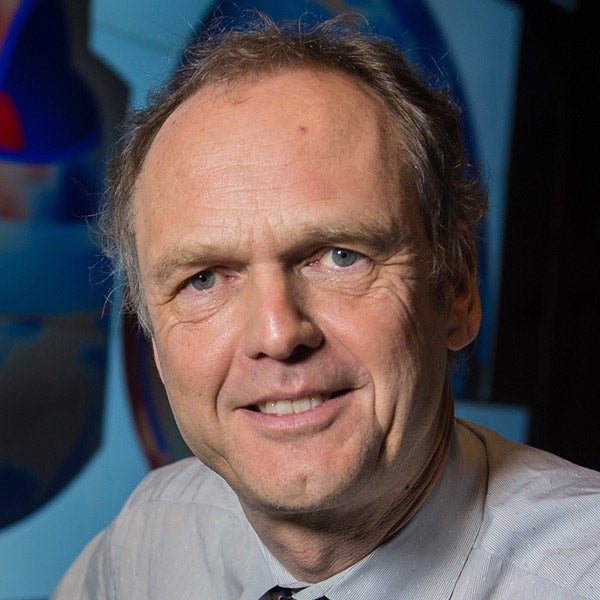
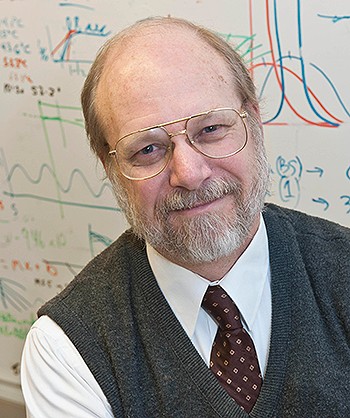
Maarten de Hoop is the Simons Chair and Professor of Computational and Applied Mathematics at Rice University, part of the George R. Brown School of Engineering. He holds visiting roles at MIT and the Chinese Academy of Sciences. His research spans seismic wave analysis, inverse problems, deep learning, and planetary seismology. He earned his Ph.D. in Technical Sciences from Delft University of Technology (1992), and earlier degrees from Utrecht University. Notable awards include the 1996 J. Clarence Karcher Award and 2001 Fellowship from the Institute of Physics. His work integrates computational mathematics with geophysics, focusing on extracting signal information from large datasets, developing novel inverse scattering methods, and applying deep learning to geoscience challenges. Recent studies include transformer models for in-context learning, semialgebraic neural networks, and seismic waveform foundation models like SeisLM. He leads the Geo-Mathematical Imaging Group, fostering interdisciplinary projects in planetary missions and data-driven discovery.
Prof. Stefan Wiemer is the Director of the Swiss Seismological Service (SED) and holds the Chair of Seismology at ETH Zurich's Department of Earth and Planetary Science. He obtained a geophysics diploma from Ruhr University Bochum (1992) and a PhD from the University of Alaska Fairbanks (1997). His research focuses on earthquake processes, probabilistic hazard assessments, induced seismicity, and geothermal energy applications. He has published over 200 articles and supervised 30 PhD students, while also lecturing at the University of Bern. Key Roles: Member of ERC Grants Evaluation Panel (2015–present) Scientific Advisor to GFZ German Research Center for Geosciences (2021–present) President of Swiss Geophysical Commission Projects: Leader of Switzerland's national earthquake risk model Coordinator of EU-funded RISE (risk assessments) and DEEP (geothermal de-risking) projects Principal Investigator for ERC Synergy grant FEAR (BedrettoLab fault experiments) His research spans operational earthquake forecasting, CO2 storage monitoring, and the BedrettoLab underground experiments. He has won the Humboldt Foundation Fellowship (1997) and contributed to international initiatives like the Dutch Mining Effects Panel. Teaching includes ETH's Geophysics I course. Scientific contributions include developing seismic hazard models (ERM-CH23), real-time induced seismicity forecasting frameworks, and innovative techniques for fault dynamics analysis. His work integrates field data, laboratory experiments, and computational modeling to address both natural and human-induced seismic risks.
Virginia Polytechnic Institute and State UniversityUnited States
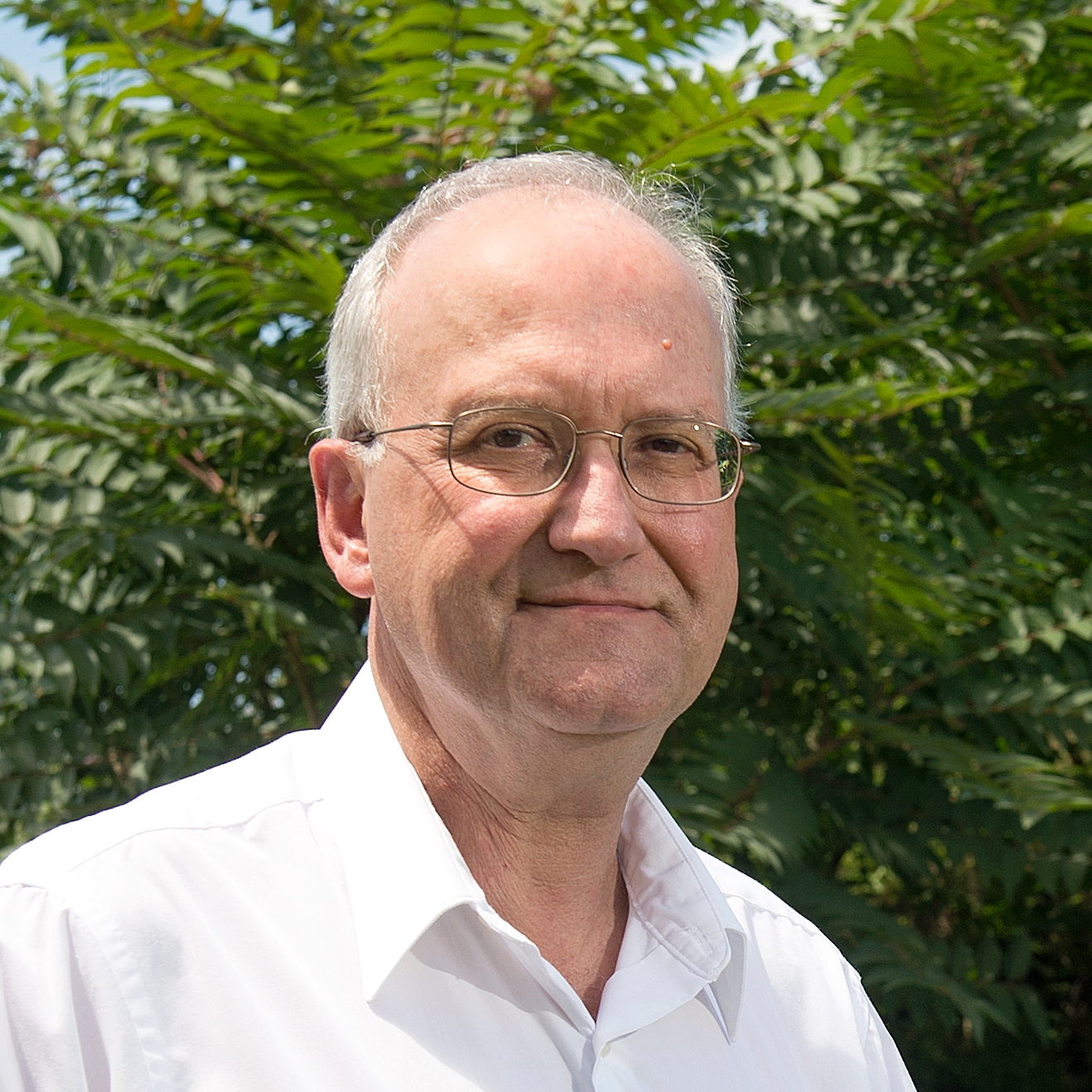
Martin C. Chapman serves as Research Professor of Geophysics in Virginia Tech's College of Science, Department of Geosciences. He directs the Virginia Tech Seismological Observatory (VTSO), operating from a Cold War-era fallout shelter near the Virginia Tech Executive Airport. His research integrates observational seismology with earthquake hazard mitigation in plate-interior regions, particularly eastern North America. His educational background includes: Ph.D. in Geophysics, Virginia Tech (1998) M.S. in Geophysics, Virginia Tech (1979) B.S. in Geophysics, Virginia Tech (1977) Chapman's primary research focuses on plate-interior seismicity/tectonics and strong-motion seismology. He combines field observations from the VTSO network with global strong-motion data to investigate earthquake causes and wave propagation characteristics. Recent work emphasizes induced seismicity from aquifer recharge and wastewater injection, site amplification effects in sedimentary basins, and development of seismic monitoring networks for risk reduction in eastern North America. Analysis of his 2022-2025 publications reveals concentrated research on injection-induced seismicity in Virginia's Hampton Roads region, sediment thickness mapping of Atlantic/Gulf Coastal Plains for ground motion prediction, and advanced characterization of historical earthquakes (1886 Charleston) and recent sequences (2024 New Jersey, 2020 Sparta). His methodology integrates dense seismic arrays, machine learning detection algorithms, and geospatial analysis to refine hazard models. His scientific recognition includes: Jesuit Seismological Association Award for Contributions to Observational Seismology (2016) As VTSO director, Chapman oversees seismic monitoring across Virginia and leads the Hampton Roads Seismic Network initiative. His work involves significant collaboration with the US Geological Survey on coastal plain amplification studies and regional seismic hazard workshops. Current projects focus on optimizing earthquake detection during aquifer recharge operations and developing site-specific amplification models for eastern US infrastructure. Chapman's laboratory operations center on the VTSO's network of seismic stations, utilizing advanced techniques including reverse vertical seismic profiling and dense array backprojection imaging. His team's recent field deployments target induced seismicity monitoring in Southeast Virginia and detailed characterization of the Central Virginia Seismic Zone.
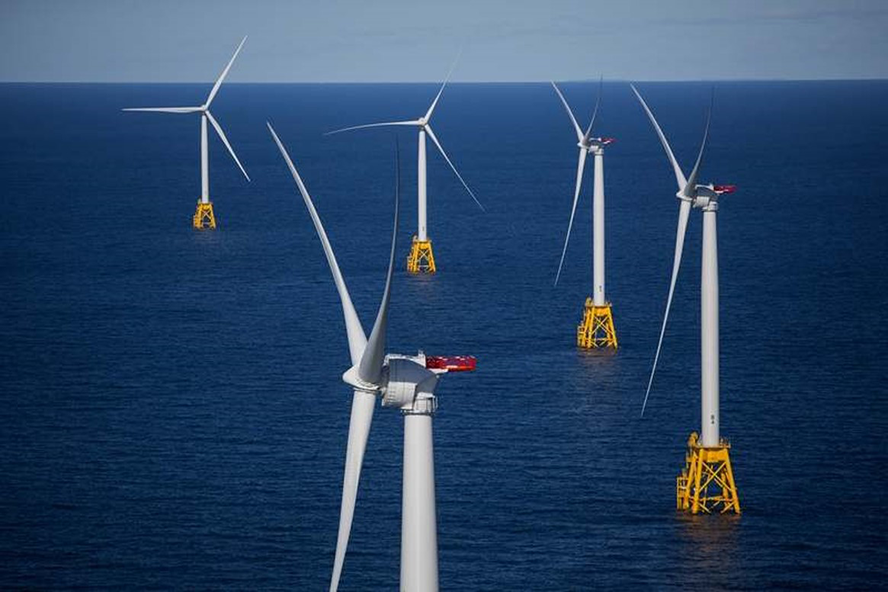
Babak Moaveni is a Professor in the Department of Civil and Environmental Engineering at Tufts University, serving as the Associate Chair since September 2024. He also holds a joint appointment as a Professor in Electrical and Computer Engineering. His research focuses on structural health monitoring, Bayesian inference, earthquake engineering, and offshore wind energy systems. Moaveni earned his Ph.D. in Structural Engineering from the University of California San Diego (2007), following an M.S. (2001) and B.S. (1999) from Sharif University of Technology in Tehran, Iran. His research interests span probabilistic system identification, signal processing, uncertainty quantification, and verification/validation of computational models. Notable grants include leadership in the PIRE project on offshore wind energy digital twins and the Coastal Virginia Offshore Wind Pilot Project. He has supervised multiple Ph.D. and M.S. students, with current advisees including Mehdi Akhlaghi and Nasim Partovi-Mehr. Moaveni has received the Best Presentation Award at the 2022 EDGE Symposium and serves on editorial boards for journals like Structural Health Monitoring and Frontiers in Built Environment . His lab, the Structural Health Monitoring Lab, specializes in infrastructure management and offshore wind energy systems. Key professional activities include membership in the American Society of Civil Engineers (ASCE) and roles on Tufts' Tenure and Promotion Committee. His teaching includes courses on structural health monitoring, numerical methods, and structural reliability.
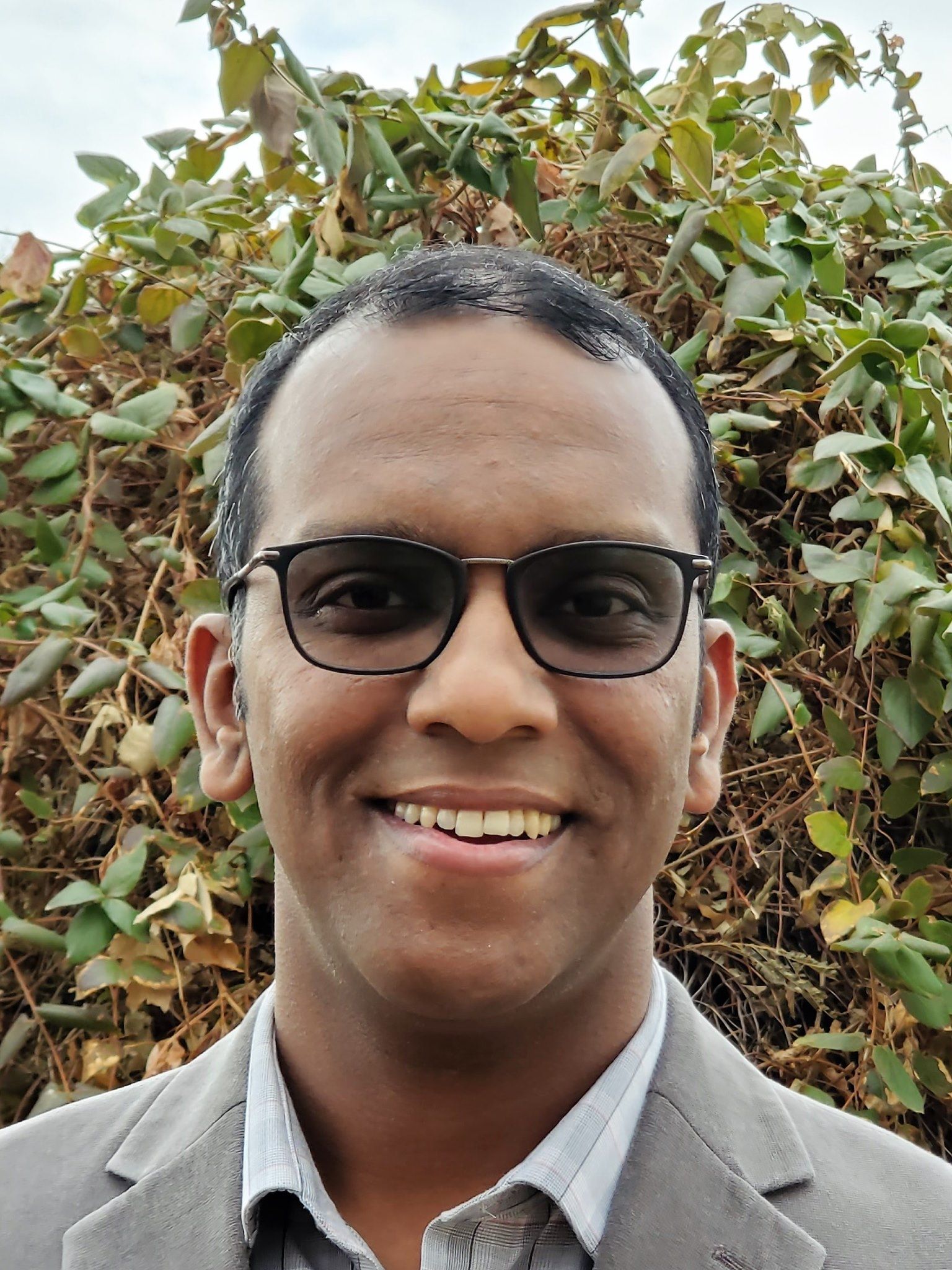
Abdullah Mueen is a Professor and Associate Chair in the Department of Computer Science at the University of New Mexico (UNM), where he has been since 2013. Previously, he worked as a Scientist in the Cloud and Information Sciences Lab at Microsoft Corporation. Research Interests : His work focuses on Temporal Data Mining , with emphasis on efficiency , interactivity , and interpretability . Key areas include Blockchain Data Mining (e.g., BitLink for Bitcoin cluster analysis), Seismic Data Mining (e.g., PAW for aftershock detection), and Social Media Mining (e.g., DeBot for Twitter bot detection). Article Trends : His recent publications span four domains: Seismology : Algorithms for earthquake data analysis (e.g., focal depth inference, aftershock classification). Blockchain : Temporal linkage of Bitcoin addresses (BitLink) and cryptocurrency fraud detection. Traffic Safety : Multi-LiDAR data fusion for real-time road safety monitoring. Time Series Methods : Innovations like MASS similarity search and DAMP anomaly detection for massive datasets. Scientific Awards : ACM SIGKDD Test-of-Time Award (2022) UNM Provost Research Leader Award UNM School of Engineering Junior Faculty Research Excellence Award KDD 2012 Doctoral Dissertation Contest Runner-Up KDD 2012 Best Paper Award Advising and Grants : He has mentored 11 PhD students now employed at institutions like Microsoft, Meta, and Lawrence Livermore National Lab. His research is funded by NSF , NIH , DARPA , AFRL , NEC , Exxon , Microsoft , and LANL .
California Institute of Technology (Caltech)United States
Zachary E. Ross is a Professor of Geophysics at the California Institute of Technology (Caltech) and holds the William H. Hurt Scholar distinction since 2021. His research integrates machine learning, computational mathematics, and seismology to analyze earthquakes and fault zones using large seismic datasets. Education B.S., University of California, Davis (2009) M.S., California Polytechnic State University, San Luis Obispo (2011) Ph.D., University of Southern California (2016) His research focuses on high-resolution imaging of fault zones, understanding earthquake sequences in space and time, and applying artificial intelligence to seismic data analysis. He develops scalable algorithms for waveform inversion, ground-motion synthesis, and real-time seismic monitoring. Recent publications highlight his work on neural operators for wave propagation, AI-driven seismicity analysis, and induced earthquake dynamics. He teaches advanced courses including Ge 264 – Machine Learning in Geophysics and Ge 271 – Dynamics of Seismicity . Scientific Awards William H. Hurt Scholar (2021–present)
Jiaxuan Li is an Assistant Professor of Geophysics in the Department of Earth and Atmospheric Sciences at the University of Houston's College of Natural Sciences and Mathematics. His research focuses on developing fiber-optic sensing technologies for seismic monitoring across diverse geological environments including volcanic, crustal, and glacial settings. Dr. Li's educational background includes a Ph.D. in Geophysics from the University of Houston (2015-2020) and a B.S. in Geophysics from Peking University (2011-2015). He previously held a postdoctoral position at Caltech Seismolab under Prof. Zhongwen Zhan. His research program centers on distributed acoustic sensing (DAS) applications, with major contributions in volcanic eruption forecasting through minute-scale magma migration imaging, earthquake rupture dynamics via high-frequency fault asperity analysis, and subsurface characterization for carbon sequestration and geothermal energy. Recent work demonstrates DAS capabilities as dense geodetic arrays for real-time volcanic monitoring systems deployed in Iceland through collaborations with the Icelandic Met Office and Reykjavik University. Analysis of Dr. Li's publication record reveals a strong emphasis on operationalizing fiber-optic networks for geophysical monitoring, with significant advancements in eruption early warning systems, earthquake source characterization, and subsurface imaging techniques. His work bridges fundamental seismological research with practical hazard mitigation applications. Dr. Li actively mentors graduate students and recently welcomed postdoc Dr. Tianfan Yan to his research team. His lab operates real-time DAS streaming systems for volcanic eruption monitoring in Iceland, developed through international collaborations involving the University of Houston, Caltech, Ljósleiðarann, and Reykjavik University. Current research directions include expanding DAS applications for carbon sequestration verification and deep geothermal reservoir characterization.
Alexander Rodríguez is an Assistant Professor in the Department of Computer Science and Engineering at the University of Michigan. His research focuses on advancing AI methods for modeling complex spatiotemporal dynamics, particularly in applications related to population health and community resilience. He specializes in machine learning, time series analysis, uncertainty quantification, and multi-agent systems, with an emphasis on scientific modeling and data-driven decision-making. Recent contributions include keynote talks at AAMAS 2025 (Autonomous Agents for Social Good workshop), presentations at the US National Academies Symposium, and invited talks at AAAI 2025 on topics like knowledge-guided machine learning and public health prediction. He co-organizes AAMAS 2025 as sponsorship co-chair and leads initiatives in AI for science and epidemic forecasting. His publications emphasize neural networks for time series forecasting, biomedical foundation models, and epidemic surveillance systems. Notable work includes 'Neural Conformal Control for Time Series Forecasting' (AAAI 2025) and 'Deepcovid: An operational deep learning-driven framework for explainable real-time forecasting' (2021). No scientific awards explicitly listed in available texts. His research group actively collaborates on grants related to AI applications in public health and infrastructure resilience, with a focus on data-centric methodologies and multi-agent systems.
Juan C. Vasquez is a Professor at Aalborg University's Faculty of Engineering and Science, Department of Energy Technology, and Co-Director of the Center for Research on Microgrids (CROM). He holds a PhD in Automatic Control from the Technical University of Catalonia and has held academic positions at Aalborg University since 2011. His research focuses on microgrid control, renewable energy integration, power electronics, and smart grids. He has supervised numerous PhD and master’s students and leads projects funded by EU and national grants. Education: BS in Electronics Engineering (Autonomous University of Manizales, Colombia, 2004); PhD in Automatic Control (Technical University of Catalonia, Spain, 2009). Research interests include operation and control strategies for AC/DC microgrids, maritime microgrids, energy management systems, and IoT integration in smart grids. He has authored 648+ publications, including highly cited works, and received awards like the Young Investigator Award (2019) and Clarivate’s Highly Cited Researcher status since 2017. Key projects: EU-DREAM (Digital Services for Energy Transition), NEST (National Research Infrastructure), and ActRes (Resilience in Energy Systems). Collaborations include Virginia Tech and Ritsumeikan University.
State University of New York at BuffaloUnited States
Jee Eun (Jamie) Kang is an Associate Professor in the Department of Industrial and Systems Engineering at the University at Buffalo's School of Engineering and Applied Sciences. Research focuses on transportation modeling and applied operations research, with applications in urban mobility, shared autonomous vehicles, and sustainable transportation systems. Education includes a PhD from UC Irvine. Research emphasizes data-driven approaches to travel behavior, electric vehicle adoption, and humanitarian logistics. Publications consistently address mobility innovation, including pricing strategies for emerging services, predictive analytics for transit, and optimization of shared transportation systems.
California Institute of Technology (Caltech)United States
Jean-Philippe Avouac is the Earle C. Anthony Professor of Geology and Mechanical and Civil Engineering at the California Institute of Technology (Caltech). He is also the Associate Director of the Center for Autonomous Systems and Technologies and the former Director of the Tectonic Observatory (2004–2013). His academic career includes roles at the University of Cambridge (2018–2021) and leadership in geomechanics research. Avouac holds a M.E. from École Polytechnique (1987), a Ph.D. from Institut de Physique du Globe de Paris (1991), and a Habilitation (1992). His research focuses on crustal deformation, earthquake mechanics, and geomorphic processes, using field observations, geodetic measurements, and remote sensing. He has authored over 200 peer-reviewed publications and pioneered geodetic imaging techniques. Key research areas include seismicity forecasting, fault dynamics, and subsurface engineering impacts. Awards include the AGU Fellow distinction and the Wolfson Merit Award. Avouac advises numerous PhD students and postdocs, directing labs like the Center for Geomechanics and Mitigation of Geohazards. His work spans tectonic processes in the Himalayas, induced seismicity, and planetary surface dynamics.
Massachusetts Institute of TechnologyUnited States
Camilla Cattania is an Assistant Professor of Geophysics in the Department of Earth, Atmospheric and Planetary Sciences (EAPS) at the Massachusetts Institute of Technology, where she holds the Cecil and Ida Green Career Development Professorship. She leads research in seismology, earthquake physics, and operational earthquake forecasting, with a focus on understanding earthquake interactions at regional and global scales using numerical, analytical, and statistical tools. Dr. Cattania received her bachelor's and master's degrees in experimental and theoretical physics from the University of Cambridge, followed by a PhD in geophysics from the GFZ German Research Center for Geosciences/University of Potsdam. Her professional journey included positions as a guest scientist at GFZ, guest investigator at Woods Hole Oceanographic Institution, and postdoctoral fellow at Stanford University before joining MIT's faculty. Her research interests center on earthquake physics and forecasting, with specific focus areas including seismicity on rough faults, fault mechanics and earthquake cycles, the physics of small earthquakes, static stress triggering in operational earthquake forecasting, seismic swarms and aseismic slip driven by dikes, and dynamic triggering on transform faults. She develops physics-based models that incorporate Coulomb stress changes with rate-and-state friction laws to improve earthquake forecasting capabilities. Dr. Cattania's publication record demonstrates an impressive progression in developing and refining physics-based earthquake forecasting models, with her most recent work exploring the integration of AI and machine learning techniques to enhance forecasting accuracy. Her research spans both theoretical development and practical applications for operational earthquake forecasting systems. Scientific Recognition: Recipient of the prestigious NSF CAREER Award in 2024 for her project 'Towards a comprehensive model of seismicity throughout the seismic cycle' Co-author of influential papers that have advanced the field of physics-based earthquake forecasting Dr. Cattania is actively involved in educational outreach through partnerships with 826 Boston, working with Boston area high schools to lead interactive labs and demonstrations about earthquake research. She emphasizes the importance of connecting students with scientists to humanize the research process and inspire future generations of geophysicists.
Derek Elsworth is the G. Albert Shoemaker Chair and Professor of Energy and Mineral Engineering and Geosciences at Pennsylvania State University. He is a co-founder of the Center for Geomechanics, Geofluids, and Geohazards, where he leads research in computational mechanics, rock mechanics, and fluid flow in fractured systems. His work spans multiple energy-related applications including geothermal energy, CO 2 sequestration, and unconventional hydrocarbon extraction. Professor Elsworth's research focuses on the mechanical and transport characteristics of fractured rocks, with applications spanning multiple domains. His work in computational geomechanics addresses challenges in geothermal energy development , CO 2 geological sequestration , and unconventional hydrocarbon extraction . He investigates fundamental processes including fracture mechanics, permeability evolution, and fault reactivation under various stress and fluid pressure conditions. His laboratory and field studies often integrate advanced computational modeling with experimental approaches to understand complex coupled thermo-hydro-mechanical-chemical (THMC) processes in subsurface systems. Analysis of Professor Elsworth's recent publications reveals a strong focus on cutting-edge challenges in subsurface energy systems. His work increasingly incorporates machine learning and advanced imaging techniques to address complex problems in rock mechanics and fluid flow. Key themes include fracture behavior in shale systems, fault stability during fluid injection operations, and the development of novel characterization methods for subsurface reservoirs. His research bridges fundamental science with practical applications for sustainable energy development. Professor Elsworth has developed and taught numerous courses including Fluid Mechanics (EME 303), Geothermal Energy Engineering, and Computational Geomechanics. He has also led short courses internationally on reservoir geomechanics. His research is supported through multiple projects including studies on volcano dynamics, enhanced geothermal systems, and in situ testing methodologies. As co-founder of the Center for Geomechanics, Geofluids, and Geohazards, he oversees a collaborative research environment focused on subsurface processes relevant to energy and environmental challenges.
John E. Ebel is a Professor and Senior Research Scientist at Boston College's Department of Earth and Environmental Sciences, affiliated with Weston Observatory. He holds a Ph.D. from California Institute of Technology and an A.B. from Harvard University. His research focuses on earthquake seismology, including hazard assessment, source mechanisms, and forecasting, particularly in New England and eastern North America. He leads the New England Seismic Network since 1981, monitoring regional seismic activity. His work spans theoretical seismology, exploration seismology, and induced seismicity from industrial activities. Over 80 peer-reviewed papers and one book published Recipient of ORCID 0000-0003-1064-0629 Advisor to multiple graduate students focusing on earthquake mechanics and seismic analysis Research emphasizes lithospheric structure determination, aftershock analysis for historical earthquakes, and interdisciplinary paleoseismic studies. Recent work includes lake sediment records of historical quakes and seismic network optimization in the eastern U.S. His students investigate topics like earthquake depth computations and induced seismicity from quarry operations.
Francesco Finazzi is a full professor of statistics (SECS-S/02) at the Department of Economics of the University of Bergamo and maintains a research affiliation with the School of Mathematics and Statistics at the University of Glasgow. He is internationally recognized as the founder of the Earthquake Network citizen science initiative (www.sismo.app), which pioneered the first globally implemented smartphone-based seismic early warning system. His research expertise spans sensor network data analysis, crowdsourced data from citizen science initiatives, statistical modeling of spatio-temporal data, and parallel scientific software development. He has made significant contributions to developing statistical methodologies for earthquake parameter estimation using smartphone sensor networks and has advanced techniques for analyzing environmental time series data. His recent publications reveal a strong research trajectory focused on earthquake early warning systems, spatio-temporal environmental modeling, and statistical approaches to crowdsourced seismic data. His work uniquely bridges statistics, seismology, and computer science to develop practical, real-world early warning solutions that leverage mobile technology and citizen participation. Finazzi has secured substantial research funding as Principal Investigator for the University of Bergamo in major Horizon 2020 projects, including RISE (Real-time earthquake risk reduction for a ReSilient Europe, 2019-2023, €8,000,000) and TURNkey (Towards more Earthquake-resilient Urban Societies through a Multi-sensor-based Information System, 2019-2022, €7,999,948). He leads the Earthquake Network initiative, a groundbreaking citizen science project that has created the first operational smartphone-based seismic early warning system worldwide. This platform not only provides early warnings but also facilitates rapid impact assessment and supports search and rescue operations following seismic events.