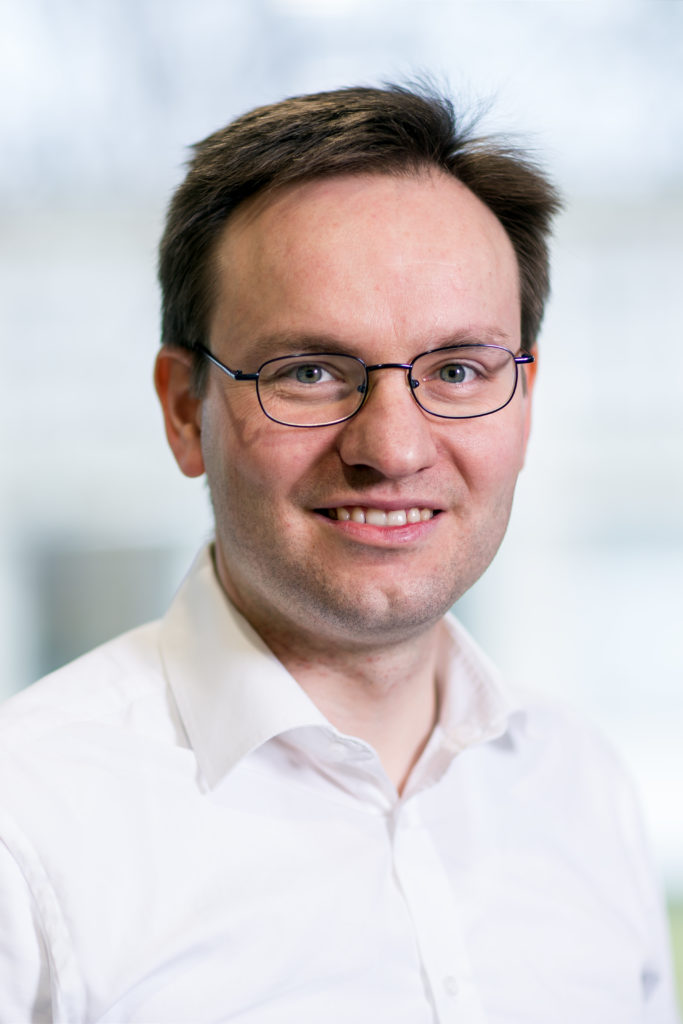
Radu State is Full Professor in Network Management and Cyber Security at the University of Luxembourg's Interdisciplinary Centre for Security, Reliability and Trust (SnT), where he leads the SEDAN research group. Research focuses on: Network security architectures Distributed system management Service-oriented security Cybersecurity protocols His work addresses fundamental challenges in secure network operations and resilient service deployment across complex infrastructures.
Konstantinos KANAVOURAS is a Doctoral Researcher at the Interdisciplinary Centre for Security, Reliability and Trust (SnT) within the University of Luxembourg, specifically in the Space Systems Engineering research group (SpaSys). He is advised by Prof. Andreas Hein and focuses on model-based systems engineering, software development, and aerospace engineering applications in satellite systems. His research integrates agile methodologies and machine learning for spacecraft design and anomaly detection. Kanavouras holds a Master’s degree from Aristotle University of Thessaloniki (2021) and contributed as an avionics engineer to ESA’s AcubeSAT nanosatellite project under the Fly Your Satellite! program. His work emphasizes lightweight data management tools, PocketQube missions like POQUITO, and fractionated satellite systems for planetary observation. His publications highlight trends in small satellite development, including agile systems engineering practices, thermal anomaly detection via machine learning, and adapting space projects to remote collaboration (e.g., during the pandemic). Key projects include the University of Luxembourg’s first PocketQube mission (POQUITO) and lean approaches to spacecraft subsystems. Current affiliations include the SpaSys group at SnT, with a focus on interdisciplinary collaboration between systems engineering and software development. No scientific awards are listed, but his work aligns with cutting-edge space technologies and mission design.
Dr. Raphaël Frank is an Assistant Professor and Senior Research Scientist at the University of Luxembourg's Interdisciplinary Centre for Security, Reliability and Trust (SnT), where he leads the UBIX Research Group and directs the ATLAS IPBG Programme. With over 80 peer-reviewed publications, his research focuses on intelligent distributed systems, network security, and ubiquitous computing architectures. Dr. Frank serves on the University Council and actively participates in international scientific committees as a senior IEEE member. His professional experience includes co-founding Motion-S (the University of Luxembourg's first tech spin-off) where he served as Operations Director. He holds a Master's in Cryptography and Network Security from Université Joseph Fourier and a Ph.D. in Computer Science from University of Luxembourg, including research at UCLA.
François Koulischer is an Assistant Professor in Sustainable Finance at the University of Luxembourg's Department of Finance (Faculty of Law, Economics and Finance). He is also an affiliated researcher with the MFI and MECSD Chair in Sustainable Finance. His research focuses on sustainable finance mechanisms, monetary policy impacts, and housing market dynamics. Key areas include ESG disclosure regulation, tax policies affecting housing affordability, and the distributional effects of low interest rates on household debt. His work bridges theoretical financial economics with policy-relevant analysis, particularly in central bank liquidity operations and crisis responses. Notable contributions include studies on quantitative easing mechanisms in the Eurozone and the visible hand of policy during the 2020 pandemic. He has been recognized with the American Real Estate Society's Manuscript Prize for his work on tax subsidies and housing markets. Publications span high-impact journals such as the Journal of Financial Economics and Journal of Financial Stability , with a focus on banking systems, collateral frameworks, and crisis management. His research often integrates empirical evidence from Luxembourg and broader European contexts, emphasizing policy implications for financial stability and equitable growth.
Joachim Arts is a Full Professor at the University of Luxembourg in the Faculty of Law, Economics and Finance , Department of Economics and Management. He is affiliated with the Luxembourg Centre for Logistics and Supply Chain Management (LCL) and holds visiting positions at MIT Sloan School of Management and Eindhoven University of Technology. His research focuses on operations research applications in supply chain management, logistics, maintenance optimization, and business analytics, often collaborating with companies like ASML and Philips. He has published extensively in top journals such as Operations Research and European Journal of Operational Research . Dr. Arts holds a European Doctoral Dissertation Award (EURO) and a Veni Career Grant from the Netherlands. His work emphasizes practical applications, including inventory systems, maintenance scheduling, and sustainability in supply chains. He previously served as an Assistant Professor at TU Eindhoven and a visiting scholar at MIT. His research bridges theoretical models with real-world industry challenges. Awards : European Doctoral Dissertation Award (201?), Veni Career Grant (201?) Visiting Appointments : MIT Sloan, TU Eindhoven Key Focus Areas : Lost sales inventory systems, condition-based maintenance, green logistics, and service parts optimization His recent work explores profitability-sustainability trade-offs in chemical value chains and dynamic supply mode selection for emission reduction. He leads initiatives in data-driven maintenance strategies and multi-echelon inventory systems.
Pierre PERRUCHAUD is a Postdoctoral researcher at the Department of Mathematics within the Faculty of Science, Technology and Medicine (FSTM) at the University of Luxembourg. His research focuses on advanced topics in stochastic analysis, mathematical physics, and functional analysis. He is affiliated with the Maison du Nombre research unit located in Esch-sur-Alzette. His work explores complex systems such as hypoelliptic operators, stochastic processes in geometric settings, and homogenization theory. Key contributions include studies on non-de Finetti theorems, loop soup representations, and kinetic Dyson Brownian motion. His research bridges probability theory with applications in quantum field theory and statistical mechanics. Pierre's publications reflect a deep engagement with both theoretical and applied aspects of stochastic analysis, often involving interdisciplinary approaches combining geometry and probability. His current projects likely continue to advance understanding in anisotropic kinetic systems and asymptotic expansions for hypoelliptic equations. No scientific awards or grants are explicitly mentioned in the provided information. His advising record remains unspecified, though his postdoctoral role suggests active participation in academic mentorship.
Giovanni PECCATI is a Full Professor in Mathematics and Head of the Department of Mathematics (DMATH) at the University of Luxembourg’s Faculty of Science, Technology and Medicine. He leads the research group 'Revealing order in randomness' and serves as President of the Luxembourg Mathematical Society. Previously, he held positions at Sorbonne Université (1999–2008) as Assistant Professor and at Université Paris-Nanterre (2008–2010) as Full Professor before joining Luxembourg in 2010. His research focuses on probability theory, stochastic analysis, and mathematical finance, with particular expertise in Malliavin calculus, limit theorems, and random fields. Key contributions include studies on nodal sets of random waves, Poisson functionals, and Stein’s method applications. Prof. Peccati’s awards include the 2018 IMS Fellowship and the 2015 FNR Award for Outstanding Scientific Publication. His work bridges pure mathematics with applications in statistical mechanics and mathematical physics, emphasizing probabilistic structures in geometric and physical systems. He has authored over 100 publications, including the influential book *Wiener Chaos: Moments, Cumulants and Diagrams* (2011), and co-founded the *Stochastic Analysis for Poisson Point Processes* research program. His current projects explore phase transitions in stochastic systems and geometric properties of random fields.
Eva LAGUNAS is an Assistant Professor and Deputy-Head of the SIGCOM research group at the Interdisciplinary Centre for Security, Reliability and Trust (SnT) , University of Luxembourg. Her expertise lies in Non-Terrestrial Communication Systems , focusing on radio resource management and wireless networks optimization. She holds a Ph.D. and M.Sc. in Telecommunications Engineering from the Polytechnic University of Catalonia (UPC), Barcelona. Key Affiliations & Roles: Principal Investigator (PI) of the FNR CORE project VARRAY-5G (Vehicular Phase Array Antennas for 5G) PI of the CHIST-ERA project SHIELD (Secure Distributed Learning & Smart Contract Ecosystems) Co-PI in the ESA ARTES-funded NeuroSat project (Neuromorphic Processors for SatCom) Deputy-Head of SIGCOM group and active contributor to the TelecomAI-Lab (AI-driven satellite communication) Event organizer: Special Session on ML for NTN at IEEE ICMLCN 2025, Track Chair at EUCNC 2025 Research Interests: Non-Terrestrial Networks (NTN), 6G integration, satellite-ground network convergence, AI-driven optimization, reconfigurable intelligent surfaces (RIS), and neuromorphic computing for onboard processing. She also leads efforts in vehicular communications and energy-efficient satellite payloads. Recent Achievements: 2025: Elected to the EURASIP Board of Directors 2024: Listed in the 100 Brilliant and Inspiring Women in 6G list 2023: Co-authored NeuroSat project's IEEE publication on neuromorphic computing for SatCom Labs & Projects: TelecomAI-Lab : Developing neuromorphic hardware (e.g., Intel Loihi2, BrainChip AKIDA) for satellite applications ESA NeuroSat : Pioneering neuromorphic processors for onboard SatCom resource management Grants & Funding: Secured Luxembourg National Research Fund (FNR) and CHIST-ERA grants for projects like VARRAY-5G and SHIELD, totaling over €2M in research investment.
Dr. Mirko HIRSCHMANN is a Postdoctoral researcher at the University of Luxembourg's Interdisciplinary Centre for Security, Reliability and Trust (SnT) , specializing in the Entrepreneurship, Innovation, and New Technology department. His research focuses on the intersection of entrepreneurship with sustainability, impact investing, and socio-economic challenges such as climate change, conflict zones, and economic inequality. He explores themes like B Corp certification, social enterprise financing, and policy-driven entrepreneurial behavior. His work spans environmental entrepreneurship (e.g., biodiversity loss impacts), conflict-driven economic adaptation, and institutional roles of family firms. Recent studies analyze how climate policies and conflict environments shape entrepreneurial strategies, alongside the role of trademarks in social innovation measurement. He has published widely on topics including impact investor vs. VC performance and social incubator selection criteria. Research trends show a strong emphasis on sustainability-driven entrepreneurship, with particular attention to certification systems (e.g., B Corp) and their signaling effects in finance markets. He also investigates how social enterprises balance market and social goals through IP strategies and funding mechanisms. No scientific awards are listed, though his contributions to interdisciplinary research are notable. His work is part of SnT’s broader mission to address societal challenges through innovative solutions. He collaborates on projects analyzing entrepreneurial resilience in crises and policy frameworks for equitable economic development.
Claudio Mandrioli is a Postdoctoral Researcher at the Interdisciplinary Centre for Security, Reliability and Trust (SnT) at the University of Luxembourg, where he joined the Software Verification and Validation (SVV) research group led by Prof. Lionel Briand and Prof. Domenico Bianculli in January 2023. His educational background includes a PhD in Automatic Control from Lund University (Sweden, 2022), a Master's degree in Automation and Control Engineering from Politecnico di Milano (2017), and a Bachelor's degree in the same field from Politecnico di Milano (2015). Mandrioli's research centers on bridging software engineering and control theory for Cyber-Physical Systems (CPS), with emphasis on verification challenges arising from their interdisciplinary nature. His work integrates control-theoretical perspectives into software testing, particularly for feedback-based systems and self-adaptive software, while addressing real-time execution non-idealities. This approach enables more robust validation frameworks for safety-critical CPS applications. His recent publication trends highlight a strong focus on model-based CPS testing methodologies, as evidenced by the 2025 ASE conference paper on fault injection techniques for Simulink models, reflecting his ongoing commitment to enhancing verification practices through cross-disciplinary collaboration. SIGBED-SIGSOFT Frank Anger Memorial Award (2022) Marie Skłodowska-Curie Actions Postdoctoral Fellowship for ConTestCPS project (2024) Mandrioli actively contributes to the academic community through program committee roles at EMSOFT, SEFM, and FSE conferences, while advising doctoral research via the Software Engineering Doctoral Symposium. His research is supported by competitive grants including the MSCA-PF ConTestCPS project, which develops control-theoretical testing frameworks for CPS. He operates within the Software Verification and Validation research group at SnT, collaborating closely with Prof. Domenico Bianculli and Prof. Lionel Briand, and maintains partnerships with institutions including Lund University, Politecnico di Milano, and Fondazione Bruno Kessler.
Intidhar BEDHIEF serves as a Postdoctoral researcher at the Interdisciplinary Centre for Security, Reliability and Trust (SnT) within the University of Luxembourg, specifically affiliated with the SigCom research group. Her work focuses on advancing secure and reliable communication systems through interdisciplinary research. Her core research interests include: Cybersecurity Signal Processing Communications Reliability Engineering Trustworthy Systems These fields align with SnT's mission to address critical challenges in security and reliability for next-generation information technologies. BEDHIEF operates from the JFK campus (29, boulevard J.F. Kennedy, L-1855 Luxembourg) in office JFK, E02 211, contributing to the SigCom team's efforts in developing robust signal processing frameworks for secure communications infrastructure.
Marcus Völp is an Associate Professor and head of the CritiX research group at the University of Luxembourg's Interdisciplinary Centre for Security, Reliability and Trust (SnT). His research focuses on ultra-reliable operating systems, fault and intrusion tolerant systems for cyber-physical environments, and hierarchical hybridization techniques to construct resilient computing platforms. His work bridges theoretical foundations with practical implementations, particularly in developing dependable systems-on-chip that can withstand faults and intrusions. Research spans formal verification methods, radiation-hardened hardware, blockchain security, and autonomous vehicle safety systems. Recent publications demonstrate advancement in parameterized system verification, radiation effects on routers, and N-version machine learning for autonomous systems. His group maintains strong focus on practical resilience mechanisms for real-time and critical systems across computing layers.
Sylvain Kubler is a Researcher at the Interdisciplinary Centre for Security, Reliability and Trust (SnT) within the University of Luxembourg's SerVal group. He holds a PhD from Université de Lorraine (2013) and previously served as an Associate Professor at the Research Center for Automatic Control of Nancy. His work focuses on IoT applications, decision support systems, and their integration into Industry 4.0, renewable energy, and smart cities. He has contributed to projects involving blockchain consensus mechanisms, maintenance scheduling, and energy system optimization. His research emphasizes sustainable technologies and distributed systems security. Research Interests: IoT and Blockchain Integration Decision Support Systems for Smart Cities and Industry Renewable Energy and Multi-Energy Networks AI-Driven Maintenance and Prognostics Privacy-Preserving Distributed Systems Recent Contributions: Sylvain’s recent work explores adaptive blockchain frameworks (e.g., DRAFTEE), reinforcement learning for maintenance scheduling, and explainable AI (XAI) in prognostics. His articles analyze trade-offs in federated learning architectures and multi-level energy system coordination. Affiliations and Labs: A core member of the SerVal group, he collaborates on initiatives like the IoT-based BIoTope ecosystem and the Sabine blockchain project. His work aligns with Luxembourg’s focus on secure, reliable, and sustainable technological solutions.
Christophe Lesschaeve is a Postdoctoral Researcher at the Department of Social Sciences, Faculty of Humanities, Education and Social Sciences, University of Luxembourg, where he has been affiliated since October 2017. His research examines political representation, voter-elites issue congruence, and the enduring effects of war on electoral behavior, particularly in Southeast European contexts. He earned his PhD in Political Science from the University of Antwerp in 2016, where his dissertation investigated inequality in opinion congruence between privileged and underprivileged voters in Belgium. During doctoral studies, he participated in the PartiRep-Project funded by the Belgian Science Policy and conducted research at the University of Leiden supported by the Fonds voor Wetenschappelijk Onderzoek (FWO). Lesschaeve's scholarly focus bridges theoretical and applied political science, analyzing how war experiences shape party choices, voter attitudes toward veterans, and pandemic-related political behaviors. His work extends to practical democratic innovation through contributions to voting advice applications (Stemtest and Test Électoral) for Belgian elections, now utilized in educational settings to familiarize students with political parties. Recent publications demonstrate methodological diversity across Southeast European case studies, examining war legacies through survey experiments, social network analysis, and comparative electoral data. Key thematic clusters include conflict-induced voting patterns, pandemic policy trade-offs, gender dynamics in postwar elections, and measurement innovations for representation inequality. He currently leads research within the ERC-funded "Electoral Legacies of War" project while maintaining collaborations from prior Belgian Science Policy funding. His non-academic engagement includes designing civic education tools that translate complex political science concepts into accessible voter resources. Lesschaeve operates within the Department of Social Sciences research ecosystem, contributing to Luxembourg's growing expertise in comparative electoral studies and conflict legacy analysis through data collection initiatives like the ELWar Expert Survey and BiHCorp parliamentary corpus.
Alexey BALITSKIY is a Postdoctoral Researcher at the Department of Mathematics within the Faculty of Science, Technology and Medicine (FSTM) at the University of Luxembourg. His research focuses on geometric analysis, topology, and convex geometry, with particular attention to systolic inequalities, geometric bounds, and billiard dynamics. He explores topics such as Urysohn width, waist inequalities, and symplectic geometry, contributing to both theoretical advancements and applications in geometric optimization. His work often bridges pure mathematics with computational approaches, addressing problems in geometric measure theory, metric embeddings, and discrete geometry. Notable contributions include generalizations of classical plank inequalities and studies on equality cases in conjectures like Viterbo’s and Mahler’s. Alexey’s research is disseminated through high-impact journals such as the Journal of Topology and Analysis and collaborations on topics like flip cycles in plabic graphs and geometric complexity of planar drawings. Alexey’s publications reflect a strong focus on geometric inequalities, with recent work emphasizing codimension 2 width estimates, systolic vertex counting, and multi-plank generalizations. His work often intersects with symplectic geometry, convex billiards, and computational topology, demonstrating interdisciplinary reach. Despite no listed awards or grants, his prolific output since 2016 highlights sustained academic engagement and innovation in geometric analysis.