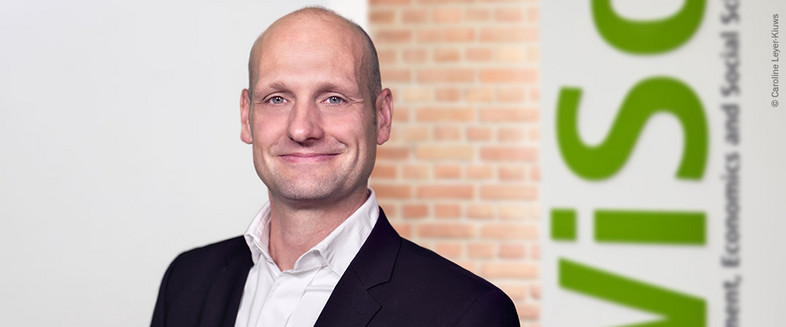
Christoph Rosenkranz is a Professor of Information Systems at the Faculty of Management, Economics and Social Sciences , University of Cologne. He serves as Academic Director of the Bachelor's program in Business Informatics and Deputy Managing Director of the Cologne Institute for Information Systems . His research focuses on agile software development , digital transformation , and socio-technical systems , with applications in healthcare and business process management. Academic Director, Bachelor's program 'Wirtschaftsinformatik' (2021–present) Founding Director, Master's program 'Business Analytics and Econometrics' (2019–2021) Visiting Researcher at Towson University and Rochester Institute of Technology (2018) His work bridges information systems , project management , and digital innovation , with empirical studies on: Agile practices in software development Time pressure and software quality Communication theory in IS design Electronic healthcare systems Service network effects Recent publications analyze digital market offerings , ethics in machine learning , and psychological safety in teams . He contributes to the ECONtribute: Markets & Public Policy cluster, researching digital transformation's societal impact. Collaborative projects include: HPDnet (DFG-funded child healthcare networks) C-SEB (Social and Economic Behavior research)
Roland Reitberger is a Research Fellow at the Chair of Energy Efficient and Sustainable Design and Building at the Technical University of Munich . His work focuses on Life Cycle Assessment , thermal-dynamic building simulation , and parametric methods for analyzing the built environment. He investigates interactions in urban systems and synergy effects in sustainable construction. Research interests include climate-resilient urban planning, integration of green infrastructure with building systems, and data-driven optimization of building energy performance. His recent publications demonstrate expertise in multi-objective decision support for neighborhoods, GIS-based urban tree analysis , and holistic climate assessments of construction projects. Reitberger contributes to urban climate resilience research through parametric modeling of building density-vegetation relationships and develops frameworks for circular economy strategies in building densification and refurbishment. His methodological innovations combine machine learning with building simulation for explainable AI applications in office energy management.
Prof. Dr. Frauke Becker serves as a Professor in the Faculty of Life Sciences at Rhine-Waal University of Applied Sciences, Kleve Campus, with primary responsibility for General Business Administration within the university's organizational structure. Her research concentrates on core business administration disciplines including Management and Organizational Behavior, uniquely contextualized within life science industries. This interdisciplinary focus likely addresses strategic and operational challenges in healthcare systems, agricultural enterprises, and environmental resource management through business frameworks.
Prof. Dr. Jian Peng is a W3 Professor for Hydrology and Remote Sensing at the University of Leipzig and Head of the Remote Sensing Department at the Helmholtz Centre for Environmental Research (UFZ) since January 2020. He holds a joint appointment between these institutions and serves as Editor-in-Chief of the Geoscience Data Journal for the Royal Meteorological Society. His academic career spans prestigious institutions including the University of Oxford, University of Munich, and the Max Planck Institute for Meteorology. Education: Postgraduate Certificate in Teaching and Learning in Higher Education, University of Oxford (2018-2020) PhD in Earth Science, Max Planck Institute for Meteorology (2010-2013) Professor Peng's research focuses on the intersection of hydrology, remote sensing, and climate science. His work centers on the quantitative extraction of land surface parameters from remote sensing data, assimilation of this data into climate and land surface models, understanding land-atmosphere interactions, and quantifying climate change impacts on water resources. He has particular expertise in estimating high-resolution land surface water and energy fluxes from satellite observations and investigating hydrological and climatic extremes. His research employs both process-based modeling and data-driven approaches to address critical questions in Earth system science. Professor Peng's recent publications (2021-2025) demonstrate a strong focus on soil moisture monitoring, drought assessment, climate extremes, and land-atmosphere interactions. His work increasingly integrates multi-source satellite data with advanced modeling techniques to produce high-resolution environmental datasets. A significant portion of his research addresses the impacts of climate change on water resources and agricultural systems, with particular attention to regional studies in China and global applications. His collaborative approach is evident in the extensive co-authorship networks spanning multiple continents and disciplines. Scientific Awards and Recognition: 2019 Remote Sensing Young Investigator Award, MDPI Featured as 'promising future leader in climate science' by the World Climate Research Programme (WCRP) Professor Peng leads an active research group within the Remote Sensing Department at UFZ, supervising PhD candidates through programs like MoDEV and mentoring early-career researchers. His team has secured funding from major organizations including the EU and the German Research Foundation (DFG). The group maintains strong international collaborations, particularly with institutions in China, the UK, and the US. Current research directions include developing high-resolution environmental monitoring systems, improving drought prediction capabilities, and understanding the complex interactions between climate change, water resources, and ecosystem functioning. Professor Peng's research group, part of the Remote Sensing Department at UFZ, includes researchers such as Daniel Doktor, Almudena García-García, Maximilian Lange, Anne Reichmuth, Andreas Schmidt, Elisabeth Rahmsdorf, Mohammad Hajeb, and Xueying Li. The department is embedded within UFZ's broader research framework focusing on 'Smart Models / Monitoring' and contributes to multiple interdisciplinary research units including Ecosystems of the Future, Water Resources and Environment, and Compound Environmental Risks. The team operates within the Remote Sensing Center for Earth System Research (RSC4Earth), which facilitates cutting-edge Earth observation research.
Björn Laukemann is a Professor of Civil Law and German/International Civil Procedure Law at the University of Tübingen's Faculty of Law. His work focuses on European and International Insolvency Law , Private International Law , and the intersection of Artificial Intelligence with Legal Dispute Resolution . He also contributes to Comparative Procedural Law and Digital Legal Innovation . His research explores cross-border insolvency frameworks , judicial transparency , and AI-driven dispute resolution mechanisms . He has published extensively on EU Insolvency Regulation , synthetic proceedings , and procedural efficiency in civil litigation. Recent work analyzes the European AI Act 's impact on platform-based legal enforcement . Scientific awards include the Serick Prize (2009) , Gravenbrucher Kreis Science Prize (2009-2010) , and participation in the Baden-Württemberg Elite Program for Postdoctoral Researchers (2011-2012) . He serves as an International Advisor to the American Law Institute on Restatement of the Law Fourth Property since 2015. For full details, consult his 15 most recent publications (2006-2024), covering topics from cross-border asset allocation to digital self-help mechanisms in civil law contexts. His secretariat operates at Geschwister-Scholl-Platz, Tübingen, with office hours Monday-Friday and via email sekretariat.laukemann@jura.uni-tuebingen.de .
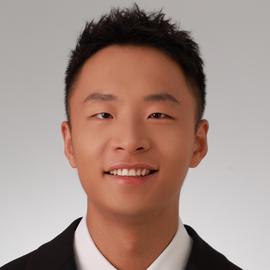
Chao Peng is a Principal Research Scientist at ByteDance where he leads the Software Engineering Lab, focusing on AI agents for software engineering. He holds a part-time position as a Postgraduate Student Mentor at Fudan University's School of Computer Science. His research bridges industry and academia, with significant contributions to software testing, program repair, and LLM applications in software development. Education: PhD in Informatics, 2021, University of Edinburgh, UK MSc in High Performance Computing and Data Science, 2017, University of Edinburgh, UK BEng in Computer Science and Technology, 2016, Xuzhou University of Technology, China Dr. Peng's research interests center on the intersection of artificial intelligence and software engineering. He explores how large language models can transform traditional software development practices, particularly in code generation, testing, and bug fixing. His work on LLM4Code has led to innovative frameworks like CodeVisionary for evaluating code generation capabilities and Trae Agent for software engineering tasks with test-time scaling. He investigates the synergy between machine learning techniques and compiler optimizations to enhance software reliability and developer productivity. His recent publications reveal a strong focus on practical evaluation frameworks for LLMs in real-world software engineering contexts. Rather than theoretical benchmarks, his work emphasizes real-world applicability, as seen in RepoMasterEval which evaluates code completion in actual repository settings. He examines multi-faceted challenges including code generation, bug reproduction, issue resolution, and repository-level question answering, consistently addressing the gap between laboratory evaluations and practical development environments. Scientific Awards: Distinguished Reviewer for FSE'25 Invited to program committees for FSE'26, SANER 2026, ASE 2025, and others School of Informatics Scholarship (fully-funded PhD) Multiple national scholarships during undergraduate studies Honours Spot Bonus at ByteDance Dr. Peng actively mentors postgraduate students at Fudan University while leading research initiatives at ByteDance that foster university collaborations. His laboratory work translates academic research into practical tools for software development, with several frameworks deployed in industrial settings. He serves on multiple conference program committees, contributing to the advancement of software engineering research through rigorous peer review and community building. His Software Engineering Lab at ByteDance operates at the forefront of AI-assisted development, exploring how agent-based systems can automate complex software engineering tasks. The team's work on frameworks like AEGIS for bug reproduction and DialogAgent for code question answering demonstrates their commitment to solving practical challenges faced by developers in real-world settings.
Katta Spiel is an Assistant Professor for Critical Access in Embodied Computing at the HCI Group of Vienna University of Technology (TU Wien), where they lead research under the ERC Starting Grant ACCESSTECH. They also hold membership in the Young Academy of the Austrian Academy of Sciences (2024-present) and will serve on Austria's UN Disability Rights Monitoring Committee (2025-2029). Their academic foundation includes: Bachelor of Arts in Media Culture from Bauhaus Universität Weimar Bachelor of Science in Media Systems from Bauhaus Universität Weimar Master of Science in Computer Science and Media from Bauhaus Universität Weimar Spiel's research critically examines technology through marginalized lenses, merging Computer Science, Design, and Cultural Studies. They develop participatory methodologies that center disabled, neurodivergent, and nonbinary experiences to challenge normative assumptions in Human-Computer Interaction. Key contributions include reimagining accessibility beyond compliance, transforming empathy-based design into justice-oriented co-creation, and developing frameworks for evaluating technology through lived experience rather than deficit models. Major recognitions include: SIGCHI Outstanding Dissertation Award (2020) for pioneering work on neurodivergent digital experiences Förderungspreis Mathematik, Informatik, Naturwissenschaft, Technik of Vienna (2022) Spiel's grant portfolio demonstrates sustained funding success, currently leading the €1.5M ERC Starting Grant ACCESSTECH (2025-2029) after securing FWF Hertha Firnberg and project funding for 'Exceptional Norms', 'Social Play Technologies', and 'OutsideTheBox'. These projects collectively advance participatory design with autistic children, neurodivergent youth, and nonbinary communities, producing methodological innovations like their co-developed Participatory Evaluation framework. Their research environment fosters radical collaboration through the ACCESSTECH project team, which operates as a community of practice where academic researchers and marginalized technology users co-design both methodologies and artifacts. This model rejects traditional lab hierarchies in favor of equitable knowledge production, with outcomes spanning interactive computing systems, critical design patterns, and transformative HCI theory.
Lena Thiebes serves as a Research Group Leader in Respiratory Tissue Engineering at the Biohybrid & Medical Textiles (BioTex) department within the Institute for Applied Medical Engineering (AME) at RWTH Aachen University. Holding the academic rank of Privatdozent (equivalent to Associate Professor), she operates under the department leadership of Professor Stefan Jockenhoevel. Her research focuses on: Advanced tissue engineering for respiratory systems Development of biohybrid materials integrating living cells with synthetic textiles Innovative medical textile applications for implantable devices Translational approaches to respiratory disease treatment As part of AME's interdisciplinary structure—which includes Cardiovascular Engineering and Rehabilitation and Prevention Engineering departments—Dr. Thiebes contributes to RWTH Aachen's biomedical research ecosystem through experimental work on tissue-chip models and microfluidic systems as indicated in departmental job postings.
Dr. Franziska Fichtner serves as a Researcher at the Institute of Plant Biochemistry, Heinrich Heine University Düsseldorf, where she leads an independent research program investigating the intersection of plant metabolism and development. Her work centers on trehalose 6-phosphate (Tre6P), a sugar-signalling metabolite that functions as both a sucrose-specific signal and negative feedback regulator of sucrose levels—operating analogously to the insulin-glucagon system in animals. This research is critical for understanding how plants efficiently allocate carbon resources through their primary transport sugar, sucrose. Fichtner's research demonstrates Tre6P's essential role in plant viability, with mutations in the TREHALOSE-6-PHOSPHATE SYNTHASE1 (TPS1) gene causing embryo lethality in Arabidopsis thaliana. Her group localized Tre6P synthesis to meristematic tissues and vasculature using tagged TPS1 constructs, revealing its systemic role in regulating flowering time, shoot branching, and root development. Current investigations focus on Tre6P's potential phytohormone-like behavior, its modulation of root-shoot growth trade-offs, and interactions with established phytohormone pathways to elucidate molecular mechanisms underlying plant architecture responses to sugar supply. Analysis of her 2017-2022 publications reveals consistent advancement in understanding Tre6P's dual metabolic and developmental functions across model systems including Arabidopsis thaliana and garden pea. Her work bridges fundamental plant biology with potential agricultural applications, particularly in carbon partitioning efficiency and yield optimization under environmental stress. Key contributions include establishing Tre6P as a master regulator of bud outgrowth, shoot architecture, and metabolic homeostasis. No scientific awards were documented in the source materials. Dr. Fichtner directs a research group at the Institute of Plant Biochemistry but specific mentoring relationships or grant funding details were not disclosed in the available information. Her laboratory operates within the Institute of Plant Biochemistry at Heinrich Heine University Düsseldorf, utilizing molecular, biochemical, and genetic approaches to dissect Tre6P signaling networks. The research environment emphasizes interdisciplinary collaboration across plant metabolism and development, with ongoing work focused on reconstructing Tre6P's systemic signaling mechanisms and their implications for plant productivity.
Bojan Godina is Professor of Media and Religious Education at Friedensau Adventist University since June 2025, contributing to theological education with a focus on the intersection of media, religion, and psychology. His academic journey includes doctoral studies at the University of Heidelberg and extensive teaching experience across multiple institutions including Andrews University (USA), University of Heidelberg, and University of Cologne. His educational background includes: Doctorate at the University of Heidelberg, Faculty of Behavioral and Empirical Cultural Studies (2004-2007) MA in Social Behavioral Sciences from the Institute of Psychology and Pastoral Care at Friedensau University of Applied Sciences (2000-2002) Studies in Clinical Psychology and Psychotherapy at IPS Freudenstadt (1998-2000) Theological studies at Free Theological University of Giessen (1985-1988) Godina's research spans media education, religious studies, and psychology, with particular emphasis on how media influences religious understanding and personal development. His work explores the intersection of digital culture with spiritual formation, examining how religious deep structures operate beneath secular consciousness. His phenomenological approach to media literacy has informed numerous educational programs, including the award-winning Medienscout project which has been implemented in schools across Germany. He has developed innovative educational concepts like 'Naturecode' and 'Kimko' that integrate media competence with spiritual and environmental awareness. His publications reveal a consistent interdisciplinary trajectory connecting theology, psychology, and media studies. Godina's scholarly work demonstrates how religious deep structures operate across diverse worldviews, examining media manipulation techniques while developing practical tools for media literacy education. His recent work increasingly addresses digital age challenges to spiritual formation and mental health, particularly focusing on social media's impact on personality development and religious experience. Scientific recognition includes: 2012 Schutzbengel-Award (5,000 EUR) 2012 'Aktiv für Demokratie und Toleranz' award (5,000 EUR) 2014 Stuttgarter Kiwanis-Preis (2,000 EUR) Godina serves as Director of Studies at the German Society for Biblical-Therapeutic Pastoral Care (BTS) and previously chaired its Scientific Advisory Board. His teaching extends beyond traditional academic settings to practical ministry contexts, including numerous church-based educational initiatives. He has collaborated extensively with the Center for Empirical Research on Religion at the University of Novi Sad and with the ECPD Heidelberg on psychosomatic health research. As founder of the IKU Institute (University Institute for Culturally Relevant Communication and Values Education), Godina has led numerous innovative projects including the Medienscout initiative, Naturecode educational concept, and development of the 'Kimko' school subject for media competence in Baden-Württemberg. His work bridges academic research with practical application in educational and church contexts.
Dr. Benjamin Rost is a researcher at the Institute of Neurophysiology within the Faculty of Medicine at Charité - Universitätsmedizin Berlin. He is a core member of Collaborative Research Center SFB 1315 (Project C01), focused on developing molecular tools for memory engram manipulation and investigation. His research centers on optogenetic technology development and neural circuit analysis, with specific expertise in synaptic plasticity mechanisms, calcium signaling control, and neuromuscular junction modeling. Key contributions include engineering calcium-permeable channelrhodopsins (CapChRs) for precise intracellular signaling manipulation, developing bistable opto-GPCRs like PdCO for multiplexed circuit interrogation, and creating self-organizing neuromuscular junction models from human stem cells. His work bridges molecular engineering, electrophysiology, and disease modeling to address fundamental questions in neural communication. Recent publications reveal a clear trajectory toward increasingly sophisticated optogenetic tools with enhanced spatiotemporal precision. His 2022-2025 work demonstrates progression from foundational presynaptic optogenetics (2022) to asymmetric plasticity discovery (2025), with critical intermediate advances in calcium signaling (2022), stem cell-based disease models (2023), and high-throughput screening systems (2024). This evolution highlights his interdisciplinary approach combining biophysics, stem cell biology, and circuit neuroscience. Dr. Rost operates within Prof. Dietmar Schmitz's laboratory at Charité's Institute of Neurophysiology, leveraging SFB 1315 resources for memory engram research. His team employs advanced techniques including patch-clamp electrophysiology, stem cell differentiation protocols, and custom-built optogenetic hardware like the RainbowCap illumination system for microplate-based assays.
Philipp Berendes serves as Professor and Head of Lightweight Design at the Institute for Engineering Design and Industrial Design, University of Stuttgart, holding a senior academic position within Germany's prominent technical university. His research expertise centers on lightweight structural systems, integrating engineering design principles with industrial applications to advance mechanical efficiency and material innovation. This work spans sustainable manufacturing, structural optimization, and cross-disciplinary product development methodologies critical to modern engineering challenges. As departmental leader, Professor Berendes directs specialized research initiatives in lightweight construction while maintaining active industry collaborations. His operational base is the university's Pfaffenwaldring campus (Room 1.120), with primary contact via telephone at +49 711 685 - 66098 / +49 711 685 - 66083.
Wei Huo is a researcher at the Institute of Information Engineering, Chinese Academy of Sciences, specializing in software security and engineering. His work focuses on vulnerability detection, program analysis, and cybersecurity across diverse systems including cloud infrastructure, firmware, and web applications. His research interests encompass Software Security , Program Analysis , Binary Analysis , and AI-driven security techniques . He develops practical tools for identifying vulnerabilities in Kubernetes ecosystems, baseband firmware, and binary code, with emphasis on real-world applicability in industrial contexts. Analysis of his publications (2019-2025) reveals a consistent focus on empirical security studies and tool development. Key trends include cloud-native security (Kubernetes), firmware analysis (printers/baseband), and AI-enhanced binary similarity detection, demonstrating progression from component-level to system-level security challenges. While no specific awards are documented in the source material, his contributions to top venues like ASE, ICSE, and ISSTA reflect significant impact in software engineering research. His work bridges academic rigor with practitioner-oriented solutions, particularly in vulnerability management and automated testing. Wei Huo actively contributes to the security research community through publications addressing critical infrastructure vulnerabilities, though details about student supervision or grant funding are not available in the provided text.
Chung Hwan Kim serves as an Assistant Professor in the Department of Computer Science at the University of Texas at Dallas, where he directs the Software & Systems Security Laboratory (S³ Lab). His research focuses on critical security challenges in cyber-physical systems, embedded devices, and cloud infrastructure, with recognition including the NSF CAREER Award and UT Dallas New Faculty Research Symposium Grant. His expertise spans Computer Systems Security , Cyber-Physical Security , and Software Security and Reliability , emphasizing practical solutions for robotic vehicles, autonomous systems, and trusted execution environments. Current projects address signal injection attacks, resilience testing, and confidential computing through innovative fuzzing frameworks and hardware-assisted protections. Recent publications (2020-2026) reveal three dominant research thrusts: (1) Security for autonomous/robotic systems ( DriveFuzz , IMUFUZZER ), (2) Trusted execution in constrained environments ( Vessels , GEVisor ), and (3) Automated vulnerability discovery ( HFL , TZ-DATASHIELD ), consistently appearing in top venues like IEEE S&P and USENIX Security. Key honors include: NSF CAREER Award (premier early-career recognition) UT Dallas New Faculty Research Symposium Grant Top 10 finalist for CSAW Best Applied Research Paper Award (2018) As principal investigator of the S³ Lab, Kim mentors graduate researchers and secures competitive funding for projects spanning robotic vehicle security, embedded systems hardening, and confidential computing. His teaching portfolio includes Operating Systems, Information Security, and specialized courses on CPS/IoT security. The S³ Lab develops deployable security tools like TZ-DATASHIELD for embedded data protection and IMUFUZZER for resilience testing of aerial vehicles, collaborating with industry partners to translate research into real-world solutions for autonomous systems and critical infrastructure.
Philip Taranto is a Lecturer (Assistant Professor) at The University of Manchester's Physics & Astronomy department, where he leads the Quantum Information & Spatiotemporal Phenomena (QuISP) research group. He also serves as an editor for the Quantum journal. Originally from Melbourne, Australia, Taranto completed his undergraduate studies and Masters at Monash University under Dr. Kavan Modi and Dr. Felix A. Pollock, focusing on memory effects in open quantum systems. He then earned his PhD at the University of Vienna under Dr. Marcus Huber, studying quantum thermodynamics and complex temporal correlations. Following this, he held a JSPS Postdoctoral Fellowship at the University of Tokyo in Dr. Mio Murao's group before joining the University of Manchester. Taranto's research centers on quantum complexity, exploring how quantum systems' intricate behaviors can be harnessed for computational advantages. His primary focus areas include quantum information theory, open quantum dynamics, quantum thermodynamics, quantum foundations, correlations & entanglement, stochastic & complex processes, and quantum computation & simulation. His methodological approach heavily relies on the framework of higher-order quantum operations—transformations that act upon transformations themselves—which has proven valuable for developing optimal quantum interactive strategies, clarifying memory effects in open quantum processes, and analyzing foundational notions like causality. He also employs tensor networks, graphical calculus, and semidefinite programming in his research. His recent publications reveal a strong focus on quantum thermodynamics, higher-order quantum operations, and quantum memory effects. Taranto has made significant contributions to understanding the relationship between Landauer's principle and Nernst's unattainability principle in quantum cooling, developing protocols for efficient quantum system cooling with finite resources, and characterizing multi-time quantum processes with classical memory. His work on the quantum switch and higher-order quantum operations has advanced our understanding of quantum causality and indefinite causal order. JSPS Postdoctoral Fellowship (2022-2025) Editor of Quantum Journal (since June 2024) Taranto actively collaborates with multiple research groups globally, including the Murao group at the University of Tokyo, the Huber group at TU Wien, and the Modi group at SUTD Singapore and Monash University. He has worked with prominent researchers such as Simon Milz, Jessica Bavaresco, Marco Túlio Quintino, Felix Binder, Martí Perarnau-Llobet, Patryk Lipka-Bartosik, and Andrea Smirne. He is currently accepting PhD students and encourages collaboration with researchers sharing similar interests. Taranto is also committed to social responsibility, advocating for open science, climate justice, and empowering historically excluded and marginalized groups.