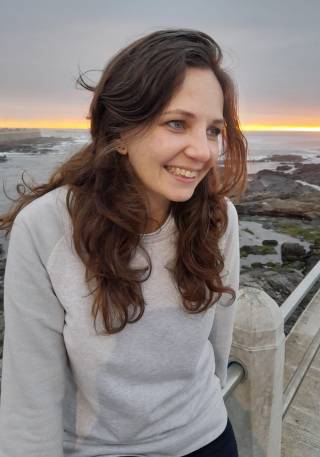
Madeleine Bernstorff is a cultural producer, film curator, author, and lecturer at the Institute for Music and Media at Robert Schumann University Düsseldorf. Her work bridges research-based film curating, feminist film history, and avant-garde cinema, with a focus on resistance movements and political documentary forms. Education : Studied media art at the Academy of Fine Arts Munich, University of Munich, and F+F School of Design Zurich Research : Avant-garde cinema, feminist film movements, migrant representation, and socio-political documentation Teaching : Guest professorships at Berlin University of the Arts, Munich Academy of Fine Arts, and international institutions Collaborations : Co-founded Sputnik cinema (1984) and Blickpilotin feminist film collective (1989) Publications : Edited works on Trinh T. Minh-ha, René Vautier, and Afghan cinema Her filmography includes The Fanaticism of the Suffragettes (2010), Candan (2005), and Zitronenfilm (1997), exploring themes of gender, migration, and historical memory through Super8 and video art. She has curated exhibitions at Tromsø Kunstforening and programmed films at institutions like the Arsenal Cinema Berlin and Oberhausen Short Film Festival.
Gábor Bodnár is a Professor at the Institute of Arts Communication and Music , Eötvös Loránd University (ELTE) , where he serves as Head of the Department of Music Culture. His work bridges music pedagogy, creative education, and interdisciplinary studies. Academic Focus : Music education, creative teaching methods, and the integration of formal and non-formal education. Research Themes : Application of the Kodály concept in global teacher training, translation theory in musical contexts, and the interplay between text and music in art song repertoires. Publications : Recent works explore Aldous Huxley's musical ideas, Schumann's Dichterliebe revisions, and innovative pedagogical frameworks for music educators. Professional Impact : Bodnár has developed postgraduate programs emphasizing talent care and Kodály principles, influencing music education curricula and assessment systems in Hungary and beyond.
Dr. hab. Kamila Kułakowska serves as a university professor at the Feliks Nowowiejski Academy of Music in Bydgoszcz, where she has led the singing class since 2013 and held the position of vice-dean of the Faculty of Vocal and Acting from 2016 to 2020. An internationally active soprano, she maintains a dual career in performance and pedagogy across European concert halls and opera stages. Her academic foundation includes a diploma with distinction from the Academy of Music in Bydgoszcz's Vocal and Acting Department, preceded by piano studies at the Secondary State School of Music. She refined her vocal technique through master classes with Christoph Hampe (Karlsruhe), Christoph Elssner (Dresden), and Hanna Łazarska (Vienna). Professor Kułakowska specializes in classical vocal repertoire spanning over 200 art songs and major operatic roles by Mozart, Gluck, Tchaikovsky, and Stravinsky. Her artistic focus integrates historical performance practice with contemporary works, particularly excelling in Mozartian roles, Slavic operas, and 20th-century compositions like Ullmann's 'Emperor of Atlantis'. Her distinguished competition record includes: Ada Sari International Vocal Art Competition: 2nd place + special prize Stanisław Moniuszko Competition: Kościuszko Foundation special prize Golden Voices National Competition: 1st place + operetta prize Paderewski Vocal Competition: 2nd place + Polish Radio prize Duszniki-Zdrój National Competition: Special prize Halina Halska Competition: 3rd place + contemporary music prize As an educator, she mentors vocal students while maintaining an active performance schedule with conductors including Valery Gergiev (Teatr Wielki 'Les Troyens') and Modestas Pitrenas (Stravinsky's 'The Nightingale'). Her career bridges rigorous academic training with international stage experience across six European countries.
Peter Volpe serves as Professor of Music in the Voice Department at the Jacobs School of Music, Indiana University, with his studio located in the East Studio Building (JS336). A critically acclaimed bass with a 35+ year international career, Volpe specializes in operatic voice performance and vocal interpretation. His expertise spans over 90 roles across six languages, focusing on bass repertoire in classical works from Baroque to contemporary. Praised by The New York Times for his “stentorian and robust bass” and Opera News for “full-bodied bass and great candor of tone,” he demonstrates exceptional command of dramatic expression and historical context in performance. Volpe maintains an active performance schedule across major global opera houses while contributing to vocal pedagogy through masterclasses and institutional leadership at Indiana University.
Karol Berger is the Osgood Hooker Professor in Fine Arts at the Department of Music, Stanford University (since 1996). He previously served as Professor in Musicology (1982-1996) and Assistant Professor (1975-1982) at Boston University. He has held visiting appointments at UNC Chapel Hill, Universität Paderborn, University of Oxford, and Harvard's Villa I Tatti. Education: Doctorate from Yale University (1975), musicology studies at University of Warsaw (1965-1968) His research spans Renaissance music theory, Austro-German musical modernity from Bach to Mahler, and the history of musical aesthetics. He pioneered interdisciplinary approaches connecting musicology with philosophy and cultural criticism. Key publications include Musica Ficta (1987), A Theory of Art (1999), Bach's Cycle, Mozart's Arrow (2007), and Beyond Reason (2016). His work explores how musical structures reflect philosophical and cultural shifts. Scientific Awards: 1988 Otto Kinkeldey Award 1995 Alfred Jurzykowski Award 2008 Marjorie Weston Emerson Award 2011 Glarean Prize 2014 Humboldt Research Award Multiple academy memberships
Dr. Eve Klein is an Associate Professor and Senior Lecturer in Music Technology and Popular Music at The University of Queensland (UQ) School of Music. She leads a research cluster in interactive composition, focusing on virtual/augmented reality works and guiding postgraduate composers. Her work bridges classical music traditions with digital innovation, addressing themes like gender in technology, identity, and participatory cultures. Dr. Klein holds a PhD in Music and Sound and has pioneered immersive art music experiences for festivals such as MONA FOMA and VIVID Sydney. Her artistic works include Vocal Womb (a laryngoscopy-based opera exploring voice and power) and City Symphony (an AR soundwalk overlaying Brisbane’s CBD). She is a recipient of the 2023 Art Music Award for Experimental Practice and the IASPM 2016 Open Publication Prize. Her research spans music technology curriculum design, future work skills in the arts, and epistemic fluency through transdisciplinary collaboration. She co-founded the Touch Ensemble, a technology-focused performance group collaborating with engineering students. Dr. Klein’s work frequently addresses social justice themes, including gendered violence and climate change. Education: PhD in Music and Sound Awards: 2023 Art Music Award, IASPM 2016 Prize, UQ Program Innovation Award Her articles critically examine virtual orchestras’ impact on classical norms, while her creative works challenge traditional performance boundaries. Klein collaborates internationally with festivals, scientists, and NGOs to create transformative cultural projects.
Dr Katherine Fry is a Visiting Fellow in the Department of Music at King’s College London, where she has held previous roles as a Lecturer in Musicology and a postdoctoral fellow in the ERC-funded Music in London 1800–1851 project. She earned her undergraduate degree in Music from the University of Cambridge, followed by an MA and PhD at King’s College London. Her research focuses on 19th-century music history, particularly Wagnerism, Anglo-German cultural exchanges, and the intersection of sound studies with gender and media history. Current projects include investigating British women composers’ networks through media history and urban environments (1820–1930). Her work has been supported by the Marie Skłodowska-Curie Global Fellowship and the European Research Council. She teaches music history, sound studies, and critical voice studies at both undergraduate and postgraduate levels, emphasizing interdisciplinary approaches and student-led exploration. Recent publications include Wagner and Victorian Modernity (in progress) and contributions to volumes such as Sound and Sense in British Romanticism . Research highlights include analyses of Nietzsche’s musical critiques, Victorian sonic cultures, and the material history of Wagner’s reception in London. She has organized events like English Art Song and Black Heritage in Early Twentieth-Century London , reflecting her commitment to underrepresented voices in music history.
Laura Pernice is a Researcher in Performing Arts at the Department of Humanities, University of Catania, where she teaches History of Theater and Entertainment, Performing Arts and New Media, and Forms of Multimedia Performance in the L-20 and LM-65 degree programs. She holds a PhD in Cultural Heritage and Production Sciences from the University of Catania and has obtained the National Scientific Qualification for Associate Professor in the sector 10/C1 (Theater, Music, Cinema, Television and Audiovisual Media). Her research focuses on interdisciplinary approaches at the intersection of theater studies and digital media. Key areas include multimedia performance, intermediality, contemporary Italian theater, and the integration of new technologies in opera and theatrical production. The recent publications and research projects indicate a strong trend in digital transformation in performing arts, especially in opera remediation, transmedia strategies, and social media use in theater. Her work explores how technology reshapes audience engagement and performance aesthetics. She has supervised multiple theses on topics such as streaming opera, digital dramaturgy, and transmedia musicals, reflecting her engagement with contemporary performance forms. Research grants and projects include the national 'Living Cabiria' (PNRR), the VIRTUA(*)RT project (Pia.ce.ri. 2024–2026), and prior involvement in the ARIE and PuppetPlays projects. Laura Pernice is a member of the research group for: VIRTUA(*)RT – Virtual Rooms for Arts (2024–ongoing) Living Cabiria – PNRR Spoke 2: Creativity and Intangible Cultural Heritage (2023–ongoing) ARIE – Audience, Remediation, Iconography, Environment in Contemporary Opera (2021–2023) PuppetPlays – ERC Advanced Grant (2019) She has also served on the editorial board of Arabeschi. International Journal of Studies on Literature and Visuality since 2015.
Soprano Sarah Price serves as Teacher of Applied Music in the Department of Music at Washington University in St. Louis. An award-winning performer, she has appeared in operatic and concert repertoire internationally, performing roles such as Tosca in Puccini's Tosca and Countess Almaviva in Le Nozze di Figaro . As a section leader in the St. Louis Symphony Chorus and soloist with the St. Louis Chamber Chorus, she appears on their CD American Declarations . Her cabaret performances have been featured at prominent venues including the Kranzberg Art Center and Sheldon Concert Hall. Research interests focus on vocal performance across classical and contemporary genres including opera, concert works, and cabaret. Publications include recorded performances showcasing interpretive approaches to diverse vocal repertoire. Awards recognize excellence in vocal performance through major competitions including the St. Louis Metropolitan Opera Auditions.
Dr. John Watkins is McKnight Distinguished Professor of English specializing in early modern literature and diplomatic history. His career spans Shakespeare studies, apocalyptic narratives, Anglo-Russian relations, and T.S. Eliot's works. Awarded the University's highest teaching honors, he developed innovative courses including 'End of the World in Literature & History'. His scholarship includes monographs on Elizabethan representation in Stuart England and Shakespeare's diplomatic contexts, supported by Guggenheim and ACLS fellowships. Current projects examine Benjamin Britten's operatic works and apocalyptic narratives.
Yufan Wang is a vocal lecturer at Fujian Vocational College of Art and a PhD candidate at the University of York's School of Arts and Creative Technologies. Their research focuses on Western opera's reception in Mainland China, combining historical analysis with empirical studies of audience perceptions. Currently supervised by Áine Sheil and Caroline Waddington-Jones, their work explores how Chinese artists reinterpret Western operatic traditions through performances and language adaptations. PhD Research: Investigates opera dissemination history, audience surveys, and professional interviews Teaching: 8 years of vocal instruction at Fujian Vocational College Performance Experience: Singer at National Centre for the Performing Arts (Beijing) Recent presentations include analyses of translational opera practices at Cardiff University and evolving audience tastes at the Royal Society of Music conference. Research interests bridge musicology, cultural studies, and educational methodologies.
Roger Parker is the Thurston Dart Professor of Music at the University of Cambridge, where he is also a Fellow of St John's College. He has previously held academic positions at Cornell University, Oxford University, and served as Professor of Music at Gresham College. His work is centered in the Department of Music within the School of Arts and Humanities, with a focus on 19th-century opera and music culture. PhD, King's College London BA, Goldsmiths College, University of London Roger Parker’s research primarily explores opera , with a strong emphasis on Italian opera of the 19th century , particularly the works and cultural impact of composers like Verdi, Donizetti, and Puccini. He investigates the intersections of music with politics, especially during the Risorgimento, and has recently turned his attention to music in 19th-century London . His methodological approach combines critical theory , archival research, and editorial scholarship, contributing to both academic discourse and performance practice. He is deeply engaged in reconstructing historical performance contexts and analyzing textual variants in operatic scores. The recent articles and books reflect a sustained engagement with critical editions of operas , the cultural mythology of composers , and the urban musical environment of 19th-century London . There is a clear trajectory from editorial scholarship (Donizetti, Puccini) to broader historiographical questions about how opera functions in society. Keywords across these works include opera, Risorgimento, autograph studies, critical theory, and cultural reception, indicating a scholar bridging musicology, history, and cultural studies. His scientific recognition includes: Premio Giuseppe Verdi (1986) Guggenheim Fellowship (1986–1987) Dent Medal, Royal Musical Association (1991) Fellow of the British Academy (2008) Vice-President, Royal Musical Association (2001) Roger Parker has supervised numerous doctoral and master’s students, though specific names are not listed. He has led significant research projects, including the ERC-funded Music in London, 1800–1851 and Operatic Networks: London, Paris and Beyond , securing grants from the European Commission, British Academy, and European Science Foundation. His editorial leadership includes co-founding the Cambridge Opera Journal and serving on the editorial boards of Opera and Opera Quarterly . He has also been an assessor for the Leverhulme Trust and Radcliffe Fellowship Program. He directs major research initiatives such as the MUSLOND project and has been involved in international scholarly networks, including the Institute for Advanced Study at Princeton. His work often involves collaborative teams of musicologists, historians, and archivists, focusing on reconstructing 19th-century musical life through manuscripts, periodicals, and performance records.
Dr. Melanie Fritsch is a Junior Professor at Heinrich-Heine-Universität Düsseldorf since October 2020, specializing in Media Cultural Studies with a focus on Game Studies and related fields. Her career spans roles as a PR & Communications Manager in the gaming industry, lecturer at Humboldt-Universität zu Berlin, and research assistant at Universität Bayreuth and Leipzig. Education: Theaterwissenschaft, Musikwissenschaft, and Neuere Deutsche Literatur at Freie Universität Berlin, Humboldt-Universität zu Berlin, and Sapienza Università di Roma (2000–2008) Doctorate: 2018 at Universität Bayreuth with dissertation 'Performing Bytes. Musikperformances der Computerspielkultur' Current Research: Ludomusicology, performance theory, fan studies, environmental narratives in games Melanie’s research bridges game studies, digital humanities, and musicology, emphasizing games as performative cultural practices. Her work explores intersections of music and gameplay, fan engagement dynamics, and liveness in digital spaces. Key publication trends include: Game music analysis (e.g., 'The Cambridge Companion to Video Game Music') Performance theory in gaming ('Live Performance Games') Environmental narratives in virtual worlds Historical game music studies (1980s Japanese game music) Interdisciplinary methodologies combining musicology and game design She has contributed to major conferences and symposia, including keynote presentations at Universidad de Chile and Kunstuniversität Graz. Her editorial work includes co-editing the peer-reviewed series 'Studies in Game Sound and Music'.
Ingrid Pearson serves as Historical Clarinet Professor and Senior Academic Tutor at the Royal College of Music (RCM), where she has been a faculty member since 2005. Her career bridges historical performance practice with scholarly research, focusing on single-reed organology, music historiography, and conservatoire pedagogy. University of Sydney (BMus, Dip Ed) University of Sheffield (PhD in performance practice) Licentiate of Trinity College London (LTCL) Licentiate in Music (LMusA) Senior Fellow of the Higher Education Academy (SFHEA) Honorary Associate of the Royal College of Music (HonRCM) Pearson's research explores historical and contemporary performance practices through musical iconography, organology, and historiography. She has pioneered studies on clarinet reed positioning in historical contexts and microtonal performance challenges. Her scholarly output spans analyses of 18th–19th century single-reed instruments, Mozart's operatic instrumentation, and 20th-century British wind players' listening experiences. Notable collaborations include recordings with English Baroque Soloists and research on Robert Kahn's chamber works. Arts and Humanities Research Council (AHRC) grant for 19-tone microtonality Galpin Society grant for Neapolitan clarinet study She contributes to international period ensembles (English Baroque Soloists, The English Concert, etc.) and maintains active doctoral supervision at RCM. Her work appears in multiple languages, with Chinese, German, and Spanish translations of her research.
Dr. Juliana M. Pistorius is a music historian affiliated with the University College London (UCL) Institute of Advanced Studies as a Marie Skłodowska-Curie Actions Global Postdoctoral Fellow . Her research interrogates the intersections of Western art music, coloniality, and racial politics, particularly in postcolonial contexts. PhD, University of Oxford (2018) Leverhulme Postdoctoral Fellowship, University of Huddersfield (2018-2021) Founding member, Black Opera Research Network (BORN) Reviews Editor, Cambridge Opera Journal Her current project, Beyond Boycott: Musical Internationalism and the Making of Race in Apartheid South Africa , analyzes how classical musicians' participation in apartheid-era South Africa reinforced racial hierarchies. This work builds on her monograph Postcolonial Opera: William Kentridge and the Unbounded Work of Art (forthcoming, 2025), which examines Kentridge's operatic experiments as decolonial narratives. Their research spans interdisciplinary analyses of opera as a colonial tool, cultural resistance in apartheid-era performances, and the ethical paradoxes of music's role in empire-building. Key themes include civic empowerment, racial profiling, and the enduring legacies of colonial soft power in artistic practice. Scientific Awards Leverhulme Postdoctoral Fellowship Marie Skłodowska-Curie Actions Global Postdoctoral Fellowship Pistorius is a founding member of the Black Opera Research Network (BORN) , contributes to Cambridge Opera Journal , and collaborates with institutions in South Africa, including the University of the Witwatersrand during her MSCA fellowship's outgoing phase.