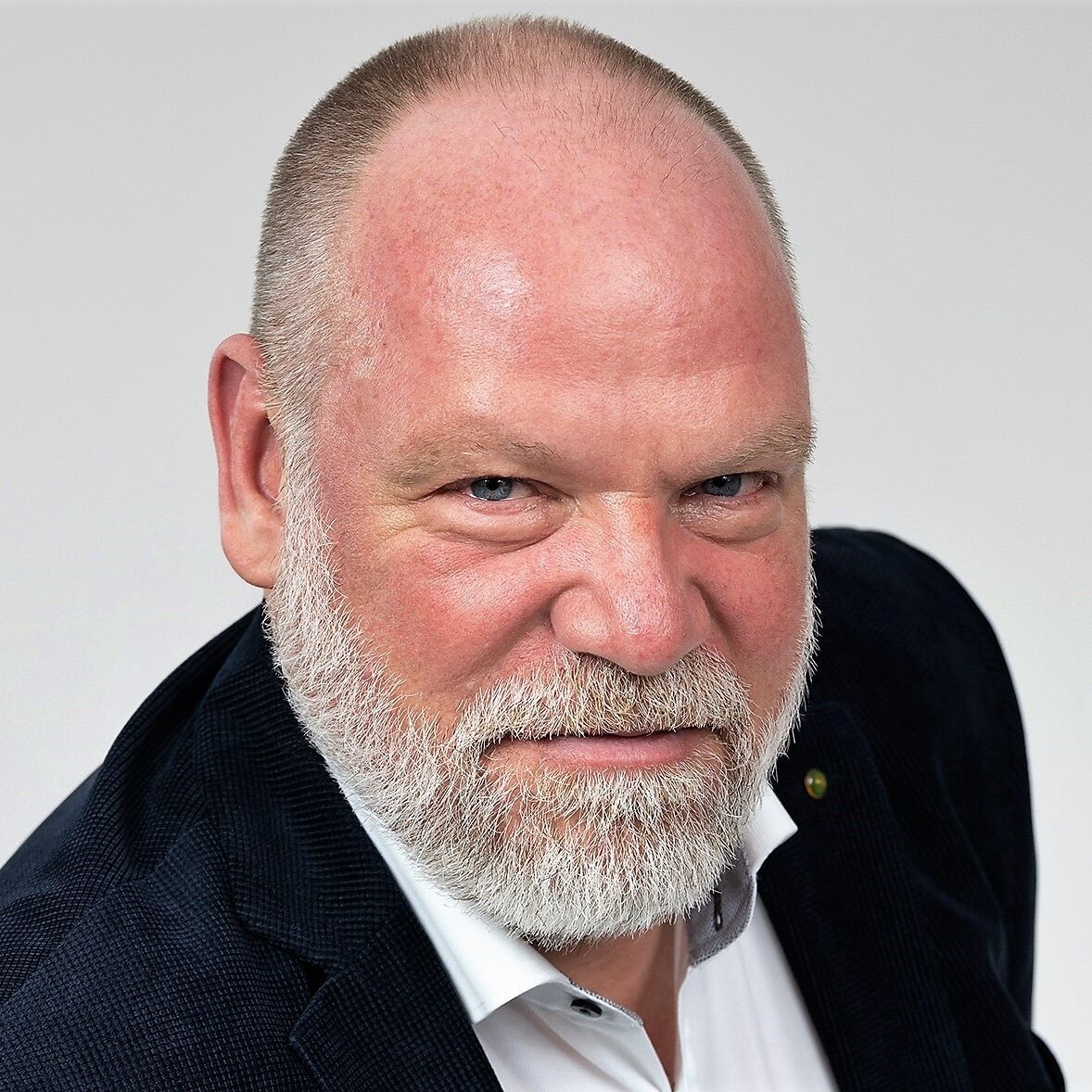
Wolfgang Kluge is a Lecturer at the University of Music and Theatre Rostock, specializing in vocal accompaniment, operatic role studies, and conducting. He holds a Diplom in Music Teaching (piano) from the Leipzig Academy of Music and Theatre (1991). Currently, he serves as Kapellmeister and Head of Opera Studies at Anhaltisches Theater Dessau since 1996/97, directing acclaimed productions of operas like *Andrea Chenier*, *La Bohème*, and *West Side Story*. His expertise spans Lied accompaniment, chamber music, and composer roles. Education: Leipzig Academy of Music and Theatre: Diplom in Music Teaching (Piano, 1991) Postgraduate studies in conducting (Prof. G. Blumhagen, Prof. V. Rohde) and accompaniment (Prof. H.-G. Kluge) Professional Roles: Solo répétiteur at Leipzig and Halle opera houses (1994–1996), lecturer at Young Artists Festival Bayreuth (2011–2015). His work extends to children’s/youth concerts and chamber music collaborations. Awards: 2025: Honorary Title of Chamber Musician (Anhaltisches Theater Dessau)
Piotr Staniszewski is an Assistant Professor at the Stanisław Moniuszko Academy of Music in Gdańsk, where he has been employed since October 2024. Previously, he taught French horn at the Academy of Art in Szczecin from 2017 to 2022, where he was appointed professor in 2020. He maintains an active performance career as a member of the Polish Baltic Philharmonic Orchestra in Gdańsk since 1993, performing internationally in Vatican City, Germany, Sweden, Russia, China, and USA. He also collaborates with the Polish Chamber Philharmonic in Sopot and has performed over 130 solo recitals and chamber concerts. Staniszewski's primary research interests encompass 19th-century Italian opera and the life and work of Gioacchino Rossini. His scholarly work includes six publications on piano music prepared as part of the International Piano Music Academic Sessions in Gdańsk. He has authored more than a dozen published arrangements or transcriptions for horn and chamber ensembles. His most recent publication, in October 2024, appeared in 'The Horn Call,' the quarterly journal of the International Horn Society in the USA, focusing on CD Lorenz. His artistic output includes three significant recordings: 'Sacred Music for Horn and Organ' (2000) with organist Ewa Mazurek-Krasodomska; 'Concert Songs of Romanticism' (2008) with soprano Aleksandra Kucharska-Szefler and pianist Bożena Szull-Talar; and 'Horn Fantasy' (2019), featuring the world's first recording of works for horn and piano by Carl Daniel Lorenz (1816-1866). Bronze Badge of the Polish Association of Choirs and Orchestras (1996) Award of the Mayor of Gdynia (2004, 2021) Diploma of the Minister of Culture (2004) Badge of Merit for Polish Culture (2009) Individual Award of the Director of the Center for Artistic Education (2016) Medal of the Commission of National Education (2019) Cultural Scholarship of the City of Gdańsk (2002, 2009) Staniszewski combines his academic work with extensive teaching experience, having instructed French horn and chamber ensemble classes at the Primary and Secondary Music School in Gdynia since 1993 and at the Complex of State Music Schools in Koszalin. His students have won over 230 awards in regional, national, and international competitions. He serves on juries for music competitions and as a consultant for the Center for Artistic Education in Warsaw since 2021. His music journalism for 'Ruch Muzyczny' includes 85 reports on major musical events in the Gdańsk region and international opera performances.
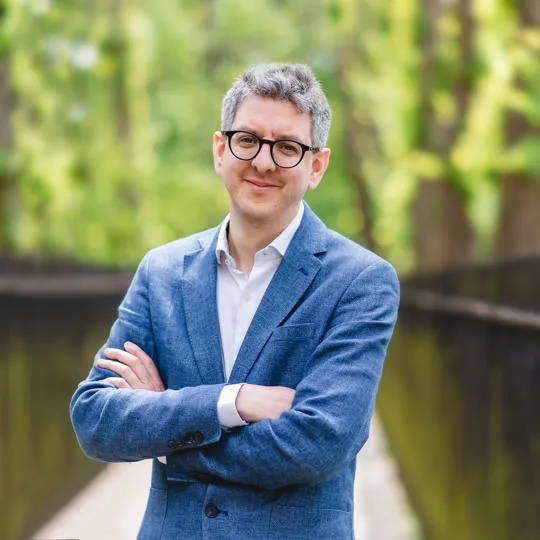
Dr Catherine Kontz is a London-based composer and professor at the Royal College of Music, specializing in nonlinear forms, visual/spatial elements, and musical theatricality in contemporary composition. She serves as a Doctoral Supervisor and is currently an artist-in-residence at King's College London's Engineering Department. Born 1976 BMus (Hons), MMus, PhD from Goldsmiths Her research spans: Audio technology applications in composition Multimedia operatic productions Site-specific sound installations Interdisciplinary collaboration strategies Cultural synthesis in musical theatre Temporal experimentation in performance Her work has been performed by prestigious ensembles and artists including Solistes Européens Luxembourg, BBC Scottish Symphony Orchestra, ensemble recherche, Exaudi, and Naomi Woo. Current projects include collaborative research with Professor Zoran Cvetkovic exploring audio technologies and human intelligence processes. Notable achievements: Shortlisted for Quattropole Music Prize Commissioned for European Capital of Culture program Doctoral research connecting Deleuzian theory with mime opera Regular Tête-à-Tête opera festival participant Director of multimedia opera productions Academic contributions include: Supervising doctoral composition students Developing interdisciplinary research projects Teaching contemporary composition techniques Creating large-scale collaborative works Advancing audio technology applications Mentoring emerging composers
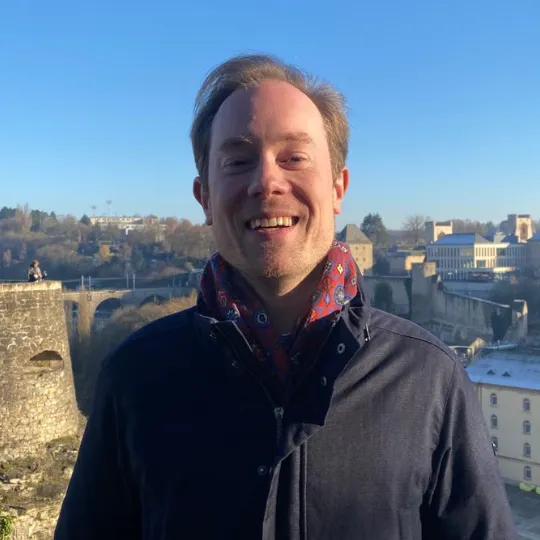
Mara Gibson is an Associate Professor of Composition at Louisiana State University (LSU) School of Music, where she serves as area coordinator with tenure. Originally from Charlottesville, VA, Dr. Gibson completed her Ph.D. at SUNY Buffalo after graduating from Bennington College. She has also studied at London College of Music, L'École des Beaux-Arts in Fontainebleau, France, and the International Music Institute at Darmstadt, Germany. Dr. Gibson's creative work spans contemporary composition with emphasis on cross-disciplinary collaborations. Her music has been described as "shocking, gripping and thought-provoking... conjuring a flurry of emotions" (PARMA Recordings). She is a regular collaborator with choreographers, visual artists, writers, and filmmakers, with notable projects including the ArtSounds initiative which ran for 11 years at UMKC. Her recent compositions demonstrate consistent innovation in technique and interdisciplinary approaches. Works like Escher Keys (2021), a bassoon concerto inspired by M.C. Escher, and Galetea's Dream (2021/23), a staged song cycle, showcase her ability to merge visual art concepts with musical expression. Her compositions often draw inspiration from poetry, visual arts, and natural phenomena, resulting in works that are both technically sophisticated and emotionally resonant. Dr. Gibson has received numerous prestigious awards including: LSU Provost Fund for Innovation in Research ($7,500 for "The Devil's Dream" opera, 2024) GRAMMY nomination eligibility for "Unseen World" album (2024) ATLAS grant through Louisiana Board of Regents ($32,000 for bassoon concerto project, 2021) MacDowell Colony Fellowship (2016) Virginia Center for the Arts residency (2015) Yale University Distinguished Music Educator Award (2015) As an educator, Dr. Gibson has significantly expanded the composition program at LSU, more than doubling its size since her arrival. She founded the Constantinides New Music Ensemble, which debuted at Carnegie Hall in April 2022. Previously, at UMKC Conservatory of Music and Dance, she coordinated undergraduate composition and tripled enrollment in the program. She is currently working on her first opera, "The Devil's Dream," based on Lee Smith's novel and inspired by the country music powerhouse Carter family.
Patrick Hansen is an Associate Professor at the Schulich School of Music, McGill University, and currently on sabbatical leave during Fall 2024. He serves as the Artistic Director of Opera McGill and holds expertise in conducting, stage directing, vocal coaching, and artistic administration. He has been actively involved with the Association of Opera in Canada (AOC) and Opera America. His career spans over 40 years, involving over 300 opera productions across North America and Europe. Education: MMus (Piano Performance), University of Missouri at Kansas City, 1991 BMus (Piano Performance), Simpson College, 1988 Fellowship in Opera Coaching, The Juilliard School, 1991-1993 Research and Creative Work: Hansen focuses on opera production, stage direction, and vocal pedagogy. His recent productions include the Bulgarian premiere of Weill’s *Street Scene*, and stagings at venues like the Kennedy Center and Opéra de Montréal. He is known for innovative directing, such as incorporating audience spaces in *Lucretia* and dramatic lighting in *Bluebeard’s Castle*. Awards: Two-time Schulich School of Music 'Excellence in Teaching' Award McGill Award for Equity Programming Advising and Mentorship: Teaches Opera McGill courses, graduate seminars on Bel Canto and Shakespeare in Opera, and provides private vocal coaching for advanced students. His artistic mentorship extends to programs like Bel Canto in Tuscany. Labs/Teams: Leads Opera McGill, a renowned training ground for operatic artists. Collaborates with institutions like Glimmerglass Opera and Florida Grand Opera. Current projects include directing *The Barber of Seville* (2024) and *Platée* (2025).
Robert Henke is a Professor of Drama and Comparative Literature at Washington University, serving as Director of Graduate Studies for the M.A. in Performance Studies. He holds a PhD from the University of California, Berkeley. His research focuses on Ancient and Renaissance Theater, Comparative Literature, and Dramatic Theory, with a particular emphasis on early modern theatrical networks, commedia dell’arte, and the interplay between performance and literature. Current projects include studies on Shakespearean-Italian dramatic connections, transnational theater networks, and a performance-centered sourcebook on commedia dell’arte. Henke has authored three monographs: *Pastoral Transformations: Italian Tragicomedy and Shakespeare’s Late Plays* (1997), *Performance and Literature in the Commedia dell’Arte* (2002), and *Poverty and Charity in Early Modern Theater and Performance* (2015). He co-edited volumes such as *Transnational Exchange in Early Modern Theater* (2008) and *Transnational Mobilities in Early Modern Theater* (2014), and has contributed extensively to journals and edited collections. His work explores themes like orality in performance, genre hybridity, and the cultural mobility of theatrical forms. Henke’s research highlights the interconnectedness of early modern European theater traditions, examining how performance practices, texts, and ideas circulated across borders. His recent articles analyze topics ranging from commedia dell’arte’s influence on Shakespeare to the material and spatial dimensions of Renaissance theater spaces. He is also editing the early modern volume of *A Cultural History of Western Theatre* (Bloomsbury Academic). His publications reflect a commitment to interdisciplinary approaches, blending literary analysis with performance studies, cultural history, and material culture. While no specific grants or awards are listed, his extensive editorial and monographic output underscores his leadership in early modern theater scholarship. His academic advising and institutional roles at Washington University further highlight his contributions to training the next generation of performance studies scholars.
Dr Thomas Hyde is a Lecturer in Music Composition and Education at King's College London's Department of Music, within the Faculty of Arts & Humanities. He concurrently holds a senior research fellowship at Worcester College, Oxford. His roles include chairing the Lucille Graham Trust, supporting London-based music education projects, and serving as a Vice-President of the Presteigne Festival. Hyde's career spans teaching at City University and a junior fellowship at the Royal Academy of Music, where he was later elected an Associate in 2017. His creative output includes orchestral works like the BBC Scottish Symphony Orchestra's Symphony and the opera 'Aiding and Abetting' (2019-22). His research focuses on composition pedagogy, music analysis, and theoretical frameworks. Notable publications include edited volumes on Stephen Dodgson and David Matthews, and contributions to journals like Twentieth-Century Music and Musical Opinion Quarterly . His compositions often explore orchestral and choral forms, reflected in works like Magnificat and Orpheus with his Lute . Hyde's academic contributions emphasize bridging compositional practice with pedagogy, evidenced by his teaching roles at undergraduate, postgraduate, and doctoral levels. His articles and edited works demonstrate expertise in British musical traditions, symphonic structures, and 20th-century composers.
Ditlev Rindom is a Visiting Research Fellow at King's College London's Department of Music within the Faculty of Arts & Humanities. He previously held a British Academy Postdoctoral Fellowship (2019–2023). His education includes a BA in English Literature from Oxford University, piano studies at the Royal College of Music and RNCM, and a PhD in Musicology from Cambridge University with a visiting fellowship at Yale University. His research focuses on 19th–20th century opera, modern Italian studies, film music, and voice studies. Key projects include his monograph Singing in the City: Opera, Italianità and Transatlantic Exchange (1870–1918) , a critical edition of Puccini's La rondine premiered at La Scala, and a co-edited Cambridge Opera Journal special issue on Italian operetta. Current work explores material cultures of 19th-century Italian opera and transnational opera-cinema links. Teaching expertise covers 19th–20th century music history and musicological methodologies. He contributes to institutions like the Royal Opera House and Wigmore Hall through programme notes and talks. His publications span peer-reviewed journals ( 19th-Century Music , Journal of the Royal Musical Association ) and edited volumes on Puccini and Italian opera contexts. Research projects include the British Academy-funded 'Staging Italy: The Theatrical Imagination in the Italian Peninsula, 1837–1871' (2019–2023). He actively engages in public scholarship through reviews in Opera magazine and Times Literary Supplement , maintaining interdisciplinary connections between music, performance studies, and cultural history.
Krzysztof Cicheński is an interdisciplinary artist, academic lecturer, and opera director affiliated with the Faculty of Interior Design and Scenography at Magdalena Abakanowicz University of Arts in Poznań (UAP). Since 2025, he holds the rank of Assistant Professor at the Department of Scenography, where he teaches courses such as 'Selected issues in the history of theatre and drama' and 'Introduction to directing.' Education : Doctoral degree in art (visual arts and art conservation) from UAP (2024); Inter-Faculty Interdisciplinary Studies in Humanities (Master's) at Adam Mickiewicz University in Poznań (2005–2010). His artistic practice merges opera direction, playwright, libretto writing, set design, and sound art. He specializes in interdisciplinary performances that blend spatial activities, sound installations, and operatic installations, often exploring themes like forgotten works, historical narratives, and socio-cultural commentary. Notable projects include the 2024 opera Wedding (libretto and direction), the 2023 interdisciplinary Landscape , and the 2022 research-based performance The Devil's Wheel , which interrogates the ontological status of lost artworks. His work frequently involves collaborations with institutions like the Zbigniew Raszewski Theatre Institute and Grand Theatre in Warsaw. Scientific Awards : Scholarship of the Ministry of Culture and National Heritage (2024, 2020) Scholarship of the Marshal of the Wielkopolska Voivodeship (2013) He co-founded the Automaton Theatre (2005–2018) and has taught at institutions including Adam Mickiewicz University and the Academy of Music in Poznań. His projects are supported by programs like 'Placówka,' which funds innovative theatrical explorations.
Christoph Strehl is a Professor of Singing at the Mozarteum University in Salzburg, specializing in vocal studies and opera training since 2013. A renowned tenor, he has performed internationally with major opera houses and orchestras, collaborating with conductors like Claudio Abbado and directors including Claus Guth. His career spans key roles in Mozart operas (Don Ottavio in Don Giovanni , Tamino in The Magic Flute ), Beethoven's Fidelio , and Schubert's Fierabras . He has recorded extensively for labels like Deutsche Grammophon and EMI, with notable albums including Die Zauberflöte (2007) and Das Paradies und die Peri (2008). His teaching emphasizes creative process integration and vocal technique, supported by masterclasses with luminaries such as Axel Bauni and Norman Shetler. Education: Studied at Folkwang University (Essen) with Soto Papulkas and privately with Silvana Bazzoni-Bartoli in Zurich. Professional milestones include a 9-year tenure at Zurich Opera House (2002-2011) and Salzburg Festival debuts in 2003 and 2019. Active in recitals with pianists like Helmut Deutsch and Pauliina Tukiainen.
Pierpaolo Polzonetti is a Professor of Music at the University of California, Davis , with a PhD in Musicology from Cornell University . His research bridges opera, eighteenth-century music, and interdisciplinary themes like food, social justice, and transcultural exchange. Research Interests include operatic gastromusicology, the intersection of music and cuisine, eighteenth-century social and gender dynamics in opera, Cuban popular music, and prison music education. He pioneers the study of gastronomic symbolism in operatic works, as seen in his 2021 book Feasting and Fasting in Opera . His publications reveal a focus on gastronomic codes in opera, political themes in Mozart and Haydn, and cultural identity in Italian opera. Awards include the Lockwood Book Award , Slim Award , and Latina International Prize . He has secured grants from the NEH , ACLS , and Earhart Foundation . Scientific Awards: Lockwood Book Award Slim Award Einstein Article Award Latina International Prize in Music Studies Grants: National Endowment for the Humanities American Council for Learned Societies Earhart Foundation Cuban Research Institute Kimberly Green Latin American and Caribbean Center Global Affairs UC Davis Seed Grant Polzonetti's teaching philosophy emphasizes social engagement, notably through programs like Don Giovanni Goes to Prison . His documentary El Sabroso (2024) explores Son music in Havana, aligning with his interests in marginalized cultural expressions.
Dr. Mylène Pardoen is a soundscapes archaeologist affiliated with the Lyon Institute of Human Sciences . Her work focuses on reconstructing soundscapes from pre-20th-century urban and military contexts, blending historical research with acoustic design. Notable Projects : Bretez Project (18th-century Paris), Musée de l'Armée soundscapes (Paris), Notre-Dame Archaeological Crypt sound installations. Research Themes : Historical acoustics, cultural heritage sonification, sensory urbanism, and museum auditory experiences. Her research trends emphasize multidisciplinary approaches combining digital humanities, urban history, and sonic artistry. She has been recognized in the Innovatives 2015 for her heritage-focused work. Scientific Awards : Innovatives 2015 (Heritage category) Mylène has presented extensively at international conferences, including Digital Humanities 2015 , CSHS Congress 2012 , and Music and Ecology of Sound 2013 , showcasing her expertise in auditory heritage.
Paolo Falzone is an Associate Professor at the Department of Modern Literature and Culture, Sapienza University of Rome. He specializes in Dante studies, medieval philosophy, political thought, and classical sources in modern Italian literature. His research bridges theological, philosophical, and poetic dimensions in Dante's works and their historiography. His academic contributions include critical analyses of Dante's political discourse, studies on Averroism's influence, and comparative examinations of classical reception in 20th-century Italian writers like Pasolini and Morante. He has co-edited scholarly works and organized conferences on Dante's intellectual legacy. Keywords: Dante Alighieri, Averroism, Medieval Philosophy, Italian Literature, Political Thought, Classical Reception Falzone's publications reveal trends in Dante's philosophical foundations, Manzoni's ideological frameworks, and interconnections between Greek tragedy and modern Italian dramaturgy. His editorial projects highlight collaborative scholarship in Italian philology. Office hours and course materials are managed through the university's virtual classroom system, with email contact at paolo.falzone@uniroma1.it. He teaches graduate courses on Dante's works and 19th/20th-century Italian literature.
Martha Feldman is the Ferdinand Schevill Distinguished Service Professor of Music and the College at the University of Chicago. A cultural historian specializing in European vernacular musics (1500-1950) with a focus on Italy, her work interrogates intersections of social, political, and artistic phenomena through opera, cinema, media, and voice studies. Education: PhD in Musicology, University of Pennsylvania (1987) Feldman's research spans Renaissance Venice, 18th-century opera seria, and 20th-century castrato legacies. Current projects include The Castrato Phantom and the co-edited volume A Voice as Something More , both exploring voice studies through interdisciplinary lenses. Her publications analyze: Madrigals in Venetian civic culture Opera as political metaphor Voice ontology across media Fellini's operatic influences Courtesan artistic practices Psychoanalysis of vocal identity Scientific Awards: Dent Medal (2001) Graduate Teaching Award (2009) Gordon J. Laing Award (2010) Otto Kinkeldey Award (2015) Member, American Academy of Arts and Sciences (2012) Feldman has received grants from the National Endowment for the Humanities, Guggenheim Foundation, and Getty Research Institute. She mentors graduate students through collaborative research initiatives and co-edited works. Labs/Teams: Principal Investigator, The Voice Project (2013-2016) Member, Neubauer Collegium for Culture and Society Board Leadership, American Musicological Society
Madeleine Bernstorff is a cultural producer, film curator, author, and lecturer at the Institute for Music and Media at Robert Schumann University Düsseldorf. Her work bridges research-based film curating, feminist film history, and avant-garde cinema, with a focus on resistance movements and political documentary forms. Education : Studied media art at the Academy of Fine Arts Munich, University of Munich, and F+F School of Design Zurich Research : Avant-garde cinema, feminist film movements, migrant representation, and socio-political documentation Teaching : Guest professorships at Berlin University of the Arts, Munich Academy of Fine Arts, and international institutions Collaborations : Co-founded Sputnik cinema (1984) and Blickpilotin feminist film collective (1989) Publications : Edited works on Trinh T. Minh-ha, René Vautier, and Afghan cinema Her filmography includes The Fanaticism of the Suffragettes (2010), Candan (2005), and Zitronenfilm (1997), exploring themes of gender, migration, and historical memory through Super8 and video art. She has curated exhibitions at Tromsø Kunstforening and programmed films at institutions like the Arsenal Cinema Berlin and Oberhausen Short Film Festival.