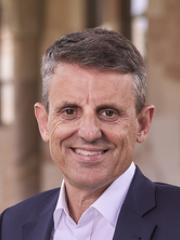
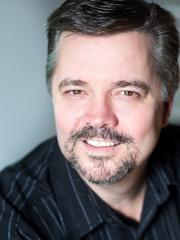
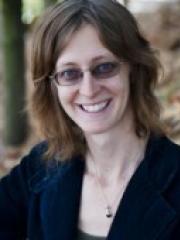
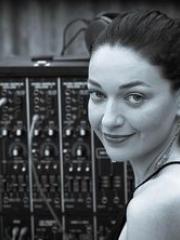
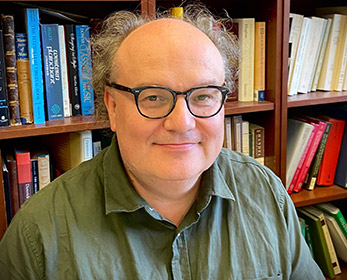
Dr. Sam Ferguson is a Senior Lecturer at the School of Computer Science, University of Technology Sydney (UTS), with a multidisciplinary background in music performance, cognitive science, and psycho-acoustics. His research explores the intersection of sound, music, and human experience through creative coding, machine learning, and interactive systems. Key Research Areas: Sound and Music Computing, Human-Computer Interaction, Creative Coding, Cognitive Science, Installation Art, and Acoustics. Current Projects: ARC Linkage project on creative coding and multiplicitous media; industry collaborations on IoT-based audiovisual systems. Recent Publications: Focus on spatial audio complexity, gestural interaction with networked sound, music emotion recognition frameworks, and robotic performance through genre-based cultural platforms. Leadership Roles: Director of Teaching & Learning Engagement; former Deputy Head of School (Teaching and Learning); active in ACM Creativity and Cognition Steering Committee. Teaching: Courses like Digital Media Studio , Prototyping Physical Interaction , and Data Processing using R within UTS's interdisciplinary Software Development Studio.
Dr. John Severn is a Research Fellow at Macquarie University's Department of International Studies: Languages and Cultures. His career spans academia, law, and translation, with a focus on theatre internationalization, Shakespearean adaptation, and community engagement. Education: PhD in Theatre Studies and English, University of New South Wales MA(Hons) in Shakespeare and Theatre, University of Birmingham LLB(Hons) in Law and French, University of Edinburgh Postgraduate Diploma in Legal Practice, University of Edinburgh BA(Hons) in Theatre Studies and Opera Studies, University of Manchester/Rose Bruford College CertHE in Scottish Gaelic language and culture, University of the Highlands and Islands His research explores theatre and internationalization through opera, musicals, and Shakespearean adaptation. He investigates how performing arts foster inclusive/exclusive communities and addresses barriers to participation. His work intersects European cultural history, arts policy, and transnational practices. Recent publications highlight trends in Shakespearean operatic adaptation, Australian theatre censorship, and decolonial processes in performance. His co-edited works include The Routledge Companion to Theatre and Internationalization and Theatre and Internationalization: Perspectives from Australia, Germany, and Beyond . Dr. Severn collaborates with institutions like the University of Sydney, University of New South Wales, and the Goethe-Institut Australia. He founded the research cluster 'Staging Migration in Berlin' and co-organizes international conferences on theatre internationalization.
Associate Professor Antony Moulis is a faculty member at the University of Queensland's School of Architecture, Design and Planning, where he also serves as Deputy Head of School. He holds a Bachelor of Design Studies and a Bachelor degree from UQ. His research focuses on productive cities, urban retrofit, and global architectural knowledge transfer, with notable contributions to books like House, Precinct, Territory (2023) and Le Corbusier in the Antipodes (2021). He collaborates with industry on projects addressing micro-urban resilience, energy transitions, and cross-cultural architectural exchanges. Research interests include urban infill housing strategies, architectural techniques from the 20th to 21st century, and the global influence of figures like Le Corbusier. He led UQ's participation in the Water Sensitive Cities CRC, focusing on green infrastructure and urban intensification. Awards include the 2025 Architecture Australia Prize for Unbuilt Work and multiple Queensland Architecture Awards for collaborative designs like the Blue Bower and One Room Tower. His work spans academic and professional journals, with over 50 articles and 4 books. He has supervised numerous research projects and contributed to exhibitions at venues like the Seoul Biennale. Moulis is a past President of the Society of Architectural Historians, Australia and New Zealand (SAHANZ), and actively engages in architectural historiography and design pedagogy.
Dr. Shaun Brown is the Director of Performance and Voice Performance Fellow at The University of Queensland's School of Music, within the Faculty of Humanities, Arts and Social Sciences. He holds a Doctor of Musical Arts from the University of North Texas and a Master's from UQ. His career spans over three decades with Opera Queensland, where he has performed in over 50 productions, including Don Giovanni, Carmen, and Così fan Tutte. Internationally, he has collaborated with institutions like Opéra de Lyon and the Center for Contemporary Opera in New York. His research focuses on vocal performance practices, particularly Erich Korngold's early Lieder. Notable performances include roles in Britten’s War Requiem, Bach’s St Matthew Passion, and Handel’s Messiah. Recent engagements include OQ’s Festival of Outback Opera productions and recitals with Brisbane Music Festival. He actively participates in workshops, masterclasses, and community arts initiatives. Education: Doctor of Musical Arts, University of North Texas Masters (Coursework), The University of Queensland Research interests emphasize historical vocal performance techniques, interpretation of 20th-century Lieder, and contemporary opera. His 2016 thesis on Korngold’s works highlights interdisciplinary approaches to vocal pedagogy and musical analysis. Though no explicit awards are listed, his critical acclaim and long-term institutional contributions reflect professional recognition. He oversees performance training at UQ, mentoring emerging artists through Opera Queensland’s Young Artist program. Collaborations include Brisbane Chorale, Queensland Youth Orchestras, and festivals like Jimbour’s Outback Opera. Key venues include Queensland Performing Arts Centre, Lyric Theatre, and St John's Cathedral, showcasing his versatility across operatic, concert, and recital formats.
Dr Andrea Jean Baker is a Senior Lecturer in Journalism at Monash University's Faculty of Arts, where she has held significant leadership roles including Acting Head of Journalism and Undergraduate, Honours, and Research Coordinator. She is currently serving as Unit Coordinator for Journalism and Global Change and Lifestyle Journalism courses, and is an active member of Monash's Artificial Intelligence in Education Working Group. As an award-winning journalism scholar and journalist, her work integrates Artificial Intelligence and constructive journalism into her teaching of large enrollment units. PhD in Digital Communications from Monash University (2012) Certificate in Human-Centred Artificial Intelligence from Stanford University (2025) Graduate Diploma in Health Management from La Trobe University (1996) Bachelor of Arts in Media and Politics from Swinburne University of Technology (1994) Dr Baker's interdisciplinary research spans feminist journalism studies, criminology, ethnomusicology, and urban studies, with a focused emphasis on violence against women, urban communication, and the safety of journalists in the AI era. Her scholarly work includes over 80 academic publications across 4 books, 38 book chapters, 20 peer-reviewed journal articles, and 2 industry reports. She has pioneered Australia's first student-led net-only radio station at Monash and the nation's first international journalism study tours to major global cities. Her recent publications demonstrate a clear trajectory toward examining the intersection of AI with journalism ethics, safety of journalists, and media representation of violence against women. Baker's work increasingly focuses on applying intersectional frameworks to media coverage of gender-based violence, while exploring how AI is transforming journalism practices globally, particularly in the Global South context. Finalist, International Book Awards, Best Education/Academic Book (2019) International Association for Media and Communications Research Publication Award Nominated for the 2024 Hazel Gaudet-Erskine Best Book Award Hampton Press prestigious publishing award for Virtual Radio Ga Ga (2012) Entry into Jane Jacobs Book Award (2019) Entry into Robert E. Park Book Award (2020) Dr Baker has supervised or examined 12 PhDs and Masters theses and 16 Honours research projects to successful completion. She has secured competitive research grants from governments, NGOs, and university sources for projects including 'Media coverage of violence against women from an intersectional lens' (2024-2026) and 'Examining Sexual Violence in the Music City of Melbourne' (2021). As Editor-in-Chief of Journalism Practice journal since 2022, she plays a significant role in shaping scholarly discourse in the field. Her research extends beyond the university through external positions including City of Melbourne's Music Cities advisor (2013-2017) and City of Port Phillip's Music Taskforce member (2012). Dr Baker's work is cited by international bodies including UNESCO, UN Women, and UNICEF, demonstrating significant policy impact in the areas of gender equality and media ethics.
Andrew Foote is an Associate Professor at the Conservatorium of Music, University of Western Australia. He holds roles as Chair of the Board of Studies (Design and Creative Arts), Chair of Vocal Studies, and Academic Integrity Officer (Music). Previously served as Director of the West Australian Symphony Orchestra Chorus (2019-2024) and Vocal Coach (2014-2018). Education: Doctor of Musical Arts (2020), University of Western Australia Research focuses on Schubert's Winterreise, historical performance practices in Baroque and Renaissance eras, and vocal pedagogy. Active in professional opera performances, including a Helpmann Award-winning role in Peter Grimes (2010). Specializes in German Lieder, crossover cabaret, and business leadership coaching. Recent performance projects include WA Opera's Pirates of Penzance (2025), Die Fledermaus with WASO (2025), and Beethoven's 9th Symphony (2024). Known for innovative choral direction and inter-disciplinary collaborations. Awards: UWA FABLE Teaching Award (2020), multiple student teaching accolades Leads vocal ensembles like Symphonic Chorus of UWA and Concordia Vocalis. External roles include ANCA National Councillor (2023-2024) and WA President of the Australian National Choral Association.
Associate Professor Josh Stenberg holds a PhD from Nanjing University and is affiliated with the University of Sydney's Faculty of Arts and Social Sciences. His research focuses on Chinese theatre, Sinophone literature, and Sino-Indonesian cultural dynamics. He has held prestigious fellowships including Fulbright Taiwan and SSHRC Postdoctoral support. Education: B.A. Harvard, M.A. UBC, PhD Nanjing University Affiliations: China Studies Centre, Sydney Southeast Asia Centre Research spans contemporary xiqu, Sino-Indonesian performance, and global reception of Chinese theatre. Recent projects explore Sinophone cinema in West Kalimantan and PRC soft power strategies. Over 50 peer-reviewed publications include monographs like Minority Stages and Liyuanxi . Current supervisions cover topics like Chinese Lion Dance in Chile and trauma narratives in Wang Xiaobo's fiction. Awards include the Henry Luce Poetry Translation Fellowship and Australian Academy of Humanities grants. Labs/Teams: Part of multi-institutional projects on Southeast Asian Chinese ethnicity and Chinese-Arabic literary translation.
Julian Smiles is a Senior Lecturer in Cello at the Sydney Conservatorium of Music, part of the University of Sydney. He holds prestigious roles in Australian classical music, including former Principal Cello of the Australian Chamber Orchestra and frequent guest principal with the Sydney Symphony Orchestra. He is a core member of the Australia Ensemble (UNSW) and co-founder of the internationally acclaimed Goldner String Quartet. His performances span soloist engagements with major orchestras, chamber music festivals, and premieres of Australian contemporary works. Ensembles: Goldner String Quartet, Australia Ensemble UNSW Performance Venues: Sydney Opera House, Melbourne Recital Centre, Townsville Civic Theatre Repertoire Focus: Classical chamber works, Australian compositions, and international contemporary pieces Research interests include chamber music interpretation, performance practice, and pedagogy rooted in his studies with Nelson Cooke and Janos Starker. He regularly collaborates with composers like Mark Isaacs and Carl Vine, premiering new works. Teaching emphasizes linking technical mastery with artistic expression through historical and contemporary repertoire. Recent performances include the 30th anniversary season of the Goldner Quartet at Sydney Conservatorium, Hyperion Records releases, and international tours to New Zealand and India. His 2024 recording Bird Spirit Dreaming explores Australian musical identity through contemporary compositions. Grants and collaborations involve Musica Viva Australia, Huntington Estate Music Festival, and the Australian World Orchestra. His pedagogical work includes masterclasses at Four Winds Festival and mentoring emerging chamber musicians. Labs/Teams: Goldner String Quartet (30-year partnership), Australia Ensemble UNSW (since 1991), Sydney Conservatorium Cello Studio.
Dr. Sarah Collins is a Professor in Musicology at the Conservatorium of Music, University of Western Australia (UWA). She also serves as Deputy Dean (HDR Supervision and Research Training) at UWA and holds roles including Chair of the UWA Animal Ethics Committee and Co-editor of Music & Letters (Oxford UP). Her research focuses on the intersections of music, aesthetics, and intellectual history, with notable expertise in modernism, cultural history, and political theory. Education: Collins holds a PhD in Cultural History and Musicology from the University of Queensland (2010), a Bachelor of Music (Hons) in Musicology and Performance (2006), and a Bachelor of Laws (2011), also from UQ. Research Interests: Her work examines music’s role in late-nineteenth and early-twentieth-century cultural and political contexts, including modernist ideologies, aesthetic liberalism, and the relationship between music and literature. Recent projects include an ARC-funded study on automated labor’s cultural history and collaborations with interdisciplinary groups like the UWA Tech & Policy Lab. Publications and Awards: Collins has authored acclaimed books such as Lateness and Modernism (2019) and edited volumes like Music and Victorian Liberalism (2019). She is a Fellow of the Australian Academy of the Humanities and recipient of the prestigious Dent Medal (2024), McCredie Musicological Award (2019), and other honors. Teaching and Engagement: She teaches courses on contemporary debates in music, music and society, and sound studies. Public engagements include talks on AI, generative creativity, and music’s societal roles, featured in venues like the BBC Radio and WA Museum Boola Bardip.
Dr. Eve Klein is an Associate Professor and Senior Lecturer in Music Technology and Popular Music at The University of Queensland (UQ) School of Music. She leads a research cluster in interactive composition, focusing on virtual/augmented reality works and guiding postgraduate composers. Her work bridges classical music traditions with digital innovation, addressing themes like gender in technology, identity, and participatory cultures. Dr. Klein holds a PhD in Music and Sound and has pioneered immersive art music experiences for festivals such as MONA FOMA and VIVID Sydney. Her artistic works include Vocal Womb (a laryngoscopy-based opera exploring voice and power) and City Symphony (an AR soundwalk overlaying Brisbane’s CBD). She is a recipient of the 2023 Art Music Award for Experimental Practice and the IASPM 2016 Open Publication Prize. Her research spans music technology curriculum design, future work skills in the arts, and epistemic fluency through transdisciplinary collaboration. She co-founded the Touch Ensemble, a technology-focused performance group collaborating with engineering students. Dr. Klein’s work frequently addresses social justice themes, including gendered violence and climate change. Education: PhD in Music and Sound Awards: 2023 Art Music Award, IASPM 2016 Prize, UQ Program Innovation Award Her articles critically examine virtual orchestras’ impact on classical norms, while her creative works challenge traditional performance boundaries. Klein collaborates internationally with festivals, scientists, and NGOs to create transformative cultural projects.
Associate Professor Narelle Yeo is affiliated with the Sydney Conservatorium of Music at The University of Sydney. She holds an academic position focused on performance, pedagogy, and new music development. Her email is narelle.yeo@sydney.edu.au , and her office is located at C41 Sydney Conservatorium of Music. Education: Graduate studies at Shepherd School, Rice University San Francisco Conservatory of Music Research Interests: Narelle specializes in opera performance, musical theatre direction, and the development of new works. She champions contemporary compositions through premieres of pieces by Australian composers like Luke Byrne and Paul Stanhope. Her work extends to innovative teaching methods in music ensembles and career development through ePortfolio systems. She explores audience engagement dynamics in theatrical spaces and the application of complexity theory to rehearsal practices. Her performance credits include roles in Madama Butterfly , Masterclass , and the world premiere of Annus Horribilis . She has directed opera and musical theatre projects across multiple institutions, including a recent revival of Mahagonny Songspiel . Grants & Projects: 2021 Equity Prize recipient Lead researcher on WIL capstone experiences for musicians Labs & Collaborations: Narelle contributed to the 2024 Footbridge Theatre renovation project, reviving the historic venue for Music Theatre education and performances. She collaborates with organizations like Far Too Soon Productions and Opera Carnivale on new works and community performances.
Amanda Coles is a Senior Lecturer in Employment Relations within the Department of Management at Deakin University's Faculty of Business and Law. She also holds a position as Lecturer in Arts and Cultural Management at the same institution. Coles serves as Deputy Editor of the Journal of Industrial Relations and is a co-researcher with the Interuniversity Research Centre on Globalization and Work (CRIMT) in Montreal, Canada. Dr. Coles' research examines the political economy of labour markets and workforce development in the cultural economy with a focus on public policy, collective representation and intersectional inequality. Her work particularly investigates gender inequality in creative industries including film, television, and opera production. She has conducted significant research on the Australian cinematography workforce, revealing issues of precarious employment, hiring discrimination, and toxic workplace culture. Her analysis of The Royal Opera demonstrated that over 15 seasons, 90% of all opera productions credited a male director, with women significantly underrepresented in leadership roles. Her scholarly output shows a clear trend toward examining gender equity through empirical analysis of creative industries workforce data. Recent publications focus on comparative international assessments of gender policies in film sectors, career pathways in screen industries, and the impact of non-standard work arrangements on diversity in performing arts. Her research methodology typically involves large-scale data analysis of production credits, workforce surveys, and policy document examination. As Deputy Editor of the Journal of Industrial Relations, Coles plays a significant role in shaping scholarly discourse in employment relations. Her research collaborations extend internationally through her work with CRIMT and comparative studies of Canadian and Australian creative industries. Dr. Coles' research has practical implications for policy development in cultural industries, with findings presented to industry bodies and policymakers. Her work on camera department diversity was commissioned by the Australian Cinematographers Society and has informed industry discussions about workforce development and inclusion initiatives.
Stephen Mould is a Senior Lecturer in Conducting, Opera Studies, and Repetiteurship at the Sydney Conservatorium of Music, University of Sydney, and Artistic Director of the Conservatorium Opera. He holds a B.Mus and Grad Dip from the Sydney Conservatorium, and studied at the Royal Academy of Music, London. His career spans roles as repetiteur, conductor, and Head of Music at Opera Australia, alongside collaborations with international opera companies in Germany, Belgium, the USA, and Asia. Research focuses on opera conducting history, performance practice, and the roles of conductors from the 19th century onward. Key publications include Curating Opera (2021) and Reading Conductors (forthcoming), alongside studies on artists Dušan and Voitre Marek. Recipient of the Phillip and Myrtle Foster Award (1990), Bayreuth Scholarship (1998), and Opera and Arts Support Group Scholarship (1999). Teaching emphasizes conducting techniques derived from historical scores, with research on marked scores of iconic conductors. Current projects explore Mahler's operatic contributions and the evolving role of conductors in 19th-century Italy.
Stewart Smith is a Senior Lecturer at the Western Australian Academy of Performing Arts (WAAPA), part of Edith Cowan University. He leads the Centre for Keyboard Heritage and Performance Research and serves as assistant organist at St George's Cathedral in Perth. Previously, he held leadership positions as head of department and Dean of Music at WAAPA, but has returned to focus on teaching and research. Master of Music, Royal Academy of Music and London University Certificate IV in Assessment & Workplace Training, TAFE WA (2006) Smith's research spans historical musicology, early music, performance practice, improvisation, and historical keyboard instruments, with particular focus on Baroque repertoire and English music from 1700-1850. His work uniquely bridges scholarly research with practical performance, exploring how historical understanding informs contemporary interpretation. He has developed significant expertise in reception history, examining how musical works have been understood and performed across different eras. Analysis of his recent publications reveals consistent exploration of performance authenticity, particularly regarding Baroque practices. His work demonstrates increasing interdisciplinary approaches, connecting musicology with cultural studies, instrument history, and cross-cultural influences. The research shows particular strength in keyboard performance traditions and their evolution. Solo harpsichord recital for ABC's Sunday Live voted one of the year's best broadcasts Five-CD set of French Baroque music on ABC Classics label received international acclaim Smith has secured substantial research funding, including a major Australian Research Council grant for French Baroque research and recent significant grants from the Feilman Foundation ($350,000) and Wright Burt Foundation ($100,000) for keyboard instrument restoration. He actively supervises 5 current PhD students and has guided numerous completed research projects across musicology, performance practice, and historical instruments. As director of the Centre for Keyboard Heritage and Performance Research, he oversees projects focused on historical keyboard instruments and their performance contexts, including the restoration of a 1786 Kirkman harpsichord. Smith maintains an international performance profile, with recent work including Celtic Baroque interpretations, experimental Vivaldi performances, and Ligeti's Volumina. His performance career spans collaborations with major ensembles including the Orchestra of the Antipodes, Pinchgut Opera, and all Australian state symphony orchestras, alongside international appearances at prestigious venues including Westminster Abbey and St Paul's Cathedral.
Benedict Carey is a Casual Academic in the Faculty of Arts and Social Sciences at the University of Technology Sydney (UTS), and a doctoral candidate at the Hochschule für Musik und Theater Hamburg (HfMT Hamburg, Germany). His academic career includes teaching roles at National Institute of Dramatic Art (NIDA), Sydney Conservatorium of Music, University of Sydney School of Architecture, and UNSW School of Art and Design. He has extensive experience in audio engineering, lighting design, and computer technology in academic and performance settings. His research focuses on the intersection of music technology and digital media, including projects like the 'Sonic Environments for Healing' initiative at UKE Hamburg and the development of the 'Huosphere' networked light/sound system. Key technical areas include virtual reality interfaces for music composition, networked notation systems, and real-time spectral analysis applications. His work bridges music production, human-computer interaction, and therapeutic sound design. Benedict has taught courses in programming, sound design, and music technology at multiple institutions, including courses on interactive media at HfMT Hamburg. His funded research interests span IoT applications in music, machine learning for composition, and rapid prototyping in digital media. Notable collaborations include DAAD exchange projects on internet-based music performance and a German-Australian-US research network for innovative composition systems.