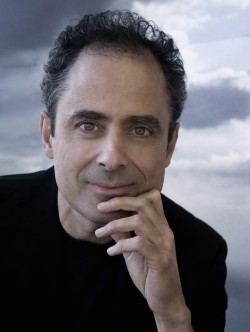
Flavio Ferri-Benedetti is a Lecturer at the Basel Academy of Music, University of Applied Sciences and Arts Northwestern Switzerland, specializing in singing and Italian diction instruction. Concurrently, he serves as a research assistant at the University of Bern's Institute for New Testament Studies while pursuing a BA in Old Catholic Theology there, demonstrating a unique interdisciplinary trajectory spanning musicology, literature, and theology. His extensive educational background includes: BA student of Old Catholic Theology, University of Bern (2024–) PhD in Literature (magna cum laude), Universitat de València (2014) MA Singing (Musical Performance, cum laude), Schola Cantorum Basiliensis (2010) Classical Philology (cum laude), Universitat de València (2006) Translation and Interpreting Licentiate, Universitat Jaume I (2004) Piano diploma (cum laude), Vila-real, Spain (2000) Classical baccalaureate (cum laude), Castellón de la Plana, Spain (1983) His research centers on Baroque opera with particular emphasis on Metastasio's libretti, vocal aesthetics, and classical reception studies. He investigates intersections between musicology and literary analysis, gender dynamics in musicality, and creative expression through poetry. This multidisciplinary approach bridges historical performance practice with contemporary theoretical frameworks. Publication trends reveal consistent scholarly engagement with Metastasio's works and baroque opera conventions, evolving toward gender studies and creative writing. His output demonstrates methodological diversity across musicological analysis, historical manuscript studies, and poetic composition, reflecting both academic rigor and artistic practice. No scientific awards or fellowships are documented in available sources. Information regarding student advising and research grants remains unspecified in current records. He maintains affiliation with GRATUV (Grup de Recerca i Acció Teatral de la Universitat de València), a research and theatrical action group at the University of Valencia focused on classical tradition in performance contexts.