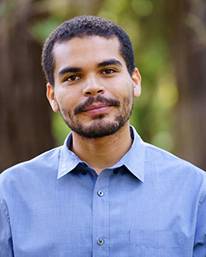
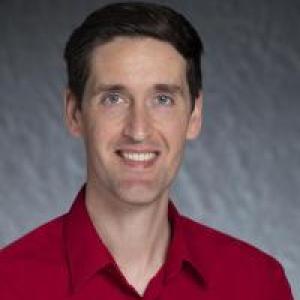
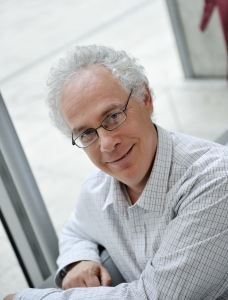
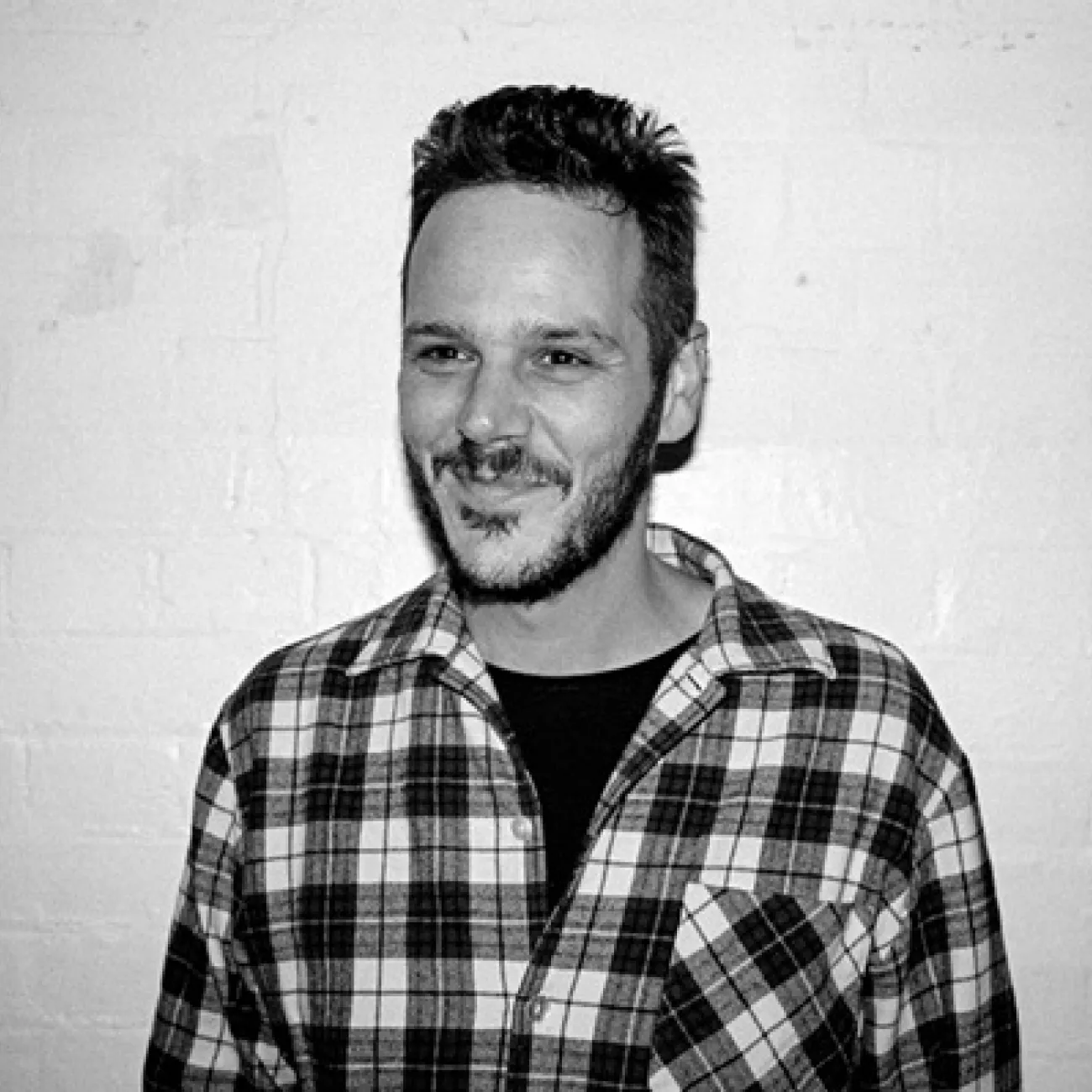
Christopher Castro serves as an Assistant Professor of Composition at Chapman University's College of Performing Arts. A composer and double bassist from Brooklyn, New York, he combines academic rigor with avant-garde experimentation. Ph.D. in Composition and Theory from University of California, Davis Bachelor of Music from Juilliard School (Double Bass & Composition) His research bridges Western Art Music traditions with contemporary innovations , creating works that merge: Johannes Ockeghem's polyphonic complexity John Coltrane's spiritual intensity Modernist structural experimentation Historical reconstruction techniques Jazz-classical hybrid forms Interdisciplinary performance formats Recent compositions demonstrate trends in flexible instrumentation , text-music relationships , and genre synthesis . His output spans chamber works, orchestral pieces, and vocal compositions with equal mastery. Scientific recognition includes: 2023 Fromm Music Foundation Commission (Harvard University) Chamber Music America's 2021 Classical Commissioning Award As a new music advocate , Castro collaborates with ensembles like: Left Coast Chamber Ensemble (artistic advisory board) New Mexico Contemporary Ensemble Los Angeles Philharmonic's Upbeat Live series Lyris Quartet and Sharon Harms
Sylwia Janiak-Kobylińska is a Polish conductor, educator, and artistic leader currently serving as the Dean of the Faculty of Conducting, Composition, and Music Theory at the Stanisław Moniuszko Academy of Music in Gdańsk. She is President of the SAJ Foundation Supporting Young Artists, founder of the Baltic Philharmonic Orchestra of the Youth, and an active participant in international music competitions and festivals. Her work spans symphonic and opera conducting, artistic direction of multidisciplinary projects, and pedagogical leadership. Her research interests focus on Orchestral Conducting Contemporary Music Interpretation Artistic Education for Youth Symphonic and Opera Collaboration Cultural Management in Music Interdisciplinary Art Projects Her recent artistic projects, such as the inUnity. Contemporary Music from Gdańsk album and the Homage to Szymborska concert series, highlight collaborations between classical and jazz composers, youth orchestras, and interdisciplinary teams. These works emphasize themes of unity, cultural heritage, and innovation in music education. Scientific awards and recognitions include Meritorious for Polish Culture badge (2023) Antoni Wit Award at the G. Fitelberg Conducting Competition Multiple Rector’s Awards at the Academy of Music in Gdańsk Pomeranian Artistic Award in 'Artistic Hope' category As an educator, she leads orchestral workshops, mentors students across multiple faculties, and pioneered the 4C’s in Music Art program (Creativity, Collaboration, Critical Thinking, Communication). Her leadership in the SAJ Foundation and Baltic Philharmonic Orchestra of the Youth has fostered over 1000 young musicians since 2011.
Dmitri Tymoczko is a Professor of Music at Princeton University, where he has taught composition and theory since 2002. His work bridges the gap between academic music theory and contemporary composition, creating a unique interdisciplinary approach that has earned him recognition as a leading figure in modern music scholarship and creation. Tymoczko's research interests focus on the geometric modeling of musical structures, polystylistic composition that draws from genres spanning Renaissance to rock, and the mathematical foundations of tonality. His theoretical work explores how harmonic structures can be represented geometrically, revealing fundamental patterns that connect diverse musical traditions. He approaches composition as 'a logical deduction from absurd premises,' blending rigorous structural thinking with playful musical exploration. His scholarly publications and compositions reveal a consistent interest in the intersection of mathematical precision and expressive freedom. The articles demonstrate expertise across music theory, composition, and the cognitive aspects of musical perception, with recurring themes of geometric modeling, tonal structure, and genre hybridization. His work often challenges traditional boundaries between academic and popular music forms. Guggenheim fellowship Rhodes Scholarship Leonard Bernstein fellowship from Tanglewood Fellowship from the Radcliffe Institute for Advanced Study Block lectureship from the Society for Industrial and Applied Mathematics First music-theory article published in Science magazine Tymoczko maintains an active performance career alongside his academic work, with his compositions performed by leading ensembles including the Brentano Quartet, Newspeak, and Roomful of Teeth. His teaching integrates theoretical insights with practical composition, fostering a generation of musicians who understand music's structural foundations while embracing creative freedom. He has developed innovative tools like the musical programming language 'arca' to explore new compositional possibilities.
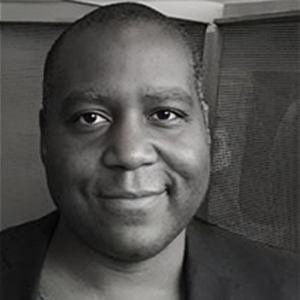
Keith Obadike is a Professor in the Department of Art at Cornell University's College of Architecture, Art, and Planning (AAP), where he also serves as Director of Undergraduate Studies. He is an acclaimed interdisciplinary artist and composer, known for his collaborative work with Mendi Obadike, which spans sound art, digital media, public installations, performance, and internet-based projects. His artistic and academic work critically engages with technology, race, history, and identity. Obadike earned a B.A. in Visual Art from North Carolina Central University and an M.F.A. in Sound Design from Yale University. Prior to joining Cornell, he taught at William Paterson University and held visiting positions at Princeton University, Columbia University, Northwestern University, and the Art Institute of Chicago. His research and creative practice focus on sound art, digital media, public art, performance, and collaborative practice , with strong interdisciplinary connections to Afrofuturism, data sonification, and social justice. He explores how sound and technology mediate racial identity, memory, and liberation, notably through the concept of acousmatic blackness , which he and Mendi developed to describe the racial perception of sound when its source is unseen. Obadike’s selected works include large-scale public sound installations such as Blues Speaker (for James Baldwin) , Free/Phase , Compass Song (Times Square Arts), and GuideStar (Space Needle, Seattle). His projects often use data sonification, archival research, and mythic storytelling, blending historical inquiry with futuristic vision. Notable series include the Opera-Masquerades , Americana Suites , and Numbers Station works, which transform databases of violence into sonic experiences. His honors include: Rockefeller New Media Arts Fellowship (2004) Louis Comfort Tiffany Biennial Award (2015) New York Foundation for the Arts Fellowship in Fiction New Music USA Creator Development Fund (2022) Obadike has received commissions and support from institutions such as the Vera List Center, Harlem Stage, Times Square Arts, the American Composers Orchestra, and the Cornell Mui Ho Center for Cities. He has exhibited and performed at The New Museum, The Whitney Museum of American Art, MoMA, and The Studio Museum in Harlem. His writings and publications include contributions to Studies into Darkness (2022), and artist books such as Four Electric Ghosts and Big House / Disclosure (both 2014). He has also released albums like Crosstalk (2008) and created internet artworks such as Blackness for Sale (2001) and The Interaction of Coloreds (2002), which are foundational in new media and critical race art. While specific advisees are not listed, his role as Director of Undergraduate Studies and Professor indicates active mentorship. His work is deeply collaborative, often co-created with Mendi Obadike, and supported by interdisciplinary teams and institutions.
Dr. Sam Ferguson is a Senior Lecturer at the School of Computer Science, University of Technology Sydney (UTS), with a multidisciplinary background in music performance, cognitive science, and psycho-acoustics. His research explores the intersection of sound, music, and human experience through creative coding, machine learning, and interactive systems. Key Research Areas: Sound and Music Computing, Human-Computer Interaction, Creative Coding, Cognitive Science, Installation Art, and Acoustics. Current Projects: ARC Linkage project on creative coding and multiplicitous media; industry collaborations on IoT-based audiovisual systems. Recent Publications: Focus on spatial audio complexity, gestural interaction with networked sound, music emotion recognition frameworks, and robotic performance through genre-based cultural platforms. Leadership Roles: Director of Teaching & Learning Engagement; former Deputy Head of School (Teaching and Learning); active in ACM Creativity and Cognition Steering Committee. Teaching: Courses like Digital Media Studio , Prototyping Physical Interaction , and Data Processing using R within UTS's interdisciplinary Software Development Studio.
Prof. Nicola Jürgensen is a distinguished German clarinetist and Professor of Clarinet at Faculty 1 of Folkwang University of the Arts in Essen, Germany. She also serves as Dean of Faculty 1 and is a Confidential Lecturer for the German Academic Scholarship Foundation. Her career seamlessly integrates performance, education, and artistic leadership. She is the Artistic Director of WDR 3 Campus Concerts and a board member of the Folkwang University Foundation. Professor of Clarinet, Folkwang University of the Arts (2018–present) Dean, Faculty 1 Artistic Director, WDR 3 Campus Concerts Board of Directors, Folkwang University Foundation Principal Clarinet (former), WDR Symphony Orchestra Cologne (2001–2018) Regular coach, German National Youth Orchestra (2020–present) Nicola Jürgensen's research and artistic interests center on clarinet performance, chamber music, and contemporary repertoire. She is deeply committed to historical performance practice, evidenced by her recordings on basset clarinet, and to expanding the global reach of classical music through international masterclasses and festivals. Her work bridges traditional European repertoire and modern experimental works, including performances in avant-garde operatic productions. She has collaborated with leading orchestras and ensembles worldwide, from Berlin and Leipzig to New York, Bangkok, and Auckland. Her recent artistic output reveals a strong focus on rediscovered works (e.g., Wilms' concerto), contemporary compositions (e.g., Kancheli, Zwilich), and cross-cultural collaborations (e.g., German Masters Music Festival in Thailand). She emphasizes pedagogical innovation and performance excellence, mentoring students who now hold principal roles in Germany’s top orchestras. Her recordings and performances consistently highlight expressive depth, technical mastery, and scholarly engagement with historical instruments and arrangements. Scientific and Artistic Awards: Mozart Prize, Wiesbaden Mozart Society German Music Competition Soloists' Prize (1999) Germany Radio Promotion Prize (2002) Nicola Jürgensen has been instrumental in guiding numerous students into prestigious orchestral positions and leads the ensemble 'Folkwang Clarinets' with her students. She holds multiple leadership roles in academic and artistic institutions and continues to perform as a guest principal clarinetist with major orchestras like the Mahler Chamber Orchestra and NDR Elbphilharmonie Orchestra. Her involvement in grants and funding appears indirect through institutional roles and festival organization. She is actively involved with several artistic initiatives, including the 'Spannungen' festival, WDR 3 Campus Concerts, and international masterclass programs. Her ensemble collaborations and educational outreach reflect a sustained commitment to excellence, innovation, and accessibility in classical music.
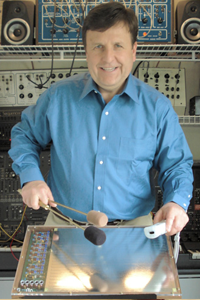
Richard Boulanger is a Professor in the Electronic Production and Design (EPD) department at Berklee College of Music, where he contributes significantly to music technology education and innovation. His work bridges performance, composition, and technological exploration. His research and expertise focus on music technology , electronic music , and music synthesis , particularly through tools like Csound. He advocates for technology as a means to uncover and express a musician’s inner voice, integrating historical traditions with contemporary and future-facing practices. Richard Boulanger is internationally recognized as a lecturer, author, performer, and consultant. He edited The Csound Book (MIT Press, 1999), a seminal work in computer music. His career includes performances with prestigious ensembles such as the La Jolla Symphony Orchestra, San Diego Opera Orchestra, and Boston Symphony Orchestra. Scientific Awards: Fulbright Scholar Recipient of numerous awards, honors, and grants As an educator, he teaches courses in music technology and supports students in exploring their musical identities through technological tools. He is affiliated with the Professional Writing and Music Technology programs at Berklee.
Wesley Bradford serves as Assistant Professor and Program Coordinator for Music Theory at the University of Louisiana at Lafayette's School of Music and Performing Arts, teaching courses from freshman theory to graduate composition since joining the faculty in 2016. His international engagement includes study abroad courses in London and presentations at conferences like the North American Conference on Video Game Music. Dr. Bradford's educational foundation includes: Ph.D. in Music Theory from Louisiana State University (2016) M.M. in Music Theory from the University of Oklahoma (2013) B.A. in Music Composition from Austin Peay State University (2010) His research centers on musical meaning through narrative and semiotic frameworks, with concentrated exploration of video game music. Recent projects analyze narrative structures in The Legend of Zelda series, demonstrating how mathematical and interpretive approaches reveal new dimensions in contemporary genres like interactive media soundtracks. Bradford's publication trend shows consistent focus on video game narrative analysis since 2016, evolving from woodwind repertoire studies to digital media. His work bridges classical music theory with emerging game studies, particularly examining environmental storytelling through audio in interactive contexts. His scholarly recognition includes: Dissertation Year Fellowship (Spring 2016) As Theory/Composition studio coordinator, Bradford mentors students through recitals and studio meetings while securing research funding like the 2021 SPARK ArTech Grant. His active conference participation reflects ongoing scholarly contribution to music theory communities. He maintains professional engagement through the South Central Society for Music Theory and national Society for Music Theory, fostering collaborative research networks within the university's music theory ecosystem.
Professor Adam Gorb is a renowned composer and academic, serving as Professor of Composition and former Head of the School of Composition at the Royal Northern College of Music (RNCM) from 2000 to 2023. He holds a PhD in Composition from the University of Birmingham (2013), alongside degrees from Cambridge University (BA 1980) and the Royal Academy of Music (RAM, MMus with Principal’s Prize 1993). His research and creative output focuses on orchestral, operatic, and wind ensemble composition. Notable works include operas Anya 17 (2012) and The Path to Heaven (2018), which explore themes like human trafficking and the Holocaust. His wind ensemble pieces, such as Towards Nirvana and Farewell , have won British Composer Awards and are performed globally. Awards include three British Composer Awards and a House of Commons accolade for Anya 17 . He advises PhD students in composition while maintaining international collaborations, including recent projects in Romania, Australia, and the USA. His music is frequently recorded and performed worldwide, with CDs such as 24 Preludes (2022) and Dancing in the Ghetto (2016) showcasing his diverse output. Teaching roles include undergraduate and postgraduate composition at the RNCM, alongside guest lectures at institutions globally. His current projects include commissions for the Royal Academy of Music and interdisciplinary work with Parkinson’s patients.
Mauro Calcagno is an Associate Professor of Music at the University of Pennsylvania, specializing in opera studies, early modern music, performance studies, critical theory, and digital humanities. He holds a Ph.D. in Music from Yale University (2000) and previously taught at Harvard University (until 2008) and Stony Brook University (until 2013). His research focuses on Baroque opera, Monteverdi’s works, and digital editions of early music. Notable publications include From Madrigal to Opera: Monteverdi's Staging of the Self and contributions to the Journal of the American Musicological Society . His edition of Cavalli's Eliogabalo has been internationally performed and critically praised. He co-directs the Marenzio Online Digital Edition (MODE), funded by a NEH grant, and is involved in initiatives like the Bibliotheca Dantesca online journal and the Music in the Pavilion concert series. His awards include the Alfred Einstein Award for an essay on 17th-century vocal aesthetics. At Penn, he directs undergraduate education in the Music Department, chairs the Center for Italian Studies (2017–2021), and co-leads the Rodin Arts Collective. His teaching spans doctoral seminars on opera theory, Baroque music, and digital editing, as well as undergraduate courses on opera history. He actively collaborates with institutions like the Juilliard School and the Centre for Baroque Music in Versailles, offering workshops on Baroque performance practices. His current projects include a book on modern stagings of Baroque opera and a comparative literature initiative through Penn’s graduate programs.
Donnacha M. Dennehy is a Professor of Music at Princeton University and Director of the Princeton Sound Kitchen. Previously a tenured lecturer at Trinity College Dublin, he was appointed a Global Scholar at Princeton University in Autumn 2012 and joined the music faculty in 2014. Dennehy founded Crash Ensemble, Ireland's renowned new music group, in 1997 after returning to Ireland from studies in the USA, France, and Holland. Dennehy's research interests focus on contemporary composition with particular emphasis on opera, experimental music theatre, overtone series exploration, and ensemble music. His work bridges traditional composition with innovative approaches to sound and performance, often incorporating elements of Irish musical tradition within contemporary frameworks. He has developed a distinctive compositional voice that has earned him international recognition. His compositions have been performed at major festivals and venues worldwide including the Edinburgh International Festival, Royal Opera House London, Carnegie Hall New York, The Barbican London, and many others. Dennehy's work shows consistent exploration of narrative structures within contemporary classical music, with a particular interest in collaborations across artistic disciplines including theatre, visual arts, and literature. Scientific Awards: Elected to Aosdána (Ireland's Academy of Creative Artists), 2005 Fulbright Scholarship Irish Times Theatre Award for best opera (for The Last Hotel), 2015 International Rostrum of Composers 'recommended' for Crane, 2010 Dennehy has received numerous commissions from prestigious organizations including Carnegie Hall, Wigmore Hall, Metropolitan Museum of Art, BBC, and RTE National Symphony Orchestra. His collaborations extend to renowned artists including Dawn Upshaw, Kronos Quartet, and writers Colm Tóibín and Enda Walsh. As Director of Princeton Sound Kitchen, he leads an ensemble dedicated to innovative contemporary music performance and creation. Dennehy's work with Crash Ensemble has been particularly influential in the new music scene, with their 2011 Nonesuch release of his music, Grá agus Bás, named by NPR as one of its '50 favorite albums' of 2011. His teaching at Princeton includes courses in composition, instrumentation, and music theory through performance.
Dimitri Scarlato serves as Area Leader in Masters Programmes in Composition for Screen and Doctoral Supervisor at the Royal College of Music's Faculty of Composition. Holding a Doctorate in Composition from the RCM (2014) alongside prior studies at Guildhall School of Music & Drama (2004) and Rome's Conservatorio di Musica S.Cecilia, he maintains active roles in academic leadership and doctoral supervision while continuing professional creative work. His research spans film composition, opera, and contemporary classical music with specialized focus on screen-based media. Key interests include soundtrack production techniques, cross-cultural narrative scoring, and innovative vocal composition for modern contexts. His work integrates academic rigor with industry practice through film scores, operatic productions, and multimedia performances that bridge traditional and contemporary forms. Scarlato's recent creative output demonstrates consistent thematic development in audiovisual storytelling, with increasing sophistication in emotional resonance and cultural contextualization across film and opera formats. His projects frequently explore Italian cinematic traditions while incorporating international perspectives from collaborations at venues like Berlinale Talent Campus and Royal Opera House. 2nd Prize, Opera Harmony Digital Opera Festival (2020) for 'A Life Reset' Award for Soundtrack to Short Film 'Intolerance' (2021) RCM Rising Star Selection (2010) As Doctoral Supervisor, Scarlato guides emerging composers through rigorous academic and creative development, emphasizing practical industry integration. His professional engagements include conducting premieres of contemporary operas across Europe and high-profile collaborations such as coaching Sir Michael Caine for the film 'Youth' (2015). Current projects focus on expanding composition techniques for digital media platforms while maintaining strong connections to traditional performance venues.
Steven D. Zohn is the Laura H. Carnell Professor at Temple University’s Boyer College of Music and Dance. He holds a PhD and MA in musicology from Cornell University and an AB in music from Vassar College. As a leading Telemann scholar, his research spans intersections of style and genre, print culture, reception history, domestic music-making, historical performance practices, and music as intellectual property. PhD, Musicology, Cornell University MA, Musicology, Cornell University AB, Music, Vassar College Zohn’s research emphasizes Telemann’s instrumental works, sacred vocal music, and cultural contexts, as well as Bach family studies and Enlightenment-era salon culture. His publications include influential books like Music for a Mixed Taste and Telemann Studies , alongside critical editions and articles in Journal of the American Musicological Society and Oxford Handbooks Online . In 2022, he received the Georg Philipp Telemann Award from Magdeburg for his contributions to Telemann research. Other accolades include the Noah Greenberg Award and the William H. Scheide Prize. He co-edits the Bach Perspectives series and serves on editorial boards, including Telemann’s Musikalische Werke . Zohn also performs on historical flutes with ensembles like Night Music and Philadelphia Bach Collegium, with recordings on Acis, Avie, and Chandos labels. His courses explore domestic musicking, Bach’s cantatas, and unaccompanied instrumental works.
Matthew Shlomowitz is Professor of Composition at the University of Southampton, actively engaged in contemporary music creation and scholarly work. His position places him at the forefront of innovative compositional practices, with collaborations spanning international ensembles and performers including Rubiks Collective, Ensemble Nikel, and major orchestras worldwide. Shlomowitz's research explores contemporary composition with particular focus on notions of artistic voice, music theatre including performance-lectures, neoclassicism, polytonality, and instrumental music with recorded sound. His work investigates technical approaches within music composition, historical textures, and forms that have fallen out of circulation within contemporary music making, seeking new potentialities for these techniques. His publications reveal a consistent exploration of polytonality across multiple volumes, theatrical works spanning monodramas to collaborative pieces, and scholarly examinations of artistic identity in contemporary music. The works demonstrate his interdisciplinary approach that bridges composition, performance art, and musicology, with particular emphasis on the relationship between historical techniques and contemporary practice. Scientific Awards: Johann-Joseph-Fux-Opernkomposition prize by Land Steiermark (2015) Professor Shlomowitz currently supervises multiple PhD students in Music at the University of Southampton, including James Douglas Howell, Linhao Li, Max Syed-Tollan, and Timothy Cape. He has taught on prestigious short courses internationally including Darmstadt Summer Courses (Germany), Impuls Academy (Austria), Time of Music (Finland), Tzlil Meudcan Summer Course (Israel), and Ensemble Offspring Hatched Academy (Australia). Beyond his academic work, he co-directs the new music group Plus Minus Ensemble and hosts the Soundmaking podcast, creating platforms for contemporary musical discourse and performance.
Dr. Shaun Brown is the Director of Performance and Voice Performance Fellow at The University of Queensland's School of Music, within the Faculty of Humanities, Arts and Social Sciences. He holds a Doctor of Musical Arts from the University of North Texas and a Master's from UQ. His career spans over three decades with Opera Queensland, where he has performed in over 50 productions, including Don Giovanni, Carmen, and Così fan Tutte. Internationally, he has collaborated with institutions like Opéra de Lyon and the Center for Contemporary Opera in New York. His research focuses on vocal performance practices, particularly Erich Korngold's early Lieder. Notable performances include roles in Britten’s War Requiem, Bach’s St Matthew Passion, and Handel’s Messiah. Recent engagements include OQ’s Festival of Outback Opera productions and recitals with Brisbane Music Festival. He actively participates in workshops, masterclasses, and community arts initiatives. Education: Doctor of Musical Arts, University of North Texas Masters (Coursework), The University of Queensland Research interests emphasize historical vocal performance techniques, interpretation of 20th-century Lieder, and contemporary opera. His 2016 thesis on Korngold’s works highlights interdisciplinary approaches to vocal pedagogy and musical analysis. Though no explicit awards are listed, his critical acclaim and long-term institutional contributions reflect professional recognition. He oversees performance training at UQ, mentoring emerging artists through Opera Queensland’s Young Artist program. Collaborations include Brisbane Chorale, Queensland Youth Orchestras, and festivals like Jimbour’s Outback Opera. Key venues include Queensland Performing Arts Centre, Lyric Theatre, and St John's Cathedral, showcasing his versatility across operatic, concert, and recital formats.