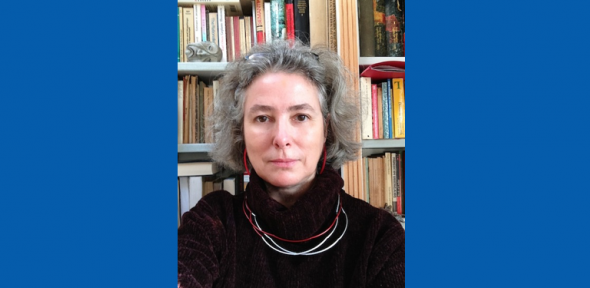
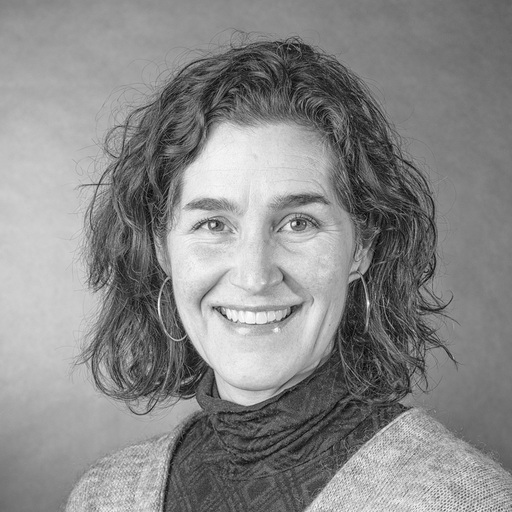
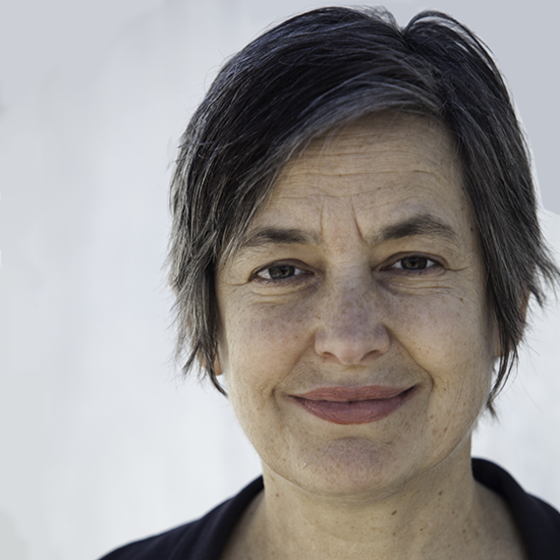
Dr Marion Kant is a Lecturer in the Department of German at the University of Cambridge's Faculty of Modern and Medieval Languages and Linguistics. Her work bridges musicology and dance history, focusing on body politics, the history and aesthetics of performance (theatre, opera, dance, ballet), German-Jewish relations, Nazi ideology, and anti-fascist exile. Her research explores the intersection of physical culture, nationalism, and avant-garde arts. She is currently editing a six-volume Cultural History of Dance for Bloomsbury, examining German nationalism and movement concepts from the 19th and 20th centuries. Her publications span German physical cultures, nationalist ideologies, and the role of dance in exile communities. Key Research Themes: Body aesthetics, German-Jewish assimilation, Nazi cultural policies, avant-garde movements, and transnational exile networks. Notable Projects: Analysis of Nazi-era dance policies, documentation of anti-fascist artists in Los Angeles, and historical studies of German physical cultures.
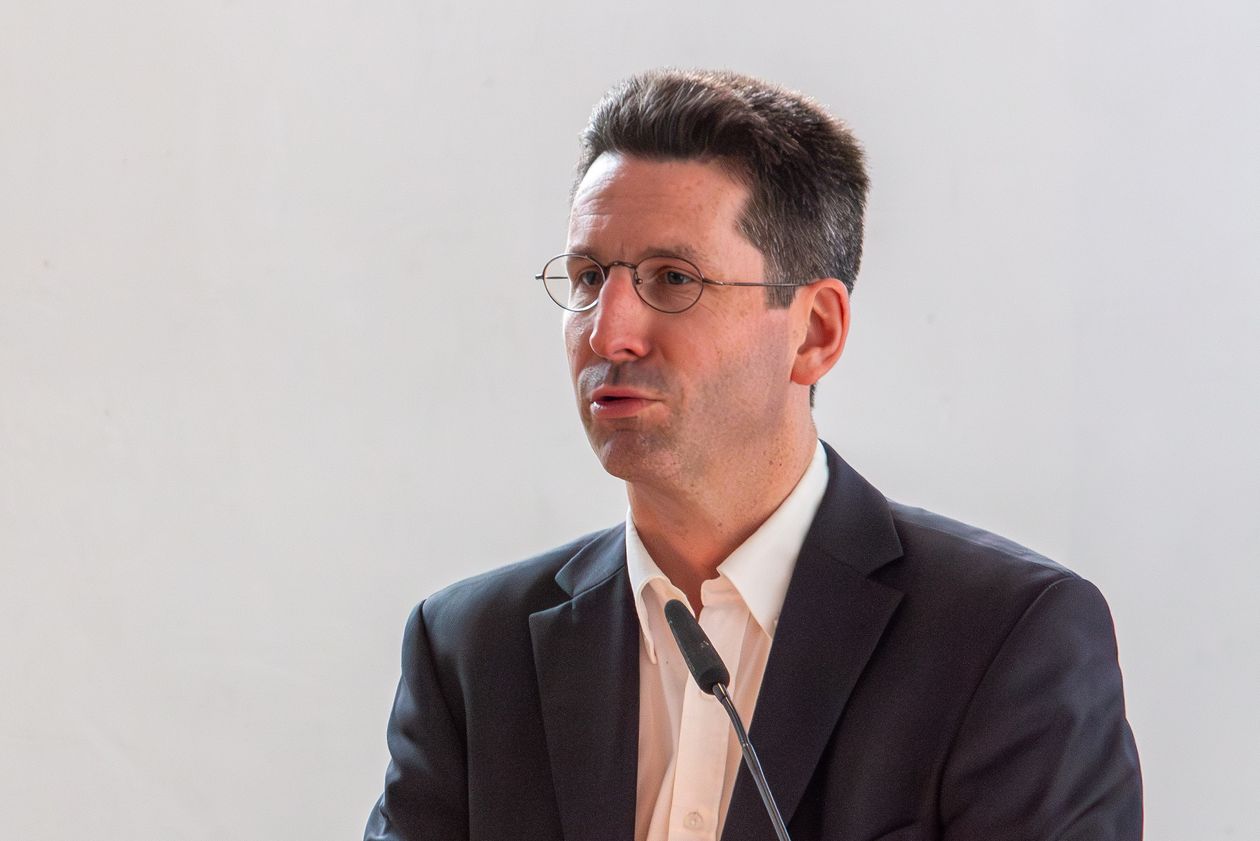
Dr. Sam Ferguson is a Senior Lecturer at the School of Computer Science, University of Technology Sydney (UTS), with a multidisciplinary background in music performance, cognitive science, and psycho-acoustics. His research explores the intersection of sound, music, and human experience through creative coding, machine learning, and interactive systems. Key Research Areas: Sound and Music Computing, Human-Computer Interaction, Creative Coding, Cognitive Science, Installation Art, and Acoustics. Current Projects: ARC Linkage project on creative coding and multiplicitous media; industry collaborations on IoT-based audiovisual systems. Recent Publications: Focus on spatial audio complexity, gestural interaction with networked sound, music emotion recognition frameworks, and robotic performance through genre-based cultural platforms. Leadership Roles: Director of Teaching & Learning Engagement; former Deputy Head of School (Teaching and Learning); active in ACM Creativity and Cognition Steering Committee. Teaching: Courses like Digital Media Studio , Prototyping Physical Interaction , and Data Processing using R within UTS's interdisciplinary Software Development Studio.
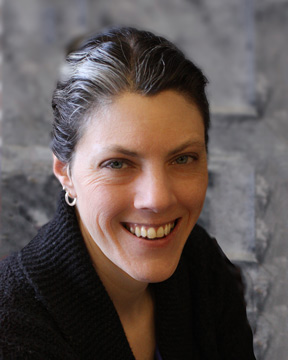
Laurie Kincman is an Associate Professor and Chair of the Department of Theatre & Dance at the University of Wisconsin-La Crosse. She specializes in Stage Management, Arts Administration, and Dramaturgy, and serves as the department’s Production Manager. Her roles include overseeing the Stage Management and Arts Administration programs, teaching courses like Dramaturgy and Theatre Management, and advising productions. Education: MFA in Stage Management, University of California-Irvine BA in Drama & Political Science, Dartmouth College Research & Professional Contributions: Kincman authored The Stage Manager's Toolkit (4th ed., 2024), a foundational text for stage management education. Her work emphasizes communication techniques, digital tools, and ethical practices in theatre production. She has professional credits with institutions like the Old Globe Theatre and Opera Pacific. Recent Contributions: Led productions such as Cabaret (2025) and What the Constitution Means to Me (2024). Presented on legal and creative topics, including copyright in the arts and documentary drama. Affiliations: Member of the United States Institute for Theatre Technology, Stage Managers Association, and Literary Managers and Dramaturgs of the Americas.
Prof. Katharina Thoma is a renowned opera director currently serving as Head of the Opera School at the University of Music Würzburg . She also holds the positions of Deputy Chair of the Music Academy and Dean of Studies . With a career spanning major European opera houses including the Royal Opera House Covent Garden and Glyndebourne Festival, she specializes in blending historical accuracy with modern theatrical innovation. Studied piano at Lübeck University of Music Resident director at Dortmund Opera (2011-2014) Visiting professor at Graz University of Music (2018) Freelance director since 2008 Katharina Thoma's research and practice focus on opera stage direction , scenic training for singers , and historical opera interpretation . Her work spans from Baroque masterpieces to contemporary political operas, emphasizing: Contextual authenticity in period-specific productions Modern reinterpretation of classical works Interdisciplinary approaches to staging Integration of visual and musical elements Training of next-generation opera performers Exploration of war-related themes in opera Notable productions include: 2024: Johann Strauss' The Bat (University of Music Würzburg) 2023: De Falla's El retablo de Maese Pedro 2022: Britten's The Rape of Lucretia 2019: Schönberg's Pierrot lunaire 2007: European Opera Directing Competition Finalist Her artistic contributions have been recognized with: Second Prize at the European Opera Directing Competition 'Camerata Nuova' (2007) Katharina Thoma actively mentors young singers and develops innovative opera productions at the University of Music Würzburg's Opera School. Her recent work includes: Wagner operas debut (2019/20 season) Collaboration with composers like Richard Jones and Christof Loy Participation in renowned festivals (Munich Biennale, Glyndebourne) The Opera School under her leadership focuses on comprehensive training combining: Historical performance practices Contemporary staging techniques Technical vocal training Interdisciplinary collaboration
Professor Scott Palmer is a distinguished academic at the University of Leeds, serving as Professor of Light and Performance within the School of Performance and Cultural Industries (Faculty of Arts, Humanities and Cultures). With over 30 years of teaching and management experience in Higher Education, he was a founder member of the School in 2001 and has held numerous senior management roles including Interim Head of School, Director of Student Education (2019-2022), Director of Enterprise and Knowledge Transfer, and Programme Manager for BA (Hons) Performance Design for over a decade. In 2017-18, he was appointed to an Excellence and Innovation Fellowship at the Leeds Institute for Teaching Excellence & Innovation. PhD (Leeds) - Light, Scenography and the Choreography of Space Cert. Education (Manchester) BA Hons. Drama (Wales) Professor Palmer is a leading international advocate for scenography as an intellectual discipline. His research focuses on light, darkness and atmosphere in performance, designing for audience experience, and since 2017, the field of XR (Extended Reality). His influential monograph Light: Readings in Theatre Practice (Palgrave Macmillan, 2013) significantly contributed to establishing scenography as a scholarly field, exploring how light has influenced staging practices throughout history. He has co-edited major works including Scenography Expanded (Bloomsbury 2017) and the groundbreaking Contemporary Performance Lighting (2023), the first critical anthology focused specifically on performance lighting. His recent publications reveal evolving research trends from historical analyses of light in theatre to contemporary explorations of XR, immersive environments, and audience experience. Keywords across his work consistently emphasize scenography, audience experience, light design, and the integration of digital technologies in performance. His sub-field specializations span historical lighting techniques, immersive theatre practices, site-specific performance, 360-degree environments, and the theoretical frameworks connecting technological innovation with theatrical expression. Excellence and Innovation Fellowship at the Leeds Institute for Teaching Excellence & Innovation (2017-18) Research impact highlighted by AHRC as an exemplar case study Contributions to BBC Radio 3's Illuminating the Stage (broadcast December 25, 2017) Professor Palmer has supervised numerous PhD candidates and led collaborative student projects resulting in public performances including Pandora's Box (2009), Dream/Play (2010), Just Before Dawn (2011), Into the Dark (2012), Blood Wedding (2013), The Dreaming (2015), The Waiting Room (2017), and Within This House (2018). His research has been supported by significant grants including the AHRC-funded Projecting Performance (2006-08), UKRI-funded Surround Stories (XR Stories), and AHRC-funded Bridging the Gaps exploring Mixed Reality Performance of Chinese Opera. He plays an active role in international scholarly communities as co-convenor of the IFTR Scenography Working Group (2013-16), inaugural member of the TaPRA Scenography Working Group, and contributor to OISTAT Education and History and Theory Commissions. Professor Palmer is a member of the PLACE, Practice as Research, and Participation Research Groups at Leeds, and was co-instigator of the Leeds-based Performing Light Network. His SignalSpace web resource, developed with colleague Maria Kapsali, explores digital creativity and mobile phone applications in performance contexts. He regularly presents research outcomes at international conferences including IFTR, TaPRA, ICIDS, and ZipScene, demonstrating his commitment to advancing both theoretical understanding and practical applications of performance design.
Andrew Cooper-James is a Senior Lecturer in Creative Film, TV & Digital Media Production at the University of Northampton, School of Arts. With over 30 years of experience as an independent filmmaker, he specializes in production design, performance, and sound design across film, television, and live art. He has been teaching for 17 years and holds a Fellowship from the Higher Education Academy. Research Interests: His creative and academic work focuses on interdisciplinary practices, particularly in screendance, collaborative art, and digital media. He explores the integration of performance, sound, and visual storytelling in both educational and artistic contexts. Publications and Conferences: Andrew has published in the International Screendance Journal and presented at GLAD and NAHEMI conferences. His recent work reflects trends in experiential learning, community engagement, and the fusion of live art with moving image. Fellowship from the Higher Education Academy Teaching and Creative Practice: He leads hands-on modules including Final Major Project, Sound for Screen, and Community Impact. His artistic projects have been supported by major institutions such as Arts Council England, The Royal Opera House, and The South Bank Centre. He mentors students in creative production and emphasizes practical, student-led learning. Labs and Creative Teams: While no formal lab is mentioned, Andrew collaborates with interdisciplinary teams in live art and film, often working with dancers, composers, and visual artists on hybrid projects supported by national and international arts organizations.
Dr. hab. Klaudia Carlos-Machej is a Professor and has served as Dean of the Faculty of Dance at the Chopin Academy of Music in Warsaw (UMFC) since 2019. She holds dual doctorates as Doctor of Humanities and Doctor of Musical Arts, and is an accomplished dancer and choreographer specializing in Polish national dances. Her academic foundation includes a degree in ballet pedagogy from UMFC (1995), postgraduate studies in journalism at Adam Mickiewicz University in Poznań (2001), and Postgraduate Studies in Cultural Management at the Polish Academy of Sciences (2017). As a lecturer at UMFC since 1995, she served as Vice-Dean of the Faculty of Choral Conducting, Music Education, Church Music, Rhythm and Dance from 2012-2019 before becoming Dean. Professor Carlos-Machej's research focuses on dance education, Polish national dances, and the historical relationship between music and dance. Her work explores dance as cultural heritage, particularly during Poland's partition era, examining how traditional forms like polonaise, krakowiak, kujawiak, and oberek functioned as expressions of national identity. She has documented the influence of Russian classical dance traditions on Polish ballet education and investigated the philosophical dimensions of dance in antiquity. Her publications from 2014-2024 demonstrate consistent scholarly output, with her most recent work examining the relationship between dance and music during Poland's loss of statehood (1795-1918). She has also edited significant dance publications including comprehensive guides to Polish dances. As an educator and administrator, she has been conceptually responsible for the Polish Dance Forum since 2014, an important periodic event at UMFC that serves as a platform for dance scholarship and performance in Poland. Her professional background includes extensive performance experience as a dancer with the T. Sygietyński State Folk Song and Dance Ensemble 'Mazowsze' (1990-1995) and as a mime dancer and dance teacher at the Warsaw Chamber Opera (1996-2011), where she performed solo parts in numerous productions including works by Mozart, Telemann, Monteverdi, and Tchaikovsky. Additionally, Professor Carlos-Machej has maintained a parallel career in media since 1994 as a journalist and TV presenter across multiple Polish networks, creating programs that promote dance and music, including the Baletownik series on TVP Kultura featuring prominent Polish dancers.
Eftychia Papanikolaou is an Associate Professor of Musicology and Musicology Coordinator at Bowling Green State University (BGSU) within the College of Musical Arts. She holds a B.A. in English Philology from the University of Athens, Music Theory degrees from the National Conservatory of Athens, and M.A. and Ph.D. in Historical Musicology from Boston University. Her research focuses on the interplay between music, religion, politics, and choreomusical analysis in 19th-century music, as well as contemporary ballet and film/TV soundtracks. Dr. Papanikolaou has authored/co-edited books including Sacred and Secular Intersections in Music of the Long Nineteenth Century (Lexington, 2022) and a forthcoming monograph on choreomusical perspectives in contemporary ballet. She has presented at international conferences, contributed hundreds of program/liner notes, and delivered pre-concert talks for institutions like the Toledo Opera and Toledo Symphony Orchestra. Her academic service includes roles such as AMS Council Member, Program Committee Chair for the American Musicological Society (AMS), and Executive Secretary of the Society for Christian Scholarship in Music. Teaching roles include courses on Western Art Music, Opera Literature, and Graduate Seminars on Beethoven and Exoticism. Education: B.A. English Philology (University of Athens) Music Theory (National Conservatory of Athens) M.A./Ph.D. Historical Musicology (Boston University) Awards: NEH Summer Seminar Fellowship (Opera Studies) BGSU’s Distinguished Thesis Award (2023) Technology Innovations Course Grant (Ohio Learning Network) Advising/Grants: Supervised graduate theses recognized at BGSU, secured teaching innovation grants focusing on digital humanities. Labs/Teams: Active in interdisciplinary collaborations with dance scholars and film institutions.
Brandon McShaffrey serves as Assistant Professor of Vocal Arts at Temple University's Boyer College of Music and Dance, while maintaining an active professional career as Producing Director of Mauckingbird Theatre Company and freelance Director/Choreographer in Philadelphia. Educational background: BFA in Musical Theater Performance, Roosevelt University's Chicago Conservatory of Performing Arts MFA in Directing, Temple University His expertise spans Theater Directing, Choreography, and Vocal Performance, with extensive local engagement at Drexel University, Villanova University, Hedgerow Theater, Act II Playhouse, and BCKSEET Productions. Though no specific awards are documented, his dual academic-professional trajectory demonstrates significant contributions to performing arts education and production within Philadelphia's cultural ecosystem.
Jörg Rothkamm is a Professor at the University of Tübingen's Musicological Institute, with a focus on music-choreography relationships, 20th-century composers, and post-war musicological reconstruction. His roles include Deputy Director (2013–2017), member of editorial boards, and organizer of international symposia. Key Research Areas: Ballet music history, Mahler studies, post-war musicology, film music dramaturgy, gender in composition, genre-specific composition techniques Academic Collaborations: Co-edited Mahler-Gropius correspondence, led DFG projects on academic continuity, and VolkswagenStiftung ballet-choreography research Recent publications analyze Parsifal staging (2023), Russian ballet (2016), and Ligeti's polyrhythmic innovations. Articles emphasize interdisciplinary approaches, historical continuity, and genre-specific compositional strategies in ballet and opera. Notable Awards: Nominations for 'Best Book of the Year' (2024), Hermann-Abert-Preis (2012), Karl H. Ditze-Preis (2002) Students: Supervises/has supervised 12 PhD/Master's candidates, including Fabian Kurze and Angelo Pinto Current projects include the DFG-funded Alma Mahler-Walter Gropius annotated edition and digital teaching material development (BMBF). He leads a team of 6 postdocs, 7 doctoral candidates, and 4 research assistants.
Torunn Helene Robstad is an Associate Professor and Programme Coordinator for the Master's Programme in Dance at the Academy of Dance, Oslo National Academy of the Arts. Educated at the Norwegian National Opera Ballet School and Alvin Ailey American Dance Center, she specializes in communication/interpretation and production/performance work. Teaches in the Master's Programme in Dance Associated with Carte Blanche Dance Company and Cullberg Ballet Worked with international choreographers and institutional theatres in Oslo Rehearsal director at the Norwegian Opera and Ballet Research Interests focus on dance improvisation, artistic practice, and performance dynamics. Her work explores embodied cognition, choreographic innovation, and interdisciplinary approaches to movement and interpretation. Recent publications address improvisation, gesture documentation, and aesthetic experimentation. Scientific Contributions include collaborations in artistic research, with notable 2025 lecture on dance improvisation and 2024 works examining gestural frameworks and experimental performance. Earlier projects (2016-2019) investigated movement analysis, choreographic expression, and theatrical experimentation.
Maren Butte is a Professor of Theater and Performance Studies at the Institute for Media and Cultural Studies, Faculty of Arts and Humanities, Heinrich Heine University Düsseldorf, where she has taught and researched since 2016. Previously, she held research positions at the University of Bayreuth (2015), Freie University of Berlin (2011-2014), and University of Basel (2006-2009). Professor Butte completed her doctorate on audiovisual aesthetics of melodrama in 2014. Her academic journey demonstrates consistent interdisciplinary engagement with performance, media, and cultural studies, with particular attention to intersections between artistic practices and theoretical frameworks. She holds the title of apl. Professor (außerplanmäßiger Professor), a permanent academic position in the German system that sits outside the standard salary scale. Her research focuses on performative practices between the arts and between art and everyday (media) life, body techniques and digital technologies. Her teaching emphasizes theater history, theory, and aesthetics at the intersection with media cultural studies: communicative and affective processes (staging, representation, performance), body techniques and knowledge, ritual theories (theater anthropology and transculturality), choreography, gender and fashion studies, intermediality, and transmodal perception (sensory studies). Her scholarly output reveals evolving engagement with the ephemeral nature of performance, politics of visibility, and intersection of embodied practices with technological mediation. Recent work shows increasing attention to queer aesthetics, digital materialism, and politics of belonging in contemporary performance. Publications demonstrate sophisticated understanding of how affect operates as a medium in performance art and how artistic practices navigate disciplinary boundaries. Kuratoriumsmitglied: iDas (International Dance Artist Service NRW) Member: Gesellschaft für Theaterwissenschaft (GTW) Member: Gesellschaft für Medienwissenschaft (GfM) Member: International Federation for Theatre Research Reviewer for: DFG, DAAD, Tanzrecherche NRW Professor Butte regularly presents at international conferences and has delivered numerous invited lectures on topics including techno-aisthesis, contact zones of the body, digital materialism, and post-melodramatic experience. Her editorial work includes forthcoming volumes on choreographic procedures and obscene scenes in performative arts.
Elizabeth Jochum is an Associate Professor at the Department of Communication and Psychology, Aalborg University, within the Faculty of Social Sciences and Humanities. She heads the Research Laboratory for Art and Technology (RELATE) and coordinates projects like the European ABRA initiative on Artificial Biology, Robotics, and Art, and the ImprovAIze project linking machine learning with dance and wearables. Her research bridges visual/performing arts with robotics and assistive technologies to foster human-centered, value-sensitive designs addressing societal needs. Education: PhD in Theatre (University of Colorado Boulder, 2013), MA in Theatre (2008), BA in Theatre and Italian (Wellesley College, 2001). Research focuses on transdisciplinary collaboration in human-robot interaction, health, and engineering. Notable projects include CRERoB (Center for Rehabilitation Robotics) and AHH (Arts, Health, and Humanities cluster). She also serves as a Part-Time Lecturer at IT University of Copenhagen (2016). Awards: Recognized among the Top 50 Women in Robotics by Robohub (2021). Key contributions span creative robotics in theatre, socially assistive robots for mental health, and AI-driven dance improvisation. Administrative roles include Semester Coordinator for Art and Technology, Study Board Member for KUNST (Art, Health, and Technology), and coordinator for Erasmus Mundus Joint Masters in Media Arts Cultures. Her work emphasizes ethical, inclusive, and artistic approaches to technology.
Sarah Drury is an Associate Professor and Director of Graduate Studies at Temple University’s School of Theater, Film and Media Arts (TFMA), specializing in interactive media art, performance, and digital installations. She holds a BA from Barnard College and advanced degrees from NYU’s Tisch School of the Arts and International Center of Photography. Her research explores narrative, play, and emergent subjects through video, sound, and sensing technologies. Notable works include Mechanics of Place (collaborative AR platform), Violet Fire (Tesla-themed multimedia opera), and The Walking Project (disability-focused sensor-based performances). Her work has been showcased globally at venues like BAM’s Next Wave Festival, ISEA International, and the Brooklyn Museum. Grants: Two NEA Fellowships Media Platforms: PBS broadcasts, gallery installations, and performance art Drury’s interdisciplinary projects bridge theater, technology, and public engagement, emphasizing interaction between audiences and digital mediums. Her academic roles include prior faculty positions at NYU’s Interactive Telecommunications Program and leadership in TFMA’s graduate programs.
Grace Edgar is a faculty member at St. Mary's University in San Antonio, Texas, serving as the Director of Theatre within the Department of Music and Theatre Arts. She holds a Doctorate of Musical Arts (D.M.A.) from the University of Houston and has extensive professional experience in theatre direction, music direction, and intimacy choreography. D.M.A., University of Houston G.P.D., Longy School of Music M.A., Western Washington University B.M., Centenary College of Louisiana Her research interests blend theatre pedagogy, musical interpretation, and interdisciplinary topics such as motherhood in performing arts academia and consent-based practices in theatre. Recent work explores the application of Viewpoints methodology to collegiate opera and musical theatre, as well as gender dynamics in academic and professional theatre settings. Selected publications and presentations highlight her focus on collaborative techniques, academic leadership, and the intersection of personal identity with theatre education. Grace is also an advocate for consent-based cultures in performance spaces and chairs the Women in Theatre Committee at the Southeastern Theatre Conference.