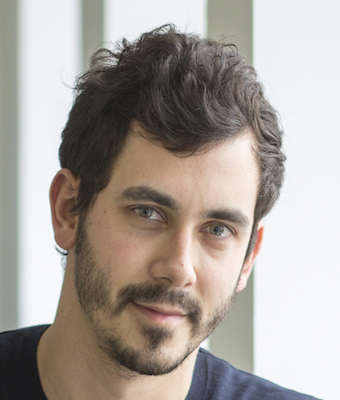
Angelos Konstantinidis is an Educational Advisor at the University of Groningen , affiliated with the Team Educational Design and Development (TEDD) and the Center for Information Technology . He serves as an Embedded Expert at the Faculty of Science and Engineering and the Faculty of Religion, Culture, and Society. Expert in course design, feedback literacy, and open pedagogies Active in Virtual Exchange and student well-being research Coordinator of #ONING (Education Innovation Network) His research focuses on educational innovation , blending pedagogical theory with technological implementation . Recent work examines AI ethics in education, self-regulated learning dashboards, and universal course design principles from top universities. His publications highlight student well-being and interactive feedback systems in digital learning environments. Key trends in his scholarship include technology-enhanced learning , inclusive educational design , and sustainability integration in curricula. He contributes to open education initiatives (OER) and has developed frameworks for distance learning pedagogy. Active in institutional education governance, Konstantinidis serves on the Board of Examiners for multiple programs and participates in the Education Festival Committee . He collaborates across disciplines to advance educational technology practices.
Anqi Liu (Angie) is an Assistant Professor in the Department of Computer Science at the Whiting School of Engineering, Johns Hopkins University. She is affiliated with the Data Science and AI Institute, Mathematical Institute for Data Science (MINDS), and Institute for Assured Autonomy (IAA). Her research focuses on developing principled machine learning algorithms for reliable, trustworthy, and human-compatible AI systems in high-stakes applications. PhD in Computer Science from University of Illinois Chicago Postdoctoral Research at Caltech's Department of Computing and Mathematical Sciences Her work emphasizes robustness to changing data environments, uncertainty quantification, and human-AI interaction. Key methodologies include distributionally robust learning, active learning, safe exploration, fair machine learning, and conformal prediction. Applications span healthcare (NIA/NIH-funded), robotics, and computational social science. Amazon Research Award Johns Hopkins + Amazon Initiative for AI Faculty Research Johns Hopkins Discovery Award Institute for Assured Autonomy Challenge Grant She advises PhD candidates in AI safety and fairness, with students co-advised by faculty in Human-Robot Interaction and Computational Linguistics. Collaborations include Center for Language and Speech Processing (CLSP) and Laboratory for Computational Sensing and Robotics (LCSR).
Efi Nisiforou is an Assistant Professor in Distance Education at the School of Education , University of Nicosia. Her work bridges human-computer interaction (HCI) , technology-enhanced learning (TEL) , and instructional design , with a focus on personalized learning , educational neuroscience , and integrating new technologies across educational levels. Education: PhD in Distance Education (Cyprus University of Technology, 2016) Master’s in Metacognition and Learning Styles (University of Manchester, 2009) Bachelor’s in Education (National and Kapodistrian University of Athens, 2008) Her research spans virtual/augmented reality , AI in education , digital literacy , and gamification , often analyzing cognitive abilities like field dependence-independence through eye tracking and EEG. Recent publications highlight global perspectives on ChatGPT adoption and open schooling frameworks. Scientific Achievements: Recipient of EU research funding Active in 10 projects (2017–2024), including DRONE (digital literacy training) and VRinHE (virtual reality integration) Over 23 research outputs with 8 h-index citations
Sioux McKenna is Professor of Higher Education Research at Rhodes University in South Africa. With over 25 years of academic leadership, she has served as Director of the Centre for Postgraduate Studies (2017-2024) and Higher Education Studies PhD Coordinator (2010-2018), following earlier roles at the University of KwaZulu-Natal and Durban University of Technology. PhD from Rhodes University (2004) MA in Linguistics from Stellenbosch University (1995) BA from University of KwaZulu-Natal (1988) Her research critically examines: Knowledge legitimation processes in academia Equity in postgraduate education Neoliberal transformations in universities Academic literacy development Doctoral supervision practices AI's impact on education Recent publications reveal consistent focus on neoliberalism in higher education (2022-2025) and generative AI implications (2024-2025), alongside longitudinal studies on doctoral education (2016-2024) and international collaboration dynamics (2020-2024). Scientific recognition includes: 2023: Book Award for 'Understanding higher education' 2023: NRF B rating for research excellence As architect of three national/international postgraduate development programs (2014-present), she has shaped: Supervision frameworks (NRF-funded) Writing group methodologies Collaborative doctoral education models Academic integrity policies Current projects include: Social Justice & Quality in Higher Education (British Council/DHET 2020-2024) Creating Postgraduate Collaborations (European Commission 2020-2024) Strengthening Postgraduate Supervision (DHET 2015-2017)
Neele Engelmann is a postdoctoral researcher at the Max Planck Institute for Human Development , working within the Center for Humans and Machines in Berlin, Germany. She obtained her Dr. rer. nat. in Psychology (2022), M.Sc. (2017), and B.Sc. (2014) from Georg-August-University Göttingen . Her research bridges psychology, philosophy, and law, focusing on causal and moral reasoning, human-AI interaction, and computational modeling. Ph.D. Psychology, Georg-August-University Göttingen (2022) M.Sc. Psychology, Georg-August-University Göttingen (2017) B.Sc. Psychology, Georg-August-University Göttingen (2014) Her research explores causal reasoning in moral judgment , including how statistical and prescriptive abnormality affect causal selection, and how drift diffusion models can explain rule enforcement processes. Recent studies examine human-AI interaction dynamics, particularly how framing (not transparency) reduces cheating in algorithmic delegation, and the computational modeling of moral decision-making in multi-outcome scenarios. Key publication trends include: moral psychology analyses of lying vs. misleading, experimental jurisprudence studies on legal-moral interface, and cognitive modeling of judgment mechanisms. She co-teaches statistics courses for psychology students using Excel and R, and has supervised numerous Bachelor's and Master's projects in causal/moral reasoning and experimental philosophy. Engelmann contributes to the Center for Humans and Machines , conducting interdisciplinary research that connects cognitive psychology with computational modeling and legal reasoning frameworks . Her work spans empirical investigations, theoretical modeling, and methodological innovations like hierarchical drift diffusion analysis.
María Dolores Pérez Godoy is a full-time Professor in the Department of Computer Science at the University of Jaén. She contributes to the Andalusian Interuniversity Institute for Data Science and Computational Intelligence and leads the Intelligent Systems and Data Mining research group. PhD in Computer Science (2010) - University of Jaén Thesis: Hybrid cooperative-competitive evolutionary methods for radial basis function networks Research Focus: Computational Intelligence, Time Series Forecasting, Data Mining, Evolutionary Algorithms, Neural Networks, and Big Data Applications. Her work bridges theoretical advancements in RBFN design with practical implementations in agriculture (olive oil price forecasting) and resource-constrained systems. Recent Article Trends: 2025 work addresses multilabel imbalance with diffusion models. 2024 contributions include tools like Nets4Learning platform, DESReg library, and data governance frameworks. Earlier studies explore transformer models, clustering for crop mapping, and data stream classification. Technical Contributions: Developer of GRNN multi-series forecasting, data stream neural network implementations, and MEFASD-BD multi-objective evolutionary algorithms.
Professor Steven Longmore is a faculty member at the Astrophysics Research Institute (ARI), Liverpool John Moores University, where he leads the Astro-Ecology group. His research bridges astrophysics and ecological applications. Current affiliation: Liverpool John Moores University Academic rank: Professor Research focus: Star formation, galactic evolution, and ecological technology His astrophysical research explores cosmic gas cloud dynamics, star system formation, and galactic evolution. He innovatively applies astronomical techniques to conservation challenges like endangered species protection, search-and-rescue optimization, and peat fire mitigation. Recent publications highlight his leadership in Central Molecular Zone studies using ALMA and JCMT surveys, alongside AI-driven ecological monitoring systems. Key themes include magnetic field alignment, spiral arm effects on star formation, and drone-based thermal imaging for fire detection. The Astro-Ecology group under his leadership demonstrates interdisciplinary approaches to sustainable development goals (Life on Land, Climate Action, Affordable Energy). Collaborations span institutions like Harvard-Smithsonian Center for Astrophysics and European Southern Observatory.
Juan Domingo Aguilar Peña is a Full Professor in the Department of Electronic and Automatic Engineering at the University of Jaén. His research focuses on photovoltaic solar energy systems and engineering education innovation. He has directed academic units at both the University of Jaén and the University of Granada. PhD in Electronic Engineering (2011) Member of research groups TEP-101 and TEP-985 72 conference contributions and 75 total publications Founding member and former President of the non-profit 'Technology, Learning and Teaching of Electronics' His work spans technical research in photovoltaic systems and pedagogical development, including open educational resources and personal learning environments. He has contributed to JCR-indexed journals and conference proceedings, with over 600 Google Scholar citations. Scientific recognitions include: Industrial Technique Award (1987) Second Citation Prize (2009) He has developed educational tools like PV Excel Jaén 3.0 and promoted entrepreneurship through digital platforms and social media integration in engineering education.
Dr. Isaiah J. Lim serves as an Assistant Professor in the Department of Physics at Eastern Illinois University (EIU), specializing in high-pressure physics and materials science. His research leverages diamond anvil cells (DACs) to explore quantum phenomena under extreme conditions, with collaborations extending to national facilities like Argonne National Laboratory. Dr. Lim's educational background includes: PhD in Experimental Condensed Matter Physics, Washington University in St. Louis (2015) MS in Physics, Western Illinois University (2009) MS in Theoretical Solid-State Physics, Dankook University (2003) BS in Physics, Dankook University (2001) His research focuses on pressure-driven phenomena in quantum materials, particularly superconductivity and magnetism under high-pressure conditions. Utilizing techniques like confocal Raman microscopy and synchrotron X-ray diffraction, he investigates how extreme pressures alter interatomic distances to induce novel material properties, with applications for ambient-condition material design. Analysis of his 2022-2025 publications reveals a concentrated effort on high-pressure superconductivity in low-Z materials , especially diborides and iridates. His work demonstrates how pressure and chemical substitution (e.g., niobium doping) can stabilize metastable phases, enhance critical temperatures, and manipulate electronic structures through defect engineering. No specific scientific awards were documented in the provided materials. Dr. Lim teaches core physics courses including General Physics I/II and Experimental Physics I/II. His research program features open-science initiatives like YouTube tutorials for high-pressure electrical resistivity setups, though no explicit grant details were specified. He maintains active collaborations with Washington State University and the University of Florida. His laboratory at EIU centers on diamond anvil cell experiments, supported by partnerships with synchrotron facilities at Argonne National Laboratory. Current work emphasizes pressure-induced quantum states in hydrogen-rich materials and metastable superconductivity mechanisms.
Stoo Sepp is a Lecturer in Educational Technology and Learning Design at the University of British Columbia's Master of Educational Technology (MET) program. With experience since 2018, he specializes in integrating cognitive science principles into digital education frameworks. University of British Columbia Master of Educational Technology His research bridges cognitive science and educational technology , focusing on: working memory optimization , self-regulated learning , and gesture-based interaction in digital environments. Recent work explores educational data privacy and decentralized learning platforms . Key article trends span: 2019-2020: Cognitive load and movement integration 2022: Open educational resources evolution 2023-2025: Gesture analytics and translingual assessment tools Professional Networks : Active in #EdTech communities Contributor to #OpenEd movements Collaborator in cognitive load research
Dr. William Diehl is an Associate Teaching Professor of Education at Pennsylvania State University's College of Education, where he serves in the Department of Learning and Performance Systems. He holds significant administrative roles as Coordinator of Online Graduate Programs and Professor in Charge for the Lifelong Learning and Adult Education (LLAED) program. His academic credentials include a Ph.D. in Adult Education with a focus on Distance Education from Penn State, an undergraduate degree in Elementary Education, and international teaching experience via Durham University in the United Kingdom. Dr. Diehl's research explores: Historical evolution of distance and online education Intercultural communication in virtual learning environments Competency frameworks for online teaching Open educational resource development Pedagogical applications of emerging technologies His publications consistently address transformational shifts in digital education, examining technological innovations (AI, Web 3.0), systemic barriers to change, and future-oriented pedagogical strategies. As Director of The American Center for the Study of Distance Education and founder of the International Museum of Distance Education and Technology, he leads initiatives preserving historical knowledge while advancing contemporary research. He serves as Associate Editor for The American Journal of Distance Education and has co-edited the comprehensive Handbook of Distance Education (4th Edition).
Julien Mille is an Associate Professor at INSA Centre Val de Loire and Ecole Polytechnique de l'Université de Tours , France. He conducts research with the RFAI team (Reconnaissance des Formes et Analyse d'Images) at the Laboratoire d'Informatique Fondamentale et Appliquée in Tours. Previously, he was an associate professor at Université Claude Bernard Lyon 1 (2009-2015), affiliated with the LIRIS laboratory and Imagine team . Key research areas: Pattern recognition, image analysis, active contours/surfaces, optimal transport, human activity recognition Technical contributions: Developed open-source tools for image labeling ( PixelLabeling ), DeepFlowCUDA optimization Scientific contributions span computer vision, biomedical imaging, and plant science applications. Notable work includes: Optimal transport methods for image restoration Hierarchical skeletonization for shape matching Pose-driven attention mechanisms for video analysis 3D segmentation of medical images His research has been published in leading journals like SIAM Journal on Imaging Sciences , International Journal of Computer Vision , and Computer Vision and Image Understanding , along with major conferences including CVPR , ECCV , and ICIP .
Alfredo García Hernandez Diaz is a Professor at the Department of Economics, Quantitative Methods and Economic History in the Universidad Pablo de Olavide , Seville, Spain. His research focuses on Quantitative Methods for Business and Economics , with a strong emphasis on Operations Research , Multiobjective Optimization , and Computer Science applications. He has extensive collaboration networks and contributes to zbMATH Open as an author and reviewer. PhD in Mathematics from the University of Seville (2002) Specializes in Weighted Composition Operators and Hardy Spaces His work spans theoretical and applied domains, including Queueing Systems , Vehicle Routing , and Heuristic Algorithms . He has co-authored over 20 publications and contributed to software packages in Multiobjective Optimization . His email is agarher@upo.es .
Aurélien Bellet is a senior researcher (directeur de recherche) at Inria, France, affiliated with the PreMeDICaL Team (Precision Medicine by Data Integration and Causal Learning), an Inria/Inserm research group based in Montpellier, and an associate member of the Magnet Team (MAchine learninG in information NETworks) based in Lille. His research focuses on the theory and algorithms of machine learning, particularly designing large-scale learning algorithms that balance statistical performance with computational complexity, communication efficiency, privacy, and fairness. His key research areas include distributed/federated/decentralized learning algorithms, privacy-preserving machine learning, representation learning, distance metric learning, optimization for machine learning, graph-based methods, statistical learning theory, and fairness in machine learning, with applications to NLP, speech recognition, and health. Bellet has published extensively in top machine learning and security conferences including ICML, ICLR, CCS, AISTATS, and NeurIPS. His recent work (2024-2025) focuses on privacy amplification in decentralized learning, federated causal inference, privacy attacks in decentralized systems, and improved theoretical guarantees for decentralized optimization algorithms. He is actively involved in promoting public awareness of AI, privacy, and transparency issues, having contributed to media outlets like La Croix, Libération, and participated in events organized by CNIL (French Data Protection Authority). Bellet has developed several open-source libraries including declearn for federated learning, FLamby for healthcare federated learning benchmarks, and metric-learn for metric learning algorithms, all under permissive open-source licenses. He has taught courses on privacy-preserving machine learning at the University of Lille and Ecole Centrale de Lille, and previously taught advanced machine learning courses at Télécom Paris.
Hao Ni is Professor of Mathematics at University College London (UCL), where she leads the UCL Rough Path Theory and Machine Learning Group and serves as co-director of the EPSRC Centre for Doctoral Training in Collaborative Computational Modelling at the Interface (CCMI). As a co-investigator of the EPSRC Program grant on 'Unparameterised multi-modal data, high order signatures, and the mathematics of data science,' she bridges theoretical mathematics with practical machine learning applications. Previously, she was an Associate Professor at UCL (2016-2022) and held postdoctoral positions at Oxford-Man Institute of Quantitative Finance and Brown University. DPhil in Mathematics, University of Oxford (2012) MSc in Mathematics, University of Oxford (2009) BSc in Mathematics, Southeast University (2008) Ni's research centers on stochastic analysis and machine learning, with a focus on rough path theory as a mathematical framework for modeling complex multi-modal data streams. She develops high-quality generative models for synthetic time series generation with applications spanning computer vision, healthcare, biology, and quantitative finance. Her work on signature-based methods has produced innovative approaches for skeleton-based action recognition, sepsis prediction, and financial data analysis. The signature of a path, originating from rough path theory, serves as a principled feature for sequential data that often boosts performance when combined with state-of-the-art machine learning methods. Ni's publication record reveals a strong trajectory in developing mathematical foundations for data science, with recent work extending signature methods to Riemannian manifolds, creating novel GAN architectures for time series generation, and applying these techniques to real-world problems in healthcare and finance. Her research increasingly bridges pure mathematics with practical applications, particularly in generative modeling and time series analysis. Turing Fellow at the Alan Turing Institute (2016-2024) Co-investigator of EPSRC Program grant on Unparameterised multi-modal data Member of London Mathematical Society As an academic leader, Ni has secured significant research funding through EPSRC and Turing Institute collaborations. She actively promotes equality, diversity, and inclusion by co-founding the WINDSMATH seminar series (2022), which showcases cutting-edge research by women and non-binary scholars in mathematics and data science with over 750 global subscribers. Her group organizes seminars, workshops, and conferences while developing open-source code repositories for real-world applications. Ni also organizes digital data hackathons focused on trustworthy synthetic time series generation through deepintomlf.ai. Ni leads the UCL Rough Path and Machine Learning Research Group, which develops mathematical and numerical toolsets based on rough path theory to advance machine learning research on analyzing multi-modal complex data. The group's research spans expected signature theory, synthetic time series generation, human-computer interfaces, and molecule learning, with applications in finance, healthcare, and computer vision.