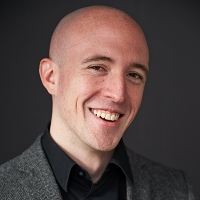
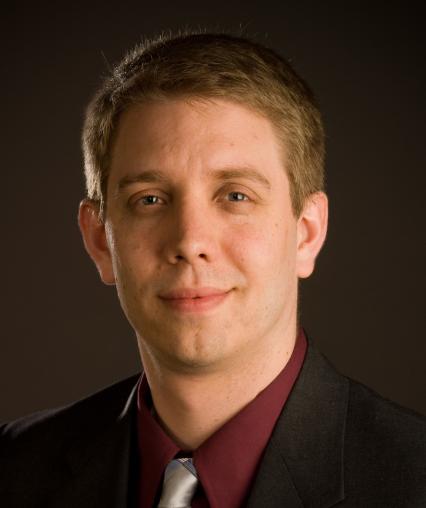
Keenan Crane is the Michael B. Donohue Associate Professor of Computer Science and Robotics at Carnegie Mellon University , with membership in the Center for Nonlinear Analysis and mentorship in the Geometry Collective . His research bridges differential geometry and computer science to develop fundamental algorithms for geometric data processing. Education : BS from University of Illinois at Urbana-Champaign, PhD from Caltech Fellowships : Google PhD Fellow, NSF Mathematical Sciences Postdoctoral Fellow Research focuses on Discrete Differential Geometry , addressing PDE solutions, mesh processing, and geometric modeling through methods like: Walk on Spheres for PDEs Intrinsic Triangulations for robust geometry Repulsive Energy formulations for collision avoidance Recent publications span 2025–2021 , emphasizing grid-free algorithms , anisotropic mesh generation , and differentiable systems . Scientific accolades include Packard Fellowship and NSF CAREER Award . Students include Nicole Feng , Olga Gutan , and Zoë Marschner . During his 2024 sabbatical at Roblox , he does not accept new researchers. Key software contributions include Penrose (math diagram generation) and I♥Mesh (domain-specific language for mesh algorithms).
Jun Yan is an Associate Professor and Concordia University Research Chair in Artificial Intelligence in Cyber Security and Resilience at the Concordia Institute for Information Systems Engineering (Concordia University). His research focuses on cybersecurity, smart grid systems, and AI-driven solutions for energy and communication networks. He supervises graduate students in programs such as Information Systems Security (MASc), Computer Science (MCompSc), and Information and Systems Engineering (PhD). Research Highlights : Cybersecurity of distributed energy systems, AI penetration testing frameworks, and resilient transactive energy markets. Awards : Holds a prestigious university research chair in AI-driven cybersecurity. His work integrates machine learning with domain-specific challenges in smart grids, IoT security, and multi-agent systems. Notable contributions include frameworks for detecting adversarial attacks on power systems, optimizing renewable energy integration, and developing AI tools for penetration testing. His articles reflect a strong emphasis on interdisciplinary solutions blending cybersecurity, energy systems, and advanced computing. Yan’s research also addresses policy and infrastructure challenges in sustainable energy systems, including waste management policy analysis and optimal configuration of hybrid renewable systems. He has pioneered open-source co-simulation platforms like PEMT-CoSim and Quantum-Sim for secure energy trading and quantum communication in grids. He actively engages in grant-funded projects and advises on both academic and applied aspects of cybersecurity and intelligent systems.
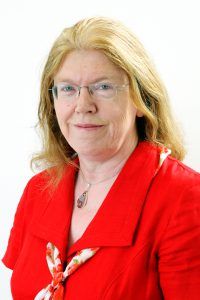
Eileen Scanlon is the Regius Professor of Open Education at the Open University, a title awarded for her groundbreaking contributions to educational technology and science communication. She holds a PhD in cognitive models of physics problem solving and has been affiliated with the University since 1975, working extensively in the Institute of Educational Technology (IET). As Associate Director of Research and Innovation in the IET, she leads strategic research initiatives in technology-enhanced learning (TEL), including directing the openTEL research theme. Her work focuses on bridging formal and informal learning contexts, advancing citizen science, and leveraging digital tools for inclusive education. She has pioneered platforms like nQuire for community-driven inquiry and contributed to influential reports like the Innovating Pedagogy series. Scanlon also holds visiting roles at the University of Edinburgh and previously served at Bletchley Park and the University of California, Berkeley. Her research interests span educational technology, science communication, and open educational resources (OERs), with an emphasis on democratizing access to science. Key achievements include developing frameworks for MOOCs, advancing virtual microscopy in distance learning, and promoting participatory citizen science initiatives. Education: PhD in physics education (1990), Open University Affiliations: Institute of Educational Technology (IET), Moray House School of Education (Edinburgh) Grants: Leadership in openTEL, EC-funded MAZI project, and MASELTOV incidental learning initiatives Labs: Computers and Learning Research Group (CALRG), Centre for Research in Education and Educational Technology (CREET)
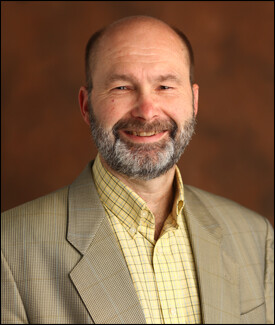
Douglas H Fisher is an Associate Professor of Computer Science and Computer Engineering at Vanderbilt University's School of Engineering. His research focuses on artificial intelligence, particularly machine learning, and computational sustainability. He holds a Ph.D., M.S., and B.S. in Computer Science from the University of California - Irvine. His work bridges AI with societal challenges, emphasizing sustainability, education technology, and cognitive modeling. Notable areas include integrating sustainability into computing curricula, leveraging AI for peer review systems (pReview), and exploring bias mitigation in neural networks. He has contributed to foundational machine learning techniques, such as rule induction for medical data analysis and decision tree optimization. Fisher's research spans interdisciplinary applications: from geospatial water resource modeling to MOOCs' social incentives. His educational contributions include blended learning frameworks and open educational resources advocacy. He has authored over 100 publications across AI, sustainability, and education, reflecting a commitment to both technical innovation and societal impact.
Thembi Mason is a Senior Lecturer in the School of Education at RMIT University, Australia. Her roles include Associate Dean (Education), Senior Advisor in Learning and Teaching, and Program Manager. She specializes in leadership for learning and teaching, digital technologies, and next-generation learning spaces. Her work emphasizes active learning, student agency, and innovative pedagogies. Education Experience: Secondary schools Adult education Vocational education Higher education Research Interests: Focuses on learning and teaching leadership, active learning, online learning strategies, educational technologies, and curriculum design. Her work addresses challenges in contemporary educational systems and promotes student-centered approaches. Research Themes: Her publications explore Associate Deans' roles, leadership in creative arts education, and professional development in next-generation learning spaces. Recent work includes analysis of virtual teaching models and post-COVID teacher training. Advising & Grants: Open to supervising Masters/PhD students in projects like remote teaching during lockdowns and post-pandemic professional learning. Active in national projects on academic development and technology-enabled learning. Labs/Teams: Collaborates through networks like createED to strengthen learning leadership in creative arts institutions.
Dr. Christopher S. Hlas is a Professor of Mathematics Education at the University of Wisconsin-Eau Claire within the College of Arts and Sciences Department of Mathematics. With a doctorate from the University of Iowa, he specializes in mathematics pedagogy, technology integration, and cross-disciplinary connections between math and foreign languages. Ph.D. in Mathematics Education (University of Iowa, 2005) B.S. in Mathematics and Computer Science (University of Iowa, 2001) His research focuses on teaching through problem solving , student motivation , and technology-enhanced mathematics instruction . He has developed innovative formative assessment probes and conducted extensive studies on homework design, flow theory, and creativity in K-12 education through grants like the ESEA Title II Mathematics and Science Partnerships. His work spans curriculum development, professional development for teachers, and mathematical modeling. Recent publications highlight his exploration of creativity assessment in language education and the application of game mechanics to classroom engagement. He serves as an AP Calculus Reader and Table Leader, while maintaining active roles in the Wisconsin Mathematics Council and National Council of Teachers of Mathematics. Bilingual education initiatives GeoGebra integration in geometry instruction Formative assessment frameworks Game-based learning strategies Scientific Awards CARE Award (2015) ACTFL Research Priority Grant (2010) Multiple teaching scholarships UWEC student-nominated award (2007) Outstanding teaching assistant recognition (2004) Mentoring over a dozen student research projects and securing more than $4 million in federal and state grant funding, Dr. Hlas has supervised numerous collaborative research initiatives. He maintains open-source educational tools like interactive Pascal's Triangle and rational functions resources at math.hlasnet.com while serving on multiple university committees and grant review panels.
Prof. Damaris Zurell is a Full Professor of Ecology/Macroecology at the University of Potsdam, leading an interdisciplinary research group focused on biodiversity responses to global change. She holds a PhD in Geoecology (2011) and MSc in Geoecology (2007), both from the University of Potsdam. Her career includes roles as a junior research group leader (2018–2023), postdoctoral researcher (2011–2018), and awards such as the 2024 Henriette-Herz Scout and 2008 Junior Scientist Award. Research Interests: Bridging theoretical ecology, conservation science, and predictive modeling, Prof. Zurell explores how biodiversity adapts to climate change, focusing on terrestrial ecosystems (birds, mammals, plants). Her work emphasizes spatial eco-evolutionary dynamics, species distribution modeling (SDMs), and invasive species management. Collaborative initiatives include ISIMIP (Terrestrial Biodiversity Sector Lead) and GEOBON’s biodiversity modeling working group. Publications & Trends: Recent work highlights SDM methodological advances, climate-driven range shifts, and niche dynamics in birds and plants. She prioritizes open science, co-developing tools like RangeShifter 2.0 and the ENM2020 course. Key Projects: DEBTs (detecting biodiversity drivers), NichePac (alien plant spread in the Pacific), BirdWatch (Copernicus-based habitat monitoring). Grants: DFG, HORIZON, and Swiss National Science Foundation-funded projects totaling over €10M. Labs & Teams: Her lab at the University of Potsdam collaborates globally, hosting postdocs, PhD students, and international fellows. Current openings include Humboldt Postdoc/Sabbatical positions focused on global change ecology.
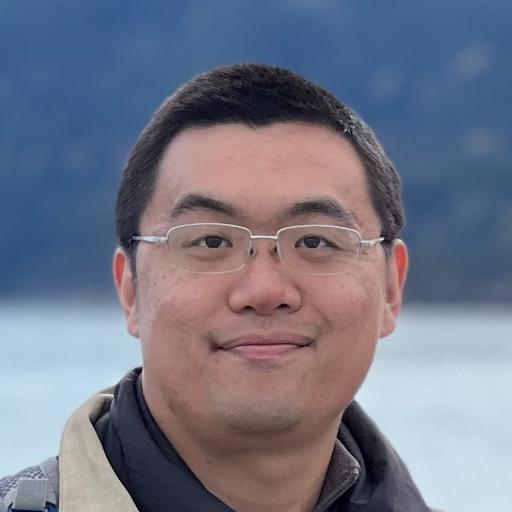
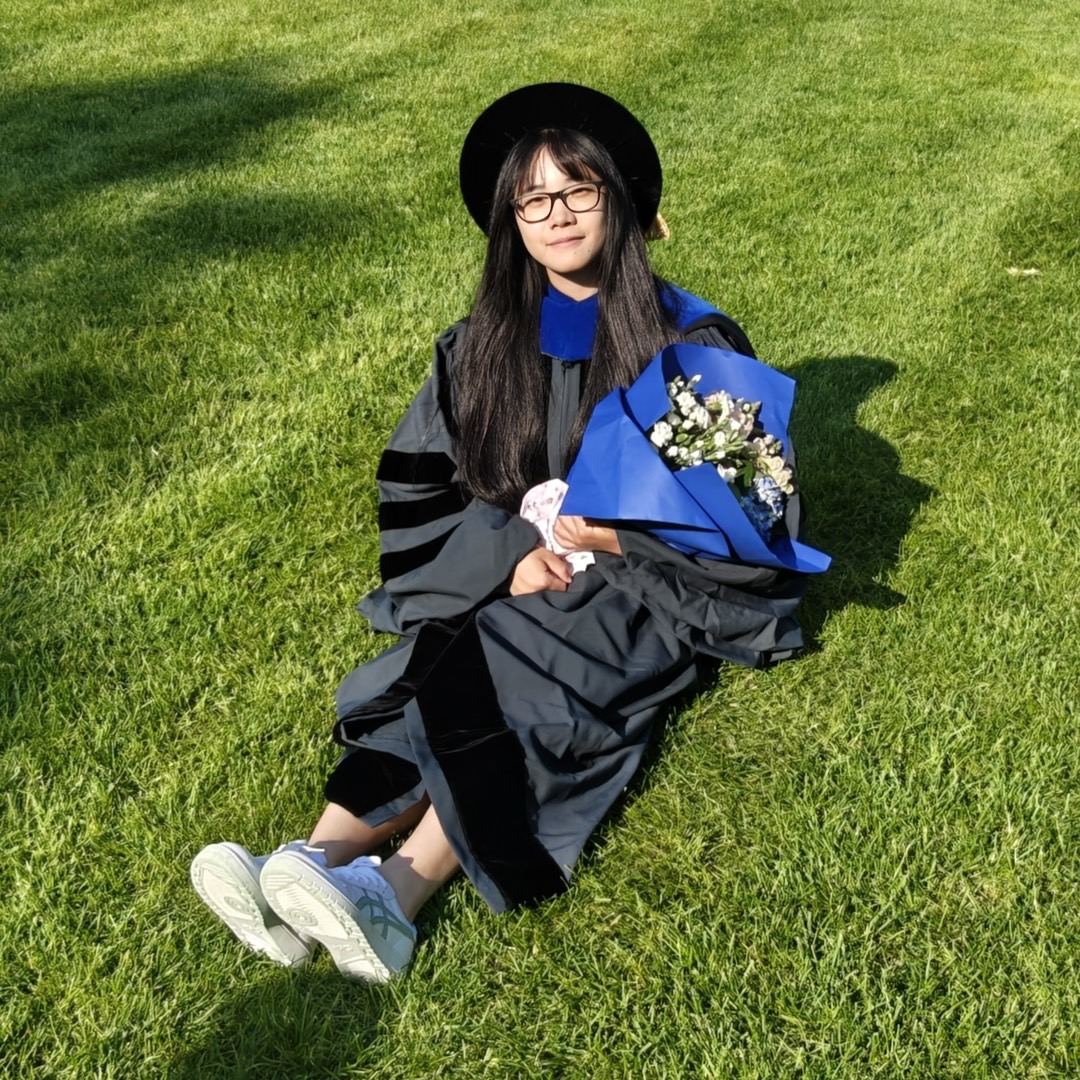
Luyang Zhao is an incoming tenure-track Assistant Professor in the Department of Electrical and Computer Engineering at Clemson University (starting August 2025). He earned his PhD in Computer Science and double undergraduate degrees in Computer Science and Mathematics from Dartmouth College and the University of Minnesota respectively. Academic Affiliation : Clemson University (Assistant Professor) Education : PhD in Computer Science (Dartmouth College), BS in Computer Science & Mathematics (University of Minnesota) His research focuses on Robotics , particularly soft robotics, modular systems, and bio-inspired designs. Key areas include: Large Language Models for robotic design automation Modular tensegrity systems for self-assembling structures Swarm coordination strategies Multi-environment adaptability (land/aquatic/aerial) Simulation tool integration for design optimization Recent publications highlight his work on SoftSnap modular platforms, LLM-driven swarm intelligence, and bioinspired dolphin robots. He received the Neukom Outstanding Graduate Research Prize for his contributions. Industry Experience : Research internships at Amazon Robotics and TuSimple Mentorship : Advised 6+ graduate/undergraduate researchers Open-Source Contributions : Developed SoftSnap platform for rapid prototyping Academic Service : Workshop co-organization (IROS 2023), peer reviewing (RA-L, ICRA, IROS, RoboSoft, BioRob)
Maria Sanchez-Ortiz is a Senior Lecturer in Translation and Interpreting Studies at the School of Language, Literature, Music and Visual Culture (LLMVC), University of Aberdeen, where she has been actively contributing since 2016. She serves as Programme Director for both the on-campus and distance learning MSc in Translation Studies and co-directs the Centre for Multilingual Research. She previously directed the Centre for Translation and Interpreting Studies from 2020 to 2023 and coordinated the undergraduate programme in Modern Languages and Translation from 2017 to 2020. Her educational background is extensive and interdisciplinary: PhD in Translation Studies, University of Bradford (2006) MSc in Dubbing, Subtitling & Localization, Instituto Superior de Estudios Lingüísticos y Traducción, Spain (2019) Postgraduate Certificate in Academic Practice, University of Salford (2015) Diploma in Audiovisual Translation, Universidad de Educación a Distancia, Spain (2014) Diploma in Public Service Interpreting, CIoL (2007) MA in European Studies, University of Bradford (1994) Diploma in Spanish with Translation and Interpreting, CIoL (1992) BA in English Language and Literature, University of Granada, Spain (1989) Maria's research focuses on Translation and Interpreting Studies, with particular emphasis on literary translation, audiovisual translation, translator training, sociolinguistics, dialect translation, and the impact of AI on translation professions. She has supervised multiple PhD students to completion and actively welcomes new doctoral candidates in Spanish and Latin American Studies. Her work consistently bridges theory and practice, with a strong pedagogical orientation. Her 15 most recent publications span from 1996 to 2024, reflecting a sustained engagement with core issues in translation. The articles reveal a deep interest in the pragmatics, ethics, and cultural dimensions of translation, particularly in literary and dialectal contexts. A recurring theme is the translator's agency and the challenges of preserving stylistic and sociolinguistic nuances. More recently, her work has addressed gender, multiculturalism, and the evolving role of technology in translation. She has received numerous teaching accolades, including: Awarded 'Best Undergraduate Lecturer', University of Aberdeen (2024–2025) Awarded 'Funniest Lecturer', University of Aberdeen (2023–2024) Awarded 'Best Taught Postgraduate Lecturer', University of Aberdeen (2018–2019) Nominated for 'The Most Inspiring Lecturer' (2019–2020) and Excellence in Teaching awards Maria Sanchez-Ortiz is an active supervisor, mentor, and curriculum developer. She has served as an external examiner for MA and BA programmes at several UK universities, including Manchester, Open University, Portsmouth, Durham, and Bath. She is a Fellow of the UK Higher Education Academy (since 2015) and a member of key professional bodies such as the Institute of Translation and Interpreting (ITI) and the International Association for Translation and Intercultural Studies. She also contributes to academic journals as a member of editorial and advisory boards. She leads and co-directs major research centres at Aberdeen, fostering interdisciplinary collaboration and innovation in multilingual research. Her leadership in the European Graduate Placement Scheme and membership in the PACTE Research Group highlight her commitment to international cooperation and empirical research in translation competence.
Stavros Demetriadis is a Full Professor at the School of Informatics, Aristotle University of Thessaloniki, Greece. His research focuses on Learning Technologies, including Conversational Agents in Education, Learning Analytics, Computer-Supported Collaborative Learning (CSCL), Computational Thinking, and Massive Open Online Courses (MOOCs). He has led EU-funded projects like colMOOC and developed educational tools such as 'pytolearn' for Python instruction and 'Cubes Coding' (winner of Open Education Challenge 2014 and NUMA Competition 2014). He has supervised 5 completed PhD theses, 4 ongoing PhDs, and over 60 Master’s theses. Academic Appointments: Full Professor (2020–present), Associate Professor (2015–2020), Assistant Professor (2012–2015), Lecturer (2002–2008), Informatics Teacher (1989–2002) Education: PhD in Multimedia Technology in Education (2000), MSc in Electronic Physics (1986), BSc in Physics (1983) His work bridges AI and education, with over 161 publications and an h-index of 27. Recent research explores ChatGPT integration, ethics in Learning Analytics, and AI-driven assessment tools. He has delivered invited talks at institutions like the University of Valladolid (2024) and coordinates the 'Teachers' Fast-paced Distance Training on Tele-education' project. Awards include three international best paper awards and recognition for his 'Cubes Coding' project. Key Research Contributions: Developed frameworks for Conversational Agents in CSCL Innovated Computational Thinking pedagogy through robotics Explored ethics and culture in Learning Analytics adoption Created Python-based MOOCs for non-programmers He has taught courses like Human-Computer Interaction and Learning Analytics, and led short programs on Conversational AI. His collaborations span institutions in Spain, Denmark, and Greece. ORCID: 0000-0002-1561-6372; Google Scholar, Semantic Scholar, and Scopus profiles list his extensive output.
Despo Ktoridou serves as Professor and Head of the Department of Management at the University of Nicosia's School of Business in Cyprus. She has held academic positions since 1999, advancing from Assistant Professor of Educational Technologies to Associate Professor in 2007 and full Professor in 2019. A Certified Engineer by the Cyprus Scientific and Technical Chamber (ETEK), she maintains active memberships in IEEE and ACM while bridging engineering, management, and educational disciplines through her scholarly contributions. Her educational background includes: Bachelor of Science in Engineering (Computer Systems & Networks) from Saint Petersburg Electrotechnical University (awarded 1991) Master of Science in Engineering (Computer Systems & Networks) from Saint Petersburg Electrotechnical University (awarded 1993) Doctor of Philosophy in 'Expert Systems in Education' from Saint Petersburg Electrotechnical University (awarded 1999) Professor Ktoridou's research centers on ICT integration in educational practice, technology and innovation management pedagogies, and open and online distance learning. Her work examines how technological advancements can be effectively incorporated into teaching methodologies and management education, with publications spanning theoretical frameworks to practical applications in higher education settings. Analysis of her recent publications (2024-2025) reveals a pronounced focus on emerging technologies including artificial intelligence and the metaverse within educational contexts. These studies consistently investigate student perspectives, acceptance patterns, and specialized course development (e.g., intellectual property management for technology students), demonstrating interdisciplinary approaches that merge computer science, business management, and educational theory. Scientific Awards: No scientific awards, prizes, or fellowships documented in provided information Professor Ktoridou has supervised numerous graduate students throughout her academic career and participated in multiple EU-funded and locally sponsored research programs. Her academic service includes guest lecturing at foreign universities, conference session chairing, program committee membership, and editorial review activities. As Department Head since 2012, she demonstrates sustained commitment to academic administration and program development. While specific laboratory facilities are not detailed, her research trajectory indicates leadership in interdisciplinary teams focused on educational technology innovation. Current work explores cutting-edge topics including AI ethics in education and metaverse applications, positioning her contributions at the forefront of technology-enhanced learning research.
Cengiz Hakan Aydin , PhD, is a full professor at Anadolu University in Turkey, where he has been a faculty member since the early 1990s. He currently serves as the Head of the Distance Education Department in the Faculty of Open Education and is the Director of the OpenAnadolu Project , which includes the AKADEMA MOOCs platform. Additionally, he holds the role of Director of the Office of Learning and Teaching Enhancement at Özyeğin University . Dr. Aydin’s research is centered on the design and development of open and distance learning (ODL) environments. His work explores the integration of emerging technologies such as AI, VR, AR, and MR into educational systems. He is deeply engaged in the study and promotion of Open Educational Resources (OER) , Open Educational Practices (OEP) , and Massive Open Online Courses (MOOCs) . His scholarly contributions also address current trends and challenges in higher education. Dr. Aydin has held leadership roles in several international organizations. He served as President and Board Member of the International Division at the Association for Educational Communications and Technology (AECT) , and as a Board Member of the International Council for Educational Media (ICEM) . He is currently a Steering Committee Member of the OpenupEd initiative under the European Association of Distance Teaching Universities (EADTU) , and a member of the AECT Board and the Centre for Distance Education Research (COER) . He is actively involved in editorial work, serving on the boards of International Review of Research in Open and Distance Learning (IRRODL) , Educational Media International (EMI) , and Journal of Open, Distance, and Digital Education (JODDE) . Research Projects and Grants: Volkswagen Foundation – AI in Education (AIEd) : Local researcher. Erasmus+ CRED4TEACH (MOOC-based micro-credentials for teacher professional development): Leading researcher at Anadolu University. Erasmus+ ADMIT (Generative AI and Large Language Models in Higher Education): Researcher. Anadolu University Internal Funds – Multiple projects including AI-based tools for writing skills, intelligent personal education coach, and automated grading systems for open-ended questions. Dr. Aydin serves as both Project Coordinator and Researcher . Labs and Teams: Dr. Aydin leads the OpenAnadolu Project , which encompasses platforms like AKADEMA and serves as a hub for innovation in distance education and MOOC development at Anadolu University.
Dr. Muhammad Humayoun is a Senior Lecturer at Karlstad University, Sweden, specializing in informatics education and computational linguistics research. He holds a Ph.D. from University of Grenoble Alpes (2012) and M.Sc. from Chalmers University (2006). His academic career spans over 15 years across Pakistan and Sweden, including teaching roles at COMSATS University, University of Central Punjab, and Higher Colleges of Technology. Research Focus: His work centers on NLP applications for under-resourced languages like Urdu/Punjabi, including text summarization, abusive language detection, and formalization of mathematical texts. He has developed linguistic resources (corpora, lexicons) and contributed to plagiarism detection systems in programming courses. Teaching Contributions: Designed and taught over 15 courses across multiple universities, including advanced programming, AI, and cloud computing modules. Currently teaches graduate-level courses like 'Legal Tech, AI and Rules-as-Code' and undergraduate software engineering courses at Karlstad University. Awards: Recognized for Urdu threat detection system (3rd place, 2021) and top rankings in Urdu fake news competitions. His work on Urdu summarization corpora has been widely cited in computational linguistics research.
Fahim Hasan Khan is an Assistant Professor in the Computer Science and Software Engineering Department at California Polytechnic State University, San Luis Obispo (Cal Poly). His research focuses on computer vision, applied machine learning, and citizen science applications, with a special emphasis on environmental monitoring and education. He holds a PhD in Computer Science and Engineering from UC Santa Cruz, where he was advised by Professors Alex Pang and James Davis, and a Master's in Computer Science from the University of Calgary. Key research contributions include real-time rip current detection systems (RipFinder, RipScout), mobile citizen science platforms (SmartCS), and educational tools to engage high school students in STEM research. His work has received media attention for innovations in drowning prevention and environmental safety. Notable awards include the Best Poster Presentation Award at ICIAR 2019 and the Best of the Baskin School of Engineering Award at UC Santa Cruz in 2022. Dr. Khan collaborates extensively with industry and academic partners to develop practical solutions for challenges in marine safety, autonomous systems, and healthcare diagnostics. He actively mentors students and seeks to democratize access to machine learning tools through no-code platforms.
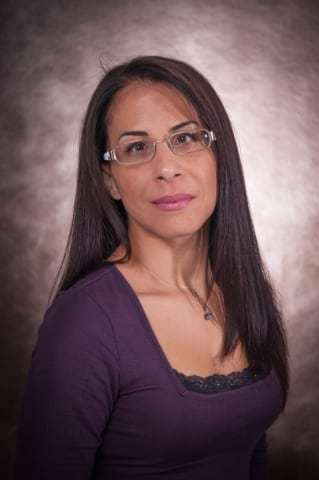
Samantha Curle is a Reader in the Department of Education at the University of Bath, serving as Director of all MRes Programmes in the Humanities and Social Sciences Faculty. She also holds roles as Institutional Academic Lead for the South West Doctoral Training Partnership and Director of Studies for the MRes in Advanced Quantitative Methods. Her research focuses on English Medium Instruction (EMI) in global higher education, particularly its academic and linguistic outcomes, technology integration, and psychological dimensions. Career highlights include a PhD from the University of Oxford (2018) on stakeholders’ attitudes toward EMI in Japanese higher education. She has extensive editorial roles, including guest editorships at Frontiers in Educational Psychology and Data in Brief . Her expertise spans quantitative methods, applied linguistics, and bilingual education, contributing to UN Sustainable Development Goal 4 (Quality Education). Education: PhD (University of Oxford, 2018) MSc Research Methods (University of Oxford, 2014) Bachelor of Education (Open University of Hong Kong, 2010) Grants and Projects: Leading projects on EMI in Saudi Arabia, Brazil, and Hong Kong-UK collaboration Focus on educational inequalities in Spain using CART models Awards: Adjunct Professor (2024) Her research has yielded 88+ publications, emphasizing EMI’s role in STEM, teacher professional development, and sustainable education. She advises doctoral students on quantitative EMI studies and advocates for evidence-based policy in multilingual education.