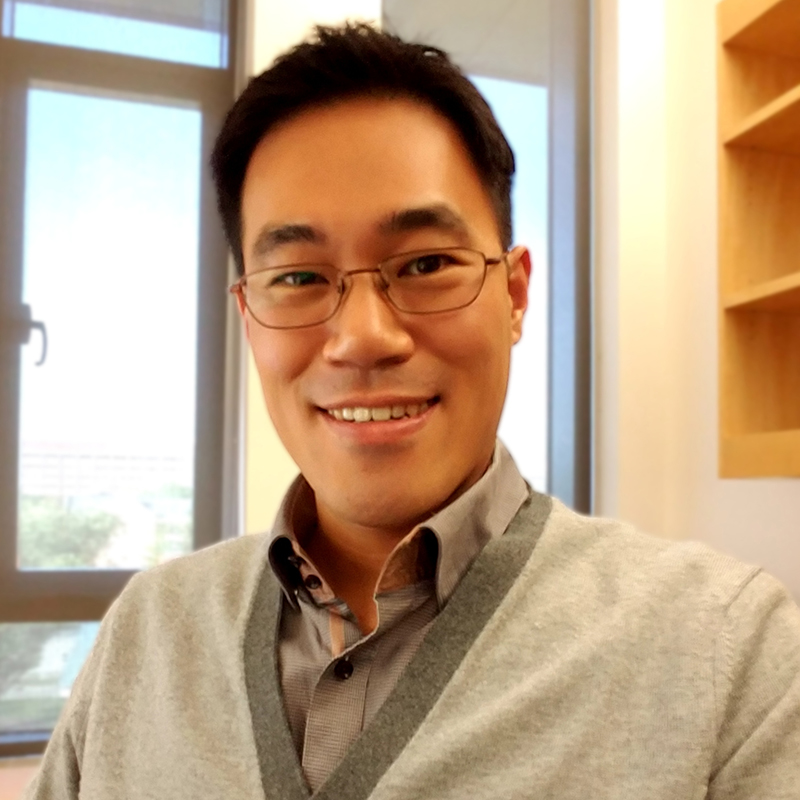
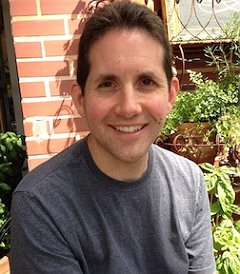
Dr. Patrick Park is an Assistant Professor at the Software and Societal Systems Department within Carnegie Mellon University's School of Computer Science. His work bridges computational and social sciences to analyze network dynamics, digital communication, and open source systems. Current position: Assistant Professor Institution: Carnegie Mellon University Department: Software and Societal Systems Park's research focuses on social network analysis, behavioral modeling, and computational sociology. Key contributions include studies on network diversity, geospatial visualization techniques, and digital communication patterns across civilizations. His recent publications (2023-2024) highlight expertise in network visualization, social contagion, and open source innovation. Earlier work spans topics like organizational classification, user behavior paradoxes, and cross-cultural communication networks.
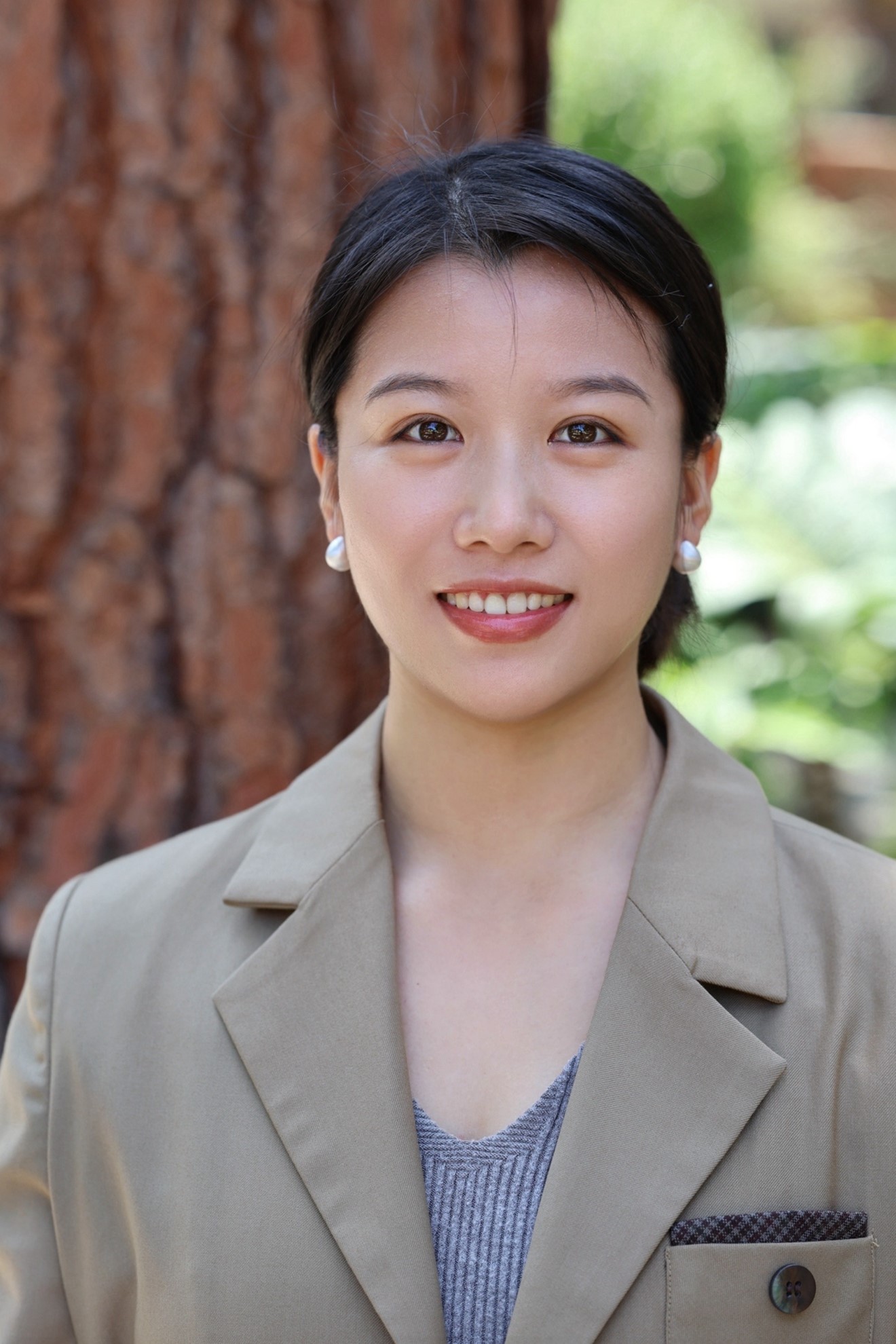
Dr. Yali Ling serves as an Assistant Professor in the Fashion Merchandising and Design program within the Department of Family and Consumer Sciences at California State University, Long Beach's College of Health and Human Services. Her research bridges traditional textile engineering with cutting-edge sustainable material innovation. Education: Ph.D. in Textile Technology Management, North Carolina State University (2021-2024) M.S. in Fashion Design and Engineering, Wuhan Textile University (2018-2021) B.S. in Fashion Design, Wuhan Textile University (2014-2018) Research Focus: Dr. Ling's work pioneers sustainable textile production through hemp/cotton blends and recycled materials, while advancing digital fashion technologies via 3D body scanning applications. Her expertise spans yarn engineering for performance textiles and functional apparel design addressing ergonomic challenges in diverse populations. This dual focus creates synergies between eco-conscious manufacturing and precision garment engineering. Publication Trends: Her 15 most recent publications (2019-2025) reveal three converging trajectories: (1) Sustainable material innovation (hemp textiles, eco-spinning), (2) Triboelectric wearable technology development, and (3) Anthropometric-driven apparel design. These strands collectively address industry demands for environmentally responsible production while enhancing human-technology interfaces in textile applications. Scientific Recognition: 2024 Best Poster Presentation at Textile Research Open House (NCSU) 2022 VF Graduate Student Impact Award ($5,000) 2021 Wuhan Textile University Special Graduate Scholarship ($1,500) 2020 Chinese Ministry of Education National Scholarship ($3,000) 2020 CNTAC "Maker China" Innovation Excellence Award 2019 China Natural Dialectics Research Association Symposium Prize Professional Engagement: Dr. Ling maintains active industry partnerships through her sustainable textile research while mentoring undergraduate students in the Fashion Merchandising and Design program. Her current work focuses on scaling hemp-based textile production and developing AI-integrated pattern generation systems. Research Infrastructure: While specific laboratory facilities aren't detailed in available materials, her publications indicate collaborations with Wilson College of Textiles' advanced manufacturing facilities and access to 3D body scanning technologies for anthropometric research.
Prof. Dr. Christina Raasch is Professor of Digital Economy at Kühne Logistics University (KLU) and holds a joint appointment with the Kiel Institute for the World Economy (IfW) . Since 2017 she has led research and teaching on how digitalization reshapes innovation processes, enterprise crowdfunding, and customer-driven disruptive innovation. Education Habilitation (Dr. habil.) in Business Administration, Hamburg University of Technology (TUHH), 2012 PhD in Management, University of Erlangen-Nuremberg, 2006 MSc (lic. oec.) in Economics & Management, University of St. Gallen (HSG), 2002 Visiting Researcher, MIT Sloan School of Management, 2010-2012 Research Interests Prof. Raasch’s work centers on digital transformation of innovation . She investigates how firms leverage digital technologies—ranging from AI to crowdfunding platforms—to enhance idea generation, evaluation, and implementation. Core themes include: Open & User Innovation: understanding when and how users become valuable innovators inside and outside firms. Disruptive Innovation Dynamics: analyzing whether disruptive ideas stem from users or producers under varying environmental conditions. Enterprise Crowdfunding: designing decentralized decision-making systems that mitigate hierarchy-induced biases. Publication Trends Her 70+ publications reveal a systematic exploration of demand-side innovation . Early work modeled welfare impacts of user innovation; recent studies use large-scale field data from Siemens and other multinationals to uncover cognitive and social biases in idea evaluation. A consistent thread is bridging micro-level behavioral insights with macro-level policy and strategy implications. Scientific Awards & Honors Fellow of the Open and User Innovation (OUI) Society Host of the 2023 OUI Conference at KLU Research Funding & Industry Collaboration Current grants exceed €2 million and include: FabCity-Citizen Extension (2025-2026) – decentralized urban innovation funded by the German Federal Ministry of Education and Research. EvaluationShirking (2024-2026) – idea evaluation biases in collaboration with a global industrial manufacturer. Idea Evaluation in Democratized Innovation (2019-2023) – DFG-funded project on enterprise crowdfunding design. Labs, Teams & Knowledge Transfer Prof. Raasch leads the Open & User Innovation Research Group at KLU, supervising doctoral researchers and managing industry partnerships with firms in automotive, high-tech, and logistics sectors. She regularly contributes to policy panels and media outlets such as Harvard Business Manager and Springer Professional .
Dr. Chiara Bertelli is a Lecturer in Biosciences at Swansea University within the Faculty of Science and Engineering, School of Biosciences, Geography and Physics. With over 15 years of experience in coastal and marine ecological surveys, she specializes in seagrass ecology and restoration, marine conservation, and habitat suitability modeling. Dr. Bertelli has extensive field experience including boat-based surveys, SCUBA diving, and snorkeling in both temperate and tropical environments. She is currently completing her PhD part-time focusing on environmental drivers of change in seagrass meadows in the UK and Brazil. Her educational background includes advanced training in marine biology with specialization in ecological survey techniques and data analysis using R and Primer. Her primary research focuses on seagrass ecology as nature-based solutions for climate change. She develops habitat suitability models to inform optimal locations for seagrass restoration, with applications in carbon sequestration (blue carbon) and marine biodiversity enhancement. Her work aligns with UN Sustainable Development Goals 13 (Climate Action) and 14 (Life Below Water). Analysis of Dr. Bertelli's recent publications (2020-2025) reveals a strong emphasis on practical applications of seagrass research to inform restoration efforts. Her work spans habitat suitability modeling, environmental stress responses, nutrient dynamics, and decision-support tool development. A significant portion addresses seed-based restoration techniques, ecosystem services, and the socio-ecological dimensions of marine conservation. Dr. Bertelli actively collaborates with external organizations including Project Seagrass, Sky Ocean Rescue, WWF, Natural England, and the National Oceanographic Centre. Her current ReSOW project aims to develop the CEEDS (Coastal Ecosystem Enhancement Decision Support) tool, an open-source platform to guide seagrass restoration practitioners. As an educator, Dr. Bertelli teaches several field-based marine biology courses including BIO260 Marine Biology Field Course, BIO327 Tropical Marine Ecology Field Course, and BIO346 Professional Skills in Marine Biology. Her teaching emphasizes practical, field-based learning and professional skill development for marine biologists, with a focus on survey techniques, data analysis, and environmental impact assessment. Dr. Bertelli is actively involved in research teams focused on marine ecosystem restoration and coastal management. Her work bridges academic research with practical conservation applications, working closely with government agencies, NGOs, and international research partners to translate scientific findings into actionable conservation strategies.
Tanel Alumäe is an Associate Professor of Speech Processing at Tallinn University of Technology's School of Information Technologies, Department of Software Science. With over 15 years of academic experience, he has held various research and teaching positions at the university since 2006, progressing from Research Fellow to Tenured Associate Professor. His work focuses on speech and language technologies with a particular emphasis on Estonian language applications. PhD in Information and Communication Technology (2006), Tallinn University of Technology Research Master's Degree in Informatics (2002), Tallinn Technical University MSc studies at Tallinn Technical University (1999-2002) and Universität Erlangen-Nürnberg, Germany (1999-2000) Diploma in Computer and Systems Engineering (1994-1999), Tallinn Technical University Alumäe's research spans automatic speech recognition, speaker recognition, natural language processing, and computational linguistics with a focus on Estonian language technology. His work addresses challenges in multilingual speech processing, deep learning applications for speech technologies, and developing practical systems for real-world applications including broadcast media processing and accessibility solutions. He has made significant contributions to low-resource language processing and specialized applications for children's speech and emotion recognition. His recent publications demonstrate a strong focus on cutting-edge speech processing techniques including deepfake detection, multi-speaker systems, speech-to-speech translation, and applying large language models to speech applications. The research shows a consistent pattern of addressing both theoretical challenges in speech processing and practical implementations for Estonian language technology. Award 'Keeletegu 2019' from the Ministry of Education and Research Award 'Keeletegu 2011' from Estonian Ministry of Education and Research 3rd award at the Tallinn University of Technology contest for applied scientific projects (2011) Boris Tamm stipend (2007) First prize at the national contest of students' scientific works (2007) Ustus Agur stipend of Estonian Information Technology and Telecommunications Association (2005) Alumäe has supervised postdoctoral researchers including Rena Nemoto (2012-2015) on pronunciation modeling for speech recognition. He serves in editorial and review capacities for major journals including Nature, Computer Speech & Language, and IEEE Transactions. His administrative roles include Secretary of the Northern European Association for Language Technology Board and membership on the Department of Software Science Council at TalTech. His research group at Tallinn University of Technology actively participates in international challenges (IWSLT, Interspeech, Odyssey) and collaborates with institutions worldwide. The team has developed open-source platforms for Estonian speech transcription and created systems for automatic closed captioning of Estonian broadcasts, demonstrating strong practical applications of their research.
Brooke Foucault Welles is a Professor in the College of Arts, Media and Design at Northeastern University, where she also serves as Interim Dean and Director of the Network Science PhD program. Her research focuses on how social networks and communication technologies shape power dynamics, particularly in contexts of marginalization and social justice. PhD in Media, Technology and Society from Northwestern University MS and BS in Communication from Cornell University Her research spans multiple domains including: Network science of AI and social systems Digital activism and social movement dynamics Health information and (mis)information flows Open source community structures Race/ethnicity in digital contexts Computational social science methodologies Recent publications focus on attention dynamics in social networks, hate speech protection mechanisms, and open-source software sustainability. Her work has been supported by grants from the NSF, NULab, and Chan Zuckerberg Initiative. Awards include: McGannon Book Award (2021) for #HashtagActivism Best Paper Honorable Mention at CSCW 2019 She leads the Communication Media and Marginalization Lab (CoMM Lab) which includes PhD students and postdocs from diverse disciplines. Her advising approach emphasizes interdisciplinary collaboration and methodological training in both quantitative and qualitative approaches.
Scott Staniewicz is a researcher at the University of Texas at Austin in the Department of Aerospace Engineering and Engineering Mechanics. His work focuses on geophysical applications of computer vision and remote sensing, particularly using Interferometric Synthetic Aperture Radar (InSAR) to detect surface deformation and tropospheric noise features. Academic Affiliation: University of Texas at Austin Research Focus: Surface deformation analysis, InSAR data processing, tropospheric noise mitigation Email: scott.stanie@utexas.edu Staniewicz's research employs computer vision techniques like Laplacian of Gaussian (LoG) filtering to identify spatially coherent deformation features (e.g., subsidence/uplift in oil-producing regions). His methods integrate noise spectrum estimation from real data and simulations to distinguish true deformation signals from atmospheric artifacts. Recent work includes software development for automated InSAR analysis and large-scale studies of anthropogenic deformation in the Permian Basin. He has contributed to open-source tools such as Blobsar (2025a) and Troposim (2025b) for deformation detection, and collaborated on studies analyzing seismic sequences (Skoumal et al., 2020), tropospheric delay corrections (Li et al., 2019; Yang et al., 2024), and statewide seismic networks (Savvaidis et al., 2019). His publications demonstrate expertise in combining computer vision with geophysical data analysis.
Pasquale Davide Schiavone holds multiple research and teaching positions at École Polytechnique Fédérale de Lausanne (EPFL), serving as a Lecturer at the School of Computer and Communication Sciences (IC) and as a Scientist at both the Embedded Systems Laboratory (ESL) within the School of Engineering (STI) and PAT Administration. His interdisciplinary work bridges computer architecture, embedded systems design, and biomedical applications, with office located at ELG 136 in Lausanne, Switzerland. Dr. Schiavone's research focuses on ultra-low-power computing systems, particularly RISC-V architectures and TinyML applications for edge devices. His work develops open-source hardware platforms like X-HEEP and HEEPOCRATES that enable energy-efficient AI at the edge, with applications spanning biomedical monitoring, neural interfaces, and wearable computing. He explores innovative hardware-software co-design approaches to overcome energy constraints in resource-limited environments. His recent publications reveal a consistent research trajectory centered on open, configurable computing platforms for specialized applications. The work spans from fundamental RISC-V architecture improvements (ARCANE, e-GPU) to application-specific implementations for biomedical contexts (BiomedBench, neural interfaces). A strong emphasis on energy efficiency permeates all his research, whether through novel arithmetic approaches (Posit), system architecture (near-memory computing), or specialized accelerators (Strela, Quadrilatero). Lecturer, School of Computer and Communication Sciences (IC) Scientist, Embedded Systems Laboratory (ESL), School of Engineering (STI) Scientist, PAT Administration, School of Engineering (STI) Dr. Schiavone teaches courses on hardware compilation, presenting algorithms and methods for transforming hardware description languages into optimized circuit implementations. His Embedded Systems Laboratory work places him at the forefront of developing practical, open-source solutions for next-generation computing challenges in energy-constrained environments.
Prof. Dr. Johannes Kinder is a Professor and Chair of Programming Languages and Artificial Intelligence at the Institute of Informatics , Ludwig Maximilian University of Munich. His research focuses on software security through program analysis and machine learning, particularly targeting malware detection , vulnerability analysis , and reverse engineering . He has held faculty positions at Royal Holloway, University of London, and Bundeswehr University Munich. Research Interests include: Securing software systems via program and machine learning techniques Detection of software vulnerabilities and malware Preventing exploitation through binary analysis Applications of formal methods in systems security Recent Publications highlight advancements in binary function embedding , malware detection in npm , and speculative execution attack modeling . His work appears in top venues like USENIX Security and IEEE S&P . Education : Diplom from TU Munich (2005), Doctorate from TU Darmstadt (2010). Professional Roles : General Chair, ACM CCS 2019 Doctoral Symposium Chair, ESSoS 2016 Program Committee member for NDSS 2026, IEEE S&P 2022-2025
Marylyn D Ritchie, PhD, is the Edward Rose, M.D. and Elizabeth Kirk Rose, M.D. Professor at the Perelman School of Medicine, University of Pennsylvania. She concurrently serves as Director of the Institute for Biomedical Informatics, Vice President for Research Informatics for the University of Pennsylvania Health System, Director of the Division of Informatics in the Department of Biostatistics, Epidemiology, and Informatics, and Vice Dean of Artificial Intelligence and Computing. Education: BS in Biology, University of Pittsburgh at Johnstown, 1999 MS in Applied Statistics, Vanderbilt University, 2002 PhD in Statistical Genetics, Vanderbilt University, 2004 Research Interests Dr Ritchie’s work integrates computational genomics , bioinformatics , pharmacogenomics , and systems genomics to advance precision medicine. She develops statistical and machine-learning approaches to dissect epistasis , genetic epidemiology , and evolutionary computation in large-scale biobanks, with a special focus on cardiovascular disease and Alzheimer’s disease . Her group is also pioneering translational informatics methods that incorporate social determinants of health and fairness metrics into AI-driven clinical decision support. Publication Trends In 2025 alone, Dr Ritchie co-authored more than fifteen high-impact studies spanning vision-language models for 3D CT , multi-omics Alzheimer’s risk prediction , fairness in neuroimaging AI , ancestry-specific pharmacogenomics , and cloud-based polygenic risk score platforms . The collective work highlights a shift from single-omics discovery to integrative, equitable, and clinically actionable models across diverse ancestries. Awards & Honors While specific named awards were not detailed in the text, Dr Ritchie’s endowed professorship and multi-institutional leadership roles signify sustained recognition. Grants & Advising Dr Ritchie leads large NIH, foundation, and industry-funded initiatives that support interdisciplinary teams of postdocs, graduate students, and data scientists. Her lab actively mentors trainees from UPenn’s Cell and Molecular Biology and Genomics and Computational Biology graduate groups. Laboratories & Teams She directs the Ritchie Lab (ritchielab.org), which develops open-source visualization tools such as PhenoGram , PheWAS-View , and Synthesis-View for genome-wide and phenome-wide data exploration. The lab operates within the Institute for Biomedical Informatics and collaborates closely with the Penn Medicine BioBank and multiple clinical departments to translate big-data discoveries into precision medicine workflows.
Bernhard Aichernig is an Associate Professor at the Institute of Software Engineering and Artificial Intelligence. His work bridges formal methods, model-based testing, and artificial intelligence, with a focus on automata learning, digital twins, and AI-assisted programming. Institution: Institute of Software Engineering and Artificial Intelligence Key Research Areas: Model-Based Testing, Automata Learning, AI-Driven Verification His research explores the integration of machine learning into formal verification, enabling scalable testing of complex systems like IoT devices and reinforcement learning agents. Recent projects include AI-Augmented DevOps frameworks (AIDOaRT) and digital twin validation (LearnTwins). Notable scientific awards include multiple best paper recognitions at SEFM (2020, 2021) and the TAYSIR Competition first place (2023). His publications emphasize hybrid approaches combining genetic programming, SMT solving, and neural networks for system modeling. 2025 : AI-assisted programming, timed automata via domain knowledge 2024 : Stochastic environment modeling, Git system learning 2023 : Reinforcement learning under partial observability, digital twins for VPN servers He actively contributes to testing frameworks like AALpy and investigates explainable AI for fault diagnosis in cyber-physical systems.
Professor John G Rarity serves as Professor of Optical Communication Systems within the School of Electrical, Electronic and Mechanical Engineering at the University of Bristol, where he leads research at QET Labs and the Bristol Quantum Information Institute. His work spans quantum communication, photonics, and quantum information systems with significant contributions to quantum cryptography and sensing. Research focuses on quantum communication networks , quantum cryptography , and quantum sensing applications . His fingerprint reveals dominant expertise in Quantum Dot Physics (100%), Photonics Physics (94%), Photonic Crystal Material Science (60%), and Quantum Cryptography (48%). Current work emphasizes entanglement distribution, counterfactual communication protocols, and quantum-enhanced sensing for environmental monitoring. Recent publications (2025) demonstrate leadership in multi-node quantum networks, deterministic teleportation, and methane sensing via quantum techniques. His 438 research outputs show consistent focus on practical quantum systems integration, particularly in overcoming classical-quantum channel coexistence challenges in fiber networks. Principal Investigator for 75 projects including active EPSRC grants EP/N00762X/1, EP/R022054/1, and EP/R023018/1 Supervised 36 research students Developed quantum communication systems for CubeSat deployment Pioneered quantum sensing applications for greenhouse gas detection Rarity actively collaborates across international quantum research networks, with recent work involving hollow-core fiber quantum channels, NV-center quantum sensors, and photonic integrated circuits for scalable quantum systems. His lab maintains strong industry partnerships with BT Research and optical communications firms.
Todd Millstein is a Professor in the Computer Science Department at the University of California, Los Angeles (UCLA). He served as the Computer Science Department Chair from 2022-2025 and is also an Amazon Scholar. His research focuses on making software systems more reliable through programming languages techniques, with significant contributions to network verification and probabilistic programming. Millstein received his Ph.D. from the University of Washington Department of Computer Science, where he was a member of the Cecil group led by Craig Chambers. Prior to that, he completed his undergraduate studies at Brown University under the guidance of Paris Kanellakis and Pascal Van Hentenryck. Millstein's research spans several areas of programming languages and systems with a focus on reliability. He has made significant contributions to network verification, developing the Batfish network configuration analyzer which is now managed by Amazon Web Services and forms the basis of Oracle Cloud's Network Path Analyzer. His work has been recognized with the ACM SIGCOMM Networking Systems Award in 2025. He also works on interactive program verification through lemma synthesis and scalable reasoning methods for probabilistic programming languages. His research bridges programming languages theory with practical systems challenges, as highlighted in his SPLASH/OOPSLA 2024 keynote "Everything is a Program (even if it's not)". Millstein's recent publications demonstrate a consistent focus on verification and reliability across multiple domains. His work shows a progression from foundational programming language techniques to practical applications in networking and probabilistic systems. Key themes include data-driven approaches to program analysis, synthesis of verification artifacts, and applying programming languages techniques to non-traditional domains like network configuration. Millstein's scientific achievements have been recognized with numerous prestigious awards including an NSF CAREER Award, an ACM SIGPLAN Most Influential PLDI Paper Award, an ACM SIGCOMM Networking Systems Award, IEEE Micro Top Picks selection, best-paper awards from PLDI, OOPSLA, and SIGCOMM, a Microsoft Research Outstanding Collaborator Award, an Okawa Foundation Research Grant, an IBM Faculty Award, and a Facebook Research Award. He has also received both the Northrop Grumman Excellence in Teaching Award (for junior faculty) and the Eon Instrumentation Inc. Excellence in Teaching Award (for senior faculty) from UCLA Engineering. Millstein advises several Ph.D. students including Ana Brendel, Poorva Garg (co-advised with Guy Van den Broeck), Rajdeep Mondal (co-advised with George Varghese), and Rathin Singha (co-advised with George Varghese). His research has been supported by various grants including an NSF CAREER Award, Okawa Foundation Research Grant, IBM Faculty Award, and Facebook Research Award. He has also been a Co-Founder and Chief Scientist of Intentionet, which was later acquired by Amazon Web Services. Millstein is actively involved in the Batfish project, an open-source network configuration analyzer that has had significant practical impact. Batfish is now managed by AWS, powers Oracle Cloud's Network Path Analyzer, and is used by dozens of companies. His research group continues to work on network reliability, developing techniques for scalable BGP policy verification and behavioral testing of protocol implementations.
Edgar Weippl is a Professor at the Faculty of Computer Science, University of Vienna, where he serves as Vice Dean and Head of the Research Group Security and Privacy. His work spans cybersecurity, blockchain, and machine learning, with teaching roles in information security and software security courses. Current Positions: Vice Dean (Faculty of Computer Science), Head (Security and Privacy Research Group), Deputy Head (Neuroinformatics & Knowledge Engineering Groups) Research Interests: Cybersecurity, blockchain, IoT security, code obfuscation, privacy technologies, reinforcement learning, and socio-technical systems security Selected Publications: Focus on blockchain privacy, VoWiFi security, code obfuscation, and reinforcement learning applications
Robert Nowak holds dual distinguished professorships as the Keith and Jane Morgan Nosbusch Professor in Electrical and Computer Engineering and the Grace Wahba Professor of Data Science at the University of Wisconsin–Madison. Based at the Discovery Building (330 N Orchard Street), he leads interdisciplinary research at the Wisconsin Institute for Discovery, bridging engineering with data science applications. His academic foundation includes: BS, MS, and PhD from the University of Wisconsin–Madison Post-doctoral Fellowship at Rice University Nowak's research program spans artificial intelligence, machine learning, and optimization with dual emphases on AI-driven health applications and systems optimization. His work integrates theoretical rigor with practical implementations, particularly in large language model fine-tuning, active learning frameworks, and neural network theory. Recent publications demonstrate strong focus on improving model efficiency, humor comprehension in AI systems, and theoretical bounds for retrieval-augmented generation. Analysis of his 15 most recent publications reveals dominant trends in large language model advancement (particularly humor understanding and task diversity), theoretical neural network analysis (including sparse architectures and multi-task learning), and novel active learning methodologies for open-world scenarios. His work consistently bridges theoretical machine learning with real-world applications in health and recommendation systems. While specific named awards aren't documented in the source material, his appointment to two endowed chairs (Nosbusch and Wahba professorships) represents exceptional institutional recognition of his scholarly impact. Nowak advises graduate students in the Electrical and Computer Engineering department and secures significant research funding, including NSF grants such as CIF: Small: Advanced Understanding and Applications of Deep Learning. His group operates within the collaborative ecosystem of the Wisconsin Institute for Discovery, fostering cross-disciplinary projects that integrate AI with health sciences and engineering systems. Current projects indicate strong momentum in human-AI collaboration frameworks and optimization of language model training pipelines.