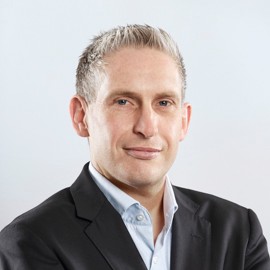
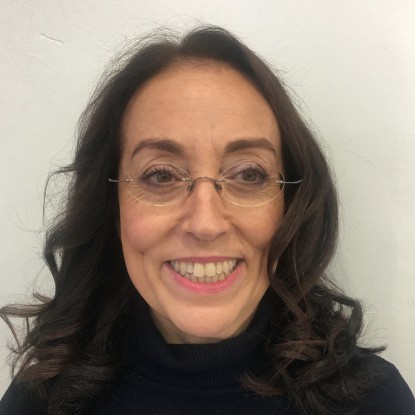
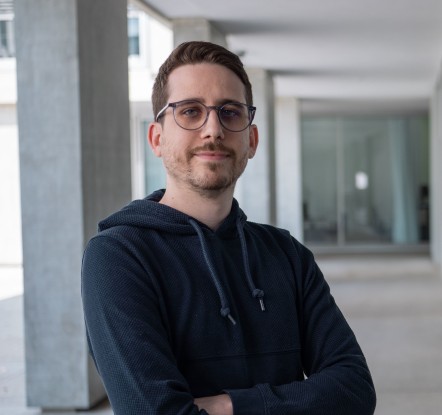
Martin Scharm is a researcher at the University of Rostock's Department of Systems Biology and Bioinformatics. Holds a PhD from University of Rostock (2018) and completed research internships at Oxford and Manchester. Research develops: Tools for computational model management (versioning, comparison) Methods for reproducible research dissemination Data integration pipelines Knowledge representation frameworks Publications focus on improving model reuse in systems biology, including metabolic model analysis tools. Awarded for contributions to medical systems biology. Maintains active open-source software projects and advocates for open science practices.
Daniel Graziotin is Professor of Business Informatics and Digital Technologies at the University of Hohenheim. His research examines human aspects of software engineering, including developer well-being, emotional intelligence, and research methodologies. Research Focus: Graziotin investigates psychological factors in software development, including stress and emotional intelligence in developers, collaborative coding practices, and open science methodologies. His work bridges behavioral science and technical software engineering practices. Publications: Recent articles (2022-2025) focus on developer psychology, qualitative research methods in software engineering, GitHub collaboration patterns, and blockchain developer ecosystems. His research often employs longitudinal analyses and phenomenological approaches to understand developer experiences.
Michele Nottoli is a researcher at the University of Stuttgart's Institute of Applied Analysis and Numerical Simulation (Faculty 08), specializing in Numerical Mathematics for High-Performance Computing. He holds a Ph.D. and works as a Postdoc and Research Assistant. His research focuses on developing advanced computational methods for quantum mechanics and molecular dynamics, emphasizing polarizable embedding models, QM/MM coupling, and high-performance numerical algorithms. Key contributions include the development of the ddX library for polarizable continuum solvation and optimizing linear-scaling methods for large-scale molecular simulations. Nottoli's work addresses challenges in modeling light-driven processes in complex systems, such as photoreceptors and antenna complexes, with applications in biochemistry and materials science. His methodologies integrate domain-decomposition techniques, fast multipole methods, and symmetry-preserving approaches to enhance computational efficiency and accuracy. He actively contributes to open-source software development, including the OpenMMPol library, to facilitate multiscale simulations of embedded molecules in polarizable environments. His research also explores excited-state dynamics, solvation effects, and nonperiodic boundary conditions, with implications for understanding magnetic shifts and optical properties in chemical systems. Nottoli collaborates on projects involving light-harvesting mechanisms in purple bacteria and the molecular mechanisms of solvent shifts in nitroxide radicals. Despite his prolific publication record, no scientific awards are currently listed. Advising and grants: Nottoli is actively involved in postdoctoral research but no specific advisees or grant details are provided in the available information. His affiliation with the Numerical Mathematics group positions him at the intersection of algorithm design and applied computational science.
Holger Class is an Adjunct Professor and Deputy Head of the Department at the University of Stuttgart , specifically within the Department of Hydromechanics and Modelling of Hydrosystems . His academic career includes a Diplom (1997), doctoral degree (2000), and habilitation (2008), all in engineering. Since 2004, he has held research and teaching roles at the University of Stuttgart's Institute for Modelling Hydraulic and Environmental Systems. His research focuses on fluid dynamics, porous media processes, and CO2 sequestration. Key interests include multiphase flow modeling, density-driven dissolution, and karst hydrology. He has contributed to developing numerical models like DuMux and pioneered studies on enzymatically induced calcite precipitation. Teaching includes modules on fluid mechanics, environmental fluid dynamics, and multiphase modeling in porous media. He has advised on projects involving microfluidic experiments, hydraulic simulations, and geochemical processes. Awards include the 1999 John F. Kennedy Student Paper competition first prize and the 2006 University of Stuttgart Environmental Engineering award for teaching excellence. Research Impact : His work bridges numerical modeling with experimental validation, addressing challenges in subsurface flow, CO2 storage, and geomechanical processes. Collaborations span academic and industrial sectors, emphasizing interdisciplinary solutions for environmental and energy challenges.
Torben Schubert is Deputy Head of the Department of Innovation and Knowledge Economy at Fraunhofer ISI (since 2019) and an Associate Professor at CIRCLE - Centre for Innovation Research at Lund University, Sweden. He holds a doctorate in finance from Friedrich-Alexander-Universität Erlangen-Nürnberg (2008) and has been at Fraunhofer since 2005. His research focuses on innovation-based economic competitiveness, strategic innovation management, and science economics. Education: Economics studies at University of Cologne; PhD in Finance (Erlangen-Nürnberg) Roles: Deputy Department Head (Fraunhofer ISI), Academic Leader (Lund University) His research interests span innovation policy frameworks, organizational dynamics in innovation processes, and the economic impact of research. He has contributed to frameworks like the EU Innovation Indicator and advised on technology sovereignty policies. Key achievements include the Staedtler-Foundation Dissertation Award (2009) and leadership in high-impact projects such as the 'Socio-Ecological Transformation Analysis' and 'Open Source Software Economic Impact Study'. Teaching includes courses on innovation management, globalization of innovation, and quantitative methods at multiple universities, reflecting his dual academic and applied research profile.
Dr. Ugur Öztürk is a leading researcher in natural hazards, specializing in landslide dynamics and urban risk assessment. He holds a Ph.D. from the University of Potsdam (2018) and has been a postdoctoral researcher at GFZ Potsdam since 2018. He is transitioning to the University of Vienna as a project leader in 2025 while maintaining affiliation with GFZ as a visiting scientist. His work bridges geosciences, environmental policy, and urban planning, focusing on climate-driven landslide risks in tropical cities. Key roles include ERC UrbanSlide project leadership (€1.5M grant), associate editorship of Natural Hazards , and membership in the Austrian Young Academy. Education: B.Sc. Civil Engineering, Istanbul Technical University (2010) M.Sc. Civil Engineering, Politecnico di Milano (2012) Ph.D. Geosciences, University of Potsdam (2018), under the NatRiskChange graduate school Research Interests: Landslide susceptibility and risk modeling Urban expansion and disaster vulnerability Climate change impacts on hydrological hazards Complex network analysis of extreme weather events Awards: ERC Starting Grant (2024) Brandenburg Science Prize (2023) Austrian Young Academy Member (2025) Projects: UrbanSlide (2025–2030): Quantifying landslide risk in tropical cities Co-PREPARE (2020–2024): Cross-border disaster preparedness CaTeNA (2018–2020): Catastrophic natural hazards Labs/Teams: Analysis of Hydrologic Systems Group at University of Potsdam GFZ Section 2.6: Earthquake Hazards and Dynamic Risks
Nikolai Knapp is a Researcher at the Thünen Institute of Forest Ecosystems in Eberswalde, Germany, and a Guest Scientist at the Helmholtz Centre for Environmental Research (UFZ) in Leipzig. His primary role involves coordinating and analyzing data for the German Crown Condition Survey (WZE) within the ICP Forests monitoring program. He holds a PhD in Environmental Systems Sciences from the University of Osnabrück (2019) and has extensive experience in integrating remote sensing, ecological modeling, and field data to study forest dynamics. Knapp’s research focuses on linking remote sensing technologies (e.g., LiDAR, radar) with forest process models like FORMIND to understand tree vitality, mortality, and carbon dynamics in tropical and temperate forests. Key projects include the Biotrop-X initiative for tropical forest modeling and the RedMod project on model upscaling. He has developed R packages for LiDAR data processing and contributed to global biomass estimation frameworks like the GEDI mission. His work emphasizes spatial and temporal analysis of forest structure, biomass distribution, and the impact of environmental changes. Teaching roles include lecturing on LiDAR remote sensing at HNE Eberswalde. Knapp’s publications span remote sensing applications, ecological modeling, and forest inventory methods, with a focus on bridging empirical data and simulation-based insights.
Prof. Ulrike Endesfelder is a Professor in the Institute for Microbiology and Biotechnology at the University of Bonn. Her research focuses on microbial cell biology, combining quantitative single-molecule microscopy and biophysical methods to study molecular processes in microorganisms. She leads the Endesfelder Research Group , which develops novel microscopy techniques and analyzes cellular dynamics in archaea, bacteria, and eukaryotes. Her work includes projects on kinetochore architecture, type-III secretion systems, CRISPR-Cas dynamics, and bacterial physiology. She has pioneered methods like TARDIS (Temporal Analysis of Relative Distances) and contributed to open-source software like EVE for event-based microscopy analysis. Her team includes doctoral researchers, master’s students, and technical assistants working on cutting-edge imaging technologies. Recent highlights include combining single-molecule and expansion microscopy for nanostructural visualization and developing drift-correction algorithms. She advocates for equitable research funding models and innovative academic structures.
Prof. M. Cristina Cardoso is a faculty member at the Department of Cell Biology and Epigenetics, Technische Universität Darmstadt, Germany. Her laboratory focuses on elucidating the mechanisms underlying epigenome maintenance during cell division, DNA replication dynamics, and chromatin structure. She leads a multidisciplinary team employing advanced live-cell and super-resolution microscopy, combined with biochemical and cell biological techniques. Her work integrates the study of DNA replication, epigenetic regulation, and nuclear architecture to understand how these processes influence cellular differentiation, reprogramming, and disease. Her research highlights include the discovery of dynamic replisome components, the role of histone modifications in replication timing, and the development of novel tools like cell-permeable nanobodies for live-cell imaging. The Cardoso Lab collaborates extensively, with funding from major institutions, and contributes to open-source software for microscopy analysis. Key areas of investigation include: Epigenome maintenance during cell proliferation and stress Epigenetic reprogramming in differentiation and disease Targeted manipulation of cellular structures using CPPs and nanobodies Super-resolution imaging of chromatin and DNA repair Her lab’s software contributions include tools for DNA replication modeling and colocalization analysis. Despite no listed awards, her work is widely cited in epigenetics and cell biology fields.
Alexander Dietz is a Lecturer in the Department of Mathematics at Technische Universität Darmstadt. His research focuses on geometry and approximation, with specialized interests in volumetric subdivision, subdivision surfaces, and elliptic PDEs on subdivision surfaces and volumes. He has contributed to isogeometric analysis and geoscience software tools such as standardized Schoeller diagrams. He has presented at conferences including the Rhein-Ruhr-Workshop (2020–2022), the International Conference on Approximation Theory (2023), and the International Geometry Summit (2023). His teaching includes pre-course mathematics for computer scientists and courses on constructive geometry and mathematics for engineering disciplines. Notable achievements include the Higher Education Teaching Certificate (2018–2020), a research stay at USI Lugano (2023), and the 2023 Athene Award for Good Teaching in Mathematics at TU Darmstadt.
Prof. Dr. Barbara Hammer is a full professor of Machine Learning at Bielefeld University, Faculty of Engineering, and leads the Machine Learning Group at the Center for Cognitive Interaction Technology (CITEC). She is actively involved in multiple interdisciplinary research centers including the Bielefeld Center for Data Science (BiCDaS), the Research Institute for Cognition and Robotics, and the Institute for Bioinformatics Infrastructure (BIBI). She holds leadership roles in major research initiatives such as the TRR 318 'Constructing Explainability', the graduate school Data-NinJA on Trustworthy AI, and the research network SAIL on sustainable AI systems. Her research focuses on intelligent data analysis , explainable and trustworthy AI , and machine learning in dynamic environments . She investigates foundational algorithms for learning from complex, non-Euclidean, and evolving data streams, with applications in urban infrastructure (especially water systems), life sciences, and socio-technical systems. Her work bridges algorithmic innovation with societal impact, particularly in fairness, ethics, and human-AI interaction. The recent publications highlight a strong trend towards explainability in dynamic environments , concept drift detection and explanation , fairness in streaming data , and real-world applications in critical infrastructure . Her team develops both theoretical frameworks and practical tools, such as EPyT-Flow for water network simulation, and contributes to high-impact AI challenges in health, environment, and industry. ERC Synergy Grant – Smart Water Futures LAMARR Fellow She advises several PhD and Master’s students and leads numerous funded projects from the European Union, DFG, and national agencies. Her leadership extends to editorial roles, including on the IEEE TPAMI editorial board. She is also deeply involved in academic governance, serving on examination boards, habilitation committees, and interdisciplinary research centers, reflecting her central role in shaping AI research and education at Bielefeld and beyond.
Björn B. Brandenburg is a tenured faculty member at the Max Planck Institute for Software Systems (MPI-SWS), where he leads the Real-Time Systems Group. His role is equivalent to an associate professorship in the US system, and he is deeply engaged in both theoretical and practical aspects of real-time computing. Max Planck Institute for Software Systems (MPI-SWS), Kaiserslautern, Germany PhD, University of North Carolina at Chapel Hill (2006–2011) MSc, Technische Universität Berlin (TU Berlin, 2003–2006) His research centers on real-time systems , operating systems , and embedded systems , with a focus on combining formal analysis methods and systems building to create robust, analyzable, and efficient systems. He is particularly interested in work that bridges theory and practice, such as formally verified schedulability analysis and dynamic model extraction from real systems. The 15 most recent publications reflect a strong trend toward mechanized verification (especially using Coq/Rocq in the PROSA project) and real-world applicability (e.g., Linux, ROS 2). Key themes include response-time analysis, scheduling theory, model extraction, and formal foundations for real-time principles. The work spans from abstract theoretical frameworks to concrete tools like LiME and LITMUS-RT. His scientific recognition includes: ERC Starting Grant (TOROS, 2018) ACM SIGBED Early Career Award (2018, inaugural) Multiple Best/Outstanding Paper Awards at RTSS, RTAS, ECRTS, EMSOFT Fulbright and Klaus Murmann Fellowships ACM Future of Computing Academy (2017, inaugural class) Distinguished Dissertation Awards (EDAA, CGS/ProQuest, UNC) He has advised numerous PhD and master’s students, many of whom have secured academic positions or industry research roles. He has received significant research funding, including the ERC Starting Grant and bilateral ANR-DFG grants. His leadership extends to organizing major conferences (e.g., PC Chair of RTSS 2025, ECRTS 2021) and editorial roles (LITES, former associate editor for ACM TECS). He actively contributes to the open-source research ecosystem through tools like PROSA, LiME, LITMUS-RT, and SchedCAT. He leads the Real-Time Systems Group at MPI-SWS, which focuses on the PROSA and LiME projects. The group brings together systems hackers and formal provers to advance the state of the art in analyzable real-time systems. He collaborates with institutions such as INRIA, ONERA, and TU Braunschweig through funded projects.
Christian B. Mendl is an Assistant Professor (Rudolf Mößbauer Tenure Track) at Technische Universität München's Department of Computer Science. His research focuses on quantum computing, tensor network methods, computational physics/chemistry, high-performance computing, and theoretical condensed matter physics. He holds a PhD in Physics from LMU München and dual diplomas in Physics and Mathematics from TU München, with postdoctoral experience at Stanford University and TU Dresden. His work bridges quantum algorithms, numerical methods, and interdisciplinary applications. Notable contributions include Riemannian quantum circuit optimization, tensor network simulations, and quantum-classical computing frameworks. He collaborates with institutions globally and actively develops open-source tools like PyTreeNet for tensor networks. Recent research emphasizes scalable quantum algorithms, optimization techniques, and hybrid quantum-classical systems. His work addresses challenges in quantum computing, many-body systems, and high-performance simulation frameworks.
Gihanna ST Galindez is a Researcher at the Chair of Computational Molecular Medicine, Technische Universität München (TUM), Germany (since 2024). She also serves as a Data Steward at the Munich Data Science Institute. Her academic journey includes a PhD in Data Science in Biomedicine from TU Braunschweig (2021–2024) and a prior PhD at TUM's Chair of Experimental Bioinformatics (2019–2021). She holds an M.Sc. in Life Science Informatics from the University of Bonn (2016–2019) and a B.Sc. in Molecular Biology and Biotechnology from the University of the Philippines–Diliman (2007–2011). Her research focuses on computational biology, systems biology, and network medicine. Key areas include gene regulatory network inference, drug repurposing via platforms like NeDRex, and bioinformatic analysis of genomic and transcriptomic data. Her work integrates machine learning, network analysis, and computational tools to address challenges in disease modeling, infectious diseases, and marine organism growth biology. Her recent publications highlight advancements in DNA language models for functional genomics, network-based drug discovery strategies for SARS-CoV-2 and infectious diseases, and transcriptome analysis in marine species like Holothuria scabra. She actively contributes to open-source tools and platforms for biomedical research. Galindez has held roles ranging from bioinformatician to patent examiner, reflecting her interdisciplinary expertise. Her work bridges computational methods with translational applications in medicine and marine biology.
Prof. Dr. Patricia Arias Cabarcos is a Professor in the Department of Computer Science (IT Security) at the University of Paderborn, leading the IT-Sicherheit group. She specializes in cybersecurity, privacy engineering, and human-centric authentication systems. Her research focuses on neurotechnology privacy, biometric authentication, and user-centered security design, with notable contributions to frameworks for brainwave-based authentication and privacy-preserving techniques for behavioral data. Current courses include Proseminar: Human Interaction in Privacy & Security and Accessibility, Privacy, and Identity. Her work bridges theoretical advancements with real-world usability, addressing challenges in industrial control systems, password managers, and neurotechnology data management. Publications highlight her leadership in standardizing methodologies for biometric evaluation (e.g., NeuroIDBench) and exploring public attitudes toward brain data privacy. She actively collaborates on projects like NeuroBench and Brainnet, emphasizing open-source tools for reproducible research. Her recent work (2025) advances user-centric digital identity wallets and credential audit interfaces, underscoring a commitment to practical, human-focused solutions in security. Awards and recognitions are not explicitly listed in the provided texts, but her extensive publication record and leadership roles indicate significant academic impact. Research spans over a decade, with contributions to IoT security, adaptive authentication, and privacy in eHealth systems, reflecting a broad yet cohesive focus on balancing technological innovation with ethical and user-centered principles.