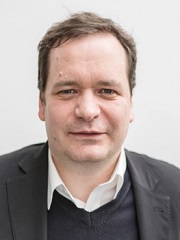
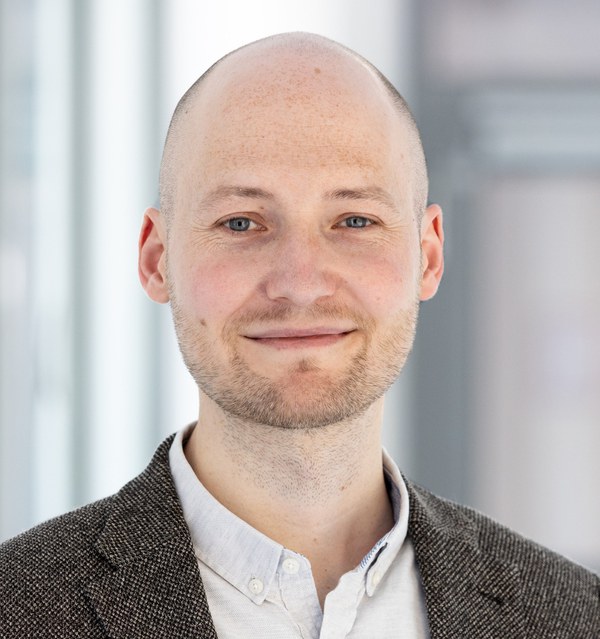
Prof. Dr. Matthias Weidlich is a faculty member at Humboldt University of Berlin within the Institute of Computer Science under the Faculty of Mathematics and Natural Sciences . His research focuses on Process Mining , Complex Event Processing , and Data Privacy with applications in Business Process Management and Scientific Workflows . Research Interests: Business Process Management and Process Mining Complex Event Processing and Stream Data Analysis Data Privacy and Security in Process Systems Scientific Workflow Systems and User Behavior Heterogeneous Network Embeddings Algorithm Design and Optimization Recent Publications (2023-2025) demonstrate expertise in: Efficient stream processing techniques Privacy-preserving process mining frameworks Scientific workflow analysis tools Graph neural network applications Multi-modal data integration Adaptive querying systems Contact: Office: Unter den Linden 6, 10099 Berlin Phone: 030 2093-41277 Email: matthias.weidlich@hu-berlin.de Web: hu.berlin/data
Ahmed Elbeltagi is an Assistant Professor in the Agricultural Engineering Department at Mansoura University's Faculty of Agriculture. His work focuses on hydrology, agricultural water management, and climate change adaptation. Specializes in data-driven modeling for water resource optimization Integrates machine learning with traditional hydrological models Active in climate change impact assessments on agricultural systems Recent research trends include: Developing open-source tools like Aqua-MC for irrigation simulation Applying hybrid deep learning models for evaporation prediction Advancing water quality assessment through multivariate analysis Exploring economic applications of wetlands in arid regions He collaborates with institutions across Egypt, India, China, and Saudi Arabia, with a focus on sustainable water management solutions.
Prof. Dr. Martin Spindler is a Professor for Statistics at the Department of Statistics with Application in Business Administration, University of Hamburg Business School. His research bridges Econometrics, Statistics, and Machine Learning, focusing on high-dimensional methods, causal inference, and applications in finance, insurance, and health economics. Current position since 2016 Visiting Professor at University Mannheim (2016), Boston College (2015), and MIT (2015, 2013-2014) Senior Researcher at Max Planck Society (2012-2016) Education: PhD in Economics, University of Munich (2012) Master in Mathematics and Economics, University of Munich (2008) and Regensburg (2003) B.A. in Mathematics, University of Regensburg (2005) His methodological work includes L2Boosting for treatment effect estimation, double machine learning frameworks, and nonparametric approaches for asymmetric information. Applications span from fraud detection in claims management to pandemic shielding strategies and financial forecasting. Research Trends: Recent publications emphasize high-dimensional statistical methods, causal machine learning, and interdisciplinary applications. Key tools include double machine learning, attention networks, and transformation models. Collaborations: Active partnerships with institutions like MIT, Boston College, and Max Planck Society, alongside contributions to open-source software (e.g., DoubleML, hdm package).
Prof. Dr. Matthias Rarey is a computer scientist and Professor at the University of Hamburg's Center for Bioinformatics. He holds a Ph.D. in Computer Science from the University of Bonn (1996) and has been leading the Algorithmic Molecular Design working group since 2002. His research focuses on molecular design algorithms, cheminformatics tools, and 3D bioinformatics. Co-founder of BioSolveIT GmbH Former cheminformatics group leader at Fraunhofer SCAI Former researcher at SmithKline Beecham and Roche Bioscience Head of Helmholtz Data Science Graduate School DASHH Director of Center for Data and Computing in Natural Science (CDCS) Research interests span algorithmic molecular design, cheminformatics, structure-based drug discovery, and machine learning applications in bioactivity prediction. His group developed widely used tools like FlexX, PoseView, and SpaceLight for molecular modeling and fragment space analysis. Recent publications focus on geometric pattern matching in protein-ligand interfaces, combinatorial fragment space encoding, adverse drug reaction network analysis, and efficient shape-based virtual screening. The work emphasizes scalable algorithms for billion-sized compound libraries and integration of machine learning with traditional cheminformatics approaches. Scientific awards include: GMD Award 1996 (Best Dissertation) GMD Award 2000 (Best Project) NRW Wissenschaftspreis 2002 Corwin Hansch Award 2005 Emerging Technologies Award 2011 Norddeutscher Wissenschaftspreis 2020 Academic leadership roles: Founding director of Center for Bioinformatics Co-founder of M.Sc. Bioinformatics and B.Sc. Computing in Science programs Chair of doctoral committee at Faculty of Computer Science Member of EMBL-EBI's Molecular and Cellular Structure advisory board Former Associate Editor of Journal of Chemical Information and Modeling
Prof. Dr.-Ing. Maria Francesca Spadea serves as Director of the Institute of Biomedical Engineering (IBT) at Karlsruhe Institute of Technology (KIT), part of the Helmholtz Association. Her leadership role includes overseeing research initiatives, teaching activities, and administrative responsibilities within the institute. Located in space 512, she maintains regular consultation hours on Wednesdays from 10:30-11:30 am by appointment. Professor Spadea's research spans several cutting-edge areas in biomedical engineering, with particular focus on medical image processing, artificial intelligence applications in healthcare, and radiomics. Her work bridges computational techniques with clinical applications, emphasizing practical solutions for medical imaging challenges. She has pioneered approaches in federated learning for medical image translation, particularly in CT/MRI synthesis for radiation therapy applications. Her research also extends to cancer cell analysis, vascular biomechanics, and medical robotics, demonstrating a broad yet cohesive research portfolio that addresses critical challenges in modern healthcare. Analysis of Professor Spadea's recent publications reveals a strong emphasis on AI-driven medical imaging solutions, particularly in the translation between different imaging modalities (like MRI-to-CT) using federated learning approaches that preserve patient privacy. Her work demonstrates growing specialization in radiation therapy applications, with multiple publications addressing synthetic CT generation for treatment planning. There's also a clear trajectory toward multi-institutional collaboration, as evidenced by her involvement in projects spanning multiple research centers across Europe. Professor Spadea actively mentors numerous students, including M. Krohmer Zabaleta, N. Skupien, and M. Destito, who have completed bachelor's and master's theses under her supervision. Her research group appears well-integrated within the broader Institute of Biomedical Engineering, collaborating extensively with colleagues like P. Zaffino and C.B. Raggio on multiple projects. The group maintains strong connections with clinical partners, as evidenced by publications addressing real-world medical challenges in radiation therapy, cardiology, and neurosurgery. The research activities of Professor Spadea's team are centered within the Institute of Biomedical Engineering at KIT, with particular focus on medical imaging processing and AI applications. Her laboratory appears to specialize in developing computational tools for medical image analysis, with recent work emphasizing privacy-preserving federated learning frameworks that enable multi-institutional collaboration without sharing sensitive patient data. The team maintains active collaborations with clinical departments, particularly in radiation oncology, as evidenced by numerous publications addressing CT synthesis for radiation therapy planning.
Riccardo Tommasini is an Associate Professor at INSA Lyon , a leading engineering institution in France. He leads the Stream Processing and Knowledge Graphs research within the DB Team at LIRIS laboratory under Professor Angela Bonifati. His academic journey began with a PhD in Computer Science from Politecnico di Milano under Emanuele Della Valle, with a dissertation titled Velocity on the Web to be published as a Springer book. Research Interests : Advancing stream processing for real-time data systems Extending knowledge graphs with dynamic data Designing graph databases for big data applications Creating query languages for heterogeneous data environments Building data engineering pipelines with Apache Airflow Enabling big graph processing in distributed settings Key Contributions : Developed Zodiac framework for Datalog reasoning under rule amendments (ICDE 2025) Co-authored foundational Streaming Linked Data book with Springer (2023) Created RSP4J API for RDF stream processing (ESWC 2021) Designed challenge-based learning curriculum for Data Engineering courses Scientific Recognition : Received ANR JCJC grant for POLYFLOW project (2024) Awarded Best Resource at ESWC 2021 Managed industrial collaborations with Neo4j, InfluxData, and Confluent Advising & Teaching : Supervises Mohamed Ragab (PhD candidate at University of Tartu) Course Leadership : Foundational Data Engineering course at INSA Lyon and University of Tartu Structured around Apache Airflow , Docker, and graph databases
Martín Hötzel Escardó is a Professor of Theoretical Computer Science in the School of Computer Science at the University of Birmingham, UK. He has been a faculty member since 2000, following previous academic positions at Imperial College London, the University of Edinburgh, and the University of St Andrews. His research bridges theoretical computer science and pure mathematics, with a strong emphasis on foundational aspects of computation. His educational background includes a BSc and MSc from Universidade Federal do Rio Grande Sul (Brazil) and a PhD from Imperial College London (1997) under Michael B. Smyth. Escardó's research interests center on topology in computation , constructive mathematics , dependent and univalent type theory (including Homotopy Type Theory and Cubical Type Theory), domain theory , locale theory , and exact real-number computation . His work explores deep connections between logic, topology, and programming, often using functional languages like Haskell and Agda to formalize and experiment with theoretical ideas. He is particularly known for his discoveries on exhaustively searchable infinite sets and the topological nature of computability. The trend in his recent publications reflects a sustained focus on univalent foundations, constructive domain and order theory, game semantics with dependent types, and the logical structure of type universes. His work consistently advances the formalization and understanding of higher-type computation and constructive mathematics within modern type theories. He has no listed scientific awards in the provided text, but his influence is evident through his extensive publication record and software developments like TypeTopology. Escardó has advised several students and collaborators, though specific names are not listed. He has been involved in significant research projects, particularly in the formalization of mathematics in type theory and the semantics of programming languages. His work often involves developing Agda libraries to formalize new mathematical results constructively. He leads and contributes to a vibrant research group in theoretical computer science at Birmingham, with a focus on logic, semantics, and type theory. His public research blog, lecture notes, and open-source Agda code (e.g., TypeTopology, HoTT-UF-in-Agda) serve as important resources for the community.
Luisa Wellert is a Research Associate at the Innovative Educational Technologies Department within the Tübingen Center for Digital Education (TüCeDE) at the University of Tübingen since September 2023. She is also a PhD student at TüCeDE since October 2022. Education: Master of Arts in Intermedia and General Educational Science (2020-2022) from University of Cologne Bachelor of Arts in Media Studies and Educational Science (2016-2019) from University of Tübingen Research Focus: Her work centers on media pedagogy , media didactics , and adaptive learning systems , with particular emphasis on AI integration in educational contexts. Recent projects examine automated qualitative coding of AI tutoring dialogues using large language models and effectiveness of self-developed adaptive systems in schools. Publications: Recent work analyzes assessment methodologies in adaptive learning systems, compares performance-based and cognitive load-based evaluation approaches, and explores implementation challenges of DIY adaptive technologies. She actively contributes to open-source AI tutoring initiatives through the OSATI project. Presentations: Luisa presents her research at major conferences including EARLI, LEAD Research Meeting, and GEBF Conference, focusing on practical implementations of AI-based educational tools and their cognitive impacts. Professional Activity: Prior to her current role, she served as Project Manager for Educational Research at TüCeDE (2022-2023) and worked as a Research Assistant at mmb Institut GmbH (2021-2022) and mecodia GmbH (2018-2020). She also has experience in media education and empirical media research.
David Schlipf is a Professor at the Fachbereich Energy and Life Science, Hochschule Flensburg, leading the Wind Energy Technology Institute. His expertise spans lidar-assisted control systems, floating offshore wind turbines, and aeroelastic modeling. He actively collaborates with international initiatives like IEA Wind Task 32 and contributes to projects such as the 'Lidar Knowledge Europe (LIKE)' network. His research focuses on enhancing wind turbine efficiency through advanced control strategies and sensor technology integration. He has been instrumental in developing the TorqTwin open-source framework for multibody modeling and has published extensively on topics including wind field reconstruction, load mitigation, and floating platform dynamics. His work bridges academic research with industrial applications, emphasizing practical solutions for offshore wind energy challenges. Notable projects include the evaluation of lidar-assisted control performance, optimization of floating turbine designs, and contributions to wind energy education's role in climate resilience. His research outputs span over 200 publications, highlighting his global impact in advancing renewable energy systems.
Professor Saman Amarasinghe is a full Professor in the Department of Electrical Engineering and Computer Science (EECS) at the Massachusetts Institute of Technology (MIT), and Principal Investigator at MIT's Computer Science and Artificial Intelligence Laboratory (CSAIL). He leads the Commit compiler research group, which focuses on programming languages and compilers that maximize application performance on modern computing platforms. His work spans multiple academic departments and research centers, with strong affiliations to both MIT's School of Engineering and CSAIL. Professor Amarasinghe's research interests center around high-performance domain-specific languages and compiler technology . His work combines language design with sophisticated compilation techniques to deliver unprecedented performance for targeted application domains. His research spans multiple areas including image processing (Halide), sparse tensor algebra (TACO), graph analytics (GraphIt), stream computations (StreamIt), and bioinformatics (Seq). A significant thread throughout his work is the application of machine learning for compiler optimizations, from Meta optimization in 2003 to the OpenTuner autotuner framework. Analysis of Professor Amarasinghe's recent publications reveals a strong focus on sparse computing , compiler vectorization , and domain-specific language implementation . His work consistently bridges theoretical compiler concepts with practical performance gains across diverse application domains. The progression from earlier work on StreamIt and Halide to more recent projects like GraphIt and TACO shows an evolution toward more specialized, high-performance DSLs targeting specific computational patterns. His 2020-2025 publications particularly emphasize sparse tensor operations, GPU acceleration, and machine learning integration with compiler technology. ACM Fellow (2019) Professor Amarasinghe has made significant contributions to academic entrepreneurship and student development. He founded Determina, Inc. (acquired by VMware) based on security research from his MIT lab and co-founded Lanka Internet Services, Ltd., Sri Lanka's first ISP. As faculty director of MIT Global Startup Labs, his programs across 17 countries have helped create over 20 successful startups. His teaching includes the popular Performance Engineering of Software Systems (6.172) course with Professor Charles Leiserson, as well as innovative project-based courses like the Open Source Software Project Lab and Bring Your Own Software Project Lab. His educational approach emphasizes hands-on experience with compiler and language design concepts. Professor Amarasinghe leads the Commit compiler research group at MIT CSAIL, which has produced numerous influential domain-specific languages and compilers including Halide, TACO, Simit, StreamIt, and GraphIt. The lab maintains strong industry connections through projects like OpenTuner and Determina, and collaborates with researchers worldwide on compiler technology. The group's work spans both theoretical compiler research and practical implementation, with a consistent focus on bridging the performance gap between high-level programming abstractions and hardware capabilities.
Prof. Dr.-Ing. Annette Eicker is a Professor of Geodesy and Adjustment Calculations at the HafenCity University Hamburg (HCU), where she has been serving since 2016. Prior to her current position, she was an Academic Councillor at the Institute of Geodesy and Geoinformation at the University of Bonn (2014-2016), and has held visiting research positions at NASA's Jet Propulsion Laboratory in Pasadena, USA (2015) and the University of Rennes 1 in France (2014). Her research focuses on satellite gravimetry, particularly utilizing GRACE (Gravity Recovery and Climate Experiment) and GRACE-FO (Follow-On) mission data to monitor terrestrial water storage, study climate-related mass changes, and develop advanced methods for gravity field recovery. Her work bridges geodesy, hydrology, and climate science, with significant contributions to understanding global water cycle dynamics and developing next-generation gravity missions like MAGIC (Mass-change And Geosciences International Constellation). Analysis of her recent publications reveals a strong emphasis on improving the accuracy and applications of satellite gravity data for hydrological monitoring, with increasing focus on next-generation missions and daily gravity field solutions. Her research spans from fundamental method development (e.g., GROOPS software toolkit) to practical applications for water resource management and climate change monitoring. Prof. Eicker's work demonstrates leadership in the field of satellite gravimetry, with numerous publications in high-impact journals addressing critical challenges in Earth observation and climate monitoring. Though specific awards aren't mentioned in the provided materials, her extensive publication record and leadership in major projects like MAGIC indicate significant recognition within the geodetic and hydrological communities. Her research has strong implications for understanding climate change impacts on water resources, with applications in drought monitoring, flood risk assessment, and sustainable water management. She maintains active collaborations with international institutions including NASA's Jet Propulsion Laboratory and has contributed to major initiatives like the GlobalCDA Project, which integrates geodetic and remote sensing data with hydrological models.
Timothy Baldwin is a Professor at the University of Melbourne, School of Computing and Information Systems, with additional affiliation at Mohamed bin Zayed University of Artificial Intelligence in UAE. His research spans natural language processing, large language models, and multilingual AI systems. His research interests focus on the safety, reliability, and ethical aspects of large language models. He investigates bias evaluation and debiasing techniques, uncertainty quantification methods, fact-checking systems, and multilingual model safety. His work addresses critical challenges in making AI systems more transparent, reliable, and culturally aware, with particular attention to low-resource languages and cross-cultural differences. Baldwin's recent publications demonstrate a strong focus on evaluating and improving the safety of language models across diverse linguistic contexts, developing tools for fact verification, and understanding the internal mechanisms of large language models. His research shows increasing emphasis on practical applications with real-world impact, particularly in multilingual settings and safety-critical domains. His scientific contributions include foundational work on multilingual NLP, bias mitigation techniques, and frameworks for evaluating LLM safety across different cultural contexts. His research has been published in top-tier venues including ACL, NAACL, EMNLP, and ICLR. Baldwin actively mentors students and junior researchers, with frequent collaborations with Haonan Li, Xudong Han, and Fajri Koto, among others. His research group appears to focus on practical applications of NLP with strong ethical considerations, particularly regarding model safety and cultural sensitivity.
Prof. Dr.-Ing. Marc Reichenbach serves as the Chair of Integrated Systems at the Institute for Applied Microelectronics and Data Technology at the University of Rostock. His office is located at Albert-Einstein-Straße 26, 18059 Rostock, Room 102 (1st floor), with contact information including telephone (0381) 498 7270 and email marc.reichenbach@uni-rostock.de. Professor Reichenbach's research focuses on the intersection of hardware design and artificial intelligence, with particular expertise in memory technologies and computing architectures. His work spans several key areas: Development of specialized computer architectures for deep learning applications Advanced VLSI design and CPU architecture Emerging memory technologies, particularly RRAM (Resistive Random-Access Memory) FPGA-based acceleration systems Hardware implementations for neural networks and AI applications Analysis of Professor Reichenbach's recent publications (2023-2025) reveals a strong focus on memory computing technologies, particularly RRAM-based systems. His work demonstrates expertise across multiple dimensions of computer architecture including ASIC design, FPGA acceleration, and novel memory systems. The publications show a clear trajectory toward implementing AI and machine learning capabilities directly in hardware, with applications ranging from edge computing to satellite systems. A significant portion of his recent work addresses the challenges of implementing neural networks using emerging memory technologies, focusing on efficiency, reliability, and performance optimization. Professor Reichenbach teaches several advanced courses including: Computer architectures for deep learning applications Project seminar Embedded Systems Advanced VLSI Design (Advanced CPU Design) His research group appears to be actively engaged in several cutting-edge projects related to hardware acceleration for AI applications, memory computing, and embedded systems design. The group collaborates on projects involving digital twins for hardware systems, real-time operating systems for heterogeneous architectures, and specialized computing systems for various applications from medical devices to drone technology.
Andreas Maier is a Researcher at the University of Hamburg's Faculty of Mathematics, Informatics and Natural Sciences, affiliated with the Computational Systems Biology department. He began his PhD in May 2021 with Cosy.Bio (Center for Systems Biology) at UHH, focusing on drug repurposing projects such as REPO-TRIAL. Previously, he completed a Bioinformatics master's thesis at TUM (Technical University of Munich), developing a web application for analyzing molecular disease networks. His research interests emphasize network medicine, drug repurposing, and computational tools for biomedical discovery. He has contributed to platforms like NeDRex-Web, Drugst.One, and BioCypher, which democratize access to systems medicine workflows. His work bridges heterogeneous data integration, federated learning for rare diseases, and quantum computing applications in genetics. Maier's publications highlight innovations in knowledge graph-based drug discovery, privacy-preserving federated learning, and single-cell network analysis. He actively develops open-source bioinformatics tools to address challenges in disease module identification and patient stratification. His projects align with the REPO4EU consortium and other collaborative initiatives in translational bioinformatics.
Dr. Jann Michael Weinand is the head of the Integrated Scenarios department at the Institute of Climate and Energy Systems (ICE-2) within Forschungszentrum Jülich GmbH. He leads a team of 30 scientists, PhD students, and master students focusing on energy system analysis, complexity management, and AI integration. His work addresses regional and international energy systems, emphasizing renewable energy resource assessment and techno-economic feasibility. Dr. Weinand holds a Dr.-Ing. from the Karlsruhe Institute of Technology (2020) and a Mechanical Engineering and Business Administration degree from RWTH Aachen University (2016). His research spans energy autonomy, renewable resource optimization, and the socio-technical challenges of energy transitions. Key research areas include energy system modeling, geothermal and wind energy potential, and data-driven methodologies. He coordinates interdisciplinary projects with academic and industrial partners, contributing to high-impact journals like Nature Energy and Joule. His team develops open-source tools (e.g., ETHOS workflows) for reproducible energy assessments and advocates for spatially disaggregated energy planning. Publications highlight trade-offs in energy system design, AI risks, and land-use conflicts for renewables. He emphasizes integrating social, technical, and environmental factors into energy policy frameworks.