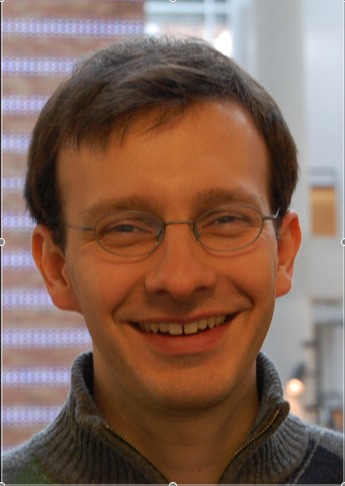
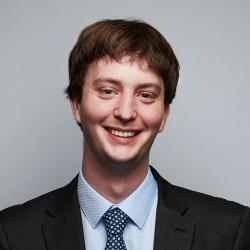
Dr Graeme Bragg is a Senior Teaching Fellow at the University of Southampton within the Department of Electronics and Computer Science . His work spans teaching, research, and technical development with a focus on event-driven computing, bioinformatics, and computational modeling. He actively supervises PhD students and collaborates on interdisciplinary projects. Research Interests: Parallel computing, event-driven systems, genotype imputation, Petri net simulations, subglacial hydrology modeling Teaching: Specializes in hardware description languages and computational methods for engineering students Technical Expertise: RISC-V architecture, FPGA acceleration, bespoke compute fabric development His recent publications demonstrate expertise in applying event-driven computing to diverse problems including: 2025: Automated marking systems for SystemVerilog labs 2025: Seasonal dynamics in subglacial hydrology 2023: Genotype imputation using custom hardware 2022: Optimization algorithms and graph analysis Current research explores: Custom RISC-V FPGA clusters for bioinformatics Event-triggered systems for scientific simulations Parallel computing solutions for molecular modeling Contact: gmb@ecs.soton.ac.uk | +44 23 8059 2784
Michael J. Cafarella is an Associate Professor in the Computer Science and Engineering department at the University of Michigan . His research focuses on databases, information extraction, data integration, and data mining, with applications in economics, social media analysis, and combating human trafficking. He leads the Software Systems Lab and Michigan Database Group . Scientific Awards NSF CAREER award Sloan Research Fellowship (2016) 2018 VLDB Ten-Year Best Paper award Research Impact : Cafarella co-founded the Hadoop open-source project and Lattice Data (acquired by Apple). His work on DeepDive and DARPA MEMEX was featured on 60 Minutes and in Scientific American . Funding from The Census Bureau, DARPA, Google, NSF, Yahoo!, General Electric, and Dow.
Martin Hepp is Professor of Web Science and Digitalization at the Universität der Bundeswehr Munich, where he leads the E-Business and Web Science Research Group. He is also CEO and Chief Scientist of Hepp Research GmbH, a consultancy firm specializing in semantic technologies, GoodRelations, and schema.org. He has held academic positions at the University of Innsbruck, Florida Gulf Mexico University, and DERI Innsbruck, and has been a visiting scientist at IBM Research and Boston University. Education: Habilitation in Information Systems, University of Würzburg, 2005–2008 PhD in Management Information Systems, University of Würzburg, 2000–2003 (Summa Cum Laude) Diplom-Kaufmann (M.B.A.), Business Administration and Management, University of Würzburg, 1997–1999 Vordiplom, Business Administration and Management, University of Würzburg, 1994–1997 His research centers on shared data structures at web scale, particularly ontology engineering and semantic interoperability in e-commerce. He is best known for creating GoodRelations , an OWL DL ontology for e-commerce that became the official e-commerce core of schema.org in November 2012. His other major projects include the Product Types Ontology, OPDM (Ontology-based Product Data Management), and the Automotive Ontology Working Group. He has developed methodologies such as GenTax for deriving ontologies from taxonomies and advocates for community-driven ontology development. His recent publications explore foundational issues in ontology design and the future of web communication, reflecting a blend of technical innovation and philosophical inquiry. These works highlight trends in semantic technologies, particularly their application in real-world business systems and ethical dimensions of digital interaction. Scientific Awards: Linked Data-a-thon Award (4th prize), ISWC 2009 ACM Senior Member (2009) 2nd place, FIT-IT Research Proposal Award (2007) Dissertation Award, Alcatel SEL Foundation (2004) Dissertation Award, Unterfränkische Gedenkjahrstiftung (2004) Summa cum laude, University of Würzburg (2003) Prof. Hepp has supervised numerous research projects funded by the European Commission, BMBF, FFG/BMVIT, and others, including MUSING, SUPER, myOntology, and OPDM. He has been an active member of over 60 conference program committees, including ISWC, ESWC, WWW, and ECIS, and has chaired workshops and tracks on semantic web topics. He serves or has served on editorial boards of journals such as the International Journal on Semantic Web and Information Systems (IJSWIS). He leads several research labs and teams, including the E-Business and Web Science Research Group at Universität der Bundeswehr Munich, and has contributed to open-source projects such as SKOS2GenTax, myClassify, and eClassOWL. His work bridges academic research and industry application through Hepp Research GmbH and collaborative initiatives like the Automotive Ontology Working Group.
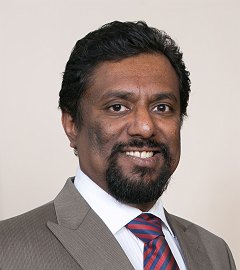
Professor Saman Amarasinghe is a full Professor in the Department of Electrical Engineering and Computer Science (EECS) at the Massachusetts Institute of Technology (MIT), and Principal Investigator at MIT's Computer Science and Artificial Intelligence Laboratory (CSAIL). He leads the Commit compiler research group, which focuses on programming languages and compilers that maximize application performance on modern computing platforms. His work spans multiple academic departments and research centers, with strong affiliations to both MIT's School of Engineering and CSAIL. Professor Amarasinghe's research interests center around high-performance domain-specific languages and compiler technology . His work combines language design with sophisticated compilation techniques to deliver unprecedented performance for targeted application domains. His research spans multiple areas including image processing (Halide), sparse tensor algebra (TACO), graph analytics (GraphIt), stream computations (StreamIt), and bioinformatics (Seq). A significant thread throughout his work is the application of machine learning for compiler optimizations, from Meta optimization in 2003 to the OpenTuner autotuner framework. Analysis of Professor Amarasinghe's recent publications reveals a strong focus on sparse computing , compiler vectorization , and domain-specific language implementation . His work consistently bridges theoretical compiler concepts with practical performance gains across diverse application domains. The progression from earlier work on StreamIt and Halide to more recent projects like GraphIt and TACO shows an evolution toward more specialized, high-performance DSLs targeting specific computational patterns. His 2020-2025 publications particularly emphasize sparse tensor operations, GPU acceleration, and machine learning integration with compiler technology. ACM Fellow (2019) Professor Amarasinghe has made significant contributions to academic entrepreneurship and student development. He founded Determina, Inc. (acquired by VMware) based on security research from his MIT lab and co-founded Lanka Internet Services, Ltd., Sri Lanka's first ISP. As faculty director of MIT Global Startup Labs, his programs across 17 countries have helped create over 20 successful startups. His teaching includes the popular Performance Engineering of Software Systems (6.172) course with Professor Charles Leiserson, as well as innovative project-based courses like the Open Source Software Project Lab and Bring Your Own Software Project Lab. His educational approach emphasizes hands-on experience with compiler and language design concepts. Professor Amarasinghe leads the Commit compiler research group at MIT CSAIL, which has produced numerous influential domain-specific languages and compilers including Halide, TACO, Simit, StreamIt, and GraphIt. The lab maintains strong industry connections through projects like OpenTuner and Determina, and collaborates with researchers worldwide on compiler technology. The group's work spans both theoretical compiler research and practical implementation, with a consistent focus on bridging the performance gap between high-level programming abstractions and hardware capabilities.
Wilson Miller serves as Associate Professor of Radiology and Medical Imaging within the Department of Radiology and Medical Imaging at the University of Virginia School of Medicine. His research bridges advanced medical imaging physics with clinical pulmonary and neurological applications, maintaining active collaborations across radiology, pulmonology, and neurosurgery departments. Dr. Miller's research program centers on two transformative domains: hyperpolarized gas MRI for pulmonary disease characterization and focused ultrasound for neurological interventions. In pulmonary imaging, he pioneers hyperpolarized xenon-129 and helium-3 MRI techniques to map regional lung function in COPD, asthma, and lung transplantation, identifying novel imaging biomarkers for early disease detection and treatment monitoring. His neurological work develops focused ultrasound protocols for blood-brain barrier opening to enhance therapeutic delivery for cerebral cavernous malformations and brain tumors, with recent publications demonstrating lesion regression and improved drug penetration. Analysis of his 2023-2025 publications reveals accelerating integration of molecular techniques with imaging, particularly transcriptomic analysis of rejection in lung transplants and immune response mapping in glioblastoma. His work increasingly emphasizes multimodal assessment combining hyperpolarized gas MRI with histological and molecular validation, while maintaining a secondary research thread in spin-polarized fusion physics for energy applications. Scientific Awards: No specific awards documented in source materials Dr. Miller actively mentors graduate students and postdoctoral researchers within the Medical Imaging PhD program, though individual advisee names were not provided in source texts. His research program likely operates through NIH-funded R01 grants from the National Heart, Lung, and Blood Institute (NHLBI) and National Institute of Neurological Disorders and Stroke (NINDS), supported by collaborative infrastructure from the University of Virginia's Radiology Research Division. His laboratory operates advanced 3T MRI systems with hyperpolarized gas delivery capabilities and preclinical focused ultrasound platforms, collaborating with the UVA Brain Immunology and Glia Center and Lung Repair and Regeneration Consortium. Current projects include developing AI-enhanced analysis of hyperpolarized gas MRI for COPD endotyping and optimizing microbubble parameters for focused ultrasound-mediated drug delivery to brain lesions.
Raghavendra Selvan, an Assistant Professor (Tenure Track) at the University of Copenhagen, holds joint appointments in the Machine Learning Section (Department of Computer Science), Kiehn Lab (Department of Neuroscience), and the Data Science Laboratory. His academic journey includes a PhD in Medical Image Analysis (2018), MSc in Communication Engineering (2015), and BSc in Electronics and Communication Engineering (2009). PhD - Medical Image Analysis, University of Copenhagen (2018) MSc - Communication Engineering, Chalmers University (2015) BSc - Electronics and Communication Engineering, BMS Institute of Technology, India (2009) His research focuses on Bayesian Machine Learning with emphasis on Medical Image Analysis, Graph-based Learning, Tensor Networks, Approximate Inference, and Multi-Object Tracking Theory. Recent publications highlight his contributions to environmentally sustainable AI practices, efficient deep learning in medical imaging, and novel applications of tensor networks. Key research areas: Green AI and Environmental Sustainability Medical Image Analysis Graph Neural Networks Crystal Structure Prediction Model Compression Materials Science Applications
M. Tariq Iqbal is a Professor in the Department of Electrical and Computer Engineering at Memorial University of Newfoundland. He holds a B.Sc. from UET Lahore, M.Sc. from QAU Islamabad, and PhD from Imperial College London. His research develops renewable energy solutions including hybrid power systems, solar applications, and IoT-based monitoring. Projects focus on off-grid communities, industrial applications, and energy-efficient electronics. Specific interests include microgrid design, solar water pumping, and power consumption analysis. Recent publications emphasize techno-economic modeling of microgrids, IoT-enabled SCADA systems, and energy efficiency in computing. Work demonstrates increasing focus on practical implementations in remote locations. No scientific awards are documented. Iqbal advises graduate students on projects across 20+ countries. Current research includes solar-powered oil pumps, electric vehicle charging, and community microgrids. He directs multiple projects through the faculty's engineering design initiative.
Paolo Prandoni is a Lecturer at École Polytechnique Fédérale de Lausanne (EPFL) in the School of Computer and Communication Sciences (IC). He serves as a Scientist in the Audiovisual Communications Laboratory (LCAV) and teaches in the SSC-ENS and SIN-ENS units, focusing on signal processing theory and practical applications in audiovisual communications. He earned his PhD from EPFL after completing all prior education there, driven by childhood fascination with long-distance telephony. His doctoral work established foundations in communication systems that continue to inform his research. Prandoni's research spans audio/image processing, machine learning for media analysis, and DSP education. Key areas include computational photography (e.g., spectral imaging, stained glass rendering), speech quality assessment via transfer learning, music information retrieval (e.g., fingering prediction), and audience analytics through his company Quividi. His work consistently bridges theoretical signal processing with real-world implementation. Recent publications reveal a strategic shift toward machine learning integration in signal processing tasks, particularly non-intrusive speech assessment and lensless imaging reconstruction. Simultaneously, he advances DSP pedagogy through MOOC development and hands-on teaching tools using off-the-shelf hardware, emphasizing accessibility and practical skill development. No scientific awards are documented in the provided materials. He has advised PhD student Thanikachalam Niranjan (thesis: Image Based Relighting of Cultural Artifacts , 2016) and teaches Communication Systems and Computer Science courses. His educational impact extends through the open-access textbook Signal Processing for Communications (2008) and tools like MultiPub for maintainable online classes. Industry engagement includes Quividi co-founding (2006) and ongoing CSO role in attention analytics. As a core LCAV laboratory member, he collaborates on interdisciplinary projects including cultural heritage digitization, embedded signal processing systems, and real-time audience measurement, leveraging EPFL's infrastructure for both academic and commercial applications.
Peter Burke is a Professor of Electrical Engineering and Computer Science (joint appointments in Biomedical Engineering and Materials Science and Engineering ) at the Samueli School of Engineering, University of California, Irvine . His research bridges nanoelectronics with biotechnology , focusing on carbon nanotubes , graphene devices , and mitochondrial bioenergetics . He has received prestigious Young Investigator Awards from the Office of Naval Research and Army Research Office. Education: B.A. in Physics, University of Chicago (1992) Ph.D. in Physics, Yale University (1998) His work spans quantum electronics , high-speed semiconductor devices , and bio-nano interfaces . Recent publications highlight drone technology , mitochondrial electrical activity , and AI-driven nanoscale sensing . Research trends include terahertz spectroscopy , super-resolution imaging , and open-source medical devices like the NanoStat potentiostat . Scientific Awards Young Investigator Award, Office of Naval Research Young Investigator Program Award, Army Research Office As director of the BurkeLab , he develops nano-electronic interfaces for biological systems, including mitochondrial membrane potential assays and graphene-based biosensors . His lab's innovations in carbon nanotube arrays and scanning microwave microscopy have advanced bio-nano applications.
Sarah Azimi is a fixed-term researcher at the Department of Control and Computer Science (DAUIN) within the College of Computer, Film and Mechatronics Engineering at Politecnico di Torino. She actively contributes to research and teaching in the domains of reliable computing, reconfigurable systems, and AI applications for space and smart city security. Research Interests: Reliability and fault tolerance in safety-critical and space systems RISC-V and FPGA-based architectures High-performance computing (HPC) and reconfigurable computing AI resilience and real-time gesture recognition for public safety Radiation effects and hardening techniques for aerospace applications Publication Trends: Her recent publications focus on RISC-V reliability, radiation effects in space missions, AI resilience in reconfigurable platforms, and smart city security through gesture recognition. Her work spans both journal and conference venues, emphasizing practical and mission-tailored solutions in embedded and aerospace computing. Scientific Awards: No awards explicitly mentioned in the provided text. Advising and Grants: Sarah Azimi supervises multiple PhD students including Federico Buccellato, Aobo Cui, and Giorgio Cora. She leads the competitive research project Safe Smart City: Detecting Violence and Requests for Help in Real Time Through Video Surveillance Devices (2024). She is also a member of the RAMSES CubeSat-1 Development project (2025–2026) and led the commercial research project on the Rempro fault-tolerant processor (2022–2023). Labs and Teams: She is a key member of the CAD - Electronic CAD & Reliability Group (DAUIN) at Politecnico di Torino, contributing to cutting-edge research in electronic design automation and system reliability for aerospace and terrestrial applications.
Peter Bui is a Teaching Professor in the Computer Science and Engineering department at the University of Notre Dame , located within the College of Engineering. He teaches courses such as Data Structures, Systems Programming, and Ethical and Professional Issues, while also managing the core Elements of Computing programming sequence for the Computing & Digital Technologies minor. Education: Ph.D. in Computer Science and Engineering from University of Notre Dame (2012) His research interests span systems programming, operating systems, parallel computing, cloud computing, distributed computing, programming languages, compilers, and web services . He actively integrates these domains into his teaching and extracurricular work with the Linux Users Group. Recent publications highlight his work in distributed computing frameworks , including the development of tools like WorkQueue and Madeup for scalable scientific workflows and 3D printing integration. Projects such as ROARS and Weaver demonstrate his focus on robust data management and workflow automation. Outside academia, he stewards the Linux Users Group , engages with open-source communities, and balances personal interests like gaming in RuneScape with family time.
Pasquale Scarlino is a Tenure Track Assistant Professor in the Institute of Physics at École Polytechnique Fédérale de Lausanne (EPFL), where he founded and leads the Hybrid Quantum Circuits (HQC) Laboratory. He holds a dual appointment with the School of Basic Sciences (SB) and the Physics Section (SB-SPH), conducting research at the intersection of semiconductor and superconducting quantum technologies. His laboratory develops hybrid quantum hardware for advanced quantum information processing. His educational background includes a Master's degree in Physics from the University of Salento (Italy, 2011), where he was a student of Scuola Superiore ISUFI, followed by a Ph.D. from TU Delft (2016) in the Spin Qubits group of Prof. L.M.K. Vandersypen at the Kavli Institute of Nanoscience-Qutech. His doctoral work focused on Si/SiGe spin qubits in collaboration with the M. Eriksson Group at Wisconsin University. Scarlino's research centers on experimental quantum physics using hybrid superconductor/semiconductor devices with electrostatically defined quantum dots coupled to high-impedance microwave resonators. He investigates light-matter interactions in unconventional regimes, quantum transport in low-dimensional systems, and spin/charge qubit implementations. His work aims to merge semiconductor and superconducting platforms to expand quantum information capabilities, with applications in quantum computing, quantum optics, and analog quantum simulation. Early career achievements include establishing the first coherent interface between superconducting and semiconducting quantum systems using high-impedance resonators. His publication record shows strong focus on microwave photon-mediated interactions between quantum systems, with recent work exploring quantum acoustics, topological band engineering, and criticality-enhanced sensing. The articles demonstrate increasing specialization in hybrid quantum hardware, with a shift toward germanium-based systems and advanced resonator designs in the latest publications. Scarlino has advised eleven Ph.D. students at EPFL and teaches courses including General Physics (Electromagnetism), Solid State Systems for Quantum Information, and Introduction to Quantum Science and Technology. His teaching emphasizes experimental quantum hardware approaches and critical assessment of quantum computing platforms. The Hybrid Quantum Circuits Laboratory operates within EPFL's Institute of Physics, utilizing state-of-the-art nanofabrication facilities and cryogenic measurement setups. The team collaborates extensively with leading quantum research groups worldwide, maintaining strong ties with previous institutions including ETH Zurich, TU Delft, and Microsoft Station Q Copenhagen.
Alexandre Manuel de Castro Passos de Almeida is an Assistant Professor in the Department of Information Science and Technology at the University Institute of Lisbon (ISCTE-IUL), where he also contributes to the School of Technology and Architecture. He is an Associate Researcher at the Institute of Telecommunications - IUL, actively involved in the Radio Systems Group, focusing on telecommunications and sensor-based environmental monitoring. PhD in Telecommunications, ISCTE-IUL, 2012 His research interests span telecommunications, wireless sensor networks, air quality monitoring, computer architecture, and robotics. He has led and contributed to innovative projects such as ExpoLis, which uses mobile sensor networks on public buses to map urban air pollution. His work bridges engineering and environmental science, aiming to influence urban policy and public health through real-time data systems. The most recent publications highlight a strong trend toward deploying low-cost, mobile sensor networks for environmental monitoring, particularly in urban settings. His work integrates computer systems, signal processing, and sustainable technology, with applications in smart cities, public health, and robotics. Topics like air quality mapping, energy harvesting, and noise-aware robot navigation reflect a multidisciplinary approach to solving real-world problems. He has advised seven Master’s students at ISCTE-IUL, guiding research in sensor networks, air pollution, database performance, robotic navigation, and personal photography assistants. While no specific scientific awards are listed, his contributions to funded research projects and consistent scholarly output indicate recognition in his field. He has held leadership roles in academic governance, including Vice President of the Pedagogical Council, underscoring his institutional engagement. His teaching portfolio includes core courses such as Fundamentals of Computer Architecture, Operating Systems, and Big Data Processing, delivered across multiple undergraduate and postgraduate programs. He is involved in research projects that combine academic innovation with practical urban applications, particularly through the deployment of scalable, open-source environmental sensing systems.
Dr. Erik Linstead is an Associate Professor and Senior Associate Dean at Chapman University, affiliated with the Fowler School of Engineering, School of Pharmacy, and George L. Argyros College of Business and Economics. His expertise spans Machine Learning, GPU Programming, Autism Spectrum Disorder, Assistive Technologies, Predictive Analytics, and Virtual Reality. Education: Bachelor of Science, Chapman University Master of Science, Stanford University Ph.D., University of California, Irvine Dr. Linstead's research integrates machine learning with diverse domains, including autism treatment, environmental monitoring, and software engineering. His recent publications focus on coral reef health, land surface temperature trends, and embedded machine learning systems. His scholarly work includes collaborations in remote sensing, medical informatics, and neurodiversity support. Articles highlight his interdisciplinary approach, applying AI to ecological challenges (e.g., Red Sea coral reefs, Nile Basin droughts) and human-centered technologies (e.g., VR therapy for autism, medication adherence analysis).
Samuel McDermott is an Associate Teaching Professor at the Department of Chemical Engineering and Biotechnology , University of Cambridge. He serves as the Sensor CDT Programme Manager , focusing on interdisciplinary research in healthcare, biotechnology, and open-source hardware. His research spans machine learning applications in medical imaging , laboratory automation , and web-of-things (WoT) integration for scientific equipment. Recent work emphasizes federated learning in healthcare, blood cell morphology classification, and low-cost diagnostic tools. Key article trends include: deep diffusion models for malaria detection , open-source microscopy platforms like OpenFlexure, and AI-driven clinical data generalization . His projects often combine 3D-printed hardware and IoT-enabled laboratory systems .