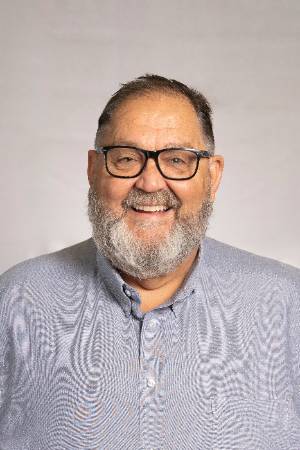
Wayne Garcia is a Senior Instructor at USF's Zimmerman School of Advertising & Mass Communications with 30+ years of journalism and political communication experience. His teaching focuses on media and society, podcasting, and reporting fundamentals. Education includes: MA, University of South Florida BS in Journalism, University of Florida As Executive Director of the Florida Scholastic Press Association, he supports high school journalism programs statewide. Professional honors include Sunshine State Awards for political reporting and ACLU recognition for investigative journalism. His teaching emphasizes hands-on skills development and civic engagement. Courses taught include Media and Society, Radio/Podcasting production, Beginning Reporting, and Writing for Mass Media. He maintains professional engagement through political commentary on public television and community radio.
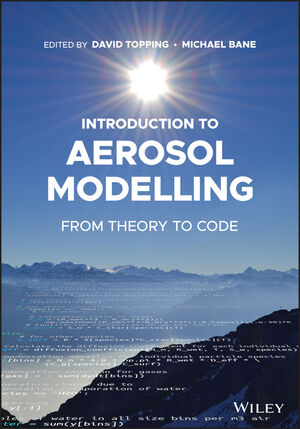
Dr. Michael K. Bane is a Senior Lecturer in Green Software Engineering & Performance Computing at Manchester Metropolitan University , within the Department of Computing & Mathematics, Faculty of Science and Engineering. A Senior Fellow of the Higher Education Academy (HEA) and founder of GreenCompute.UK , he leads the university's Greener Compute Club and the £120K UKRI Net Zero project "ENERGETIC" on heterogeneous computing for carbon reduction. Current teaching: Unit Lead for High Performance Computing & Big Data (UG/MSc) and Green Software Engineering modules Previous roles: University of Liverpool lecturer, UKRI Hartree Centre research scientist, and University of Manchester HPC team leader Research focuses on Energy Efficient Performant Computing (EEPC), exploring: Heterogeneous architectures (FPGA/GPU/accelerator integration) Carbon-aware scheduling systems Quantifying ICT's environmental footprint Green AI development Emerging hardware-software synergies Key contributions: Co-edited Introduction to Aerosol Modelling: From Theory to Code (2022) Authored 20+ publications on HPC, parallel algorithms, and sustainable computing Recipient of EMS 'best paper' award for climate modeling work
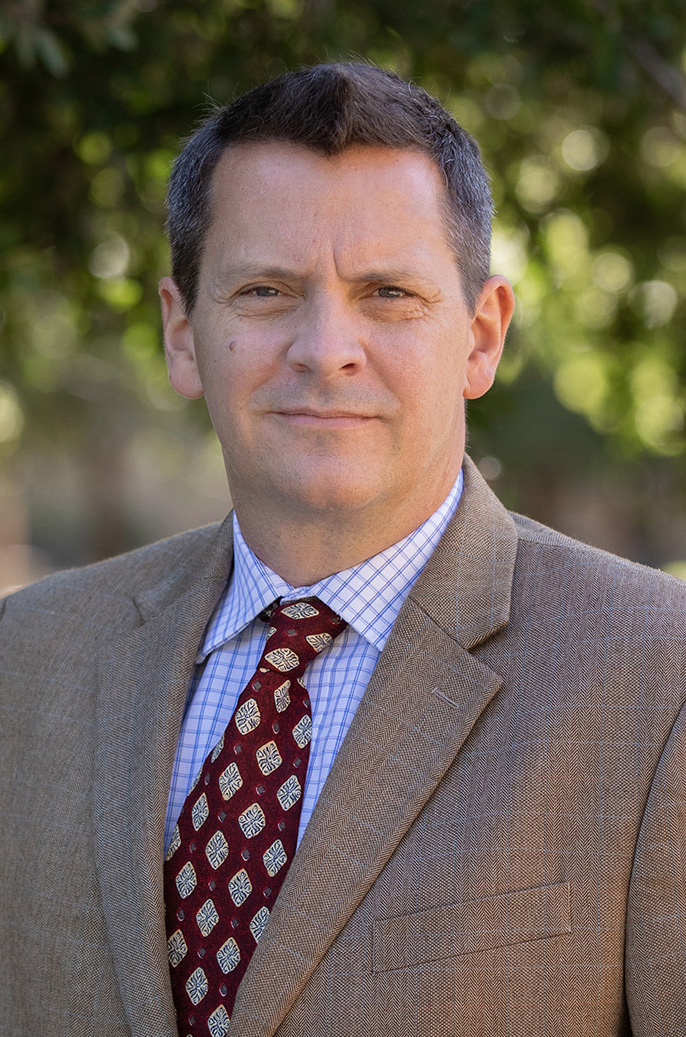
Brian Still is a Professor in the Department of English at Texas Tech University, where he also serves as Vice Provost for Texas Tech Online. He previously held roles as Interim Dean of the College of Arts and Sciences and Chair of the Department of English. Dr. Still holds a PhD in English from the University of South Dakota (2005), an MA in English (1993), and an AB in English & Philosophy (1990). His research bridges technical communication, user-centered design, and cognitive science, with emphasis on eye-tracking technology and usability studies. As co-founder of EyeGuide Inc., he pioneered innovations in medical diagnostics and assistive technologies, resulting in FDA-cleared devices and multiple patents. Dr. Still's publications explore interdisciplinary approaches to human-computer interaction, including cognitive function testing frameworks and open-source collaboration models. His work demonstrates consistent focus on translating technical innovations into accessible user experiences. Awards include election to the National Academy of Inventors (2018), the President's Technology Commercialization Award (2015), and the IEEE Emily K. Schlesinger Award (2009). He directs initiatives integrating academic research with industry applications, including workforce training programs and technology commercialization partnerships with organizations like Google and IBM.
Prof. Kurt Rohloff is an Associate Professor in the Department of Computer Science at New Jersey Institute of Technology (NJIT). He serves as the founding director of the NJIT Cybersecurity Research Center, focusing on advanced cryptographic techniques such as homomorphic encryption, lattice-based cryptography, and secure computing. With a background in electrical engineering from the University of Michigan (Ph.D., 2004) and Georgia Tech (B.E., 1999), his career includes prior roles as a DARPA Program Investigator in industry before joining academia. His research emphasizes practical implementations of privacy-preserving technologies, including open-source libraries like PALISADE and OpenFHE , which enable secure computation on encrypted data. Key areas of contribution include FPGA-accelerated homomorphic encryption, proxy re-encryption systems, and applications in healthcare, telecommunications, and distributed computing. He has led workshops such as WAHC (Workshop on Encrypted Computing and Applied Homomorphic Cryptography), fostering interdisciplinary collaboration. Rohloff’s work bridges theoretical cryptography with real-world challenges, addressing scalability, performance optimization, and usability of secure computing frameworks. His innovations target use cases like encrypted genome analysis, privacy-preserving AI, and secure data sharing across distributed networks.
Franco Raimondi is Professor of Computer Science at Middlesex University and an Amazon Scholar in the Prime Video Automated Reasoning Group. His research focuses on formal verification methods, multi-agent systems, and security protocols. He leads projects in automated reasoning for distributed systems, including blockchain alternatives and privacy-preserving social platforms (CoSMed). His educational innovations include developing the MIRTO open-source robotics platform for coding instruction and digital twin technologies for scalable computer science education. His work bridges theoretical foundations with industrial applications in security and cloud computing.
Dirk Pflüger is a Professor at the University of Stuttgart's Institute of Parallel and Distributed Systems, within the Faculty of Computer Science, Electrical Engineering and Information Technology. His research focuses on high-performance computing (HPC), parallel and distributed systems, and sparse grids. He has led projects in astrophysical simulations, machine learning applications, and uncertainty quantification. Notable contributions include developing scalable algorithms for exascale computing using HPX, Kokkos, and SYCL frameworks. His expertise spans distributed computing architectures, task-based parallel programming, and interdisciplinary applications in astrophysics and medical AI. Recent work includes optimizing hyperparameter tuning, simulating stellar mergers, and enhancing blood glucose prediction models using deep reinforcement learning. Pflüger's research emphasizes performance portability, fault tolerance, and cross-platform collaboration. He has contributed to open-source tools like PLSSVM and hws, which address hardware monitoring and GPU acceleration challenges. His work bridges theoretical advancements with practical implementations for real-world computational problems.
Mel Woods is a Professor and Chair of Creative Intelligence at the University of Dundee, Scotland. Her work bridges creativity, technology, and social innovation to address societal challenges through citizen science and environmental monitoring. Current roles: Principal Investigator (EATS, Urban ReLeaf), Co-Director (DesignHOPES) External appointments: UNFCCC Technology Advisory Group, UKRI Peer Review College Her research focuses on design-led climate action , participatory sensing , and data ecosystems for sustainability. She pioneered methodologies like the Making Sense project's 8-step process for urban pollution mitigation and the GROW Observatory's citizen agriculture initiatives. Recent projects include: EATS: Enhancing Agri-Food Transparency via digital systems Urban ReLeaf: Citizen-powered data for green urban transitions Scientific awards highlight her impact: Stephen Fry Award (2020) for Public Engagement PIEoneer Digital Innovation of the Year (2020) STARTS Prize Honorary Mention (2018) ADIM Workshop Excellence (2019) Woods supervises postgraduate students and leads collaborations across Europe, including partnerships with Strathclyde, Edinburgh, and Heriot-Watt universities. Her work aligns with UN Sustainable Development Goals, particularly Climate Action and Life on Land .
Fareena Saqib is an Associate Professor in the Department of Electrical and Computer Engineering at the University of North Carolina at Charlotte (UNCC), serving as Director of the Hardware and Embedded Design and Security (HEADS) Lab. Her research focuses on hardware security, IoT security, and embedded systems security, with particular expertise in physical unclonable functions (PUF), FPGA-based security, and supply chain risk management. She leads efforts in developing secure boot frameworks, countermeasures against side-channel attacks, and authentication protocols for resource-constrained devices. Her work spans multiple domains including automotive networks (CAN-FD security), FPGA security through logic locking and dynamic reconfiguration, and embedded systems protection against DMA and other hardware-level attacks. Dr. Saqib has published extensively on topics like counterfeit IC detection using machine learning, secure communication frameworks for electronic control units, and hardware-assisted information flow tracking in RISC-V architectures. Her research has been supported by grants such as NSF Student Travel Grants for IEEE HOST conferences. Key contributions include novel authentication protocols based on PUF technology, delay-based machine learning models for attack mitigation, and secure design flows for reconfigurable systems. She actively promotes cybersecurity education through initiatives like the HACE Lab, an online platform for hardware security evaluation.
Benjamin Sanchez Terrones is a postdoctoral researcher at Harvard Medical School, Boston, MA, USA, affiliated with the Department of Neurology. Previously, he held a postdoctoral position at the Universitat Politècnica de Catalunya (UPC) in the Electronic and Biomedical Engineering Group. His research focuses on electrical bioimpedance measurement techniques , particularly for cardiac regeneration and neuromuscular diagnostics . Ph.D. in Electronic Engineering (UPC, 2012) M.S. in Telecommunication and Electronic Engineering (UPC, 2006) His work involves multisine excitation signal design and dynamic bioimpedance characterization in both myocardial regeneration and neuromuscular disorder studies. Current projects include wearable bioimpedance devices and AI-driven impedance analysis . Recent publications span 2025 and 2024 with themes in electromyography , impedance imaging , skin cancer diagnostics , and implantable medical devices . He has received multiple featured article distinctions in journals like Measurement Science and Technology and Physiological Measurement . 3rd top student in Electronic Engineering (UPC, 2006) Best Research Work presentation (Barcelona Forum, 2010) Featured article (Measurement Science and Technology, 2012) Highlighted article (Measurement Science and Technology anniversary, 2012) Featured articles (Physiological Measurement, 2013) He has collaborated with institutions including the KTH Royal Institute of Technology and Vrije Universiteit Brussel , and contributed to implantable cardiac monitoring systems and smart medical devices .
Percy Shuo Liang is an Associate Professor of Computer Science and Courtesy Associate Professor of Statistics at Stanford University. He directs the Center for Research on Foundation Models (CRFM) and is affiliated with Human-Centered Artificial Intelligence (HAI), the Artificial Intelligence Lab, and the Natural Language Processing Group. His research focuses on foundational aspects of machine learning, natural language processing, and reproducible research methodologies. He co-developed CodaLab Worksheets, a platform for experiment reproducibility, and leads the Marin community for open foundation model development. Education: B.S. (2004) and MEng (2005) in Electrical Engineering and Computer Science from MIT, advised by Michael Collins. Ph.D. (2011) in Computer Science from Berkeley under Michael Jordan and Dan Klein. Postdoctoral researcher at Google (2012). Research interests include foundation models, copyright challenges in AI, data weighting strategies, model interpretability, and ethical AI. Over 30 students and postdocs have been advised, many now holding prestigious academic and industry roles. Awards include the Presidential Early Career Award (2019), Sloan Fellowship (2015), and ACM ICPC World Finals 2nd place (2002). Labs/Teams: CRFM, HAI, AI Lab, NLP Group, Machine Learning Group. Notable contributions include CodaLab Worksheets and Marin platform. Active in programming contests and piano competitions (KDFC Classical Star Search winner, 2008).
Nick Jones is a Professor of Mathematical Sciences at Imperial College London's Department of Mathematics within the Faculty of Natural Sciences. He holds affiliations with multiple research centers including the I-X Centre for AI in Science (a flagship Imperial AI initiative), the Biomathematics Group, the EPSRC Centre for Maths of Precision Healthcare, and the Cancer Technology Network. His research integrates tools from Bayesian inference, stochastic processes, and signal processing to address challenges in mitochondrial genetics, aging processes, public health, and network analysis. His work on mitochondrial dynamics focuses on understanding genetic variability and clonal expansion mechanisms in aging cells. He has pioneered methods for analyzing time-series data, such as the catch22 framework and hctsa computational tool, which enable high-throughput phenotyping and feature-based classification. In ecology, he leads the SAFE Acoustics project, deploying open-source acoustic sensors for real-time ecosystem monitoring in tropical forests. Jones co-founded the EPSRC Centre for the Mathematics of Precision Healthcare and is actively involved in advancing AI applications in science through the I-X initiative. His research group explores aging mechanisms, network science, and precision healthcare modeling. Notable contributions include stochastic models for mtDNA inheritance, community detection algorithms without edge data, and innovative approaches to quantify energetic constraints in biological systems. Jones has secured grants such as the 2013 Advanced Hackspace initiative at Imperial College, supporting interdisciplinary maker spaces for applied research. He advises students in the CDT in Chemical Biology program and leads teams investigating cellular energy homeostasis and mitochondrial quality control.
Margo Seltzer is a Professor and Co-Head of the Department of Computer Science at the University of British Columbia (UBC). She holds the Canada 150 Research Chair in Computer Systems and the Cheriton Family Chair in Computer Science. Her research focuses on computer systems, including operating systems, databases, data provenance, graph analytics, and interpretable machine learning. She is also involved in educational initiatives and has held leadership roles in academia, including serving as Dean of Computer Science and Engineering at Harvard University. Education: PhD in Computer Science from UC Berkeley (1992), AB in Applied Mathematics from Harvard (1983). Professional roles include Chief Technology Officer at Sleepycat Software and architect at Oracle Corporation. She has received prestigious awards such as the ACM Athena Lecturer Award, Killam Teaching Prize, and membership in the National Academy of Engineering. Research Interests: Systems, databases, transaction processing, provenance capture, healthcare informatics, and cybersecurity. Her work emphasizes practical applications of systems research, including optimizing storage, improving operating system performance, and enhancing data security. She has contributed to open-source projects like Berkeley DB and CamFlow provenance system. Key Contributions: Developed systems for provenance-aware storage, sparse decision trees (e.g., GOSDT), and intrusion detection (FRAPpucino). She advocates for reproducible research through tools like Encapsulator and Rclean. Her teaching and mentorship have influenced countless students and junior faculty in computer science. Awards: ACM Athena Lecturer (2023), SIGMOD Systems Award (2020), USENIX Lifetime Achievement Award (2019), and election to the American Academy of Arts and Sciences (2021). Her work bridges theoretical computer science with real-world applications, emphasizing both technical innovation and societal impact.
Mohammad Shahrad is an Assistant Professor in the Department of Electrical and Computer Engineering at the University of British Columbia (UBC) and an Associate Faculty Member of UBC's Computer Science Department. He leads the UBC Cloud Infrastructure Research for Reliability, Usability, and Sustainability (CIRRUS) Lab. His research focuses on sustainable and efficient large-scale computing systems, particularly in cloud resource management and serverless systems. Education: Ph.D. in Electrical Engineering, Princeton University (2020) M.A. in Electrical Engineering, Princeton University (2016) B.Sc. in Electrical Engineering, Sharif University of Technology, Tehran (2014) Research Interests: Shahrad's work emphasizes energy-efficient cloud computing, serverless architecture optimization, and sustainability in distributed systems. His projects address challenges like carbon footprint reduction, resource allocation, and cold-start delays in serverless platforms. He employs interdisciplinary approaches, combining system design, algorithm development, and empirical analysis to tackle real-world cloud infrastructure problems. Recent Contributions: His research trends include carbon-aware scheduling, geospatial shifting for sustainability, and developer-centric compliance tools for serverless applications. These efforts aim to balance performance, cost, and environmental impact in modern cloud ecosystems. Scientific Awards: Community Award at USENIX ATC '20 for Serverless in the Wild: Characterizing and Optimizing the Serverless Workload at a Large Cloud Provider Advising & Grants: As CIRRUS Lab lead, Shahrad mentors researchers in cloud infrastructure and sustainability. While specific grant details are not listed, his work reflects substantial industry collaboration (e.g., Microsoft Research, Azure). Labs/Teams: The CIRRUS Lab focuses on creating sustainable cloud solutions through open-source frameworks like OpenPiton and collaborative industry partnerships.
Sarab Sethi is an Assistant Professor in the Department of Life Sciences at Imperial College London, leading the Ecosystem Sensing research group under the Imperial-X AI initiative. His work focuses on developing novel acoustic monitoring systems and AI-driven approaches to assess biodiversity across global ecosystems. Current affiliations include honorary roles at University College London (Honorary Research Fellow, Genetics, Evolution & Environment) and non-academic advisory roles with the Norwegian Institute for Nature Research. Academic career highlights include Herchel Smith Postdoctoral Fellowships at the University of Cambridge (2022-2023) and a PhD in interdisciplinary Mathematics/Engineering/Life Sciences from Imperial College (2016-2020). Technical expertise spans ecoacoustic sensor networks, machine learning applications, and automated data analysis frameworks. Notable projects include large-scale biodiversity monitoring networks in Borneo and Norway's 'Sound of Norway' initiative. Research interests emphasize translating acoustic data into actionable conservation insights, with applications in pest control, supply chain transparency, and ecological restoration. Technical innovations include the MAARU multichannel recording system and AI-driven sound analysis tools. Active in both academic and applied sectors, advising public/private organizations on machine learning integration in ecological monitoring. Awards and recognitions include grants supporting Imperial-X AI initiatives and international collaborations. Ongoing work focuses on advancing low-power sensor technologies and creating scalable biodiversity monitoring solutions. Supervises PhD candidates through externally funded fellowships requiring applicants to align research interests with lab priorities in ecoacoustic systems.
Jürgen Brugger is a Full Professor at EPFL's School of Engineering with primary affiliation in the Institute of Microengineering (IMT) and cross-appointments in Materials Science (IMX) and Doctoral Education (EDMI/EDAM). His laboratory (LMIS1) operates from Building BM at EPFL's main campus in Lausanne, Switzerland, where he leads research in MEMS and Nanotechnology with applications in biomedical systems and wearable devices. His research spans MEMS & Nanotechnology , Micro/Nanomanufacturing , and Additive Manufacturing with emphasis on Development of biodegradable implantable microsystems Advanced microfabrication processes including thermal scanning probe lithography Wearable biomedical sensors and drug delivery systems Microscale additive manufacturing for flexible electronics His group has pioneered techniques for plastic MEMS, biocompatible microdevices, and mixed-reality education tools. His publication record shows strong focus on additive micro-manufacturing (particularly melt electrowriting), biomedical applications (cochlear implants, drug delivery), and advanced nanofabrication (block copolymers, 2D materials). Recent work integrates superconducting elements for quantum sensing and develops water-soluble micro-molds for pharmaceutical applications. Scientific recognition includes: ERC Advanced Grant (2017) for MEMS 4.0 project IEEE Fellow designation (2016) MNE Fellow Award (2022) Election to Swiss Academy of Engineering Sciences (SATW, 2024) Professor Brugger has supervised over 25 PhD students and currently teaches courses including Microfabrication Technologies , Advanced Additive Manufacturing , and Nanotechnology . He serves on EPFL's School Council (STI) and Doctoral Program Committee for Advanced Manufacturing. His lab maintains strong industrial partnerships and has spun off multiple startups commercializing microfabrication technologies. The Microsystems Laboratory 1 (LMIS1) operates state-of-the-art cleanroom facilities for micro/nanofabrication, with recent expansions into additive manufacturing and biocompatible materials processing. Current projects focus on biodegradable implants, quantum sensors, and AI-integrated microsystems.