Professor Gizopoulos Dimitris is a faculty member at the Department of Informatics and Telecommunications, National and Kapodistrian University of Athens. His research focuses on advanced topics in computer architecture, reliability engineering, and hardware security. With a strong emphasis on fault tolerance and computational integrity, his work addresses critical challenges in modern computing systems such as silent data corruptions, GPU reliability, and RISC-V cloud ecosystems. Key research interests include microarchitecture-level analysis, cross-layer system reliability assessment, and energy-efficient computing. His contributions span fault propagation modeling, hardware-software co-design for resilience, and innovative approaches to detecting silent errors in CPUs and GPUs. He actively participates in large-scale projects like NEUROPULS and Vitamin-V, advancing secure neuromorphic architectures and open-source cloud infrastructure. Recent publications highlight trends in silent data corruption quantification, GPU vulnerability analysis, and energy-efficient RISC-V designs. His work bridges theoretical models with practical implementations, emphasizing real-world validation through frameworks like gem5 and fault injection experiments. Despite no listed advisees or grants in current records, his research collaborations and project leadership position him at the forefront of next-generation computing reliability. Labs and teams associated with his work include the Vitamin-V virtual environment development team and the NEUROPULS consortium for secure neuromorphic accelerators. These initiatives reflect his commitment to advancing both theoretical and applied aspects of dependable computing systems.
Karakostas Vasileios is an Assistant Professor at the Department of Informatics and Telecommunications of the National and Kapodistrian University of Athens. His research focuses on computer architecture, cloud computing, and energy-efficient hardware systems. He specializes in areas such as RISC-V processors, virtual memory systems, and hardware security. Vasileios leads projects like NEUROPULS (neuromorphic secure accelerators) and Vitamin-V (RISC-V-based cloud infrastructure validation). His work emphasizes resilience analysis, performance optimization, and trustworthy development frameworks. Education and employment details are not explicitly provided in the source text, but his extensive publication record since 2011 demonstrates continuous academic engagement. Key research trends include: Memory systems optimization (e.g., TLB hierarchies, elastic translations) GPU and SoC fault tolerance analysis Cloud resource management (ACTiCLOUD, DAPHNE runtime) Open-source hardware validation (Vitamin-V project) Notable contributions include the Gem5-marvel simulator for heterogeneous architectures and BypassD for SSD access acceleration. His work bridges theoretical computer architecture with practical cloud and embedded system applications.
Professor Richard Forster from the University of Utah's School of Environment, Society & Sustainability is a leading expert in glaciology and remote sensing with ORCID 0000-0003-3945-5072. His research focuses on firn aquifers, cryospheric processes, and hydrological modeling through advanced geophysical techniques. Current position: Professor (2010-present) Previous academic positions: Assistant Professor (1999-2004), Associate Professor (2004-2010) at University of Utah Research interests include: Firn aquifer dynamics and ice sheet hydrology Remote sensing of snow and glacier systems Climate change impacts on cryospheric regions Hydrological modeling in extreme environments Recent publications demonstrate methodological innovations in SAR coherence analysis, firn aquifer characterization, and snowmelt progression mapping across Greenland, Antarctica, and the Indus Basin. His work integrates field measurements with advanced geophysical techniques. Scientific awards include: College Senior Superior Research Award (2012) Student Choice Teaching Award (2009) Professional activities feature service on NASA's Standing Review Board (2014-2016) and multiple NSF advisory roles (2008-2011). He has secured major grants from NASA and NSF for ice sheet monitoring and snow water equivalent estimation.
Evan Gawlik is an Associate Professor in the Department of Mathematics and Computer Science at Santa Clara University (2024–present), previously serving as Associate Professor (2023–2024) and Assistant Professor (2018–2023) at the University of Hawaii. He holds a Ph.D. in Computational and Mathematical Engineering from Stanford University (2015) and a B.S. in Applied and Computational Mathematics from the California Institute of Technology (2010). Education : Ph.D., Stanford University, 2010–2015 B.S., California Institute of Technology, 2006–2010 Research Interests : Focused on numerical analysis, finite element methods, and structure-preserving algorithms for partial differential equations. His work emphasizes geometric numerical integration, computational fluid dynamics, and applications in magnetohydrodynamics (MHD) and general relativity. Key areas include finite element discretization of differential forms, error analysis on manifolds, and thermodynamically consistent numerical schemes. Grants & Funding : NSF Grant DMS-1703719 (2017–2020) ANR Grant GEOMFLUID (ANR-14-CE23-0002-01) Labs & Collaborations : Active in computational mathematics research groups, including contributions to open-source finite element software and collaborations on geometric numerical methods. His GitHub repositories (e.g., egawlik ) showcase code implementations of his research, such as variable density Euler equations solvers.
Abram Hindle is a Professor in the Department of Computing Science within the Faculty of Science at the University of Alberta. He holds a Ph.D. from the University of Waterloo (2010), an M.Sc. from the University of Victoria (2005), and a B.Sc. (Honours with distinction) from the University of Victoria (2003). His research focuses on evidence-based software development, leveraging techniques from data mining, machine learning, and empirical analysis. Hindle's research spans multiple domains including software repository mining, energy efficiency in software systems, and interdisciplinary applications like computer music and ECG analysis. His work integrates statistical analysis, NLP, and visualization to study software processes, maintenance, and metrics. His recent publications demonstrate a strong focus on healthcare applications of machine learning (particularly ECG-based diagnostics), software defect prediction, container orchestration, and energy-aware development practices. These reflect an ongoing commitment to empirical validation and real-world impact.
Alex Chen is an Assistant Professor in the Department of Physics at Washington University in St. Louis. He is affiliated with the McDonnell Center for the Space Sciences and leads a research group focused on astrophysical plasma dynamics. His work involves GPU-based supercomputer simulations to study radiative processes and plasma physics near compact objects like neutron stars and black holes. Alex holds a PhD in Physics from Columbia University (2017) and has held postdoctoral positions at Princeton University’s Department of Astrophysical Sciences and JILA at the University of Colorado Boulder. His research expertise spans multi-wavelength pulsar emission mechanisms, fast radio bursts (FRBs), magnetic reconnection in extreme environments, and gamma-ray flares from active galactic nuclei (AGN). Research interests include: High Energy Astrophysics Neutron Stars and Magnetars Black Hole Magnetospheres Relativistic Plasma Simulations Radiation Physics in Strong Magnetic Fields AI Applications in Medicine and Astronomy Notable grants include a 2023 NSF award co-led with Yuan to simulate pulsar magnetospheres. His recent studies highlight interdisciplinary efforts, such as evaluating AI systems in medicine and developing open-source tools like the CompactObject package for neutron star analysis. Alex also contributes to the HEX-P X-ray probe project targeting magnetars. Labs/Teams: His research group collaborates with the McDonnell Center for the Space Sciences, leveraging advanced computational frameworks like APERTURE and Gemini 1.5 to tackle complex astrophysical problems. He emphasizes mentorship through initiatives like undergraduate research programs.
Tapan Mukerji is a Professor (Research) at Stanford University with joint appointments in the Department of Energy Science & Engineering, the Department of Earth & Planetary Sciences, and the Department of Geophysics within the School of Earth Sciences. He co-directs the Stanford Center for Earth Resources Forecasting (SCERF), the Basin Processes and Subsurface Modeling (BPSM) consortium, and the Stanford Rocks and Geomaterials Project (SRGP), and previously co-directed the Stanford Rock Physics and Borehole Geophysics Project (SRB). His educational background includes: Ph.D. in Geophysics from Stanford University (1995) M.Sc.(Tech) in Geophysics from Banaras Hindu University, India (1989) B.Sc. in Physics from Banaras Hindu University, India (1986) Tapan Mukerji's research focuses on integrating rock physics, wave propagation physics, spatial data science, and machine learning to address challenges in remote sensing of subsurface systems, stochastic geomodeling, uncertainty quantification, and value of information analysis in Earth sciences. His work uses theoretical, computational, and statistical methods to discover fundamental relations between geophysical data and rock properties, quantify uncertainty in subsurface models, and address decision making under uncertainty. He is particularly interested in forging links between geosciences, engineering, and decision sciences, believing these interdisciplinary connections are critical for the future of energy resources research. His research has broad applications in hydrocarbon exploration, geothermal energy, carbon sequestration, and critical mineral exploration. His recent publications demonstrate a strong trend toward integrating advanced machine learning techniques with traditional geophysical methods. There's increasing focus on physics-informed neural networks, generative models for geological facies simulation, and uncertainty quantification in subsurface characterization. His work bridges the gap between theoretical rock physics and practical applications in energy resource development, with particular emphasis on making robust decisions under uncertainty. Professor Mukerji has received numerous scientific awards and recognitions: Karcher Award for Outstanding Young Geophysicist, Society of Exploration Geophysicists (2000) ENI Award 2014: New frontiers of Hydrocarbons - upstream, ENI - Italy (2014) Best paper, honorable mention, Society of Exploration Geophysicists (2020) Best paper, International Association of Mathematical Geosciences (2010) Multiple best paper awards from various geophysical societies Invited keynote speaker at numerous international conferences Haider Fellowship and Green Fellowship from Stanford University Professor Mukerji actively advises and mentors graduate students, serving as Doctoral Dissertation Advisor for Jaehong Chung and Jiayuan Huang, Doctoral Dissertation Reader for several students, and Postdoctoral Faculty Sponsor for Qi Hu and Suihong Song. His research has been supported by multiple industrial consortia including the Stanford Rock Physics and Borehole Geophysics Project (SRB), Stanford Center for Earth Resources Forecasting (SCERF), Basin Processes and Subsurface Modeling (BPSM), Stanford Rocks and Geomaterials Project (SRGP), and Smart Fields Consortium (SFC). He has also received funding from the Department of Energy and various fellowship programs throughout his career. Professor Mukerji co-directs several major research groups at Stanford including the Stanford Center for Earth Resources Forecasting (SCERF), the Basin Processes and Subsurface Modeling (BPSM) consortium, and the Stanford Rocks and Geomaterials Project (SRGP). These groups bring together faculty, researchers, and industry partners to tackle complex problems in subsurface characterization, reservoir modeling, and energy resource development. His labs focus on developing computational methods for integrating geophysical data with rock physics models, creating advanced uncertainty quantification frameworks, and building decision support tools for subsurface resource management.
Dr. Chloé Arson is a Professor in the Department of Earth and Atmospheric Sciences at Cornell University and an adjunct faculty member at Georgia Tech’s School of Civil and Environmental Engineering. She holds a Ph.D. in geomechanics from École Nationale des Ponts et Chaussées (2009) and has held academic roles at Texas A&M (2009–2012) and Georgia Tech (2012–2023) before joining Cornell in 2023. Research: Her work focuses on damage and healing in rock mechanics, AI-driven subsurface exploration, and bio-inspired geotechnical systems. Key areas include computational modeling of porous media, geothermal energy systems, and climate change mitigation through poromechanics. Her lab develops tools like the Burrowing Robot with Integrated Sensor System (BRISS) and investigates slime mold network dynamics for infrastructure adaptation. Teaching: Teaches mechanics-focused courses at Cornell and Georgia Tech, including 'Modern Structures,' 'Theoretical Geomechanics,' and 'Finite Element Method for Porous Media.' Awards: 2023 Susan G. and Christopher D. Pappas Professorship 2021 NSF BRITE Award 2016 NSF CAREER Award Service: Editorial roles in Scientific Reports and Open Geomechanics , leadership in ASCE committees, and director of the CEE Gateways to France program fostering Franco-American collaborations. Labs/Teams: Leads the Arson Lab at Cornell, focusing on computational geomechanics, AI integration, and bio-inspired engineering solutions.
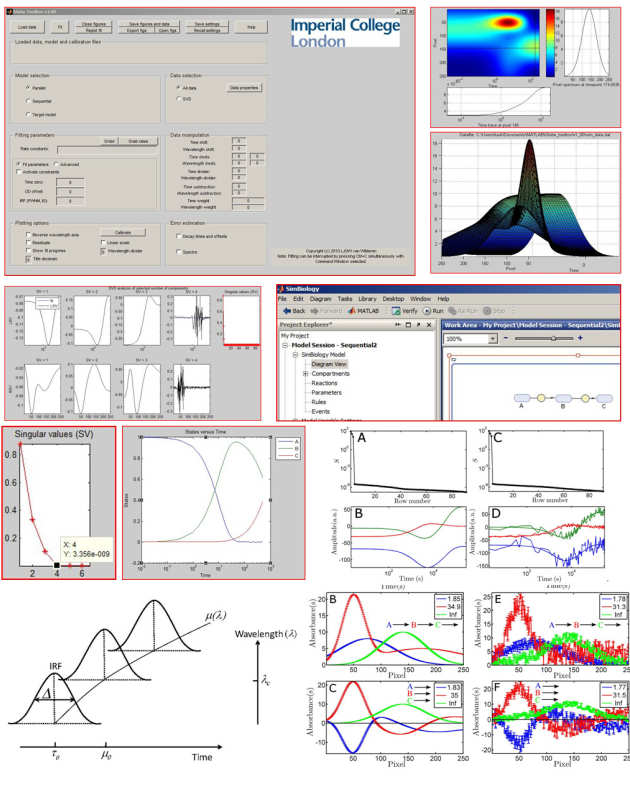
Professor Jasper van Thor is a faculty member at Imperial College London's Department of Life Sciences, part of the Faculty of Natural Sciences. He holds the title of Professor of Molecular Biophysics and leads the Ultrafast Spectroscopy Laboratory and Molecular Biophysics group. His research focuses on ultrafast molecular dynamics using techniques like femtosecond crystallography and spectroscopy, particularly studying light-sensitive proteins such as photoreceptors, fluorescent proteins, and photosynthetic systems. He has pioneered work on structural dynamics using X-ray free electron lasers (XFELs) and developed open-source software tools like the Ultrafast Spectroscopy Modelling Toolbox and PyLDM for data analysis. Education: MSc (1993) and PhD (1999) in Chemistry from the University of Amsterdam, followed by postdoctoral research at the University of Oxford under Dame Louise Johnson, supported by EMBO and HFSP fellowships. He joined Imperial College in 2007, establishing the Ultrafast Spectroscopy Lab. Research Interests: Ultrafast structural changes in proteins, photoactivation mechanisms, coherent vibrational dynamics, XFEL applications in biology, and theoretical modeling of population dynamics. His work bridges molecular biophysics, chemistry, and materials science, with contributions to understanding photosynthesis and protein signaling. Key Achievements: Director of Imperial's Frontiers of Ultrafast Measurement network and PI of the LUXD lab. Developed novel methods for femtosecond infrared crystallography and revealed mechanisms like the 'hula-twist' isomerization in fluorescent proteins. Authored influential papers on protein structural dynamics and spectroscopic analysis tools. Awards: EMBO Research Fellowship (2000), HFSP Long-Term Fellowship (2000), Royal Society University Research Fellowship (2002). Recognized for contributions to ultrafast structural biology. Grants & Labs: Active in XFEL collaborations globally (LCLS, SACLA, European XFEL). Oversees the Electron Microscopy Centre and Energy Futures Lab affiliations. His lab develops open-source software for data analysis, emphasizing reproducibility and accessibility.
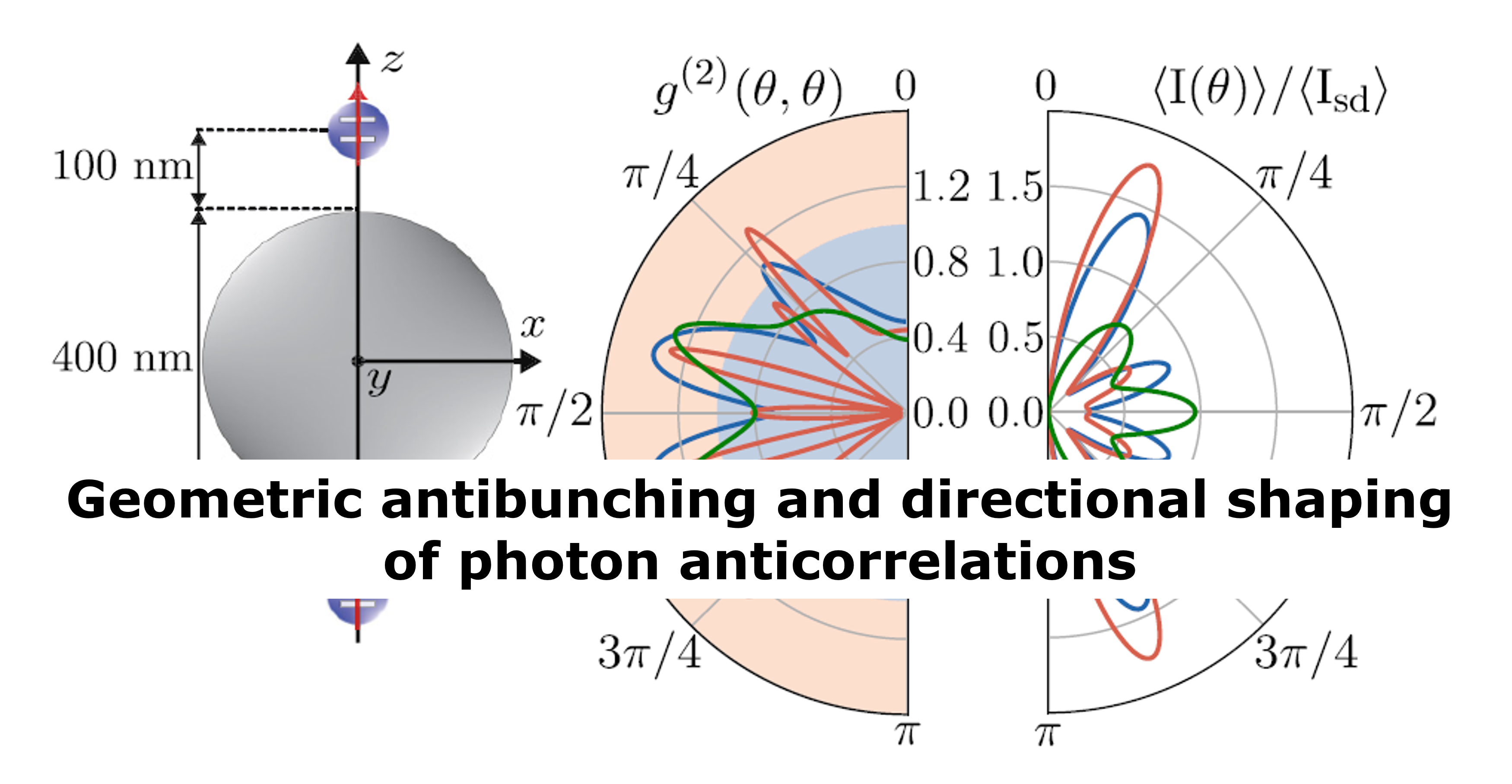
A. I. Fernández Domínguez is an Associate Professor in the Department of Theoretical Condensed Matter Physics at the Universidad Autónoma de Madrid (UAM), Spain. He is affiliated with the Condensed Matter Physics Center IFIMAC and focuses on theoretical investigations of quantum nanophotonic phenomena. His research spans transformation nano-optics, light-matter interactions at the nanoscale, and spoof plasmon metamaterials. Educational Background: Not explicitly stated in the provided text. Research Interests: Transformation Nano-optics: Explores material-geometry links in Maxwell's equations, applied to nano-antennas and plasmon-exciton coupling. Light-Matter Interactions: Investigates plasmon-assisted energy transfer, exciton dynamics, and quantum optical effects in nanophotonic systems. Quantum Nanophotonics: Develops strategies for quantum light generation and tailoring photon-emitter interactions in nanocavities. Spoof Plasmon Metamaterials: Designs metamaterials enabling plasmonic effects in infrared/THz ranges through geometric surface modes. Articles Trends: Recent work emphasizes quantum emitters in nanocavities, non-Hermitian systems, and plasmon-molecule coupling. Topics include directional photon emission, polariton dynamics, and metamaterial applications in low-frequency photonics. Scientific Awards: No awards listed in the provided text. Advising/Grants: Advising information unavailable; no grant details provided. Labs/Teams: Active in the Condensed Matter Physics Center IFIMAC, collaborating on theoretical nanophotonics projects.
Dr Michael Short is an Associate Professor of Process Systems Engineering at the University of Surrey , affiliated with the School of Chemistry and Chemical Engineering and the Surrey Institute for Sustainability . His research focuses on mathematical optimisation tools for sustainable process design, bioenergy systems, renewable energy integration, and pandemic risk modelling. Current projects include AI-driven biogas production optimisation and carbon-negative chemical synthesis. EPSRC-funded £1.7M project on AI for biogas production Co-I in £5M Supergen Bioenergy Impact Hub Developed open-source DECO2 software for ASEAN decarbonisation His team applies mixed-integer nonlinear programming (MINLP) and machine learning to industrial challenges in pharmaceuticals, aquaculture, and microbreweries. Collaborations span Eli Lilly, Pfizer, and universities in Japan, Malaysia, and Brazil. Supervised projects address grid-scale energy storage, CO2 utilisation, and rural electrification. Scientific Awards : 2021 EPSRC Impact Acceleration Account Commercialisation Fellow Best Speaker Award at 2020 Sustainable Process Integration Lab Conference Editorial Board Member of Journal of Water Process Engineering Recent publications examine direct air capture integration, waste-to-energy brewing processes, and whole-system energy models. Supervises students in distributed energy systems, catalytic processes, and sustainable design.
David Mobley is a Professor in the Department of Chemistry at the University of California, Irvine (UCI), affiliated with the School of Physical Sciences. His research focuses on applying computational and theoretical methods to understand biological processes such as protein-ligand binding and solvation, with applications in drug design. He co-leads the Open Force Field Initiative, driving open-source molecular modeling tools and community efforts like the SAMPL Challenges and Open Free Energy project. Research Interests include chemical biology, physical chemistry, and computational methods for predicting molecular interactions. He emphasizes collaborative projects, including developing transferable force fields and advancing free energy calculation techniques. Recent work highlights advancements in force field parametrization, machine learning applications in molecular mechanics, and benchmarking methodologies. His lab's contributions include the Open Force Field v2.0, the Konnektor framework for free energy networks, and tools like alchemlyb for alchemical free energy calculations. Dr. Mobley’s research also addresses challenges in water sampling, binding free energy predictions, and collaborative initiatives such as the SAMPL blind challenges. His team works on improving simulation accuracy for industrial and academic applications.
Alan Dearle is a Professor in the School of Computer Science at the University of St Andrews. His academic background includes a B.Sc. and Ph.D. from the University of St Andrews. He holds roles in the British Computer Society and the Association for Computing Machinery. His research focuses on distributed systems, operating systems, programming languages, similarity search, and data linkage. Current work includes the Digitising Scotland project, which reconstructs Scottish genealogical pedigrees using digitized vital records, and the development of the Stardust unikernel for Java applications. He collaborates with Richard Connor on similarity search algorithms and leads projects funded by the Economic & Social Research Council and EPSRC. Alan advises PhD students like Ben Claydon and Tom Dalton. Notable projects include the ADR UK Programme and SFC SMART Tourism. He participates in initiatives like Doors Open @ Computer Science and contributes to open-source tools like the Metric Space Framework. His work addresses challenges in metric search, synthetic population generation, and efficient operating system design, with applications in heritage digitization and scalable data management.
Charles F. Vardeman II is a Research Professor in the Department of Computer Science and Engineering at the University of Notre Dame, where he also holds an appointment at the Center for Research Computing (CRC). He earned his B.S. and Ph.D. in Chemistry from Notre Dame, focusing on theoretical chemistry and molecular dynamics simulations of nano-metallic and glassy systems. His research integrates computational models with linked data and semantic web principles, emphasizing ontology design patterns (ODPs) to enhance data integration and discovery. He explores AI-driven approaches for knowledge representation in machine learning and symbolic neural networks. Education: B.S. in Chemistry (Notre Dame), Ph.D. in Theoretical Chemistry (Notre Dame). Research interests include computational modeling, semantic web technologies, ontology engineering, and the application of AI to material science and environmental sustainability. His work bridges domains like molecular dynamics simulations, geospatial data systems, and cyberinfrastructure design. Recent projects address hurricane risk assessment, resilient building design, and open-source molecular dynamics tools like OpenMD. Publications focus on advancing open-source computational tools, ontology-driven data integration, and interdisciplinary cyberinfrastructure. Notable contributions include developing the OpenMD molecular dynamics engine and frameworks for geospatial data interoperability. He has contributed to initiatives like the Cyberinfrastructure Center of Excellence and CyberEye for disaster response systems. His efforts emphasize linking computational experiments with real-world applications through semantic technologies.
Carl Richard Steen Fosse is an Assistant Professor at the Department of Electronic Systems, Norwegian University of Science and Technology (NTNU). His expertise includes embedded systems, digital design, and IoT solutions. He actively contributes to open-source projects related to Nordic Semiconductor development kits and Bluetooth Low Energy (BLE) applications. Key competencies: Arduino, C/C++, FPGA, RTOS, and BLE protocol development. Maintains GitHub repositories demonstrating integration with Nordic Thingy:52 sensors and nRF52xx platforms. Focuses on education through course development in embedded systems at NTNU.