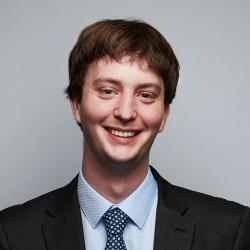
Walter Szeliga is a Professor and Department Chair at Central Washington University. He holds a Ph.D. from the University of Colorado (2010). His research focuses on seismology, GPS, and InSAR technologies, with emphasis on earthquake early warning systems, crustal deformation monitoring, and natural hazards mitigation. Dr. Szeliga leads efforts in integrating real-time geodetic data streams for disaster response and has contributed to the development of ShakeAlert® systems. His work spans global geophysical networks, ionospheric perturbations, and paleotsunami studies. Key research interests include: Real-time GNSS applications for seismic monitoring Crustal deformation analysis using InSAR and GPS Earthquake source characterization through multi-method approaches Historical seismotectonic reconstructions Disaster forecasting and early warning system optimization Recent studies highlight advancements in trapping atmospheric lee waves detection via GNSS, volcanic plume dynamics during the 2022 Tonga eruption, and long-term paleotsunami records in Chile. His work bridges geophysical instrumentation with computational modeling to address critical questions in tectonic processes and hazard assessment. Scientific contributions include 50+ peer-reviewed articles on topics ranging from Cascadia subduction zone dynamics to global navigation satellite system innovations. His research has implications for civil infrastructure resilience, space weather impacts, and international geohazard collaboration frameworks.
Roles & Affiliations: Distinguished Research Professor in Statistical Science at Queensland University of Technology (QUT), Director of QUT Centre for Data Science, and Associate Member of University of Oxford's Department of Statistics. Served as Deputy Director of ARC Centre of Excellence in Mathematical and Statistical Frontiers (2015–2021) and ARC Laureate Fellow (2015–2021). Education: BA (Hons) and PhD in Mathematical Statistics from University of New England, Australia. Completed post-doctoral roles at multiple Australian universities. Research Interests: Specializes in Bayesian statistical modelling, computational methods, and their applications in environmental science, genetics, healthcare, and industry. Leads projects on coral reef recovery, cancer epidemiology (Australian Cancer Atlas), and virtual citizen science platforms like Virtual Reef Diver. Her work emphasizes interdisciplinary collaboration, integrating complex data sources with advanced statistical techniques to address real-world challenges. Publications & Grants: Over 350 refereed journal publications and attracted >30 major grants. Recent focus areas include influenza epidemiology, spatial health disparities, and AI-driven early warning systems for climate-sensitive diseases. Active in developing methodologies for spatial statistics, small-area estimation, and federated learning. Awards & Recognition: 2024 Ruby Payne-Scott Medal (Australian Academy of Science), Pitman Medal (2016), first female recipient of this award in 35 years. Elected Fellow of Australian Academy of Science (2018), Academy of Social Sciences (2018), and Queensland Academy of Arts and Sciences (2018). Holds international roles including Vice-President of International Statistical Institute (2021–2025) and Scientific Council Member at Centre International de Rencontres Mathématiques (France). Supervision & Leadership: Supervised over 36 PhD students and leads teams in >50 collaborative projects. Current supervision includes 5 PhD and 4 Masters students at QUT. Founded the QUT Centre for Data Science and previously led the Collaborative Centre for Data Analysis, Modelling and Computation. Labs & Initiatives: Core contributor to the Australian Cancer Atlas 2.0, Virtual Reef Diver project, and Queensland's Learning Potential Fund. Active in global initiatives like the World of Statistics campaign and UN Big Data Task Teams.
Mathias Payer is an associate professor at EPFL's School of Computer and Communication Sciences (IC), leading the HexHive research group since 2018. He focuses on strengthening software and system security through fuzzing, vulnerability mitigation, and compiler-based approaches. His work includes open-source prototypes and contributions to embedded systems, IoT security, and trusted execution environments. Education: PhD in Computer Science (Dr. sc. ETH) from ETH Zurich (2012), postdoctoral researcher at UC Berkeley (2012–2014), and assistant professor at Purdue University (2014–2018). Tenured at EPFL since 2021. Research Interests: Fuzzing frameworks, memory safety, vulnerability analysis, compiler optimizations for security, and firmware security. Projects include Enclosure , HexType , and DP3T (decentralized contact tracing). Awards: Multiple best/distinguished paper awards at top venues (e.g., Usenix Security, NDSS, RAID). Co-founded the EPFL polygl0ts and Purdue b01lers CTF teams to foster cybersecurity innovation. Labs/Teams: HexHive group, CTF initiatives, and collaborations with industry (e.g., Intel SGX, Android security).
Mario Berta is a Professor of Physics at RWTH Aachen University’s Institute for Quantum Information, with an honorary Visiting Reader position at Imperial College London’s Department of Computing. His research focuses on mathematical aspects of quantum information science, including quantum communication theory, cryptography, and algorithms. He leads a group funded by the ERC Starting Grant QEntropy, exploring entropy’s role in quantum information. He actively recruits PhD/postdoc researchers and organizes workshops like the Mathematics of Quantum Information conference at RWTH Aachen and Beyond IID 13 in Munich. Education: PhD in Theoretical Physics from ETH Zurich. Prior roles include Senior Research Scientist at Amazon Web Services’ quantum computing division and Postdoctoral Researcher at Caltech’s IQIM. He has pioneered quantum Gibbs sampling algorithms for the Fermi-Hubbard model and contributed to quantum error correction and complexity theory. His work bridges theoretical foundations with practical implementations, emphasizing resource analysis and algorithm optimization. Research interests span quantum algorithms’ computational complexity, entanglement theory, and information-theoretic security. He explores topics like quantum channel coding, hypothesis testing, and distributed quantum protocols under communication constraints. His group’s activities include organizing international workshops and collaborations with institutions like ML4Q and EPSRC. Funding sources include the European Research Council, RWTH’s Exploratory Research Space, and the EPSRC. He advocates for open-access science, as seen in his German-language article Algorithmen für neue Hardware . His work aims to advance quantum technologies through rigorous mathematical frameworks and experimental feasibility analysis.
James S. Plank is a Professor in the Department of Electrical Engineering and Computer Science at the University of Tennessee. He holds a PhD from Princeton University (1993) and has been at UT since 1993. His research focuses on fault-tolerant computing, erasure coding, distributed systems, and neuromorphic computing. He teaches programming courses from introductory to graduate levels and has won multiple teaching awards, including seven departmental awards, the College of Arts and Sciences Senior Faculty Teaching Award, and the Chancellor’s Citation for Excellence in Teaching. Plank is a member of the IEEE Computer Society and has contributed to open-source software like JGraph and Jerasure. His recent research emphasizes neuromorphic computing systems, including projects like NeuroPong and RISP Neuroprocessor. He collaborates with industry and academia on storage systems, checkpointing, and hardware-software co-design. Plank advises numerous graduate and undergraduate students, evident in his annual summer student gallery. He has secured grants such as the NSF-funded "Ground-roaming autonomous neuromorphic targeter" (2020). His lab, Neuromorphic UT, explores applications in control systems, vision, and robotics. Plank’s contributions to erasure coding and storage reliability include seminal works like the RAID-6 Liberation Code and SD codes for mixed failure modes.
Kevin Gary is an Associate Professor in the School of Computing and Augmented Intelligence (SCAI) within the Ira A. Fulton Schools of Engineering at Arizona State University (ASU). He joined ASU in 2004 after prior industry experience and faculty work at the Catholic University of America. His research focuses on software agility, open source software, and applications in healthcare and e-learning. He has contributed to mHealth platforms addressing pediatric chronic conditions and adaptive e-learning systems. Education: Ph.D. in Computer Science from Arizona State University (1999). Research Interests: Software Architecture, Agile Methods, Open Source Software, Healthcare Informatics, and Educational Technology. His recent work explores agile impact on regression testing and lean metrics in open source software. He has developed mobile health apps for asthma, epilepsy, and anxiety, leveraging agile principles and AI. Teaching & Innovation: Created the Software Enterprise program, an industry-aligned pedagogy integrated into ASU’s software engineering curriculum. This initiative earned the President’s Award for Innovation in 2011. He has taught courses in software engineering, web applications, and secure software systems. Grants & Projects: Led projects funded by NSF, industry partners (e.g., UNICON, GEORGETOWN UNIV MED CTR), and foundations (Children’s National Medical). Notable projects include the Image-Guided Surgical Toolkit and the ATIC-funded Software Enterprise pedagogy model. Service: Reviewed for journals/conferences, served as Associate Chair of computing programs, and contributed to professional organizations (IEEE, ACM, ASEE).
Daniel Livingstone is a researcher at The Glasgow School of Art (GSA) specializing in the application of games and 3D technologies to enhance learning and public engagement. His work spans medical visualization, heritage interpretation, and broader educational technology domains. Current PGR supervisee: Shaojie Ni (AR & Gamification in Museums) Email: D.Livingstone@gsa.ac.uk Research Themes : Serious games, virtual reality, 3D anatomical modeling, disease education, digital heritage preservation, and AI-driven simulations. Highlights include AR tools for rheumatology engagement, VR applications in diabetes management, and digital reconstructions of historical surgical instruments. Article Trends : Focus on merging immersive technologies with healthcare education, heritage storytelling, and interdisciplinary applications of game engines. Recurring keywords: Augmented Reality , 3D Visualization , Medical Education , Public Health , Virtual Environments .
David Atienza is a Professor in the Department of Electrical Engineering at the School of Engineering, Swiss Federal Institute of Technology in Lausanne (EPFL), renowned for pioneering embedded systems education and research in ultra-low power computing. His innovative teaching methods, including using Nintendo DS consoles and smartphones to teach embedded systems, earned him the 2015 EPFL Teaching Award in Electrical Engineering. His research focuses on Embedded Systems , Edge AI , and Wearable Healthcare , with breakthroughs in energy-efficient hardware-software co-design for biomedical applications. Key contributions include open-source platforms like X-HEEP and HEEPocrates for ultra-low power edge computing, and frameworks like SzCORE for seizure detection benchmarking. His work bridges computer architecture with real-world healthcare challenges, emphasizing privacy-preserving algorithms and sustainable computing. Recent publications (2023-2025) reveal a dominant trend toward biomedical edge AI and sustainable computing , with 70% of articles targeting healthcare wearables (seizure detection, cough monitoring) and 30% addressing energy efficiency in data centers and edge devices. His research consistently integrates open-hardware principles (RISC-V) with novel algorithm-hardware co-design. Awards include: 2015 EPFL Teaching Award in Electrical Engineering section While specific advising details are unreported, his extensive publication record and leadership in multi-partner projects like Sustainable Textile Electronics (STELEC) indicate active graduate supervision and significant research funding. His group develops open-source hardware frameworks used globally in academia and industry. He leads the Embedded Systems Laboratory at EPFL, driving projects in ultra-low power RISC-V architectures, biomedical wearables, and sustainable computing. Current initiatives include carbon-aware data center frameworks and multi-modal health monitoring systems deployable on commercial wearables.
Samsung Lim serves as an Associate Professor of geographic information systems (GIS) in the School of Civil and Environmental Engineering at the University of New South Wales (UNSW) Sydney. With expertise spanning data science, artificial intelligence, and machine learning, Lim applies geospatial technologies to critical real-world challenges in natural disaster management and public health research. Lim's interdisciplinary work bridges engineering, computer science, and public health domains to develop practical decision-making tools for emergency response and disease surveillance. Ph.D. in Aerospace Engineering and Engineering Mechanics, University of Texas, Austin, TX, USA M.A. in Mathematics, Seoul National University, Seoul, South Korea B.A. in Mathematics, Seoul National University, Seoul, South Korea Lim's research focuses on applying GIS to natural disaster management and public health challenges. Key areas include machine learning methods for bushfire susceptibility mapping, spatial clustering for landslide susceptibility analysis, city-scale evacuation management in flood scenarios, and social media-based natural disaster assessment. In public health, Lim investigates geo-correlations between environmental factors and asthma occurrence, computational approaches to avian influenza outbreaks, emerging hot spot analysis of COVID-19, and early detection systems for emerging infectious diseases. This work combines advanced spatial analytics with machine learning to address complex environmental and health challenges. The recent publication record demonstrates a clear interdisciplinary trajectory where geospatial science intersects with public health emergency response and natural hazard management. Lim's work consistently applies machine learning techniques to geospatial data, with particular emphasis on disaster susceptibility mapping, disease outbreak detection, and infrastructure monitoring. The research spans multiple continents and addresses both immediate emergency response needs and long-term environmental health challenges, reflecting a commitment to practical applications of geospatial science. Associate Editor of Geospatial Information Science National Delegate of Commission 3 of International Federation of Surveyors (FIG) National Representative of the International Cartographic Association (ICA) Commission on Sensor-driven Mapping Senior Member of Institute of Electrical and Electronics Engineers (IEEE) Lim actively contributes to the development of early warning systems for emerging infectious diseases through collaborations with public health researchers. The work on EPIWATCH demonstrates how AI can enhance surveillance capabilities for outbreak detection. Lim's research on cruise ship transmission of diseases and the spread of avian influenza through bird migration patterns and poultry trade networks shows strong engagement with real-world public health challenges. These projects often involve multidisciplinary teams spanning engineering, computer science, epidemiology, and veterinary medicine. Lim's work integrates multiple geospatial data sources and analytical techniques to address complex environmental and public health challenges. This includes developing frameworks for performance analysis of OpenStreetMap data, creating specialized road datasets for pedestrian navigation, and applying Persistent Scatterer Interferometry for land motion monitoring. The research combines traditional geospatial methods with cutting-edge machine learning approaches to extract meaningful insights from complex spatial datasets.
Dr. Erik Linstead is an Associate Professor and Senior Associate Dean at Chapman University, affiliated with the Fowler School of Engineering, School of Pharmacy, and George L. Argyros College of Business and Economics. His expertise spans Machine Learning, GPU Programming, Autism Spectrum Disorder, Assistive Technologies, Predictive Analytics, and Virtual Reality. Education: Bachelor of Science, Chapman University Master of Science, Stanford University Ph.D., University of California, Irvine Dr. Linstead's research integrates machine learning with diverse domains, including autism treatment, environmental monitoring, and software engineering. His recent publications focus on coral reef health, land surface temperature trends, and embedded machine learning systems. His scholarly work includes collaborations in remote sensing, medical informatics, and neurodiversity support. Articles highlight his interdisciplinary approach, applying AI to ecological challenges (e.g., Red Sea coral reefs, Nile Basin droughts) and human-centered technologies (e.g., VR therapy for autism, medication adherence analysis).
David Ellis is a Professor of Behavioural Science at the University of Bath's School of Management, with affiliations to the Applied Digital Behaviour Lab , Centre for Healthcare Innovation and Improvement , Centre for Business, Organisations and Society (CBOS) , and Institute for Digital Security and Behaviour (IDSB) . His interdisciplinary research bridges psychology and data science , focusing on digital technologies' impact on human behavior and healthcare systems. Ellis earned a PhD in Psychology (2013), MSc in Psychology (2009), and MA in Psychology (2008) from the University of Glasgow. His work addresses health inequality , digital ethics , and open research practices , influencing NICE guidelines and UK government reports. Recent publications highlight his leadership in computational reproducibility and digital behavioral interventions , including tools like Optimeet for attendance optimization and frameworks for ethical data exploration (DECIDE). His research spans healthcare planning , cybersecurity , and social data science , with over 85 peer-reviewed articles. Scientific awards include: Royal College of General Practitioners – Research Paper of the Year (2020) Dean's Award for Research Communication and Translation (2021) Stanford-Elsevier Top-Cited Scientist (2022) Doctoral Recognition Award (2023) Ellis supervises doctoral students and leads EPSRC-funded projects like Co-designing Technological Solutions for Loneliness and Digital Health Hub Pilots. He chairs the Social Sciences Research Ethics Committee and contributes to UKRI and Wellcome-funded initiatives.
Jürgen Huber is a Full Professor in Finance and Head of the Department of Banking and Finance at the University of Innsbruck. He has been a central figure in experimental finance since 1998, founding the Society for Experimental Finance and leading international collaborations with institutions like Stockholm School of Economics and VU Amsterdam. Education: PhD in Political Sciences (2001) and Business Administration (Habilitation, 2007), both from University of Innsbruck. Research Interests: His work spans Experimental Economics , Behavioral Finance , and Meta Science , focusing on market microstructure, replicability of scientific research, and communication behavior. Recent projects explore: Climate change policy through CO2 taxation and climate dividends . Digital finance implications of cryptocurrencies and NFTs . Communication differences (face-to-face vs. online) and their impact on decision-making. Scientific objectivity in peer review via the Nobel and Novice project. Article Trends: His 2024 publications in Nature Human Behaviour and PNAS emphasize replicability crises, climate economics, and communication behavior. Earlier work in Management Science and Journal of Economic Behavior and Organization analyzes market microstructure, financial transaction taxes, and crowd-sourced research validation. Scientific Awards: Voted Professor of the Year by students (2019-2023), with multiple FWF and OeNB grants totaling over €1 million. Received the Pater Johannes Schasching SJ-Preis (2016) and Forschungspreis der Stiftung Südtiroler Sparkasse (2015). Teaching: Integrates research into interactive lectures, including lab-based simulations for stock market experiments. Taught at universities in Austria, Germany, USA, Thailand, Vietnam, and Indonesia.
Philip Brunner is a Professor of Hydrogeology at the University of Neuchâtel's Faculty of Science since 2012. He is based at the Center for Hydrogeology and Geothermics (CHYN), leading the Laboratory of Hydrogeological Processes. His work centers on sustainable water resource management through quantitative tools. He earned his PhD from ETH Zurich, focusing on sustainable salt and water management in Western China's agricultural basins. Post-PhD, he conducted three years of postdoctoral research in Australia, developing new approaches for simulating river-aquifer interactions. Brunner's research spans surface water-groundwater interactions, numerical modeling, and remote sensing. He integrates methods from numerical modeling, remote sensing, scientific computing, and isotopic chemistry. His interdisciplinary collaborations with mathematicians, biologists, and physicists address challenges in agriculture, ecohydrology, engineering, and sustainable resource management. Recent publications highlight innovative tracer techniques (noble gases, microbes), low-cost monitoring systems, and advanced numerical models. His work tackles climate change impacts on ecosystems, groundwater in conflict zones, and sustainable practices in diverse environments including mountains and agricultural regions. He teaches courses such as Introduction to Hydrological Processes (Master), Numerical Modeling (Master), Remote Sensing (Master), and Introduction to Soil Physics (Bachelor, in French). His laboratory serves as a center for experimental and computational hydrogeological research.
Samuel McDermott is an Associate Teaching Professor at the Department of Chemical Engineering and Biotechnology , University of Cambridge. He serves as the Sensor CDT Programme Manager , focusing on interdisciplinary research in healthcare, biotechnology, and open-source hardware. His research spans machine learning applications in medical imaging , laboratory automation , and web-of-things (WoT) integration for scientific equipment. Recent work emphasizes federated learning in healthcare, blood cell morphology classification, and low-cost diagnostic tools. Key article trends include: deep diffusion models for malaria detection , open-source microscopy platforms like OpenFlexure, and AI-driven clinical data generalization . His projects often combine 3D-printed hardware and IoT-enabled laboratory systems .
Michał Paweł Michalak is an Assistant Professor at AGH University of Science and Technology in Kraków, affiliated with the Faculty of Geology, Geophysics and Environmental Protection and Department of Geoinformatics and Applied Informatics. His research spans computational geometry in geological modeling, machine learning applications in Earth sciences, statistical epidemiology, and ecclesiological dynamics. Doctoral degree from University of Silesia in Katowice Developed GeoAnomalia software suite combining C++, R, and ParaView Created unbiased risk metrics (WCSIR) for infectious disease surveillance Research focuses on: Subsurface geological modeling using combinatorial algorithms and machine learning; Spatial epidemiology emphasizing testing heterogeneity bias; Ecclesiological dynamics analyzing factional theological interactions. His 2020/37/N/ST10/02504 grant project received 'very good' evaluation for developing angular distance metrics in geological contacts. Scientific contributions include: 2025 Solid Earth paper on fault-related structure detection 2025 Frontiers in Public Health work on global pandemic risk evaluation 2023 AGH Rector award recipient Developer of open-source geological analysis tools Collaboration network includes Harvard University, Technische Universität Freiberg, and University of Texas at Austin. Currently teaching GIS modeling, optimization methods, and geoinformatics systems. Maintains a personal website with open data access.