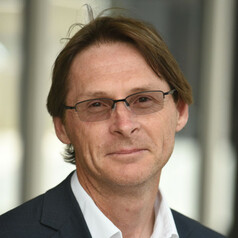
Dr Stephen McGlinchey is a faculty member and Programme Leader for Politics and International Relations at the School of Social Sciences , University of the West of England, Bristol. He holds a PhD in International Relations from Cardiff University, alongside an MSc and BSc from Cardiff and Wales respectively. His research focuses on: US foreign policy, particularly historical US-Iran relations Arms policies during the Cold War Innovative pedagogical approaches in International Relations Post-truth political dynamics Dr McGlinchey has authored and edited numerous publications, including: Polarity (2025) - analyzing global power structures Global Politics in a Post-Truth Age (2022) - exploring modern political discourse Foundations of International Relations (2022) - a textbook for beginners The Reluctant Realist: Jimmy Carter and Iran (2018) - applying realism to US-Iran arms deals He is also the Editor-in-Chief and Publisher of E-International Relations , the leading open-access IR platform. His work spans from 1950s US-Iran arms agreements to contemporary geopolitical theory, with articles in journals like Diplomacy and Statecraft . No scientific awards or student advising details are mentioned in the provided texts.
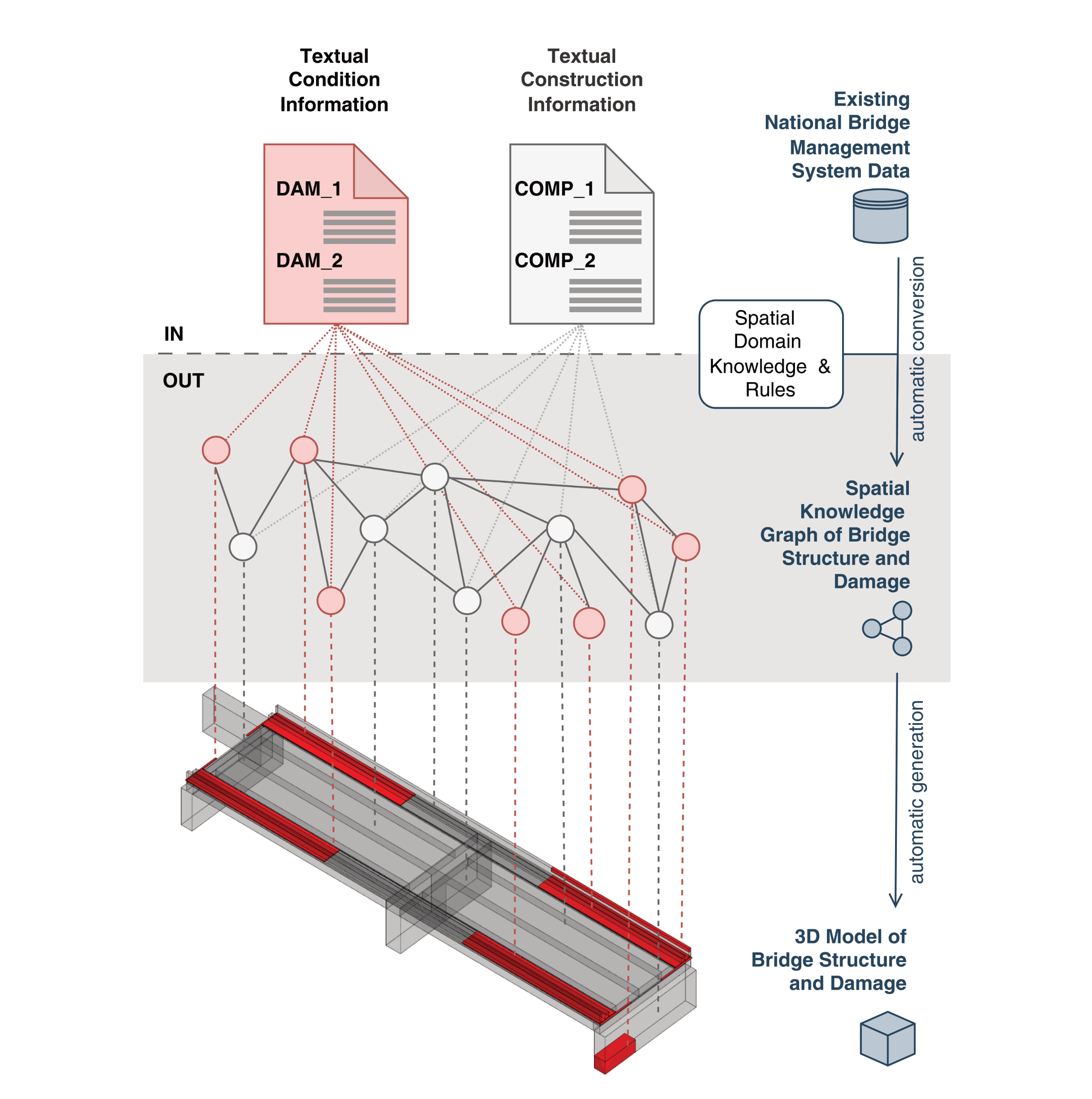
Prof. Dr. Jakob Beetz serves as a University Professor at RWTH Aachen University's Faculty of Architecture, leading the Design Computation (DC) research group. His work addresses critical challenges in sustainable built environments through digital innovation, focusing on integrating knowledge, information, and data across disciplines to reduce the sector's energy and material consumption—which accounts for over one-third of global totals—while advancing climate goals under the European Green Deal. His research spans Building Information Modeling (BIM), digital twins, and artificial intelligence, with emphasis on graph-based data federation, semantic web technologies, and large language models in construction. Key interests include evidence-based planning, parametric design optimization, building physics simulation, and networked knowledge modeling. Recent projects explore federated digital twin ecosystems for infrastructure management, intelligent damage assessment systems, and AI-driven solutions for wood structure preservation, directly contributing to sustainable development targets. Analysis of his 2024-2025 publications reveals a cohesive trajectory toward decentralized data environments and AI integration in Architecture, Engineering, and Construction (AEC). His work bridges theoretical foundations in knowledge representation with practical applications in bridge maintenance, road infrastructure, and timber construction, demonstrating consistent innovation in spatial data querying, federated issue management, and ontology-based process modeling. Prof. Beetz actively supervises PhD candidates, as evidenced by DC.Promotions 2024, and drives international collaboration through events like the Forum Construction Informatics 2025 and CIB W78 conferences. His research group engages with industry standards including Industry Foundation Classes (IFC) and Common Data Environments (CDEs), emphasizing open data principles and interoperability to transform construction workflows.
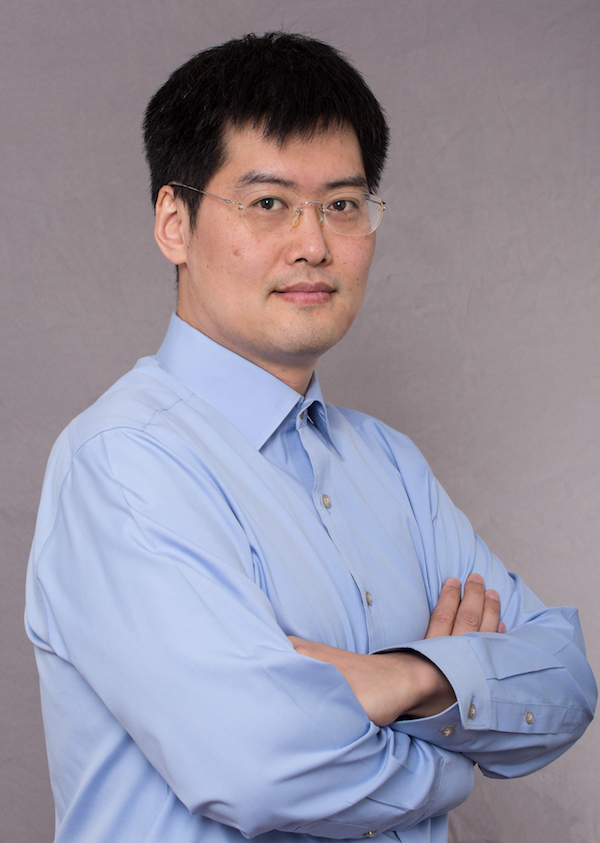
Xuming He is an Associate Professor at the School of Information Science and Technology (SIST), ShanghaiTech University, where he leads the PLUS Lab. His research spans computer vision and machine learning with a focus on developing algorithms that operate effectively under limited supervision and evolving data conditions. His core research interests include weakly-supervised and few-shot learning for scenarios with sparse annotations, continual learning frameworks for knowledge retention during sequential task acquisition, semantic segmentation techniques for scene understanding, and multimodal vision-language representations. He emphasizes interpretable machine learning to build transparent AI systems capable of human-understandable reasoning, addressing critical challenges in model trustworthiness and deployment reliability. Recent publications reveal strong trends toward novel class discovery in long-tailed recognition scenarios, physics-informed generative modeling for scientific applications, and robust segmentation under distribution shifts. His work increasingly integrates large language models for multimodal reasoning while maintaining focus on efficiency in resource-constrained environments like robotic grasping and medical imaging analysis. He actively mentors students, having supervised Qian He to PhD completion and Chuanyang Hu to Master's degree in 2023. He welcomes prospective graduate students through ShanghaiTech's Computer Science & Technology program and offers undergraduate research projects requiring minimum six-month commitments. The PLUS Lab under his direction drives innovation in learning under supervision constraints, with recent work spanning medical tumor analysis, cross-view geolocation, photonic computing, and semiconductor design verification. The lab's research bridges theoretical advances with practical applications across healthcare, robotics, and scientific discovery domains.
Shane Dawson is the Executive Dean of UniSA Education Futures and Professor of Learning Analytics at the University of South Australia. His work bridges social network analysis and learner interaction data to enhance teaching quality and educational outcomes. Affiliation : University of South Australia Research Focus : Learning Analytics, Curriculum Mapping, K-12 Decision-Making Systems, and AI in Education Recent Research Trends : Shane’s 2025 publications emphasize generative AI for curriculum analytics, ethical considerations in K-12 dashboards, and longitudinal graduate attribute monitoring. His articles often integrate psychometric models, social network tools, and open-source software like OVAL and SNAPP . Advising and Collaboration : As a co-developer of key learning analytics tools and a supervisor for research students, he collaborates globally with institutions such as Johns Hopkins University and Shahid Beheshti University of Medical Sciences. Labs and Teams : Shane leads UniSA’s Teaching Innovation Unit and is a founding member of the Society for Learning Analytics Research , driving institutional and international initiatives in educational technology.
Fabrizio Falchi is a researcher at the Artificial Intelligence for Media and Humanities (AIMH) Lab of the Institute of Information Science and Technologies (ISTI) within Italy's National Research Council (CNR). He also maintains an associate position at the Biorobotics Institute of Scuola Superiore Sant'Anna. His work focuses on developing advanced multimedia retrieval systems, with the VISIONE platform being his most notable contribution, which has won international competitions including the Video Browser Showdown in 2024 and placed second in 2023. Falchi's educational background includes: Ph.D. in Information Engineering from University of Pisa (Italy) Ph.D. in Informatics from Faculty of Informatics of Masaryk University of Brno (Czech Republic) M.B.A. from Scuola Superiore Sant'Anna in Pisa His research spans deep learning, convolutional neural networks, deep features extraction, similarity search algorithms, distributed indexing systems, multimedia information retrieval, computer vision applications, and peer-to-peer systems. Falchi has made significant contributions to fine-grained visual understanding, cross-modal retrieval (particularly image-text matching), and robustness of deep learning systems against adversarial attacks. His work demonstrates a strong focus on practical applications of these technologies, particularly in video retrieval systems and safety monitoring solutions. Analysis of Falchi's recent publications reveals a strong focus on video and image retrieval systems, with the VISIONE platform being central to his work. His research shows increasing emphasis on fine-grained understanding in computer vision, cross-modal retrieval, and addressing practical challenges like cross-resolution face recognition. Recent work demonstrates innovation in making these systems more efficient through techniques like knowledge distillation (ALADIN) and leveraging virtual worlds for training data. His publications consistently bridge theoretical advances with practical applications in surveillance, safety monitoring, and multimedia search. Falchi's work has received significant recognition: Best paper award at CBMI 2024 for 'Is ClLIP the main roadblock for fine-grained open-world perception?' VISIONE 2024 won the Video Browser Showdown competition in Amsterdam VISIONE obtained second place at Video Browser Showdown 2023 in Bergen Best Paper Award for 'Learning Safety Equipment Detection using Virtual Worlds' at CBMI 2019 Falchi collaborates extensively with researchers at ISTI-CNR, particularly within the AIMH Lab. His work on VISIONE involves collaboration with Giuseppe Amato, Paolo Bolettieri, Fabio Carrara, Claudio Gennaro, Nicola Messina, Lucia Vadicamo, and Claudio Vairo. As co-chair of Ital-IA 2023, the 3rd National Conference on Artificial Intelligence, he plays an active role in the academic community. He is a member of ACM (since 2012), the Computer Vision Foundation, the Italian Association for Computer Vision Pattern Recognition and Machine Learning (CVPL), and the CINI Lab on Artificial Intelligence and Intelligent Systems. Falchi is a key member of the Artificial Intelligence for Media and Humanities (AIMH) Lab at ISTI-CNR, where he leads research on video retrieval systems. The lab has developed the award-winning VISIONE platform, which combines multiple scientific results in content-based video retrieval. His team focuses on developing systems that enable users to search for target videos using textual prompts, drawing objects and colors, or images as query examples. The lab's work demonstrates strong interdisciplinary collaboration, bridging computer science with practical applications in media, safety monitoring, and urban environments.
Prof. Dr. Stefan Eicker is a Professor and Chairholder of Business Information Systems and Software Engineering at the Faculty of Computer Science, University of Duisburg-Essen, Germany. He has held this position since April 2004, following previous academic appointments at the Technical University of Clausthal, the University of Essen, and other German institutions. His research spans multiple domains within information systems and software engineering, with a particular focus on digital transformation and emerging technologies. Prof. Eicker's research interests center around Smart Products , Service Systems , Internet of Things , and Platform Economics . His work explores how digital technologies transform traditional business models and create new value propositions. He has developed taxonomies for smart services and investigated quality factors in self-tracking solutions, demonstrating his interdisciplinary approach that bridges technical and business perspectives. His research particularly emphasizes the integration of physical and digital components in modern products and services. His recent publications (2019-2024) reveal a strong focus on digital platform economies, smart services, and IoT applications. The research shows a clear trajectory toward understanding value creation mechanisms in digital ecosystems, with increasing attention to practical applications in energy systems, self-tracking technologies, and business model innovation. His work often involves collaboration with colleagues like Gero Strobel and Tobias Brogt, indicating an active research group focused on digital transformation. Prof. Eicker has contributed significantly to the academic community through his extensive publication record spanning nearly two decades, with work appearing in journals, conference proceedings, and edited volumes. His research bridges theoretical frameworks with practical applications in business contexts. He maintains an active role in academic administration and education at the University of Duisburg-Essen, where he has contributed to curriculum development and the implementation of systems for managing academic information. His work on the bolognaT3 system demonstrates his commitment to improving academic processes through technology.
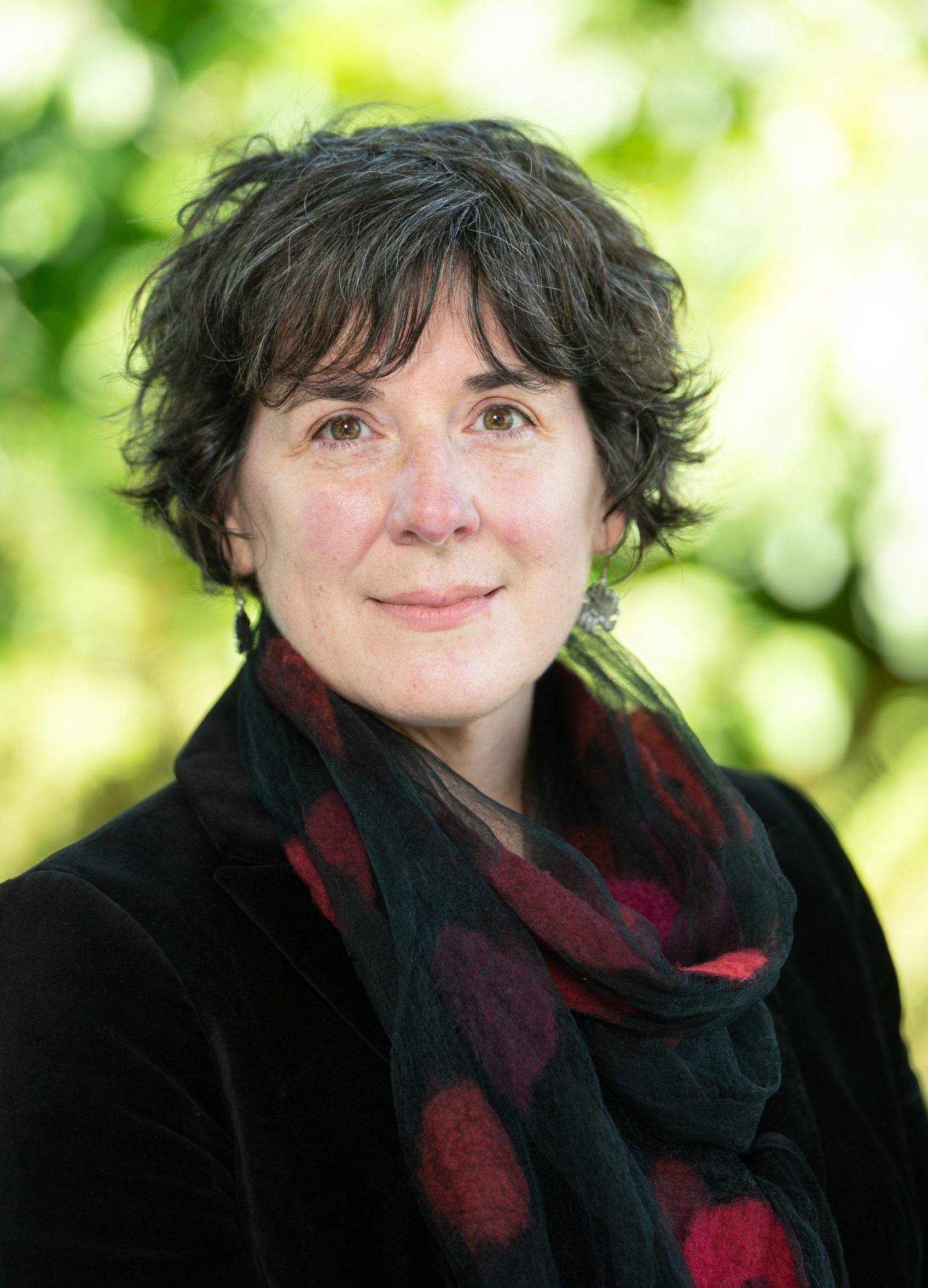
Laura Moorhead is an Associate Professor in the Department of Journalism at San Francisco State University and a researcher with the ScholCommLab at Simon Fraser University. Her work bridges journalism ethics, science communication, and social justice, focusing on how media narratives address homelessness, health equity, and marginalized communities. Research interests include: Visual solutions journalism and its ethical application to societal issues Science communication dynamics between journalists and researchers Access to knowledge frameworks and open science practices Collaborative journalism models for community-driven reporting Recent article trends emphasize participatory action research, climate crisis education, and preprint usage in science reporting. She co-leads NIH-funded and NNLM grants focused on health equity and serves on the Markkula Center for Applied Ethics at Santa Clara University.
Holly A. Yanco, Ph.D. , is a Professor of Computer Science at the University of Massachusetts Lowell (UML), where she also serves as the Distinguished University Professor and Director of the New England Robotics Validation and Experimentation (NERVE) Center . She founded the Human-Robot Interaction (HRI) Laboratory at UML in 2001, fostering interdisciplinary research in robotics, assistive technology, and artificial intelligence. Education: Dr. Yanco earned her B.A. in Computer Science from Wellesley College , followed by an M.S. and Ph.D. in Computer Science from the Massachusetts Institute of Technology (MIT) . Research Interests: Her work spans human-robot interaction , robotics education , assistive technologies , urban search and rescue (USAR) , and multi-modal interfaces . She has led collaborative initiatives such as Artbotics , integrating art and robotics in K-12 and college curricula, and Pyro , a Python-based robotics platform recognized as Premier Courseware of 2005 . Grants & Funding: Her research has been supported by the National Science Foundation (NSF) , U.S. Army Research Office , Microsoft Research , and National Institute of Standards and Technology (NIST) . Notable grants include an NSF CAREER Award (2005) and leadership roles in DARPA’s Fast Lightweight Autonomy (FLA) program . Awards & Recognition: Dr. Yanco has received teaching awards from UMass Lowell and MIT , served as General Chair of the 2012 ACM/IEEE International Conference on Human-Robot Interaction , and held leadership roles in AAAI’s Executive Council (2006-2009) . Lab & Outreach: The HRI Lab engages students from high school to Ph.D. levels, emphasizing K-12 outreach through Botball tournaments , STREAM teacher workshops , and the Artbotics program in collaboration with The Revolving Museum .
Nora H Prior, PhD, is a Senior Research Associate in the Psychology Department at Cornell University, focusing on sensory systems, social behavior, and neurogenomics. Her research team explores avian behavioral neuroscience, with expertise in neuroendocrinology, bioacoustics, and comparative psychology. 2020-2021: Sessional Instructor & course designer, University of British Columbia 2018-2021: Postdoctoral Associate, Avian Behavioral Neuroscience Lab (University of Maryland) 2016-2018: Postdoctoral Fellow, Center for Comparative and Evolutionary Biology of Hearing (University of Maryland) 2015: Postdoctoral Fellow, Neuroethology & Bioacoustics Lab (University of Lyon) 2009-2014: PhD Candidate (University of British Columbia) Her research combines neuroendocrinology, bioacoustics, and behavioral ecology to study avian communication, pair bonding, and neurogenomic responses to environmental stressors. Key topics include: Acoustic fine structure in zebra finch communication Neuroendocrine regulation of monogamy and aggression Effects of water restriction on vocal behavior Differential gene expression in extreme physiological states Temporal processing of vocal sequences Perceptual limitations in avian cognition While her publications span from 2010-2025, recent work emphasizes methodological rigor in neuroscience research, environmental impacts on brain development, and neurogenomic resilience in wild birds. Her 2025 paper on Science Democratization addresses systemic challenges in behavioral neuroscience.
Heather O'Brien is a Professor at the School of Information , University of British Columbia, specializing in user engagement with digital technologies , information retrieval , and knowledge exchange . Her work bridges human-computer interaction and health informatics through projects like the User Engagement Scale (UES) and the PolarUs app for bipolar disorder management. Education: MLIS and PhD from Dalhousie University Research: Focuses on engagement theory, digital health, and university-community knowledge exchange Her STOREE project (SSHRC-funded) develops frameworks for open scholarship and community-centered metadata practices. She co-developed the internationally adopted UES tool for measuring technology engagement, translated into French, German, Italian, and Portuguese . Scientific Awards: 2022 ASIS&T Research in Information Science Award 2018 ASIS&T SIG USE Best Paper Award Professor O'Brien mentors graduate students in information behavior and digital health while leading interdisciplinary collaborations with institutions like CREST.BD and BC Centre on Substance Use .
Christopher Chambers is Professor of Cognitive Neuroscience at Cardiff University's School of Psychology. His research spans open science reform, cognitive neuroscience, and translational applications in behavior change. He founded numerous initiatives including Registered Reports, the UK Reproducibility Network (UKRN), and the Royal Society Replications initiative, while chairing the Registered Reports Committee at the Center for Open Science. Chambers' research focuses on: 1) Developing and promoting open research practices to enhance scientific reliability; 2) Investigating cognitive control mechanisms using brain stimulation (TMS, TES) and neuroimaging (fMRI, MEG); and 3) Translational applications in obesity and behavior change through response inhibition training paradigms. His work bridges cognitive neuroscience with metascience reform. His publications demonstrate strong trends in open science methodology (Registered Reports, reproducibility frameworks) and cognitive-behavioral interventions, particularly examining how inhibitory control training affects food valuation and eating behaviors. Recent work emphasizes robustness verification and implementation of open science practices across disciplines. Awards include: 2018 British Psychological Society Book Award for 'The Seven Deadly Sins of Psychology' 2018 PROSE Award from Association of American Publishers He leads major grants including a €1.99M ERC Consolidator Grant on cognitive control training and a £188k Arnold Foundation grant on Registered Reports. Chambers founded the Insciout research group (science communication) and UK Evidence Information Service (science-policy interface), and currently advises the Peer Community in Registered Reports.
Javier Lezaun is an Associate Professor at the University of Oxford's School of Anthropology and Museum Ethnography, and Lead Researcher at the Institute for Science, Innovation and Society. His work bridges Anthropology and Science and Technology Studies (STS), focusing on biomedical governance and climate change as intertwined scientific-political challenges. Current projects include analyzing carbon sequestration technologies and leading the Oxford Net Zero programme's research on equitable climate transitions. Director of ERC-funded Bioproperty project Co-investigator in UNESCO’s International Bioethics Committee His research spans pharmaceutical R&D organization, citizen participation in technology assessment, and the socio-technical dynamics of disease outbreaks. He actively supervises DPhil students in STS and Global Health, and teaches courses on Science and Technology Studies. Lezaun's publications reveal a consistent engagement with intellectual property, climate justice, and public health infrastructure. Recent articles highlight his focus on marine carbon removal, malaria drug discovery, and the epistemological challenges of epidemic responses. Collaborations span institutions like the Universidad de los Andes (Colombia) and the OceanNETs consortium. Scientific Awards & Grants: ERC-funded Bioproperty project British Academy-funded Diseased Landscapes project
Professor Talia Isaacs is a leading academic in Applied Linguistics and TESOL at University College London's Faculty of Education & Society. She serves as Head of Research and Inclusion Co-Lead in the Department of Culture, Communication and Media, with a focus on language assessment, health communication, and educational equity. Previously, she was an Associate Professor at UCL-IOE (2016–2024) and Lecturer/Senior Lecturer at Bristol University (2011–2016), where she founded the EU-funded Second Language Speech Lab. Education: PhD in Second Language Education from McGill University (2011) Appointments: Co-Editor of Language Testing (2023–present), Expert Member of EALTA and TOEFL Committee of Examiners Her research spans language assessment , speech sciences , and health communication , with groundbreaking work on pronunciation assessment and clinical trial inclusivity. Recent articles analyze accent fairness in Duolingo testing, trial monitoring frameworks, and health communication practices. She champions Open Science and was awarded the 2023 UCL Open Science Award. Her research trends show interdisciplinary engagement across educational linguistics , clinical trial methodology , and health equity , often employing mixed methods and evidence synthesis . She has supervised 7 PhD students to completion, including funded projects by ESRC, MRC, and British Council. Scientific Awards: UCL Open Science and Scholarship Award (2023) Fellow of the Royal Society of Arts (2023) Fellow of the Higher Education Academy (2014) She leads the Second Language Speech Lab and collaborates with the MRC-NIHR Trials Methodology Research Partnership. Her work addresses language barriers in academic and healthcare settings, with a focus on under-served communities.
Andrey Anikin is an Associate Professor and Researcher in Cognitive Science at the Department of Philosophy, Lund University. His work focuses on vocal communication and emotions, exploring how the voice conveys information beyond linguistic codes through nonverbal vocalizations and acoustic phenomena. Research Interests Dr. Anikin investigates how vocal qualities like roughness, laughter, and screams convey emotional and social information. His research takes a cognitive and biological approach, examining sensory biases and auditory attention in vocal communication. His work aims to illuminate the evolutionary origins and universal features of vocal communication across human cultures and animal species. Key areas include emotion perception, nonverbal vocalizations, acoustic analysis, and vocal communication systems. Research Output Trends Dr. Anikin's recent publications (2025) demonstrate a strong focus on acoustic properties of vocalizations across species. His work bridges biology, psychology, and acoustics with methodological innovations in analyzing nonlinear phenomena, voice roughness, and formant structures. His research shows increasing interdisciplinary collaboration, particularly with zoologists and signal processing experts, while maintaining a core focus on the cognitive mechanisms underlying vocal communication. Research Projects What makes baby cries impossible to ignore? (2024-2026): Funded by the Swedish Research Council, this active project investigates the sensory mechanisms behind infant cry perception. Sensory biases in nonverbal communication (2021-2023): A completed project funded by the Swedish Research Council that examined how sensory systems shape nonverbal communication. Research Environment Dr. Anikin is affiliated with the Cognitive Zoology Group and the Lund University Cognitive Science (LUCS) program. He contributes to the LU Profile Area: Natural and Artificial Cognition. His work connects with the UN Sustainable Development Goals through interdisciplinary research on communication and cognition, with implications for understanding human well-being and social interaction.
Alex Kamenev is a Professor in the School of Physics and Astronomy at the University of Minnesota and serves as Director of the William I. Fine Theoretical Physics Institute. His academic career spans multiple decades with continuous research output since 1991, demonstrating sustained contributions to theoretical physics. His research focuses on theoretical condensed matter physics, with particular emphasis on disordered systems and glasses, field-theoretical treatment of many-body systems, mesoscopic systems, and out-of-equilibrium phenomena. His fingerprint analysis reveals strong expertise in Instanton Physics (100%), Fermion Physics (90%), Conductance (69%), Quantum Dot Physics (64%), and Superconductor physics (62%). Analysis of his recent publications shows a clear trend toward quantum computing applications, non-equilibrium quantum dynamics, and advanced field-theoretical approaches to many-body problems. His work bridges fundamental theoretical physics with practical applications in quantum information science, particularly in understanding quantum dissipation, localization phenomena, and quantum annealing processes. As Principal Investigator, Kamenev has led numerous significant research projects, primarily funded by the National Science Foundation. His current active projects include the REU Site: Physics and Astronomy at the University of Minnesota (2024-2027) and NSF-BSF: Many Body Physics of Quantum Computation (2024-2027), demonstrating his leadership in training the next generation of physicists and advancing quantum computing research. He actively mentors graduate students, as indicated by his statement that he is "Accepting new graduate research students." His research group contributes to the Condensed Matter Theory research area within the School of Physics and Astronomy, focusing on theoretical approaches to quantum systems.