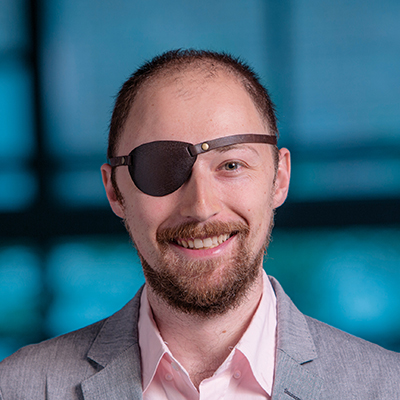
Mark Yatskar is an Assistant Professor in the Department of Computer and Information Science at the University of Pennsylvania. His research focuses on the intersection of natural language processing, computer vision, and fairness in machine learning. He earned his PhD from the University of Washington under advisors Luke Zettlemoyer and Ali Farhadi, and previously worked as a Young Investigator at the Allen Institute for Artificial Intelligence. Education: PhD in Computer Science, University of Washington (Advisor: Luke Zettlemoyer & Ali Farhadi) Research Interests: Yatskar's work explores how language can structure visual perception and mitigate human biases in machine learning systems. Key themes include: Natural language as a scaffold for visual intelligence Bias characterization and control in machine learning systems His lab currently investigates projects like language-guided bottlenecks, annotator cognitive heuristics, and gender bias amplification. Teaching: CIS 5300: Computational Linguistics (2021-2024) CIS 7000: Language and Vision (2020) CIS 6300: Efficient NLP (2023, 2025) Awards: Best Paper Award at EMNLP (Gender Bias Amplification Research) Advising & Grants: Yatskar advises a team of PhD/Master's students and actively seeks motivated researchers. His group has explored funding in areas like interpretable AI, multimodal reasoning, and dataset bias mitigation. Labs/Teams: Leads the Penn NLP & Vision Lab, focusing on projects like MolMo/PixMo open models, ViUniT visual unit tests, and bias mitigation frameworks.
Pamela J. Hinds is the Rodney H. Adams Professor and Fortinet Founders Chair in Stanford University's School of Engineering, holding a joint appointment in the Department of Management Science and Engineering. She co-directs the Center on Work, Technology, and Organization and serves on the Director's Council for the Hasso Plattner Institute of Design. Her research focuses on technology's impact on teams, collaboration, and innovation in global and cross-cultural contexts. She earned her Ph.D. in Organizational Science and Management from Carnegie Mellon University (1997). Research Interests: Dr. Hinds explores cross-boundary work teams, particularly those spanning national borders, examining cultural dynamics, language barriers, and site visits' role in knowledge sharing. She investigates human-robot interaction in workplaces and emerging technologies' effects on work practices, including AI, 3D printing, and open innovation systems. Her work bridges organizational behavior, human-computer interaction, and global work dynamics. Awards & Recognition: Lasting Impact Award (2018) Senior Editor of Organization Science Co-editor of Distributed Work (MIT Press) Advising & Leadership: As department chair, Hinds shapes educational and research agendas. Her grants include NSF-funded studies on digital technologies in agriculture and crowd-based innovation. She advises initiatives at the intersection of technology, work design, and global collaboration. Labs & Teams: Co-leads the Center on Work, Technology, and Organization, fostering interdisciplinary research on modern work environments. Engages in Stanford's Design School (d.school) to integrate human-centered design principles into workplace innovation.
Professor Emily So serves as Deputy Head of the School of Arts and Humanities at the University of Cambridge and directs the Cambridge University Centre for Risk in the Built Environment (CURBE). A chartered civil engineer with extensive field experience, she holds leadership roles in the Open-Oxford-Cambridge AHRC Doctoral Training Partnership and chairs the Faculty EDI Committee. Her research focuses on urban risk and resilience , particularly in earthquake-prone regions. Combining structural engineering with epidemiological approaches, she develops innovative casualty estimation models and engages directly with affected communities worldwide. Her work spans seismic safety, disaster epidemiology, and remote sensing applications for rapid damage assessment. Professor So's publication trends reveal strong emphasis on machine learning for disaster risk modeling , with recent work featuring graph neural networks, deep clustering for urban morphology, and LSTM-based population forecasting. Her research bridges engineering, social sciences, and data science to address resilience in developing nations. 2010 Shah Family Innovation Prize (Earthquake Engineering Research Institute) Fellow of the Institution of Civil Engineers (FICE) Scientific Advisory Group for Emergencies (SAGE) member advising UK government As Director of CURBE, she leads interdisciplinary collaborations with EEFIT, Global Earthquake Model (GEM), World Bank, and USGS. Her field investigations following major earthquakes inform practical solutions for vulnerable communities, notably contributing to the 2017 World Building of the Year design in China. Current work includes sabbatical research for 2025-2026 focused on decolonizing architectural approaches to disaster resilience. Professor So maintains active roles in professional organizations and international disaster response frameworks, with her CURBE team developing methodologies now implemented globally for seismic safety improvements.
Dr. Zhenman Fang is an Associate Professor at the School of Engineering Science , Simon Fraser University (SFU) , where he founded and directs the HiAccel Lab . He also holds an associate membership in the School of Computing Science at SFU. His research focuses on customizable computing with software-defined hardware acceleration , addressing performance, energy-efficiency, and reliability in post-Moore’s law computing across domains like machine learning , big data analytics , quantum chemistry , and precision medicine . Education: Ph.D. in Computer Science from Fudan University (2014), with a visit to University of Minnesota during his studies. Postdoctoral Work: University of California, Los Angeles (UCLA) (2014-2017). Industry Experience: Staff Software Engineer at Xilinx (2017-2019). Dr. Fang’s research spans the entire computing stack , including application characterization , accelerator-rich architecture design , and programming/tool support . He has developed frameworks like HiSpMV , SyncNN , and SQL2FPGA , emphasizing FPGA acceleration for vision transformers , quantum chemistry , and spiking neural networks . His work has been recognized with 3 best paper awards (FPL 2024, TCAD 2019, MEMSYS 2017) and 3 best paper nominees (FCCM 2025, HPCA 2017, ISPASS 2018). Recent publications highlight trends in low-precision machine learning ( ShiftQuant , ESRU ), quantum chemistry acceleration ( SERI ), and vision transformer optimization ( Quasar-ViT ). His HiAccel Lab actively mentors PhD and MASc students , with notable graduates like Alec Lu (PhD 2024, now at Meta) and Philip Stachura (MASc, now with BC Graduate Scholarship). Scientific Awards: Inaugural SFU Research Excellence Award - Horizon Award (2025) FPL 2024 Stamatis Vassiliadis Best Paper NSERC Alliance Award (2020) CFI JELF Award (2019) Xilinx University Program Award (2019) IEEE Senior Member (2023) Grants: NSERC Discovery Grant (2019) CFI JELF Funding (2019) Huawei and Xilinx sponsorships Dr. Fang leads open-source initiatives like SyncNN , PASTA , and SQL2FPGA , and serves as General Chair for ASAP 2025 and Program Co-Chair for RAW 2025 . His lab collaborates globally with institutions such as UCLA , Northeastern University , and Xidian University .
Paschal Anosike is a Professor of Entrepreneurship and Innovation at the University of the West of England's Faculty of Business and Law. He serves as Director of the Centre for African Social and Economic Transformation (CASET) and Chair in African Research and Partnerships. Previously, he founded and directed the Centre for African Entrepreneurship and Leadership (CAEL) at Wolverhampton Business School. Education BA (Hons) MA PGCHE PhD Paschal's research focuses on advancing entrepreneurship ecosystems in Africa, with emphasis on innovation management, education, and sustainable development. His work bridges academic theory with practical solutions for African socioeconomic challenges. His publications highlight trends in entrepreneurial ecosystems, gender equality, religiosity, and institutional impacts on entrepreneurship. He has contributed to global policy discussions via the Africa Prosperity Index and co-created the Micro-Venture Accelerator Programme (m-VAP) for African universities. Scientific Awards Award-winning book: Entrepreneurship and Sustainable Development in Africa Paschal has received advisory and consultancy grants from the African Union Commission, European Commission, UNDP, GIZ, and the Legatum Institute. He founded the Forum for Innovation in African Universities (FIAU), a non-profit promoting university-industry collaboration.
Jordi Galí is a Professor at the Department of Economics and Business at Universitat Pompeu Fabra (UPF), a Senior Researcher at the Center for Research in International Economics (CREI), and a Research Professor at the Barcelona School of Economics (BSE). He holds a PhD from MIT and has played a central role in shaping modern macroeconomic theory, particularly the New Keynesian framework used by central banks worldwide. Education: PhD in Economics, Massachusetts Institute of Technology (MIT), 1989 Master in International Management, ESADE, 1985 Bachelor in Economics, Universitat Pompeu Fabra, 1994 His research focuses on macroeconomic theory, monetary economics, and macroeconometrics. He is best known for his work on the New Keynesian Phillips Curve, optimal monetary policy rules, and the role of technology and expectations in business cycles. His influential book, Monetary Policy, Inflation and the Business Cycle , is a standard reference in graduate programs globally. The most recent articles highlight a continued focus on critical issues in modern macroeconomics: the implications of a low natural rate of interest (r*), the effectiveness of monetary policy at the zero lower bound, the role of wage and price flexibility, and the interaction between fiscal and monetary policy. His work increasingly integrates heterogeneity, financial frictions, and experimental methods, reflecting the evolving frontiers of the field. Scientific Awards: BBVA Foundation Frontiers of Knowledge Award (2025) Yrjo Jahnsson Award (2005) Premi Rei Jaume I d'Economia (2004) Premio Nacional de Investigación “Pascual Madoz” (2022) Three ERC Advanced Grants Foreign Honorary Member, American Economic Association (2020) Galí has advised numerous central banks, including the ECB, Federal Reserve, and Banque de France. He has held leadership roles as President of the European Economic Association (2012), co-editor of the Journal of the European Economic Association , and co-director of the CEPR International Macroeconomics Programme. He is a Research Fellow at CEPR, a Research Associate at NBER, and a Fellow of the Econometric Society. He has also been actively involved in public policy debates in Spain and Europe, particularly on issues of productivity, labor market reform, and fiscal policy. His research program continues to explore the design of stabilization policies in open and currency union economies.
Hamed Zamani is an Associate Professor at the Manning College of Information and Computer Sciences (CICS) at the University of Massachusetts Amherst, where he also serves as Associate Director of the Center for Intelligent Information Retrieval (CIIR). He joined UMass Amherst in 2020 after working as a researcher at Microsoft. His research focuses on designing and evaluating statistical and machine learning models for information access systems, including search engines, recommender systems, and question answering. Education: PhD in Computer Science, University of Massachusetts Amherst MS in Computer Engineering, University of Tehran BS in Computer Engineering, University of Tehran Zamani's current research explores neural information retrieval, conversational search, and retrieval-enhanced machine learning. He develops efficient neural models for core IR tasks and emerging areas like conversational information seeking. His work bridges information retrieval with large language models to enhance capabilities in understanding complex queries and generating relevant responses. His recent publications demonstrate a strong focus on retrieval-augmented generation, personalized information access, and efficient neural ranking models. There's a clear trend toward integrating large language models with information retrieval systems, optimizing multi-agent frameworks, and developing evaluation metrics for generative AI applications in search contexts. Scientific Awards: NSF CAREER Award ACM SIGIR Early Career Excellence in Research & Community Engagement Awards (2023) UMass CICS Outstanding Dissertation Award Paper awards at SIGIR (2022, 2023, 2024), CIKM (2020), ICTIR (2019) Microsoft Research Award (AI and New Future of Work program) Amazon Research Award (Optimization of Retrieval-Enhanced ML Models) Zamani actively advises PhD students and postdoctoral researchers, with his students receiving prestigious awards including NSF Graduate Research Fellowships and SIGIR Best Paper awards. He leads the CIIR Talk Series, hosting IR researchers to share recent findings. His Alexa Prize TaskBot Challenge team was selected for two consecutive years, advancing task-oriented dialogue systems. He directs research at the Center for Intelligent Information Retrieval (CIIR), where he oversees projects in neural retrieval models, conversational AI, and retrieval-augmented generation. The center serves as a hub for developing next-generation information access systems with industry and academic collaborators.
Eero Hyvönen is a Professor of Computer Science at Aalto University and Director of the Helsinki Centre for Digital Humanities (HELDIG) at the University of Helsinki. He leads the Semantic Computing Research Group (SeCo), specializing in Semantic Web technologies and applications. Hyvönen holds an Adjunct Professor title at the University of Helsinki's Department of Computer Science. His work focuses on developing national-level semantic web infrastructure, with applications in digital humanities, cultural heritage, and AI. He has published over 500 research articles and books, receiving numerous awards including the Decoration of Knight, First Class, of the Order of the White Rose of Finland (2018). Hyvönen chairs editorial boards of journals like Semantic Web and serves on committees for major conferences. His research spans semantic web technologies, linked open data, and AI applications in cultural heritage domains. Key projects include Sampo portals (e.g., LetterSampo, OperaSampo) for cultural data analysis, ParliamentSampo for parliamentary data, and FindSampo for archaeological finds. His work emphasizes interdisciplinary collaboration, integrating law, history, and computing through initiatives like FIN-CLARIAH. Hyvönen advises doctoral and master's students, notably Annastiina Ahola and Jouni Tuominen, who have won awards under his supervision. He directs research infrastructures, chairs international boards, and actively contributes to open data policies and standards development.
Zeynep Akata is the Liesel Beckmann Distinguished Professor of Computer Science at the Technical University of Munich (TUM) and Director of the Institute for Explainable Machine Learning at Helmholtz Munich. Previously she was a W3 Professor at the University of Tübingen (2019-2023) and held faculty and post-doctoral positions at the University of Amsterdam, UC Berkeley and the Max Planck Institute for Informatics. Her research focuses on multimodal learning and explainable artificial intelligence . Education: PhD, University of Grenoble / INRIA Rhône-Alpes, 2014 MSc, RWTH Aachen University, 2010 BSc, Trakya University, Turkey, 2008 Research Interests: Professor Akata’s group develops algorithms that learn from vision, language and other modalities simultaneously, with a strong emphasis on zero-shot, few-shot and continual learning . A central theme is making decisions interpretable, leading to work on explainable AI, concept bottleneck models, multimodal reasoning and human-aligned representation learning . Recent projects investigate large-scale multimodal language models, dataset distillation, model merging and continual knowledge editing. Publication Trends: Her 2024-2025 publications reveal a shift toward foundational large-scale models (diffusion, LLMs, vision-language transformers) while retaining the core themes of interpretability and generalization under limited supervision . Topics span dataset distillation, model merging, continual learning, fairness auditing of generative models and novel evaluation protocols for zero-shot learning systems. Scientific Awards: Lise-Meitner Award for Excellent Women in Computer Science (2014) Young Scientist Honour, Werner-von-Siemens-Ring Foundation (2019) ERC Starting Grant, European Commission (2019) DAGM German Pattern Recognition Award (2021) ECVA Young Researcher Award (2022) Alfried Krupp Award (2023) Advising & Funding: Prof. Akata currently supervises or co-supervises 25+ PhD students across TUM and the University of Tübingen via ELLIS and IMPRS-IS doctoral programs. She holds major grants including an ERC Starting Grant and DARPA Explainable AI funding, and is a frequent program chair and area chair for premier conferences (CVPR 2024, ECCV 2026, NeurIPS, ICML, etc.). Labs & Teams: She leads the Institute for Explainable Machine Learning at Helmholtz Munich and heads the Multimodal Learning and Explainable AI group at TUM. The institute collaborates closely with the ELLIS Institute Tübingen and Cyber Valley ecosystem, and maintains close ties with the Max Planck Institute for Intelligent Systems and Informatics.
William Yang Wang serves as the Mellichamp Professor of Artificial Intelligence at the University of California, Santa Barbara (2019-present). He directs the UCSB Center for Responsible Machine Learning, the Mind and Machine Intelligence Initiative, and the UCSB NLP Group. His research focuses on theoretical foundations and practical algorithms for AI, particularly in NLP, LLMs, and neuro-symbolic reasoning. PhD in Computer Science from Carnegie Mellon University Active in AI theory and applications (2016-present) Research interests span multiple AI domains, with special emphasis on NLP and responsible machine learning. He has pioneered datasets like HybridQA, TabFact, and VaTeX, enabling advancements in multi-hop QA, fact verification, and video-language tasks. His work combines statistical relational learning with modern deep learning paradigms. Recent publications center around multimodal reasoning, knowledge graph integration, and responsible AI development. He has received numerous accolades including the IEEE SPS Pierre-Simon Laplace Award (2024) and NSF CAREER Award (2021). Karen Sparck Jones Award (2022) DARPA Young Faculty Award (2018) IBM Faculty Award Mentoring 15+ PhD and postdoc researchers who now hold positions at Microsoft Research, Amazon, Meta GenAI, and academic institutions like Arizona and Rutgers. His lab maintains active collaborations with industry partners through initiatives like ChipAgents.ai, which he founded as CEO.
Yonatan Bisk is an Assistant Professor at Carnegie Mellon University (CMU) in the School of Computer Science , with dual appointments in the Language Technologies Institute and Robotics Institute . His research bridges Natural Language Processing (NLP) with robotics, focusing on grounded and embodied language understanding. Assistant Professor, Language Technologies Institute, CMU (2021–Present) Courtesy Appointment, Robotics Institute, CMU Research Themes : Language as a social codification of embodied experience Interpretable multimodal model training Human-robot collaboration frameworks Embodied question-answering systems Selected Trends : His recent publications show increasing focus on cross-modal attention mechanisms (Vid2Robot), error detection in toolchains (Tools Fail), and theory-of-mind reasoning in language agents (SOTOPIA). Multimodal integration spans vision, audio, and robotic control contexts (ANAVI). Labs & Collaborations : Founder of CLAW Lab (Connecting Language to Action and the World) Collaborations with Microsoft Research, Meta Inc, and CMU's REAL (Robotics, Embodied AI, Learning) community
Deborah Richards is a Professor in the School of Computing at Macquarie University, affiliated with the Ethics and Agency Research Centre, Performance and Expertise Research Centre, and Frontier AI Research Centre. She holds roles as Industry and External Relations Director for the School and Director of the Virtual Reality Lab. Her research focuses on Intelligent Virtual Agents, Virtual Reality applications in education and health, knowledge acquisition, and cybersecurity ethics. She has authored over 425 publications and led 19 research projects, including studies on AI in healthcare and ethical AI design. Education: PhD (Artificial Intelligence, Macquarie University), MAppSc (Information Studies), BBus (Computing and MIS), and a Postgraduate Certificate in Higher Education (Leadership and Management). She advises on PhD and MRes students in Intelligent Virtual Agents research. Research interests include virtual agents for health behavior change, AI ethics, and educational technology. Notable projects include the eADVICE web-based management system for urinary incontinence and the development of embodied conversational agents for wellbeing support. Awards include the ABC Science Media Fellowship (2005) and Vice-Chancellor’s Citations for Outstanding Contributions to Student Learning (2017). Grants and collaborations span health informatics, cybersecurity, and AI ethics. She co-leads initiatives like the Respectful Maternity Care study and the Virtual Reality Lab’s immersive learning environments. Future work emphasizes ethical AI integration in education and healthcare.
John P.A. Ioannidis is the C.F. Rehnborg Professor in Disease Prevention and Professor of Medicine, Health Research and Policy, Biomedical Data Science, and Statistics at Stanford University. He is Co-Director of the Meta-Research Innovation Center at Stanford (METRICS) and an Einstein BIH Visiting Fellow at Charité - Universitätsmedizin Berlin. His academic appointments span multiple departments and institutes at Stanford, including the Stanford Prevention Research Center, Biomedical Data Science, and Statistics. He is internationally recognized for his work in meta-research, evidence-based medicine, and research reproducibility. Ioannidis holds an MD and DSc in Biopathology from the National University of Athens, with training in internal medicine and infectious diseases from Harvard and Tufts. He previously chaired the Department of Hygiene and Epidemiology at the University of Ioannina Medical School and held adjunct positions at Harvard, Tufts, and Imperial College. He joined Stanford in 2010, where he launched the PhD program in Epidemiology & Clinical Research, the MS in Community Health & Prevention Research, and METRICS in 2014. His research focuses on improving research methods, appraising biases, enhancing reproducibility, and integrating evidence across scientific disciplines. He is a pioneer in meta-research, with seminal contributions on the reliability of published findings, statistical practices, and research synthesis. His influential 2005 paper, "Why Most Published Research Findings Are False," is the most-accessed article in PLoS history. His recent work examines peer review, data sharing, AI in medicine, and pandemic research impact, consistently advocating for transparency and methodological rigor. His publications span epidemiology, statistics, genomics, clinical trials, and meta-analysis, with a strong emphasis on bias detection, replication, and open science. Trends in his recent articles highlight concerns about research integrity, citation practices, peer review reform, and the scientific response to global health crises. Founders' Medal for Lifetime Contributions to Meta-science (2024) Honorary doctorates from McMaster, Thessaloniki, Edinburgh, Tilburg, Athens, and Rotterdam Elected member, US National Academy of Medicine (2018) Elected member, European Academy of Sciences and Arts (2015) President, Association of American Physicians (2023–2024) President, Society for Research Synthesis Methodology Gordon Award, NIH (2019) Chanchlani Global Health Award (2017) Highly Cited Researcher (Clarivate) in Clinical Medicine, Social Sciences, and Psychiatry Ioannidis has advised numerous students and mentored early-career researchers. He has served as Senior Advisor for Knowledge Integration at the National Cancer Institute (2012–2016) and Editor-in-Chief of the European Journal of Clinical Investigation (2010–2019). He has received over 700 invited lectures and is deeply involved in shaping research policy and scientific infrastructure. He leads METRICS, a hub for meta-research innovation, and is affiliated with multiple Stanford institutes, including Bio-X, the Cardiovascular Institute, and the Stanford Cancer Institute.
Prof. Antje Stokman is a Professor of Landscape Architecture and Landscape Planning at HafenCity University Hamburg. Her department researches and designs landscape-, nature-, and water-related transformation processes, with teaching and research focused on the design and collaborative creation of urban landscapes in their dynamic interactions between natural and human habitats. Her research interests include: Landscape Architecture and Urban Design Climate-Adapted Urban Landscapes Blue-Green Infrastructure Water-sensitive Urban Design Linear Infrastructure Landscapes Urban Transformation Processes Prof. Stokman has led several significant research projects including the LILAS research network (Linear Infrastructure Landscapes as Open Spaces for the City in Climate Change), the City on the Blue Belt project, and the Blue-Green Infrastructure Dialogue Process. Her recent publications focus on transforming urban linear infrastructure landscapes and developing water development corridors along federal waterways as open space potential for urban green-blue infrastructure. Scientific awards: City of Hamburg's Teaching Prize (Hamburg Teaching Award) Prof. Stokman supervises doctoral projects including Katarina Bajc's work on "Perception and Design of Ecological Processes in Landscape Architecture" and Anne Kittel's research on "The Transformation of Metropolitan Landscapes." She has received research funding from various sources including the Federal Environment Agency, BMUV, BMBF, and EU Horizon 2020. She co-leads the Blue-Green Infrastructure Lab (BGI-Lab) with Prof. Wolfgang Dickhaut, which focuses on interdisciplinary research at the intersection of environmentally sound urban planning and landscape architecture.
Aeli Roberts is a Professorial Teaching Fellow at The Bartlett School of Sustainable Construction, University College London, specializing in sustainability, health and safety, and sustainable construction practices. She is a member of BSSC's Centre for Sustainable Governance and Law in the Built Environment, a partnership between UCL and Gatehouse Chambers. Her educational background includes a diverse range of qualifications: PhD from Open University (2004), Bar Vocational Course from BPP Law School (2005), BSc in Construction Management from University College London (2003), MSc from Royal Holloway (1988), BSc from Royal Holloway (1986), and Higher National Diploma from Camberwell College of Art (1990). Initially trained as a chemist, she worked in industry and taught material science to conservation students before transitioning to construction management. Roberts' research focuses on integrating green space within urban environments for environmental and social benefits, health and safety in construction, and sustainable building practices. Her work examines sustainability in small and medium enterprises (SMEs), which employ 85% of UK construction workers, and explores architect-client interactions for sustainable domestic construction. She has conducted comparative studies of health, safety, and well-being in UK and Hong Kong construction industries. Her publication record shows a strong focus on operational failure mitigation, knowledge transfer for safety culture, and the role of building control in sustainable construction. Recent work emphasizes climate change impacts on construction, wellbeing in the industry, and sustainable design integration. Her research bridges academic theory with practical application in the construction sector. Scientific Awards: Significant contributions serving the Design Futures Council's London and Cambridge Think Tank (2012) Roberts has held teaching positions across multiple subject areas including materials science, law, and sustainability. She has developed a third-year module on built asset management, emphasizing the importance of post-occupancy building performance. Her teaching philosophy connects historical building conservation with contemporary sustainability challenges, particularly in the context of upgrading existing housing stock to meet carbon reduction targets. She has been involved in collaborative research projects with organizations including the London Chamber of Commerce and Industry (LCCI), focusing on eco-design training for the construction supply chain. Her work with the CIC 2050 Group demonstrates engagement with industry-wide sustainability initiatives.