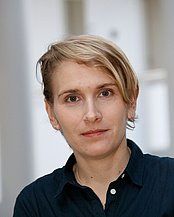
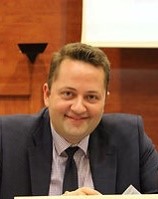
Josef Strobl is an Associate Professor at the Department of Geoinformatics , Paris Lodron University of Salzburg. With over 40 years of research activity (since 1982), he has produced 168 publications and participated in 51 projects. His work focuses on GIScience, spatial data infrastructure, remote sensing, and environmental engineering applications. Education : Not explicitly detailed in the text Research Interests : Geospatial technologies, data sharing frameworks, climate action support, hydrological modeling, and interdisciplinary applications in Central Asia Recent Publications (2021-2025) demonstrate expertise in geospatial ecosystems, water resource analysis, disease monitoring, and educational frameworks using GIS technologies across multiple domains including climate science, health geography, and regional development. Scientific Awards Christian-Doppler Preis (1989) Ehrenzeichen des Landes Salzburg (2018) Erasmus+ Botschafter (2022) Kulturfonds Salzburg Kinder- und Jugendprojektpreis (2020) Lifetime Achievement Award (2023) Leadership Roles include membership in the European Academy of Sciences and Arts (since 2021), full membership in the Austrian Academy of Sciences (since 2010), and organizing major conferences like GISCA 2024-2025. He contributes to editorial activities and peer review processes.
Katerina Panagopoulou serves as Assistant Professor of Ancient History at the University of Crete's Faculty of Arts, Department of History & Archaeology, where she has taught Hellenistic and Roman History since 2004. Her academic appointments include prior teaching roles at Royal Holloway College (University of London), Universities of Patras, Ionian, and Hellenic Open, alongside research positions at Greece's National Research Foundation and Foundation of the Hellenic World. She earned her BA in History & Archaeology from National & Kapodistrian University of Athens (1993) followed by a PhD in History from the University of London (2000). Her doctoral research established foundations for her ongoing specialization in ancient monetary systems. Her research centers on ancient numismatics, economic behavior of precious metals (particularly silver and gold) in Hellenistic and Roman contexts, demography and political economy of ancient Macedonia, and social network theory applications to economic history. She integrates numismatic evidence with papyrological sources and historical analysis to examine transaction practices, royal economies, and federal structures in the ancient Mediterranean world, with emphasis on cross-cultural economic interactions. Recent publications reveal sustained focus on Ptolemaic Egypt's gold-based transactions, Macedonian political organization during the Hellenistic era, and iconographic analyses of royal coinage. Her work demonstrates methodological innovation through network theory applications to ancient economic data, while maintaining rigorous philological engagement with primary sources across multiple disciplines. Her scientific distinctions include: Academy of Athens Prize (2022) for The Early Antigonids: Coinage, Money and the Economy CCS-CHS Fellow in Comparative Cultural Studies at Harvard University (2019-20) Stanley J. Seeger Visiting Fellowship at Princeton University (2017-18) British School at Athens Fellowships (2008-09, 2002-03) Royal Numismatic Society's MJPrice Fellowship (1998) She has secured substantial research funding through prestigious fellowships including Princeton University's Stanley J. Seeger programs (2002, 2017-18), Harvard University's CCS-CHS program (2019-20), and grants from the Alex. Onassis Foundation and State Scholarship Foundation (IKY). Her collaborative projects frequently involve international research teams focused on Mediterranean networks, as evidenced by co-edited volumes with scholars like Irad Malkin. While no dedicated laboratory is specified, she actively participates in research collectives centered on ancient economic systems and network analysis, notably through her editorial work for the University of Crete's Yearbook and collaborative projects examining cultural transformations in the Eastern Mediterranean.
Luke J Harmon serves as Professor in the Department of Biological Sciences within the College of Science at the University of Idaho, with additional appointments in the Initiative for Bioinformatics and Evolutionary Studies, Institute for Interdisciplinary Data Sciences, and Office of Research and Economic Development. Education: PhD in Evolution, Ecology, and Population Biology (2005) from Washington University in St. Louis BS in Zoology (1998) from Iowa State University Research Focus: Harmon's work integrates phylogenetic comparative methods with computational biology to investigate adaptive radiations , trait evolution , and biogeographic patterns . His research bridges micro-macroevolutionary scales through innovative statistical modeling, particularly in evolutionary medicine applications and speciation dynamics. As developer of key R packages ( rwty , treeducken , SSARP ), he advances methodological frameworks for analyzing evolutionary rates and character correlations. Publication Trends: Recent work (2022-2025) demonstrates increasing emphasis on software tool development for phylogenetic analysis, with significant contributions to evolutionary oncology, fire-adapted trait evolution in conifers, and niche theory applications in adaptive radiations. His publications consistently address methodological challenges in modeling rate heterogeneity, species delimitation, and cross-scale evolutionary processes. Research Infrastructure: Harmon leads the Harmon Lab, which operates within the University of Idaho's Initiative for Bioinformatics and Evolutionary Studies. The lab focuses on computational approaches to evolutionary questions, leveraging high-performance computing resources and interdisciplinary collaborations through the Institute for Interdisciplinary Data Sciences.
Adrian Kemmer Cernev is a Professor at the Getulio Vargas Foundation (FGV-EAESP) since 2004, with teaching experience at Insper, FIAP, PUC-SP, and FEI University Center. He holds a PhD and Master's degrees in Business Administration from FGV EAESP and was a visiting scholar at the University of California, Berkeley (2015-2016) at the School of Information (iSchool). His educational background includes a PhD and Master's in Business Administration from FGV EAESP with a thesis on mobile banking & digital payments in Brazil. He has also attended extension courses at Harvard Business School and UC Berkeley's School of Information. Professor Cernev's research focuses on technological innovation, payment methods, financial services, open banking, cryptocurrencies, blockchain, and Information Technology for Development (ICT4D). His work bridges academic research with practical business applications, particularly in the Brazilian context where he examines how digital technologies can drive financial inclusion and social development. He has published extensively on topics including social cryptocurrencies, mobile money, and digital complementary currencies, with a particular interest in how these technologies can address challenges in underserved communities. His publications show a clear trajectory toward increasing focus on blockchain applications and digital financial inclusion, with recent work examining the intersection of cryptocurrency technology with social impact initiatives, particularly in the context of the COVID-19 pandemic. His research often combines theoretical frameworks with practical case studies from Brazilian community banking initiatives. Professor Cernev actively participates in research projects with the Microfinance and Financial Inclusion Research Center (GVcemif) at FGV EAESP. His multidisciplinary approach combines insights from business administration, information technology, and social development to create applied knowledge that can be implemented in innovation projects and used to advise entrepreneurs at various business stages. He has collaborated with multidisciplinary teams to produce applied knowledge, implement innovation projects based on technology, and advise entrepreneurs, with the goal of achieving outstanding results in business transformation and social impact.
Marika Apostolova Trpkovska is an Associate Professor at the Faculty of Contemporary Sciences and Technologies, South East European University (Tetovo, Macedonia). Her academic work spans cybersecurity, blockchain technology, and educational technology with a focus on Industrial IoT security, semantic web applications, and digital learning systems. PhD in Computer Science (Specialty: e-Medical Services based on Semantic Web) MSc in Software Development and Applications BSc in Computer Sciences Her research covers cybersecurity frameworks for Industrial IoT, blockchain applications in public administration, and educational technology innovations including VR/AR integration and gamification. She has published extensively in international conferences and journals on these topics, with recent works focusing on machine learning-enhanced security protocols and decentralized real estate management systems. Current publications (2023-2024) highlight her expertise in IIoT security standards, smart contract development using Ethereum/IPFS, and cybersecurity threat modeling. Earlier works examine e-learning systems implementation, gender disparities in CS research, and real-time operating system validation. She serves as part-time academic staff member while maintaining technical roles in learning management system administration (LIBRI, ANGEL) and teaching responsibilities across software engineering, algorithms, and programming disciplines.
Michael Hilton is an Associate Teaching Professor in the Software and Societal Systems Department of the School of Computer Science at Carnegie Mellon University. He also serves as the Associate Department Head for Education and directs both the Software Engineering Minor and Software Engineering Concentration programs. His work bridges academic research with practical software engineering education. Ph.D. in Computer Science, Oregon State University (2017) M.S. in Computer Science, Cal Poly San Luis Obispo (2013) B.S. in Computer Science, San Diego State University (2002) Professor Hilton's research primarily focuses on understanding and improving the developer experience, with particular emphasis on flaky tests, continuous integration practices, and software engineering education. His work combines empirical studies of real-world development practices with educational innovations to enhance how software engineers are trained. He has conducted extensive research on test flakiness, identifying patterns, causes, and potential solutions to this pervasive problem in modern software development. His scholarly contributions reveal a consistent focus on practical software engineering challenges, particularly those affecting developer productivity and software quality. The research trajectory shows increasing attention to educational aspects of software engineering, including team-based learning, structured feedback mechanisms, and the impact of emerging technologies like AI on programming education. Professor Hilton has over 20 years of professional experience in software development, including 9 years at SPAWAR Pacific where he worked on projects for the US Navy, Coast Guard, and White House. This industry background informs his teaching approach, which emphasizes preparing students for real-world challenges they'll face after graduation. He teaches software engineering-focused courses and has developed educational approaches that integrate practical development experience with theoretical foundations. His teaching philosophy centers on providing students with both immediate practical skills and enduring principles that will serve them throughout their careers, with special attention to software engineering in startup environments.
Magdalene Silberberger is a Professor at the University of Witten/Herdecke, affiliated with the Faculty of Business and Society (Department of Philosophy, Politics and Economics) and the Chair of Development Economics. She serves as program director for the Global Sustainability (BA) degree and is a board member of the PPE Institute for Social and Institutional Change (ISIC). Her academic career spans institutions including Ruhr-University Bochum and the Wuppertal Institute, with consultancy experience at UNEP. Education : Dr. rer. oek. from Ruhr-University Bochum, Diplom-Ökonom from Bergische University Wuppertal Her research focuses on institutional conditions, international trade dynamics (including non-tariff barriers), fiscal policy optimization in African contexts, privatization regulation, and sustainable development frameworks. She leads the Professorship for Development Economics, emphasizing interdisciplinary analysis of country-specific development challenges. The 15 most recent publications demonstrate expertise in climate finance mechanisms (climate impact auctions), illicit financial flows, trade policy substitution, and agricultural value chains. Articles span empirical analyses of cassava systems in Nigeria, privatization in Mauritius, and politico-ecological studies in Cameroon. Awards : Recognized for innovative teaching methods addressing climate crisis responses (2022) She contributes to global climate governance through participation in COP29 and leads research projects like Green Impact Fund for Transformation (GIFT) and IndiGreen, focusing on digital tools for environmental governance. Her work bridges economic growth, regulatory frameworks, and equitable development.
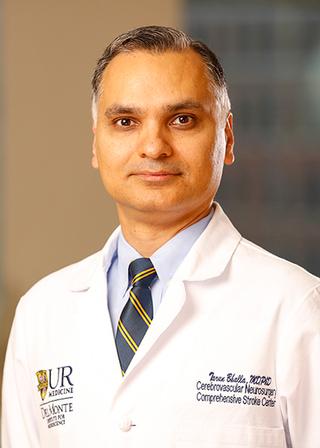
Tarun Bhalla, M.D., Ph.D., is an Associate Professor of Neurosurgery at the University of Rochester Medical Center (URMC), where he also holds appointments in Neurology and Imaging Sciences. He serves as Director of Stroke and Cerebrovascular Services at URMC, leading clinical and research efforts in cerebrovascular diseases. Previously, he directed Cerebrovascular and Endovascular Neurosurgery at Geisinger Medical Center (2013-2016). Education : M.D. from University of Connecticut School of Medicine (2006), Residency and Surgical Endovascular Neuroradiology Fellowship at Cleveland Clinic (2006-2012). His research focuses on open cerebrovascular and endovascular treatments for stroke, aneurysms, arteriovenous malformations (AVMs), carotid/vertebral disease, and trigeminal neuralgia. He pioneered mobile stroke unit (MSU) research to improve acute stroke care delivery and equity. Recent publications examine thrombus biology, MSU operational metrics, and procedural innovations in thrombectomy. His clinical trials include studies on radiation safety in MSUs, aspiration catheter optimization, and ADAMTS13-augmented thrombolysis. Scientific Awards : Ruth L. Kirschstein National Research Service Award (2004-2006), Phi Beta Kappa (1999), Medical Scientist Training Program Fellowship (1999-2006). Bhalla works with multidisciplinary teams including neurologists, neuroradiologists, and critical care specialists. He leads URMC's Mobile Stroke Center initiatives and has published extensively on cerebrovascular interventions.
Dr. Jenifer Jasinski Schneider serves as Interim Dean and Professor of Literacy Studies in the College of Education at the University of South Florida. Her leadership spans academic administration, research innovation, and community literacy initiatives, with significant contributions to K-12 writing instruction and children's literature scholarship. She earned her Ph.D. in Language, Literature, and Reading Education from The Ohio State University, establishing foundational expertise in literacy development and pedagogical theory. Dr. Schneider's research centers on children's composing processes through arts-based approaches, examining how process drama and children's literature foster symbolic development and meaning-making. Her work explores digital literacies' impact on multimodal composition, Irish children's literature through Fulbright-supported research in Ireland, and family literacy initiatives across diverse community contexts. She investigates evolving student strategies for print-based and digital text communication, emphasizing inclusivity and technological integration. Analysis of her recent publications reveals strong trends in diversity and inclusion through immersive technologies, interdisciplinary writing instruction (particularly mathematics integration), and critical digital literacies in post-truth discourse. Her scholarship bridges theoretical frameworks with practical classroom applications, consistently addressing contemporary challenges in teacher preparation and K-12 literacy education. Key scientific recognition includes: Fulbright Scholar award for research in Ireland Dr. Schneider has directed the Suncoast Young Authors Celebration for 20 years, championing student writing achievement, and currently serves on the Hillsborough Literacy Council Board. She pioneered open-access educational resources through her digital textbook The Inside, Outside, and Upside Downs of Children's Literature , demonstrating commitment to accessible pedagogy and community engagement in literacy advancement.
Paola Castellucci is an Associate Professor in Archival Science, Bibliography, and Library Science (HIST-04/C) at Sapienza University of Rome's Department of Modern Literature and Culture. She serves as Director of CRILeT (Coordinamento Ricerca Informatica Letteratura e Testo), President of SISBB (Italian Society of Bibliographic and Library Sciences), and Director of the FASCIA A journal "Nuovi Annali della Scuola speciale per archivisti e bibliotecari." Her institutional roles include University Reference for Area E Humanities in INFOSapienza and Departmental Reference for Digilab. PhD in Literary Sciences (Comparative Literature), University of Bari (1993) Post-Doctoral Fellow, University of Bari (1993-1994) Lincei Academy Fellow, Beniamino Segre Interdisciplinary Center (1991-1993) CNR Research Grant, Institute for Scientific Research and Documentation (1988-1991) Laurea in Modern Foreign Languages and Literatures, University of Rome "La Sapienza" (1986) Professor Castellucci's research spans Digital Humanities, Open Access, Library Science, and the history of information technology. Her monograph Dall'ipertesto al Web. Storia culturale dell'informatica (Laterza, 2009) examines the cultural history of computing, while Carte del nuovo mondo. Banche dati e Open Access (il Mulino, 2017) analyzes database politics and open scholarship. Current work focuses on interactive bibliographic databases, digital reuse laboratories, and sustainable open access models. Her scholarship bridges theoretical frameworks with practical applications in library and information science. Analysis of her 15 most recent publications reveals strong thematic continuity in digital knowledge organization, with increasing emphasis on sustainable open access infrastructures (32% of recent works), interactive information systems (24%), and critical database studies (18%). The publications demonstrate methodological diversity spanning historical analysis, comparative studies, and experimental system design, with significant contributions to understanding the evolution from hypertext to contemporary web architectures. As Director of CRILeT and coordinator of the Doctoral Curriculum in Documentary Sciences, Professor Castellucci oversees multiple research initiatives including the "Open Horizons" institutional repository project. Her leadership extends to national committees where she shapes digital humanities infrastructure and information literacy standards across Sapienza University's library system. Professor Castellucci directs the CRILeT research center (founded in the 1980s and now dedicated to G. Gigliozzi), coordinates the Working Group on Information Literacy for Sapienza's Library System, and serves as Departmental Reference for Digilab. Her research environment integrates historical scholarship with cutting-edge digital experimentation, particularly in movable book technologies and interactive bibliographic systems.
Iván Sánchez Milara serves as a University Teacher and Fab Lab instructor at the Faculty of Information Technology and Electrical Engineering, University of Oulu, while pursuing his PhD on 'Making interactive spaces for education'. His teaching portfolio includes Introduction to Computer Systems, Computer Systems, Programmable Web Project, Principles of Digital Fabrication, and Fab Lab-focused courses, alongside training educators in STEAM and Digital Fabrication through Fab Academy. Education: MSc.(Eng) [Institution unspecified] PhD candidate at University of Oulu His research centers on integrating ICT innovations into learning environments to empower educators in creating custom digital content and physical devices. Specializing in Digital Fabrication, Human-Computer Interaction, and Child-Computer Interaction, he develops authoring tools for teachers and investigates Fab Lab integration into formal education systems. Analysis of his 15 most recent publications (2020-2024) reveals a cohesive focus on digital fabrication in educational contexts, emphasizing collaborative making with children/teens, sustainable prototyping, pandemic adaptations for makerspaces, and community-driven STEAM education. His work consistently bridges pedagogical theory with practical technology deployment. He actively contributes to the Make4Change project for unemployed youth and STEAM in Oulu's Community of Practice for educators. As a core member of Fab Lab Oulu and the Center for Ubiquitous Computing, he drives initiatives that merge academic research with real-world educational transformation.
Sandra Treija is a Professor at the Institute of Architecture and Design, Riga Technical University (RTU), specializing in urban architecture, urban regeneration, and the quality of the housing environment. With over two decades of academic and administrative experience at RTU (including Deputy Dean roles), she focuses on sustainable urban development, community engagement, and architectural education. Doctor of Architectural Sciences Active in urban planning since 2012 Key affiliations: Latvian Union of Architects, Docomomo National Group Her research bridges theoretical and practical urban planning, emphasizing participatory budgeting, public space dynamics, and post-socialist housing estates. Recent projects explore digital tools in regeneration and the interplay between historic preservation and modernization. Publications highlight challenges in densification, privatization of public spaces, and cross-cultural urban studies (Taiwan-Baltic comparisons). She supervises doctoral students, contributes to international conferences, and serves on editorial/review boards for journals like Architecture and Urban Planning and Sustainability . Her work integrates community-led initiatives with formal academic frameworks, addressing urban sprawl, green space, and housing policy.
Roukanas Spyridon is a Professor at the Department of International and European Studies of the University of Piraeus, where he also serves as Vice-Chancellor for Academic and Administrative Affairs. His academic career spans multiple institutions across Greece and Cyprus, with expertise in International Political Economy and economic development in Southeastern Europe and the Eastern Mediterranean region. Department of International and European Studies, University of Piraeus School of Social Sciences, Hellenic Open University Neapolis University of Paphos, Cyprus University of Peloponnese University of the Aegean Democritus University of Thrace Roukanas earned his undergraduate degree from the Department of International Economic Relations & Development at Democritus University of Thrace (2003), followed by a Master of Arts in International Political Economy from the University of Leeds (2004), and completed his PhD at Democritus University of Thrace (2008). His academic journey reflects a strong foundation in international economic relations that has shaped his research trajectory. His research focuses on International Political Economy with particular emphasis on economic development in Southeastern European countries, the Eastern Mediterranean region, and emerging economies. He examines the complex relationships between these regions and the European Union, analyzes the effects of international economic crises on the contemporary global economic environment, and investigates how emerging economies are reshaping the international economic landscape. His work frequently addresses issues of energy security, monetary policy, and the political economy of sovereign wealth funds. Analysis of his recent publications reveals a consistent focus on the intersection of economic policy and geopolitical strategy, particularly regarding Southeastern Europe and the Eastern Mediterranean. His research demonstrates strong engagement with contemporary challenges including monetary competition between major powers, energy security dynamics, and the economic implications of global crises. The thematic coherence across his publications indicates a sustained scholarly contribution to understanding the evolving political economy of Europe's periphery and its integration into global economic structures. Roukanas has been actively involved in teaching across multiple programs, including undergraduate courses in Business and Organizational Management, graduate courses in Economics for Public Sector Management, and numerous postgraduate programs focusing on International and European Studies, Energy Policy, and Southeast European Studies. His teaching portfolio reflects the same thematic interests evident in his research, creating a cohesive academic profile that bridges theory and practice in international political economy.
Tyler McCormick is a Professor in both the Department of Statistics and Department of Sociology at the University of Washington. He also serves as a Senior Data Science Fellow at the eScience Institute and maintains affiliations with the Center for Statistics and the Social Sciences, the Center for Studies in Demography and Ecology, and the Responsible AI Systems & Experiences (RAISE) initiative. Dr. McCormick earned his Ph.D. in Statistics from Columbia University in 2011. His academic journey has established him as a leading researcher at the intersection of statistical methodology and social science applications. McCormick's research program focuses on developing innovative statistical approaches to address complex societal challenges: Bayesian methods for modeling high-dimensional dependence structures in social networks Estimating vital demographic rates from sparse data sources Developing interpretable predictive models with proper uncertainty quantification Creating methodological frameworks for verbal autopsy analysis in global health His publication record reveals a consistent trajectory of methodological innovation with practical impact. Recent work demonstrates increasing sophistication in handling network interference, integrating machine learning with statistical theory, and addressing data scarcity challenges in global health contexts. His research bridges theoretical advances with applications that inform public health policy and social science understanding. McCormick has received significant recognition for his scholarly contributions: NIH Director's New Innovator Award (2019) Election as Fellow of the American Statistical Association (2023) As an educator, McCormick teaches advanced graduate courses including Hierarchical Modeling for the Social Sciences and Quantitative Techniques in Sociology. His research has been supported by competitive grants from NICHD (2015-2020) focused on vital rate estimation in developing countries and NSF (2016-2018) funding for compact Bayesian models of social networks. His work has influenced policy discussions through media coverage in the Wall Street Journal and Washington Post. McCormick leads the OpenVA initiative, providing open-source tools for verbal autopsy analysis, and has developed multiple R packages implementing his methodological contributions to network analysis and causal inference. His research continues to address critical challenges at the intersection of statistical theory, computational methods, and societal impact.
Carole J. Lee is a Professor in the Department of Philosophy at the University of Washington, with additional affiliations as Adjunct Professor at the Information School (iSchool) and Affiliate Faculty at multiple interdisciplinary centers including the Center for an Informed Public, Center for Statistics and the Social Sciences, eScience Institute, Center for Studies in Demography and Ecology, and Society + Technology Program. Her research focuses on the social structure of science, examining biases in peer review, disparities in grant funding (particularly Black-white and gender gaps), and emerging norms in scientific credit allocation. She engages with both normative and empirical questions in metascience, publishing in venues like Science , Philosophy of Science , and Plos ONE . National Science Foundation National Institutes of Health Mellon Foundation Career Enhancement Fellowship Lee has received notable awards, including the First Prize for NIH's Peer Review Challenge and the Philosophy of Science Association's Prize in Philosophy of Science & Race. She also holds leadership roles at Rapid Science and previously advised on the Transparency and Openness Promotion (TOP) Guidelines.