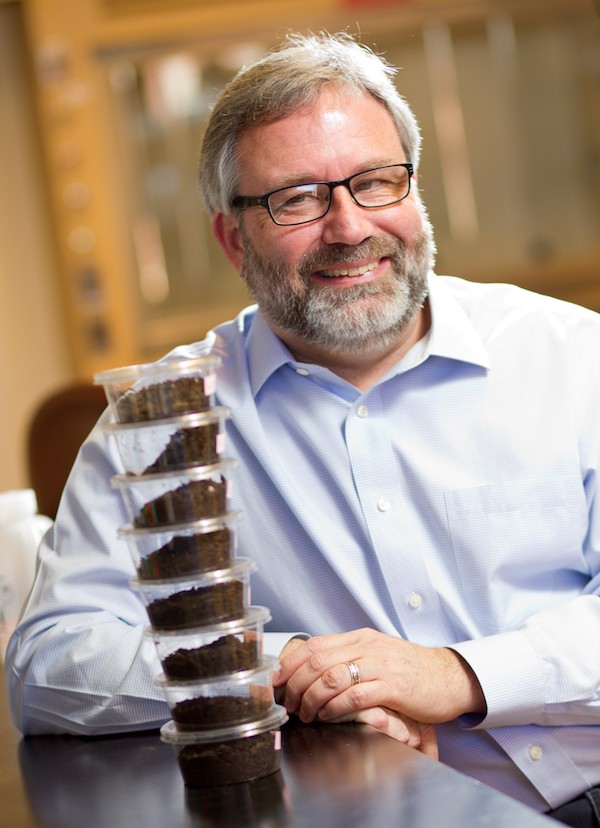
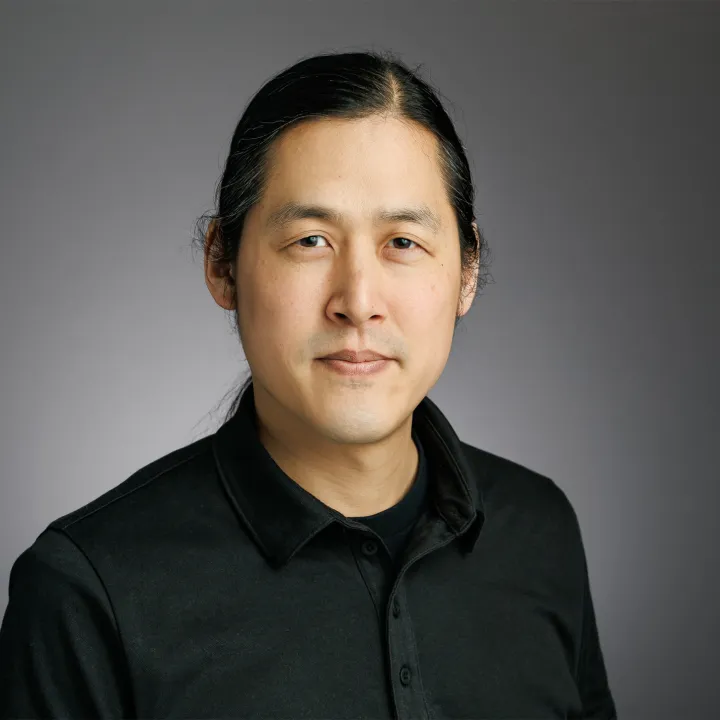
Daragh Byrne is an Associate Teaching Professor at the Carnegie Mellon University School of Architecture , with courtesy appointments in the School of Design and Human-Computer Interaction Institute (HCII) . Previously an Assistant Research Professor at Arizona State University’s School of Arts, Media and Engineering, he manages the NSF-funded XSEAD project and leads MakeSchools , a catalog of making practices in higher education. PhD in Digital Media from Dublin City University (2011) M.Res. in Design and Evaluation of Advanced Interactive Systems from Lancaster University B.Sc. in Computer Applications from Dublin City University His research explores experiential media systems through Internet of Things and tangible interaction design , focusing on how computational tools can capture human experience and enable multidisciplinary collaboration. Key projects include Sentient Concrete (thermochromic architectural surfaces) and Spooky Technology (speculative design around invisible technologies). He has developed CMU’s Designing for the Internet of Things course since 2016, creating hands-on curricula for connected product design. Recent publications examine creative physical computing education , AI-driven documentation systems , and XR-enabled skill training . Awards include multiple CMU research grants and the CHI 2018 Best Paper Award . He actively advises PhD and Masters students in Computational Design, emphasizing human-centered design and speculative technology research .
Allen J. Moore is a Distinguished Research Professor in the Department of Entomology at the University of Georgia's College of Agricultural & Environmental Sciences. His work bridges evolutionary biology, genetics, and behavioral ecology with a focus on understanding the molecular and genetic mechanisms underlying complex social behaviors in insects. Moore's research program centers on the evolution of parental care and social behavior, primarily using burying beetles (Nicrophorus species) as model organisms. His work integrates quantitative genetics, molecular biology, and behavioral ecology to investigate how indirect genetic effects shape coevolutionary dynamics between interacting individuals. A significant portion of his recent research examines the role of DNA methylation, particularly Dnmt1, in reproductive processes and behavioral plasticity across insect species. His approach combines field observations with molecular techniques to address fundamental questions about how genes and environment interact to produce adaptive behaviors. Analysis of Moore's recent publications reveals a strong trajectory toward understanding the epigenetic regulation of social behavior. His work demonstrates how molecular mechanisms like DNA methylation interact with environmental factors to influence parenting strategies, reproductive timing, and kin recognition. The research spans multiple insect systems including burying beetles, crickets, and whiteflies, providing comparative insights into the evolution of social behavior across diverse taxa. Moore maintains active collaborations within the University of Georgia, particularly with Patricia Moore in the Entomology department, as evidenced by their joint research on DNA methylation in insects. His lab appears to train graduate students and postdoctoral researchers, contributing to the next generation of evolutionary biologists while advancing our understanding of how complex social behaviors evolve and are maintained in natural populations.
Leif Kobbelt serves as a University Professor at RWTH Aachen University, leading the Computer Graphics Group within the Department of Computer Science (Informatik 8). His research focuses on advancing geometry processing, interactive visualization, and computer graphics through innovative algorithmic solutions and interdisciplinary collaborations. Professor Kobbelt's research program centers on geometry acquisition and processing, with significant contributions to mesh generation, surface reconstruction, and neural rendering techniques. His work bridges theoretical geometry with practical applications in computer vision, photo-realistic image synthesis, and multimedia data transmission, often involving collaborations with industry partners and international research teams funded by DFG and EU sources. Recent publications (2023-2025) reveal a strategic integration of deep learning with traditional geometry processing, particularly in Gaussian splatting for real-time rendering, NeRF-based 4D content generation, and robust mesh Boolean operations. His group maintains leadership in quad mesh optimization and surface mapping while expanding into immersive visualization techniques for complex data analysis. The group has earned recognition through prestigious awards: Günter Enderle Best Paper Award at Eurographics 2023 Best Paper Award (1st place) at Symposium on Geometry Processing 2022 Honorable Mention for Best Paper at ACM Symposium on Virtual Reality Software and Technology Funding from Deutsche Forschungsgemeinschaft and European Union programs supports the group's research infrastructure and international collaborations. The team actively supervises graduate theses while developing open-source software tools that translate theoretical advances into practical industry applications, particularly in digital fabrication and immersive visualization systems. The Computer Graphics Group operates as a central hub for visual computing research at RWTH Aachen, maintaining strong ties with both academic institutions and technology companies. Their recent work on virtual reality educational tools and high-fidelity 3D reconstruction systems demonstrates commitment to knowledge transfer and real-world impact beyond traditional publication venues.
Stefan Decker is a full University Professor (Universitätsprofessor) at RWTH Aachen University, Germany, where he heads the Chair of Information Systems and Databases (Informatik 5) within the Faculty of Mathematics, Computer Science and Natural Sciences. He is actively involved in teaching, research, and the supervision of numerous ongoing and completed doctoral, master’s, and bachelor theses. Education & Academic Background Doctorate (Dr. rer. pol.) – field of Information Systems or related (exact institution/year not stated in text). Appointed as University Professor and Chair of Information Systems and Databases at RWTH Aachen University. Research Interests Prof. Decker’s work lies at the intersection of databases, knowledge graphs, semantic web technologies, data science, and cybersecurity . He investigates architectures and algorithms for large-scale, privacy-preserving, decentralized data analytics , develops ontology-driven information systems , and explores the use of large language models (LLMs) for educational technology, anomaly detection, and incident-response playbooks. Additional focal areas include smart energy systems, mixed-reality learning environments, FAIR data principles, and federated machine learning . Scientific Contributions & Trends His recent publications (2022-2025) demonstrate a clear trend toward explainable AI, LLM-enhanced systems, secure data spaces, and semantic interoperability . Key contributions include novel anomaly-detection frameworks for encrypted power-grid communications, knowledge-graph-driven chatbots for higher-education support, and methodological advances in decentralized analytics and FAIR data sharing. These works are disseminated in top-tier venues such as AAAI, IEEE ISGT Europe, ESWC, IDEAL, and various Springer LNCS and IEEE Transactions. Supervision & Grants Doctoral Theses Advised: A. T. Neumann – “Chatbots as professional companions in large-scale community information systems” (2024) S. M. Welten – “Methods for practical data sharing and decentralized analytics” (2025) Master’s Theses Co-Advised: A. R. Küsters – “Object-centric process constraints using variable bindings” (2025) Additionally supervising more than 30 ongoing bachelor, master, and doctoral projects covering topics such as LLM-driven cybersecurity playbooks, knowledge-graph construction for German law, privacy-preserving analytics in smart grids, and mixed-reality learning agents. Principal investigator or senior researcher in large collaborative projects including NFDI4DS, WestAI, champI4.0ns and several EU/national initiatives on sovereign data spaces and AI services. Labs & Teams Prof. Decker leads the Information Systems & Databases (DBIS) Research Group . The group operates well-equipped laboratories for knowledge-graph engineering, mixed-reality applications, privacy-enhancing technologies, and secure distributed analytics . Current team size exceeds 30 researchers including PhD candidates, postdocs, and scientific programmers, supported by national and EU funding streams.
Matthias Bannert is a Lecturer at the Department of Management, Technology, and Economics at ETH Zürich, where he works at the KOF Swiss Economic Institute (Konjunkturforschungsstelle). His work focuses on the intersection of economics, software development, and data management, with particular expertise in time series analysis and official statistics. Bannert designs solutions for state-of-the-art data processing, management, and publishing of economic data and research. Bannert completed his doctoral thesis titled "Survey Based Research in Economics - Essays on Methodology, Economic Applications and Long Term Processing of Economic Survey Data" at ETH Zürich in 2016. His academic journey began when he joined KOF in late 2008, initially working as a researcher for the Business Tendency Survey group before transitioning to the institute's IT department. Dr. Bannert's research interests span several interconnected domains at the nexus of economics and data science. He specializes in developing software environments for official statistics, with particular focus on processing and managing economic time series data through open-source driven data pipelines. His technical expertise includes R programming and PostgreSQL database systems, which he applies to create robust solutions for economic data analysis. Bannert is particularly interested in survey methodology, nowcasting techniques, and the development of reproducible research workflows. His work bridges the gap between theoretical economics and practical software implementation, ensuring that economic research can leverage state-of-the-art data processing techniques. Analysis of Bannert's publication record reveals a consistent focus on the application of data science techniques to economic research problems, particularly in the domain of official statistics and survey-based economics. His work demonstrates a progression from theoretical survey methodology to practical software implementation, with increasing emphasis on real-time economic forecasting and data management systems. A distinctive feature of his research is the development of open-source R packages that make advanced economic data analysis more accessible to researchers and practitioners. As an active contributor to the R language for Statistical computing and the open source community, Bannert has developed several notable software packages including timeseriesdb, tstools, and kofdata, which are available on CRAN. These tools reflect his commitment to creating reproducible, transparent, and efficient workflows for economic data analysis. Bannert serves as a data science supervisor for multiple KOF research projects and is a co-Principal Investigator in an SNF-funded Digital Lives project in collaboration with KOF's labor market expert group. His teaching activities include "Hacking for Sciences - An Applied Guide to Programming with Data" and involvement in the Nowcasting Lab, which provides live out-of-sample forecasting and model testing capabilities for economic researchers. Dr. Bannert is affiliated with the KOF Swiss Economic Institute, where he contributes to several research groups including the KOF Macroeconomic Forecasting group and the KOF Data Science and Macroeconomic Methods group. His work at KOF bridges the institute's traditional economic research with modern data science approaches, helping to position the institute at the forefront of data-driven economic analysis.
Anastasios Zafeiropoulos serves as Assistant Professor at Harokopio University of Athens, specializing in Spatial Data Management and Analysis within the Postgraduate Studies Program for “Applied Geography and Spatial Management” (Direction C: Geoinformatics). His academic role encompasses teaching “Spatial Databases” and advancing research at the intersection of geospatial technologies and distributed computing systems. His research program focuses on Spatial Databases, Internet of Things (IoT), Cloud/Edge Computing, and 6G Network Orchestration, with significant extensions into Knowledge Graph applications for Sustainable Development Goals (SDGs) and socio-emotional learning in education. Key innovations include the EduCardia methodology for student competency assessment and frameworks for climate vulnerability analysis using knowledge graphs. Analysis of his 2024-2025 publications reveals three dominant thrusts: (1) AI-driven orchestration of 6G services across the computing continuum using reinforcement learning; (2) Knowledge Graph applications for SDG interlinkage analysis and materials science; (3) EU-funded IoT/Edge Computing project ecosystems. His work consistently bridges theoretical networking concepts with practical sustainability and educational applications. Dr. Zafeiropoulos actively contributes to EU-funded initiatives in IoT and Edge Computing standardization, particularly through AIOTI WG Standardisation. His project portfolio includes NEPHELE multi-cloud ecosystem development and O-RAN slice admission control research, demonstrating strong industry-academia collaboration in next-generation networking. He leads the development of innovative tools including Palindrome.js for distributed system visualization and the EmoSocio open-access emotional intelligence model, reflecting his commitment to translating research into practical educational and environmental solutions.
Dr. Sotirios Varelas serves as an Assistant Professor at the Department of Tourism Studies within the School of Economics, Business and International Studies at the University of Piraeus. His academic specialization focuses on Hospitality Business and Tourism Organization Strategy, where he contributes significantly to both undergraduate and postgraduate education through courses spanning tourism geography, international tourism markets, tourism development strategies, and strategic management of tourism businesses. Department of Tourism Studies, University of Piraeus School of Economics, Business and International Studies Teaches in Tourism Management programs at University of Piraeus and Hellenic Open University Student internship coordinator and academic advisors coordinator President of the Board of Directors of the Greek Branch of IFITT (World Organization for Technology in Tourism and Travel) Dr. Varelas's research interests center around strategic management in tourism, digital transformation in the hospitality industry, sustainable tourism practices, and innovative approaches to destination marketing. His scholarly work explores how emerging technologies like blockchain, big data analytics, and virtual reality platforms can revolutionize tourism enterprises and destinations. He has extensively studied the impact of economic crises on Greek hospitality businesses and developed strategic frameworks for tourism organizations to navigate challenging market conditions. His research portfolio demonstrates a consistent focus on strategic approaches to tourism development, with particular attention to sustainable indicators, performance measurement, and the integration of technology in tourism enterprises. Dr. Varelas's publications reveal an evolving research trajectory that increasingly incorporates digital innovation and sustainability metrics into traditional tourism management frameworks. Creator and coordinator of the Postgraduate Program in Tourism Business Administration Founder of the International Tourism Research Center of Neapolis University Former scientific consultant at the Ministry of Tourism, Hellenic Tourism Organization, and Peloponnese Region Collaborator with multiple research centers including the Institute of Regional Development and ELKE of the University of Peloponnese With over 12 years of professional experience as a scientific consultant in tourism organizations and as the creator of a virtual tourism startup company, Dr. Varelas brings practical industry insights to his academic work. His engagement with professional organizations and his role in connecting academic knowledge with industry practice demonstrate his commitment to advancing tourism education and practice in Greece and internationally.
Dr. Maura Conway serves as Professor of International Security at Dublin City University's School of Law and Government and is the Coordinator of the VOX-Pol research network. She additionally holds a visiting position at CYTREC, Swansea University. Her expertise focuses on the critical intersection of extremism, terrorism, and digital technologies, where she has established herself as a leading global scholar through over 40 publications in premier journals including Studies in Conflict & Terrorism and Media, War & Conflict. Her research program systematically investigates cyberterrorism, online radicalization pathways, and the operational dynamics of violent extremist content across digital platforms. Prof. Conway examines how terrorist organizations exploit internet infrastructure for recruitment, propaganda dissemination, and operational coordination, while simultaneously analyzing counter-terrorism responses in cyberspace. Her work bridges theoretical frameworks with empirical analysis of both far-right and jihadi online ecosystems. Analysis of her recent publications (2021-2025) reveals a strategic evolution from foundational critiques of 'cyberterrorism' hype toward contemporary investigations of platform governance, researcher ethics, and comparative analyses of extremist online behaviors. Her scholarship increasingly addresses the practical complexities of content moderation, researcher safety protocols, and the development of tailored ethical guidelines for high-risk online research environments. Prof. Conway actively engages with global policy institutions, having presented findings to the United Nations in New York, the European Commission in Brussels, and the UK House of Lords. She contributes to international security architecture through her membership on Europol's Counter-terrorism Centre Academic Advisory Board and the Editorial Board of Terrorism and Political Violence, directly influencing counter-terrorism strategies and academic discourse worldwide.
Andreas Weber is an Associate Professor at the University of Twente's Digital Society Institute , specializing in the Knowledge, Transformation & Society (KiTeS) research group . His work examines the long-term historical and global relationship between Science, Technology, and Society , with particular focus on colonial histories of natural history, chemistry, and sustainability , as well as computational technologies for contextualizing digitized archives . He leads the HAICu project (2023–2029) on digital cultural heritage and coordinates STS PhD training for the Netherlands Graduate Research School (2019–2024). MA & PhD in History (2005 & 2012), Leiden University Assistant Professor (2017–2023), University of Twente Andreas' research integrates digital humanities with colonial science history , emphasizing global histories of minerals , digital humanism , and AI's societal context . His 15 most recent publications (2016–2025) explore topics like colonial bias in natural history collections , FAIR data implementation , and semantic annotation of handwritten archives , spanning disciplines from history of science to computer science and museum studies . He has received 7 scientific awards , including multiple Best Teacher Awards (2020–2023) and the IEEE eScience Best Poster Award (2018). Andreas supervises PhD and postdoctoral projects while engaging in media commentary on colonial heritage issues and co-organizing international conferences like Hydrogen Pasts and Futures (2024).
Professor Stephen Rose is Head of the Department of Music at Royal Holloway, University of London. His research focuses on music history from the 16th to 18th centuries in German-speaking lands and England, utilizing methods from book history, social history, and digital humanities. He explores how music circulated between communities and its symbolic meanings, particularly through printed music and authorship concepts. His work includes groundbreaking projects like the digitization of early music collections and open data initiatives analyzing music catalogues. Director of major AHRC projects: 'Music, Heritage, Place' (2024-26), 'A Big Data History of Music' (2014-15), and 'Early Music Online' (2010). Editor of Early Music journal (2004–present) and co-editor of scholarly editions like Leipzig Church Music from the Sherard Collection . Recipient of grants from the British Academy, AHRC, and Swedish Foundation for International Cooperation. His research emphasizes overlooked sources, such as novels and fictional narratives to uncover social attitudes toward musicians. He collaborates with institutions like the British Library and the Foundling Museum to enhance public access to musical heritage. Current projects include documenting regional musical collections in English county archives to decentralize understandings of English music history. Teaching includes undergraduate courses on music history, digital tools for music studies, and baroque performance practices. He mentors PhD students in topics ranging from charity school music to French performance styles in 17th-century England. Recent trainees hold academic positions at universities like Northumbria and Brigham Young.
Gabriele Bavota is an Associate Professor at the Software Institute of Università della Svizzera Italiana (USI) in Lugano, Switzerland. He leads the SEART (Software Engineering Advanced Research Team) group and serves as Principal Investigator for the DEVINTA ERC starting grant focused on developer intelligence through mining software artifacts. Dr. Bavota's research spans Software Quality, Empirical Software Engineering, and Mining Software Repositories. His work has evolved from foundational studies on code smells and technical debt to cutting-edge research at the intersection of artificial intelligence and software development. He has made significant contributions to understanding API usage patterns, software quality metrics, and developer behavior through empirical studies of large software repositories. His recent publications reveal a strong focus on AI-assisted software development, with extensive research examining code generation, code summarization, and code review automation using large language models. He has also expanded his research to include quality assurance in game development (detecting game stuttering and low engagement events) and voice user interface testing. His work consistently bridges theoretical insights with practical applications for software developers. ACM SIGSOFT Distinguished Paper Award for API compatibility research (MSR 2019) ACM SIGSOFT Distinguished Paper Award for Hugging Face model documentation study (ICPC 2024) ACM SIGSOFT Distinguished Artifact Award for deep learning fault taxonomy (ICSE 2020) As an active member of the software engineering research community, Dr. Bavota serves on program committees for major conferences including ICSE, ASE, FSE, and MSR. He has held leadership roles such as Program Co-Chair for ICSME 2023 and Vision/Reflection Track Co-Chair for ICSE. His SEART research group develops practical tools like the SEART Data Hub that streamline large-scale source code mining and preprocessing for empirical software engineering research.
Tse-Hsun (Peter) Chen is an Associate Professor in the Department of Computer Science and Software Engineering at Concordia University in Montreal, Canada. He serves as Director of the SPEAR lab (Software Performance, Analysis, and Reliability lab), which focuses on improving the quality of large-scale software systems through research in log analysis and AIOps, software performance analysis, software testing, and mining software repositories. His research group maintains extensive collaborations with industry partners including ERA Environmental, Ericsson, Microsoft, and BlackBerry. Dr. Chen received his PhD and MSc in Computer Science from Queen's University and his BSc in Computer Science from the University of British Columbia. Dr. Chen's research addresses critical challenges in modern software engineering, including leveraging Large Language Models to assist developers with development, debugging, and maintenance; helping developers debug production systems by utilizing rich software data; providing optimization suggestions by analyzing user usage data; improving software quality assurances in DevOps environments; and mining software development history for useful developer suggestions. His work spans Software Engineering, Performance Engineering, DevOps & AIOps, Software Testing, and Mining Software Repositories, with a strong emphasis on practical applications that bridge academic research and industrial practice. His recent publications (2024-2025) demonstrate a pronounced shift toward integrating Large Language Models into various aspects of the software engineering lifecycle, particularly in log analysis, fault localization, code generation, and performance testing. This trend reflects the growing importance of AI in software engineering research and practice. Gina Cody Research award (2022) Ranked as one of the most active software engineering researchers worldwide by an independent study published in JSS Dr. Chen has successfully advised numerous PhD and Master's students, many of whom have secured prestigious academic positions. Several of his graduated PhD students now hold tenure-track assistant professor positions at institutions including York University, University of Alberta, DePaul University, and IIT Gandhinagar. His SPEAR lab has developed research tools that have been integrated into industrial practice for ensuring the quality of large-scale enterprise systems. The SPEAR lab, under Dr. Chen's leadership, has established itself as a leading research group in software engineering, with particular expertise in software performance analysis, log analysis, and AI applications for software engineering. The lab maintains strong industry connections and has produced numerous high-impact publications in top-tier software engineering venues including ICSE, FSE, ASE, and TSE.
Dr Preeti Raghunath is a Lecturer in Digital Media and Society at the University of Sheffield's School of Sociological Studies, Politics and International Relations. She holds a PhD from the University of Hyderabad and has prior academic roles at Monash University. Her research focuses on global media policy, sustainable technology governance, and AI/ data policies in the Global South. She co-leads the STeMiS research theme and is a Fellow at the Institute for Global Sustainable Development. Her education includes a PhD in Communication (2019) and MPhil in International Relations (2011). Before academia, she worked in journalism, corporate communications, and research. Her work integrates critical policy ethnography and deliberative frameworks, with a focus on South Asia and Southeast Asia. Research highlights include the Deliberative Policy Ecology Approach for media governance, studies on AI policy gender dimensions, and analysis of digital state assemblages. She's contributed to UN-funded projects on AI and women's rights, and her work is part of Columbia University's Global Freedom of Expression curriculum. Teaching includes modules on digital society, research methods, and global data industries. She's secured grants from entities like UN Women, Ford Foundation, and the Open Society Foundations. Awards include the 2018 IAMCR Best Paper Award. Professional roles include Co-Editor of Palgrave's Global Media Policy series and Editorial Board member of Journal of Digital Media & Policy . She collaborates internationally, including partnerships with UNU Macau and India's National Media Policy consultations.
Theodore Kim is a Professor of Computer Science at Yale University, where he co-leads the Computer Graphics Group with Julie Dorsey and Holly Rushmeier. His research focuses on physics-based simulation, including fluid dynamics, solid mechanics, and fractal growth structures. He holds a PhD from the University of North Carolina at Chapel Hill and has held academic positions at UCSB and the University of Saskatchewan. His work has been applied in over two dozen films, earning him SciTech Oscars in 2012 and 2022. He previously served as a Senior Research Scientist at Pixar, contributing to projects like *Cars 3*, *Coco*, and *Incredibles 2*. Education: Ph.D., Computer Science, University of North Carolina at Chapel Hill (2006) M.S., Computer Science, University of North Carolina at Chapel Hill (2006) B.S., Computer Science, Cornell University (2001) Research Interests: Kim’s work bridges academia and industry, emphasizing practical applications of physics-based simulation. Notable areas include hair and skin simulation for animation, fluid dynamics, and the historical context of computer graphics innovations. His research also addresses racial biases in graphics, such as in hair and skin modeling. Articles Trends: Recent work emphasizes diverse representation (e.g., Black hair simulation), biomechanical accuracy (feather modeling), and historical analysis of technical contributions (e.g., Búi Tướng Phong’s legacy). Earlier publications focus on fluid subspace methods, wavelet turbulence, and efficient simulation techniques. Awards: Academy Award for Scientific and Technical Achievement (2012, 2022) NSF CAREER Award (2013–2018) UCSB Harold J. Plous Award (2015) Best Paper Awards at SCA (2011, 2016, 2018) Grants & Labs: Leads Yale’s Critical Computing Initiative and directs undergraduate studies in CS. His lab collaborates with industry (e.g., Pixar) and emphasizes open-source software. Current projects include fractal design tools and anti-racist graphics research.
Gaétan de Rassenfosse is an Associate Professor at EPFL's School of Management of Technology (CDM), specializing in Science, Technology, and Innovation Policies. He joined EPFL in 2014 and holds a PhD in Economics from the Solvay Business School (Université Libre de Bruxelles). His research focuses on crafting evidence-based policies for knowledge economies, particularly in intellectual property, intangible capital measurement, and 'science of science.' He has published in top journals like Journal of Industrial Economics and Research Policy , secured over CHF 2.5M in research grants, and advised governments and international organizations such as the European Commission and Swiss Federal Office for Education and Research (SERI). He teaches courses on innovation economics and intellectual property management. Professional roles include membership in the CDM Management Board, the Conference of Section Directors (CDS), and doctoral program committees. His advising includes guiding 5 PhD students focusing on policy impacts in clean technology, innovation incentives, and science organization. Key research themes span patent systems, innovation policy efficacy, and cross-border knowledge flows. He actively engages with media and policymakers to translate academic insights into actionable public strategies.