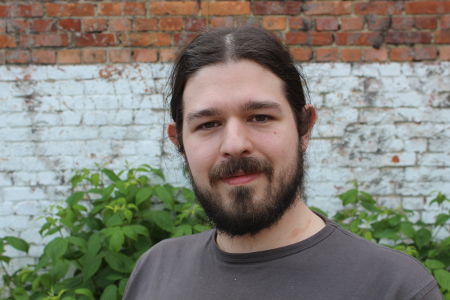
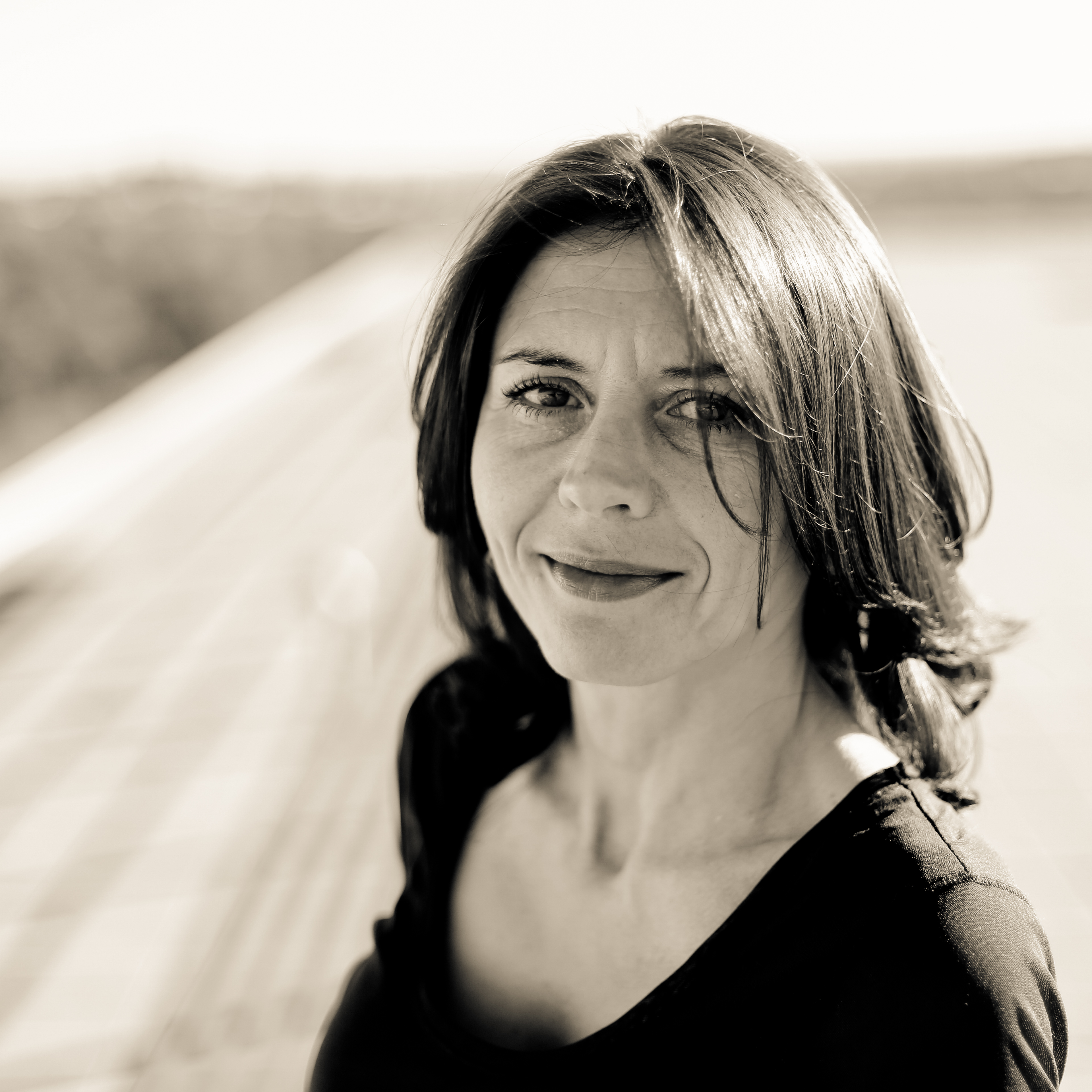
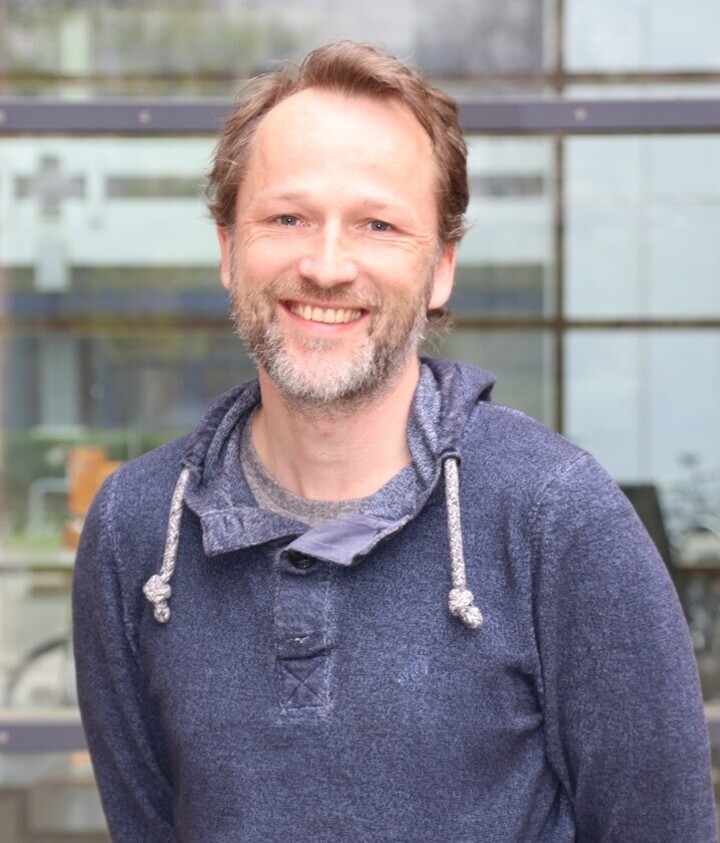
Professor Alsayed Algergawy is the substitute for the Chair of Data and Knowledge Engineering at the University of Passau since April 2023. His work bridges semantic web technologies and machine learning to enable heterogeneous data integration across domains. Current focus areas: schema/ontology alignment, entity resolution, knowledge graph construction Active in DFG Collaborative Research Center AquaDiva (data lifecycle management) Domain applications: biodiversity, agriculture, energy His team develops hybrid strategies combining rule-based systems with ML techniques to extract value from both structured and unstructured data sources.
Prof. Dr. Heiko Paulheim is a Professor of Data Science and currently serves as University Vice President at the University of Mannheim. He leads the Data and Web Science Group (DWS), which focuses on Web Data Mining, Knowledge Graphs, and Semantic Web technologies. His research group contributes to open source knowledge graphs like DBpedia and develops new knowledge graphs such as WebIsALOD and DBkWik. As of October 1, 2024, he has limited teaching capacity due to his vice presidential duties. Prof. Paulheim's research interests span Knowledge Graphs, Semantic Web, Web Data Mining, Machine Learning, and Natural Language Processing. His work particularly focuses on knowledge graph refinement, embedding techniques (notably RDF2vec), and applications in various domains including news recommendation, biomedical informatics, and environmental monitoring. His group develops practical tools like the RapidMiner Linked Open Data Extension and RDF2vec for knowledge graph applications. His recent publications demonstrate a strong focus on knowledge graph embeddings, with particular attention to RDF2vec variants, applications in news recommendation systems, biomedical data integration, and spatio-temporal knowledge graphs for environmental monitoring. His work bridges theoretical advances in knowledge representation with practical applications across multiple domains. Among his notable achievements are a nomination for the Best Paper Award at CAiSE 2025 and securing an Open Science Grant for the SpatialBenchRAG project. His research has significant impact in both academic and industrial contexts, with multiple papers accepted at top conferences like ISWC and ESWC. Prof. Paulheim has supervised numerous PhD students including Alexander Brinkmann and Michael Schlechtinger, and has led several research projects including the DFG Project Mine@LOD, State of BW Project SyKoW², and BMBF Project DS4DM. His group maintains strong industry connections with partners like SAP AG, Daimler AG, and IDS.
Prof. Liqiu Meng serves as Chair of Cartography and Visual Analytics at the Technical University of Munich (TUM). He specializes in advanced geospatial research, digital cartography, and human-technology collaboration frameworks. Current Faculty at TUM Chair of Cartography and Visual Analytics Research Focus: His work bridges cartographic theory with cutting-edge technology, covering topics like 3D urban modeling, AI ethics visualization, geovisual analytics, and spatiotemporal data interpretation. Urban Morphology Analysis AI Ethics Cartography Geovisual Analytics 3D City Data Integration Location-Based Service Design Publications: Recent works (2025-2024) demonstrate expertise in explainable AI for urban analysis, multi-agent systems for geospatial interaction, and advanced spatial modeling techniques. Contact: liqiu.meng@tum.de | contact.lfk@ed.tum.de
Schloss Dagstuhl - Leibniz Center for InformaticsGermany
Pierre Monnin is a Junior Fellow in AI at Université Côte d'Azur , conducting research within the Wimmics team at the I3S Laboratory . He also teaches within the EFELIA Côte d'Azur program. His work spans multiple institutions through funded projects like SHACKLE (EU Horizon), ECLADATTA and AT2TA (ANR), with collaborations at Télécom Paris , Università di Bari , and INESC-ID in Lisbon. Previous roles include temporary lecturer at TELECOM Nancy (2023-2024) and researcher at Orange (2020-2023). Research Interests focus on the knowledge graph lifecycle (construction, matching, refinement, mining, discovery) from neurosymbolic AI and analogical reasoning perspectives. He explores Domain knowledge injection into ML models Symbolic-semantics for graph embeddings Zero-shot bootstrapping techniques Context-aware semantic annotation Link prediction with constraint enrichment Life sciences applications Recent scientific awards include: Best Paper Award at ESWC 2024 (Student & Resource Papers) Best Thesis Award from French Association EGC (2022) 1st Prize (Accuracy Track) at Semantic Web Challenge (2021) His teaching portfolio covers AI fundamentals for foreign languages, marketing, and adult education programs, with specialized courses in Semantic Web technologies NoSQL databases XML tools Compiler implementation He supervises multiple PhD students and interns on topics involving neurosymbolic refinement , knowledge reconciliation , and analogical reasoning . Key software contributions include: KGPrune - Web application for thematic Wikidata subgraph extraction PyGraft - Synthetic knowledge graph generation tool DAGOBAH UI - Semantic table interpretation interface He also maintains datasets like PGxLOD and YAGO4-LP for pharmacogenomics and link prediction.
Dr. Pascal Reuss is a Researcher at the Intelligent Information Systems (IIS) Division within the Institute of Computer Science , University of Hildesheim . His work focuses on Case-Based Reasoning (CBR) systems, Multi-Agent Systems , and Knowledge Management applications. Active in CBR framework development and game-based AI research Teaching Computer Science III (Databases) for winter 2025/26 Participating in university sustainability initiatives like Stadtradeln 2024/25 Reuss contributes to AI education through practical implementations in gaming environments and has developed visualization tools for CBR agent behavior. His research spans multi-agent collaboration , dynamic case bases , and domain-specific language implementations for knowledge maintenance. Notable contributions include: Co-developing the FEATURE-TAK framework for knowledge extraction Designing case factories for distributed CBR systems Implementing finite state machines for tactical game agents Creating CBR-based fitness planning systems His work appears in various CBR and Game Development publications from 2011-2024. The research demonstrates practical applications of CBR in aircraft maintenance diagnostics , training plan generation , and educational technology contexts.
Schloss Dagstuhl - Leibniz Center for InformaticsGermany
Catia Pesquita is an Associate Professor in Computer Science at the Faculty of Sciences of the University of Lisbon , where she is also a Senior Researcher at LASIGE and leads the Health and Biomedical Informatics Research Line . With a multidisciplinary background in Biology and Computer Science, she focuses on Artificial Intelligence and Data Science applications in life and health sciences . Her research spans Semantic Web , Biomedical Ontologies , Knowledge Graphs , and Explainable AI , with significant contributions to ontology matching and semantic similarity . Education: PhD in Computer Science - Bioinformatics (2012) MSc in Bioinformatics (2008) Degree in Cell Biology and Biotechnology (2005) Current Projects: KATY (2021-2024): AI-Empowered Personalized Medicine for cancer treatments. BRAINTEASER (2021-2024): AI for ALS and MS disease progression models. Research Outputs: Developed tools like AgreementMakerLight (AML) , KGsim-benchmark , and the Epidemiology Ontology . Over 133 publications with significant citations (32,909 reads, 3,889 citations). Teaching: Lectures advanced topics in Databases , Data Integration , Bioinformatics , and Big Data . Advocacy: Vice-president of Biodata.pt , promoting biological data valorization in Portugal. Actively involved in initiatives to promote computer science careers to young women .
Schloss Dagstuhl - Leibniz Center for InformaticsGermany
Juan F. Sequeda is the Principal Scientist and Head of the AI Lab at data.world, with a PhD in Computer Science from the University of Texas at Austin. He co-founded Capsenta, a spin-off from his research on semantic data virtualization. His work bridges academia and industry through roles in the Property Graph Schema Working Group, LDBC Graph Query Languages task force, and W3C standards editing. Education : PhD in Computer Science (2015) from University of Texas at Austin His research focuses on Knowledge Graphs, Semantic Web, and Ontology-Based Data Integration. He develops technologies for graph data management and semantic query processing, with applications in constitutional data analysis (Constitute.org) and enterprise data virtualization (Ultrawrap, Gra.fo, G-CORE). Recent publications analyze composable graph query languages (G-CORE, 2018) and optimize SPARQL execution on relational data (Ultrawrap, 2013). Awards include NSF Graduate Fellowship (2010-2013), ISWC2014 Best Student Paper, and 2015 Institute for Applied Informatics Best Transfer Project. Scientific Awards : NSF Graduate Research Fellowship (2010-2013) 2nd Place, 2013 Semantic Web Challenge Best Student Research Paper, ISWC2014 2015 Best Transfer and Innovation Project (Institute for Applied Informatics) UT Graduate Diversity Fellowship (2008-2009) National Instruments Scholarship (2007-2008) Intel Foundation Fellowship (2007) He actively contributes to program committees (ISWC, ESWC, WWW) and workshop organization (COLD, AMW2018 General Chair). Contact: juan@data.world (work), juanfederico@gmail.com (personal).
Prof. Anika Groß is a Professor for Database Systems and Programming at the Department of Computer Science and Languages at Anhalt University of Applied Sciences in Köthen, Germany. She holds a PhD from the University of Leipzig (2014) and has held roles as a PostDoc in strategic research at Daimler AG and as a research assistant at the Interdisciplinary Centre for Bioinformatics (IZBI). She is actively involved in academic governance, serving on the faculty council, board of examiners, and various sustainability and research data management committees. Her research focuses on database systems, knowledge graphs, and ontology engineering, with applications in environmental science, medicine, and material sciences. Education - PhD (Dr. rer. nat.) in Computer Science, University of Leipzig (2014) - Diploma in Bioinformatics, MLU Halle-Wittenberg (2007) - Postdoctoral research at University of Leipzig's Database Group (2008–2013) Research Interests Her work emphasizes temporal graphs, ontology evolution, and semantic data integration. She develops tools like Region Evolution eXplorer (REX) and contributes to projects such as AgriRestore (ecosystem restoration) and MeineWaldKI (AI-based forest monitoring). Her recent focus includes wearable device applications in healthcare and digital twins for lithium value chains. Recent Research Trends Recent publications highlight interdisciplinary applications of knowledge graphs in agriculture and environmental science, leveraging temporal analysis and machine learning for tasks like chemical transformation prediction and bladder monitoring. She also explores cross-lingual semantic annotations in medical forms and holistic clustering of linked data. Professional Roles - Executive Committee Member, GI Database Systems Group - Fellow, Institute for Technologies and Economics of Lithium (ITEL) - Co-Chair of multiple workshops including FGDB-Workshop @ LWDA 2018 and BigDS@BTW 2017 Labs & Collaborations She leads research teams in projects funded by DFG, European Union (EFRE), and ITEL, collaborating with organizations like Daimler AG and ANU. Her lab focuses on advancing database systems and interdisciplinary data science applications.
Schloss Dagstuhl - Leibniz Center for InformaticsGermany
Michael Cochez is an Assistant Professor in the Learning and Reasoning group at the Faculty of Science, Vrije Universiteit Amsterdam . His research focuses on Machine Learning , Knowledge Graph Embedding , and Prototype-Based Ontologies , with applications in Scalable Hierarchical Clustering , Ontology Matching , and Knowledge Evolution . He teaches Intelligent Systems , Data Mining , and Machine Learning courses. His research explores integrating Knowledge Graphs into end-to-end ML models , addressing challenges in Approximate Query Answering and Knowledge Representation . He has also contributed to Multi-Agent Systems and Cloud Communication through projects like Graphino.nl (his consultancy business). His students include Jiawen Chen (supervised thesis on Smart Semantic Multi-channel Communication ).
Schloss Dagstuhl - Leibniz Center for InformaticsGermany
Catherine Faron is a Full Professor at Université Côte d'Azur , affiliated with the I3S laboratory and Inria center . She serves as vice-head of the Wimmics joint research team and leads the Artificial Intelligence and Data Engineering (IAID) program at Polytech Nice Sophia engineer school. Habilitation à diriger les recherches (HDR) in Computer Science, UCA (2017) PhD in Computer Science, Univ. Paris 6 (1997) Her research focuses on Artificial Intelligence , particularly in Knowledge Representation and Reasoning (KRR) and Semantic Web technologies. She develops hybrid intelligent systems combining KRR with machine learning for knowledge extraction, integration, and exploitation across education, health, and digital humanities. Recent publications highlight her work on: 2025 : Knowledge graphs for historical zoological data 2024 : Semantic annotation frameworks in agronomy 2023 : Agricultural data mapping and medical record enrichment 2022 : Visual exploration of big linked data Scientific recognitions include: 2023: Best Paper Award, ESWC 2017: Scientific Excellence Award, UCA 2016: Best Demo Award, ISWC 2015: Best Paper Award, IC 2008: Best PhD Paper Award, ECPPM She has supervised 19 PhD/Master's students and leads/has led projects like D2KAB , DEKALOG , and ZOOMATHIA , with partnerships across academic and industrial institutions.
Zaiwen Feng is a researcher actively contributing to data governance, semantic modeling, and causal inference. His work focuses on knowledge graphs, graph-based methods, and service-oriented architectures through collaborations with institutions like the University of Queensland and universities in China. Research Focus : Graph Differential Dependencies, Entity Resolution, Causal Effect Estimation, and Ontology Alignment Methodologies : Machine Learning, Variational Autoencoders, Prompt Engineering, and Semantic Retrieval Application Areas : Biomedical Data, Property Graph Recommendation, and Process Model Repositories Key trends in his publications include automated semantic modeling , neural approaches for entity resolution , and causal inference with graph structures . He frequently collaborates with researchers like Keqing He, Wolfgang Mayer, and Selasi Kwashie across conferences such as HPCC, BIBM, and WISE.
Dieter A. Fensel is a Full Professor at the Institute of Computer Science, Faculty of Computer Science, University of Innsbruck, Austria . He has held academic positions at the University of Karlsruhe, Vrije Universiteit Amsterdam, and the University of Amsterdam. He founded the Digital Enterprise Research Institute (DERI) in Galway and Innsbruck and co-founded the Semantic Technology Institute International (STI2). His work spans semantic technologies, knowledge engineering, and intelligent systems. PhD in Political Science, University of Karlsruhe (1993) Habilitation in Applied Computer Science, University of Karlsruhe (1998) Masters in Computer Science (TU Berlin) and Social Science (FU Berlin) His research interests focus on the Semantic Web, ontologies, knowledge representation, web services, and intelligent systems. He investigates how semantics can enhance data interoperability, service composition, and knowledge sharing in distributed environments. His work bridges formal methods with practical applications in e-commerce, tourism, and digital enterprises. He emphasizes the role of semantics in enabling machine-understandable content and automated reasoning across domains. The research trends in his publications and projects reveal a consistent focus on semantic technologies, from foundational work on knowledge representation (e.g., KARL language) to large-scale EU projects on data ecosystems (PlanetData, BYTE), travel (EuTravel), and energy (ENTROPY). His work evolved from theoretical AI and knowledge engineering to applied semantic web services, linked data, and digital innovation in societal domains. His scientific awards include: Carl-Adam-Petri-Award of the Faculty of Economic Sciences, University of Karlsruhe (2000) As an academic advisor, Dieter Fensel has supervised over 25 PhD students and served on numerous Master’s and PhD committees. He has led more than 100 national and international research projects with total funding in the hundreds of millions of euros, including major grants from the EU’s 7th Framework Program, Horizon 2020, and Science Foundation Ireland. These projects span domains such as big data, ambient assisted living, transportation, and digital services. He co-founded and led several research labs and teams , including: Digital Enterprise Research Institute (DERI), Galway and Innsbruck Semantic Technology Institute (STI) Innsbruck Semantic Technology Institute International (STI2) Co-founder of the European Semantic Web Conference (ESWC) and International Semantic Web Conference (ISWC) These organizations foster global collaboration in semantic technologies and have become central hubs for research, innovation, and community building in the field.
Andreas Thor is affiliated with the University of Applied Sciences for Telecommunications Leipzig, Germany. He has been actively publishing in computer science since 2004, with a focus on database systems, data integration, bibliometrics, and educational technology. His research spans several domains, including database systems, entity resolution, ontology matching, and more recently, e-assessment and digital learning tools. He has made significant contributions to bibliometrics through the development and application of CRExplorer for Reference Publication Year Spectroscopy (RPYS). His work also includes the design of educational tools like DMT and FeeDI for automated assessment in higher education. The recent articles (2021–2023) reflect a strong trend toward educational technology, particularly in the development of tools for e-assessment, Jupyter Notebook integration, and knowledge graphs for learning. Earlier works (2004–2012) focus on core database research such as entity resolution, data fusion, and MapReduce-based systems. The publications collectively demonstrate a transition from foundational database research to applied educational informatics. Scientific Awards: No scientific awards mentioned in the provided text. Advising and Grants: No information is available regarding students advised or grants received. However, his extensive publication record and leadership in workshop proceedings (e.g., GI-Workshop Grundlagen von Datenbanken) suggest involvement in academic mentoring and collaborative research initiatives. Labs and Teams: Andreas Thor has collaborated extensively with researchers at the University of Leipzig, particularly with Erhard Rahm, Toralf Kirsten, and Stefanie Scherzinger. His work on bibliometrics involves collaboration with Lutz Bornmann, Loet Leydesdorff, and Robin Haunschild. These collaborations indicate participation in research groups focused on data management and scientometrics.
Jayant Madhavan is a researcher at Google specializing in database systems, web data extraction, and information integration. His work primarily focuses on extracting structured data from the web, schema matching, and developing techniques for managing and visualizing large datasets, particularly through projects like Google Fusion Tables and WebTables. Madhavan's research interests center around the challenges of working with web data. His work explores methods for extracting structured information from unstructured web content, particularly focusing on tables and lists. He has made significant contributions to the field of schema matching, developing techniques that enable integration of data from diverse sources. His research also extends to geospatial data processing and visualization, where he has developed algorithms for efficiently handling large geographical datasets for map visualization. His publication record shows a consistent focus on practical applications of database research to web-scale problems. The evolution of his work demonstrates a progression from foundational research on schema matching and data integration to applied work on Google products like Fusion Tables, which enable non-experts to work with structured data. His most recent work examines the ecosystem of structured data on the web and how to effectively extract and utilize this information. Madhavan has collaborated extensively with Alon Y. Halevy (43 co-authored papers) and other researchers at Google, forming a core group that has advanced the state of the art in web data management. His work bridges theoretical database research with practical applications, making significant contributions to both academic literature and real-world data management systems.
Christian Meilicke is a Researcher at the Data and Web Science Group (DWS) within the School of Business Informatics and Mathematics at the University of Mannheim. His work focuses on artificial intelligence, ontology matching, and knowledge graph completion, with recent contributions to rule-based methods and their applications in business process modeling. He is heavily involved in teaching, coordinating courses such as 'Modeling Business Processes' and 'Artificial Intelligence.' His research interests include the integration of open and structured knowledge, probabilistic reasoning frameworks, and improving the efficiency of knowledge base systems. He has explored topics like inductive logic programming, automated debugging of ontologies, and the use of Markov Logic Networks for root cause analysis in IT systems. In terms of trends, his recent publications emphasize combining symbolic rule-based approaches with machine learning for knowledge graph tasks, such as activity recommendation and link prediction. He also investigates explainability in embeddings and temporal forecasting in knowledge graphs. His work often bridges theoretical advancements with practical applications in business informatics and data integration. No scientific awards have been explicitly mentioned. Christian has advised no formal students listed here but has contributed to teaching and mentoring through his courses and tutorials. His research and teaching are closely tied to the DWS Group, which focuses on data-centric AI and semantic technologies.