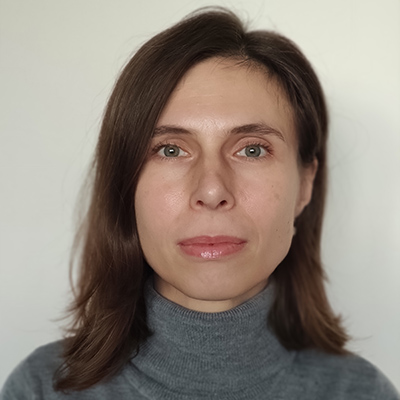
Mahboobeh Zangiabady is a Lecturer at the Digital Society Institute, specializing in Design and Analysis of Communication Systems . Her research focuses on Software Defined Networking (SDN) , Network Virtualization , and Control Plane optimization.
Imbir Kamil is a Professor and Dean of the Faculty of Psychology at the University of Warsaw. His academic career includes roles such as Chairman of the Scientific Council of Psychology (2022–2024) and previous Deanships (2020–2024). He holds a Ph.D. in Psychology from the University of Warsaw, specializing in dual-system models of emotion-cognition interactions. Education: Ph.D. in Psychology (2017), M.Sc. in Psychology (2008), B.Sc. in General Biology (2008). Research focuses on emotion origins (automatic vs. reflective), neurobiological correlates, and cognitive processes. He leads experimental studies using ERP, neuroimaging, and behavioral methods. Research interests span emotion-cognition connections, neural mechanisms, and applications in social judgment and pandemic psychology. Over 100+ peer-reviewed articles and books, including monographs on dual emotion systems. Supervised 42+ master’s theses and 3 licencjat works. Recent articles explore emotional ambiguity, cognitive load, and pandemic-related threat perception. Awards include the Złotego Psi (twice), Polityka Award, and Rector’s recognition for publishing output. Teaching includes courses on emotion psychology and experimental methods. Organizational roles include Experimental Psychology course coordination and Senate membership. Active in academic committees for ethics, research, and doctoral education.
Professor Richard Mitchell is a Professor of Cybernetics at the University of Reading, affiliated with the Department of Computer Science. He serves as the Assessment Lead and School Director of Technology Enhanced Learning. He holds a BSc (Hons) and PhD from the University of Reading, becoming a professor in 2015. His research focuses on Cybernetics, Artificial Intelligence, Control Engineering, Robotics, and Technology-Enhanced Learning, with over £2m in research grants, including Knowledge Transfer Partnership (KTP) projects. Notably, he led a KTP project with Red-Whale awarded 'Best KTP in the UK' in 2021. Teaching includes courses on Cybernetics, AI, Robotics, Neural Networks, and Gaia Theory. He developed interactive web pages for the FutureLearn MOOC Begin Robotics , enhancing student engagement. Awards include a University Teaching Fellowship (2011) and Senior Fellow of the Higher Education Academy (2014). Administratively, he has held roles such as Head of Department and Examinations Officer. He contributes to professional societies like the Thames Valley IET and IEEE Systems, Man, and Cybernetics Society Chapter.
Dr. Mohammad Hasan is a Senior Lecturer in Digital, Tech, Innovation & Business at Staffordshire University with extensive expertise in cybersecurity, cloud computing, and network engineering. His educational background includes a PhD in Mobile Ad-hoc Networks, MSc in Computer and Network Engineering, and BSc in Computer Science. His primary research focuses on: Computer networks including wireless systems and IoT Cybersecurity frameworks and threat analysis Cloud computing infrastructure and virtualization Machine learning applications in data analytics Recent publications demonstrate strong trends in machine learning applications for pattern recognition (eSports analytics), network security (XSS prevention), and biomedical signal processing (brain source localization). Dr. Hasan maintains professional certifications including CCSK, CompTIA Security+, and Cisco CyberOps Associate, and holds Senior Fellow status with the Higher Education Academy.
Paul S. Simone, Jr. is a Professor and Chair of the Department of Chemistry at The University of Memphis, where he has served since 2010 after beginning his academic career at The Citadel. His work bridges academic research, regulatory compliance, and commercial technology development focused on drinking water safety. His educational background includes: Bachelor of Science in Chemistry (2002) Master of Science in Chemistry (2006) Doctor of Philosophy in Chemistry (2008) all earned at The University of Memphis. Dr. Simone's research centers on developing automated analytical systems for detecting disinfection by-products like trihalomethanes (THMs) and haloacetic acids (HAAs) in drinking water. His work addresses critical regulatory challenges faced by water utilities through innovative instrumentation that enables real-time monitoring and process control. This research program uniquely integrates fundamental analytical chemistry with practical engineering solutions for water quality management. His publication record shows consistent focus on advancing water analysis technologies, with recent work emphasizing low-cost, field-deployable systems using 3D printing and embedded computing. The research trajectory demonstrates progression from fundamental method development to commercial implementation through NSF-SBIR funding. Dr. Simone has mentored 12 graduate students to completion, including 6 PhDs and 6 Master's students, with research spanning analytical method development, instrumentation, and water treatment optimization. His funding portfolio includes significant NSF-SBIR Phase I and II awards, USDA grants for rural water systems, and multiple contracts with water utilities and industry partners. He leads the Mobile Analytical Monitoring and Miniaturization Laboratory (MAMML) partnership with over 30 utilities across multiple states and co-founded Foundation Instruments, Inc. to commercialize his analytical technologies. His outreach includes regional university collaborations and technical assistance for small water systems facing regulatory challenges.
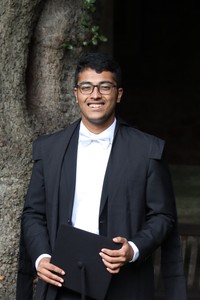
Siddhartha Datta is a Researcher at the University of Oxford's Department of Computer Science, specializing in distributed machine learning and adaptive systems. His research develops end-to-end solutions for model training, security, and deployment. Key research areas include: Adaptive learning algorithms for dynamic environments Defense mechanisms against adversarial attacks Human-centered AI interfaces and tools Cross-reality systems blending digital/physical spaces Efficient model compression techniques Current projects investigate prompt engineering for generative models, online learning under data drift, and 3D object detection refinement. His work combines theoretical frameworks with practical implementations, resulting in tools like GreaseTerminator for digital sovereignty and DeepObfusCode for source protection. Datta has collaborated with Google and Cornell University during his doctoral studies. His open-source contributions include neurocogpy (ECoG processing) and Polysemy Word Tagging Tool, demonstrating commitment to accessible research tools.
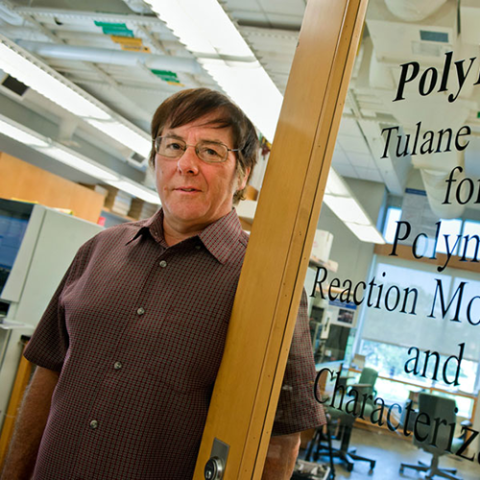
Wayne Reed is a Professor at Tulane University’s School of Science & Engineering, holding the Murchison Mallory Chair in Physics and an Interdisciplinary Professorship in Chemical and Biomolecular Engineering. His work bridges physics, polymer science, and biophysics. Ph.D. in Physics from Clarkson University (1984) M.S. in Physics from University of Washington (1976) B.S. in Physics from Rensselaer Polytechnic Institute (1975) Reed’s research focuses on macromolecular physics, polymer science, and molecular biophysics. He has pioneered methods like Automatic Continuous Online Monitoring (ACOMP) for polymerization reactions and studied non-equilibrium processes in polymeric systems. His work has applications in biologic medicine development and colloid phenomena. Recent publications highlight his contributions to RAFT polymerization kinetics, DNA-virus interactions, and real-time polymer reaction control. His work integrates physical principles with industrial applications. Reed received the Tulane Entrepreneurship Award (2023) and has secured extensive grants from biotechnology firms like Biogen, Merck, and Moderna. He co-founded Fluence Analytics Inc., a Tulane spinoff acquired by Yokogawa Electric Co. As Founding Director of the Tulane Center for Polymer Reaction Monitoring and Characterization (PolyRMC) and former Associate Director of the Tulane Institute for Macromolecular Engineering and Science (TIMES), Reed has led interdisciplinary initiatives. He has served as a Visiting Professor at Universidade de São Paulo and advised institutions globally, including the U.S. Department of Agriculture and Petrobras.
Dr. Saleh Al Jufout is a Part-time Lecturer in the Electrical Engineering Department at California State University, Long Beach (CSULB), appointed since January 2020. He previously held academic roles at Al-Balqa’ Applied University and Tafila Technical University in Jordan from 1997 to 2020. He holds a dual Ph.D. in Electrical Power Engineering from Donetsk National Technical University (Ukraine), with M.Sc. and B.Sc. degrees from Donetsk Polytechnic Institute. He completed postdoctoral research at the Technical University of Berlin (Germany) and Wayne State University (USA). His research focuses on power system transient simulation, protection system design, and electrical machine modeling. Key areas include renewable energy integration, cybersecurity for industrial networks, and smart grid technologies. He has authored/co-authored 72 scientific articles and serves as the founder and editor-in-chief of the Jordan Journal of Electrical Engineering . He is also a Quality Matters (QM) certified reviewer for online course design. Dr. Al Jufout’s recent work explores machine learning applications in distributed systems, photovoltaic plant optimization, and intrusion detection systems. His contributions span theoretical advancements in power system modeling and practical solutions for improving grid efficiency and cybersecurity. Education: Ph.D. (Dual), Electrical Power Engineering, Donetsk National Technical University M.Sc., Electrical Power Engineering, Donetsk Polytechnic Institute B.Sc., Electrical Power Engineering, Donetsk Polytechnic Institute Postdoctoral Research: Technical University of Berlin & Wayne State University Awards: Quality Matters (QM) Certified Reviewer for Online Courses Professional Roles: General Co-Chair, International e-Engineering Education Services Conference (IEEE-affiliated) Founder Editor-in-Chief, Jordan Journal of Electrical Engineering His advising and grants focus on advancing electrical engineering education and applied research. He has contributed to labs and teams developing smart road sensors, piezoelectric energy harvesters, and cybersecurity frameworks for industrial systems.
Jörg Haßmann is a Lecturer in Business Informatics at the Faculty of Economics and Social Sciences, Osnabrück University of Applied Sciences. His roles include teaching and research in fields such as healthcare IT systems, eLearning, and process optimization. Since 2008, he has held the position of Lehrkraft für besondere Aufgaben (LfB) in Wirtschaftsinformatik. He earned a Dipl.-Kfm. (1989) and an M.A. in European Marketing Management (1996). Research interests focus on healthcare information systems, eLearning implementation, and process modeling in healthcare. He contributed to projects like Lab4Apps and collaborated on studies analyzing eLearning effectiveness in medical education. His work bridges IT systems with healthcare and business processes. Publications include studies on eLearning strategies for healthcare and nursing informatics, emphasizing multimedia courseware and technology adoption. His teaching spans business informatics fundamentals, health IT systems, and simulation-based learning tools. Active in research projects related to healthcare informatics and process optimization, he explores topics such as hospital information systems and communication standards. No specific awards are listed, but his work reflects contributions to applied IT solutions in healthcare and education.
Jan H. Schumann is a Professor of Marketing and Innovation and Vice President for Research at the University of Passau, Germany. He holds the Chair of Marketing and Innovation within the School of Business, Economics, and Information Systems. Previously, he served as a Junior Professor at the Technische Universität München and earned his doctoral degree from the same institution in 2009. His academic career includes roles as a visiting scholar at Thunderbird School of Global Management, Boston College, and City University in Hong Kong. Prof. Schumann's research focuses on online marketing, customer relationship management, service pricing, and digital servitization. His work has been published in top-tier journals like the Journal of Marketing , Journal of Service Research , and Journal of Business Venturing . He has received prestigious awards, including the Emerging Service Scholar Award (2019) and multiple recognition for best articles in service research. Prof. Schumann actively contributes to academic leadership roles, including serving as Associate Editor of the Journal of Service Research and leadership positions in the American Marketing Association (AMA) and European Marketing Association. His research projects span digital privacy, consumer behavior in technology-mediated environments, B2B sales dynamics, and sustainable product innovations. He has advised numerous doctoral candidates and contributed to grants such as the Wharton Customer Analytics Initiative (2012). His work also explores intersections of e-mobility, data control, and frontline service employee well-being. Prof. Schumann collaborates internationally, co-authoring studies on service innovation and digital platforms.
Kelly Weeks, Ph.D., is an Associate Professor at Lamar University, specializing in operations management, supply chain, and logistics. She holds a Ph.D. from Jackson State University and an MBA and BBA from Delta State University. Her teaching spans online programs in BBA and MBA, focusing on Operations Management, Quality Management, and Global Logistics. Dr. Weeks has authored over a dozen journal articles and contributed to national grants, emphasizing automation in green supply chains and Six Sigma methodologies. Her research interests include sustainable practices, technology integration in business, and disaster management strategies. She collaborates extensively with industry experts and has developed innovative courses in supply chain and transportation. Notably, she advocates for open-mindedness in learning and addresses challenges in higher education, such as institutional rigor and degree credibility. Her career highlights include earning a Six Sigma Master Black Belt and advancing interdisciplinary programs like the freshman engineering experience. Dr. Weeks' work spans diverse fields, from optimizing construction project readiness to analyzing offshore industry responses to oil price volatility. She emphasizes strategic port human resource development and the application of blockchain in construction management. Her contributions to disaster management in Caribbean nations highlight her commitment to real-world problem-solving. Dr. Weeks advises students to embrace evolving concepts and maintain an open mind, reflecting her belief that 'learning is hindered by rigid education.' She collaborates on grants focused on environmental sustainability, such as wastewater treatment improvements and grid energy storage systems. Her teaching philosophy integrates practical skills with theoretical frameworks, preparing students for global business challenges.
Professor Tzahi Cath is a leading academic at the Colorado School of Mines , holding the Director role at the Advanced Water Technology Center (AQWATEC) and Co-Director of the Colorado Center for a Sustainable WE2ST. His research spans water reclamation, industrial wastewater treatment, and integrated energy-water systems, with a focus on membrane technologies and data science applications. He maintains a joint appointment at the National Renewable Energy Laboratory (NREL) Water and the Environment. PhD in Environmental Engineering, University of Nevada, Reno (2003) MS in Environmental Engineering, University of Nevada, Reno (2001) BSc in Mechanical Engineering, Tel Aviv University (1992) Tzahi Cath's research explores advanced water treatment technologies, including membrane distillation , reverse osmosis , and biological treatment systems . His work integrates data science for optimizing treatment processes and addressing challenges in direct potable reuse and PFAS removal . Key areas include electrophoretic mixing , buoyancy-driven convection , and decision support tools . His publications reveal a strong focus on membrane technologies (15+ papers), resource recovery (lithium, ammonia), machine learning applications (6 papers), and regional produced water treatment (Oklahoma, Texas, Colorado). Recent work emphasizes low-salt rejection RO and vacuum membrane distillation for hypersaline systems. WateReuse Award for Education and Outreach (2022) Professor Cath leads the Direct Potable Reuse (DPR) mobile lab , recognized for innovative solutions in water sustainability and drought resilience. His work involves collaborations across the National Renewable Energy Laboratory , Metro Wastewater Reclamation District , and Colorado Springs Utilities .
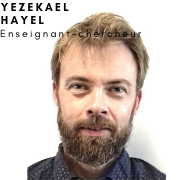
Yezekael HAYEL is a Researcher at the Laboratoire d'Informatique Avignon (LIA) and Director of the Agrosciences & Sciences Doctoral School at Avignon Université. His research focuses on optimizing complex systems with network structures, bridging computer science, applied mathematics, and social sciences. Key areas include opinion dynamics in social networks, cybersecurity, and infrastructure optimization for electric vehicles. He co-authored several influential articles on crowdfunding dynamics, epidemic control, and smart charging algorithms. As Doctoral School Director, he oversees interdisciplinary programs spanning biology, STAPS, computer science, and agricultural sciences. His leadership in the IMPLANTEUS university research school highlights his commitment to multidisciplinary collaboration. Recent work includes a CNRS-published article on opinion evolution models and a collaboration with the Nancy Automation Research Center. Education: Multidisciplinary background in mathematics and computer science Key Projects: ANR-funded IMPLANTEUS research school Optimization of EV charging ecosystems Cybersecurity strategies against network epidemics His pedagogical contributions include teaching at New York University and advocating for international academic exchange. He emphasizes perseverance and creativity in research, advising students to embrace curiosity amid challenges. Awards: None explicitly mentioned, but his leadership roles reflect institutional recognition. Labs/Teams: Active in Avignon Université's Metaboscope Platform and DARI department, collaborating with industry partners like the Nancy Automation Research Center.
Dr. Joanna Jeżewska-Frąckowiak is affiliated with the Faculty of Chemistry at the University of Gdańsk, where she serves in the Department of Molecular Biotechnology and Genetic Engineering Team. Her research focuses on advanced biotechnology applications including the monitoring and characterization of environmental microorganisms, design of prokaryotic gene expression systems, and genetic engineering of vectors for enzymatic protein production. Current projects investigate probiotic Bacillus species for industrial applications. Research interests span: New biotechnologies with industrial and environmental applications Genetic engineering of toxic gene expression systems Probiotic development and microbial characterization Ethical and cultural dimensions of biotechnology Her publication portfolio demonstrates consistent focus on microbial biotechnology, genetic engineering tools, and educational methodologies. Recent works emphasize probiotic research (40%), molecular techniques (33%), and pandemic-era pedagogy (13%), with emerging interests in public health applications. Available for tutoring in: Trends in biotechnology and GMO applications Industrial microbiology and hygiene science Bioethics and media representation of science Academic writing and research development
Ivan Ariel Ochsenius Robinson is a Part-Time Lecturer at the University of Murcia, affiliated with the Faculty of Law and the Department of Political Science, Social Anthropology, and Public Finance. He is associated with the Political Analysis Group, focusing on internal control mechanisms in public procurement and transparency policies. Education: PhD in Political Science from the University of Zaragoza (2018), thesis on internal control mechanisms strengthening legal oversight in Spanish public procurement. His research spans public administration, procurement integrity, and governance frameworks. Recent work addresses transparency in e-procurement, control systems in post-pandemic governance, and efficiency metrics in public contracts. Articles highlight challenges in legal compliance and financial oversight. As part-time faculty, he contributes to the Political Analysis Group's studies on administrative accountability and procurement ethics. No scientific awards or student advisement details are publicly documented.