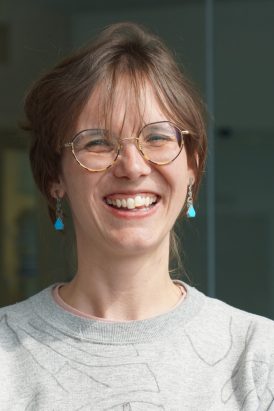
Anne-Marie OswaldView profile
Associate Professor
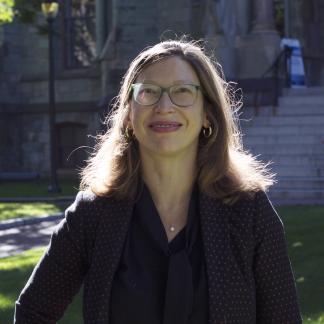
Anne-Marie Oswald is an Associate Professor in the Department of Neurobiology within the Biological Sciences Division at the University of Chicago. Her research profile indicates active engagement in neuroscience research with a particular focus on cortical circuits, neural coding, and sensory processing systems. She maintains an active research program with publications spanning from 2011 to the present. Dr. Oswald's research interests span multiple areas of neuroscience, with particular emphasis on cortical circuit function, neural coding mechanisms, and sensory processing. Her work investigates how inhibitory interneurons shape cortical dynamics, how neural assemblies form during learning, and how sensory information is processed across different brain regions. Notably, she has also contributed to discussions on diversity in science through her publication "Curating more diverse scientific conferences" in Nature Reviews Neuroscience (2020). Her research employs a combination of electrophysiological, computational, and behavioral approaches to understand neural circuit function. Analysis of her publication record reveals a strong focus on cortical circuit mechanisms, particularly in the olfactory system. Her work demonstrates expertise in understanding how different interneuron subtypes (particularly parvalbumin and somatostatin-positive cells) regulate cortical dynamics, assembly formation, and sensory processing. Over time, her research has evolved from examining basic circuit mechanisms to investigating how these circuits support complex cognitive functions like odor discrimination and associative learning. The consistent presence of computational and systems neuroscience approaches throughout her publication history indicates a rigorous quantitative approach to understanding neural function. Dr. Oswald appears to be actively mentoring students and postdoctoral researchers, as evidenced by her consistent publication record with multiple collaborators. While specific grant information isn't provided in the available data, her sustained publication output suggests successful funding of her research program. Her work bridges cellular and systems neuroscience, contributing to our understanding of how microcircuit properties shape sensory processing and behavior.