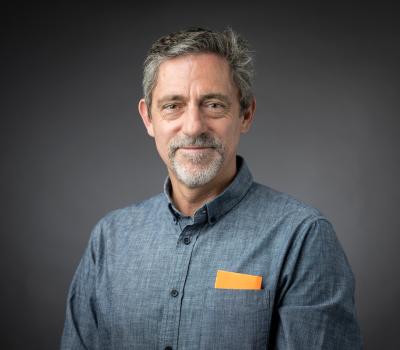
Dr. PJ Stephenson is a Research Fellow at the University of Lausanne , affiliated with the Department of Ecology and Evolution within the Faculty of Biology and Medicine . He serves as Chair of the IUCN Species Survival Commission Species Monitoring Specialist Group and collaborates with the Fumagalli Group to advance biodiversity monitoring science. Education: BSc in Zoology (University of London), PhD in Tenrec Ecology (University of Aberdeen) Current Roles: Senior Research Fellow (ETH Zürich), IUCN advisor His research focuses on understanding biodiversity monitoring challenges , addressing taxonomic and geographic data biases , developing conservation indicators , testing remote sensing and eDNA technologies , and analyzing conservation programme success factors . Recent projects include: Nature-Positive Biodiversity Credits (2024-2025): Methodological development for credit systems Data Flow Analysis (2021-2023): Cross-sector biodiversity data accessibility study Global Monitoring Tools (2023-2025): Guideline development for diverse stakeholders Scientific awards and honors: No specific awards mentioned in text He has supervised multiple UNIL Masters students on topics including protected area effectiveness , species monitoring methods , and data gaps in East African conservation . His work spans technological monitoring innovations , policy frameworks , and field research in Africa/Madagascar .
Zhenyu Yang is an Associate Professor at Aalborg University's Department of Energy within The Faculty of Engineering and Science. He specializes in control theory, AI-driven automation, and industrial process control, with a focus on offshore energy and water treatment systems. He leads the Offshore Process Control and Cybernetics Research Group and chairs the Mission for Sustainable Fuels, Chemicals, and PtX. His work aligns with UN Sustainable Development Goals related to clean energy and environmental protection. Education: B.Sc., M.Sc., and Ph.D. in Control Theory from Shandong University and Beijing University of Aeronautics and Astronautics. Postdoctoral training at Delft University of Technology and Aalborg University. Completed pedagogic education for assistant professors and interdisciplinary leadership training. Research interests include fault-tolerant control systems, hybrid dynamical systems, AI for process automation, and water treatment technologies. He has supervised 6 PhD students, including M. Kashani. Notable awards include Teacher of the Year 2012 and ABB Best Application Award Finalist 2009. Key projects involve high-temperature heat pumps, offshore produced water treatment automation, and microplastics capture using hydrocyclones. He has authored 198 publications and actively participates in academic committees and international conferences. Collaborations span institutions globally, emphasizing sustainable energy solutions and advanced control systems.
Mohsen N. Soltani is an Associate Professor in Offshore Renewable Energy Systems at Aalborg University, Esbjerg. He holds a PhD in Electronics and Control Engineering (2008). His work focuses on renewable energy systems, offshore wind technology, and power electronics. He leads projects like FOSS (Floating Offshore Sub-Station), DynEfuel (reversible power-to-X), and BlueBARGE (blue bunkering solutions). He has supervised 9 PhD students and contributed to over 168 publications. Key research areas include wave energy converters, semi-submersible turbine damping systems, and energy optimization models. Education: PhD in Electronics and Control Engineering (2008). Research Interests: Offshore wind and wave energy systems Power electronics and grid integration Structural damping solutions for floating turbines Multi-carrier energy systems optimization Hydrogen production via electrolysis Renewable energy bunkering technologies Projects: Active in 4 ongoing projects (2023-2026) focusing on offshore infrastructure, hydrogen, and wave energy tools. Previously led 29 projects including W-Tools (wave converter analysis) and Crestwing device development. Grants and Advising: Secured funding from EU Commission and EUDP. Advised 9 PhD students in energy systems and offshore engineering. Collaborates with industry partners on prototype development and field testing. Labs: Involved in Renewable Energy Control Laboratory at Aalborg University Esbjerg, maintaining a wind-solar measurement database.
Ivar Lyhne is an Associate Professor at the Department of Sustainability and Planning, Aalborg University's Technical Faculty of IT and Design. His work focuses on environmental assessment, sustainability strategies, and governance of renewable energy systems, particularly through projects like AAU BLUE – Marine & Maritime Research and the DREAMS initiative. He actively collaborates with institutions across Scandinavia and serves as a Senior Consultant at Ramboll Foundation since 2021. Academic Affiliation: Aalborg University (Technical Faculty of IT and Design, Department of Sustainability and Planning) Core Research Areas: Environmental Assessment, Climate Technology, Renewable Energy Governance, Systems Thinking, and Public Participation Lyhne's research explores the integration of Sustainable Development Goals (SDGs) into environmental assessment frameworks, digitalization of assessment tools, and community dynamics in energy infrastructure projects. Recent work emphasizes AI applications in environmental evaluation and creating structured datasets for generative AI training. His publications demonstrate expertise in CCUS (Carbon Capture, Utilization, and Storage) system integration, industrial symbiosis facilitation, and policy innovation. Selected works include studies on obstruction light impacts for wind turbines, transboundary stakeholder engagement, and quality control mechanisms in environmental appraisal. Notable recognition includes the 2022 Best Paper of the Year in the International Association for Impact Assessment Journal, shared with colleagues. He regularly contributes to conferences, peer reviews, and educational programs like the 2025 'Efteruddannelse i Miljøvurdering' series. Lyhne advises on projects related to offshore wind energy (EUopSTART), energy-positive districts (FLEXPOSTS), and Nordic environmental governance. His work bridges academic research with practical implementation, often involving interdisciplinary networks and digital tool development.
Haoshui Yu is an Associate Professor in the Department of Chemistry and Bioscience at Aalborg University’s Faculty of Engineering and Science in Esbjerg, Denmark. His research focuses on sustainable energy systems, decarbonization, and process systems engineering with a strong emphasis on energy storage, waste heat recovery, and renewable integration. He holds a visiting researcher experience at KU Leuven (June–August 2019) and has led significant projects like the 2022 initiatives on zero-emission energy systems and methane production using offshore infrastructure. His work bridges chemical engineering with environmental sustainability, addressing challenges in energy efficiency, carbon capture, and system optimization. Key research interests include Organic Rankine Cycles, compressed air energy storage (CAES), LNG cold energy utilization, and AI-driven process modeling. Over 68 publications since 2014 highlight contributions to energy systems, with recent work emphasizing machine learning applications in reactor design and system integration. Yu received the 2019 Excellent Researcher Award and has been actively involved in interdisciplinary collaborations, including visits to SLB (Schlumberger) in 2025. His lab’s projects often involve multi-objective optimizations and sustainability assessments, aiming to transition energy systems toward net-zero emissions.
Jens Muff is an Associate Professor in the Department of Chemistry and Bioscience at Aalborg University, affiliated with the Faculty of Engineering and Science and the Center for Membrane Technology. His research focuses on environmental chemical engineering, with expertise in oxidation processes, membrane-based water treatment, and remediation of contaminated soil and groundwater. He actively contributes to the UN Sustainable Development Goals, particularly in environmental sustainability and clean water. His work emphasizes advanced oxidation and membrane filtration technologies, including reverse osmosis (RO), nanofiltration (NF), and hydrothermal oxidation for treating industrial wastewater and offshore H2S scavengers. He leads multiple projects funded by institutions like the Danish Innovation Fund and the Danish Environmental Protection Agency, addressing challenges in water treatment, chemical recovery, and sustainable energy. Key research areas include recovery of valuable chemicals (e.g., MEA-triazine) from wastewater, development of novel membrane materials, and hydrothermal oxidation of spent scavengers. His projects often involve industry partnerships to transition laboratory innovations into practical solutions, such as the Kraftcentrum Grindsted initiative for localized energy balancing via electrolysis. Muff has received the Esbjerg University Prize (2008) for academic excellence. His activities span peer review, conference participation, and public engagement, reflecting his commitment to advancing both technical and educational aspects of environmental engineering.
Longzhi Yang is a Professor at Northumbria University’s Department of Computer and Information Sciences, currently serving as Director of Education. He holds a PhD in Computing Science from Aberystwyth University (2011) and has extensive research experience in Artificial Intelligence, Robotics, Cybersecurity, and Manufacturing. His work emphasizes real-world applications under uncertain environments, supported by grants from EPSRC, Innovate UK, and industry partners. Research interests include Computational Intelligence, Machine Learning, Cybersecurity, Robotics, Planning/Scheduling, and Additive Manufacturing. Recent projects focus on energy storage systems, fuzzy logic control, and data-driven robotic systems. He has organized major conferences like the UK Workshop on Computational Intelligence and the IEEE ICMLA. Publications span topics such as reinforcement learning for EVs, fuzzy neural networks, and cybersecurity frameworks. Awards include the Best Paper Award at UKCI 2018 and 2016. He actively supervises PhD students and leads interdisciplinary initiatives like the COVER project for emergency response drones and 3D-printed furniture manufacturing. Education: PhD in Computing Science (Aberystwyth University, 2011) Funding: EPSRC, ESRC, Innovate UK, RAEng Grants: 4 active/funded projects including smart manufacturing and emergency response systems Labs/Teams: Involved in robotics, cybersecurity, and intelligent manufacturing research groups
Pedro Lomonaco is a Professor and Director of the O.H. Hinsdale Wave Research Laboratory at Oregon State University’s College of Engineering. He specializes in coastal and ocean engineering, focusing on wave-structure interactions, tsunami resilience, and offshore renewable energy systems. Prior roles include leading Spain’s Hydraulics, Coasts and Offshore Laboratory (2007–2014) and research at Canada’s National Research Council. Education: Ph.D. (Civil Engineering, University of Cantabria, 1999), M.Sc. (Coastal Engineering, IHE-Delft, 1994), B.Sc. (Civil Engineering, National University of Mexico, 1991). Research interests include physical and numerical modeling of wave dynamics, coastal infrastructure resilience, mangrove ecosystems’ protective roles, and floating offshore wind technologies. His work emphasizes disaster mitigation through hybrid green-gray infrastructure, debris dynamics in tsunamis, and scour protection for marine energy foundations. Key projects involve large-scale experimental facilities to study tsunami forces on bridges and buildings, wave attenuation by vegetation, and energy absorption systems. Advising and grants: While specific student names are unstated, his lab supports numerous graduate researchers. Major projects include NHERI-funded studies on coastal hazards and DOE-backed offshore wind initiatives. The Hinsdale Lab serves as a flagship facility for tsunami and wave research. Notable labs/teams: Leads the Hinsdale Wave Research Laboratory, a NSF-funded National Hazards Engineering Research Infrastructure (NHERI) site, enabling large-scale physical modeling of coastal hazards and renewable energy systems.
Professor Aris Christou is a distinguished faculty member at the University of Maryland, holding professorships in the Department of Materials Science and Engineering, Mechanical Engineering, and the Graduate Program in Reliability Engineering. He earned his Ph.D. from the University of Pennsylvania in 1971 and has established himself as a leading expert in materials science, semiconductor reliability, and device physics. As President of the Federation of Materials Societies in Washington D.C. and an IEEE Fellow, Professor Christou has made significant contributions to both academia and industry. Professor Christou's research spans multiple cutting-edge areas including Compound Semiconductor Reliability, Physics of Failure, Device Physics and Modeling, Electronic Materials, Flexible Electronics and Displays, Biomolecular Sensing, and New Device Development. His work focuses on understanding degradation mechanisms in electronic materials and devices, with particular emphasis on reliability issues in compound semiconductors like GaAs and GaN. He has pioneered research in flexible electronics, graphene applications, and reliability of LEDs for medical applications. His laboratory, the Laboratory for Reliable Nanoelectronics, is equipped with advanced facilities for semiconductor device process development and reliability testing. Professor Christou's recent publications demonstrate a consistent focus on reliability engineering across multiple platforms. His work bridges fundamental materials science with practical applications in flexible electronics, semiconductor devices, and photonics. A significant portion of his research addresses electromigration, fatigue properties of novel materials, and physics of failure mechanisms in next-generation electronic devices. His expertise spans from theoretical modeling to practical implementation in real-world applications. Professor Christou has received numerous prestigious awards throughout his career: 2012 Micro & Nano Scientific Society Award 2010 iNEER Award for Engineering Education 2007 ASM Burgess Memorial Award 2006 FMS Recognition Award 2004 iNEER Award for Achievement on International Engineering Education and Research 1999 University of Maryland Invention of the Year Award 1993 Fellow of the IEEE 1987 Millenium Medal from the University of Bologna Professor Christou has been actively involved in mentoring students and securing research funding. His recent Maryland Offshore Wind Energy Challenge Grant (2013) with Professor Pat McCluskey demonstrates his ability to secure significant funding for interdisciplinary research. He has served as an editor for multiple prestigious journals including IEEE Transactions on Device and Materials Reliability and IEEE Transactions on Electron Devices. His service extends to conference organization, with leadership roles in numerous international conferences on materials science and semiconductor reliability. At the University of Maryland, Professor Christou directs the Laboratory for Reliable Nanoelectronics, a state-of-the-art facility equipped with UHV Atomic Layer Deposition systems, high density plasma etch tools, and advanced analytical equipment. This laboratory supports research in semiconductor device process development, test structure design for reliability, and reliability measurements. The lab has been instrumental in advancing research in graphene electronics, flexible displays, and reliability of compound semiconductor devices.
Ester Faia is a Professor (W3) and Chair in Monetary and Fiscal Policy at the Department of Money and Macroeconomics, Goethe University Frankfurt. Her research focuses on macroeconomic policy design, financial stability, and labor market dynamics with a particular emphasis on distributional consequences. She is a CEPR Fellow in the International Finance and Monetary Economics, Macroeconomics, and Banking groups. Her work examines topics such as the transmission mechanisms of monetary policy, systemic risk in banking networks, and the macroeconomic implications of globalization. Recent research explores heterogeneous effects of policy interventions across demographic groups and the role of social preferences during pandemics. She frequently collaborates with international institutions on policy analysis. Key themes in her publications include capital misallocation, labor mobility channels, and the interplay between financial innovation and macroeconomic stability. Her analysis often integrates behavioral economics principles to explain market frictions and policy responses. Though no awards are explicitly listed in the provided text, her prolific publication record and CEPR fellowship indicate significant scholarly recognition. No advising relationships or grant details are provided in the current dataset.
John Mak is a Professor at Stony Brook University's School of Marine and Atmospheric Sciences (SoMAS), affiliated with the Institute for Terrestrial and Planetary Atmospheres. His research focuses on atmospheric chemistry, climate science, and isotopic tracers. He leads major NSF-funded projects, including the GOTHAAM airborne mission studying New York's air quality and the CHACHA Arctic study. Mak's work integrates field campaigns, isotopic analysis, and advanced instrumentation to understand biogenic and anthropogenic emissions, climate interactions, and OH radical chemistry. Education: Ph.D. 1992 from UC San Diego/Scripps Institution of Oceanography. Key Research: Clumped isotopes in CO, mineral dust aerosol mechanisms, and pandemic-era NYC emissions shifts. Collaborations span institutions like UC Irvine, University of Washington, and NASA. His lab develops tools like the WASP system for VOC sampling. Grants & Collaborations: NSF grants for ice core studies, SAS campaigns, and IMPOWR offshore wind research. Over 120+ publications and abstracts highlight his contributions to environmental science.
Alaeddin Burak İrez is an Assistant Professor in the Department of Mechanical Engineering at Istanbul Technical University (ITU), specializing in composite materials, structural optimization, and advanced manufacturing. His research focuses on developing novel composites for applications in aerospace, automotive, biomedical, and renewable energy sectors. He leads multiple projects funded by BAP (Scientific and Technological Research Council of Turkey) and has authored over 44 research outputs, including articles in prestigious journals like Defense Technology , Journal of Power Sources , and Polymers . Research Interests: Composite materials design and characterization Thermal and mechanical performance optimization Additive manufacturing of biomedical implants Self-healing materials for wind turbine applications Battery case structural integrity analysis Recent Research Trends: His 2024-2025 work emphasizes hybrid composites for electric vehicle batteries, biohybrid actuators, and tribologically enhanced wind turbine laminates. He has pioneered methods for hierarchical composite design using pellet extrusion additive manufacturing and numerical optimization frameworks for UAV wings. Awards: Best Presentation Award at an international conference (June 2022) Grants & Projects (as PI): Machine Learning for Wind Turbine Blade Damage Analysis (2023-2025) Thermal Conductive Hexagonal Boron Nitride Composites for EV Batteries (2022-2023) Self-Healing Multifunctional Composites for Offshore Wind Turbines (2022-2023) PEEK-based Spinal Implant Additive Manufacturing (2022-2023) Labs/Teams: Leads ITU's Composite Materials & Structural Optimization Lab, collaborating with industry partners on automotive and aerospace projects.
Caglar Karatug is an Assistant Professor in the Department of Marine Engineering at Istanbul Technical University. His research focuses on predictive maintenance strategies for ship machinery systems, energy efficiency in maritime transportation, and sustainable development goals related to marine engineering. He has contributed to advancements in renewable energy applications onboard ships, risk assessment methodologies for emission control technologies, and digital transformation in smart ship operations. Research interests include maintenance optimization for marine systems, emission reduction techniques for container vessels, and the integration of solar/wind energy systems with marine propulsion. His work addresses UN Sustainable Development Goals through innovations in energy efficiency and pollution prevention. Recent publications analyze hybrid predictive maintenance approaches, cost-benefit tradeoffs of emission reduction technologies, and reliability assessment methods for marine engines. His research emphasizes practical applications of advanced analytics and sustainability practices in the maritime sector.
Cenk Ay is a Researcher at the Department of Maritime Transportation and Management Engineering, Istanbul Technical University. His research focuses on maritime safety, risk analysis methodologies, environmental engineering, and advanced mathematical geometry. He actively explores applications of fuzzy Bayesian networks in chemical tanker operations and risk assessment frameworks. Key research interests include maritime logistics optimization, operational risk mitigation in port and vessel operations, and geometric studies of hypersurfaces in multi-dimensional spaces. His work bridges engineering challenges with theoretical mathematics, addressing both practical maritime safety concerns and abstract geometric problems. Publications highlight trends in maritime risk analysis, differential geometry advancements, and interdisciplinary approaches to maritime psychology. He has contributed to understanding emission reduction technologies in port environments and psychological factors affecting offshore safety training outcomes. No scientific awards are explicitly listed in the provided materials. His advisory activities and grant details are not detailed, though his research portfolio suggests involvement in collaborative maritime safety projects. His work contributes to both applied engineering solutions and pure mathematical explorations in geometric analysis.
Professor Ian Masters is a Professor of Mechanical Engineering at Swansea University, affiliated with the School of Aerospace, Civil, Electrical and Mechanical Engineering within the Faculty of Science and Engineering. His primary research focuses on marine and tidal energy systems, including tidal turbine blade dynamics, CFD modeling of wave machines, and environmental impact analysis of marine energy sites. He co-founded the Low Carbon Research Institute Marine Consortium (LCRI Marine) in 2006, driving research into renewable energy from oceanic and riverine systems. He previously served as Financial Director of Swanturbines Ltd, a marine renewable energy company. His research interests span tidal and wave energy converters, fluid-structure interaction, and offshore engineering. Notable contributions include the development of the Remote River Energy System, a low-maintenance turbine design for remote areas, and pioneering work on flexible polymer-based materials for energy harvesting. He collaborates extensively with industry and governmental bodies, such as the Marine Energy Task Group for Wales, to advance marine energy standards and industrial relevance. Recent publications emphasize advanced modeling techniques (e.g., phase field formulations for fracture mechanics) and field studies on tidal farm interactions with coastal environments. His work bridges computational innovation with real-world applications, addressing challenges like turbine array performance, material fatigue, and energy-grid integration. He supervises PhD students exploring topics such as fatigue-resistant elastomers, structural health monitoring, and tidal turbine simulation. Professor Masters is based at the Energy Security Research Institute on Swansea’s Bay Campus and actively contributes to interdisciplinary initiatives, including the Morgan Advanced Studies Institute. His research aims to optimize renewable energy systems while minimizing environmental impacts, reflecting Swansea’s commitment to net-zero carbon futures.