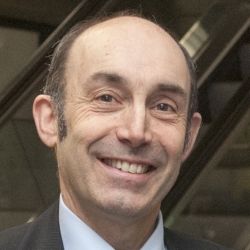
Edward Cripps is an Associate Professor in the School of Physics, Maths and Computing at The University of Western Australia, specializing in Mathematics and Statistics. He holds degrees including a BEc from UWA and a PhD in Statistics from UNSW. His research focuses on Bayesian longitudinal analysis, spatio-temporal models, and integrating physical models with probabilistic approaches for environmental, meteorological, and oceanographic applications. He leads major grants including the ARC Industrial Transformation Research Hub for Transforming Energy Infrastructure (2021-2025) and the DARE Training Centre (2021-2025). Collaborations include industry partners like INPEX, Shell, Woodside, and governmental bodies such as the Bureau of Meteorology. He teaches undergraduate courses in probability and applied statistics. Grants & Awards: ARC Hub ($10M) as Chief Investigator/Data Science Leader (2021-2025) MinEx CRC 2022-2023 publication prize (2023) Research Interests: His work addresses model-data mismatch in complex systems, leveraging high-quality data for decision-making in resource management and engineering. Recent projects include geophysical feature discovery, spectral estimation bias correction, and offshore wind turbine structural analysis.
About Erin Bachynski-Polić Erin Bachynski-Polić is a Professor in the Department of Marine Engineering at NTNU. She holds a PhD from NTNU (2014) and a BSE/MS from the University of Michigan. Her research focuses on marine structures for renewable energy, including fixed and floating wind turbines, hydroelasticity, and design optimization. She has been involved in major projects like SFI BLUES (2020-2028) and FLOAWER (EU-funded). Key research areas include global analysis of wind turbine dynamics, higher-order wave loads, and mooring system design. She teaches courses such as TMR4182 Marine Dynamics and modules in TMR4505 and HAV6000/6001. Education PhD, Marine Engineering, NTNU (2014) MS & BSE, University of Michigan (2009–2010) Research Interests Her work addresses challenges in offshore wind energy, including hydroelastic interactions, mooring system optimization, and floating platform dynamics. She emphasizes experimental validation and computational modeling, with recent studies on wave load effects and structural fatigue analysis. Grants & Projects Notable projects include WAS-XL (2017–2021), Green Energy at Sea (2018–2022), and WindBarge (2023–2025). These projects focus on advancing offshore wind technologies, improving structural reliability, and reducing environmental uncertainties. Labs & Collaborations She collaborates with institutions like the University of Michigan and SINTEF. The HELOFOW project database (Zenodo) showcases experimental datasets from her lab.
Gudmund Reidar Eiksund is a Professor at the Department of Civil and Environmental Engineering, Faculty of Engineering, NTNU. He holds a Dr. degree in Geotechnics from NTNU (1994) and has extensive experience in offshore geotechnics, having worked at SINTEF Geotechnics (1994–2005) and as a consultant at GeoPartner Marin AS (2005–2011). His research focuses on offshore geotechnical engineering, particularly foundation design for offshore wind turbines, submarine landslide dynamics, and soil-structure interaction. He leads studies on clay-rich submarine landslides using advanced numerical methods like the Material Point Method (MPM) coupled with computational fluid dynamics (CFD). Recent work includes analyzing seismic-induced landslide mechanisms and erosion effects on clays under rapid flows. Key research areas include geotechnical risk analysis for offshore structures, cyclic loading effects on monopiles, and probabilistic modeling of soil behavior. His work integrates geotechnical and structural analyses for offshore wind turbines, emphasizing cost reduction through optimized designs. Collaborations involve institutions like SINTEF, CRC Press, and international partners such as the Japan Society of Civil Engineers. Eiksund has contributed to over 50 peer-reviewed articles and conference papers since 2017, focusing on offshore wind foundations, submarine landslide modeling, and soil mechanics. His research bridges experimental testing (e.g., centrifuge tests, physical model tests) with computational methods (CFD-MPM, finite element models). He advises on geohazard mitigation strategies and participates in projects like REDWIN, aiming to reduce offshore wind energy costs through integrated geotechnical-structural design. Notable contributions include developing macro-element models for monopile foundations, evaluating pile driving effects on slope stability, and assessing frost-induced soil behavior through x-ray tomography. His work addresses challenges in heterogeneous soil conditions, installation effects, and long-term reliability of offshore infrastructure under cyclic loading and seismic events.
Professor Tim Bedford holds dual roles at the University of Strathclyde: leading the Research & Innovation portfolio in the University Executive Team and serving as Professor of Decision and Risk Analysis in the Management Science Department. He chairs key strategic initiatives such as the Glasgow City Innovation District and contributes to national policy discussions through his membership in the Scottish Funding Council's Research & Knowledge Exchange Committee. His academic work focuses on probabilistic risk analysis, uncertainty modeling, and applications in sectors like energy and transportation. Bedford earned his BSc, MSc, and PhD in Mathematics from the University of Warwick, followed by a fellowship at King's College Cambridge and academic roles at Delft University of Technology. He has supervised numerous PhD students and led over 40 research projects funded by organizations including EPSRC and the Wellcome Trust. His accolades include the Lloyds Risk Prize and Fellowships from the Royal Society of Edinburgh and Institute of Mathematics. His research intersects theoretical advances in probability with real-world challenges, such as optimizing maintenance strategies for complex systems and assessing societal risks. He collaborates extensively with industry partners like Scottish Power and Philips, and has organized major international conferences like ESREL2016.
Matthew Revie is a Professor and Head of the Department of Management Science at the University of Strathclyde's Strathclyde Business School. His research focuses on Risk Analysis, Decision Making under Uncertainty, and Reliability Engineering, with emphasis on industrial applications in energy sectors like offshore wind, nuclear, and utilities. He co-founded the Risk Consortium and the Centre for Informed Decision Analytics (IDeA) to bridge academic-industry collaboration. Revie holds a PhD (2007), MSc (2003), and BSc (2002) in Mathematics and Operational Research from the University of Strathclyde and Glasgow. He teaches risk management and decision-making tools to postgraduate and practitioner audiences globally, including roles at SSE and Iberdrola. His research interests span RAM modeling, statistical/machine learning for big data, Bayesian Networks, and discrete event simulation. Recent work includes optimizing offshore wind farm logistics, predictive maintenance, and climate impact modeling. He has supervised 5 PhD students and manages KE staff and postdocs. Revie received the 2016 Scottish Knowledge Exchange Award for Multi-Party Collaboration. He serves on the editorial board of the IMechE Journal of Risk and Reliability and the European Safety and Reliability Data Association board, and is a Fellow of the Operational Research Society. His projects include AI utilization reviews for ScottishPower, rail safety modeling, and EU-funded initiatives. Collaborations span energy, transport, and defense sectors.
Prof. Ludger Lohaus is a faculty member at the Leibniz University Hannover in the Institute of Construction Materials (Institut für Baustoffe) . His research focuses on advanced concrete technology, durability, fatigue behavior, and sustainable construction materials. He has led numerous projects on high-performance concrete (HPC), ultra-high-performance concrete (UHPC), and offshore wind energy structures. Key research interests include: Pump stability of fresh concrete Robustness of specialized concretes Damage mechanics in concrete under cyclic loading Environmental effects on concrete durability Offshore grout joint technology Publications span over 15 years, emphasizing experimental and numerical investigations in: Fatigue behavior of concrete under varying environmental conditions Rheological properties of cement-based materials Design methodologies for offshore wind turbine foundations Sustainable concrete mix design with reduced CO₂ emissions His work bridges laboratory research with practical applications, influencing industry standards for exposed concrete aesthetics and structural reliability.
Bruno Stuyts is a Visiting Professor at Ghent University and a postdoctoral researcher in the Applied Mechanics Acoustics & Vibration Research Group. His research focuses on offshore wind energy, geotechnical engineering, and soil-structure interaction, with emphasis on data-driven modeling and in-situ monitoring. He leads projects like WINDSOIL (2020–2024) and SOIL-TWIN (2020–2023), addressing soil-structure interaction and smart monitoring of offshore foundations. His work integrates geophysics, computational mechanics, and artificial intelligence to improve offshore wind foundation design and geohazard assessment. Key research interests include seabed response under wave loading, eigenfrequency analysis of wind turbines, and seismic inversion for subsurface characterization. He collaborates globally on projects involving pore pressure monitoring, data fusion, and real-time modeling of monopile foundations. His contributions span experimental studies (e.g., 3D seabed response experiments) and numerical simulations (e.g., finite element modeling of monitored monopiles). Stuyts has contributed to over 30 peer-reviewed articles, covering topics like CPT-based correlations for shear modulus, scour protection effects on turbine stiffness, and Bayesian estimation techniques. His work bridges academic research and industry applications, aiming to optimize offshore infrastructure reliability through advanced data science and geotechnical innovations. He actively participates in conferences, presenting on data science applications, seismic inversion, and offshore wind challenges. Collaborations include institutions like Zenodo (dataset sharing) and ASME. Current efforts focus on integrating geohazard mapping, AI-driven geotechnical analysis, and open-source modeling frameworks for sustainable offshore energy systems.
Jan Helsen is a Professor of Engineering Technology at Vrije Universiteit Brussel (VUB), leading the Acoustics & Vibrations Research Group. His primary affiliation is within the Faculty of Engineering Technology, focusing on advanced research in renewable energy systems, offshore wind technology, and predictive maintenance. He actively collaborates with industry partners and governmental institutions, as seen in projects like the Belgian Offshore Wind Innovation Centre (2024–2027) and the INSPIRE initiative under the Sustainable Blue Economy Partnership. Helsen’s research emphasizes wind turbine reliability, fault detection algorithms, and AI-driven operational optimization. His work bridges mechanical engineering principles with data science, addressing challenges such as drivetrain health monitoring, wake effect modeling, and hybrid energy systems. Recent contributions include modular deep learning frameworks for wind farm power forecasting and reinforcement learning strategies for hybrid wind-hydrogen plants. He has secured significant funding through projects totaling over €10M, including the €3M ICON (Cloud-edge AI for Offshore Wind O&M) and the €2.5M INSPIRE initiative. Helsen’s team publishes extensively in journals like Mechanical Systems and Signal Processing and Wind Energy Science , with a focus on practical solutions for offshore energy challenges. His lab also pioneered datasets on hyperspectral analysis of additive manufacturing processes, demonstrating interdisciplinary reach. Key collaborations include INSA Lyon (France) for joint PhD programs and the Royal Meteorological Institute for weather simulation studies. Helsen’s work is cited over 1,078 times (h-index 16), reflecting his influence in advancing offshore wind infrastructure resilience and smart energy systems.
Ottar Laurits Osen is a Professor in Automation at the Norwegian University of Science and Technology (NTNU), Department of ICT and Natural Sciences, Ålesund campus. He serves as Deputy Leader for Innovation and Sustainability and coordinates maritime research activities in the CPS Lab . Research focuses on Industrial Control Systems, Intelligent Systems, Microcontrollers, Technical Safety (SIL), and Pedagogics (Problem-Based/Project-Based Learning). His work spans maritime automation, robotics, IIoT, and educational technology. Key collaborations include projects with researchers like Guoyuan Li, Houxiang Zhang, and Robin Bye. Recent publications emphasize path planning for autonomous vessels, dynamic positioning thruster analysis, and IIoT applications in maritime processes. Teaching includes courses on industrial control systems, mechatronics, and digital technology.
Jonas Brunskog is an Associate Professor at the Department of Electrical and Photonics Engineering, Technical University of Denmark (DTU), specializing in Acoustic Technology. His research spans structural and building acoustics, with a focus on periodic and wood-based structures, room acoustics, and sound insulation. He is actively involved in multiple PhD projects and contributes to sustainable building practices through acoustics. MSc in Civil Engineering, Lund University (1996) PhD in Acoustics, Lund University (2002) Docent in Engineering Acoustics (2006) His research interests include structural acoustics, building acoustics, room acoustics, and sound insulation in timber constructions. He investigates absorptive materials, classroom acoustics, and noise control in urban and clinical environments. His work supports UN Sustainable Development Goals related to sustainable cities and responsible consumption. The recent publications highlight a strong trend in computational acoustics, sound insulation in sustainable materials (e.g., cross-laminated timber), underwater noise modeling, and transfer path analysis. His work bridges theoretical modeling with practical applications in transportation, construction, and healthcare acoustics. Scientific Awards: No scientific awards explicitly mentioned in the provided text. Jonas Brunskog has supervised 7 PhD projects (3 completed, 3 ongoing) and serves as main or co-supervisor on several active PhD projects. These include research on Bayesian transfer path analysis, sustainable architectural acoustics using stone wool, micro acoustic device dynamics, and active noise control for outdoor events. He has also been involved in grant-funded research projects related to acoustic measurement methods and reliability in microsystems. While no specific grants are listed, the volume and diversity of projects indicate sustained research funding. He is affiliated with the Acoustic Technology group at DTU and collaborates across disciplines in structural dynamics, microsystems, and environmental acoustics. His professional service includes board membership in 'Listening Lund – The Sound Environment Centre' (2005–present) and the Swedish Acoustical Society (2008–2013). He frequently presents at international conferences, contributing to the advancement of acoustical engineering knowledge.
Olimpo Anaya-Lara is a Professor in the Department of Electronic and Electrical Engineering at the University of Strathclyde, Faculty of Engineering, United Kingdom. He is a leading expert in power system dynamics and control of wind energy systems, with significant contributions to grid integration, offshore wind technology, and renewable energy system stability. He serves on the Management Team of the EPSRC Centre for Doctoral Training in Wind and Marine Energy Systems and is the Course Director of the MSc in Wind Energy Systems. He has led Strathclyde’s participation in the European Energy Research Alliance (EERA) Joint Programme Wind and has held visiting positions at NTNU and SINTEF in Norway. PhD in Electrical Engineering, University of Glasgow, UK (2003) MSc in Electrical Engineering, Instituto Tecnologico de Morelia, Mexico (1997) BEng in Electrical Engineering, Instituto Tecnologico de Morelia, Mexico (1990) His research focuses on power system stability , modeling and control of wind power plants , HVDC transmission , offshore wind integration , and smart grid technologies . He has pioneered control strategies enabling wind farms to emulate synchronous generators, enhancing frequency and voltage support. His work spans advanced power converter systems, fault ride-through, and energy storage integration. He also explores hybrid systems combining wind with hydrogen production and hydropower flexibility. The most recent articles reflect a strong trend toward innovative offshore wind architectures (e.g., XROTOR), low-harmonic HVDC systems, wireless power transmission, and multi-energy systems integrating electricity, hydrogen, and storage. These works emphasize grid compatibility , reliability , and cost reduction in renewable energy deployment. Research spans disciplines including electrical engineering, power electronics, control systems, and sustainable energy. His scientific awards include: Young Presentation Award (2021) Poster Award Winner (2018) Visiting Scientist at SINTEF, Norway (2013) Visiting Professor at NTNU, Norway (2010) Professor Anaya-Lara has supervised numerous PhD and postgraduate research projects, including major grants such as the EPSRC CDT in Wind & Marine Energy Systems, STORE2HYDRO, and XROTOR. He teaches advanced topics in power system stability and wind generator control, and contributes to academic programs in China. He is actively involved in professional service, including editorial roles and conference organization. He leads and contributes to a high-tech multi-terminal DC-network hybrid test-bed for real-time hardware-in-the-loop experimentation, supporting both research and teaching in smart grid concepts.
Vicente Cutanda Henriquez is an Associate Professor in the Department of Electrical and Photonics Engineering at the Technical University of Denmark (DTU), specializing in Acoustic Technology. His research integrates computational modeling and experimental validation in acoustics, with a strong focus on numerical methods such as the Boundary Element Method (BEM) and Finite Element Method (FEM). His research interests include acoustics, electroacoustics, microacoustics, transducer modeling, vibroacoustics, and numerical simulation techniques . He actively explores applications in hearing aid technology, underwater noise, broadband absorption, and personalized audio devices. His work often involves model order reduction, hybrid FEM-BEM approaches, and visco-thermal losses in acoustic systems. The recent publications reflect a strong trend in computational efficiency, acoustic metamaterials, and personalized hearing solutions , with increasing emphasis on real-world applications in medical devices and environmental acoustics. His work bridges theoretical acoustics with practical engineering challenges in audio and biomedical technologies. Computationally efficient Prediction of Underwater Noise from Offshore Pile Driving Broadband acoustic absorption using cylindrical rods Vibroacoustic modeling of balanced armature receivers Sound propagation in curved ear canals Reduced-order BEM with boundary layer impedance He has been involved in multiple scientific activities, including organizing the 24th International Congress on Acoustics and chairing Dansk Akustisk Selskab. Though no formal awards are listed, his leadership in national and international acoustics communities underscores his recognition. Vicente Cutanda Henriquez supervises several PhD students, including Kulakauskas, Pedersen, Bække, and Cai, and is involved in major research projects such as Efficient Numerical Modelling of Smart Hearables and Broadband Vibroacoustic Shape Optimization . His work is supported by institutional and collaborative grants, focusing on innovation in hearing technologies and sustainable acoustic solutions. He is affiliated with the Acoustic Technology group at DTU, a leading research unit in electroacoustics and numerical acoustics, contributing to both fundamental research and industrial applications in sound engineering.
Jon Keller is a researcher at the National Renewable Energy Laboratory (NREL) specializing in drivetrain technology for wind turbines. He leads projects focused on enhancing drivetrain performance, power density, and reliability, particularly through field testing at the NREL Flatirons Campus. Current affiliation: National Renewable Energy Laboratory (NREL) Past affiliation: U.S. Army at Redstone Arsenal Education: PhD in Aerospace Engineering, Pennsylvania State University Master’s in Aerospace Engineering, Pennsylvania State University Bachelor’s in Aerospace Engineering, Pennsylvania State University Jon’s research interests center on wind energy systems, with a focus on mechanical reliability, gearbox design, and drivetrain failure analysis. His work spans both theoretical and practical approaches, including the development of condition monitoring systems and advanced drivetrain models. Recent publications highlight his contributions to fiber-optic torque measurement, bending moment analysis in turbines, and offshore wind maintenance strategies. Collaborative efforts with institutions like the Department of Energy emphasize his role in advancing renewable energy frameworks.
Dr. Faryal Khalid is a Lecturer in Offshore Wind Technology at the University of Exeter, affiliated with the Department of Engineering within the College of Engineering, Mathematics and Physical Sciences. She is also appointed as the Programme Lead for MEng Environmental Engineering, effective January 2025. Her work is deeply integrated with Exeter Marine and contributes to UN Sustainable Development Goals including Affordable and Clean Energy, Industry, Innovation and Infrastructure, Climate Action, and Life Below Water. Research Interests: Dr. Khalid specializes in offshore renewable energy systems, with a focus on the reliability, dynamics, and environmental integration of offshore wind and wave energy technologies. Her research spans: Subsea power cable dynamics under complex ocean conditions Floating offshore wind turbine mooring systems, including active load-reduction technologies like the IMS (Intelligent Mooring System) Risk and reliability assessment for offshore energy deployments Numerical modelling and mechanical characterisation of marine structures Environmental impact on offshore aquaculture and energy systems Her interdisciplinary approach combines engineering analysis with geospatial and environmental data to optimize system performance and sustainability. Although specific publications are not listed in the provided text, her research activities indicate a strong focus on experimental and numerical validation of offshore technologies, particularly in collaboration with industrial partners and international test sites like EMEC in Orkney, Scotland. Scientific Awards: No awards mentioned in the provided text. Advising and Grants: Dr. Khalid has led and contributed to multiple collaborative research and innovation projects funded through national and international programs. These include: CableDyn: Investigating dynamic loading and fatigue of subsea cables under 3D wave and current conditions. WEDUSEA: Grid-connected 1MW floating wave energy converter demonstration at EMEC. Bilateral UK & US Offshore Wind R&D Programme: Commercialization of active mooring components for floating wind. OffAqua: Assessing environmental impacts on structural risk for offshore aquaculture. Floating Wind Joint Industrial Project: Scaled prototype testing of the IMS for floating wind applications. Dynamic Load Reduction and Station Keeping Mooring System: Physical and numerical testing of IMS for load reduction. MaRINET2: European collaboration on offshore renewable energy research infrastructure. OPERA: Providing open-access operating data for wave energy development. These projects highlight her leadership in translating research into real-world applications through strong industry partnerships. Labs and Research Teams: Dr. Khalid is embedded in Exeter’s marine and renewable energy research ecosystem, contributing to Exeter Marine and collaborating with leading European research infrastructures. Her work benefits from access to experimental facilities and field data from test sites such as EMEC, supporting both numerical simulations and physical testing.
Andrew Glaws is a Researcher in Applied Mathematics at the National Renewable Energy Laboratory (NREL), working within the Computational Science Center. He joined NREL as a postdoctoral researcher in January 2019 and transitioned to a Researcher position in 2021, focusing on physics-informed deep learning for energy systems. His educational background includes: PhD in Computer Science, University of Colorado Boulder Master of Science in Mathematics, Virginia Polytechnic Institute and State University Bachelor of Science in Mathematics, Vanderbilt University Bachelor of Science in Physics, Vanderbilt University Glaws' research centers on applying machine learning and data-driven methods to renewable energy challenges. His core interests include: Machine Learning and Deep Learning Surrogate Modeling Uncertainty Quantification and Sensitivity Analysis Dimension Reduction Multifidelity Methods Exploratory Data/Model Analysis He has extensive cross-domain collaborations in wind/solar energy, climate science, building energy analysis, bioenergy, and battery technology. Analysis of his 45 publications (2020-2025) reveals a pronounced shift toward generative AI applications in energy systems since 2022, with 2025 outputs emphasizing aerodynamic design, photovoltaic reliability, and offshore wind platform modeling using advanced neural architectures. No scientific awards are documented in available sources. His advisory activities and grant funding details are not specified in the provided materials, though his 28 Mendeley readers and active conference participation indicate significant academic engagement. Glaws operates within NREL's Computational Science Center, contributing to interdisciplinary teams tackling energy challenges through computational mathematics and AI-driven approaches.