Kourosh Koushan is a Professor in the Faculty of Engineering at the Norwegian University of Science and Technology (NTNU). His research focuses on marine propulsion systems, hydrodynamics, and energy-saving technologies for maritime applications. Research Interests: Marine Propulsion Systems, Hydrodynamics, Computational Fluid Dynamics (CFD) for Ship Design, Underwater Radiated Noise, Air Lubrication Systems, Renewable Energy Integration in Maritime Systems Outreach: Active in international symposia and industry webinars, including contributions to the International Symposium on Marine Propulsors series. Key Research Trends include: numerical-experimental validation of propeller systems, CFD methodology calibration, air lubrication for high-speed crafts, and novel power prediction methods using in-service data. His work bridges theoretical hydrodynamics with practical maritime industry solutions.
Professor Harald Stollhofen serves as Chair of Geology (Exogenous Geodynamics) at the GeoCenter Northern Bavaria, Friedrich-Alexander University Erlangen-Nuremberg (FAU). His extensive academic career spans several prestigious German institutions including RWTH Aachen, University of Heidelberg, and University of Würzburg before his current position at FAU. Stollhofen's research interests span multiple interconnected fields of geology and earth sciences. His primary focus areas include reservoir geology with emphasis on reservoir petrology and petrophysics (clastics), deep and near-surface geothermal energy systems, and the geological subsurface as a control factor. He conducts significant research on offshore/onshore correlations and seismic modeling of post-breakup strata in Namibia and Brazil, Plio-Pleistocene paleoenvironments, explosive volcanism and hominid evolution at Olduvai Gorge, Tanzania, and fluvio-aeolian interactions in the Namib Desert. His work also examines fluvio-marine terraces, diamonds, tectonics, and sea level changes along the African continental margins. Professor Stollhofen's publication record demonstrates consistent research productivity across sedimentology, structural geology, paleoclimatology, and paleoanthropology. His recent work shows increasing integration of advanced analytical techniques including machine learning applications for geological analysis, multi-scale fault network analysis, and detailed studies of carbonate cementation processes. Much of his research maintains a strong field component with significant work in African settings, particularly Namibia and Tanzania, where he examines geological processes in the context of human evolution and environmental change. As a principal investigator, Stollhofen leads multiple research projects including Soil2heat-Vibra-Pflug for geothermal applications, studies on deformation zones and clay smear effects, investigations of rapid sandstone compaction in Namibia, and significant paleoanthropological research at Olduvai Gorge and Kilombe Caldera. His work often involves interdisciplinary collaboration with experts in paleoanthropology, archaeology, and engineering disciplines. At FAU, Professor Stollhofen contributes to the Master's program in 'GeoThermie/GeoEnergie,' which focuses on comprehensive training in geothermal resource exploration, development, and utilization. His laboratory work centers on applied sedimentology with applications to both energy resources and paleoenvironmental reconstruction, particularly through the analysis of sedimentary archives related to hominin evolution.
Neveen Shlayan is an Associate Professor of Electrical Engineering at The Cooper Union for the Advancement of Science and Art. She joined the Albert Nerken School of Engineering in September 2016, bringing expertise in Cyber Physical Systems and Intelligent Transportation Systems. Prior to Cooper Union, she held academic and research positions at SUNY Maritime, Philips Research North-America, and the Singapore-MIT Alliance for Research and Technology. Education: Ph.D. in Electrical Engineering (University of Nevada, Las Vegas, 2011), M.S. in Mathematics. Research Focus: Her work spans Intelligent Transportation Systems, Structural Health Monitoring for Offshore Structures, and mathematical modeling for large-scale lighting control in transportation systems and smart buildings. She has contributed to mesoscopic traffic simulations and parameter estimation techniques. Grants & Projects: Secured funding from the University Transportation Research Center (UTRC) and the American Bureau of Shipping for research initiatives.
Bjørn Thomas Svendsen is an Associate Professor in the Department of Structural Engineering at the Norwegian University of Science and Technology (NTNU). His research focuses on Structural Health Monitoring (SHM) of steel bridges, particularly exploring dynamic analysis , modal analysis , and sensor technology for damage detection and condition-based maintenance. Research Objectives : Develop SHM methods for bridge damage detection, validate through full-scale experiments, and create tools for SHM system design Collaborators : Works closely with Professor Anders Rønnquist and Associate Professor Ole Øiseth His recent publications analyze hybrid SHM approaches , sensitivity of sensor configurations , and damage detection algorithms . Key subfields include missing data compensation , finite element model updating , and temporal moment analysis . He applies these methods to railway bridges through field studies at the Hell Bridge Test Arena . Current work emphasizes improving sensor-assisted inspections and addressing challenges in offshore steel structures through case studies. His research combines numerical simulations with experimental validation to enhance structural monitoring reliability.
A.C. Viré is an Associate Professor in the Department of Aerospace Engineering at Delft University of Technology. Their research focuses on floating offshore wind energy, airborne wind energy systems, fluid-structure interactions, and high-fidelity numerical/turbulence modeling. They lead projects like Accelerating Dutch innovations in offshore renewables through data-driven hybrid labs and collaborate internationally. Research areas: Wind turbine wake dynamics, vortex-induced vibrations, dynamic stall control Key methodologies: Porous disk modeling, PIV experiments, numerical simulations Affiliations: Flow Physics and Technology group Scientific contributions include advancements in helix active wake control, floating turbine load analysis, and inflatable wing aerodynamics. They have published extensively in journals like Physics of Fluids and Wind Energy Science , with recent work (2025) exploring synergies between wake mixing and yawing dynamics. Awards : Delft Education Fellowship (2023) Public Engagement : Viré actively participates in media outreach and educational events, including the Aerospace Diversity Day (2020). They have presented at international conferences on floating offshore wind energy and cluster wake mixing.
Dr. Peter Dunning is a Lecturer in the School of Engineering at the University of Aberdeen, specializing in advanced computational methods for structural and aerospace engineering. He leads PhD supervision and teaches core engineering courses, including Fundamentals of Engineering Materials and Group Design Projects . His academic credentials include a PhD in Aerospace Engineering from the University of Bath (2011) and Chartered Engineer status with IMechE (2016). Research Areas: Multiscale Reliability-Based Optimization of Composite Materials Geometric Nonlinear Topology Optimization Aeroelastic Structure Design for UAVs and Aircraft Metamaterial Development via Computational Methods Recent Publication Trends: His 2025-2024 work focuses on UAV winglet optimization, offshore wind turbine mooring systems, and thermal-mechanical metamaterials. Earlier studies (2023-2019) address buckling constraints, composite reliability, and aerostructural design. All research integrates advanced numerical methods with practical engineering applications. Scientific Awards: Nominated for Best Supervisor (Postgraduate Research) - Runner-up Multiple Best Undergraduate Lecturer nominations Excellence in Postgraduate Teaching (2017/18) Supervision: Currently advising PhD candidates in floating offshore wind systems and composite design. Former students include experts in wave energy extraction and geometrically nonlinear aeroelastic analysis. He also serves as a reviewer for 12+ international journals.
Prentza Loukia is an External Research Associate at the National Technical University of Athens (NTUA), affiliated with the School of Naval Architecture and Marine Engineering's Laboratory for Floating Structures & Mooring Systems since 2020. Her work focuses on inter-disciplinary research at the intersection of thermal engineering and maritime systems, particularly in applications related to clean energy technologies and sustainable blue economy initiatives. PhD in Mechanical Engineering (2019) with thesis on 'CO2 Absorption Systems' Diploma in Mechanical Engineering from NTUA Participates in EU-funded projects on clean energy, smart cities, and marine sustainability Expertise in floating structures and mooring systems for offshore energy applications
Dr. Firdaus Muhammad Sukki is an Associate Professor at Edinburgh Napier University's School of Computing Engineering and the Built Environment, specializing in renewable energy systems, solar cell technology, and smart grid development. With a strong research portfolio spanning photovoltaics, wind energy, and sustainable development applications, he contributes significantly to the university's Transport Research Innovation Centre. His research interests focus on renewable energy technologies , particularly dye-sensitized solar cells using natural materials like fungal dyes, smart grid integration , and wind turbine structural modeling . His work addresses critical sustainability challenges through innovative approaches to energy harvesting, storage, and distribution systems. His research group explores the intersection of bio-based materials and energy conversion technologies, with particular emphasis on sustainable solutions for developing regions. Dr. Muhammad Sukki's recent publications demonstrate a clear trend toward natural and sustainable materials for energy applications , with significant work on mushroom-based dyes for solar cells and agrivoltaic systems. His research spans both theoretical modeling and practical implementation, with projects addressing energy solutions for Sub-Saharan Africa and Scotland. The breadth of his work connects fundamental materials science with real-world energy challenges. As a research supervisor, he serves as second supervisor for PhD candidates including Magnus Bichan working on structural modeling of electrical generators for offshore renewable energy and Abubakar Suleiman researching solar energy systems in Nigeria. His current projects include "Accelerating Transformative Technology for Sustainable Clean Energy Development" funded by the Department for Science, Innovation & Technology (£359,983) and "Fungal Innovations for Synergy of Zero Hunger and Affordable Energy" funded by the Royal Society of Edinburgh (£65,000). His work connects with the Transport Research Innovation Centre and focuses on sustainable energy solutions that address climate change challenges while promoting economic development in both developed and developing contexts. His interdisciplinary approach bridges engineering, environmental science, and sustainable development goals.
Michael Welch is a Senior Researcher at the Danish Offshore Technology Centre (Technical University of Denmark) specializing in Geology and Geophysics. His research focuses on fracture mechanics, fluid flow dynamics, and geomechanical modeling in subsurface environments. Research Interests: Welch investigates fracture propagation across material interfaces, subcritical crack growth, and fluid flow variations in fractured reservoirs. His work integrates seismic data analysis, discrete fracture networks (DFN), and phase-field modeling techniques. Key areas: Fracture network validation, geomechanical controls on chalk/marl reservoirs, mechanical failure risk assessment for CCS operations Methodologies: Linear Elastic Fracture Mechanics (LEFM), poroelastic modeling, photogrammetry hardware development Collaborations: Active in international projects related to North Sea geology, Netherlands diapir structures, and Danish Central Graben analysis.
Chunhua Sheng is a Professor in the Department of Mechanical, Industrial and Manufacturing Engineering at The University of Toledo, where he also serves as Director of the High-Performance Computing Laboratory. His office is located in Nitschke Hall. Education: Doctor of Philosophy, Aerospace Engineering - Mississippi State University Master of Science, Jet Propulsion - Nanjing University of Aeronautics and Astronautics Bachelor of Science, Jet Propulsion - Nanjing University of Aeronautics and Astronautics Research interests focus on advanced computational methods in fluid dynamics, including: Development of numerical algorithms for structured and unstructured grids Turbulence modeling and transition prediction Fluid-structure interaction phenomena Applications in rotorcraft aerodynamics and renewable energy systems He directs the High-Performance Computing Laboratory, which supports computational research in fluid dynamics and related engineering fields through advanced simulation capabilities.
Giuseppe BERLINGIERI is an Associate Professor in Economics at ESSEC Business School since 2022, with prior roles as Assistant Professor (2015–2022). He holds affiliations as a Research Associate at the Center for Economic Performance (CEP) of the London School of Economics (LSE) and THEMA research center at the University of Cergy-Pontoise. His research spans international trade, outsourcing, firm productivity, sectoral reallocation, and technology diffusion. PhD in Economics (LSE, 2013) M.Res. in Economics (LSE, 2008) Laurea Magistrale in Management Engineering (University of Genoa, 2005) His work examines how firms organize global supply chains, the impact of service offshoring on export dynamics, and structural shifts in productivity distribution. Recent projects analyze technology diffusion and its policy determinants. Awards include the 2024 Fondo Italiano per la Scienza grant and the 2020 Emergence Project from CY Initiative of Excellence. Reviewed for journals like American Economic Review and Journal of International Economics Co-directed PhD theses at ESSEC and served on juries at École Polytechnique Contributed to policy work at OECD (2013–2024)
Ahmad Shakibaeinia is a Full Professor at the Department of Civil, Geological and Mining Engineering in Polytechnique Montréal , holding the Tier 2 Canada Research Chair in Digital Hydrosystems . He serves as a researcher in the Experimental and Digital Water Flow Engineering Group (GENIE EAU) and is affiliated with the Interuniversity Study Center for Structures under Extreme Loads (CEISCE) . Research Domains : Computational fluid mechanics, multiphase flows, granular flow dynamics, cold-region hydraulics, fluvial mechanics Methodologies : Specializing in mesh-free particle methods (SPH, MPS) for simulating complex hydro-environmental flows His work focuses on multi-physics hydro-environmental flows involving water-air-sediment-ice interactions, with applications in flood risk assessment , tailings dam breach modeling , and cold-region river dynamics . Recent publications demonstrate expertise in floating breakwater systems , microbial risk assessment , and ice-structure interaction simulations . Key scientific contributions include: Developing enhanced weakly-compressible MPS/SPH methods for free-surface and granular flows Pioneering fully Lagrangian DEM-MPS models for ice-wave dynamics Creating integrated numerical frameworks for cold-region water quality assessment He has supervised 12 graduate students (3 PhD, 9 Master's) and secured multiple NSERC Alliance Grants for projects on climate change impacts and critical infrastructure vulnerability . His 74 publications span topics from sediment transport to particle method development , with significant contributions to oil sands tailings dam failure and transboundary river pollution understanding.
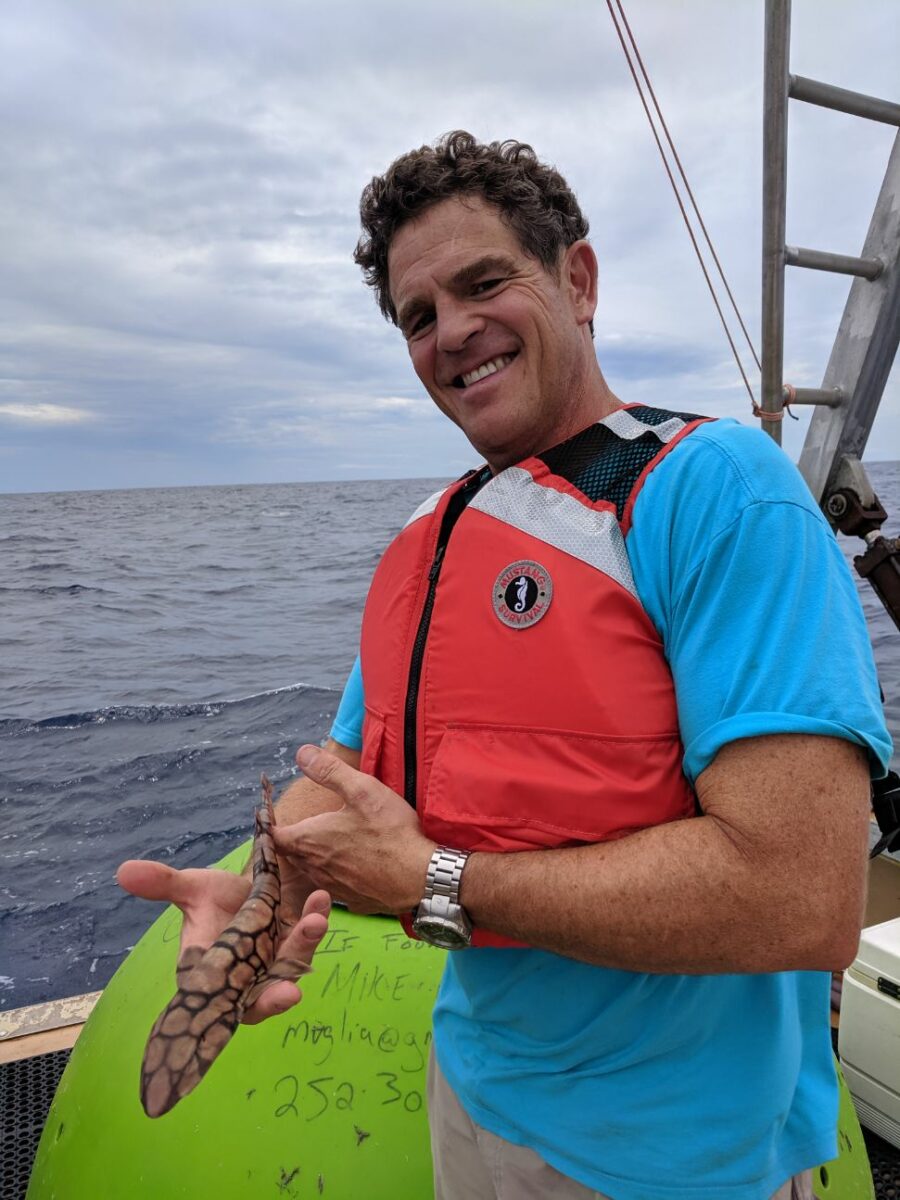
Mike Muglia is a faculty member at East Carolina University (ECU) serving as an Associate Professor in the Department of Coastal Studies and Assistant Director for Science & Research in the North Carolina Renewable Ocean Energy Program. Based at the Coastal Studies Institute (CSI), he leads Gulf Stream hydrokinetic energy assessments and manages oceanographic observing systems like HF radars and CODAR. His work bridges academic research with industry partnerships (e.g., Weatherflow, Surflink) and government agencies (USACE, NOAA, US Coast Guard). Ph.D., Marine Science, University of North Carolina-Chapel Hill (2019) M.S., Physics, University of North Carolina-Chapel Hill (2002) B.S., Physics, University of North Carolina-Wilmington (2000) B.S., Biology (Marine Science), University of Miami (1996) His research focuses on Gulf Stream variability in position, transport, and orientation, analyzing its interactions with regional water masses (Mid-Atlantic Bight, South Atlantic Bight, Slope Sea) using HF radars and ocean circulation models. He integrates oceanographic data into renewable energy solutions, collaborating on prototypes like ocean kites and towed turbines for hydrokinetic energy harvesting. Recent publications highlight advances in radar-based current monitoring, wake interaction modeling, and Gulf Stream resource characterization. Mike operates a Coastal Ocean Radar (CODAR) at the Army Corps of Engineers Field Research Facility in Duck, NC, and contributes to infrastructure development at Jennette's Pier test center. He holds certifications as a NAUI divemaster, PADI/AAUS diver, and US Coast Guard OUPV Captain, supporting fieldwork and safety protocols.
Andreas Stephan serves as the Acting Dean (Prodean) of the School of Business and Economics at Linnaeus University, a position he has held since May 2023. He is affiliated with the Department of Forestry and Wood Technology and actively participates in multiple research centers including the Linnaeus University Centre for Data Intensive Sciences and Applications (DISA), the Linnaeus University Centre for Equality of Opportunity and Big Data Policy Analysis, and The Bridge—a unique partnership between Södra, IKEA, and Linnaeus University focused on innovation and sustainability in forestry and wood. Stephan holds a master's degree in industrial engineering and management from Technical University in Berlin and a PhD in Economics from Humboldt University Berlin. His research spans forest industry analytics, ESG and financial markets, green investment and finance, with particular focus on how innovation facilitates the green transition of industries. He has published extensively across economics, finance, and sustainability journals, with recent work examining sustainable finance, green bonds, forest economics, and the impact of environmental policies on business performance. His research portfolio includes significant projects such as TallBoard (exploring tall oil application in industrial fiberboards) and investigating the green transformation of the Swedish pulp and paper industry. Stephan serves as an associate editor for the journals Eurasian Economic Review and Business Strategy and the Environment, demonstrating his scholarly leadership in sustainable economics and finance. His recent publications show a strong trend toward integrating environmental considerations with financial decision-making, particularly in portfolio optimization and sustainable investment frameworks. Stephan is deeply embedded in Linnaeus University's research ecosystem, leading and participating in multiple research groups including Deterministic and Stochastic Modelling, Forest Economics, Forest Management, and Small-scale Forestry. His work bridges theoretical economic modeling with practical applications in sustainable industry transformation, reflecting Linnaeus University's commitment to addressing global sustainability challenges through interdisciplinary research.
Ronen Galaiduk is an Adjunct Research Fellow at the UWA Oceans Institute, The University of Western Australia. His work focuses on marine ecology, reef conservation, and environmental niche modeling, with a strong emphasis on human impacts on marine ecosystems in Australia. Research Interests: Active in marine ecology, Galaiduk investigates demersal fish communities, benthic habitats, niche partitioning, and the ecological effects of decommissioning offshore infrastructure. His studies often integrate environmental modeling and spatial planning. Key Article Trends: Recent publications analyze hydrodynamic modeling datasets, tropical reef connectivity, and the role of oil/gas structures in marine metapopulation dynamics. Themes include conservation challenges in Western Australia and global marine pollution impacts. Labs & Collaborations: Collaborates with marine scientists across Australia, including institutions like Curtin University and Australian Institute of Marine Science, focusing on interdisciplinary studies of reef ecosystems and anthropogenic infrastructure effects.