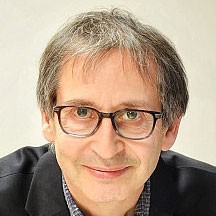
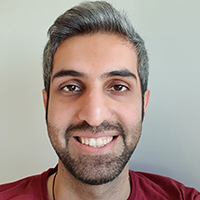
Vincenzo Vitelli is Professor in the Department of Physics and James Franck Institute at the University of Chicago. His research spans complex systems at the intersection of physics, engineering, and applied mathematics, including biophysics, active matter, machine learning, robotics, metamaterials, topological insulators, hydrodynamics, and soft materials. The Vitelli Group investigates phenomena arising from nonlinearities, disorder, and far-from-equilibrium dynamics using analytical and numerical approaches. Current projects explore nonlinear x-ray interactions, odd elastic properties, machine learning for physical systems, and topological mechanics. The group maintains active collaborations with multiple experimental teams. Vitelli has received several honors including being named a Fellow of the American Physical Society (2018) and Kavli Frontiers of Science Fellow (2015). He currently advises 8 PhD students and has mentored over 15 doctoral graduates. The group has received funding from multiple sources including the National Science Foundation and Department of Energy.
Nigel Goldenfeld is the Chancellor's Distinguished Professor in Physics at UC San Diego, specializing in condensed matter theory, living systems theory, and non-equilibrium statistical physics. He holds a Ph.D. from the University of Cambridge and previously held endowed positions at the University of Illinois. He directs the Biocomplexity Group and co-founded NumeriX, a financial software company. His research spans multiple domains: Condensed matter theory and phase transitions Hydrodynamics and turbulence phenomena Astrobiology and universal biology principles Epidemic modeling and COVID-19 dynamics Active matter and nonequilibrium systems Recent publications focus on turbulence dynamics, nonequilibrium statistical mechanics, and biological physics. His work shows strong emphasis on scaling behaviors, emergent phenomena, and interdisciplinary approaches combining physics with biological systems. Scientific Awards: Leo P. Kadanoff Prize (APS) National Academy of Sciences Member American Academy of Arts and Sciences Fellow Sloan Foundation Fellowship University Scholar of Illinois He has led significant projects including the NASA Astrobiology Institute (2013-2019) and mentors students through the Biocomplexity Group. Current work explores fundamental aspects of turbulence and biological organization using advanced computational and theoretical frameworks.
Hadi M. Dolatabadi is a Research Fellow in machine learning at the University of Melbourne node of the ARC Centre of Excellence for Automated Decision-Making & Society (ADM+S). He is affiliated with the School of Computing and Information Systems at the University of Melbourne, where he has nearly completed his Ph.D. focusing on robustness in deep learning. His research contributes to the ADM+S Centre's Machines Research Program, specifically developing algorithms for systematic treatment of bias and unfairness in AI systems. Hadi earned his Ph.D. from the School of Computing and Information Systems at the University of Melbourne, with his thesis examining current notions of robustness in neural networks and challenging them from novel perspectives. His doctoral research bridges theoretical foundations with practical applications in machine learning. Hadi's research interests center on machine learning with a strong emphasis on robustness and fairness. He specializes in adversarial robustness, coreset selection, and generative modeling techniques including normalizing flows, GANs, and diffusion models. His approach uniquely combines statistical perspectives with generative modeling frameworks to address fundamental challenges in AI. His work has significant implications for developing more reliable and equitable automated decision-making systems, particularly in contexts where bias and unfairness could have serious societal consequences. Analysis of Hadi's publication record reveals a strong focus on the intersection of theoretical machine learning and practical AI ethics. His work consistently addresses the tension between model performance and robustness, while increasingly incorporating fairness considerations. The progression of his research shows a movement from foundational robustness questions toward more applied problems related to bias detection and mitigation in real-world AI systems. His publications span top-tier AI conferences including NeurIPS, ECCV, and AISTATS, demonstrating both technical depth and relevance to contemporary AI challenges. Hadi completed a six-month research internship at Amazon Science during his Ph.D. studies, gaining valuable industry experience while maintaining strong academic research output. His technical expertise spans both theoretical aspects of machine learning and practical implementation of complex algorithms. While specific grants aren't mentioned in the available information, his position at the ARC Centre of Excellence indicates involvement in significant collaborative research funding. As part of the ADM+S Centre's Machines Research Program, Hadi contributes to a multidisciplinary team addressing challenges in automated decision-making. The Centre brings together researchers from humanities, social sciences, and technological fields to create knowledge and strategies for responsible, ethical, and inclusive automated decision-making systems. Hadi's technical expertise in machine learning provides crucial foundation for the Centre's work on bias and fairness in AI systems.
Prof. Dr. Abhinav Sharma is a faculty member at the Leibniz Institute for Polymer Research Dresden, working in the Department of Soft Matter Theory and Polymer Physics. His research program investigates fundamental principles of soft matter systems with significant biological relevance, employing advanced theoretical and computational approaches. Dr. Sharma's research focuses on three interconnected domains: Biopolymer Networks Mechanics - Studying how disordered elastic networks in biological systems (like cytoskeletons and extracellular matrices) exhibit nonlinear mechanical responses including strain stiffening and phase transitions from floppy to rigid states Active Matter - Investigating systems where individual components consume energy to generate motion (molecular motors, bacteria with flagella), with particular interest in emergent phenomena like chemotaxis in cargo-carrying particle systems Odd-Diffusive Systems - Exploring diffusion processes with broken time-reversal symmetry where particles exhibit unusual "rolling past" collision dynamics that enhance spatial exploration His methodological toolkit combines classical statistical mechanics with computational techniques including Brownian Dynamics and Monte Carlo simulations, along with theoretical frameworks from liquid-state theory such as density functional theory and mode-coupling theory. Dr. Sharma's publication record from 2010-2021 reveals a consistent research trajectory focused on non-equilibrium statistical mechanics of soft materials. His work demonstrates increasing sophistication in connecting microscopic dynamics to macroscopic properties, with notable contributions in developing scaling theories for fiber network mechanics and explaining chemotactic behavior in active matter systems. Though specific advisory roles aren't detailed in available materials, his collaborative publication pattern suggests active mentorship of junior researchers. His research has significant implications for understanding biological materials and developing new active matter technologies, bridging fundamental physics with potential biomedical applications.
Jacek Jagodziński is a Lecturer at the Department of Control Systems and Mechatronics within the Faculty of Information and Communication Technology at Wrocław University of Science and Technology. His office is located in building C-3, room 317A at ul. Janiszewskiego 11/17, 50-372 Wrocław, with office hours on Monday 7:00-8:00, Tuesday (even weeks) 12:45-15:00, and Wednesday (odd weeks) 10:45-13:00. His research spans Control Theory , Industrial Networks , Logistics , and Decision-Making Systems , with significant contributions to Lean Management methodologies including Kaizen and Total Quality Management. Early work focused on mathematical control systems (nilpotent approximations, Chen-Fliess-Sussmann equations), while recent publications demonstrate a strategic pivot toward applied logistics, fashion industry analytics, and sustainable transportation systems. Analysis of his 15 most recent publications reveals an evolving research trajectory: initial focus on theoretical control systems (2008-2014) transitioned to logistics decision theory (2014-2017), then expanded into interdisciplinary domains including fashion forecasting (2019-2022) and zero-emission transportation (2020-2024). Current work emphasizes practical applications of fractional-order systems in building automation and Padé approximations for industrial control. Professional Contributions: Active research in industrial network optimization and game-theoretic logistics applications Specialized expertise in B-Spline identification methods for cascade control systems Developed frameworks for forecasting fashion demand with cost-optimization models Contributed to EU-focused studies on zero-emission bus fleet implementation His methodological approach combines rigorous mathematical modeling with empirical validation in industrial settings, particularly within Polish manufacturing and logistics sectors. Recent work shows increasing engagement with sustainability challenges in urban transportation and circular economy systems.
Ilie Grigorescu is an Associate Professor at the University of Miami , affiliated with the College of Arts and Sciences and the Department of Mathematics . He also collaborates with the Computer Science division within the same college. Research Interests: Stochastic Processes Probability Theory Mathematical Biology Evolutionary Modeling Interacting Particle Systems Applied Mathematics Recent Publications focus on branching diffusions, evolutionary fixation times, stochastic game theory, and neuronal phase transitions. His work connects probabilistic models to biological and network systems, including studies on hydrodynamic limits and risk-averse optimal stopping. Contact: Email at i.grigorescu@miami.edu or call (305) 284-2146.