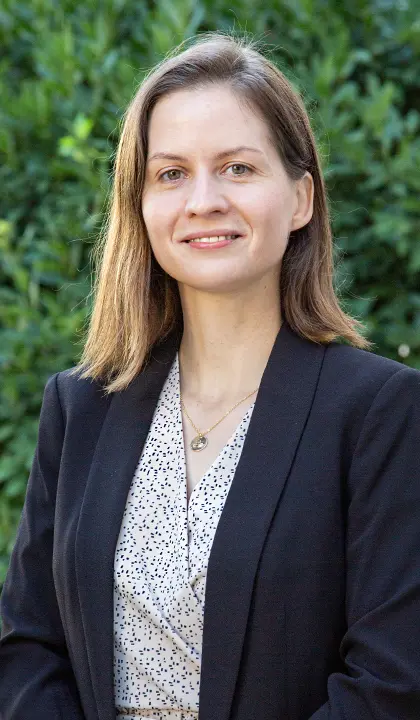
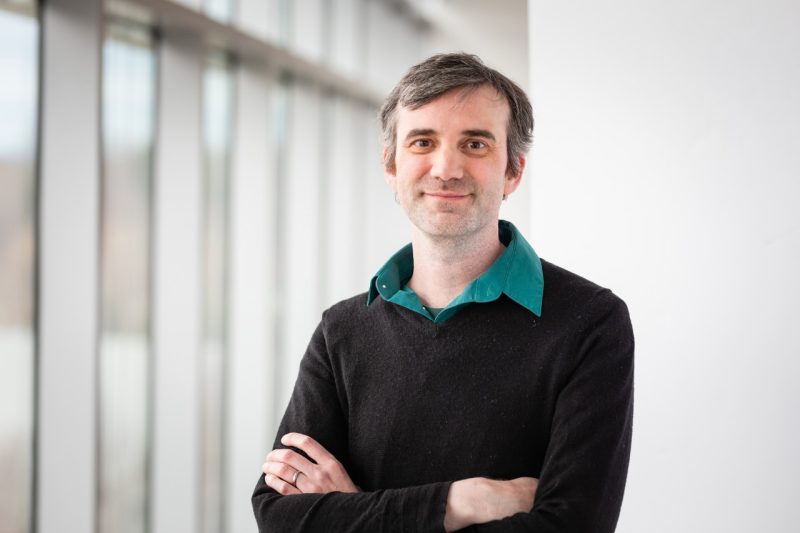
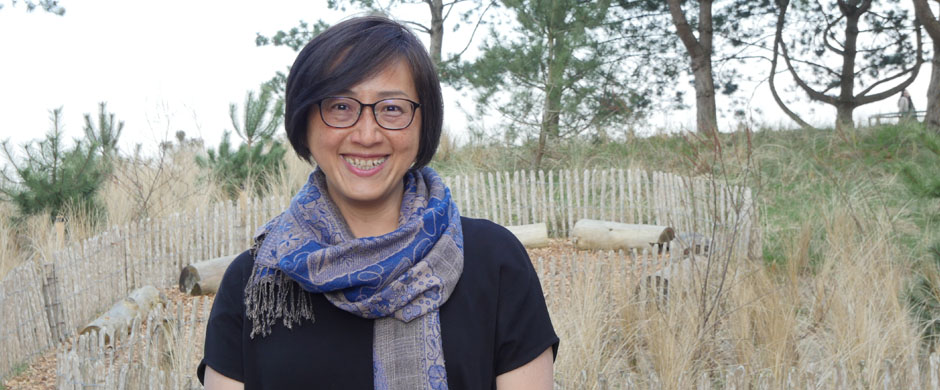
Prof. Dr. Ulrike Freitag is a distinguished scholar in Islamic Studies and social history of the Arab world, holding a Professorship at Freie Universität Berlin and serving as Director of the Leibniz-Zentrum Moderner Orient (ZMO) . Her work bridges urban history, transregional Islamic networks, and Arabian Peninsula studies within Indian Ocean and Red Sea contexts. Education : PhD in Islamic Studies (Freiburg, 1991), Habilitation (Bonn, 2002) Research : Focus on Ottoman urban violence, Saudi state formation, Hadhrami diaspora, and historical urbanism in Jeddah Her supervision of PhD projects spans topics from Moroccan Sufi sanctußen to Yemeni Jewish communities. Recent scientific awards include fellowships at Leiden University and Käthe-Hamburger Kolleg. She contributes to public discourse through Tagesspiegel op-eds and international conferences.
Professor Owen Davies is a faculty member at the University of Hertfordshire , affiliated with the History Department at the School of Creative Arts . His research spans witchcraft , magic , supernatural beliefs , and folklore , with a focus on interdisciplinary approaches integrating archaeology, anthropology, and biomedical studies. Key research areas : Witchcraft, Domestic Magic, Medical History, Electrification, Public History. Recent projects : AHRC-funded 'StoryMachine', Leverhulme 'Inner Lives', Wellcome Trust 'Harnessing the Power of the Criminal Corpse', and a new AHRC 3-year study on witch bottles. Selected publications : America Bewitched (2013), The Oxford Illustrated History of Witchcraft and Magic (2017), Troubled by Faith (2023). Awards : Funded by AHRC, Wellcome Trust, and Leverhulme Trust. Collaborates with institutions like Museum of London Archaeology and University of Essex. Leads community engagement via the Heritage Hub and 'Electric Generations' exhibition.
Johannes Riquet is a Professor in the Department of English at Tampere University , Finland, and Head of English. He directs the Spatial Studies and Environmental Humanities research group and leads interdisciplinary projects such as Mediated Arctic Geographies funded by the Academy of Finland (EUR 480,000, 2019–2023). Research Interests : Spatial theory, literary geography, environmental humanities, Arctic studies, mobility, and deconstruction. Recent Publications include monographs on island aesthetics, Arctic geopoetics, and co-edited volumes with Wesleyan UP and Manchester UP. His work spans cinematic geographies, Arctic comics, and hip-hop narratives. Grants : Principal Investigator for Mediated Arctic Geographies (Academy of Finland, 2019–2023). Collaborative Projects : Co-curated Circumpolar Connections with Indigenous scholars, integrating Arctic and Indigenous knowledges.
Olivia Badoi is a faculty member in the Department of English at Saint Louis University-Madrid. She holds a Ph.D. in English from Fordham University and contributes to the academic mission through teaching and research in modernist studies, graphic narratives, and ecocriticism. Education: Ph.D. in English, Fordham University M.A. in English, Wroclaw University B.A. in American Studies, University of Bucharest Dr. Badoi's research lies at the intersection of modernist literature, visual culture, and environmental thought. Her work explores how wordless narratives, particularly woodcut novels, engage with ecological themes and nonhuman agency. She introduces the concept of arboreal modernism to describe how trees and forests serve as structural and symbolic models in modernist art. Her scholarship spans ecocriticism, feminist modernism, adaptation studies, and the representation of animals and nature in media. She is currently completing her first book, Arboreal Modernism and the Woodcut Book , under contract. Her recent publications and conference presentations reveal a strong interdisciplinary trajectory, combining literary analysis with visual culture, environmental philosophy, and translation studies. Themes such as deep time, materiality, liminality, and nonverbal communication recur across her work, reflecting a sustained engagement with the boundaries between human and nonhuman, word and image, nature and culture. Scientific Awards: No scientific awards listed in the provided text. Dr. Badoi actively contributes to academic discourse through peer-reviewed publications and international conference presentations. While specific grant funding is not mentioned, her book contract and scholarly output indicate a robust research profile. She mentors students through her academic role, though no named advisees are listed. Her work is supported by her affiliation with Saint Louis University-Madrid, where she participates in scholarly events such as the Landscape, Narrative, and Deep Time conference. She is associated with academic teams and initiatives focused on modernism, adaptation, and environmental humanities, as evidenced by her conference organization and participation.
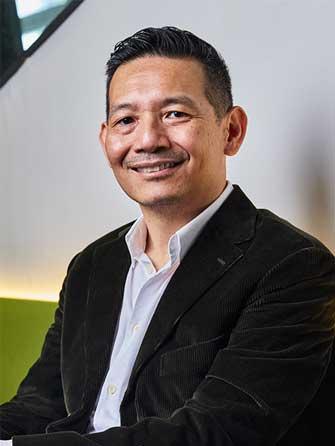
Dr Francis Maravillas is a Senior Lecturer and Programme Leader of the BA (Hons) Art Histories and Curatorial Practices: Asia and the World at LASALLE College of the Arts, Singapore. His academic work bridges art historical research, curatorial practice, and interdisciplinary teaching with a focus on contemporary Asian art contexts. His educational background includes a PhD in Humanities and Social Sciences from the University of Technology Sydney and a First Class Honours BA in Politics from Macquarie University, Australia. Maravillas' research centers on modern and contemporary Asian art, with particular expertise in curatorial practices, exhibition histories, and socially engaged/performatory art forms. His current projects investigate the aesthetics and politics of food in contemporary Asian art, examining how food functions in performance, installation, and community-based practices within post-colonial and global contexts. This research explores intersections between alimentary practices, political economies of survival, and post-colonial histories across Asia. His publication record reveals consistent engagement with Southeast Asian contemporary art worlds, food-art practices, and diasporic visual cultures. Key projects include the co-edited World Art special issue on Southeast Asian art publics (2020) and the forthcoming Routledge anthology 'Tastes of Justice' (2025), which examines food, art, and justice politics in Asian-Australian contexts. Maravillas has secured significant research funding including a SGD 20,000 LASALLE College of the Arts grant for 'Tastes of Justice' (2024) and an AUD 49,526 Creative Australia grant for related art, performance, and symposia activities in Sydney and Singapore (2024). He actively collaborates internationally through co-curated exhibitions like 'Bruised Food: A Living Laboratory' (2019) and the symposium 'Shifting Grounds, New Horizons' (2022), demonstrating commitment to building transnational networks in contemporary Southeast Asian art.
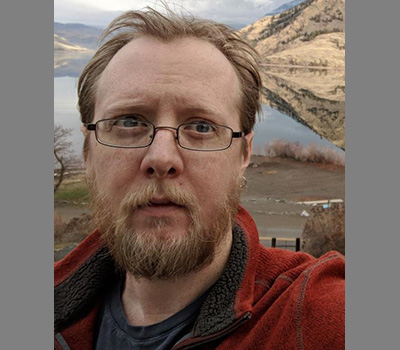
Jim Thatcher is an Assistant Professor at the College of Earth, Ocean, and Atmospheric Sciences (CEOAS) at Oregon State University. He serves as editor of Cartographic Perspectives , a leading journal in cartography. His research focuses on the intersection of technology, society, and environment, particularly examining how data and spatial technologies operate within capitalist systems. Key areas include Critical GIS, Critical Cartography, and Digital Political Ecology. Thatcher's current projects explore equitable coastal flood risk modeling using topological data analysis, mapping infrastructural legacies of slavery in the Pacific Northwest, and creating accessible disaster response maps for non-English speakers in Oregon. He also investigates spectral governance for rural internet access, cartography's societal role, climate education through board games, and geographic influences on electoral districting. His research emphasizes critical approaches to spatial data, questioning representational practices and power dynamics embedded in geospatial technologies. Recent work includes analyzing Bitcoin mining's environmental impacts on hydropower systems and examining the World Bank's renewable energy mapping through Critical Data Studies. Thatcher actively mentors graduate students and encourages interdisciplinary inquiries blending critical social theory with computational methods. Thatcher has authored numerous articles and co-authored Data Power (Pluto Press, 2022), an open-access exploration of data's role in societal control and resistance. His scholarship bridges critical geography with emerging technologies, advocating for ethical and equitable spatial practices in an increasingly data-driven world.
Leonardo Chamorro is a Professor in the Department of Mechanical Science and Engineering at the University of Illinois at Urbana-Champaign (UIUC), with affiliations in Earth Science and Environmental Change, Aerospace Engineering, and Civil and Environmental Engineering. His research focuses on fluid dynamics, renewable energy systems, and turbulence modeling. He holds a Ph.D. in Civil Engineering from the University of Minnesota (2010) and has held academic positions at UIUC since 2013, advancing to Full Professor in 2024. Chamorro's work spans experimental and theoretical investigations of wind and hydrokinetic energy, geophysical flows, and particle dynamics. His research group, the Renewable Energy & Turbulent Environment Group (RE-TE-G), explores topics like tidal flow multifractality, vortex dynamics, and bio-inspired robotics. Key achievements include Nature and Lab on a Chip cover articles, and contributions to turbulence modeling for tidal energy systems. He has received awards such as the Best Paper Award in Energies (2018) and recognition for pandemic-related research (2021). His editorial roles include associate editorships at journals like Journal of Renewable and Sustainable Energy and Frontiers in Energy Research . Chamorro has supervised numerous graduate students and postdocs, contributing to over 150 peer-reviewed publications since 2009.
Florian 'Floyd' Mueller is a Professor of Future Interfaces at Monash University in Melbourne, Australia, where he directs the award-winning Exertion Games Lab within the Department of Human-Centred Computing (ranked among the top 20 HCI departments globally). Previously, he held positions at RMIT University, Stanford, University of Melbourne, Microsoft Research, MIT Media Lab, Fuji-Xerox Palo Alto Labs, Xerox Parc, and Australia's CSIRO. Mueller is a member of the prestigious ACM SIGCHI Academy, an honorary group recognizing leaders who have made substantial contributions to Human-Computer Interaction (HCI). Professor Mueller's research focuses on the intersections between technology, the human body, and play. He originated the concept of "Exertion Interface," arguing that we should not just design "easy-to-use" interactions when "hard-to-use" interactions can also be beneficial. His work spans movement-based interactions, whole-body interfaces, uncomfortable interactions, somaesthetics, and exertion games. Mueller's research methodology often employs research through design, design ethnography, and autoethnography to explore these novel interaction paradigms, incorporating mixed-reality, augmented reality, virtual reality, electronic muscle stimulation, biosensors, wearables, and drones. His recent publications demonstrate a continued focus on bodily interactions and human-computer integration, with particular emphasis on emerging subfields like WaterHCI and SportsHCI, brain-computer interfaces, and gustosonic (taste and sound) experiences. Mueller's work has evolved from foundational exertion game concepts to more sophisticated explorations of human-computer integration where technology becomes seamlessly woven into the fabric of human experience. Professor Mueller's contributions have been widely recognized with numerous awards including: Inaugural honouree of the Australian Design Centre's Design Honours Tall Poppy award for "intellectual and scientific excellence" 10 "Best Paper Honorable Mentions" (top 5%) from premier HCI conferences 2 "Best Paper" awards (top 1%) at CHI PLAY and CHI Shortlisted for the European Innovation Games Award (alongside Nintendo's WiiFit) Nokia Mindtrek Ubimedia Award Mueller has successfully secured some of Australia's largest and most competitive research grants, achieving a remarkable 14% success rate on Australian Research Council Discovery Project applications. He has served as General co-Chair for CHI PLAY'18 and CHI'20, becoming the first Australian-based researcher to spearhead HCI's highest-ranked publication outlet, and is currently General co-Chair for CHI'24. He is Associate Editor for tier A journals including Elsevier's IJHCS (International Journal of Human-Computer Studies) and ACM's IMWUT (Interactive, Mobile, Wearable and Ubiquitous Technologies). As director of the Exertion Games Lab, Mueller leads a research team whose innovations have been experienced by over 20,000 users across 3 continents and featured on the BBC, ABC, Discovery Science Channel, and Wired magazine. The lab has produced groundbreaking work in bodily interfaces, co-founding the CHI PLAY conference series and establishing new research directions in SportsHCI and WaterHCI through recent "Grand Challenges" papers. Mueller's lab continues to push boundaries with projects exploring brain-to-brain interfaces, lucid dreaming induction, and novel gustosonic experiences.
Prof. Dr. Ute Fendler holds the Chair of Romance Literature and Comparative Studies with Special Emphasis on Africa at the University of Bayreuth. Her academic journey includes a 2006 Habilitation and 1992 PhD from Saarland University, with research spanning Francophone African literatures , intermedial phenomena , and postcolonial cinematic analysis . She coordinates the Bayreuth Academy of Advanced African Studies as Vice-Director and serves on multiple editorial boards. 2006-Present: Professor at University of Bayreuth 2011-2015: Director of Institute for African Studies 2015-Present: Vice-Director of Bayreuth Academy of Advanced African Studies Her research interrogates urban ecotonal spaces through African music videos, transnational cinematic flows in African and Afro-Asian contexts, and mediated memory practices . Recent publications explore post-apocalyptic storytelling and decolonial aesthetics in music videos and films. Scientific contributions include: 2025: Staging Atmosphere: Urban Ecotonal Spaces in African Music Videos (Brill) 2024: Co-edited Asia-Africa: Multifaceted Engagement (Palgrave Macmillan) 2022: Animating the Future: Superheroes in Africa (Brill) 2020: Ghosts as Mediators: Memory and Hauntology (iwalewabooks) 2019: K-Pop Fandom in Germany (Korea University Press) She received the Faculty Enrichment Award from the Canadian Embassy in 2005 and serves on multiple academic committees including the University Library Commission (2007-2016).
Professor Sujit Sivasundaram is a leading scholar in world history at the University of Cambridge, with affiliations as a Fellow of Gonville and Caius College and director of the Centre of South Asian Studies. His academic journey includes a Research Fellowship at Gonville and Caius College (2001), a Lectureship in South Asian History at the London School of Economics, and his current role as Professor of World History since 2019. Research Interests : Imperial history, history of science, environmental history, cultural history, history of race, and Indian/Pacific Ocean history with a focus on marginalized regions and material culture. Professional Leadership : President of The Pacific Circle , co-editorial roles in Cambridge Oceanic Histories and World Environmental History series, and EDI work at the Faculty of History (2024). Scientific Awards : British Academy Prize for Global Cultural Understanding (2021) Bentley Book Prize for World History (2021) Philip Leverhulme Prize for History (2012) Fellow of the British Academy (elected 2023) Publications emphasize oceanic histories, environmental fragments, and critical re-examinations of Euro-Atlantic historiography. His recent work explores materialist approaches to world history using objects like fossilized ferns and sea cucumbers to challenge universalist narratives.
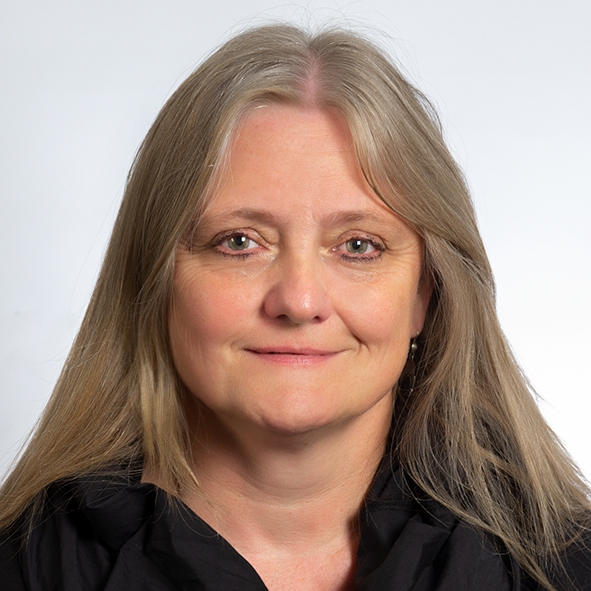
Katrin Bromber is a German Researcher at the Centre for Modern Oriental Studies in Berlin, where she has led the research group "Progress and its Discontents: Ideas, Practices, Materiality" since 2014. Her career spans senior research roles at ZMO and academic teaching positions at the University of Vienna. Nationality: German. Language skills: Native German, fluent English/Swahili, moderate Amharic, good reading knowledge in French/Russian, basic Tigrinya. Habilitation (2009–): African Studies, University of Vienna PhD (1993): African Linguistics, University of Leipzig MA (1988): Swahili Studies, University of Leipzig Katrin Bromber's research interrogates intersections of body politics , sports history , Swahili linguistics , and Ethiopian modernity . Her work traces how physical culture, media representation, and colonial/imperial narratives shape national identities across Africa and Asia. Current focus: "Progress" as contested concept in Ethiopian and Gulf urbanism. Key article trends reflect her translocal methodology: 2017 studies on Ethiopian stadiums and fitness culture ; 2014-2013 publications analyzing East African military press , sports branding in the Gulf , and Swahili poetry ; 2007-2000 works on colonial linguistic politics , Indian Ocean slavery , and German colonial Swahili promotion . Recurring sub-fields: body as political text, translocal modernity, media historiography. Scientific Awards: Research Grant of the Berlin City Council (1999-2000): Gendered Slavery study Service to the Scientific Community: Chairwoman, Academic Association for Horn of Africa Studies (2012–) Editorial Advisory Board - Stichproben. Vienna Journal of African Studies (2015–) Editorial Advisory Board - Studies of Department of African Languages and Cultures (2015–) Teaching Experience: Textlinguistics, Mediacommunication, African Linguistics, Swahili (elementary/advanced), Swahili Literature, Swahili in Arabic Script at Leipzig, Humboldt-Berlin, Free Berlin, and Vienna universities Anthropology of the Body at Mekelle University Summer School Field Research: Tanzania (1993-2003): Swahili Poetry, Intellectual History Kenya (2005): Indian Ocean WW2 UAE/Bahrain (2009): Sports and Body Cultures Ethiopia (2009-2015): Sports, Body Politics
Scott England is a Professor in the Department of Aerospace and Ocean Engineering at the College of Engineering, Virginia Polytechnic Institute and State University. He serves as the Project Scientist for NASA’s Ionospheric Connection Explorer (ICON), Co-Investigator for Global-scale Observations of the Limb and Disk (GOLD), and Participating Scientist for Mars Atmosphere and Volatile Evolution (MAVEN). Education PhD, University of Leicester (UK), 2005 MPhys First Class Honors, University of Leicester (UK), 2001 England’s research focuses on planetary atmosphere-space environment interactions, particularly gravity waves, atmospheric tides, and ionosphere-thermosphere coupling on Earth and Mars. His work integrates NASA mission data (ICON, GOLD, MAVEN) with numerical modeling to study thermal dynamics, wind systems, and solar flare impacts. Recent publications highlight his expertise in thermospheric gravity wave science, planetary wave-induced ionospheric variability, and Mars atmosphere studies using EMUS and IUVS instruments. Articles span topics like Seasonal variability of DE3/DE2 tides , Transient Martian hot oxygen corona , and Shock-induced plasma dynamics . Scientific Honors 2020 Dean's Award for Teaching Excellence 2016 RHG Exceptional Achievement for Mars Science As a professional leader, England served as Thermospheric Lead for the 2019 Planetary Mission Concept Studies Program and on the National Academy of Sciences Decadal Survey panel. He manages Virginia Tech’s participation in the Virginia Space Grant Consortium and has contributed to high-performance computing committees.
Hsueh-man Shen is the Director of Masters Studies and Ehrenkranz Associate Professor in World Art at New York University’s Institute of Fine Arts. She holds a D.Phil. from Oxford University in Archaeology, an M.A. in Art History from National Taiwan University, and an LL.B. in Law from the same institution. Her research focuses on medieval Chinese art and archaeology, particularly how cross-cultural exchanges shaped artistic practices through translation, replication, and hybridization. She has curated major exhibitions such as Gilded Splendor: Treasures of China’s Liao Empire (2006) and contributed to the Cave Temples of Dunhuang project (2016), emphasizing Silk Road cultural networks. Her current book project explores maritime activities’ impact on Buddhist art during the 10th–14th centuries. Shen’s work bridges art history, archaeology, and material culture studies, addressing topics like relic deposits, shipwrecks, and cross-cultural curatorial practices. She has held prestigious fellowships, including the Leiden University Hulsewé-Waznieski Professorship (2019) and a Wissenschaftskolleg zu Berlin residency (2008–2009). Education: D.Phil., Archaeology, University of Oxford M.A., Art History, National Taiwan University LL.B., Law, National Taiwan University Her research interests include Buddhist art’s transformation across dynasties, the role of replication in devotion, and maritime trade’s influence on cultural boundaries. She teaches courses such as Colors in the Visual Culture of Medieval China and Shipwrecks and the ‘Other’ Silk Road , integrating theoretical and material perspectives. Shen’s awards reflect her global academic contributions, including the EURIAS Senior Fellowship (2018–2019) and Progress 100 Visiting Professorship at Kyushu University (2017). Her publications span exhibition catalogues, monographs like Authentic Replicas: Buddhist Art in Medieval China (2019), and peer-reviewed articles analyzing Silk Road networks, Liao dynasty funerary practices, and cross-cultural material exchanges.
Michele DiBenedetto is an Assistant Professor in the Department of Mechanical and Aerospace Engineering at Princeton University, associated with the High Meadows Environmental Institute (HMEI). Her research focuses on environmental fluid mechanics, ocean waves, and turbulent flows, with applications in contaminant transport, biomonitoring, and ocean sensing. She holds a PhD from Stanford University (2019) and moved to Princeton in 2025 after serving as an Assistant Professor at the University of Washington (UW). Her work integrates laboratory experiments, mathematical modeling, and field observations to study interdisciplinary challenges like plastic pollution, renewable energy, and air-sea interactions. Key achievements include an NSF CAREER Award (2023) and NOAA Sea Grant funding (2024). She advises a team of graduate and undergraduate students, including Carlos, Julio, Andrew, and Ethan, whose research contributes to understanding particle dynamics in turbulent systems. Notable projects include investigating buoyant particles in wind-driven ocean boundary layers and developing methods to track particle orientation using collimated light. Her lab’s move to Princeton in 2025 marks a strategic shift to enhance collaborations in environmental fluid mechanics. Publications span experimental fluid mechanics and environmental applications, emphasizing ocean transport and marine biology.
Professor Jason Hall-Spencer is a globally recognized marine biologist at the University of Plymouth and a full professor at the University of Tsukuba (Japan), with an adjunct role at Xiamen University. His research focuses on ocean acidification, invasive species (e.g., lionfish), and climate change impacts on marine ecosystems. He pioneered the use of underwater CO2 seeps as natural analogues for climate change studies, a methodology now adopted globally. His work has influenced policies to protect deep-water corals and Arctic reefs, and he leads projects like RELIONMED to combat lionfish invasions in the Mediterranean. Education: Studied Applied Marine Biology at Heriot-Watt University, completed a PhD on coralline algae at Millport Marine Station, and conducted fieldwork across Europe, Asia, and the Pacific. His career includes discovering UK deep-water coral reefs and Arctic reefs, leading to their legal protection. Research Interests: Ocean acidification effects on marine organisms, invasive species management, CO2 seep dynamics, coral reef ecology, and marine conservation. His work combines field experiments, policy advocacy, and community engagement to address global marine challenges. Grants and Collaborations: Secured €1.7M from the EU Life Programme for lionfish control and a $400K grant on plankton dynamics. Collaborates with organizations like the Marine Biological Association and international researchers on projects such as the Ocean Organ to visualize CO2 impacts. Labs/Teams: Leads the Marine Conservation Research Group at Plymouth, coordinating initiatives like RELIONMED and influencing global marine policies through partnerships with governments and NGOs.