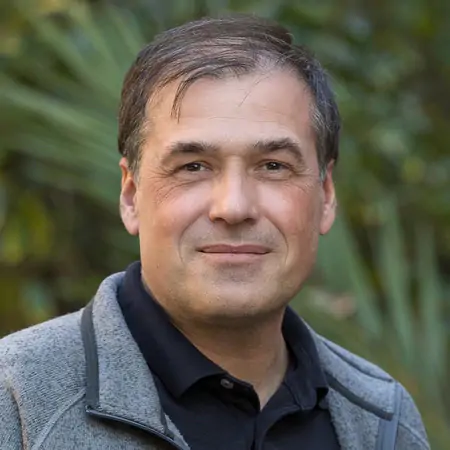
Rob Middag is a Research Leader at the Royal Netherlands Institute for Sea Research (NIOZ) and an honorary Professor in Marine Trace Metal Biogeochemistry at the University of Groningen's Centre for Isotope Research. His work focuses on the dual role of trace metals like iron, zinc, and nickel as essential nutrients and potential stressors in marine ecosystems. Research Interests : Trace metal biogeochemistry, chemical oceanography, nutrient cycling, and the development of advanced analytical methods (ICP-MS, flow injection) for ultra-clean sampling in marine environments. Recent Publications : His 2025 study on nickel distribution in the Southern Ocean highlights the interplay between trace metals and climate processes, using data from the GEOTRACES GIpr07 transect. Scientific Awards : Vidi grant (2018) from the Netherlands Organization for Scientific Research (NWO) to support his research on trace metals in marine systems. Projects & Expeditions : He leads multidisciplinary expeditions, including the EASI-2 expedition to East Antarctica (2023-2024), and has been involved in projects such as FePhyrus (2017-2021) and MetalGate (2018-2023).
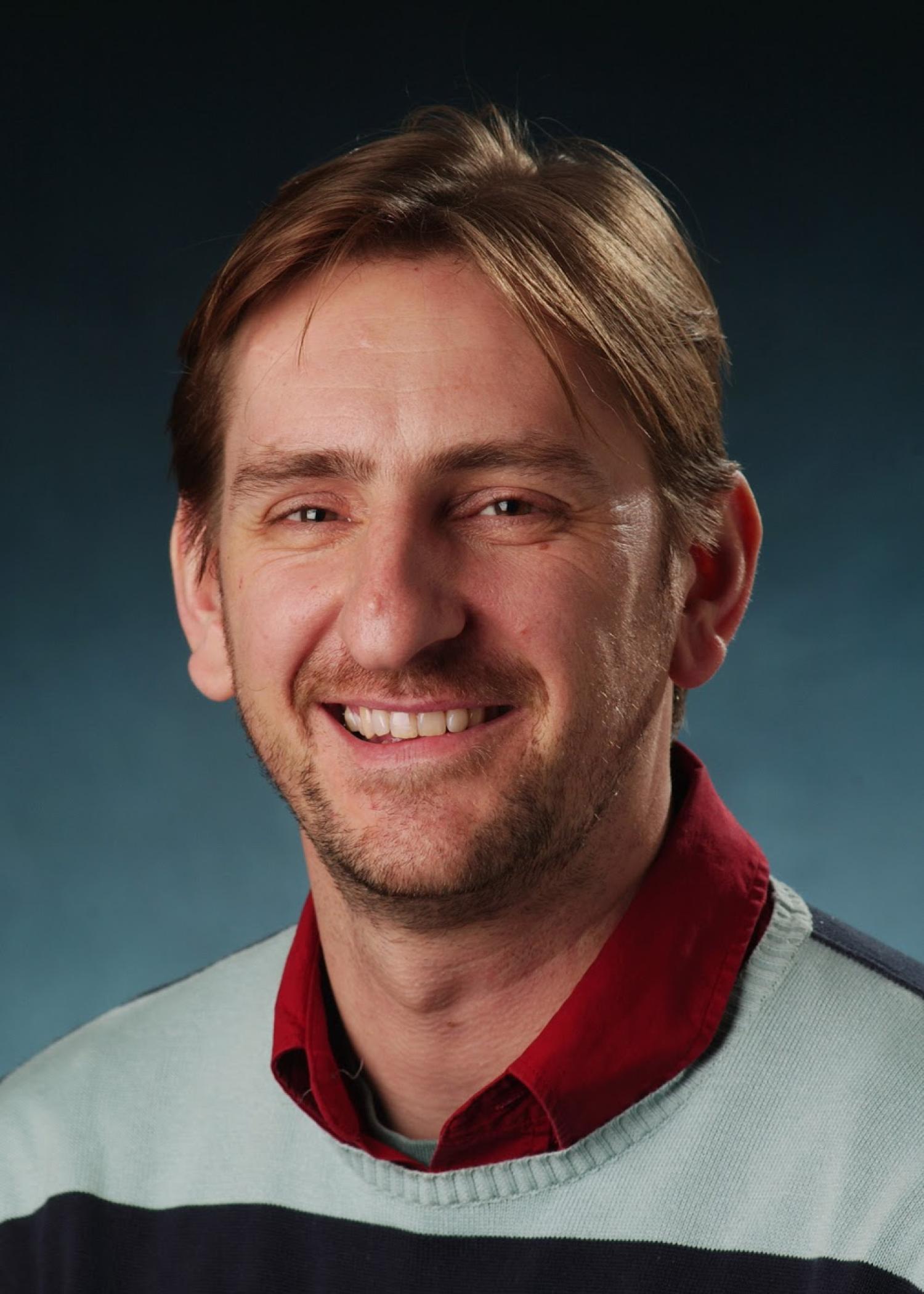
Cyle Sprick is a Senior Lecturer at Flinders University's College of Medicine and Public Health, specializing in Clinical Simulation and Biomedical Engineering. He co-coordinates the MD Year 4 program and teaches Acute Care skills across all four years of the Medical Doctor program using simulation-based methods. Dr. Sprick holds a PhD in Biomedical Engineering - Clinical Simulation from Flinders University (2010) and a BS in Physics and Scientific Instrumentation and Biomedical Engineering from Carnegie Mellon University (1990). His professional background includes working for Oceaneering Space Systems as a NASA contractor, where he designed cryogenic life support systems for astronaut training, and serving as a Paramedic Team Leader for the League City EMS near Houston, Texas. His research focuses on innovative approaches to clinical simulation in medical education, with particular emphasis on acute care scenarios and life support systems. Dr. Sprick has developed simulation protocols that bridge engineering principles with medical training, creating realistic emergency scenarios for medical students. Dr. Sprick has received recognition for his teaching excellence: ALTC Citation for Outstanding Contributions to Student Learning (2011) Executive Deans Teaching Award (2010) As an active educator and practitioner, Dr. Sprick serves as an ARC ALS Instructor and contributes to AusSETT and NHET-Sim curriculum development. He maintains his clinical skills as a Casual metro Paramedic with the South Australian Ambulance Service, ensuring his teaching remains grounded in real-world emergency medical practice. His dual expertise in biomedical engineering and emergency medicine creates a unique interdisciplinary approach to medical education.
Dr. Juan Antonio Añel Cabanelas is a Professor of Earth Physics at the Faculty of Sciences, University of Vigo, located at Campus As Lagoas in Ourense, Spain. He serves as President of the Specialized Group on Atmospheric and Ocean Physics of the Royal Spanish Society of Physics, Research Affiliate at Economics for Energy, Executive Editor of Geoscientific Model Development, and Associate Editor of PLoS Climate. His extensive academic service includes membership in the Royal Spanish Society of Physics, Royal Spanish Society of Chemistry, European Geosciences Union, and American Geophysical Union. Dr. Añel's research focuses on climate change impacts, upper troposphere-lower stratosphere dynamics, renewable energy, extreme meteorology, atmospheric dynamics, instrumental data recovery, computational science, and sustainability. His work spans both theoretical and applied climate science, with significant contributions to understanding stratospheric processes, climate intervention techniques, and the intersection of climate science with energy systems. He has published extensively in high-impact journals including Nature, Science Advances, and AGU Advances. His recent publications reveal a growing emphasis on climate intervention research, data preservation, and the societal implications of climate change. The research trends show a progression from fundamental atmospheric science toward more applied work addressing climate change impacts on energy systems and exploring potential intervention strategies. His work increasingly incorporates computational science approaches and interdisciplinary collaborations. Dr. Añel actively mentors students, with current PhD candidates working on climate change and hydropower, cloud computing in geosciences, and climate change impacts on the middle atmosphere. His former students have gone on to positions at the University of Guadalajara, INESCTEC at Universidade do Porto, and the private sector. His research has been primarily funded by public institutions including the Government of Spain, Xunta de Galicia, University of Vigo, and University of Oxford, with additional support from companies such as Royal Bank of Scotland, Inditex, Naturgy, Acciona, and computing resources from Google and Microsoft. He has organized workshops like ODEÓN for citizen engagement in climate intervention research and has been active in science communication through numerous media appearances.
Jochen Stutz is a Professor in the Department of Atmospheric and Oceanic Sciences at the University of California Los Angeles (UCLA). His research focuses on atmospheric chemistry and physics, with an emphasis on spectroscopic remote sensing techniques. He leads the Stutz Group , which develops and applies instruments like PhotoSpec and long-path DOAS systems to study air pollution, wildfire emissions, and the global carbon cycle. Contact: (310) 825-5364 | MS 7172 | jochen@atmos.ucla.edu Research Highlights: The group investigates Reactive Halogen Species (RHS) in the Bermuda Boundary Layer Experiment (BLEACH), wintertime air pollution dynamics in polar and mid-latitude regions (ALPACA), wildfire plume chemistry (FIREX-AQ), and photosynthesis in boreal/tropical forests using Solar Induced Fluorescence (SIF). They also develop tools for monitoring air toxics like BTEX near industrial facilities. Education and Career: As a faculty member at UCLA, Stutz has published over 130 peer-reviewed papers and co-authored a foundational book on DOAS (Platt and Stutz, 2008). His work bridges experimental instrument development (e.g., PhotoSpec) with numerical modeling (e.g., PACT-1D) to address environmental challenges. Team and Collaborations: The Stutz Group includes current students like Zoe Pierrat and former members such as Katie Tuite. Collaborations extend to institutions in France (Institut des Géosciences de l'Environnement) and Switzerland (Paul Scherrer Institut), focusing on snow chemistry, radiative transfer, and atmospheric modeling.
Whitney King serves as the Dr. Frank and Theodora Miselis Professor of Chemistry at Colby College, where he teaches General Chemistry, Environmental Chemistry, and Analytical Chemistry within the Department of Chemistry. He earned a B.S. in Chemistry from St. Lawrence University (1983) and a Ph.D. in Chemical Oceanography from the University of Rhode Island (1988). King's research centers on sunlight's role in regulating surface water chemistry across lakes and oceans, requiring novel analytical methodologies. His expertise spans Chemical Oceanography , Environmental Chemistry , and Analytical Chemistry , with specific focus on water pollution monitoring, trace metal analysis in seawater, and ultra-trace instrumentation development. While no specific scientific awards are documented in the source material, his endowed professorship signifies institutional recognition of his scholarly impact. He leads a research group that has developed over twenty analytical instruments for environmental measurement, now deployed globally by international investigators. King previously served as Department Chair and Director of Colby’s Partnership for Science Education, enhancing K-12 science curricula in regional schools. His laboratory specializes in creating instrumentation for ultra-trace quantification of Fe, Cu, Cr, Mn, H₂O₂, and O₂⁻ in aquatic systems, directly supporting field research on photochemical processes.
Nikku Madhusudhan is a Professor of Astrophysics and Exoplanetary Science at the Institute of Astronomy, University of Cambridge. His research focuses on exoplanets, atmospheres, interiors, formation mechanisms, habitability, biosignatures, and hycean worlds. Education: PhD (MIT, 2009), MS (MIT, 2004), B. Tech (IIT-BHU, 2002) Research Interests: His work explores exoplanetary systems, particularly hycean worlds, atmospheric characterization of temperate sub-Neptunes, photochemical modeling, and biosignature detection using JWST and ground-based instruments. Recent Publications: His 2025-2024 studies investigate water-rich interiors in K2-18 b, sulfur chemistry in exoplanet atmospheres, convection models for sub-Neptunes, and biosignature prospects on hycean worlds, alongside instrumental developments for ELT and JWST. Awards: 2019 MERAC Prize in Theoretical Astrophysics 2019 Pilkington Prize for Excellence in Teaching 2016 IUPAP Young Scientist Medal 2014 Vainu Bappu Gold Medal 2011 YCAA Prize Fellowship
Rainer Volkamer is a Professor and Institute Fellow at the Cooperative Institute for Research in Environmental Sciences (CIRES) at the University of Colorado Boulder. His research focuses on atmospheric chemistry with applications to air quality and climate science , combining in-situ and remote sensing techniques. He develops and deploys optical spectroscopic instruments in polluted urban and pristine environments, including field studies aboard ships , aircraft , and autonomous ground networks , alongside simulation chamber experiments to validate atmospheric models. Education: Ph.D. from Ruprecht-Karls-University Heidelberg, Germany Postdoctoral Fellow at University of California, San Diego Postdoctoral Fellow at Massachusetts Institute of Technology Research Interests span trace gases , radicals , aerosols , and instrument development . He investigates ocean-atmosphere interactions , halogen chemistry , and fast photochemical processes using platforms like the NOAA Twin Otter and NSF/NCAR Gulfstream V . His work also includes laboratory experiments on heterogeneous halogen activation and iodine chemistry . Key Awards: NSF CAREER Award (2009) Feodor-Lynen Fellowship (2005-2007) Henry & Camille Dreyfus Fellowship (2002-2004) Marie Curie Fellowship (1998-2000) Erasmus Fellowship (1992-1993) Advising and Collaborations include mentoring students like Lee Feinman and Romulo Cruz-Simbron , and participating in NSF and EPRI projects. His ATMOSpeclab team develops instruments such as the AMAX-DOAS and Fast-CE-DOAS .
Elie Bou-Zeid is a Professor of Civil and Environmental Engineering at Princeton University and serves as the Director of the Program in Environmental Engineering and Water Resources . He previously directed the Metropolis Initiative for urban technology until 2022. His research integrates theory, numerical simulations, and field observations to study atmospheric flows, heat/pollutant transport, and sustainability in cities . Bachelor's : American University of Beirut Master's : American University of Beirut and Johns Hopkins University PhD : Johns Hopkins University He leads the Thermofluids of Urban and Natural Environments (TUNE) Lab , focusing on urban meteorology, renewable energy integration, and climate resilience . His work addresses inequitable urban environmental conditions and develops technologies for sustainable cities , including the CityReader Project . Recent publications explore urban heat islands, blue infrastructure, machine learning for climate, and boundary layer dynamics . Awards include the 2024 STAC Award , Beyond Bauhaus Prototyping the Future Award , and Fondation Latsis Internationale Prize . Awards : STAC 2024, Beyond Bauhaus 2024, EPFL Latsis Prize 2022 Editorial Roles : Editor of Journal of the Atmospheric Sciences (2020–2025) He advises five Ph.D. students and collaborates with postdocs like Einara Zahn and Young Paul Yi . His lab investigates kirigami-inspired ventilation, agrivoltaic farms, and downscaling climatic variables using Bayesian deep learning .
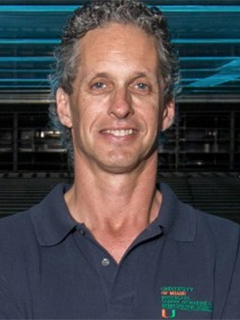
Brian K Haus is a Professor in the Department of Ocean Sciences at the University of Miami's Rosenstiel School of Marine, Atmospheric, and Earth Science. His research focuses on hurricane dynamics, air-sea interactions, and coastal protection technologies through advanced experimental and numerical modeling approaches. Institution: University of Miami School: Rosenstiel School of Marine, Atmospheric, and Earth Science Department: Ocean Sciences As director of the Alfred C. Glassell Jr. SUSTAIN Laboratory, he investigates: Wind-wave-storm surge interactions Extreme weather condition modeling Oceanographic instrument design Coastal barrier systems The laboratory enables 3D visualization of hurricane forces up to Category 5 strength (155mph/69mps) and serves as a platform for: Scientific instrument testing Material development for marine environments Commercial imaging applications His research has attracted significant grant funding including the $6.74 million coastal protection experiment involving student researchers.
Prof. Dr. Şeniz Ertuğrul is a faculty member at the College of Engineering , İzmir University of Economics , Department of Mechatronics Engineering. She previously held academic positions at Istanbul Technical University (ITU) from 1998–2018, progressing from Dr. Öğr. Üyesi to Professor. Her career includes visiting researcher roles at University of Michigan (2002) and University of Malta (2024). PhD in Mechanical Engineering (1996), Wichita State University MSc in Robotics Engineering (1992), Istanbul Technical University BSc in Mechanical Engineering (1988), Istanbul Technical University Her research focuses on system dynamics and control , particularly in humanoid robotics , marine vessel control , fuzzy logic , neural networks , and intelligent systems . She has published over 15 articles in journals like Applied Soft Computing and Ocean Engineering , with recurring themes in robot manipulators , collision avoidance algorithms , and adaptive control . Her work has been cited in studies on autonomous maritime navigation , driver modeling , and industrial optimization . She has received 14 scientific awards , including TÜBİTAK-National Instruments Third Place (2015) and WSU Mechanical Engineering Project First Prize (1993). Her 18+ advisees have explored topics like humanoid robot trajectory planning , ship motion control , and smart actuator design . Current projects include Series Elastic Actuator Development (2023–2024) and Humanoid Robot Cognitive Modeling (2021–2023).
Guy Plantier is a Teacher-researcher affiliated with the Institute of Acoustics at Le Mans University . His work bridges optical engineering and acoustic sensing, with a focus on developing advanced instrumentation for seismic and environmental monitoring. Research Interests Opto-acoustics and laser ultrasonics Self-mixing interferometry Machine learning for sensor data analysis High-resolution optical displacement sensors Monitoring of geohazards in harsh environments Scientific Production Trends Plantier's recent publications emphasize optical sensor development for geophysical applications, particularly seismic monitoring in extreme environments (volcanoes, ocean floors). His work also explores interdisciplinary applications of machine learning in agricultural data analysis (dairy cow behavior tracking). Collaborations Collaborates with researchers across France (Paris, Bordeaux, Martinique) Participates in instrumental park projects and measurement platform development
Mehr U Nisa is an Assistant Professor in the Department of Physics & Astronomy at Michigan State University, where she joined the faculty in 2023 after completing a postdoctoral position at the same institution from 2019-2023. She is an experimental particle astrophysicist working at the intersection of particle physics and high-energy astrophysics, with significant contributions to neutrino and gamma-ray astronomy. Michigan State University (2023-present): Assistant Professor Michigan State University (2019-2023): Postdoctoral Researcher University of Rochester (2018): Ph.D. in Physics and Astronomy LUMS (2012): B.S. in Physics Dr. Nisa's research focuses on multimessenger astronomy, particularly using observations of high-energy photons (TeV gamma rays) and neutrinos to investigate cosmic-ray accelerators and dark matter. Her work spans both neutrino astronomy and very-high-energy gamma-ray observations, with an emphasis on constraining beyond-the-standard-model physics. She leads research projects that involve enhancing sensitivity to point-source and extended-source neutrino searches, cross-correlating gamma-ray data with neutrinos, and using machine learning to improve directional reconstruction of neutrino events. Her extensive publication record in high-energy astrophysics reveals strong trends in multimessenger astronomy, with particular emphasis on neutrino point-source searches, gamma-ray source identification, and dark matter constraints. Her recent work shows increasing focus on machine learning applications in neutrino astronomy and the development of next-generation neutrino telescopes like P-ONE. Dr. Nisa is actively involved in multiple major international collaborations, including the IceCube Neutrino Observatory, the High Altitude Water Cherenkov (HAWC) Gamma-ray Experiment, the Southern Wide-field Gamma-ray Observatory (SWGO), and the Pacific Ocean Neutrino Experiment (P-ONE). She maintains a strong commitment to mentoring students, particularly women and under-represented minorities in physics, and encourages interested students to reach out for guidance on navigating research careers. Her laboratory work primarily involves data analysis from neutrino and gamma-ray observatories, with computational research focusing on improving detection algorithms and developing new analysis techniques for multimessenger astronomy.
Eric D'Asaro is a Senior Principal Oceanographer and Professor of Oceanography at the Applied Physics Laboratory, University of Washington (APL-UW). He is affiliated with the Ocean Physics department and has made significant contributions to the field of physical oceanography over his extensive career. Dr. D'Asaro earned his B.A. and M.S. in Physics from Harvard University in 1976, followed by a Ph.D. in Oceanography from MIT/WHOI in 1980. His educational background provided the foundation for his innovative research at the intersection of fluid mechanics, oceanography, and engineering. Dr. D'Asaro's research spans a wide number of environments from upper ocean mixed layers to nearshore coastal fronts to fjords to deep convection. Starting from a core interest in turbulence and internal waves, his work has expanded to include new aspects of small-scale oceanography, including submesoscale processes, and the role of all of these mixing processes in controlling biochemical processes in the ocean. For the past 30 years, his experimental work has focused on exploiting the unique capabilities of "Lagrangian Floats," a class of instruments that try to accurately follow the three dimensional motion of water parcels particularly in regions of strong mixing. By measuring big signals, like hurricanes or major blooms, it is easier to unravel the underlying processes because the signal to noise is high. His work bridges fluid mechanics, oceanography, and engineering, making significant contributions to our understanding of ocean mixing processes and their role in global climate systems. His research has important implications for climate modeling, carbon cycling, and predicting the behavior of extreme weather events like hurricanes. Wave Measurements at Ocean Weather Station PAPA Air-Sea Momentum Flux in Tropical Cyclones Salinity Processes in the Upper Ocean Regional Study (SPURS) Lateral Mixing Autonomous Lagrangian Floats for Oxygen Minimum Zone Biogeochemistry Hurricane Lagrangian Floats North Atlantic Bloom EXPORTS: Export Processes in the Ocean from RemoTe Sensing Lagrangian Submesoscale Experiment (LASER) Dr. D'Asaro's laboratory and research team focus on developing and deploying innovative instrumentation for oceanographic measurements, particularly Lagrangian floats that can accurately follow water parcels. His work has resulted in numerous publications spanning from 2000 to the present, with a particularly high output in recent years (2023-2025).
Wilco Hazeleger serves as Rector Magnificus of Utrecht University since 26 March 2025 and professor of Climate System Science. As rector, he oversees research, education, and student affairs at Utrecht University, with a mission to make the institution open and accessible to society through interdisciplinary connections and societal collaboration. Previously, he served as dean of the Faculty of Geosciences from July 1, 2019 to March 1, 2025, where he championed diversity, inclusivity, and sustainability-focused research. Current Position: Rector Magnificus of Utrecht University (2025-present) Academic Appointment: Professor of Climate System Science Previous Leadership: Dean of Faculty of Geosciences (2019-2025) Former Roles: Director of Netherlands eScience Center (2014-2019), Professor of Climate Dynamics at Wageningen University Education: PhD in Physical Oceanography from Utrecht University (1999) Hazeleger's research spans climate modeling, oceanography, and the application of data science to climate challenges. He pioneered narrative approaches to climate change based on vulnerability mapping, enabling better understanding of future weather extremes. His work connects climate science with societal applications, particularly through digital twin technology for Earth system modeling. His research trajectory demonstrates a clear evolution from fundamental climate science toward integrated approaches combining AI, data science, and climate modeling. Recent publications focus on digital twins of Earth, climate risk assessment through event-based storylines, and applications of machine learning to climate prediction. His work on EC-Earth, a climate model based on ECMWF's weather model, has been instrumental in IPCC assessment reports. Climate System Science: Focus on interactions within Earth's climate system Digital Earth Twins: Development of integrated simulation frameworks Climate Risk Assessment: Innovative approaches using narrative/storyline methods AI Applications: Machine learning for climate prediction and analysis Hazeleger is deeply committed to open science principles, advocating for open data, software, and knowledge sharing. He co-founded the AI Lab Sustainability, facilitating collaboration between sustainability researchers, computer scientists, and external stakeholders. His leadership extends to implementing the MERIT promotion policy at the Faculty of Geosciences, which values research, education, leadership, impact, and team spirit equally. As a key contributor to the European 'Destination Earth' program, Hazeleger bridges fundamental climate research with practical applications for addressing climate change challenges. His interdisciplinary approach connects climate science with social sciences, computer science, and policy development, positioning him at the forefront of next-generation climate research infrastructure.
apl. Prof. Dr. habil. Bernhard Schulz is an Associate Professor for Petrology at the Chair of Mineral Deposits and Petrology, Institute of Mineralogy, Faculty of Geosciences, Geotechnology and Mining at Freiberg University of Mining and Technology (TU Bergakademie Freiberg) in Germany. He has held this position since 2005, following previous academic roles at the Universities of Würzburg, Erlangen-Nuremberg, and earlier appointments as a lecturer and research fellow. His scholarly work spans metamorphic petrology, geochronology, and mineral deposit studies with particular expertise in electron microprobe monazite dating and SEM-based automated mineralogy techniques. Professor Schulz's research focuses on metamorphic rocks and petrochronology, employing methods including geothermobarometry, EPMA-Th-U-Pb-monazite dating, microstructure analysis, and geochemistry to reconstruct geodynamic processes and mineral deposit formation. His work covers regions including the Eastern Alps, Saxony, Armorican Massif, and South America. He also investigates ores and processed ores using SEM-based automated mineralogy methods (MLA) for characterizing metal ores, technical mineral processing, and recycling processes. His analytical expertise includes SEM automated mineralogy with MLA and EPMA electron probe microanalysis for silicates and Th-U-Pb-CHIME dating of monazite. Analysis of his recent publications reveals strong trends in metamorphic petrology, geochronology (particularly monazite dating), ore deposit geology, and SEM-based mineralogy applications. His work spans diverse geological settings from the Variscan orogeny in Europe to Precambrian terranes in Africa and South America. The research demonstrates consistent methodological innovation, particularly in electron microprobe techniques for dating and characterizing metamorphic events and ore formation processes across different geological timescales. Hermann-Credner-Preis 1990 der Deutschen Geologischen Gesellschaft (1990) Korrespondent der Geologischen Bundesanstalt in Wien (2001) Ernennung zum Professor apl. an der Universität Erlangen-Nürnberg (2003) Professor Schulz has served on multiple review committees including the Scientific Priority Program (SPP) 1144 'From Mantle to Ocean: Energy, Material and Life Cycles at Spreading Axes' and SPP 1158 'Antarctica Research' (both Deutsche Forschungsgemeinschaft). He has received research fellowships from the German Research Foundation (DFG) and maintains active international collaborations, particularly with institutions in France, Switzerland, Austria, and the United States. His current research involves extensive fieldwork in metamorphic terranes across Europe, Africa, and South America, with a strong emphasis on methodological development in geochronology and mineral characterization. Professor Schulz works within the Institute of Mineralogy at Freiberg University, where he leads research on metamorphic petrology and mineral deposits. His team utilizes state-of-the-art analytical facilities including a Quanta 600 FEG SEM for automated mineralogy and a JEOL electron microprobe for EPMA analysis. He collaborates closely with Dr. Joachim Krause at the Helmholtz Institute Freiberg for Resource Technology, sharing access to advanced JEOL-JXA-8530-FEG instrumentation. His research group maintains strong connections with international laboratories including Géosciences Rennes and Université Paris Jussieu in France.