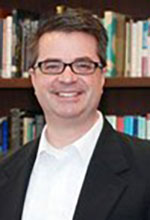
Xiaoqian (Tiffany) Zhang is an Assistant Professor in the Department of Computer Science at the University of Nebraska at Omaha (UNO) College of Information Science & Technology. Her work focuses on cloud computing, computer networking, and cybersecurity. Education: Ph.D. in Computer Science (University of Massachusetts Boston, 2023), MS in Mathematics (New York University, 2014), BA in Mathematics and Economics (Skidmore College, 2012) Her research explores cloud computing and networking with emphasis on machine learning and cybersecurity . Recent work addresses challenges in disaggregated storage systems , edge computing , and augmented reality . She received the DOE NNSA Joule Award (2022) for her scholarship. Her publications span topics including network congestion control , distributed file systems , and audio noise filtering . She teaches courses in cloud computing and computer networking .
Henrike Moll is a Professor of Psychology at the University of Southern California (USC), cross-appointed to Philosophy. She leads the Minds in Development Lab, focusing on infants' and young children's cognitive growth through social interaction, particularly shared intentionality and perspective awareness. Her work integrates developmental psychology with philosophy of mind and education. Moll holds a PhD from the University of Leipzig and has held research positions at the Max Planck Institute and the University of Washington. She has been funded by major foundations including the Spencer Foundation, Templeton Foundation, and Volkswagen Foundation. Research Interests: Ontogeny of social cognition (e.g., teaching, perspective-taking) Cultural evolution mechanisms Philosophical anthropology Human uniqueness in relational cognition Key Contributions: Pioneered studies on children’s pedagogical competence and knowledge transmission Developed the ‘Transformative Cultural Intelligence’ hypothesis Advanced interdisciplinary frameworks linking philosophy and empirical child development Funding & Recognition: Spencer Foundation Midcareer Grant ($149K, 2017) Joseph B. Gittler Award (2023) Templeton Fellowship (2015–2016) Over $1M in grants from NSF, ONR, and private foundations Labs & Teams: Director of USC’s Minds in Development Lab, collaborating with philosophers (e.g., Andrea Kern), cognitive scientists, and education researchers.
Kang Shin is a Professor in the Department of Electrical Engineering and Computer Science at the University of Michigan's College of Engineering. His research spans multiple domains in computer science and engineering, focusing particularly on automotive security, wireless communications, and distributed systems.
David Newman serves as a Senior Enterprise Fellow within the Electronics and Computer Science department at the University of Southampton's Faculty of Engineering and Physical Sciences. His research focuses on the intersection of web science, scientific workflow systems, and semantic technologies, with particular emphasis on developing infrastructure for collaborative research environments. His primary research interests center around Web Science , Scientific Workflow Systems , and Research Objects , where he investigates how digital platforms can enhance scientific collaboration. Newman's work explores the social dimensions of scientific computing through projects like myExperiment, examining how researchers share and reuse computational workflows. His research bridges technical infrastructure development with social computing aspects of scholarly practice, contributing to the evolution of virtual research environments that support modern scientific collaboration across disciplines. Analysis of Newman's publication history reveals consistent contributions to the development of semantic platforms for scientific collaboration, particularly through the myExperiment project. His work spans from foundational research on scientific social objects (2011) to practical implementations like Erica the Rhino (2016) that demonstrate real-world applications of workflow systems. The publications show progression from theoretical frameworks for research objects toward applied implementations in digital art and news enrichment, reflecting both technical depth and interdisciplinary reach. While no specific scientific awards are documented in the available materials, Newman's contributions to the myExperiment platform represent significant impact in the research infrastructure community. His work has helped shape how scientists share and discover computational workflows, contributing to more efficient and collaborative research practices across multiple disciplines. As a Senior Enterprise Fellow, Newman contributes to the university's research ecosystem through development of digital research infrastructure rather than traditional student supervision. His work focuses on creating platforms that support researcher collaboration at scale, with implications for how scientific communities organize and share knowledge in the digital age. The myExperiment platform, in particular, has served as an important testbed for concepts now mainstream in research computing. Newman's research is closely associated with the Web & Internet Science group at Southampton, where he has contributed to the development of semantic technologies for research communities. His work represents an important strand of the university's leadership in web science and digital research infrastructure, connecting technical innovation with practical applications for scholarly communication and collaboration.
Professor Shenghua Gao is an Associate Professor at the School of Computing and Data Science of the University of Hong Kong (HKU), concurrently serving as Assistant Director for Shanghai Initiatives. He holds a PhD from Nanyang Technological University. His research focuses on integrating machine learning, spatio-temporal data analysis, and database systems to address challenges in mobility prediction, traffic management, and geospatial representation learning. He has contributed significantly to trajectory modeling, indexing frameworks for multi-dimensional data, and the application of large language models (LLMs) in spatio-temporal contexts. Key research interests include: Spatio-Temporal Data Science: Developing frameworks for efficient processing and analysis of point cloud, trajectory, and traffic data. Machine Learning for Databases: Innovating indexing algorithms (e.g., BMTree, MAST) and query optimization techniques leveraging ML. Trajectory and Mobility Prediction: Creating personalized models for next-location prediction and transfer learning across regions. Geographic AI (GeoAI): Enhancing road network representation and urban function inference using physics-guided and foundation models. Recent work highlights include the ST-LLM+ framework for traffic prediction, the MAST system for point cloud analytics, and the exploration of City Foundation Models for urban challenges. His publications span top venues in databases (SIGMOD, VLDB) and AI/data science (ICML, NeurIPS). While no awards are explicitly mentioned, his prolific output and leadership roles indicate significant academic contributions. He is actively involved in teaching and supervising research in the School’s undergraduate and postgraduate programs, including MSc(AI) and MPhil/PhD tracks.
Edmund Førland Brekke is a Professor at the Department of Technical Cybernetics, Norwegian University of Science and Technology (NTNU). He leads the Autosit and Autosight projects, and serves as a work package leader in the SFI Autoship center. His research focuses on target tracking, navigation, and SLAM, with applications in collision avoidance for unmanned vessels. He co-founded the company Zeabuz for marine surface autonomy solutions. PhD in Technical Cybernetics (NTNU, 2010) MSc in Industrial Mathematics (NTNU, 2005) Research Interests: Edmund specializes in theoretical foundations of multitarget tracking, integrating target tracking with navigation/SLAM, and applying these to autonomous maritime collision avoidance. His work addresses challenges in heavy-tailed clutter, sensor fusion, and situational awareness for autonomous ferries and river barges. Publications Trends: His recent work (2018–2022) emphasizes collision avoidance algorithms, sensor fusion, and SLAM for autonomous vessels. Key areas include maritime radar tracking, trajectory prediction using AIS data, and integration of visual/Lidar sensors for navigation. Guidance: He has supervised numerous PhD candidates on topics like digital twins, multi-sensor tracking, and risk assessment for autonomous ships, including graduates from 2014–2024. Projects: Active in Autoferry (autonomous ferries), Autobarge (river barges), and the ORCAS initiative. Collaborates with the SFI Autoship center.
Evangelos E. Milios is a Professor in the Faculty of Computer Science at Dalhousie University , Halifax, Nova Scotia. He has been a faculty member since 1998 and leads the MALNIS (Machine Learning and Networked Information Spaces) research group. He is affiliated with the Institute of Big Data Analytics and served as Scientific Director of DeepSense , an innovation hub for ocean data analytics. Education: PhD in Electrical Engineering and Computer Science, MIT (1986) SM & EE, MIT (1983) Dipl. Eng. in Electrical Engineering, NTUA, Greece (1980) His research focuses on visual text analytics, text mining, graph mining, social network analysis, and machine learning . He has made significant contributions to modeling and mining of networked information spaces, with applications in data science and AI. The recent publications reflect a strong trend in data mining, robotics, pattern recognition, and semantic analysis , particularly in log analysis, pose estimation, and information retrieval. His work bridges theoretical algorithms with practical applications in robotics and web technologies. Scientific Awards and Honors: Distinguished Research Professor (2017–2022) Killam Chair in Computer Science (2006–2011) Senior Member, IEEE Professional Engineer, Ontario (1998–2024) He has served in key administrative roles including Associate Dean, Research (2008–2017) and Director of the Graduate Program (1999–2002) . He has supervised numerous graduate students and taught a wide range of courses in AI, machine learning, data science, and networking. His research is supported by major grants and collaborations, including NSERC and industry partnerships. Research Labs and Teams: MALNIS – Focuses on machine learning and networked information spaces. DeepSense – Ocean data analytics and AI innovation. Institute of Big Data Analytics – Cross-disciplinary big data research.
Mustafa Özuysal is an Assistant Professor in the Department of Computer Engineering at the College of Engineering, Izmir Institute of Technology (İYTE), where he leads the Visual Intelligence Research Group. His research focuses on computer vision, including object detection, tracking-by-detection, and real-time scene text recognition, with applications on mobile devices. Research Interests: Large-scale object detection Object detection and tracking on mobile platforms Real-time scene text recognition Feature learning from image and video sequences Augmented reality and camera egomotion estimation His scholarly work includes influential publications in IEEE TPAMI, IET Computer Vision, and top-tier conferences such as CVPR and ECCV, particularly in local feature descriptors like BRIEF and keypoint recognition using random ferns. His research emphasizes efficient, real-time algorithms suitable for embedded and mobile systems. Scientific Contributions: Co-developer of the BRIEF descriptor, widely used in computer vision for fast binary feature matching. Contributor to tracking-by-detection frameworks and homography estimation methods robust to occlusions and viewpoint changes. Dr. Özuysal has taught a range of undergraduate and graduate courses, including Introduction to Image Understanding, Vision-Based Tracking and Modeling, Data Structures, and Mobile Application Development. He advises the Visual Intelligence Research Group and continues to advance research in scalable and efficient vision systems.
Niklas Beuter is a Professor of Artificial Intelligence and Data Science at TH Lübeck, Germany, within the Department of Electrical Engineering and Computer Science. He has been in this position since 2023, contributing to both research and education in AI and computer vision. His educational background includes a Diplom in Computer Science with a focus on robotics from Universität Bielefeld, completed with distinction, followed by a Ph.D. from the same institution in 2011. His doctoral research centered on 3D human detection and tracking for mobile robotic platforms, supporting situation awareness in dynamic environments. Beuter's research is deeply rooted in artificial intelligence, computer vision, and robotics , with a focus on dynamic 3D scene analysis, human-robot interaction, and autonomous systems . His work bridges theoretical models with real-world applications, particularly in autonomous driving and intelligent robotic perception. He has led research teams in industry, demonstrating strong leadership in applied AI. The trend in his publications reflects a consistent focus on perception systems for robots and vehicles , evolving from foundational work in 3D reconstruction and gesture-based interaction to advanced topics like pedestrian intent forecasting using deep learning. His contributions span top conferences such as IEEE ICRA, CVPR, and Intelligent Vehicles, indicating sustained engagement with the core AI and robotics communities. While no formal scientific awards are listed in the provided text, his leadership roles and publication record reflect significant professional recognition. He actively supervises student theses and invites students to register for thesis topics via email, indicating an ongoing commitment to mentoring. Although no specific grants are mentioned, his industrial and academic research leadership suggests involvement in funded projects. He is a member of research groups including CoSA and serves as Deputy Head of ISy, showing active participation in institutional research organization. His research has been conducted in collaboration with teams at Universität Bielefeld, Daimler Research Center, and Robert Bosch GmbH, reflecting a strong interdisciplinary and industry-academia network. His work continues to influence both academic research and industrial applications in AI and autonomous systems.
Jeff Huang is an Associate Professor in the Department of Computer Science and Engineering at Texas A&M University, specializing in programming languages and software engineering with a focus on concurrency and runtime verification. His research develops advanced program analysis techniques and tools to enhance software performance and reliability. Programming Languages Software Engineering Concurrency Runtime Verification His work has been recognized with prestigious awards including the ACM SIGSOFT Early Career Researcher Award, NSF CAREER Award, Google Faculty Research Award, and DARPA Young Faculty Award. Notably, his research has earned multiple SIGPLAN Research Highlights and PLDI Distinguished Paper Awards. ACM SIGSOFT Early Career Researcher Award NSF CAREER Award Google Faculty Research Award Mozilla Research Award Facebook Research Award DARPA Young Faculty Award ACM SIGSOFT Outstanding Dissertation Award ACM SIGPLAN PLDI Distinguished Paper Award SIGPLAN Research Highlights Jeff Huang actively contributes to academic communities as a committee member in venues like SPLASH, ICSE, ISSTA, and PLDI. He has authored influential papers on concurrency bug detection, pointer analysis, and language translation tools, spanning both theoretical foundations and practical implementations.
Professor Steve Counsell is a distinguished academic in the Department of Computer Science at Brunel University London's College of Engineering, Design and Physical Sciences. Holding a PhD from Birkbeck, University of London (2002), he previously served as a Lecturer at Birkbeck and brings industry development experience to his academic role. As a Fellow of the British Computer Society, his career bridges theoretical research and practical software engineering applications. PhD in Software Engineering from Birkbeck, University of London (2002) Former Lecturer at Birkbeck Department of Computer Science Industry software development experience prior to PhD Professor Counsell's research centers on empirical software engineering with particular focus on software metrics, refactoring techniques, code smells, fault analysis, and agile methodology implementation. His work consistently emphasizes industry collaboration, addressing real-world challenges faced by developers and project managers. A significant portion of his research investigates the relationship between software structure metrics and maintainability, with extensive studies on object-oriented systems evolution and web application engineering. Analysis of his recent publication trends reveals a sustained focus on empirical validation of software engineering practices, with increasing emphasis on industrial case studies and reproducibility of results. His work spans both theoretical metric development and practical application in commercial environments, particularly examining how structural code properties correlate with fault-proneness and maintenance effort. Fellow of the British Computer Society Professor Counsell actively supervises doctoral research, currently guiding three PhD students while having successfully completed nine PhD supervisions since 2004, all within software engineering and information systems domains. His research has attracted significant funding including EPSRC grants EP/E055141/1 (as Co-investigator studying program slicing and faults), EP/H019685/1 (with Moorfields Eye Hospital on glaucoma data analysis), and current project EP/L011751/1 exploring fault prediction techniques in collaboration with industry partners. His research activities are coordinated through the CIDA research group at Brunel, where he maintains strong collaborations with industry partners to ensure practical relevance of his empirical studies. Current projects focus on analyzing industrial fault data to determine which prediction techniques provide the most accurate explanations of software faults in real-world systems.
Prof. Dr. Tolga Ovatman is a faculty member at the Department of Computer Engineering, Istanbul Technical University , where he has been serving as Head of Department since 2024. His academic career spans roles from Research Assistant (2004-2012) to Associate Professor (2019-2023) and full Professor (2023-present). He previously held administrative roles such as Vice Dean (2018-2022) and Deputy Head of Department (2016-2018). PhD in Computer Engineering (2005-2011) MS in Computer Engineering (2003-2005) BSc from Hacettepe University (1999-2003) His research focuses on model checking , replicated state machines , cloud computing , and object-oriented software . Recent work addresses computation offloading in 6G networks , collaborative text editing data structures , and energy-efficient environmental monitoring systems . Key projects led include Design of a Multiplexed State Machine Storage System for Edge Computing (2022-2024) and Microservice Compatible Symphony Infrastructure Research (2020). He has supervised numerous theses on topics ranging from collaborative text editing to AI applications in watershed management . Publications span IEEE Transactions , Springer , and conferences like CSCE and CLOSER .
Robert Bergevin is a Full Professor in the Department of Electrical Engineering and Computer Engineering at Laval University's Faculty of Science and Engineering, where he has been employed since 1990 and achieved full professor status in 2001. He is also a member of CeRVIM (Research Center in Robotics, Vision and Machine Intelligence) and actively participates in graduate recruitment. Dr. Bergevin's educational background includes: Ph.D. in Electrical Engineering from McGill University (1985-1990), with thesis titled "Primal Access Recognition of Visual Objects" under Professor Martin D. Levine M.Sc.A. in Biomedical Engineering from École Polytechnique de Montréal (1982-1984), with thesis on "Modeling and numerical simulation of a nuclear magnetic resonance imaging system" under Professor Robert Guardo B.Sc.A. in Electrical Engineering (Communications specialty) from École Polytechnique de Montréal (1978-1982) Professor Bergevin's research spans cognitive computer vision, pattern recognition, and information systems design methodologies. His work is guided by a unique methodology that progresses "from the general to the particular" to achieve "simply communicable and universally applicable understanding." He has been a researcher in cognitive computer vision since 1985, with particular focus on ontology, methodology, and categorization. His research interests include Ontology of Cognitive Digital Vision, Cognitive Digital Vision Development Methodology, Categorization in cognitive digital vision, Analysis and understanding of images and videos, and Understandable artificial intelligence. As a generalist, he is also a proponent of the science of global anticipatory design (R. Buckminster Fuller) and general semantics (Alfred Korzybski). Analysis of Professor Bergevin's recent publications reveals a strong focus on video anomaly detection, carried object detection, and human activity recognition. His work consistently applies cognitive principles to computer vision problems, often developing novel methodologies for segmentation, tracking, and recognition. The research shows progression from foundational work on image analysis to more complex spatio-temporal understanding of video content, with increasing integration of deep learning techniques in recent years while maintaining a focus on interpretable and cognitively-inspired approaches. Among his professional recognitions: Teaching Star, Faculty of Science and Engineering (2019, 2012) Professor Bergevin has supervised numerous graduate students throughout his career, including four PhD candidates and four Master's students in recent years. His current research includes the "Cyber-physical systems and materialized machine intelligence" project funded by Université Laval, École de technologie supérieure, and Fonds de recherche du Québec - Nature and technologies, running from 2019 to 2026. He was also the director of the bachelor's program in computer engineering from 2001 to 2010 and served as Area Editor for the journal Computer Vision and Image Understanding from 2002 to 2017. As a member of CeRVIM (Research Center in Robotics, Vision and Machine Intelligence), Professor Bergevin collaborates with researchers across multiple disciplines to advance the fields of robotics, computer vision, and machine intelligence. His work bridges theoretical foundations with practical applications, particularly in the analysis of human activities and object recognition in complex visual scenes.
Gregory F. Welch serves as the Florida Hospital Endowed Chair in Healthcare Simulation at the University of Central Florida, with primary appointments in the College of Nursing, Department of Computer Science, and Institute for Simulation & Training. He also holds an Adjunct Professor position in Computer Science at the University of North Carolina at Chapel Hill. With a Ph.D. from UNC-Chapel Hill in 1996, his career spans academia, NASA's Jet Propulsion Laboratory, and Northrop-Grumman's Defense Systems Division. Ph.D. in Computer Science, University of North Carolina at Chapel Hill, 1996 Degree in Electrical Technology, Purdue University (with Highest Distinction), 1986 Dr. Welch's research spans human-computer interaction, virtual and augmented reality, motion tracking systems, 3D telepresence, and stochastic estimation , with significant applications to healthcare training and education. His work focuses on creating seamless interactions between physical and virtual environments, particularly through innovations in tracking technology, view synthesis, and the Kalman filter. A notable contribution is his internationally-recognized website dedicated to the Kalman filter, which has become a standard reference in the field. Dr. Welch's recent publications (2016-2017) demonstrate a strong focus on social presence in virtual and augmented reality environments , particularly examining how physical-virtual interactions affect user experience. His work explores nuanced aspects like spatial coherence, gesturing, vibrotactile feedback, and environmental effects on social presence. A recurring theme is the development of "human surrogates" - physical manifestations of virtual humans that bridge the gap between real and virtual spaces, with direct applications to healthcare simulation and training. IEEE Senior Member 2nd Prize Best ICDSC 2011 Paper While specific student names aren't listed in the available materials, Dr. Welch has advised numerous researchers in virtual reality, human-computer interaction, and healthcare simulation. His work has attracted significant research funding, particularly through his role as the Florida Hospital Endowed Chair in Healthcare Simulation. His research spans multiple domains including medical applications, military training, and emergency response scenarios, suggesting diverse grant support from NIH, NSF, and defense-related agencies. Dr. Welch is affiliated with multiple research entities including the Institute for Simulation & Training at UCF and maintains connections with UNC-Chapel Hill's Computer Science department. His work often involves interdisciplinary collaborations between computer scientists, medical professionals, and educators. Notably, he co-developed the HuSIS (Human Surrogate Interaction Space), a dedicated facility for studying human interactions with virtual surrogates, demonstrating his commitment to creating specialized research environments for advancing virtual and augmented reality applications.
Kyle Bradbury is a Lecturer and Managing Director of the Energy Data Analytics Lab at Duke University. His work merges machine learning, statistical signal processing, and remote sensing to solve critical energy system challenges, particularly focusing on integrating renewable energy (wind and solar) into power grids through advanced modeling of energy storage reliability and cost trade-offs. He teaches the course IDS 705: Principles of Machine Learning .