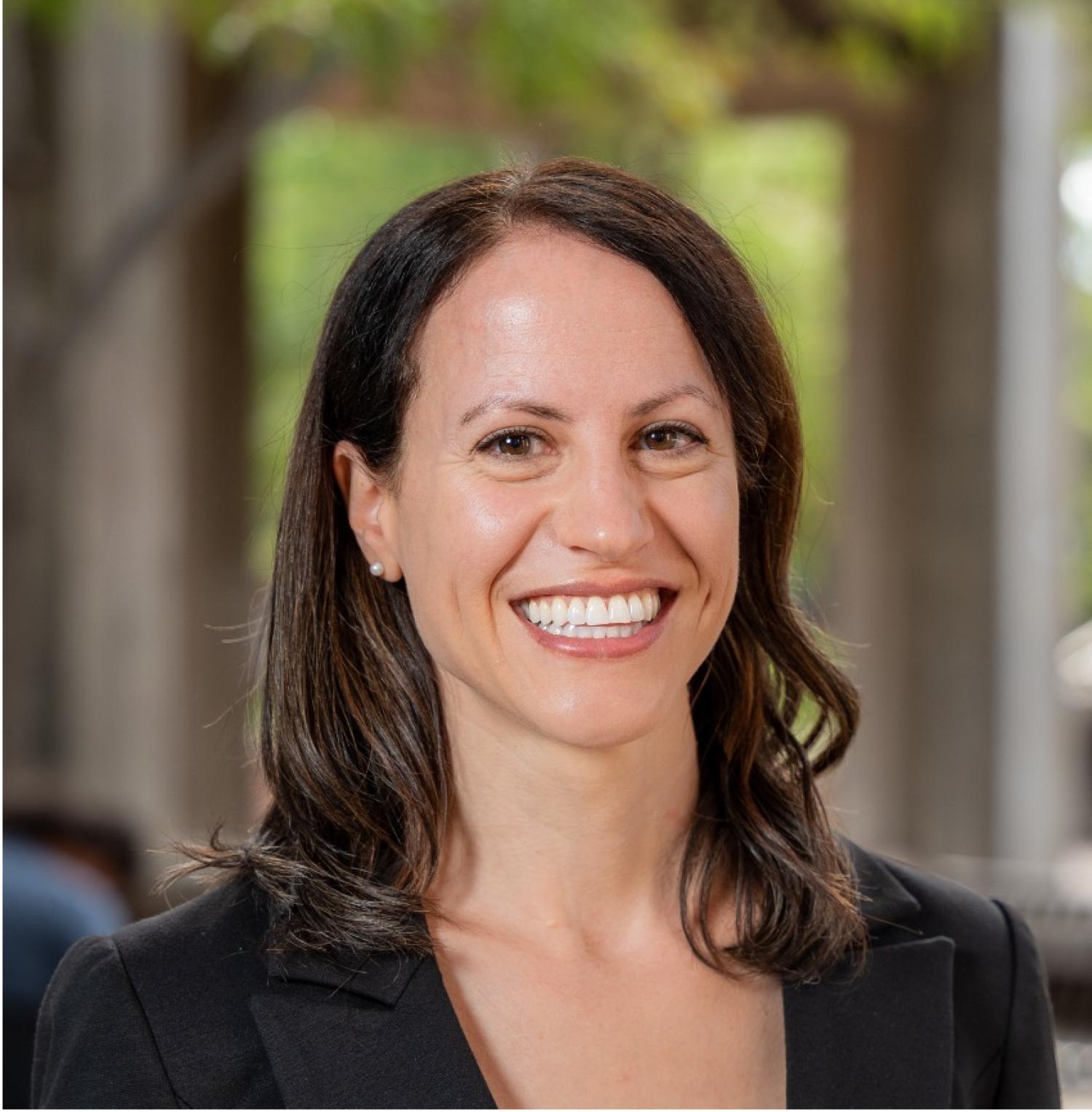
Katharina DobsView profile
Researcher
Dr. Katharina Dobs is a faculty-level researcher at Justus Liebig University Giessen, based in the Department of Psychology and Sports Science and soon moving to the Department of Mathematics & Computer Science. She leads the Visual Cognition & Computational Neuroscience (VCCN) Lab, where she integrates state-of-the-art machine-learning models with human behavioural and neural data to decipher the computations underlying rapid visual scene and face perception. Education & Career: While explicit degree details are not provided, Dr. Dobs currently holds a prestigious LOEWE Start-Professorship and an ERC Starting Grant (DEEPFUNC), underscoring her leading role in computational vision research. Research Interests: Computational principles of human visual perception Functional organisation of the visual cortex Deep neural network models of object and face recognition Integration of facial form and motion cues Temporal dynamics of face perception using MEG and fMRI Across her recent publications, a clear trend emerges toward leveraging deep convolutional networks to explain category-selective responses in the human brain, particularly for faces. Her work repeatedly demonstrates how artificial networks trained on ecologically relevant tasks spontaneously develop brain-like functional specialisation, providing computational evidence against domain-specific expertise hypotheses. Scientific Awards & Funding: ERC Starting Grant “DEEPFUNC” LOEWE Start-Professorship Supervision & Collaboration: Dr. Dobs currently supervises PhD students Elaheh Akbarifathkouhi and Hilal Nizamoglu. She co-leads multiple SFB (Collaborative Research Centre) projects, including Project S “Deep Learning: Unleashing the Potential” with Prof. Roland Fleming and Project C9 “Factors influencing categorical face processing” with Dr. Benjamin de Haas. The VCCN Lab is additionally affiliated with the CRC Cardinal Mechanisms of Perception, the research cluster The Adaptive Mind, the Center for Mind, Brain and Behavior, and the Center for Applied Computer Science and Data Science (ZAD).